“Family History of Fear has been in me for years. Along with this secret. From the instant I found out I was not who I thought I was.”
Every family has its own history. Many families carry a tragic past. Like the author’s mother, many Poles did not tell their children a complete story of their wartime exploits—of the underground Home Army, the tragedy of the Warsaw Uprising, the civil war against the Communists. Years had to pass before the stories of suffering and heroism could be told.
In Family History of Fear, Agata Tuszyńska, one of Poland’s most admired poets and cultural historians, writes of the stories she heard from her mother about her secret past.
Tuszyńska, author of Vera Gran (“a book of extraordinary depth and power”—Richard Eder, The Boston Globe; “captivating”—Newsweek; “darkly absorbing, shrewd, and sharply etched”—Publishers Weekly), has written a powerful memoir about growing up after the Second World War in Communist Poland—blonde, blue-eyed, and Catholic.
The author was nineteen years old and living in Warsaw when her mother told her the truth—that she was Jewish—and began to tell her stories of the family’s secret past in Poland. Tuszyńska, who grew up in a country beset by anti-Semitism, rarely hearing the word “Jew” (only from her Polish Catholic father, and then, always in derision), was unhinged, ashamed, and humiliated. The author writes of how she skillfully erased the truth within herself, refusing to admit the existence of her other half.
In this profoundly moving and resonant book, Tuszyńska investigates her past and writes of her journey to uncover her family’s history during World War II—of her mother at age eight and her mother, entering the Warsaw Ghetto for two years as conditions grew more desperate, and finally escaping just before the uprising, and then living “hidden on the other side.” She writes of her father, one of five thousand Polish soldiers taken prisoner in 1939, becoming, later, the country’s most famous radio sports announcer; and of her relatives and their mysterious pasts, as she tries to make sense of the hatred of Jews in her country. She writes of her discoveries and of her willingness to accept a radically different definition of self, reading the works of Isaac Bashevis Singer, opening up for her a world of Polish Jewry as he became her guide, and then writing about his life and work, circlingher Jewish self in Lost Landscapes: InSearch of Isaac Bashevis Singer and the Jews of Poland.
A beautiful and affecting book of discovery and acceptance; a searing, insightful portrait of Polish Jewish life, lived before and after Hitler’s Third Reich.
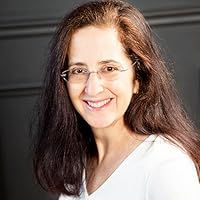
"Pisarka, poetka, reportażystka, córka znanego reportera sportowego Bogdana Tuszyńskiego i dziennikarki Haliny Przedborskiej. Ukończyła Wydział Wiedzy o Teatrze na warszawskiej PWST. Wykłada na Uniwersytecie Warszawskim.
Jest autorką popularnych książek o teatrze i biografii m.in. Marii Wisnowskiej, Isaaca Bashevisa Singera oraz Ireny Krzywickiej. Również jej książki autobiograficzne: Rodzinna historia lęku oraz Ćwiczenia z utraty spotkały się z gorącym przyjęciem. Wydana w marcu 2005 bestsellerowa Rodzinna historia lęku (nominowana do Prix Medicis), to dramatyczna i wielowymiarowa opowieść o losach polskich i żydowskich przodków autorki. Zapis walki z chorobą nowotworową jej męża, Henryka Dasko jest tematem osobistej książki Ćwiczenia z utraty (2007), która ukazała się także po francusku i koreańsku. Oskarżona: Wiera Gran - historia śpiewaczki z warszawskiego getta oskarżonej po wojnie o kolaborację z Niemcami, była niekwestionowanym bestsellerem i tematem burzliwych dyskusji. Oskarżona doczekała się wielu zagranicznych wydań, między innymi we Francji, Hiszpanii, Włoszech, Holandii, Grecji i Izraelu, w Niemczech i Stanach Zjednoczonych. Tyrmandowie. Romans amerykański (2012), to opowieść o ostatnim okresie życia autora "Złego" u boku jego amerykańskiej żony Mary Ellen Fox.
Ostatnio wydana Narzeczona Schulza, inspirowana postacią Józefiny Szelińskiej - jedynej kobiety, której B. Schulz zaproponował małżeństwo, była gorąco przyjęta zarówno w Polsce jak i we Francji. Równolegle z biografistyką i reportażem Agata Tuszyńska uprawia twórczość poetycką.
W swoim dorobku ma m.in. nagrodę im. Ksawerego Pruszyńskiego, przyznawaną przez polski PEN-Club za wybitne osiągnięcia w dziedzinie reportażu literackiego i literacką eseistykę."
This is an important book, but it very painful to read. The author writes of her family history in Poland. When she turned 18, her mother informed her that she was half Jewish on her maternal side. Her mother did not want her daughter to suffer from the curse of anti-semitism. The author tries to find her roots. She discovers how her mother and grandmother survived WWII. In a nutshell, her mother and grandmother simply walked through a courthouse that was abutting the Warsaw ghetto. They were sheltered by one of their relatives who had married a Christian Pole, but the fear never ended. People who survived the Holocaust suffered from PTSD, and their children as well. Even the children who were born far after the war. What is amazing about this book is that when the author would try to recreate the steps that her mother took during the war, she was met with blunt and horrifying anti-Semitism. Mind you, this is over 50 years after the end of the war and when there are simply no Jews in Poland. But somehow, they blame the invisible Jews for all of their problems. She relates the story of the labor uprising in 1968. The government and the press blamed the uprising on the few Jews which they caused Zionists. They, subsequently, ordered these Polish citizens out of the country after they stripped them of their jobs and their money. What is shocking about this is that the Polish people wholeheartedly buy into this nonsense. Even the author is horrified to learn that her Christian, Polish father has been heard to say that we are better off without these people. Mind you, Hitler did a good job and there are essentially no Jews left in Poland. I think that he exterminated almost 3 million Polish Jews. But once you find a convenient scapegoat, it is hard to give it up.
Autorka poznała prawdę na temat swojego pochodzenia dopiero u progu dorosłości. W niezwykle zajmujący sposób przedstawia dzieje swojej rodziny, zarówno od strony matki, jak i ojca.
Biography of the author's family tree ostensibly predicated on the fact that she was unaware of the Jewish half of her ancestry. Well-written examination of Polish life both pre and post war touching on the endemic Polish anti-semitism, the Church anti-semitism and ultimately the Soviet communistic anti-semitism. Let me not forget the self-hating Jewish anti-semitism. Much of the history of the family members delves into the assimilation and the response to assimilation. I was trying to define the author's feelings after her shock of discovery of being half Jewish (or all given her mother's religion) before she began making her final statements. A couple of times she made personal reference to one person "looking Jewish" because of a nose and another time because of "smell." The author certainly has mixed feelings about her heritage and I think it is less than pride despite her final statements. Anti-semitism to me is a litmus test for education and for comprehension. Anti-semitism is irrational though pervasive in almost every society no matter how remote in experience from Jews. I would really like to break bread with this author: much about which to talk. A book worthy of a read.
Family History of Fear, by Agata Tuszynska; Alfred A. Knopf: New York; $27.95 hardback
Memoirs must face the cold reality of what the family research reveals, in order to be true. Agata Tuszynska, one of Poland's most revered writers, best known in this country for the searing tale of Vera Gran, reviewed to great acclaim, now offers her Family History of Fear. Tuszynska is nothing if not surprising, for she learned from her parents that indeed her maternal family was Jewish, not Christian. This revelation caused her to begin a journey to find who her family was. She sought what became of them during the chaotic pre-war years in Poland, then the horrific years of the war and Holocaust. She concludes with their history during the post war of an utterly destroyed and painfully rebuilding country. She discovers them through seeking out stories of a series of family members, each recounted with care, love, but objectivity. Her paternal family was not religious, but rather adherents of communism. After the war, her father, a former railroad worker and soldier, became one of the great sports writers of a country sorely in need of some escape from the War and its Soviet Red Army occupation aftermath. Yet the discovery of her 'missing' family, the Jewish side, is most remarkable. We find them only in postcards, in single entries on official files, in vaguely remembered personal descriptions. For instance, to learn the Goldstein's, Przedborski's, and Herman's fates, she traveled to small towns once occupied by large Jewish communities. Now there was suspicion. Was she returning to try to reclaim property, property taken from long gone and dead Jews? Or what of the only indication her mother was Jewish, where her family is consigned to a street indicated as 'ghetto' by the German occupation. You will find this quest most absorbing. With segments recalling a mysterious coffin, a handbag, and a postcard of a tiny town, you are carried by these clues, almost detective like, along a heartrending trip to a lost world. It is a trip you must take, because all families have secrets.
The style of writing was beautiful. In some ways it had the feel of an epic poem. I had a hard time following who the family members were sometimes, and understanding what she was implying. That, too, makes it true to the feeling of being an epic poem. The meaning could also have been lost in its translation.
Agata Tuszyńska témoigne de son histoire familiale à travers la (re)découverte de son statut de Juive par sa mère. Ce qu'elle pensait un détail sans importance, révélé a sa majorité, finit par la questionner, au point de s'interroger sur ses origines.
Le livre nous emmène, chapitre par chapitre, tour à tour du côté paternel et du côté maternel, à la suite des connaissances et découvertes de l'auteure. Du côté de son père, une lignée de cheminots, et des origines très modestes. Du côté de sa mère, une ascendance d'entrepreneurs aisés, dont les destinées furent brisées par le Nazisme. Sa mère vécu enfant dans le ghetto puis fut cachée.
La lecture n'est pas toujours facile, on sent qu'il n'est pas aisé à l'auteure d'affronter le passé. Mais : c'est passionnant. On visite à la fois la grande Varsovie, tant dans les années de guerre que durant l'époque communiste, y compris la reconstruction de la ville (le grand-père paternel de AT y participa activement) et ses faubourgs (sa grand-mère fut cachée à Otwock, forêts, bon air, sanatoriums et pensions de vacances bourgeoises).
Nous partons ensuite vers Leczyca, berceau maternel, qui nous confronte aussi à l'absence et à l'antisémitisme survivant.
Ce livre rapporte une série de faits historiques que j'ignorais :
Les soldats polonais qui passèrent la guerre entière dans des camps, sans exactions ni mises à mort, mais sans espoir ni travail. Le grand-père Juif de AT en sorti profondément dépressif ;
Les événements de mai 1968, avec un sursaut d'antisémitisme d'Etat, et le départ de la majorité des Juifs Polonais ;
L'Etat totalitaire communiste, piège enserrant la Pologne.
La question la plus intéressante est certainement la façon dont Agata Tuszyńska évoque sa double appartenance, Polonaise et Juive, et témoigne de ce que peut ressentir une personne de la "seconde génération" prise entre deux cultures, entre la peur inscrite dans les gênes et la liberté d'être soi-même, au début des années 2000. Ceux qui restent, ceux qui partent, et pourquoi. Ce qui est perdu, ce qu'il reste : des noms de rue, des recettes de cuisine, quelques tombes, des souvenirs)
Ce témoignage est personnel et certainement imparfait, mais c'est un témoignage intéressant, avec de beaux portraits d'hommes et (à mon avis, surtout) de femmes. C'est aussi celui d'une enfant de parents divorcés à Varsovie en temps communistes.
Książka o niełatwych losach żydowskiej rodziny. Wspomnienia ciekawe, niekiedy bardzo osobiste. Niestety dużo w tym fantazji autorki. Fantazji, które są często "wodolejstwem", kilkanaście zdań na temat nieznaczących faktów, które może nawet nie miały miejsca. Niektóre wątki się powtarzają, a nawet całe zdania: „Futro miało być bezpieczne poza gettem. Poza gettem było bezpieczniej dla futra.” - te zdania są obok siebie! Widać, że autorka jest dziennikarką, która ma płacone od ilości tekstu. Te same fakty pojawiają się kilkakrotnie przy różnych postaciach. Jakby wywalić niepotrzebne dłużyzny i powtórzenia to byłaby ciekawa lektura.
Well researched, thoughtful, and illuminating on the fear felt by the remaining Jewish community in Poland. The author's complicated uncle, who tried to save his wife's family, often against their will, but who was flawed himself. The compromises made.
An important read. It has impacted my understanding of the Polish Jewish experience during WW2 and post WW2. Prior to reading this book, I did not fully understand the experience of Polish Jews in March 1968.
This entire review has been hidden because of spoilers.
DNF. Never could get into the book. It starts out as if the reader is in conversation with the author and has some context on the story. 2 stars because it will never be as bad as Shades of Gray and I can’t bear to put this in that category
This book was not fun or exciting to read but the author’s story is fascinating and also shocking. I learned quite a bit about Poland and non-Jewish Poles, as well as Jewish Poles.
This book fills several important gaps in what we know about what life was like for Polish Jews before, during, and after the Holocaust. However, I found the first 100 pages very unfocused. Once the individual stories started, it was more interesting. I would have also liked more information about his the author researched the individual stories. The list of family members at the end of the book is helpful, but it would have been better if it had been arranged as a tree.
At 19 years old, Agata Tuszyńska learned that she is Jewish, a “humiliation and a disfiguring feature” she chose to hide from the world. 40 years later, she takes up the task of reconstructing a heritage concealed by fear and forgetting. Review by Dalia Wolfson for the Jewish Book Council.
When Agata Tuszynska was 19-years-old, her mother revealed a secret: she was Jewish. It would be several decades before Tuszynska came to terms with the idea as she writes in “Family History of Fear: A Memoir” (Alfred A. Knopf). Until she was an adult, Tuszynska, who lived in Poland, believed no one she knew was Jewish. That’s because after World War II, one either identified as Jewish (and left the country) or pretended to be of Polish ancestry. This doesn’t mean that Tuszynska had never heard anyone speak about Jews: her Polish father said uncomplimentary things about them, although none of his relatives seemed prejudiced. The author also remembers that, during high school, one classmate “delivered a glowing report in our civics class, praising Hitler for having resolved the Jewish problem. He said that Hitler had purified Poland of its Jewish scurvy, something many had tried to pull off before the war without success. The teacher made no objection. I did not understand what he was talking about.” See the rest of my review at http://www.thereportergroup.org/Artic...