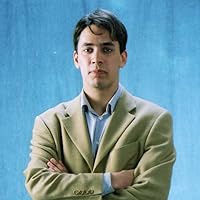
Benjamin Fondane—who was born and educated in Romania, moved as an adult to Paris, lived for a time in Buenos Aires, where he was close to Victoria Ocampo, Jorge Luis Borges’s friend and publisher, and died in Auschwitz—was an artist and thinker who found in every limit, in every border, “a torture and a spur.” Poet, critic, man of the theater, movie director, Fondane was the most daring of the existentialists, a metaphysical anarchist, affirming individual against those great abstractions that limit human freedom—the State, History, the Law, the Idea.
Existential Monday, the first selection of his philosophical work to appear in English, includes four of Fondane's most thought-provoking and important texts, "Existential Monday and the Sunday of History," "Preface for the Present Moment," "Man Before History" (co-translated by Andrew Rubens), and "Boredom." Here Fondane, until now little-known except to specialists, emerges as one of the enduring French philosophers of the twentieth century.
Benjamin Fondane or Benjamin Fundoianu; born Benjamin Wechsler, Wexler or Vecsler, first name also Beniamin or Barbu, usually abridged to B.; was a Romanian and French poet, critic and existentialist philosopher, also noted for his work in film and theater. Known from his Romanian youth as a Symbolist poet and columnist, he alternated Neoromantic and Expressionist themes with echoes from Tudor Arghezi, and dedicated several poetic cycles to the rural life of his native Moldavia. Fondane, who was of Jewish Romanian extraction and a nephew of Jewish intellectuals Elias and Moses Schwartzfeld, participated in both minority secular Jewish culture and mainstream Romanian culture. During and after World War I, he was active as a cultural critic, avant-garde promoter and, with his brother-in-law Armand Pascal, manager of the theatrical troupe Insula. Fondane began a second career in 1923, when he moved to Paris. Affiliated with Surrealism, but strongly opposed to its communist leanings, he moved on to become a figure in Jewish existentialism and a leading disciple of Lev Shestov. His critique of political dogma, rejection of rationalism, expectation of historical catastrophe and belief in the soteriological force of literature were outlined in his celebrated essays on Charles Baudelaire and Arthur Rimbaud, as well as in his final works of poetry. His literary and philosophical activities helped him build close relationships with other intellectuals: Shestov, Emil Cioran, David Gascoyne, Jacques Maritain, Victoria Ocampo, Ilarie Voronca etc. In parallel, Fondane also had a career in cinema: a film critic and a screenwriter for Paramount Pictures, he later worked on Rapt with Dimitri Kirsanoff, and directed the since-lost film Tararira in Argentina. A prisoner of war during the fall of France, Fondane was released and spent the occupation years in clandestinity. He was eventually captured and handed to Nazi German authorities, who deported him to Auschwitz-Birkenau. He was sent to the gas chamber during the last wave of the Holocaust. His work was largely rediscovered later in the 20th century, when it became the subject of scholarly research and public curiosity in both France and Romania. In the latter country, this revival of interest also sparked a controversy over copyright issues.
Benjamin Fondane was a contemporary philosopher (and poet) of Camus and Sartre, but in these wonderful essays Fondane takes a stance against their views and against reason itself. Fondane was heavily influenced by Kierkegaard, Nietzsche and Dostoyevsky and believed that we ought to give up reason for our own ontological benefit by favouring a belief beyond the absurd. He rejected universal concepts that attempted to contain an individual to a particular system, for he was always striving after the possible even when confronted with the impossible.
The reason why Fondane is largely forgotten or unknown is because he was sadly murdered in the concentration camps during WWII. He was actually granted a free pass to avoid having to go to his death, but unfortunately his sister was not afforded the same opportunity. Fondane then decided to stay with his sister and face his fate, and by doing so, he lived his philosophy to the very end, for in this decision we see a heroic individual, who not only displayed an act of great love and sacrifice for his sister, but who also decided to face the impossible in his pursuit of the possible. In this very act, we bear witness to a special kind of philosopher, one who doesn't simply exert reason and propound a priori "truths", but one who actually lives their philosophy through their actions. Fondane's humbling philosophy thus lives on as inspiration for those who dare to go against reason.
Fondane is a startling, original thinker and a terrifically exciting writer (credit to the translator). This book is essential for those interested in existentialism and continental philosophy in general. A revelation.
As someone else commented, Fondane is the poet of existence, even in his prose works. As a thinker, he is unsurpassed as a critic of rationalism, surrealism, Marxism and academic existentialism (Heidegger, Sartre) and takes his inspiration from Kierkegaard, Nietzsche, Dostoevsky and Lev Shestov. His originality and the uncompromising, radical nature of his thought is why I thought it necessary to translate some of his philosophical essays into English.
In lieu of a formal review, I’ll leave links to a couple of conversations between Daniel Rose, Davood Gozli and me. Unlike the Hayden White essays, this books was very short, so we limited the number of discussions we thought necessary to cover the material. The first discussion covers the introductory essay and the first essay, and the second discussion covers the remaining three essays in the collection.
Discussion 1, covering the introductory essay and “Existential Monday and the Sunday of History”– https://youtu.be/MppMQd1MWMI
Discussion 2, covering “Preface for the Present Moment,” “Man Before History, or, The Sound and the Fury,” and “Boredom” - https://youtu.be/k9GzxL-CM64
Fondane es el poeta de la existencia, vehemente y lúcido, hambriento de vida, apologeta del absurdo como único reducto libre en el vasto espacio que monopoliza la razón y la especulación, la lógica y las eternas e inmutables leyes universales. Baila en sus escritos al ritmo de Shestov y de la mano de Kierkegaard, Nietzsche y Dostoievski. Baila endemoniado con el ímpetu trágico del héroe existencial, bajo los cielos de Job y Abraham, representando la versión más candente de su querido maestro ruso. Baila el culto a un Dios loco y primitivo capaz de destruir Atenas por capricho.
in man before history Fondane quotes Plotinus (Enneads): "on earth, there are beings who perish because they cannot conform to the universal order. For example, if a tortoise found itself caught in the middle of a chorus dancing in perfect order, it would be trampled underfoot because it would not know how to escape from the effects of the order that regulates the steps of the dancers. However, if it conformed to that order, it would not suffer any harm"
Fondane's prose sets a mirror in front of the individual in each of us, making us contemplate the seriousness and existential weight of our lives. Existential Monday is a reminder that the individual proudly resides atop of the ontological hierarchy of Being. Anything that suggests otherwise pulls us into the orderly dance of history, careless and brutal in its collective frenzy.
Romanian Jewish intellectual writing in French, pre-WWII) Not well-known but essential if you're reading Zweig + Steinzaltz. Philosophical, literary, Jewish, watching civilization collapse. His essays on Dostoevsky and Kierkegaard are profound.
Benjamin Fondane's life and art is a testament to the failure of various schools and movements; a critique of rationalism and its relation to modern consumer culture; a litany of laughter and brimstone; a hope which can only be rendered by the courage of our individual voices.
An excellent secret armor to hold fast against Trump.
Passions...I choose to believe that we all have that one thing that makes us tick, mundane to others but a lulu to oneself, there are those who like flowers be it domesticated or wild and will go to great lengths to watch them bloom or those brave souls that collect model trains, some of us listen to retromusic and detect nuances only heard by our ears, or may be our delusions. Who knows? Whatever the reason they make life worth living. I have a few, existentialism is one of them. Cosmology, theoretical physics and others which can't be written here fill up the list. Before I go on saying this and that, let me say this review will be of marginal use if you are not into existentialism.
A week ago[sometime in the great lockdown of 2020] I didn't know who Fondane was but in the week that I have known him, I am convinced he is one of the unsung voices of existentialism[ am lumping critics and proponents into one basket] .He had an honest voice, sampled a lot of other writers and like many before him after much inquiry, he did not have a good answer on why we are here.
This collection had three essays, my favorite was "man before history" but the other two also had insights, "boredom" in particular was engaging to the mind but I was unwilling to give it that much credit in guiding human affairs. Sometimes civilization just falls captive to deluded souls...I feel like I should go into the nuances of the essays but the more I think about it, the more I drift towards leaving it to the reader to take this journey alone, untainted and make up their mind as to what Fondane was trying to put across. Bon voyage.
“Kierkegaard avrebbe senza dubbio preferito sposare Regina Olsen e non diventare una «eccezione»; Nietzsche avrebbe preferito non aspettare la sua follia per inviare a Cosima Wagner il suo telegramma «Arianna, ti amo»; Ivan Ilič avrebbe preferito essere schiacciato da una vettura piuttosto che affrontare le «rivelazioni della morte»; Dostoevskij avrebbe preferito vivere in un mondo senza «sotterraneo»; Pascal avrebbe preferito una sedia ad un abisso. E, in generale, noi tutti preferiremmo una qualsiasi schiavitù, anche gli ussari della «guerra necessaria», alla terribile esperienza di non toccare più il fondo e di perdere fiducia nella ragione. È più facile rinunciare a tutto ciò che abbiamo di più caro al mondo che chiedere, come Giobbe, un arbitro tra noi e Dio.”
Original, powerful philosophical essays. The translation is great and the explanatory notes are extensive and very helpful. The problem here is the amount of Fondane's writing you get for your $15.95. Between a novella-length introduction by some other dude and the aforementioned extensive notes, only about 75 pages (out of 160) belong to Fondane. Not very generous, NYRB.
Some brilliant points, specifically about other philosophers, but more reflexive than insightful for my taste. Boredom was my favorite of these essays.
Bracing. It helps to know Lev Shestov’s thought first- Fondane was a disciple of Shestov. Coplestone’s book on Russian philosophy has a helpful introduction to Shestov.
فكر ميكردم خيلى از اين كتاب خوشم بياد چون به مكتب Absurd و Existential علاقه دارم ولى هر بار كه خودمو مجبورميكنم بخونمش حوصلم به شدت سر ميره. ١٠٠ صفحه خوندم ولش كردم.
This is a book I intend to read again. I've told myself so many times that I've passed the age where it's fashionable to be existentialist, and then I read something and think how foolish that is.
This book; I almost planned the impact it would have on me. I noticed it in a bookstore in Chelsea one day during my lunch break. Something about the title and the description of the philosopher-poet on the back got to me, so I too a picture of it with my phone.
Then, after the [2016] election, I noticed it in my photos and downloaded it from the public library to my Kindle. There's no better way to describe it than a salve. I read the intro by Bruce Baugh and I remembered how finite politics really is; how finite the present really is. How all year, as everything around me swirled around election politics, I kept searching for the articulation of the smallness of it.
Which, even now I'm not convinced. Because this election will definitely impact the population of the planet and the future of the planet. It will impact me and my friends. It may impact very mundane matters, very immediate matters, and very long-term matters. But somehow even that didn't feel integral to existence.
I kept saying that the government we have, the institutions we have, I'm not going to say I don't appreciate them, but if they weren't my reality something else would be, and that would be fine. But there would still be something fundamental to existence that would be there.
Just the preface alone, which introduces us to Fondane's quest to undo reason, his embrace of "impertinent uneasiness, this holy hypochondria," was electrifying. I found someone who understood, and something that made me want to know more, to unearth what he was saying, instead of most things I consume that end when they end.
And it helps that Fondane is what I wish I was: a writer and philosopher and that he became a philosopher accidentally, because he was essentially one, not through training. (Though clearly he ended up adopting the formal way of discussing philosophy.)
He wasn't immune from politics. He lived between the wars and died in Auschwitz, and one of his essays is a defense of continuing to think when the world is going to shit. He argues with himself, presenting both sides. We must do something, how can we escape into thought, and I think that's the kind of question that doesn't get resolved. You know ultimately that to think, to attempt to touch of all existence, can't ever be inappropriate, but it feels that way.
He wrote one in 1936 and one in 1939.
Fondane told his wife that he's the exact type of Jew Hitler wanted to get rid of, the most authentic kind. "Rebellious. disobedient. nonconformist"
Watching the rise of Nazism and the fires of the Spanish Civil War, Benjamin Fondane, a Romanian Jewish philosopher living in Paris, wrote in 1936 that “it is no mystery to anyone that our world – ideas, structures, economies, values – is at this moment waiting in line in front of the bankruptcy trustee’s office, and that man has never been under such insistent demands as he is today to find a way out within History and to link his fate to the passionate modification of the world as it now exists.” Fondane moved to Paris in 1923 and spent most of the next ten years in the company of avant-garde Romanian artists and French surrealists. But the most profound influence on his life was Lev Shestov, a Russian existentialist philosopher who rejected Hegel’s dictum that “the real is rational”, and urged his readers to embrace the Absurd as the only way of confronting a world bent on crushing the poor and the weak. In the four essays translated here by Bruce Baugh, Fondane applied Shestov’s philosophy to a world gone mad. In the last of them, written in February 1944, just seven months before he perished in the gas chambers of Auschwitz, Fondane looked hopefully toward an “existential Monday” that will arise after the hegemony of History – that monotonous force that rolls mercilessly over individuals as it rumbles steadily onward – has been defeated. Freedom, said Fondane, is to refuse to accept that History has the last word over one’s life. Freedom, he wrote, is “the refusal of everything that tends to enclose him forever in his own imminence and offers him only false existence, false transcendence – of the self over the self, of his knowledge over his existence, of universal reason over his knowledge, of a God parallel to his imminence who in turn cannot go out of himself. Etc.”