Jump to ratings and reviews
Rate this book

A House Full of Daughters

Rate this book
All families have their myths and legends. For many years Juliet Nicolson accepted hers – the dangerous beauty of her flamenco dancing great-great-grandmother Pepita, the flirty manipulation of her great-grandmother Victoria, the infamous eccentricity of her grandmother Vita, her mother’s Tory-conventional background.

But then Juliet, a renowned historian, started to question. As she did so, she sifted fact from fiction, uncovering details and secrets long held just out of sight.

A House Full of Daughters takes us through seven generations of women. In the nineteenth-century slums of Malaga, the salons of fin-de-siècle Washington DC, an English boarding school during the Second World War, Chelsea in the 1960s, the knife-edge that was New York City in the 1980s, these women emerge for Juliet as people in their own right, but also as part of who she is and where she has come from.

A House Full of Daughters is one woman’s investigation into the nature of family, memory, the past – and, above all, love. It brings with it messages of truth and hope for us all.

336 pages, Paperback

First published March 24, 2016

87 people are currently reading
1989 people want to read

About the author

Juliet Nicolson

10 books124 followers
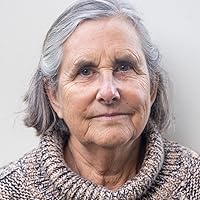
Juliet Nicolson is the author of 'The Perfect Summer: England 1911, Just Before the Storm' and 'The Great Silence: Britain From the Shadow of the First World War to the Dawn of the Jazz Age.' She read English at Oxford University and has worked in publishing in both the UK and the United States. She has two daughters, and lives with her husband in Sussex.

Ratings & Reviews

What do you think?
Rate this book

Friends & Following

Create a free account to discover what your friends think of this book!

Community Reviews

5 stars
237 (22%)
4 stars
411 (38%)
3 stars
326 (30%)
2 stars
78 (7%)
1 star
18 (1%)
Displaying 1 - 30 of 158 reviews
Profile Image for Chrissie.
2,811 reviews1,420 followers
August 1, 2016
This book does two things. It covers the biographies of eight generations of women in the author's family as well as offering a close study of the frequently fraught mother- daughter relationship all women recognize. It starts with the mother of the author's great-great-grandmother, who was born in 1830. It concludes with the author's own granddaughter born in the second decade of the 21st Century. By studying these women what do we learn? Mistakes are repeated. To some extent the author is writing this book to help her understand her own behavior and to stop making the same mistakes! Secondly she is writing simply because her family has always written about themselves. Writing is a family trait. Many of Vita Sackville-West’s novels are in fact about herself and her family. Hopefully readers too will learn from what the author has learned.

Mistakes are often repeated from one generation to the next. I have noticed this, and haven’t you? The author is very honest; she recognized that she was repeating the very same mistakes made by previous women in her family. Every woman reading this account will recognize that we do tend to repeat the same errors. So how do we stop this? Through understanding and a conscious decision to shape our own lives as we want them to be. This is not a self-help book, but it does offer food for thought. What starts as an interesting study of particular women moves on to become a psychological study of relationships.

There is much about the Sackville-West family and Vita Sackville-West in particular. The author is an historian, but history is not the focus of the book. Historical events are thrown in as a backdrop, only mentioned to the extent with which they influence family life. Historical details are dispersed as interesting tidbits that help explain the era and why particular choices were made. Authors, literature and trends are detailed; these are important since they draw the atmosphere of the time and place. Clothes and food and particularly place play a prominent role in these women's lives. Much is said about the Sackville-West residencies. Places and life in France, in Spain and in NYC are well described.

I must point out the writing is good, both in its description of places and how people behave. In expression of thoughts too. Just two examples:

-Grief, such a small word, and yet an iceberg of a word....Grief is the price you pay for love.

-Within dying there is so much living.


The book gets better the further you go. Why? Because it gets more personal. The author speaks from her heart. She had a deep relationship with her grandmother, Vita Sackville-West; she had a difficult relationship with her mother, a close relationship with her father and when she herself has a granddaughter she has begun a path toward deeper self-understanding. With this understanding comes appreciation of the granddaughter held in her arms. I am left feeling a bit envious, a little bit jealous. Me? I don’t have all my answers. Family relationships are difficult, quite simply because they are so important. Nobody can teach you how to deal with vulnerability, and aren't most of us unsure, vulnerable and uncertain of ourselves? Also, there isn't one answer; you have to find it for yourself, but we can read to see how others reason.

It is not hard to keep track of who is who. Each person becomes a real identity. There aren't too many extraneous people to confuse the reader.

Alcoholism, feminism, lesbianism and aging are covered too. Some of the ideas drawn by the author stopped too short, or rather they didn’t cover ideas I have pondered. For example, I wanted more about how it feels when both your parents have passed away. Of course maybe the author’s thoughts were simply different from mine.

I enjoyed the audiobook narration by Julie Teal. For the most part, it’s easy to follow, but sometimes there is so much to consider. Then I did wish it had been a teeny bit slower. I had to have time to think. I was forced to rewind on several occasions.

So good writing, food for thought and interesting people, but it takes a while to be drawn in. I recommend it to those interested in the Sackville-West family and those interested in thinking about their own mother-daughter relationships. I made that plural on purpose! We all have a mother and many of us have a daughter too.

Profile Image for Susan.
3,024 reviews570 followers
January 17, 2016
Juliet Nicolson has written some excellent books, including two works of history, “The Perfect Summer” and “The Great Silence,” plus a novel, “Abdication.” However, in this new book she turns her attention to her own family history and what a family it is . The granddaughter of Vita Sackville-West and Harold Nicolson, daughter of Nigel Nicolson and sister of the historian Adam Nicolson, she comes from a great literary heritage; as well as having the shadow of the great family estates of Knole and Sissinghurst as part of her history. That is not to mention her family’s involvement in politics, Vita’s greatest friend Virginia Woolf or even the fact that her favourite teacher at school was no less a person than Penelope Fitzgerald and that she was unfazed when Richard Burton and Elizabeth Taylor came for a visit.

This book though, is not interested in the rich and famous , even if most of those who inhabit these pages are one or the other (if not both), but looks at seven generations of women in her family; from the birth of her grandmother’s grandmother in 1830 to the birth of her granddaughter. All of these women, apart from one, were privileged in terms of wealth and all were daughters – as all women are born, and remain, daughters. As Juliet Nicolson says, families have different expectations from sons and daughters and this story is riddled with secrets and maternal jealousy, as well as maternal love.

This history begins with Juliet’s great-great-grandmother, the Spanish dancer, Pepita. Unlike all of the other women in this history, Pepita was born in 1830 to a life of poverty. Her mother worshipped her beautiful and talented daughter and, before long, Pepita had found fame and fortune. She also had an early marriage; an unfortunate fact when she fell in love with Lionel Sackville-West, a twenty five year old attaché at the British Legation in Germany, with whom she would have children but never a real family.

The next woman in this history is Pepita’s oldest daughter, Victoria. Unlike her mother, Victoria eventually became accepted by society and married a man with the exact same name as her own father – her cousin Lionel Sackville-West. Married in 1890, the couple were originally head over heels in love; but a terrible experience with childbirth led to the marriage turning sour and left Vita as their only daughter and, indeed, only child.

Vita Sackville-West was entirely unconventional and, like many of the daughters in this book, had an early , slightly suffocating, relationship with a mother, which became distant and estranged as the young girl became more independent with age. Her marriage to Harold Nicolson was, despite their difficulties, built upon a commitment to each other, although motherhood baffled Vita.

We then move on to Juliet’s mother, Phillipa; whose own mother Pam married Vita’s son, Nigel Nicolson. Juliet Nicolson does not hesitate to reveal the less comfortable sides of wealth, privilege and snobbery – such as the time when Pam and a young Phillipa reduced young evacuee’s staying at their house to tears, or when she is open about the problems with alcohol she shared with her own mother. Philippa obviously cared about her daughter and visited her every day in hospital when she was once ill, but it is distressing to read how little warmth Juliet was shown and how she can even recall the rare occasions her mother held her hand. The book continues with her relationships with her own daughters, Clemmie and Flora, and the circle closes with the birth of her granddaughter, Imogen.

I really enjoyed this family history, which concentrated on the female line of a family. There is the unconditional love of motherhood, but also manipulative behaviour, selfishness and benign neglect. This is an honest account of mothers and daughters and is both moving and well written. Lastly, I received a copy of this book from the publisher, via NetGalley, for review.


Profile Image for Rebecca.
4,191 reviews3,452 followers
June 26, 2024
(3.5) Journalist and popular historian Juliet Nicolson is Vita Sackville-West’s granddaughter and one of the few remaining guardians of her living memory. This 2015 family memoir chronicles the lives of seven (eight, really) generations of women and travels from Malaga in the 1830s to present-day England. Nicolson acknowledges the inherited privilege that has typified this clan since the time of Vita’s grandmother but prefers to emphasize the roles that place and talent have played. It is enough of a biography of Vita to have won a Bisexual Book Award but, even though Vita only had sons, the focus is on mother–daughter bonds and how values and experiences have recurred across nearly two centuries.

First came Pepita, who rose from poverty in southern Spain to be a legendary dancer (“the Beyoncé of her day,” Nicolson quipped at an online event I attended – see below) and catch the eye of an English diplomat, Lionel Sackville-West, at a performance in Paris. Although Pepita was already married to her dancing teacher, she shook off her controlling mother and became Sackville-West’s longtime mistress, bearing him seven children. They could all have been disinherited for illegitimacy, however, had Pepita’s daughter Victoria not secured the link – and access to the family estate, Knole – by marrying her cousin, young Lionel Sackville-West. Vita wrote in Pepita, her joint biography of her mother and grandmother, “My mother appears to have been born with the faculty of attracting the most peculiar and improbable happenings,” such as a proposal of marriage from the recently widowed U.S. president, Chester Arthur, when she accompanied her father to Washington, DC.

Vita is the book’s presiding spirit and pivot point, but I already knew a lot about her from reading Victoria Glendinning’s biography plus two of her novels, so this material was too familiar. The fact that we then leap from daughters to a daughter-in-law (Nicolson’s mother, Philippa Tennyson-d’Eyncourt – these figures are all posher than posh!) is unfortunate as it dilutes the theme. However, Nicolson gives a behind-the-scenes look at Sissinghurst and the marriages between Vita and Harold, loving but also a cover for same-sex relationships for both of them; and Nigel and Philippa, which was a disaster almost from the start. Nicolson is also brave to admit the alcoholism that she subconsciously received from her mother. Philippa died at 58, but by admitting she had a problem Nicolson was able to get help and turn things around. Two generations followed: her two daughters and one granddaughter, who is now 11.

Nicolson sees patterns repeating across the generations: emotional abandonment by parents, “the lack of confidence, the fear of failure, and the seeking of approval where there was none” as well as “writing about the life and work of an earlier generation.” She hopes that with this book she has marked the arrival of “an increasingly tolerant and accepting generation, one that is not afraid to learn from the mistakes of the past and is determined not to repeat them”. (Fun but unrelated fact: Penelope Fitzgerald was one of Nicolson’s teachers.)

I visited Sissinghurst in 2009 – I can’t believe I haven’t been back in the past 15 years – and when we briefly lived in Sevenoaks in 2012 we also went to Knole. Both are magical places, especially Sissinghurst. For a few years there I was on a kick of reading a lot by and about Vita (I can recommend No Signposts in the Sea) and I also absorbed a fair bit via Adam Nicolson’s books (that’s Juliet’s brother) and his wife Sarah Raven’s – her recipes are to die for, and she’s kept up the gardens in a way that would make Vita proud. So I’d say it probably helps to have an existing interest in the family, but it should be a reasonably engrossing read in any case.


Yesterday I watched “The Inspiration of Vita Sackville-West,” a recording of an RSL event held at the London Library in October that was aired to tie in with their annual Dalloway Day as well as the 95th anniversary of the publication of Virginia Woolf’s Orlando (for which Vita was a model) and, of course, Pride Month. The panelists were Juliet Nicolson; trans novelist Shola von Reinhold, whose LOTE (2020) won the Republic of Consciousness and James Tait Black Memorial Prizes; fashion critic Charlie Porter; and writer Olivia Laing. The discussion was expertly chaired by Shahidha Bari, an academic, fashion writer and presenter of BBC Two’s Inside Culture. She opened by asking each speaker to define Vita in one word. Nicolson chose “lover,” which von Reinhold echoed. Porter said “physical.” Laing cheated with a made-up compound word: “androgynous-aristocratic-aesthete.”

And the conversation went on from there. Nicolson spoke of her grandmother as a formidable woman, tall and tobacco-scented, and remembered the exotic treasures she and her siblings found in Vita’s tower study, such as a bottle of emerald-green nail polish. She described Vita as enigmatic and representing duality: she was born a Victorian but has been embraced by modernist and queer studies; she was conventional in some ways, but also a rebel. Porter has written about fashion and the Bloomsbury circle, with Woolf as one of his subjects, so he thinks about Vita mostly as a muse. He read from Vita’s letter to Harold describing meeting Woolf, whom she thought “quite old” and “atrociously dressed.” Nonetheless, she’d lost her heart. Woolf in her turn commented on Vita’s moustache, which was likely a sign of her Spanish heritage rather than excess testosterone as some have theorized.

For von Reinhold, Vita is an early example of androgyny, a precursor to today’s trans and nonbinary identities. Laing, who has recently published a book on gardening, focused on Vita as a garden writer and designer. She said she doesn’t really value Vita’s novels but thinks her garden books (collections of her Observer columns) are extraordinary and read a passage in which she dreamt up the famous White Garden she would create at Sissinghurst (I read a kinda crummy novel about it a few years ago, The White Garden by Stephanie Barron).

The event gave a very good sense of Vita as a person but not as a writer. Audience questions brought up her poetry (oh God, it’s awful!) and travel books but that was as far as it went, and there was no discussion of the novels. Nicolson mentioned Pepita in passing but mostly talked about Portrait of a Marriage, which was half written by Vita and then finished by Nigel, a publisher (he was half of Weidenfeld and Nicolson, aka W&N). He had the courage to reveal his mother’s sexuality and Nicolson said that she believes Vita’s legacy is courage – to create a garden from scratch as a self-taught amateur, yes; but mostly to be oneself.

Originally published on my blog, Bookish Beck.
Profile Image for Penny.
342 reviews90 followers
April 27, 2016
I've read two history books by Juliet Nicolson and enjoyed them both, so I was pretty confident I would enjoy this family memoir

Nicolson starts her book with the story of her great, great grandmother, the very lowly born Spanish dancer Pepita, and then works through 7 generations of the female line to end with a beautiful chapter on her own much loved grand daughter Imogen.

Much of the early part of this book will be familiar with those who have read The Disinherited by Robert Sackville West, a relative (cousin I think) of Nicolson.

Nicolson is a talented, clear and elegant writer, and the early chapters show she is a more than capable historian and biographer.

However, I think the book really comes into its own when she writes about her own mother, and then about herself, motherhood and her battle with alcoholism.

Nicolson admits how difficult it was to write this part of the book, and indeed the doubts she had about even trying to do so. But she confronts it unflinchingly and whilst I very rarely cry at any book, this got me very close!
Profile Image for Claire.
236 reviews70 followers
July 31, 2016
I loved this sweep through history told through the singular lives of the women of the author's family. Each woman's life is described in just a couple of chapters, so that I never found myself getting too bored by mundane details. Juliet Nicolson does a wonderful job of placing these women in their exact time and place while also uncovering the major and more universal themes of their lives. She examines the characters lovingly and forgives them their faults. When she tells her own story, the author is very honest about her strengths and foibles, and you can understand her clearly as a product of her family and the particular time period in which she has lived. I loved the book because it reminded me that life is often difficult. Even living surrounded by beautiful things at places like Knole and Sissinghurst does not protect you from heartache and fear and often destructive coping mechanisms. Finally, although most of the book centers on the women in her family, the author does a brilliant job describing her father, Nigel, the son of Vita Sackville-West. I think it is a beautiful book with some poignant life lessons.
Profile Image for KOMET.
1,259 reviews143 followers
July 1, 2016
This is a richly layered story, spanning 7 generations over 160 years, of 2 families (the Sackville-Wests and the Nicolsons) with a focus on the lives of the women. The author, a renowned historian, shares with the reader the lives of 7 women -- starting with her great-great Spanish grandmother Pepita, who enchanted Europe with her flamenco dancing in the 1850s, winning the heart of a young British diplomat (Lionel Sackville-West) in the process; continuing onward with Pepita's daughter Victoria, who later served as her father's hostess in Washington DC, where he served as British Ambassador during the 1880s; and forward to Victoria's daughter, Vita Sackville-West; Vita's granddaughter, the author; the author's mother Philippa, with whom she had an uneasy relationship; and the author's 2 daughters, Clementine and Flora.

The book takes the reader on a journey marked with many paths, showing how at times the choices made by one generation are sometimes repeated -- at heavy cost -- by future generations. "A House Full of Daughters" is also a testament to the power of love, hope, and faith, which in themselves can help a person to overcome one's own shortcomings, learn from past mistakes, and build closer, enduring ties with loved ones. This is a book that comes HIGHLY RECOMMENDED FOR ALL.
Profile Image for Mary Durrant .
348 reviews187 followers
November 14, 2016
A very moving account of seven generations of women.
Interesting how things are carried on through the generations.
All amazing women , love is the key!
Touching and beautifully written.
Profile Image for Lori.
1,667 reviews
May 17, 2016
I was a goodreads giveaway winner of this ARC book. Juliet Nicolson writes about seven generations of her family. She mostly writes of the women.She starts with her great great grandmother,Pepita born in Spain, daughter of Catalina. Pepita is born poor but earns money and becomes famous for being a Spanish Flamenco dancer. This book starts in 1830 Spain and spans the years up to present day with the birth of Juliet's own Granddaughter , Imogen. Each chapter writes of the lives of Pepita,Victoria, Vita,her son Nigel who marries Philipa, Juliet the author and her daughters Clementine and Flora. This book takes us from Spain, the the USA, To England, back the USA. Some of the relatives have wrote books of their own like Vita Sackville West. Most of the generations grew up well to do and went to boarding schools etc. I found part interesting. My favorite part was about Juliet's grandmother, Vita. If readers like historical non fiction memoirs, this is okay. I found some parts less interesting than others. but that is just me. Okay for the most part.
Profile Image for Bettie.
9,976 reviews5 followers
April 22, 2016
BOTW

http://www.bbc.co.uk/programmes/b0774ysd

Description: Juliet Stevenson reads Juliet Nicolson's journey through seven generations of women, including her Flamenco dancing great great grandmother Pepita, her grandmother Vita Sackville West and her mother Philippa - all of whom have shaped and formed, in extraordinary ways, exactly who she has become today.

We journey through the slums of 19th century Malaga to the political elite of Washington, from English boarding schools during the second world war, to London in the 60s and New York in the 80s. It is one woman's investigation into how her past forms and informs her future.

Profile Image for Alexander Van Leadam.
288 reviews2 followers
May 9, 2016
Reading about the family history of the well-known (especially if they carry double-barrelled names) seems to satisfy the readers' voyeristic needs: it gives us the insiders' view of persons we know in quite abstract terms. In this respect, the book does not disappoint: there are lots of scandalous stories to keep us intrigued and occupied. Probably the strongest aspect of the book is the dispassionate way they are told; its weakest the formulaic expressions used to tell them.
Profile Image for Liana.
400 reviews
July 10, 2017
The promise of the prologue goes unfulfilled. There is a lack of organization and continuity to the writing, and it is truly the story of very unlikeable people. Or perhaps the author simply spent too much time discussing the horrific flaws of her family and not enough time on creating a story.
Profile Image for Beth Bonini.
1,416 reviews327 followers
July 17, 2019
The mother/daughter relationship is notoriously complex, and in this family history (half biography and the other half memoir) author Juliet Nicolson has particularly rich material to work with. Although the book is a very personal project for Nicolson, in the sense that she is hoping to fill in the shadowy outlines of her female ancestors, she is also aiming for a social history and even a psychological one. Maternal patterns of smothering, possessive love are contrasted with a more distant, even indifferent model, and Nicolson is particularly interested in the ways that maternal insecurity are handed down to the next generation. Although this book is ostensibly about mothers and daughters, Nicolson also emphasises the nurturing role that fathers have played in her family history - and most particularly in the case of her own parents.

Beginning with Pepita, great-great grandmother to the author, Nicolson attempts to separate out the fragments of family legend in order to discover something more complete (authentic?) about this female ancestor. Born in Malaga to poor and undistinguished parents, Pepita manages to leverage her good lucks and grace into a successful dancing career. She captures the attention of an English aristocrat (described as ‘old’ Lionel Sackville, to differentiate him from his nephew ‘young’ Lionel Sackville), and ends up being a common-law wife to him and bearing him many children. The oldest of these children, Victoria, ends up marrying the young Lionel Sackville (her first cousin) and becomes the mistress of Knole - one of the grandest aristocratic homes in England. Two generations from poverty in Spain to the highest rung of English society: it reads more like a fairy story or fantasy than real life.

I read this book because of the Vita Sackville-West connection, but ironically she does not particularly stand out in this long line of interesting women. Mother to the author’s father Nigel, Vita’s life is somewhat downplayed; and Juliet’s childhood memories of her, primarily in the garden she created at Sissinghurst, are given more attention than her bolder experiments. To be fair, Vita’s bisexuality and unconventionality are referenced, but there is much more emphasis on the Vita of later years and the unexpectedly close partnership she achieved with her husband Harold.

Nicolson has fascinating material to work with, and all three of her female ancestors have lives interesting enough to warrant a book of their own. Without a doubt, though, her selective history of her own family becomes most emotionally affecting when she delves into the life of her own mother. Although Philippa comes from a ‘good’ family, they have none of the glamorous unconventionality or aristocratic insouciance of the Sackvilles. Nicolson describes them as Tory, conventional and well-heeled. In many ways, Nicolson pities her mother - who she feels has been a victim (of sorts) of history. Sandwiched between two brothers in her family, nothing much has been expected of or for Phillipa - except that she be pretty, competent at bridge and tennis, and make a good marriage. Her marriage to the significantly older Nigel Nicolson is a disaster for them both. Not only are they temperamentally unsuited, but they do not love each other. Although the author was close to her father, she is not unaware of his more difficult, prickly qualities. His intellectual high standards, and capacity for hard work, makes him incapable of understanding the ‘social butterfly’ life of his wife. Even more corrosively, he finds the sexual and physically affectionate side of life very difficult - and even repugnant. Philippa is both a maddening and pitiable figure, and I can understand well why her unhappy life and inconsistent parenting scarred her daughter. Although Nicolson ends the book by describing her own daughters and her toddler (at the time of writing) granddaughter, it is her brave attempt to understand her own maternal legacy which really defines the book.
Profile Image for Carol G.
88 reviews
April 5, 2023
A good read ! An amazing true story of 7 generations told through the eyes of the 5th daughter in line.
Profile Image for Kathrin.
867 reviews57 followers
April 16, 2017
I received a free copy of this book via NetGalley.

I wasn't that lucky by finding memoirs in 2016. Oftentimes, they turned out to be real different from what I was looking for at that moment. However, 'A House Full of Daughters' started strong and I was completely in love by the middle of the book.

There're two problems that usually make memoirs quite tricky for me. One, the author might not find the right stories and items left behind and two, sometimes the book ends up to be a collection of let's say letters but there's no overall theme behind them.

Nicolson was lucky as a few of her ancestors already left diaries and autobiographies behind. Besides, talking about and reflecting about other family members seemed to quite common within her family. What I liked the most was the fact that I could tell from the beginning what she set out to do. By looking at the oldest daughter in every generation she presented their lives within their time as well as searching for common themes that united the women in her family. There was a lot of honesty involved when it came to the darker aspects of the story. I believe it takes a lot of courage to talk about the not-so-bright parts in your family history. The only downside for me was the focus on the oldest daughter which is understandable as you can't talk about all of them but it felt a little awkward when there was more than one girl.

I'm a big fan of the writing style. The author managed to present current day events as intriguing as the 20th century past. Really entertaining and easy to read.

The end of the book made me quite emotional and I can see myself reading it again as there're a lot of information and maybe I'll discover new aspects the second time.
179 reviews
January 23, 2017
These big, inter-generational stories are often not best served by being told by family members. Yes, they get access to material that other biographers might not have been able to use, but they are often too uncritical of that material and too ready to bow to family sensibilities. The early chapters, when the author is reporting on ancestresses that she did not know, read very much like an exercise in name-dropping. It is only when she writes about her grandfather, her parents, and her daughters that the book comes alive. And, despite her claim to be writing about daughters, it is motherhood in its good and bad aspects that unites most of the writing.

Note to the publisher - a person who had the library book before me felt compelled to correct spelling and grammatical errors encountered in its pages. I am not sure that all the corrections of "who" to "whom" were correct, but there were still enough egregious errors to indicate that the editor and proof-reader were not at the top of their game.
Profile Image for Laura.
7,134 reviews607 followers
April 22, 2016
From BBC radio 4 - Book of the Week:
Juliet Stevenson reads Juliet Nicolson's journey through seven generations of women, including her Flamenco dancing great great grandmother Pepita, her grandmother Vita Sackville West and her mother Philippa - all of whom have shaped and formed, in extraordinary ways, exactly who she has become today.

We journey through the slums of 19th century Malaga to the political elite of Washington, from English boarding schools during the second world war, to London in the 60s and New York in the 80s.

It is one woman's investigation into how her past forms and informs her future.

A Pier production for BBC Radio 4.


http://www.bbc.co.uk/programmes/b0774ysd
Profile Image for Kris McCracken.
1,895 reviews63 followers
May 16, 2016
An exploration of the lives and loves of a very posh family indeed. Struggles with love, struggles with drink, the pain (!) of having to pay inheritance tax (I mean, how much sympathy can you have for anyone who owns a house with 365 rooms...?)

I can't help but feel that it would have strongly benefited from a far more brutal editor.
11 reviews
June 4, 2016
I am an admirer pf Juliet Nicolson's historical studies of women's lives; this work is intensely personal though. A must for anyone with an interst in Bloomsbury and associated folk but much more than that. How interesting to see how the dysfunctionality passes through generations. Very readable and I did not find it too sentimental. Not one of your tedious confessional works!
Profile Image for Beth.
1,271 reviews71 followers
August 17, 2016
If you liked this, try the similar (but better) The Mad Boy, Lord Berners, My Grandmother and Me.
Profile Image for Gill.
330 reviews128 followers
August 9, 2016
3.5 stars

An interesting, well written book, but oh, so much privilege. I'd be interested to read a similar book about 7 female generations of a more 'ordinary' family.
Profile Image for Tina.
689 reviews2 followers
October 21, 2022
The author tells of 7 generations of her family history, which emerges from a flamenco dancer born into poverty in Spain, finding its way into the ridiculously over privileged British Aristocracy.

Within it there are scandals, over indulgence, and a wonderfully mixed bag of human experiences.

What I learned is that wealth and position does not make a person immune to personal pain, but it offers more options for escape.

I enjoyed this thoroughly and related to some of the situations much more than I expected.

Profile Image for Jenny.
409 reviews18 followers
June 15, 2017
More like 3.5. The author's premise was interesting but only sometimes fully fleshed out. I did enjoy reading about women at various historical points. A fascinating family. The book definitely picked up for me in the second half.
58 reviews1 follower
October 12, 2022
A brilliant book. Not sure about it at first but then intrigued, then gripped. A moving and honest account of family relationships.
Profile Image for Sarah Gregory.
321 reviews1 follower
September 8, 2022
I enjoyed this book with its descriptions of changing mother/ daughter relationships. After " Lady in Waiting" it was another book about privileged lives and difficulties faced by even the most affluent people. I particularly related to Juliet Nicholson's sense of the importance of place: Sissinghurst and Knole. She focuses on specifics such as the garden step and the path beside the moat. She also looks at the changes in women's lives over seven generations and how the concept of a family has also altered.
Profile Image for Polly Sands.
123 reviews2 followers
April 24, 2025
More like a 3.5. V interesting family history but the writing was a bit scatty.
Profile Image for Anne Fenn.
957 reviews21 followers
August 26, 2021
I really enjoyed this memoir/biography based on the author’s family. Two early female forebears are followed by in-depth accounts of the lives of Vita Sackville West, Phillipa Nicholson, the author Juliet Nicholson , her daughters and granddaughter, producing very interesting and moving stories.
Profile Image for Juli Rahel.
760 reviews20 followers
March 28, 2016
The title was the first thing that intrigued me about A House Full of Daughters as did the idea of bringing together seven generations, spanning decades upon decades of family history. So I was very excited when I got the chance to read it and am very glad I did. Thanks to Random House and Netgalley for providing me with a copy of this book in exchange for an honest review.

Family history is absolutely fascinating, especially when it is conducted by a family member themselves. I myself have been fascinated by the history of my family, the way in which the different generations interacted with each other and where potential roots can be found. And since Nicolson comes from a fascinating family, one which started in Spain, stopped over in Washington before becoming nobility in England , A House Full of Daughters is quite an intriguing read. What immediately endeared Nicolson and her book to me, however, was that she purposefully looked at the women in her family and their roles and relationships with each other. History is largely man-made and hence full of men doing interesting things that we're all taught about, with women too often sidelined and invisible. What Nicolson shows in A House Full of Daughters is that women have always led equally fascinating lives, even if they haven't been as reported about, as men and that these deserve as much attention. The emphasis upon daughterhood as well, a singular concept which shows how women never truly lose their ties to family, provided Nicolson with an interesting perspective to approach her family history.

I thoroughly enjoyed A House Full of Daughters but I don't think it's necessarily for everyone to read about the ups and downs of a single family, even if it is an interesting one. I'd recommend this both to fans of Historical Fiction and Biographies.


For full review: http://universeinwords.blogspot.co.uk...
Profile Image for Eileen Hall.
1,073 reviews
March 11, 2016
Each chapter in this fascinating book concerns itself with famous ancestors, 2 daughters and a granddaughter of Juliet's.
From her Spanish great, great grandmother Pepita, growing up in Malaga, becoming a famous Flamenco dancer and feted all over Spain via Vita Sackville West the sometimes ambivalent writer who's first love was Knole in Kent, a grand family house, now owned by the National Trust.
Juliet writes fascinating life stories of the many strong independent ladies that are a part of her family history.
A great book to dip into as each part can be read independently.
Very highly recommended.
I was given a digital copy of this book by the publisher Chatto and Windus via Netgalley in return for an honest unbiased review.


Merged review:

Each chapter in this fascinating book concerns itself with famous ancestors, two daughters and a granddaughter of Juliet's.
From her Spanish great, great grandmother, Pepita, growing up in Malaga, becoming a famous Flamenco Dancer and feted all over Spain via Vita Sackville West, the sometimes ambivalent writer, who's first love was Knole in Kent, a grand family house, now owned by the National Trust.
Juliet writes fascinating life stories of the many strong independent ladies that are a part of her family history.
A great book to dip into as each part can be read independently.
Very highly recommended.
I was given a digital copy of this book by the publisher Chatto and Windus via Netgalley in return for an honest unbiased review.
Profile Image for Nicholas.
Author 6 books92 followers
January 30, 2017
I wanted to like this more than I did. The writing is not the problem, it's more that I'm just not sure that the concept totally works. It is indeed the biographies of seven women in one family, but they're not all actually each other's daughters (well, one of them isn't -- the author's mother, who married the son/grandson/great-grandson) of all the other women. And while Nicolson tries to connect the dots between the generations she doesn't try that hard to do so. What you get is a bunch of individual portraits of these women, who are in and of themselves fascinating characters (especially Pepita Duran and her granddaughter Vita Sackville-West, the reason most of us probably read the book in the first place), but I'm not always completely sure that the author is all that successful in showing us how each one's mothering necessarily led to the behavior of the next generation. What I need to do is just read the author's father's Portrait of a Marriage and be done with it (I know, Shawn, I know!).
Displaying 1 - 30 of 158 reviews

Can't find what you're looking for?

Get help and learn more about the design.