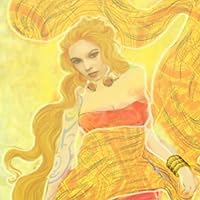
Hidden Goddess of the Celts reflects the importance of gender in ancient religion, and the author explores the primacy of the Feminine through Epona's sovereignty as Horse Goddess among the Celts; her identity as "Mistress of Animals" in her love affairs and working relationships, and the surprising role she apparently played in the ancient Greek and Roman Mysteries. P.D. Mackenzie Cook's unique study of Epona positions her in a broad cross-cultural context. The story he presents is at the same time historical, speculative, and deeply personal - at once a scholarly survey, intriguing detective story, and spiritual message to be taken to heart. The author offers fresh and original perspectives on Epona's historical origins and her "birth" in human form. He explores her early presence in southern Italy; investigates her probable identity as "Macha" in Ireland and "Rhiannon" in Wales as well as her indirect influences on the ideals of chivalry and courtly love in the Middle Ages. We are then introduced to Epona's possible presence in a set of mysterious caves in the New World, and finally to her rediscovery by present-day equestrians, and in the personal lives and accounts of modern priestesses and men devoted to her. Written by someone whose "Celtic bones" resonate deeply with Epona, Mackenzie's talents as scholar, story-teller and poet-seer all contribute to this, the first full-length book in English devoted entirely to this fascinating Goddess. Hidden Goddess of the Celts is dedicated to the hidden goddess in every woman, and to men who genuinely love them in all their depth, complexity and nuance.
I'm always pleased to see a book about a horse goddess. Research on them can be frustrating and time consuming, so it's nice to have a collection of ideas and references in one place. Cook has gathered up quite a bit of the evidence relating to Epona in this book, including a few things readers won't have seen, or might not be expecting. His own fondness for Epona as a goddess also occasionally shines through in the more factual sections.
Although the title of this book refers to Epona as both hidden and Celtic, the author seems to feel that the best way to reveal Her is not through focusing on the Celts, their relationships to their deities and to the horse, but by taking us down the long and winding road of classical antiquity. Not being a student of that part of history, I found some of the topics fascinating, but trying to see their links to Epona strained my credulity, and ultimately my patience.
It is only because Epona was so widely and enthusiastically adopted by the Roman cavalry, many of whom were Celts, that we have so much material evidence, and a few contemporary written mentions, of this goddess. Cook takes us in search of Epona's Greco-Roman antecedents, when in fact, there is no reason to believe that these exist. Are there deities who share associations with Epona in Roman, Greek and other pantheons? Yes, but that doesn't mean that they relate directly to Epona. However, as the book unfolds, Anatolians, Phrygians, Arcadians, Eleusians and even Egyptians are pressed into service, as required, to help paint a fanciful picture of the Epona-who-might-have-been.
In the prologue, Cook warns us that aspects of the book may shock some readers. This warning refers, I'm sure, to the final section of the book, in which the author reports on interviews with several contemporary, self-styled priestesses of Epona, from various parts of the world, and their male acolytes. Each of these informants tells a similar story in which ritual use of a scourge or other means of inflicting pain is applied by the priestess to her willing male counterpart. Reasons given for this included the woman's need to express her rage and the man's need to learn submission to the female principle/Goddess.
This certainly surprised me. The author interviewed six women and three men for this section of the book. (All these informants are given full anonymity, which is understandable, but also makes this part of the work impossible to confirm.) While self-declared priestesses of Epona are probably fairly rare, this still seems a small sample, especially considering that the subjects hail from five different countries. Regardless of the sample size, it is extremely surprising that all of them appear to have such similar stories. In my experience, it is rare for several Pagans to have the same personal gnossis or practices around a particular deity, at least unless they are all members of the same group. Use of the scourge is not unknown in groups with a Gardnerian influence, for example, but if all Cook's informants are in some way connected, he doesn't mention it, nor does he share his method of seeking them out. I can't help but think that he was either intentionally looking only in places where he would find this, or that he didn't consider any other form of devotion worthy of reporting. The author gives us little else about the beliefs or practices of these individuals.
Leaving that to one side, if you are interested in Epona, there should be things in this book to interest you. There are plenty of illustrations of artifacts, and exploration of their meanings, and a considered look at some of the inscriptions to Epona, as well as an interesting discussion of sovereignty. The book is also well laced with the goddess theory, and belief in a matriarchal golden age somewhere in our human past. The author is comfortable conflating or making strong connections between many different deities. How the reader receives these ideas will depend on their own beliefs.
When you know where this book is headed, then it is easier to understand why the author insists on following a route through a variety of ancient religions not usually associated with the Celts. While he doesn't directly say so, it seems that his many references to non-Celtic religious thought, and analogies and associations between Epona and non-Celtic deities, are in service to arriving at the conclusion that the modern practices described above are the inevitable, or correct, method of devotion to Epona in the present day. However, Cook falls just short of plainly stating this as his thesis. If you have a controversial theory which you feel is correct, especially on a religious level, and that theory is worthy of the effort of writing a 300 page book with over 1,200 footnotes, then why not just state it outright? I think this book would have made more sense if he'd done that.
I'm am glad that someone has written a book on Epona. I believe that She deserves more attention and understanding than She is getting, both on a scholarly level and a devotional one. This book adds a little piece to that puzzle, but I feel it is not in the same league as Jhenah Telyndru's recent book on Rhiannon. I hope that we will be seeing more non-fiction books on the horse goddesses in the next few years, and that this won't be the final word on Epona.
So, I'm going with a five star since I found it to be a really well done in-depth book. Tons of information to work through. I still maintain a bit of concern (not the exact word I'm thinking of) that the author was trying to give Epona more of a background and history then was maybe accurate, such as tying into the the assorted locales around that area of the world, and the other assorted Goddesses. However, I was impressed with his referencing and such, so it puts it on the reader to follow up with their own research.
What I was expecting: A book on the Celtic horse goddess Epona.
What I got: The Celtic horse goddess Epona, but also the best exploration of feminine and masculine polarity I’ve ever read, comparative mythology, a meandering exploration of Greco-Roman mystery traditions- some of it interesting but a lot of it trodding over old ground, courtly love and knightly chivalry, a niche mini conspiracy theory/unsolved mystery about a cave in Oklahoma that features ancient European and Middle Eastern deities that some say predates Columbus which sent me down some very weird rabbit holes, Dominatrices and their submissives, and… Epona pegging the Indo-European Sky Father (I am dead serious. I had to send it to a few people to make sure I was reading it correctly and wasn’t losing my mind 🤣)
I’m in a weird position because typically my rule is that if I give a book a half star rating, I round it up. But here, 4 feels too high but 3 feels too low. I will absolutely be returning to this one again and again. I highlighted and annotated so much of it and was constantly sending quotes from it to my friends and fellow Goddess-devotees. But it took some very bizarre turns and I would completely understand if someone were to read this after seeing me give it a 4 star rating, and not understand what I saw in it at all. Huge sections of it really could’ve been whittled down, and I think the dominatrix angle was a bit overplayed even though I understand where he’s coming from vis a vis the centrality and dominance of the sovereignty goddess in the Celtic worldview.
Unico libro che tratta esclusivamente di Epona, dea gallica dei cavalli, in chiave pagana. Si tenta di ricostruire i miti e i ruoli della dea attraverso lo studio di iscrizioni, testi antichi latini e dell'iconografia. Ritengo che si sarebbe potuto concentrare maggiormente su ritrovamenti effettivamente connessi alla divinità, invece di arrampicarsi sui vetri con l'analisi di un affresco di Pompei, che vede una figura con tirso contrapposta a Iside, erroneamente collegata a Epona. Oggi sappiamo che più probabilmente quella è una Nereide. L'ipotesi è stata avanzata anche nel libro, ma ugualmente si è preferito spendere molte pagine per giustificare una possibile connessione di Epona ai misteri di Iside e a Dioniso. Peccato. Resta un libro interessante che vale la pena prendere, soprattutto se interessati nel suo culto. Uno dei pochi testi, inoltre, che sottolinea come Epona non sia semplicemente "amore" (cosa che a molti praticanti moderni evidentemente sfugge).