Jump to ratings and reviews
Rate this book

Choosing War: The Lost Chance for Peace and the Escalation of War in Vietnam

Rate this book
In one of the most detailed and powerfully argued books published on American intervention in Vietnam, Fredrik Logevall examines the last great unanswered question on the war: Could the tragedy have been averted? His answer: a resounding yes. Challenging the prevailing myth that the outbreak of large-scale fighting in 1965 was essentially unavoidable, Choosing War argues that the Vietnam War was unnecessary, not merely in hindsight but in the context of its time.

Why, then, did major war break out? Logevall shows it was partly because of the timidity of the key opponents of U.S. involvement, and partly because of the staunch opposition of the Kennedy and Johnson administrations to early negotiations. His superlative account shows that U.S. officials chose war over disengagement despite deep doubts about the war's prospects and about Vietnam's importance to U.S. security and over the opposition of important voices in the Congress, in the press, and in the world community. They did so because of concerns about credibility--not so much America's or the Democratic party's credibility, but their own personal credibility.

Based on six years of painstaking research, this book is the first to place American policymaking on Vietnam in 1963-65 in its wider international context using multiarchival sources, many of them recently declassified. Here we see for the first time how the war played in the key world capitals--not merely in Washington, Saigon, and Hanoi, but also in Paris and London, in Tokyo and Ottawa, in Moscow and Beijing.

Choosing War is a powerful and devastating account of fear, favor, and hypocrisy at the highest echelons of American government, a book that will change forever our understanding of the tragedy that was the Vietnam War.

557 pages, Paperback

First published June 1, 1999

26 people are currently reading
488 people want to read

About the author

Fredrik Logevall

43 books267 followers
Fredrik Logevall is a Swedish-American historian and educator at Harvard University, where he is the Laurence D. Belfer Professor of International Affairs at the John F. Kennedy School of Government and professor of history in the Harvard Faculty of Arts and Sciences. He is a specialist in U.S. politics and foreign policy. Logevall was previously the Stephen and Madeline Anbinder Professor of History at Cornell University, where he also served as vice provost and as director of the Mario Einaudi Center for International Studies. He won the 2013 Pulitzer Prize for History for his book Embers of War: The Fall of an Empire and the Making of America’s Vietnam. His most recent book, JFK: Coming of Age in the American Century, 1917-1956 (2020), won the Elizabeth Longford Prize for Historical Biography and was a New York Times Notable Book of the Year.
Logevall’s essays and reviews have appeared in The New York Times, The Washington Post, the Los Angeles Times, Politico, Daily Beast, and Foreign Affairs, among other publications.

Ratings & Reviews

What do you think?
Rate this book

Friends & Following

Create a free account to discover what your friends think of this book!

Community Reviews

5 stars
54 (32%)
4 stars
63 (37%)
3 stars
44 (26%)
2 stars
4 (2%)
1 star
3 (1%)
Displaying 1 - 20 of 20 reviews
Profile Image for CoachJim.
233 reviews178 followers
October 7, 2025
It is becoming increasingly clear that, without an effective government, backed by a loyal military and some kind of national consensus in support of independence, we cannot do anything for South Vietnam. The economic and military power of the United States … must not be wasted in a futile attempt to save those who do not wish to be saved.”
(Page 399)


The tragedy of the Vietnam War is that it did not need to happen. Choosing War by Fredrik Logevall is a deep analysis into the Americanization of the War in Vietnam. He examines the decisions by the Johnson administration, and the opinions of those in opposition, and of all the opportunities that were lost for this last chance for peace.

The bulk of this book is chronological account of the meetings and decisions during a period this author also calls “The Long 1964”, a period from the assassination of President Kennedy in November of 1963 until the Americanization of the war in Vietnam in the spring of 1965. There were many reasonable voices that expressed concerns over the direction that the Johnson administration was taking. These concerns centered on the fact that Vietnam was a political not a military problem, that there was no stable government and that the general population was tired of having been at war for the last 25 years.

The decision to Americanize the Vietnam War was basically made by four people: President Lyndon Johnson, Secretary of Defense Robert McNamara, Secretary of State Dean Rusk, and National Security Advisor McGeorge Bundy—The Fearsome Foursome. These were men who had experienced World War II and the Munich disaster, and matured during the Cold War and the Truman Doctrine, which meant that the United States must confront the expansion of Communism.

The author analyzes the variables that affected the Americanization decision. He examines the theoretical question of what if Kennedy had not been assassinated. Would the decision have been different by Kennedy? Why were the opposing voices to that decision so ineffective? What would be the results of disengagement in Vietnam and what it would have looked like.

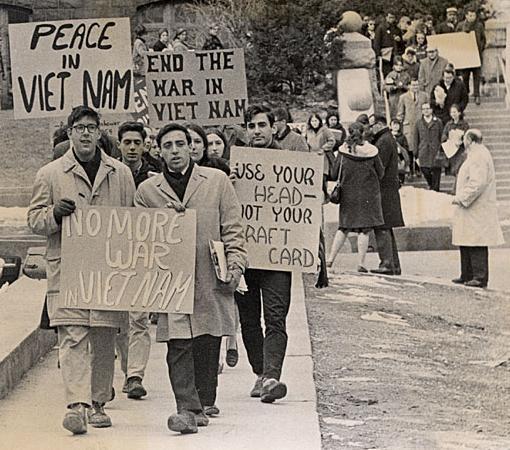
There is also an analysis of the lessons of Vietnam. The Americanization of the war in Vietnam was made by a few men at a great cost to this country. Among the immediate results were the deaths of 58,000 Americans, the millions of dollars that could have been spent on improving lives in the United States, the loss of trust in our government, and the neglect of other important developments in foreign affairs.

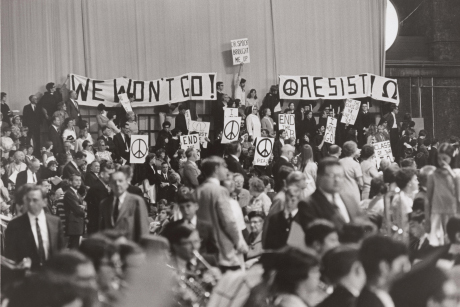
The avoidable debacle in Vietnam is something that could happen again. Lyndon Johnson and his advisors were not evil men. In 1964 President Lyndon Johnson and his advisors were allowed to make the decision to pursue a disastrous war with consequences that still affect us today. The responsibility here lies not only with the executive branch but with Congress, the media and the voters. That should be especially chilling in our current situation. This book is essential to understanding how that decision was made.

By the time a settlement was reached, at the beginning of 1973, under terms no better than Washington could have had in 1963 or 1964 to 1965, fifty-eight thousand Americans, and between 1.5 and three million Vietnamese, lay dead.
(Page 335)
Profile Image for James Murphy.
982 reviews26 followers
December 2, 2018
Logevall's history is a narrative of the steps taken toward escalation in Vietnam during the year and a half prior to the introduction of ground units in 1965. The period covered is what he calls "The Long 1964," the 18 months from late August 1963 to late February 1965. His tabulation of the arguments against such escalation are convincing: the government of South Vietnam was in inept disarray; there was strong anti-Americanism throughout the country; most American government officials and congressmen were opposed to direct involvement; most international leaders and allies advised against intervention and refused to directly support America's efforts in the field, feeling that a Vietnam neutralized by negotiations would solve the problem; everyone understood the North Vietnamese and National Liberation Front would not end their military campaign to unite the 2 Vietnams and were willing to undergo any pain to succeed; it was a widely held belief by the American government and military that the South Vietnamese lacked the will to win. All these elements were understood by the Kennedy and Johnson administrations. They saw that they had 3 options: to withdraw and cast South Vietnam to its political fate, to intervene militarily, or to enter into Geneva-style negotiations neutralizing Indochina into some sort of Titoist region in which no outsiders exerted undue political influence. Two points: America understood that 2 of these options would lead ultimately to a unification of the 2 Vietnams under a communist government, and I don't remember Logevall discussing that John Kennedy had entered into a neutralist agreement in Laos but that the North Vietnamese had reneged, causing the U. S. to distrust this kind of solution. As we know, the U. S. decided on intervention and an Americanization of the war. Logevall's story is how America came to choose this path over any other, mostly through the work of 4 men--President Lyndon Johnson, Defense Secretary Robert McNamara, Secretary of State Dean Rusk, and National Security Adviser McGeorge Bundy.

Logevall tells how the Johnson administration knew the huge risks of intervention yet went ahead with it, even deflecting during The Long 1964 any attempts by other international influences, including Chinese and Soviet initiatives, to provide other courses of action taking us away from a big war. The information he pours on the reader seems exhaustive. He's relentless in making every negative point about America's Vietnam policies without offering mitigation for why such policies came to be (more on this below). You'd think that every meeting and memo, every step along the torturous path is mentioned. His research is impressive. But he makes his points too many times. To be hit over the head repeatedly with the same facts reads like a polemic. And in my view polemics are tiresome, as this book is at times.

However, Logevall makes up for all that in the final chapter, called "Choosing War." It's 38 pages of deep analysis which does a good job of putting into perspective everything that's gone before. This includes how American domestic programs affected the decisions made concerning Vietnam. There's a section which discusses the backgrounds of Johnson and his 3 key advisers and how their attitudes formed during long years in government and business led them to make the kinds of decisions they made. Especially fascinating here is the character of Johnson. And with a strong nod to the dangers of counterfactual history, he tries to explain what directions John F. Kennedy might have taken had he lived. This last chapter is so rich in food for thought and so adroitly avoids the redundancies blotting the earlier chapters that it makes up for the dryness one has read through to get there. Books like this teach.
Profile Image for Hotavio.
192 reviews8 followers
December 11, 2012
Traditional scholarship and public memory of the Vietnam War associates it with grievous error. Historian Fredrik Logevall takes no exception to this. While many have pondered where in the course of America’s involvement in Vietnam it went wrong, Logevall pinpoints the timeframe. In Choosing War: The Lost Chance for Peace and the Escalation of the Vietnam War, he refers to “the Long ‘64” as a year which America altered its foreign policy from a supporting yet distancing role in Vietnam, to a policy of increased escalation and serving as the bulwark of non-communist Vietnam. Logevall argues that from the middle of 1963, the dawn of Ngo Dinh Diem’s government of South Vietnam, until early 1965, the introduction of a sustained bombing campaign on North Vietnam and the landing of US Marines in Danang, the United States had the flexibility to alter their policy in a way which would not have as greatly affected their credibility. Logevall furthers that the constant failure of the South Vietnam government and the lack of serious opposition could have made withdraw possible. When considering failures to curb escalation, Logevall pins the blame squarely on Lyndon Baines Johnson and his most trusted advisors.
The constantly shifting power in South Vietnam greatly contributed to the futility of American efforts in Vietnam. Recognizing the weakness of this government and the potential of the conflict in Vietnam to explode in wider war, world leaders pleaded with the United States to reconsider its policy Vietnam. Logevall stresses the efforts of leaders such as French president Charles de Gaulle and United Nations Secretary-General U Thant to bring the United States to negotiation. These efforts met with stubborn refusal by the administrations of John F. Kennedy and especially Johnson as they feared it would lead to a neutralized Vietnam, which would quickly fall to communism. Neutralization challenged notion that American power alone could win over communism in Vietnam. Early on, the Kennedy and Johnson administration particularly feared the power of de Gaulle to persuade other world leaders against supporting the US role in Vietnam and effectively “demoralize: allied troops. De Gaulle may have been an early figurehead for neutralization, but constantly shifting governance in South Vietnam and military incompetence also hindered the United States’ efforts to arrange a coalition in Vietnam.
Logevall notes that while efforts in South Vietnam failed, American excuses not to negotiate were largely invalid. The staunch anti-communism of the Truman era no longer proved necessary as “Titoism” provided a more nuanced view of the ideology. While advocating a military response to attacks in the Gulf of Tonkin and the military stronghold of Pleiku, American public were relatively uninformed and apathetic towards efforts in Vietnam in this era, that is until the conflict heated up in the Spring of 1965, at which time they supported negotiation as opposed to escalation. Similarly, Congress, despite its gradual leanings toward peace almost always fully supported Johnson so as not to break party unity. Congress would not even hold a debate on the subject until February 17, 1965. Logevall argues that these factors and a weak Republican opposition essentially gave Johnson free reign in determining America’s course in the war. While, Johnson largely relied on trusted advisors such as Secretary of War Robert McNamara, Secretary of State Dean Rusk, and Vietnam’s senior policy maker McGeorge Bundy, Logevall argues that the war became a personal mission for Johnson, an insecure and egomaniacal man. While many things went wrong with the war, Johnson had ample opportunities within “the Long ’64” to make a face saving reversal of US policy in Vietnam.
Choosing War is a hulking book that makes a very specific argument. Due to his clarity, Logevall’s 400 plus pages seem excessive. While details given to the thoughts and communications of those within the Kennedy/Johnson administrations prove Logevall’s argument, much of it reads repetitiously. If anything, through Choosing War’s repetition, Logevall does make the case that American involvement in Vietnam could have successfully ended by 1965 many times over. For those that agree that Vietnam was a fruitless effort on the part of the United States, Logevall strongly makes a case for where it all went wrong.
Profile Image for Chin Joo.
90 reviews33 followers
October 27, 2016
In this book, Prof. Logevall argued that the US's involvement in Vietnam was not inevitable, there were opportunities where the US could have left Vietnam, none better than the months immediately after Lyndon Johnson was elected as President. Unfortunately he was not of the temperament to read the signals coming from his own electorate or the international community. In the end, he would have to bear a big part of the responsibility for bringing the US into war.

Whether one agrees with the thesis, this is an excellent book. Extensively researched, logically argued, and fluidly written, the book takes the reader through an exploration of the circumstances surrounding Vietnam after the French left. It takes a broad frame of reference, tackling the issues including presidential leadership, their advisers, the attitude of the electorate and the international political climate. He examined the options available at each point between 1964 and 1965 and whether a different decision could have been made. 'Yes', he argued, and in hindsight might not have been difficult, but no, these roads were not taken.

The different questions he explored include: Would JFK keep the US out of the war had he lived as some came to argue (e.g. McNamara in his book In Retrospect )? Were the attitudes of the elites at that time as they said they were after the war (eg. George Bell)? Did the 'Domino Theory' really hold? To the first of these questions, the author examined JFK’s fundamental doubts about the US’s agency in dealing with the political issue in Vietnam (pg. 37) and compared it against his actual actions. In that section the author started one of the paragraphs with these two words: And yet. That’s the author's lament. JFK, despite his doubts, first adopted a wait-and-see attitude, but would later boxed himself in with his rhetoric. The author systematically dismantled the enduring myth that JFK would have kept the US out of the war if only he had lived.

Of more interest is why LBJ, despite having won a large mandate from an electorate that expected him to keep the US out of the war, continued to stay the course and in fact progressively up the stakes, eventually Americanising the war. This the author explored in detail, taking care to explain that it was not because he felt that LBJ had managed the situation worse than JFK would have, but because he had a much longer time in the game and so was able to make many more decisions. I shall not spoil the plot by leaking his conclusions here, enough for me to say that the argument was convincing.

The final chapter of the book is a summary of the arguments but the author also expanded it to consider a few counterfactual scenarios. The fact that Prof. Logevall revisited questions he asked earlier and gave them a somewhat different treatment shows the nuance he employed in investigating this important issue of why the US ended up caught in Vietnam.

The Vietnam War receive a lot of attention by historians, journalists and people who fought and suffered in the war. In all cases the motivation is to understand why and how it happened and hopefully we are able to avoid getting in such a situation in future. How much we have succeeded we still do not know, but if this book has gotten it right then we are looking at a complex mix of flawed logic, personality, arrogance and career management. Any one of which can lead any nation down this unfortunate road.
373 reviews
May 20, 2022
This is an important book in the scholarship of the Vietnam War. Illuminating the decision-making process that eventually led to the Americanization of the war, the author presents a picture of an American President who in spite of foreign and domestic advice pursued an ill-fated war. The research that went into this book is detailed and highly effective. As a wounded combat veteran of Vietnam, I knew Vietnam was lost when I arrived in 1969. President Johnson made up his mind and could not allow any dissent.
The author is not partisan which is a breath of fresh air. I am not sure I fully agree with his conclusions, but the book made me think once i completed it.
4 reviews2 followers
February 27, 2018
Interesting subject but not well written. The author was extremely repetitive in making his points and has a very unengaging writing style. I learned a lot by reading this book but it was much more difficult to read than it needed to be.
Profile Image for Rhuff.
390 reviews26 followers
November 18, 2019
Frederik Logevall's work is definitive and unparalleled in his meticulous tracing of Johnson's escalation of the US "commitment" in Vietnam. Of course, the US was really committed to nothing beyond itself and its need to maintain the face of empire in Asia. There are a couple of points I believe Professor Logevall slighted in his beginning and final analyses.

The overwhelmingly important one is, why Asia as a cold war theater, and twice? Not exploring this question results in a blinkered focus, a common tendency in academia to narrowly exclude all other considerations beyond one's given subject, rather than integrating it into a "big picture." This was obviously framed by the US' self-proclaimed mission of countering Communism. The "fall" of China in 1949 sealed East Asia's fate as the perfect, proxy battleground for World War III for the next quarter century - remote from either main cold war power. No direct intervention in Hungary or Cuba was possible for geo-political reasons. And, secondly, because there was no Communism present at the time in other remote but strategic regions, the Middle East and Africa. And last but by no means least, because Vietnam in particular was the kind of weak vessel suitable for a bully/hero to flex his might.

Professor Logevall also neglects a key background rationale in President Kennedy's May, 1961, escalation of US "commitment", even though Kennedy had earlier brokered a settlement in Laos. This elephant in the room was, of course, the Bay of Pigs. Having America's face egged - however symbolically - by "Communism" in Cuba, Washington (in particular the Democratic Party) needed a comeback strategy to show it took "the great challenge" to America seriously. "Standing tall" in the Republic of Vietnam seemed the perfect foil: unlike Cuba, remote, unknown to the general public, thus seemingly easy to manage. The beginning of the Berlin Wall in August of that year also poured fresh gas on the fires of frustration. That Lyndon Johnson advocated direct invasion of Cuba after the Bay of Pigs should also come as no surprise. With Kennedy's cooler head shattered by election time of 1964, there was no one to restrain Johnson from taking Kennedy's turn all the way.

The attitudes of the North Vietnamese, although beyond the book's target, seem to have undergone the same dynamic. The North knew it could not defeat the US in any meaningful military way, but it could lure the US into a main-force commitment which it couldn't win but wouldn't avoid for reasons of "face": the classic "tar-baby effect." The backlash within the US and around the world would essentially do Hanoi's fighting for it, a sort of reverse immolation in the style of the Buddhist protests of '63.

But in discounting several theories for escalation - direct economic imperatives, etc. - Logevall attempts to reduce them to Johnson's personal worldview and political needs, and to "mission creep". This is still unsatisfactory, because it remains essentially superficial and specific. The needs of empire, of "the great game" in the Asia of the early '60's, do not lend themselves to crude economic determinism, but they do transcend a given leader's personal needs. Even though Johnson was in power and the key decisions were his, and his choice a foregone conclusion, he still did not act alone. Without other key vested interests, public and private, standing with him he could not have gone forward over his critics. Johnson was playing Texas politics here: rather than an adversary of the "Imperial" party of the Republicans, he was their competitor: after the same constituents of oilmen and defense contractors as Goldwater. Hence his unwillingness to choose non-escalation, his false choice of "going ahead with this damn war" or seeing American empire rolled back to the Pacific coast.

For all my criticism, still one of the most worthwhile studies of the Vietnam era. Considering that this book was published in 1999, two years before the "War on Terror," its prophetic conclusion is worth quoting for a prospective reader: "And there is this, finally, to say about America's avoidable debacle in Vietnam: something like it could happen again. Not in the same place, assuredly, and not in the same way, but potentially with equally destructive results. This is the central lesson of the war. The continued primacy of the executive branch in foreign affairs - and within that branch of a few individuals, to the exclusion of the bureaucracy - together with the eternal temptation of politicians to emphasize short-term personal advantage over long-term national interests, ensures that the potential will exist. . . . A leader will assuredly come along who, like Johnson, will take the path of least immediate resistance and in the process produce disastrous policy - provided there is a permissive context that allows it. Lyndon Johnson's War was also America's War; the circle of responsibility was wide. If future Vietnams are to be prevented, the American people and their representatives in Congress will have to meet their responsibilities no less than those who make the ultimate decisions. Otherwise, American soldiers will again be asked to kill and be killed, and their compatriots will again determine, afterward, that there was no good reason why."
Profile Image for Will.
305 reviews18 followers
March 24, 2017
Fredrik Logevall's Choosing War was influential in challenging a long-held conception, one which spoke of the inevitability of American intervention in Vietnam. Logevall argues that there was nothing inevitable to American escalation in Vietnam, and that the decision to intervene was made in the short period of 1963-65.
The primary reason for US intervention is argued to be credibility- that of the nation, the Democratic Party and the individuals involved in the formulation of foreign policy. The four most important of these individuals were Robert McNamara, McGeorge Bundy, President Johnson and Dean Rusk, all of whom saw their reputations on the line with regards to the war's outcome.
Johnson is given lots of attention in the book- it is he who Logevall sees as the decisive figure in escalation. Johnson's hyper-masculinity and lack of self-confidence played a part in his decision not to withdraw from Vietnam. His desire to come across as strong and dependable ensured that he sent "his boys" off to fight and die in a far-off land which few saw as of much geopolitical value.
Logevall tracks the opposition to intervention which existed from the offices of the New York Times to the capital cities of Western Europe. He criticises the British and others for not being firm enough in their critique of the war. A divided opposition allowed the president and his men to go about their business of war-making unmolested- it was only after the war escalated that the opposition would find its voice.
My only gripe with Logevall is in his presentation of the South Vietnamese as corrupt and apathetic. I felt this treatment was unfair, and I do not see Saigon's fall as inevitable. However, I acknowledge that a detailed examination of South Vietnam is somewhat out of this book's remit.
Profile Image for James Mcneill.
14 reviews2 followers
January 13, 2013
This should be required reading of any serious student of the war in Southeast Asia. I have a large collection of books on that tragic conflict and without question this is one of the best. Prof Logevall exposes in detail the flawed thinking and incompetence of US administrations when making decisions on Vietnam. When you have finished reading this turn your attention to Embers of War; quite superb.
Profile Image for Rebecca ♡.
79 reviews3 followers
November 13, 2023
What an amazing book. I read Logevall's book as I had to write a book review as an assignment at university, but I can't deny that this book has changed my entire perspective on what Logevall refers to as the 'long 1964'. His argument is incredibly convincing and persuasive, other interpretations of this period fall short in comparison. It is lengthy but that is due to its in-depth analysis. It is also written in a very engaging way.
1,210 reviews3 followers
March 2, 2018
Where was this book in the 70's. Finding out that LBJ had the option to back out of the crisis.....what a goddam fool. And the rest of the cabinet should be all in jail....and we patronize these idiots
Profile Image for Isaac Long.
7 reviews
March 22, 2024
It’s a great analysis on why the US chose intervention but I can’t stand how Logevall relies on speculation (specifically chapter 12, regarding Kennedy and the 1964 election) to build an argument.
This entire review has been hidden because of spoilers.
Profile Image for Billy.
90 reviews13 followers
March 16, 2009
Logevall’s examination utilizes an international perspective. French, German, Japanese, and British policymakers were all convinced that American efforts in the region were doomed (Australia was an exception). Johnson ignored international input. Domestically, he cites American support of LBJ, his overwhelming popularity after defeating Barry Goldwater (the hard line candidate), and the malleability of the American public, who did not yet hold firm opinions on American involvement in Vietnam. International and domestic pressures, therefore, did not hold Johnson to a policy of escalation, nor, according to Logeval, did structural causes. Containment, the Domino Theory, US International Credibility, Bipolarity, a domestic Cold War Consensus, these structural forces were not pushing America into an inevitable role. Choosing War argues that the administration’s arguments that credibility, prestige and reputation were all at risk in SE Asia were false. Instead, during the “Long 1964” (August 63-Feb 65) the administration actively hurt attempts to criticize Johnson’s policy for Americanization of the war; credibility had much to do with domestic politics as in of the Democratic Party or the personal credibility of McNamara, Johnson, etc... While these policymakers had many options, they remained rigid in their commitment to SE Asia. Escalation was not inevitable. Democratic cabinet members mimicked this stance and put their personal reputations above the considerations of American soldiers. Still, LBJ remained the key pusher for Americanization. He was more concerned for his historical / personal reputation than American lives. Furthermore, LBJs stong personality made it difficult for dissenters to speak against his policies. Vietnam became to Johnson “a test of his own manliness” (383). It was LBJs credibility, not America’s, at stake.
15 reviews
March 9, 2014
Well researched and, while somewhat repetitive, well written history of how the US slid into the tragedy of Vietnam. One comes away from this book seeing that the fundamental reason for the misguided escalation of American involvement in the war was Lyndon Johnson's insecurity about being perceived as weak, as the first US president to lose a war. Because of that, more than 1 million Vietnamese and more than 58,000 Americans lost their lives. When it was over, the North Vietnamese got exactly what they would have settled for in 1964 before any of the lives were lost.
1 review2 followers
August 2, 2008
This is an important book to get inside the mindset of any president who has to make the decision between war and peace. When its not a matter of life and death, a president can choose peace, but Kennedy and Johnson did not.
Profile Image for Raymond Happy.
7 reviews
May 14, 2015
Excellent history

Terrific history of the fateful decisions the led to the Americanization of the Vietnam War. Even if you do not agree with all of the conclusions, the book is enlightening and holds clear lessons for today. It is also beautifully written.
1 review5 followers
November 6, 2007
I read this for a class--it was good. Definitely historically based (I think it was a doctoral dissertation) and critical of American policy in Vietnam...very informative on why the US goes to war.
Displaying 1 - 20 of 20 reviews

Can't find what you're looking for?

Get help and learn more about the design.