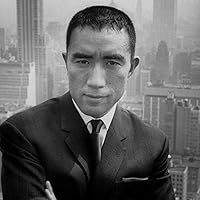
Jonathan Dermot Spence was a historian specializing in Chinese history. His self-selected Chinese name was Shǐ Jǐngqiān (simplified Chinese: 史景迁; traditional Chinese: 史景遷), which roughly translates to "A historian who admires Sima Qian."
He had been Sterling Professor of History at Yale University since 1993. His most famous book is The Search for Modern China, which has become one of the standard texts on the last several hundred years of Chinese history.
It is a perfectly adequate narrative of the Taiping rebellion or movement in China in the middle of the nineteenth century. I would have welcomed throughout analysis and context, but the focus is more on how the developing beliefs of the Taiping diverged from mainstream Protestantism than upon how they fitted in with other movements which established New Imperial regimes in China or alternatives to them. Of which there were a few active in nineteenth century China.
It is an incredible story, a village school teacher from a non-Han Chinese ethnic group in Southern China (the Hakka) had read some Protestant pamphlets translated into Chinese, while ill the teacher had a vision of ascending to Heaven, meeting God and Jesus and it was revealed to him that he was also a son of God and therefore the younger brother of Jesus. Over a period of years he convinced family and friends, collectively they won over a mass of supporters mostly among their own ethnic group in a region penetrated by European Protestant missionary activity, disrupted by the Opium wars, the opium trade, piracy and banditry. From the end of the 1840s they begin an armed struggle, in 1853 they capture Nanjing, establishing and maintaining a state until 1863 that reaches to the gates (more or less) of Shanghai and Canton, at one point an offensive gets as close as 70 miles from Beijing.
The author mentions that not only men were mobilised and assigned to units, but also women, this struck me as very interesting, but Spence only ever mentions this and does not explore the issue. The regime insisted on a strict segregation of men from women to the extent that people were executed for having sex with their spouse. This also struck me as incredible for a regime that lasted for quite a length of time, again I would have appreciated some analysis - was this ruling applied to everyone under their military control or only among those who were religiously committed to the regime or senior members?
Instead there is quite a bit of attention paid to the Biblical foundations of the regime - they dealt with the bible in a interesting way, producing a corrected version of the text, for instance removing the plurals form of God from the earlier books which could be taken as remnants of polytheism, changing the story of Lot's daughters seducing their father, and changing the story of Jacob and Esau so that Jacob no longer tricks Isaac but is instead a dutiful and honest son. The Taiping had strained relations with the European powers who are scornful of their religious beliefs and although Spence does not draw the connection explicitly - selling opium was the basis of European income from China while the Taiping condemned the use of opium, this provided no base for their cooperation.
Reading I wondered if the Taiping were like the Ming who rose up and overthrew the Mongols, or if they anticipated the warlords of the 1920s or the early days of the Communists, I was longing for broader perspectives, instead I got a paragraph devoted to the pet dogs belonging to Europeans which went missing in Shanghai at a moment when food was short.
Curiously numbers of foreigners were brought in to fight against the Taiping, both Europeans and Filipinos, bandit and pirate leaders changed sides during the conflict, the Taiping developed a form of dynamic river power to make rapid military advances and presumably to maintain state structures. This must have been a hugely traumatic period in the region, with rapidly changing ideologies, starvation events, and warfare. The reader is left to imagine what impacts this might have had in the development of China.
Notes 1. The book is about the rise of one Hong Xiuquan in the mid-19th century China to become leader of the Christian millenarian sect that caused the Taiping Rebellion.
2. The book for me really begins with the excellent overview of the pantheistic religious traditions prevalent in Hong Xiuquan's home district of Hua, about forty miles north of Canton. This is no doubt the ignorance against which Hong will rant in furture chapters.
4. What I find fascinating is the common elements that each of these millenarian movements have. These include but are not limited to: (1) disfavor with the current government; (2) iconoclasm, or destruction of the symbols and structures of other religions, invariably seen as corrupt, if not demonic; (3) armed response to threats, real and perceived; (4) direct connection with God and Jesus through entranced "channelers."
5. In addition to Cohn (above), see Backlands: The Canudos Rebellion by Euclida Da Cunha, in Penguin, about Antonio Conselhiero, another charismatic millenarian, active in rural Brazil in the late 19th century who was ultimately brought down by a genocidal campaign of the Brazilian government.
Jonathan Spence remarks in his foreword that much has been written about the 1850 Taiping rebellion in the west and even more so in the east. Despite the rebels dubious theological foundation China's communists canonized them as an early socialist movement. The Taiping have remained a topic of interest with many books recently written. Spence synthesizes Chinese and English research and also considers two newly discovered texts by the mid-century master of mayhem, Hong Xiuquan.
The story begins with British and American missionaries in China. Disseminating religion was second only in importance to importing opium, and war helped to secure both. Hong receives a bastardized Bible translation resembling Buddhist and Confucian tracts in it's Commandments and depictions of Hell. Having failed his civil service exams Hong receives visions that he is the son of God and a brother of Jesus. The Heavenly Father calls him to fight the demonic works of Confucian sacrifice and Taoist idolatry.
Hong travels the countryside to convert and baptize. He networks among his ethnic group fellows. Pirates, flushed out by the British occupation of Hong Kong, triad gangsters and highway bandits soon join forces. Early victories and Qing failures cement his hold on almost half of the empire. At its greatest extent the would be dynasty reached the Yangtze river and left thirty million dead in its wake. It nearly repealed the Manchu mandate and foreshadowed their overthrow by a half century.
At the most basic level Hong conflates Confucian family values with Christian doctrine. Where the New Testament allows God to have a son Hong adds his extended family. God gains a wife, several other sons, daughters-in-law and grandchildren and whomever else dynastic circumstance demands. The unruly clan includes mad uncles who channel the voices of Jesus and God himself until family feuds and the civil war he created doom everyone to a well deserved communal bloodbath.
It is hard to tell if Hong's beliefs were intentional fraud, self delusion or a mixture of both. The Heavenly Kingdom had equal elements of a religious cult and revolutionary army. Couched in millenarian mumbo jumbo one can easily dismiss the entire project as a lunatic fringe group but if not for the megalomaniacal scale it attained. It's not difficult to imagine how Mao, born shortly afterwards, would have seen this as a worthy period for study. The book situates the events clearly within their context.
At times Jonathan Spence may reflect a historical bias towards British gunboat diplomacy and missionary zeal. Opium Wars were waged in order to 'end the restrictive system and open ports...establish churches and spread the word of God'. In regards to Chinese sovereignty a critique seems missing, although Spence notes the destabilizing effects of foreign pressure on the Qing empire. Western interventions seem rational and judicious in contrast to Chinese intransigence and superstition.
The strength of this work is in its study of the religious mindset of the time. It shows the social and cultural setting that gave rise to a huge 19th century apocalyptic political movement. Although it isn't a general history it does trace the major events along a narrative timeline. Spence tells the tale in the present tense which adds a sense of immediacy to the proceedings. This is not a dry scholarly undertaking nor is it pop history fluff. I would consider reading it before a simple military account.
Strange Sect Runs Amok in 19th Century China When I studied World History in high school back in the '50s, we didn't study China at all. We were fully concentrated on the history of Europe and its antecedents in Egypt, the Fertile Crescent, Greece and Rome. I think things have improved a bit, but in general, if you ask the average person around here what was the biggest war of the 19th century---those who can remember any that is---they are likely to say either the American Civil War or the Napoleonic Wars. Nobody at all would say the Taiping Rebellion in China which took place from 1850 to 1864 and had some echoes after that too. But upwards of 30 million people died in that terrible conflagration caused by the severe conditions of the Chinese countryside, the weakness of the Manchu or Qing Dynasty, pressure from European powers, and the introduction of Christian texts and beliefs into a society with a completely different world view. Spence's amazingly talented book analyzes the rise of Hong Xiuquan, a millenarian leader who believed himself to be Jesus' younger brother and appointed by God to bring about Paradise on earth. Having failed the traditional Chinese civil service exams, he began preaching his syncretic religion among the poor of backwoods towns and villages. The story of the Taipings is of how this poor preacher became the leader of a vast rebellion that conquered most of central China and nearly took Beijing, the capital. Spence concentrates on the Chinese interpretations of various parts of the Bible that the Taipings then held sacred, trying to show what beliefs motivated the movement. He includes English translations of many of Hong Xiuquan's writings and closely weaves contacts with Western Christian missionaries and military men with the Taiping movement. Puritanical, believing in land reform and communal ownership, and dead set against the rule over China of a "foreign" (Manchu) dynasty, the Taiping armies came very close to changing the course of Chinese and world history. Interestingly written and with a very moving ending, which shows how little the West had understood what happened, the book for me had one grave setback, and one only. There is no conclusion! What did all this mean to Chinese history? How did it influence what happened afterwards? As I read, I kept thinking of parallels with the Communist revolution that took off only 72 years later, parallels of the long marches of the Taipings looking for a secure center and Mao's Long March to Yenan, parallels of the Taiping promise to divide the land equally and Communist land reform promises. There are more similarities. The fantastic religious element cannot be compared completely with the more practical Marxist doctrine, yet the people in both movements fought for an ideal, not just to follow a king. Spence says not a word. I couldn't quite figure out why and that's why I didn't give the five stars that this otherwise deserved.
Talk about your crazy Christians!!! I finally finished God’s Chinese Son, and man. It was more challenging than I thought to set aside my preconceived notions of what is acceptable, or at the very least, understandable regarding religious doctrine. For those not in the know, this book by Jonathan Spence follows the rise and end of the Taiping in nineteenth century china. And for those really not in the know, the Taiping were some crazy Christians. Seriously. It movement originated with a guy who had a nervous breakdown after failing his regional level examinations for the second time in a row. This episode included a vision of being taken up into Heaven where he met his true father (God), his older brother (Jesus) and this really cool important chick (Mary). He found out that it was his job to bring Christianity to the people of China and to drive out the Demons (Qing, the ruling dynasty) and essentially restore the Kingdom of Heaven that was promised in the ancient gospels.
At first I was somewhat with it, I mean aside from his crazy nervous breakdown, I was totally on the side of the Taiping. The rulers were doing a lot of things, (as well as the British) that deserved to be fought against. But, as the movement progressed, I was having a more and more difficult time figuring out how he garnered so many followers. I cannot explain to you how bizarre their doctrines are to me. Admittedly its my own preconceived Western thought of portrayed Christianity that is getting in the way. If I was a true open minded blank slate the Taiping might not seem so far out there, and had the book not set side by side the alterations that Hong Xiuquan was making in the religious texts it might not seem so obvious, but as it were, crazy.
The book on the other hand, was great. I highly recommend it for a work of nonfiction edification. It was engaging and I feel lots smarter and in fact enjoyed reading it. All of which are statements that I do not readily make towards weighty historical tomes. Even if you have no interest in the subject but you don’t mind the genre, go for it. To give you an idea of how important the civil war was in shaping Chinese culture even today, over twenty million died in the ‘skirmish’. It definitely makes me more willing to understand why the Chinese government tends to persecute Christians. I know this was a hundred and fifty years ago and several regimes and ways of life in the past but geez, the American Civil War still has an unsightly scar on our country, and we can’t claim nearly as many dead. (admittedly China had 30 million dead in the 1970’s because of famine which is a much more recent and relevant number) So read it. Spence does such an excellent job I don’t think that a person needs any background at all in Chinese history to understand any references or culture.
There are millions of goopy songs and movies about star-crossed lovers, but you hardly ever hear anything about star-crossed readers. I am a star-crossed reader.
I bought this book in the year 2000 and placed it lovingly in my crates of books to be shipped around the world to an extremely isolated location, where I planned to live for a few years. My vision: to sit out on the veranda on long tropical evenings, sipping cocktails and reading this particularly lunatic tale of historical mayhem and religious fanaticism while getting pleasantly smashed.
For circs. too complicated to explain (involving do-gooding gone wrong), the box was routed into storage in Sterling, Virginia, where it languished for 12 years. Happily, the world, she is full of books, so the tropical veranda-sitting proceeded more or less as planned, with no shortage of mayhem, fictional and historical, to help pass the steamy hours. As planned, cocktails were served.
When at long last this handsome volume was liberated from its Old Dominion incarceration, I greeted it as a long-lost. I dropped everything to dive into it. Sadly, at the same time, I was enduring an avalanche of personal possessions arriving from various corners of the globe. Most of them were not the better for the years in storage and/or the trans-oceanic voyage, with the notable exception of the mistakenly-stored Bushmills, which survived Sterling hard time admirably.
But I digress. This is a serious book. It's very readable by the standards of serious history, but far from a light read. It would be an excellent book to read under the guidance of an expert, although experts in lunatic Chinese historical episodes are sadly thin on the ground most everywhere. If you have the twilight music of the tropical reptiles as a background, it may be possible to propel your imagination and get lost in this exotic time and place. However, when the background music is one's long-suffering wife taking a box-cutter to newly-arrived crates of personal possessions, concentration is more difficult, if only because of the visible thought balloons over l.-s. wife's head betray other possible uses for that box-cutter for those who fail to do their bit.
Under these circs., I throw myself on the mercy of the political correctness police by admitting that I had difficulty keeping the Chinese names in the narrative straight, as all the Yangs, Xiaos, Lis, and Fangs blended together in my mind in a way they might not have if they had been named, for example, O'Leary, Murkowsky, Benedetto, and Schultz. Ditto place names. I advise future readers to come at the text with a robust note-taking method in place.
The authorial style is a bit eccentric, but it's not wholly inappropriate for an eccentric historical episode. The author's decision to tell the story in the present tense is a bit distracting, as is his decision to relate the appearances of visions of Jesus (and his family) to Taiping Heavenly Kingdom leadership in a rather deadpan, matter-of-fact manner. Example (p. 107): “Jesus comes back to earth many times in 1848, and through the mouth Xiao brings varied messages to Hong Xiuquan and the God-worshippers.” Spence says that Jesus spoke through various trance-prone members of the Heavenly Kingdom ruling circle, but I would have love to hear what exactly happen. What was a trance like? Did the messages come mid-trance, or as a summary afterward? Was just anybody allowed to have a trance, or only members of the inner circle? Were there fakers? Attention seekers? How could they tell? What if members received conflicting messages?
In summary, the problems of a man and his book don't amount to a hill of beans in this crazy world. Clearly this book and I were not meant to be, even though I enjoyed the good times we had. If the circs. had been different, we could have made beautiful music together.
I've always been fascinated with this potential for popular religion to turn explosive. Spence gives a sensitive examination of how a failed, frustrated scholar with messianic ambitions set off a social chain reaction that almost blew China apart.
It is a matter of intense annoyance to me that the best English-language Chinese scholars are so determined to avoid reinventing the wheel that they deliberately narrow their focus to unexplored approaches. Normally this is great. Who wants a rehash of the same old facts? But when dealing with a topic where all the traditional narratives being avoided are in a foreign language and we have no general account in English that approach is infuriating. I want to read an overview of the Taiping Rebellion. There are dozens of such books in China, with more published every year. Surely it’s not too much to ask for but a single one in English?
As you might have gathered from the above, this is not that book. I kinda suspected that going in. It sells itself as a biography of Hong Xiuquan, and while it does come close to that it is more a history of the religious movement. The discussion is frequently of theology: what exactly the god-worshippers believed, when they believed it, the revelations given to their leaders (not just Hong as I had thought), and how they adapted the Bible to meet their needs. While this unavoidably involves discussing the key political, military, and social events, they are not the focus of the book.
One of the book’s main benefits is that (being written by an American) the author is much more familiar with Christianity from within than many Chinese writers. As such we get a lot of commentary on the changes and reinterpretations and flat out inventions that went on during the Taiping regime. It is an odd and extremely unlikely sequence of events. Hong’s conversion is easy to understand–he failed his exams, had a nervous breakdown, and decided to reject Confucius, settling on the work passed out by a Christian missionary to replace his former focus. But how did a mass movement–which often seems only tangentially related to him–develop its own steam and turn into a revolution? Spence’s answer lies in the strained relations between Hong’s fellow Hunanese and the Han Chinese majority, which explains why the rebellion happened if not necessarily its course. And given how broad the movement was–Hong often appears as a cipher for all that he was the movement’s leader–it feels like a mystery that can never be solved. I was surprised to find that Hong was not alone in having visions, and indeed that he had to compete with several of his kings for spiritual authority. The whole thing seems more of a muddle than it did before. But of course that is not the author’s fault.
This was a very interesting book that answered a lot of my questions about the movement. The most curious and unusual aspect of the Taiping was undoubtedly their adoption and adaptation of the Christian religion, so a study of this topic makes the book thrive. In detailing the broader narrative of Taiping society and their rebellion the book provides an acceptable summary. If that is not enough for you there are two other books to consider. The first is Stephen Platt’s Autumn in the Heavenly Kingdom. Like this book, its focus is narrower than might be liked–he mainly looks at the Taiping from the outside, focusing on the international engagement with China during this period (i.e. the Second Opium War and various foreign military advisors) and the causes of the gradual collapse and decline of the movement. In some ways this is a sequel to the similarly focused Imperial Twilight–his second book with this frustrating tendency. Imagine a book on Chinese foreign relations in Canton that ends with the start of the Opium War! Platt is by far the better writer (not a criticism of Spence–Platt is one of the best in the business), shaping the book as a narrative of discovery with well defined characters and clear emotional arcs. Still, the narrowness of the focus makes it not the best place to start. The second book is Jen Yu-wen’s The Taiping Revolutionary Movement. This is that general overview I was yearning for, but it is an older book (1973) and far less accessible than either of these others. I would not recommend it as anyone’s first book on the topic.
Interesting read. Hong Xiuquan was a local school teacher who took (and failed) the Confucian licenate tests several times to try to rise in position in the governing Qing bureaucracy. After his fourth and final attempt, Hong had a fever induced vision while he was bed ridden for forty days with an illness. Hong had recently read and been influenced by some protestant religious tracts that were being distributed at the examination site. The vision he had had him ascending to heaven where he fought demons at the head of a heavenly host with his Elder Brother (Jesus as it turns out). Hong awoke form his dream/vision/prophesy/delusion (take your pick) to reveal that he was in fact the Younger Brother of Jesus sent to earth to defeat the demons and idol worshipers represented by the Qing dynasty. Hong formed a group of "God Worshipers" in southern China that eventually merged with several secret societies. The groups would burn idol worshiping shrines which eventually came to be seen as an act of rebellion against the ruling dynasty. The crack down actually caused the rebellion to spread and eventually encompass an enormous area of southern China. The "Heavenly Army" had the advantage at first due to their discipline and fanaticism but the Imperial troops, with foreign backing, became better and better at dealing with them. Hong was known as the "Heavenly King" and was focused mostly on religious and spiritual matters while allowing other "kings" to govern and rule. Hong eventually dies and the rebellion is squashed after causing an estimated 20–30 million casualties. I read this and thought about how Christianity and prophecy work. The Taiping would probably be known as a cult here, but they attracted 10 of thousands of followers. Who is to say Hong's vision was not legitimate? His vision was certainly no less radical or different than Mormonism.
Many people in the West (United States and Europe) are probably not aware of the Taiping Rebellion which would be up there among one of history’s most terrible events. It took the lives of twenty to thirty million people and when one compare that to World War One which took seventeen million lives you get the magnitude of this horrific fourteen year war in China that center around a man name Hong Xiuquan who claim to be the “younger brother of Jesus.” If you are interested in the history of Christianity, history of China, history of East meets West or military history or all the above this book is definitely for you. In fact I believe the maxim “Those who cannot remember the past are condemned to repeat it” is relevant here. In order for us in the West to understand certain aspects of the current relationship of the West with China and also why the Chinese government has concern for Christianity one can learn a lot from the Taiping Rebellion. The author Jonathan Spence as a historian has done an excellent work in this book. I was surprised at how much we can reconstruct of what happened and part of the credit goes to the Chinese scholars who did a good job archiving primary sources and made it accessible for even Western scholars. I was blown away at how the book describe early Protestant efforts to evangelize Chinese in Southern China and also the early days of Hong Xiquan who would later claim to be the younger brother of Jesus and lead a rebellion to try to bring about the Kingdom of God. Spence also did a good job of exploring Hong’s background such as Hong’s hometown history and happening in Hua that is a part of Guangdong province and also of Hong being part of a Chinese ethnic minority called the Hakka. The book tells us of how he received a Gospel tract, his confusion and eventual attempt to propagate his version of Christianity after experiencing a strange dream and short duration with a Western missionary. Hong travels from Guangdong province to Guangxi province where in an area known as Thistle Mountain the movement’s attempt to self-defend itself suddenly grow into a larger army fighting various secret societies, gangs, pirates, local militias and government forces. The book’s discussion of historical contribution to the rise of the Taiping was also very informative including the British colonialism’s indirect contribution to the rise of pirates moving inland and also the upheaval of society during this time that led some to the cause of the Taiping. The author is also to be commended for doing a good job reconstructing the theology of Hong and the Taiping whose early days were driven by visions and dreams. Here is a cautionary tale even for today of what happen when there’s a “Christianity” that is driven more by visions and subjectivism than an understanding of what the Bible really means. In the case of Hong he believed that he is Jesus’ younger brother who is called by God the Father to install a heavenly kingdom on earth in which all the world will eventually be under his earthly rule. Hong manages to get some loyal followers and some who became very good generals in their fight against the Qing government. Again the author’s knowledge of the background of what’s going on helps readers to understand the factors that contributed to the sudden surge of people joining Hong’s army and cause; the Emperor of China at the time were actually outsiders of the majority Han Chinese population; they were Manchus who were culturally distinct. The hatred for the Manchu’s rule was what partly motivated some to join the Taiping forces in order to overthrow the much hated Qing dynasty. This led to many surprising victories by the Taipings. I was surprised at how much distances they traveled and how much land they were able to grab such as the city of Wuhan, Anhui Province and the Taipings even making Nanjing the capital. This book is partly an exploration of the history of Western missionaries in China, Western imperialism as much as local and regional Chinese social forces at play during the mid-1800s. I was struck at how the author at one moment could discuss the Bible, historical Chinese customary practices and then military history and movements. The book’s exploration of the diplomatic and naval dimensions of Western powers such as the United States, England and France as observers and participants in the conflict is also very fascinating. The amount of endnotes and bibliography is incredible; the author is to be commended for doing his research very well. Most fascinating to me are the primary sources that the book cite concerning mercenaries who worked for the Taiping which gave us a window into the Taiping from outsiders’ perspective that weren’t overtly hostile in slanting biases against them. Also fascinating are the book’s handling of primary sources from naval officers, diplomats and missionaries who had interactions with the Taipings at various levels and even interactions with Hong himself who enthrone himself as the emperor. I took an unusually long time to finish this book. This is partly due to the fact that I read every end note of the books I read and there are a lot of them in the book. But it also is a heavy subject. The theology of the Taipings are very disturbing for orthodox biblical Christians; Hong and other lower Taiping “kings” uses Christianity for their own purposes and perverts Christian doctrines and at times invents new doctrines altogether. When Western Christians’ interactions with the Taiping resulted in errors of the Taipings being pointed out such as their wrongly held beliefs that God is physical, that Jesus is not God and the Holy Spirit is a man, we see Hong suddenly declare that the Bible is corrupted and in need of a new update. Not only is the theological subject matter concerning but the account of warfare and punishments that the Taipings impose upon their followers and those they subjugated is not easy to read. This is a blood thirsty cult that has no problem killing people in horrifying numbers and in horrifying matters, sometimes on unfounded accusations. The military defeat of the Taipings are also horrifying to read as the book document how innocent civilians suffer, and the inhumane ordeal that Taiping troops faced such as being frozen to death because of unanticipated bad weather, starvation and brutal massacres of fighting and surrendering forces. One can’t help but to draw parallel of the Taiping with ISIS. I wished the book mentioned more of what does the legacy of the Taiping rebellion and what it means for China today. I know other scholars have picked up on exploring these themes. This book exceeded my expectation of how much I would learn as a result of reading this book. Also this book also exceeded my expectation of how much primary sources the author interacted with and cited.
My only complaint is that Spence has a strange way of barely mentioning things that seem extremely important and extensively elaborating on the trivial. Otherwise, this is excellent, and there are other books on the subject to fill in the gaps.
The Taiping Rebellion is one of the most interesting episodes in Chinese history, where for more than a decade, a fanatical Christian sect ruled over a large part of China from their capital of Nanjing. Hong Xiuquan, its leader, was guided by visions of being Jesus’s younger brother. Hong was a Hakka of Guangxi origin who failed his imperial examinations numerous times and was driven to a hatred of Confucianism.
The Taiping state practised strict and total segregation of the sexes, forbidding procreation for a period of time, and creating perhaps for the first time a female conscript army. It also introduced its own Chinese characters and script and Hong published numerous tracts and commentaries about the Bible. At one point, Hong was just 70km from the Qing capital of Beijing. The Taiping Rebellion was defeated in part because Western powers blocked arms shipments and supported the Qing Dynasty. Why didn’t the Christian nations in the West support their Protestant brethren? Because they found the Taiping variant of Christianity “unrecognisable”, and besides, the Taiping were killing opium smokers by sticking heads on pikes and wanted to seize Hong Kong and Shanghai.
I really did enjoy this book about the Taiping Rebellion in China. Having lived in the Orient for almost 25 years and also being a Christian missionary, I found it doubly interesting and instructive. Sometimes just a little Christianity can do more harm than good if the recipient is mentally unstable, and I think it is fair to judge Hong Xiuquan to have been in just that sort of condition, with a mixture of self-serving and corruption thrown in for good measure. I also saw glimpses of what would later be Communist excesses in the way the Taiping movement was directed. Certainly the Chinese people of the 19th and 20th Centuries were not unwilling to follow unscrupulous megalomaniacs. Things went on among the leadership and the following that are truly difficult to believe. People willingly giving up family life for the cause, people living in starvation and sickness while the leaders feasted and clothed themselves in silken luxury. You would think it couldn't survive such blatant injustices, and yet people continued to devotedly follow the movement. I would love to delve further into the psychology of such occurrences throughout history. Something about at least some of us makes us vulnerable to such treachery.
I have only a few gripes. I wish we could delve further into the thoughts of Hong Xiuquan himself, but perhaps he left too few reflections in writing to make this possible. I also felt the book spent too much attention on the activities of Westerners in China at the time of the start of Hong's movement and in it's fall. It was really peripheral (outside of the initial missionary contact with Hong) and somewhat boring. I'd like to see it more through the eyes of the common peasant in China. Also, I really would have loved the notes to include the Chinese characters for the various terms and designations that are given in transliteration or translation. That would make the book much more revealing to a reader who can also read Chinese.
Still, it is a very good book about a historical event that has fascinated me for quite some time. Well worth reading. If you live in Taitung and would like to borrow it, just let me know.
Highly successful as a work of narrative and psycho-history (yes, that is a real term). However, I was hoping for a more birds eye narrative that would explain the social, economic, political, and religious forces that affected (Hong) Xiuquan, his world and how these impetuses caused this young many to wreak so much havoc on the Middle Kingdom in the late-middle 19th century. Moreover, for what is probably one of the most bloody and destructive events in not just the 19th century but world history as a whole, in which at least 20 million, at its highest estimates 40 million people died; Spence seems to mistakenly overlook or more likely gloss over these facts intentionally in order to focus purely on narrative.
It succeeds in what it sets out to accomplish which is to place us within the head of Hong and elucidate his mind-state throughout this upheaval and how he integrates Christian texts, as well as Chinese culture, its own particular folklore and finally his own theological insights into a synthetic synthesis. However, for those us us looking for an empirical/thematic (more mainstream, and I mean this in the best way possible because I really do enjoy Spence's work, and I really respect his position as the best White scholar of Chinese culture, study of the Taiping Rebellion we'll have to look elsewhere. Most likely a cursory visit to our local library will suffice.
Either way, it's a fantastic read and would serve as an excellent companion to a mere study of the facts. Spence is an excellent author with a very warm writing style. Also, this work encapsulates a vast swathe of sources, indigenous Chinese as well as colonial British into a very complex narrative. Additionally, Spence is able to connect a lot of dots that no one during this time period would been aware of. He definitely deserves a high salute for being able to tie such a copious amount of sources into a tight and elucidating story.
Two thumbs up. Recommended for anyone interested in the preceding century that set the stage for the violent birth of Modern China.
Hong Xiuquan failed the provincial tests on Confucian texts to get a job in the old Imperial Chinese bureaucracy four times. So, after a dream that he had ascended to heaven to meet his father God and his big brother Jesus, he set out on a new career as a messianic leader, "God's Chinese Son." Oh, and he also decided to revolt against the Quin Dynasty who ruled China back then. The result was the bloodiest event in history up until the Second World War: the Taiping Rebellion of 1845-64 in which 20 million people lost their lives. Jonathan Spence tells the story of the man, his religious concepts and the course of the horrific conflict that probably fatally weakened Manchu-ruled China in the nineteenth century. My problem with the book is that a little too much attention is paid to the theological ins and outs of Hong's version of Christianity; I realize that being in God's family is complicated, but I would rather have had a greater emphasis on the rebellion itself, how it was viewed from the perspective of the government in Beijing, and the social and economic conditions in China at the time that allowed such an earthquake to take place. Still, all in all, a good readable introduction to this vast upheaval and to the man who brought it all about.
A thorough investigation of the Taiping Rebellion. As historical scholarship, it's exhaustive. As a casual read for somebody, like myself, without an extensive grounding in Chinese history, it can be exhausting. As far as the former, there's little better. As far as the latter, it's hard to recommend, except for those keenly interested in some of history's more obscure currents.
I will say that I would have liked to see more of the results of the aftermath of the Taipings. It doesn't examine the fact that even after the main body of the group had been defeated, splinter groups continued to fight for years and, more importantly, though it mentions the manner in which the weakened Qing regime had to rely on European assistance, it doesn't get into the implications of that - namely, that this assistance directly abetted European imperialism in China. Perhaps this would've led to a book that was twice as long and outside the author's intended scope, but it seems like a relevant component.
I was very excited to read this book (the Taiping Rebellion is one of the more fascinating events in human history) but the author did not deliver. To be fair, Spence knows his stuff but it felt like he was trying to show off how much he knew instead of delivering a coherent narrative.
For example, at one point he nearly spends 10 pages on the local lore of the village Hong Xiuquan came from and does not explain why giving such detail was remotely relevant to the book. If you want an exhaustive amount of information on the topic this is a good book for you but if you are a non-expert trying to learn more I would not recommend reading it (or would at least not be afraid to skip over passages).
If you like informative books that try to compact as many details as possible between their covers, you'll probably like this book. For me this book is a chore to read. Although Dr. Spence's writing is very educational and seemingly well-researched, it makes for a dry read. The Taiping Rebellion is interesting to learn about, but my rating has nothing to do with what Dr. Spence was writing about and everything to do with how he actually wrote it.
The book is packed with facts big and small. Most of them seem relevant, and yet not are are necessary to tell the story. That and the style of writing make the story seem to drag.
Started out promising, but THE ENTIRE THING IS WRITTEN IN PRESENT CONTINUOUS which is just awful to read. Also jumps around and includes random details that were maybe meant to set context or something but it just...lost the sense of story. Also focuses a lot on things like nuanced theological shifts, but skims over main events. I just...couldn't enjoy this.
I'm torn about whether to rate this as a 3 or a 4. Clearly, the author knows his stuff, but I found the book draggy to read. Wrong book at the wrong time? That's certainly possible in 2020 AD. Why read a book about something so grim during a pandemic? I was partially inspired to read this because of the QAnon phenomenon in the US, but the facts as scrupulously laid out by Spence argue against a quick and easy historical analogy. Still there is plenty here for people that are interested in Chinese history and the 19th century. The Taiping Rebellion could conceivably be lumped in with world revolutions of 1776, 1789, 1803, 1848, etc. Ultimately it was a failure, but it solidified the influence of foreigners in China and hastened the end of the Qing dynasty and the true revolution of 1911. I would have appreciated more coverage of the Qing point of view. It's interesting to contemplate the role of Christianity. Proselytizing to the Chinese was a cherished Western dream, but they had little idea of the direction that Hong Xiuquan would take it. It's also striking how modern the Taiping movement was, as shown by their copious printed records - it's not too glib to say it was a foreshadowing of modern totalitarianism. The expanded role of women in the movement could have been better covered. To a person who has read a little about pre-Communist China, a public role for women as soldiers and officials is striking indeed, un-bound feet and all, although Hong's regime also featured concubines and polygyny. My library has another history of the Taiping Rebellion, so I will probably read it as a little exercise in historiography.
An interesting, overlooked, and truly bizarre chapter of history. Hong Xiuquan was in many ways a Chinese Savonarola or David Koresh, but with far more devastating consequences. The story of Hong Xiuquan is a bizarre tale, brought to life by Jonathan D. Spence in lively form that is detailed, yet accessible to the layperson. Considering the cast of characters involved, including Charles Gordon and Lord Elgin, one can only wonder why this episode is not better known in the West, but Spence has done a great service in rendering this bizarre historical period in literary form. The only snags are that the book seems to rush to a conclusion rather quickly, and the eventual downfall of Hong Xiuquan comes rather quickly and unexpectedly. One does not get a full account or feeling of how many perished, but other accounts say it could be as high as 40 million. Nonetheless, this is a very readable and accessible account of perhaps the most bizarre event in Chinese history.
At first I was going to give this three stars— the random asides were sometimes painfully long, there were so many huge battles and threads that didn’t get much attention, no connection to other rebellions was explored. However I do think that this is a good history of Hong Xiuquan and his personal theology. His initial mild prophecies, his growing confidence and expanding refusal of Confucian ideals, then to a reversal under the almost puppetry of Yang Xiuqing, finally to the many edits of the Bible and a last-ditch millennialism.
My large structural critique is a lack of synthesis—no “so what was that”, no long term legacy. There were antecedents mentioned but no discussion of how they changed over the course of the war.
The Taiping Rebellion is considered history's deadliest uprising, a messianic Christian rebellion that left 20-30 million dead in just 14 years. Fought between 1850 and 1864 in southern China, it was led by Hong Xiuquan, a man proclaiming himself the younger brother of Jesus Christ, and became the most fundamentalist theocracy in human history. At it's peak, it involved everything totalitarian that “The Onion” could think of and more, including a capital ban on all sex – it was Rick Santorum's wet dream, which, ironically enough, he'd then be beheaded for having.
I say “at it's peak” because the war can more or less be divided into two phases – the rise, correlating roughly with the with the reign of East King Yang Xiuqing (1850-1856), and the fall, correlating roughly with the reign of Shield King Hong Rengan (1858-1864). Both men in their time served as the Number 2 to Hong Xiuquan's Ernst Stavro Blofeld. Despite the rise of Loyal King Li Xuecheng as supreme military commander in the latter half of the war, the Taiping won no notable victories under Hong Rengan (that weren't lost so quickly that they were negligible) and with the rise of Qing General Zeng Goufan and the minor but significant interventions by the West, the unprecedented rise of the Taiping was quashed and the movement bloodily suppressed.
This is the second such book I've read on the subject; the first being “Autumn in the Heavenly Kingdom” by Stephen R. Platt (review here: http://www.goodreads.com/review/show/...), which deals very little with the Taiping theology or Hong Xiuquan himself, but instead thoroughly details the latter half of the war under Hong Rengan. Yang Xiuqing isn't even named by name in Platt's book, but instead merely referred to as “the East King” in the brief passage that mentions his attempted coup. This book, “God's Chinese Son”, deals almost exclusively with Hong Xiuquan and the Taiping theology, with brief explanations to battles along the way filled in. Some of the major players of the war – Zeng Goufan, Frederick Townsend Ward, and even Hong Rengan – receive minor attention, whereas whole chapters deal exclusively with Hong Xiuquan trying to come to terms with the infallibility of the Bible and the incest between Lot and his daughters. This book also includes a detailed history of the original five kings – East, Yang; West, Xiao Chaogui; South, Feng Yunshan; North, Wei Changhui; and Wing, Shi Dakai – including the dark details of Yang's insubordination, execution and the massacre of several thousand of his followers. Following that period, however, Hong Rengan's term is loosely skimmed over and the war comes to an abrupt end. There is little explanation as to the rise of Zeng Goufan's army, and the Western intervention is skimmed over in about half a sentence.
The insanity of the fundamentalist theocracy is plentiful, though. It details the sex segregation policy, the various “communications” between God, Jesus and Hong, Hong's debates on the incorporeality of God, the brilliantly cruel and bloody counter-coup against Yang, how local piracy and banditry helped to push and mould the Taiping, the cruelty Hong showed towards his 88 concubines (including kicking them while they were pregnant), along with snippets of some of the crueler punishments (failing to attend a prayer meeting was punishable by 100 blows with a heavy pole; one such man was sentenced to 140 blows for engaging in sex, his partner, even though likely kidnapped and raped, was sentenced to 100 blows; prostitutes were not only executed, but had their entire families executed as well).
In short, this book is very detailed, and highly informative, but it probably works best in tandem with Platt's book. Furthermore, this book (unlike Platt's) assumes a certain amount of foreknowledge on the subject. For example, if you were to pick up a book on Operation Valkyrie, it might not go into Hitler's entire biography and cover the entire European Theatre. Well, Yang's coup is to Valkyrie as Hong is to Hitler, and Spence assumes you know a little something about the Taiping before you start reading this. This is not so much a book on the Taiping Rebellion as it is on Hong Xiuquan and his theology, with snapshots of the rebellion interspersed to help frame his actions. Therefore, I would recommend reading Platt's book first, as I did, and then this one.
Some reviewers find fault with this book because the narrative is told in present tense, as though it's a novel following Hong through the years. Although it's a different way to do a history narrative, I quickly got used to it, and, given the sometimes nonlinear shifts (for example, when a character is introduced and Spence spends two pages filling in his back story, during which he reverts to past tense), the present tense helps to keeps the reader progressing with the narrative.
Two things this book could have used were a dramatis personae and an epilogue. At times, I found it hard to keep the names of some of the minor kings straight, and found myself flipping back through the chapters to refresh myself. The conclusion to the book is very abrupt, and, apart from a brief reference to the destructiveness of the Taiping in the Foreword, little is done to show the significance of the rebellion.
In the end, this book is rife with excellent history and explicit detail. It is a powerful narrative of the madman responsible for history's deadliest civil war, and the insane, puritanical, apocalyptic theology that guided him.
An eminently readable history of the Taiping Rebellion, especially noteworthy for being focused on the Chinese conflict, rather than on its consequences for European powers. (This might not be notable if one is an academic reader, but most of what is directed towards amateurs or readers for pleasure is much more euro-centric.)
Additionally: if you love reading about off beat bits of Christian adjacent dogma, then hoo boy will reading about Hong Xiuquan, the titular, “God’s Chinese Son,” scratch that itch!
I was totally onboard with a hybrid Christianity/Confucianism religion until the severed heads of opium smokers were being hung outside the Heavenly City (I can't remember which of the Ten Commandments they replaced, but "Thou shalt not partake in the consumption of addictive drugs" is a telling addition). Lot of great esoteric Christian AND Confucian theology going on here, combining the divine forms of angels with seven headed dragons is an incredible idea.
It's definitely not my field of expertise, Chinese history, and this book promised so much. The blurb made it sound intensely interesting, but Spence really got caught between two stools here, between wanting to write a detailed historical account and a gripping read. The end result - for me - was bogged down with too much detail and diversion, detailing the theological minutiae of Hong's beliefs, and letting what ought to have been a fascinating story disappear beneath the weight of his research.
Disappointed (although I accept much of that is based on my expectations).
This is one of the best history books I’ve ever read. The prose moves between exposition, cultural context and first-person stories at a perfect rate. Spence balances the global and local very well, making this not just a Chinese issue but a world historic issue.
The ending was rather chilling and perhaps could have used a “conclusion” or afterword as I would like to hear his thoughts on the legacy of the war.
A story is told that when the first Christian missionaries reached China in the 7th century AD they were granted an audience with the Emperor. He bade them recount everything they knew of this figure Jesus Christ who had caused such cataclysms in the Roman Empire to their West. As they told him their stories of virgin births, heavenly gospels, miracles, crucifixion and resurrection, the Emperor listened intently. Checking with his interpreters over certain words and watching these strange new interlopers carefully, the Emperor waited till they had finished speaking and then, choosing his words carefully, asked his emissaries to pose these missionaries a simple question: If everything you say of this figure Christ is true and he truly is the son of God, why did he not appear in China? The point was well made. The Middle Kingdom at the time was home to both the oldest continuous civilization on earth and the most technologically advanced. While the Middle East wallowed in superstition and paganism and Europe laboured under the Dark Ages, China could point to a standard of living and a cultural sophistication that dwarfed anything found anywhere else on earth. If God had wanted to send a message, wouldn't it have made sense for Him to send it to the Chinese?
The History of Christianity in China is long and complicated and far from over. From those missionary beginnings it passed through stages of growth and retreat, severe repression, and underground resistance. Despite official proscription it continues to grow in influence in the country, and may even one day become the dominant religion of what will be by then perhaps the most powerful country on earth. However, this book does not attempt to recount the whole narrative, only a very strange and often overlooked episode in China's relationship with Christianity. The Taiping Rebellion, which lasted from 1850 to 1864, was one of China's deadliest conflicts and also one of the bloodiest Civil Wars in human history, killing 20 to 30 million people. At its centre was Hong Xuiquan, a visionary and prophet who, by sheer personality and magnetism became leader of this rebellion against the Qing dynasty. A failed Mandarin or Civil Servant who had studied with American Missionaries, Hong had a dream in which God spoke to him and revealed that he was the brother of Jesus Christ, and that it was his role to vanquish the enemies of the one true God and establish divine rule on earth. The Taiping Heavenly Kingdom, as Hong styled his rebellion, took over large swathes of the South-east of the country, and for well over a decade, fought off multiple invasions and counter-rebellions before ultimately succumbing to sheer weight of numbers.
This incredible story was totally unknown to me and is infact almost unknown in the West, something which beggars belief. While the American Civil War, which occurred at roughly the same time, is believed to have led to around two million deaths, the Taiping rebellion is held responsible for ten times that figure, a number that's generally considered a conservative estimate. How could such an enormous conflict remain completely beyond the knowledge of most ordinary people? Several explanations present themselves. One reason is obviously the language barrier. Few westerners speak Mandarin Chinese, let alone 19th century Cantonese or its regional dialects. This alone makes source analysis almost impossible. Next there is the desire of the Communist party in China to keep such troublesome aspects of History under wraps and away from subversives who might use it to inspire followers and challenge their rule. Finally, none but the most able writer is skilled enough to fully inhabit and realise a world which is both totally alien and yet totally human to us today, and as a result, very few books have been written in English on such a massive and complicated period of history.
Jonathan Spence is that rare type of historian who both knows his subject material intimately and yet is also able to explain it clearly it to an audience of non-specialists who may not be versed in the complexities. He writes the book in a strange kind of present tense, telling the events not as they happened, but as if they were unravelling in real time, a technique which heightens the anticipation and throws his audience off-balance slightly. The whole thing is also charged with a surreal, ethereal quality, a fever-dream or nightmare of dragons and tigers, lotus flowers, riotous armies and mystical apparitions. This enables us as readers to glimpse what it must have been like to be a Chinese Peasant at the time and to believe that their leader was truly the son of God, and that the end of the world was close at hand. Humanity's ability for self-deception is as old as time, and Hong Xuiquan was not the first figure to claim himself the human representative of the divine. Nor will he likely be the last. What impresses most from this book however is not the propensity of individuals to believe such things, but the desperation of so many millions, throughout History and across cultures, seeking meaning and salvation, to follow them, to their deaths if necessary. As the old Syndicalist phrase went: It is not the desire of some people to rule that is the problem, it is the desire of so many to obey.
I'm a little confused as to how this book ended up coming together the way that it did. It seems like it's trying to be a few things at once: a history of the Taiping Rebellion aimed at a general readership, an exegesis of some newly-discovered writings of Hong Xiuquan (the founder of the Taiping movement), a biography of Hong Xiuquan, and an argument for the significance to Chinese millenarian sects like Taiping of the intellectual "aura" created in parts of China by Western missionaries. All of this is woven together by a meandering narrative interspersed with some extremely detailed vignettes of particular people, times and places.
For some context, Jonathan Spence is (was?) one of the biggest names in producing scholarship on Chinese history intended for a general readership. While I'm largely oblivious to the ins and outs of the publishing world, I suspect his big name - and the promise of the big sales that came attached to it - might have lead the publishers/editors to give him considerable latitude in both how he structured this project and how he executed it (For starters, the narrative could have been seriously tightened up and the length trimmed down considerably, but we'll get to that.).
In his foreward, Spence writes that he never dreamed of writing a history of the Taiping because so many authoritative works have already been published on the subject and virtually all of the relevant primary sources have been translated into English. But now some new Taiping texts have been unearthed which outline some additional heavenly visions Hong allegedly received. So, of course, this warrants a new book. In Spence's words: "This book does not attempt to give a total picture of the Taiping movement, its formation, maturation, expansion, suppression, and effects on China as a whole. Many fine scholars have written on some or all of these aspects of the story, and I am happy to build on their work rather than attempt to duplicate it. Instead I focus on the mind of Hong Xiuquan" - which is fine, but let's call a spade a spade, a general readership is not going to rush to buy a book that only dissects a few newly discovered writings by Hong Xiuquan and then meditates on how they change our understanding of the Taiping Movement (though that would certainly make for a fascinating article), so, a "total picture" of the Taiping movement is indeed what you get! It's odd, for a book supposedly "focused on the mind of Hong Xiuquan" literally entire chapters go by with nearly zero mention of him, let alone a focus on his thoughts. So, let's be clear, this is indeed a general history of the Taiping, and while much has already been written on the subject, it sure wasn't written by as marketable a name as Jonathan Spence! So the world was ready. Let's look at some pros and cons.
Pros: I really don't wan't to come off too harshly. I think Spence is a brilliant academic and a great researcher with a phenomenal grasp of both the language and the subject matter. In this book, Spence creates some wonderfully entertaining profiles of certain historical figures, and he does an awesome job of really bringing certain times and places to life with totally entertaining, readable and sometimes compelling accounts. He is also obviously good and bringing together all kinds of different sources to paint an historical picture.
Cons: In this book at least, the narrative wanders all over the place and sometimes gets weirdly bogged down in the arcane minutia of peripheral people and events. There are literally pages dedicated to the rules of decorum for how courtesans should groom Hong Xiuquan, among other things. Sometimes, rather than simply relate that "The Taiping learned X" it will be: "The Taiping learned X by way of two individuals who.." and then proceed to provide lengthy profiles of some minor characters and how they came to know whatever. Separately, for all the time spent listing the provisions of various Europeans or the exact costs of various properties, it would have been nice if a little bit more time had been spent actually outlining the socio-economic context out of which this movement arose. It would have also been nice to hear even just a little bit about some of the impacts of the Taiping on China after it was put down in 1864, but the narrative literally ends the day that Hong's son is executed.
So in sum, I really enjoyed various portions of the book, and I learned some interesting stuff about the Taiping, but I think if this book had simply been truer to itself by being an accessible general history of the Taiping, and if it had benefited from some more assertive editing, it could have been a much stronger book.