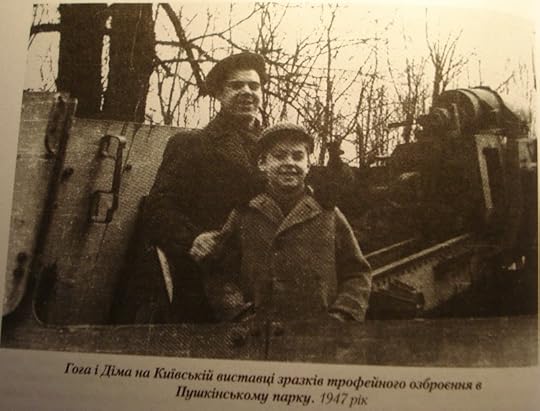
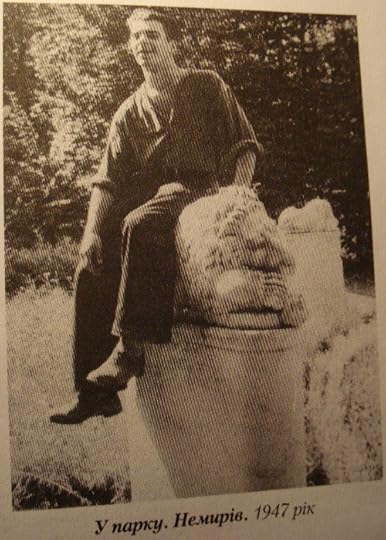
Географія нової книги відомого краєзнавця Д. М. Малакова не обмежується лише Києвом. Разом з підлітком Дімою та членами його родини — татом, мамою, улюбленим старшим братом Гогою — читач побуває в Немирові, Вінниці, Радомишлі, Каневі, Львові, Дніпродзержинську, Одесі, Макопсе кінця 1940-х і початку 1950-х років. Розповідь Дмитра Малакова і фотографії з сімейного архіву та чудові малюнки Гоги — Георгія Васильовича Малакова, талановитого художника-графіка, заслуженого художника України — допоможуть поринути у повоєння, відчути себе співпричетним як знаковим подіям, так і побуту того часу.
Дмитро́ Васи́льович Мала́ков — український краєзнавець—києвознавець, мистецтвознавець та історик архітектури, член Національної спілки краєзнавців України. Лауреат Премії імені Дмитра Яворницького Національної спілки краєзнавців України (2012). Брат українського графіка Георгія Малакова.
Oh, I dearly loved this book! I am so glad that I bought it in paper form — it was such a treat to read it, to hold in hands, to enjoy all the pictures and photographs. I think such book could make a great present, too, although I personally unfortunately do not have relatives/friends who would like to read this book.
I’ve never heard about Малаков’s family before, which is known mostly by Георгій Малаков (a famous graphic artist) and Дмитро Малаков (a historian), but now I am in love with them all and I started to notice pictures by Георгій Малаков at different exhibitions and think that they are absolutely gorgeous. I would say that the surname itself, Малакови, became something like a quality mark for me.
This book is dedicated to the life of the family and the social reality overall in the late 1940s and early 1950s, and the main focus is on war remnants and how life was reshaped after the war and due to the war. It is not memoirs per se, although the book is full of personal accounts and even private family photographs, but anyway it is perceived as something broader and more related to life of people in general. I learned so many interesting and unusual things I never thought about before, that I already bought another similar book by Дмитро Малаков written about their life in occupied Kyiv during the war (“Кияни. Війна. Німці”) and cannot wait to read it.
As Дмитро Малаков, the author of the book, was a young boy in those years, he presents events mostly through eyes of the family overall and, especially, through eyes of his elder brother, Георгій Малаков. However, even his own memories about various little things are quite precious and interesting.
It’s very difficult to tell coherently about the book, because it contains so much and the information is so diverse and funny and thought-provoking… OK, I will do something incoherently, whatever.
First of all, as I said, I fell in love with the family itself. They were intelligent and amicable people, true open-hearted and open-minded intelligenzia, inventive and friendly. There are a lot of sweet and funny episodes about their simple life, which I would not retell, of course; and I loved all their family photographs — I believe it is obvious even from the pictures what cool and interesting people they were.
Secondly, of course, the center of attention is the eldest son, Георгій (Гога). He was really very-very talented artist, and it is reflected in this book profusely, although it is not about his art per se, it’s about life after the war. However, his art and his passions and his personal interests created a huge basis for this book, particularly regarding “war remnants.”
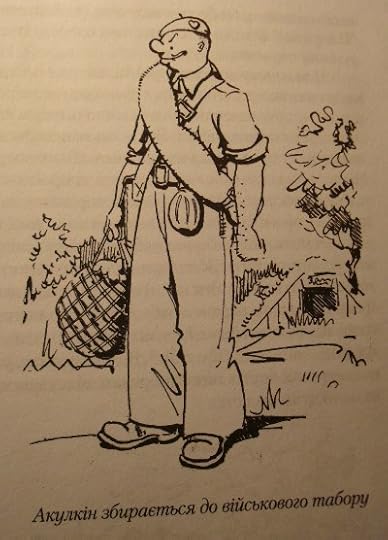
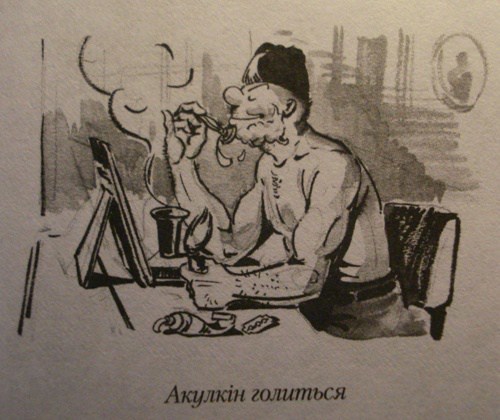
I was absolutely smitten by his Акулкін — his graphic alter-ego, through whom Гога depicted various aspects of his life, mostly funny ones. It’s something like Швейк, only Гога told about himself and the life about him in a comical manner via Акулкін.
I also loved his different sketches where he portrayed his family, himself, and the life around him overall, sometimes leaving a very valuable imprint of the everyday reality. You can see from them that he had a great sense of humor.
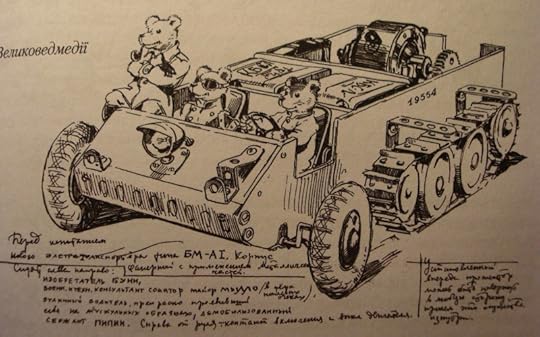
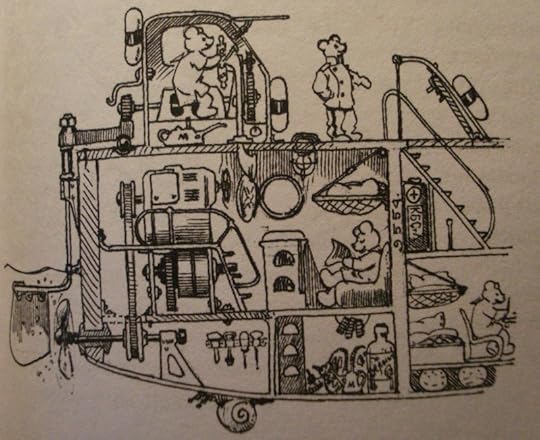
There is also a whole chapter on the absolutely gorgeous story about “Країна Великоведмедія” when Гога draw pictures and composed stories for little Дмитро about their own “Швамбранія,” so to speak.
Here we came to the main theme of the book, life after the war. Again, the book does not try to present some comprehensive picture, but it definitely adds a lot to random ideas and images that you have in your head about the real life in those times.
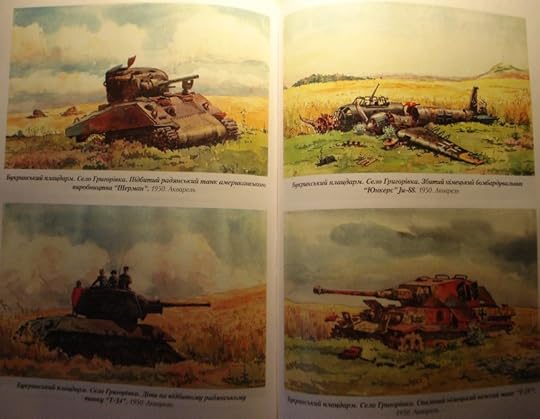
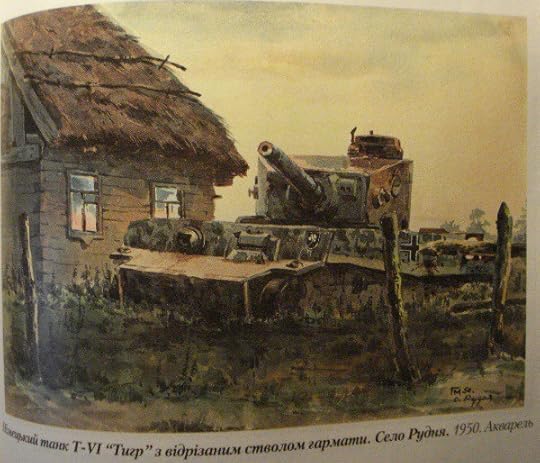
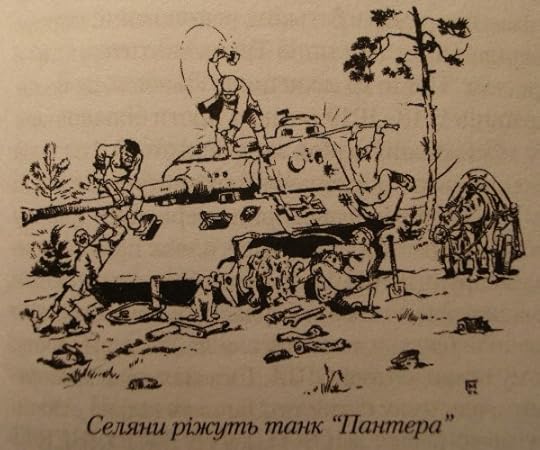
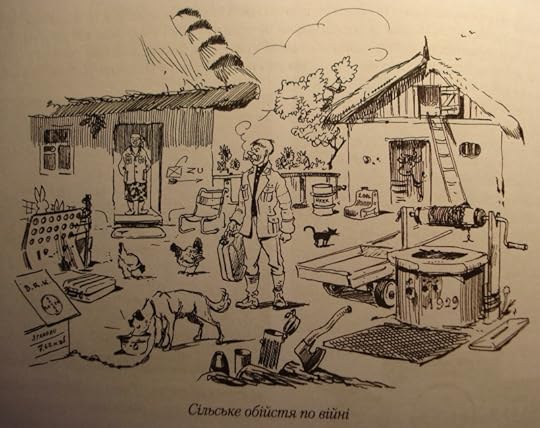
The key discovery for me was a huge amount of military hardware (machines and armors, and various other remnants of war) scattered around fields, forests, and villages for a long time after the war. I never thought about it and imagined, probably, that everything was destructed and removed very quickly, in the first couple of years after the war, but I learned from this book that people lived among all those armoured vehicles and fortification equipment for several years after the war, sometimes with such machines right in their own yards and vegetable patches. Peasants used them for snicking metal junk and all possible artifacts that could be useful in their meager households, and children played with the destroyed military machines and planes. There were even a lot of unburied corpses, especially of German soldiers.
Георгій traveled all around neighboring villages and fields to draw these fascinating images of co-existent death and life, and I think that his observations are invaluable now. There were also other curious signs of recent war, especially in details about people and their behaviour.
Although, as I said, Дмитро himself was a young boy in the early post-war years, his own observation, especially about school realities, are also very interesting.
So, I am very happy that I have this book in my personal library.