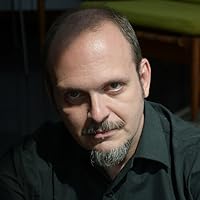
Bruno Dante veut écrire. Pas de chance, il est le fils de Jonathan Dante, le génie littéraire qui a vendu son âme à Hollywood. Trop lourd à porter. En plus, il se marie, prend des boulots idiots et gagne de l'argent facile. Il renonce à l'écriture. Le voilà alcoolique, du coup. Bien trop lâche pour assister à l'agonie de son père dans un hôpital de L.A. A la place, il boit, vole la voiture, fuit, erre et reboit. Il atterrit dans un motel miteux. Pas seul. Bonne âme, il traîne à ses basques le vieux chien de Jonathan Dante, malade, et une minipute d'Hollywood Boulevard, mal partie dans la vie elle aussi. Bruno tombe au fond. Noyé à la fois dans l'alcool et dans L.A, chemin de croix moderne pour rédemption non garantie. Comment refaire surface ? Comment arrêter de boire, se remettre à écrire ? Faut-il sauver le chien ? Larguer la pute ? Si oui, comment ? Certainement pas avec son nouveau job, démarcheur d'une boîte de rendez-vous pour dames mûres. A moins que.
”’Think dyin’s rough… Dyin’ ain’t shit The hard part is living While the dying’s going on.’ --Something I heard TJ say.”
Bruno Dante’s self-inflicted knife wounds to the stomach are still healing when he is summoned back to LA to join the vigil of siblings watching his father die. As the tensions and stresses become too much for him to bear, he starts to drink again, becomes obsessed with his father’s dog Rocco, and wakes up naked in a stolen car with a homely underage hooker, missing his wallet.
This is what happens when he dances with Mad Dog wine. ”For me a run on Mogen David was like starting to fuck a five hundred pound female gorilla. All choice is gone. The gorilla lets you know when it’s time to quit. Sweet wine is like that.”
LA is just not good for Bruno, too many memories, too many debaucheries, too many irritations surrounding his almost famous father. His father gave up writing novels to suck at the Hollywood screenwriting tit. Writing for money instead of passion had eroded him, like the diabetes that was taking his body parts one piece at a time. He was frustrated, volatile, and cuttingly abusive. ”The Dante I was remembering was more prick, less poet.”
So he is stuck with a dog who is obsessed with a putrid gopher and a hooker ”whose passions were penises and books.” Her favorite writer is William Faulkner, and when she is drunk, she starts talking like a character from one of his books.
Okay, she is a royal pain in the ass, underage, which could prove a problem, but how often is a guy going to run into a gal who talks like a Faulkner character?
Needless to say, things get much, much worse for Bruno as he drives around LA, sloshed out of his mind, in his stolen car, trying to escape the responsibility of watching his father die. He finds a copy of one of his father’s novels that he hasn’t read in decades.
The prose brings him to his knees.
Dan Fante has a lot in common with Bruno Dante, starting with the heavy drinking problem and ending with a serious problem with his father. His writing style is certainly more influenced by Charles Bukowski than it is by his own father, John Fante. There is no pretense here...Dante...Fante. He is novelizing his life. His father wrote four books featuring Arturo Bandini, and Dan wrote four novels featuring Bruno Dante. It is certainly an ode to his father, who was probably one of the most passionate, disappointed men in Hollywood. He could starve and write novels, or he could write screenplays and feed his family. He chose his family over his craft, and it gutted him.
Dan Fante drank and fornicated his way around the world, but in the end, he came back to live and die in LA. It is where dreams are made and dreams are laid to rest. This is certainly a wild ride. There are definitely moments when he tries too hard to shock, but with all the layers of nuance regarding his relationship with his father, it makes the book even more compelling to read.
I’m going the distance. I plan to weave John and Dan’s quartet of novels into my reading queue over the next year. It will be a father and son sitting on a porch and having a conversation with each other. I’m just the guy in the shadows, sipping some sweet lemonade, eavesdropping on their conversation, hoping to see some bridges built over the gaps in their personal relationship.
Es una novela desgarradora. Dan Fante relata la historia de su alter-ego, Bruno Dante, y su viaje desde Nueva York a Los Ángeles porqué su padre (escritor y guionista de Hollywood) se está muriendo. La novela es, en general, bastante deprimente porqué un adicto al alcohol no piensa en nada más que en beber hasta la autodestrucción. Tiene sus momentos de lucidez y de amor. También hay momentos en los que te hace reír, aunque la situación no sea para reírse mucho. Al principio, Bruno parece que odia a su padre, pero, poco a poco, va cambiando y se da cuenta del amor y la admiración que siente por él y que había reprimido durante años. Se establece una relación muy bonita entre Bruno y Rocco, el perro de su padre. Es una novela dura y tierna a la vez. Hay que leerla para entender de lo que estoy hablando. Le pongo cuatro estrellas porqué el tema del alcoholismo es demasiado repetitivo y se hace pesado.
-----------------------
It is a heartbreaking novel. Dan Fante tells the story of his alter-ego, Bruno Dante, and his journey from New York to Los Angeles because his father (a Hollywood writer and screenwriter) is dying. The novel is, on the whole, quite depressing because an alcohol addict thinks of nothing but drinking himself to self-destruction. It has its moments of lucidity and love. There are also moments when it makes you laugh, even if the situation is no laughing matter. At the beginning, Bruno seems to hate his father, but, little by little, he changes and realises the love and admiration he feels for him that he had repressed for years. A beautiful relationship develops between Bruno and Rocco, his father's dog. It is a novel that is both hard and tender at the same time. You have to read it to understand what I am talking about. I give it four stars because the topic of alcoholism is too repetitive and becomes tiresome.
Looking at the author photograph of Dan Fante -- which depicts a sixtysomething, moon-faced, grimacing bald man in a leather bomber jacket aiming a pistol indiscriminately upward while just behind him four seagulls spread their wings in a cloudless sky -- I was first struck by his intangible Martin Balsam quality, and then as is often the case with books such as Chump Change, I was revisited by the question of authenticity. (i.e., Is this guy for real?? I mean, c'mon...)
Dan Fante is the son of John Fante (Ask the Dust) who inspired Charles Bukowski who inspired Dan Fante. This chain of influence (and genetics) already announces the subgenre we're dealing with here. It's that grimy, grubby late afternoon, long-shadowed L.A. drunken squalor genre... you know, with the underage gazelle-like hookers and the colorful, angry Mexicans and the strip mall liquor stores every other block and the cheap motels with colorful 1950s-era neon signage out front and the commercial-grade low-pile carpeting in the rooms with indecipherable brownish-reddish-blackish stains in the shapes of forgotten Latin American countries. To point you in the right direction, I'll tell you that Bruno Dante, the author's surrogate (à la Henry Chinaski) -- working as a dating service salesman -- ejaculates into his customer's tuna salad in the midst of a late morning wine cooler bender. Don't ask. Context is everything.
Anyway. This book is surprisingly moving. At the end. Once you get past the dogfight, the stuttering hooker, and the fact that apparently no one bothered to proofread it before it was published. Unless 'unphased' has now been officially christened as a real word by the linguistic powers-that-be. (Like when the people who put together dictionaries finally just threw up their hands and surrendered in the face of inexorable misuse and decided they'd let 'alright' be an official word, although it isn't. See? The terrorists won). Also, jeezus fuckin' christ. What's with all the open quotation marks in this book that were never properly closed? You can't believe how incomplete this leaves me feeling. I'm still waiting -- even as I type this -- for the characters to finish speaking, but now they never will. Forever.
Chump Change is Dan Fante’s first book in his alter ego Bruno Dante series, a sorta- part autobiographical meandering report about the human condition. The report tells us that there’s pain no amount of booze can ever make go away. It’s not a pretty sight and not filled with unicorns and moonbeams. Bruno has a failed marriage, a failed career, a failed relationship with his father, and he’s in and out of the nuthouse and rehab. When he’s on a bender -like almost all the time – he is capable of most any perversion imaginable from sex in Time Square’s Old porn theaters to masturbation on a crowded airplane. His father’s death sets him off on yet another spiral, stealing his brother’s car and his soon to be ex-wife’s credit card, he journeys across Hollywood’s seedy underbelly with an underage hooker in tow and his father’s aging box terrier. At these limits, pretty much nothing matters anymore but surviving from one blackout to the next. Definitely not for the easily or even normally offended. It channels the sadness and ennui of Bukowski. The prose propels the reader on but there’s no emerald city at the end of the damn rainbow.
Bruno Dante is a drunkard. Bruno Dante has trouble holding to a stable job and to his marriage. Bruno Dante lives a decaying life, of late night drunken ventures, underage addicted hookers, strangers in porn movies. Bruno Dante is an unsuccessful writer living in the shadows of his dying father's career Johnathan Dante, published author and successful Hollywood screenwritter.
And Bruno Dante is Dan Fante, the author, son of cult writer John Fante.
This autobiographical novel won't be confused for a contemporary masterpiece ever, but is a very engaging and touching narrative of Fante's life, Fante writes in a dirty prose full of far fetched drunken anecdotes of his life as an alcoholic unsuccessful poet, on the verge of a failed marriage, while visiting his moribund father, and while a drunken story might not sound very compelling, Fante simply does know how to write a book, his agile narrative gets the reader caught page after page, and aside from all the turbulent and muddy stories, there is a very poignant picture of the man, the son, and the imprint of his father's life in his.
My grade might be too high, but it's always a pleasure to read an author who knows how to get his hands on such filthy themes and create an interesting work out of it without sounding scandalous or exorbitant.
Releyendo de nuevo a Fante, el hijo, me doy cuenta de hasta qué punto una obra como esta (frontal, de una sensibilidad hiriente) supone el intento más desesperado de afrontar creativamente (con palabras, con frases cortas que prácticamente hablan solas: con palabras que dan cuenta de la vida) en qué consiste ese sentimiento de orfandad que tarde o temprano nos toca asumir. De vacío, o de miedo al vacío que se proyecta tras la alargada sombra de John Fante/Jonathan Dante. Y si bien ya hay otro libro dedicado al Padre, así en mayúsculas, me resisto a pensar que Chump Change no es, en sí, la mayor elegía paterna (y el esfuerzo más tenaz por hablar del amor filial; del amor más loco, bruto y precisamente por ello tierno) escrita por su autor.
I am hard-pressed to think of any other protagonist that has elicited in me as much disgust as Bruno Dante does for the greater part of this novel. And knowing that he has an autobiographical basis means that author Dan Fante is really putting himself out there. I began to wonder if Fante wasn't trying to elicit a hatred of him, but then remembered that, like in an AA testimonial, the storyteller is the protagonist and that hopefully former person he describes the antagonist.
The dialog and other details in this narrative made me think of almost every situation from my own past in which I've had to deal with a stubborn and unrelenting drunk - especially the situations where there is a tie or responsibility that does not allow one to just flee. The internal dialog author Fante provides for Bruno Dante is an excellent example of the power of good fiction - we can eventually see the honorable human intent obscured by the actions of desperate need.
Both Fante and Dante had fathers who had some success as writers, and both of them are trying to follow in their fathers' footsteps. In the final few pages of this book I was struck by the recollection that some of the most creative works in Western culture have come from individuals fighting personal demons - some of the greatest works as their creators approached (self-)destruction. I hope that Fante has the demons under control and can continue to produce great work without that fate.
Early in this book I noticed that Fante provided detailed geographical positioning in his story and so started following the action on Google maps. This added to my enjoyment of the book and was also a productive geographical study of the Los Angeles area which allowed me to finally place mentally many of those place-names I had heard over the years, and better recall the memories of my two visits to the area years ago. I finally understand where Malibu is!
First I read Bukowski and then John Fante, after Buk's hero worship of that writer and then I read this novel by Dan Fante, John Fante's son. I was expecting it to be really gritty and raw- benders and seedy bars, loads of drinking, women of loose morals and general debauchery and reprobate behaviour. It is all of these things and some may find it a bit distasteful in places as the main character, Bruno Dante, isn't the nicest man of all time, but it's quite a deep book as well. His Dad being ill and the hospital visits and the family's trauma at this particular time are all very sad and sensitively written. The book therefore has an interesting dynamic as one moment he's drunk on Mad Dog fruit wine, messing around with some young whore and the next he's having deep moments of self realisation and grief regarding his destructive behaviour and the family crisis that's enveloping him. A really good book to read if you fancy a gritty, fast paced read that drags you straight into the story with never a dull moment to be had, as well as being pretty poignant and moving as well.
Non ho letto così tanti Bukowski da poter dire che questo libro lo ricalchi o che addirittura ne estremizzi lo stile, ma sicuramente potremmo considerare Dan Fante come l'anello di congiunzione fra suo padre John e Charles Bukowski stesso. Intanto lo stile che io ho trovato incalzante. Ok, è un libro breve ma se una storia ti annoia o è scritta male, fossero pure 50 pagine, non è detto che tu te lo legga in appena 48h. Vabbè io sono di parte però sono anche obiettiva e dico che, nonostante Dan abbia calcato molto la mano, in certe situazioni, e abbia cercato di imitare altri autori e in primis suo padre, non me la sento di stroncare questo lavoro, che alla fine risulta essere anche un estremo canto di amore e di dolore nei confronti di John Fante. Intendiamoci, passano anni luce fra di loro, e il primo a riconoscerlo è proprio Dan. Alla fine della lettura mi sono ritrovata con tanta malinconia e un velo di tristezza addosso perché ci si rende conto una volta di più di quanta desolazione abbia attraversato questa famiglia che, fin dalle sue origini che affondano le radici in Italia, ha sempre dovuto combattere e aggrapparsi con le unghie e con i denti alla vita, nell'estremo tentativo di non lasciarsi andare e di non mandare tutto in malora. Leggerò comunque altro di Dan, anche se pare che Angeli a pezzi sia stata la sua cartuccia migliore.
Bruno Dante discovers after getting out of jail in New York, that his father is in a coma and not expected to live. He makes the journey to LA where, addicted to drugs and alcohol and an aspiring writer, where his life continues to spiral out of control.
Fante’s writing style is not quite so poetic as his father’s (John Fante), more visceral and vulgar, in the vein of Charles Bukowski, with an assortment of highly colourful characters accompanied by brutal dialogue.
Fante’s skill in his depiction of his alter ego Dante is to avoid the cliched villain with a heart of gold, rather to paint Dante ad an uncertain and introverted individual caught up in a world that he has no control over.
Treading in egg shells to avoid any type of spoiler, the last pages are memorable, as Dante attempts to move on with life, with his father’s sick dog, Rocco, in tow.
I do not like reading about happy people. About successful people and their achievements. I do not like to read about healthy relationships, about overcoming difficulties, about "whimsical" adventures, and about "achieving the impossible". I do not like my fiction "quirky" or "heartwarming" or my characters "cute". I do not like romance and I do not like spirituality.
Instead, what I like is fiction that is raw, brutal, and fucked up. I like to read about broken people. People that are alienated, difficult, and troublesome. People that do not fit in. That are not in penthouses but in the gutter. That are either on the verge of going insane or are already there. People that have lost it all and don't give a fuck anymore.
In other words, I like to read people like Dan Fante. And his Chump Change (which I've read twice now), along with the three other books in the series, is a great example of the kind of stuff that I like to read.
If you also like to read about this kind of stuff, then you'll like this book. And if you don't, then you can fuck off.
I fail to see how this is such a revered book. I am a huge fan of John Fante so I went into this with high hopes.
Dan Fante is trying far too hard to be his father (thinly veiled in the book as "Dante")and edgy. Nothing "shocks" or "offends" me; but this book is just trying to be "offensive" with no real story behind it. Predictable. Doesn't offer the edginess people know from his father's books and even Bukowski. Feels orchestrated and unreal. What I liked best about his father's work is John Fante's ability to put you in the story and make you feel like you were there.
To be fair, I didn't finish it and I truly hate to give up on books. But I just couldn't waste any more time on this novel. I got about 70% of the way through.
I cannot, in good conscience, recommend this book to anyone and will be putting it up on Ebay.
Because of my familiarity with Bukowski I had read many of the works of John Fante, which led me to his son Dan. Chump Change is a loosely auto-biographic novel about growing up in a dysfunctional has-been show biz family. It spares no punches. Fante knocks it out of the park as far as I'm concerned.
This is one firecracker of a novel. Fante's style is gritty, hard-hitting but poignant. Gripping and exciting. Bruno is a lovable mad man. Highly recommended to fans of Bukowski, Hemingway, and of course, John Fante.
I read this based on recommendation, and the price of the discounted paperback was the right addition to an online order to qualify for free shipping. I am familiar with Dan as a poet, but i wasn't aware that he was a writer as well. Like his Dad, he's another writer west of Rome that i discovered after their passing.
As for the material it was very rough in a few spots. I didn't like the antihero Bruno, he was a mean drunk, and generally not remorseful. He starts out at rock bottom and goes lower. I enjoyed the originality, organization and structure, the presentation, and the Gonzo realism, he's definitely not a literary master, but he tells a story that is entertaining and engaging. I liked the Fante family references, i believe that to be of some truth, it starts as kind of an Exley A Fan's Note feeling. I have to say i sense this as a late nineties time and that really cracks me up, with just a few exceptions are removed like vcr references, video dating, and Cisco drink. Less those few items this could have easily been a 70's or 80's era story. I was generous to give this 4 stars, Dan left a lot of open-ended questions unanswered.
This is excellently written. It's a perfect example of where you start off hating the narrator, but by the final few chapters you really start to feel sorry for him and begin routing for the man. The sadness Dante feels for his father in those final chapters is fantastic, almost heartbreaking. There's a brilliant scene where he attempts to buy an original hardback of Ask the Wind (obviously based on Ask the Dust), and it just reveals so much in character, motivation, and almost the entire reasoning of why Bruno is so messed up. I'm definitely going to read the other Dante books for sure.
I would give it five stars, but there's a few questionable moments early on into the novel that I just didn't feel necessary. I won't state what they are, but I must warn readers, this book is very dark. Not for the fainthearted.
Vulgar ..... self absorbed .......yet ........ I find at times quite touching or at least familiar.... Definitely not for everyone. Maybe good enough for a few. Poor Rocco.........
By the by you can read it in less than a day 200 or so pages. Though I believe this is a series of books, this being the first. Basically a story of a seriously troubled soul who can't lay off the bad liquor. A personal struggle at a trying time.
A raw no holds barred story about a booze-soaked, self-sabotaging loser who keeps dragging himself deeper into the gutter. Just when you think he has hit rock bottom, he finds a shovel.
The author doesn’t pull any punches; he hauls you right through the muck and depravity to show the ugly truth most folks look away from.
Not pretty, but damn honest. Hits with all the subtlety of a shotgun blast.
Esta valoración tiene más que ver con la sensación que me deja que con lo que es la novela. Como novela está bien, es transparente, sincera, triste, vacía, tiene momentos brillantes, tal vez me ha faltado algo más o es que me he sentido incómodo porque me ha parecido demasiado real.
Il figlio di John Fante vuol fare lo scrittore, ma dubita d’avere talento. Sbanda, beve e scopa assai (neanche fosse il figlio di Charles Bukowski), poi si rimette in carreggiata - pare - e scrive un romanzo: questo, su di sé, e sul padre. A fine lettura, il dubbio resta: ha talento? Mah...
Dan Fante es el hijo del mítico escritor y uno de los mas importantes representantes del realismo sucio John Fante a quien Charles Bukowski bautizó como “mi dios”, creador de uno de los personajes emblemáticos de la literatura norteamericana Arturo Bandini. Dan Fante deja Los Ángeles a la edad de veinte años y decide dedicarse a vender de puerta en puerta, taxista, vendedor vía telefónica y una larga lista de empleos de poca paga mientras por las noches se dedicaba a vomitar sobre la pagina en blanco las historias que vivía o las que existían en su cabeza. Ha escrito dos libros de poesía, cuatro novelas, un libro de relatos y dos obras de teatro; Sajalin Editores edita por primera vez su obra principal en español “Chump Change” cuya traducción vendría siendo como poco dinero o alguien que cobra un miserable salario.
Dan Fante en mas de una oportunidad ha declarado que comienza a escribir porque simplemente decide no darse un tiro en la cabeza, alcohólico depresivo con altas tendencias suicidas, cargaba gran parte del día un arma solo por tenerla o bien para matarse o dispararle al primer imbécil que se le acercara, bebía hasta perder el control, su relación con el mundo en general era de un odio absoluto. La situación con su padre no era perfecta, es bien sabido que John Fante no era muy amable con nadie, ni siquiera con sus hijos a quien según Dan los veía como unos “muebles” que estaban en el medio y solo con la distancia aprendió lo que era amar a su padre. Han pasado ya 68 años de vida y esos excesos han quedado lejos, ahora Dan Fante vive mas estable con un piercing en su nariz, un sombrero vaquero y disfrutando un relativo éxito dentro de la literatura.
Según el mismo autor su obra es de alto contenido autobiográfico y al igual que hizo su padre al crear el alter ego Arturo Bandini pues Dan Fante utiliza a Bruno Dante un personaje con absolutamente todas las características mencionadas anteriormente excepto por un intento de suicidio clavándose un cuchillo en el estomago, unas largas estadías en psiquiátricos y muchas orgías homosexuales. Bruno Fante sale después de una larga temporada en un manicomio para visitar a su padre moribundo quien está perdiendo la batalla contra una larga enfermedad acostado ciego y sin piernas; por supuesto el encuentro con la familia, el odio a su ex - esposa no es nada grato, los recuerdos comienzan a golpear nuevamente y los personajes comunes aparecen para darle a la trama giros inesperados en este largo viaje de costa a costa por toda la carretera que llevará a Bruno a un final hermoso y poético.
“Chump Change” se escribe con frases cortas, directas, no hay una prosa enredada, todo es directo, somos parte de la vida de Bruno durante todo este viaje literario, posee unos momentos con una carga sentimental muy fuerte, el amor hacia el perro de su padre es mágico, o el encuentro en una librería de segunda mano del libro “Pregúntale al Viento” escrito por su difunto padre y la conversa con el vendedor es de lo mejor que se ha escrito últimamente. “Chump Change” se encuentra repleto de momentos que sacuden internamente al lector, el final cierra un círculo maravilloso de una obra que no deja ningún espacio en blanco.
“Chump Change” no pudo ser publicada en Norteamérica por su alto contenido “pornográfico” según las editoriales y es en Francia donde es publicada por primera vez, solo tiempo después es que logra aparecer en la tierra de Dan Fante.
En resumen es un libro que ensucia pero limpia perfectamente el alma, un libro que solo los que conocen la prosa de John Fante o Charles Bukowski podrán disfrutar. Un libro para los perdedores que son en realidad ganadores de la vida, que cada día encuentran una minima razón para no volarse la cabeza.
Pues sí, Dan Fante: se trata del hijo del brillante novelista John Fante, un escritor ya reivindicado por Bukowski y que durante los últimos años ha sido discretamente recuperado por el mundillo editorial en España, en especial desde que obtuvo un relativo éxito la adaptación cinematográfica de una de sus novelas, Pregúntale al polvo, de la mano del tirón taquillero de la mexicana Salma Hayek.
Decir Dan Fante significa decir muchas cosas: una pléyade de influencias que se apelotonan en su novela, que borbotean en su escritura. Y decir Fante significa hablar de su padre. No me queda duda de que si la película de Pregúntale al polvo no hubiera repuntado modestamente la figura de John Fante, una meritoria -pero humilde editorial- jamás se habría interesado, ni puesto sus ojos sobre la obra del hijo. Y vaya por delante que soy un absoluto rendido a la obra de John Fante, cuyas reseñas pendientes son una de las grandes deudas que mantengo con este blog.
Siguiendo esa inercia, Chump Change es la primera novela que se publica de Dan Fante en español, después ha llegado la publicación de una segunda, Mooch, y confirmando lo anteriormente expuesto, una biografía del padre firmada por el hijo. Con semejante background, ¿qué podemos encontrar en Dan Fante?
En Dan Fante tenemos a un buen novelista, desde luego, pero también hallamos claras influencias que el autor en absoluto trata de ocultar, al revés, se enorgullece de ellas, de los pilares fundamentales sobre los que se cimenta aquello que viene denominándose realismo sucio norteamericano: un persistente homenaje reivindicativo a su padre John, el rastro profundo y repetitivo –a veces, incluso, rozando con la mímesis camaleónica- de los textos narrativos de Bukowski, la presencia poética de e.e.cummings, retales de Carver y un estilo compuesto de otros muchos estilos, de todos estos autores que Dan Fante amalgama, que podría definirlo como un estilo de patchwork de realismo sucio. Por separado, no me cabe duda de que será mejor leer a estos escritores que a Dan Fante, pero todo junto, y agitado, acaba resultando atractivo y atrayente, con páginas llenas de brutalidad, fuerza y desesperación, tramas con garra, discursos sanguíneos y cierto espíritu disolvente y muy divertido.
En Fante nos encontramos con una suerte de Frankestein literario confeccionado con la cabeza de Arturo Bandini, el corazón de Hank Chinaski, el hígado de Charles Bukowski, la furia contenida del propio John Fante, el lirismo complejo de e.e. cummings y el realismo descarnado y frío de Carver. La monstruosidad, la aberración, que podría resultar un monigote de guiñol, funciona bien, y proporciona en Chump Change una novela dura y directa sacudida y atravesada por el continuo recuerdo y homenaje al padre (la trama se ubica durante la agonía y muerte de John Fante). Una vez sacudido este lastre, Dan Fante avanza, y mucho, en su escritura, como se demostrará en la meritoria y superior Mooch, que pronto espero reseñar en esta bitácora.
Son aventuras de seres desesperados, de borrachos, de Bukowskis de segunda, de Chinaskis de carnaval, atravesadas de sexo, violencia, alcohol y palabras gruesas, en efecto, pero sobre ellas se extiende una pátina de dolor que te agarra las entrañas, y te zarandea el estómago y te hace sentir náuseas, que eleva la prosa descarnada de Dan Fante por encima de los peajes de sus influencias y del lastre del apellido, para encontrar su propia autonomía y brillo, al final, en todo ello.
Dipsomaníaco y borrachuzo, adictivo y letárgico, entre el delirum tremens y la literatura escrita con las tripas, un texto sucio y manchado por ciertas notas crepusculares.
Novelist, playwright and poet Dan Fante is the second son of John Fante. He is well regarded in Europe and his novels include Mooch, Chump Change and Spitting off Tall Buildings
Stop Smiling: As both a novelist and a screenwriter, what are the main similarities between the processes? And what are the major differences?
Dan Fante: I don't mean to be overly unkind here, but screenwriting is a process quite unlike legitimate prose. Screenwriters are the errand boys for producers and directors. The do what they are told to do: "Fix this. Make her tits bigger. Let's have her be a victim of incest." That kind of nonsense. Screenwriting is not writing. It is a collaborative process in which the so-called creative person becomes an underpaid, over-ruled typist.
SS: What are your experiences with Hollywood? How close have you gotten to a script becoming a film?
DF: My book Mooch will be a film this year or next. I wrote the screenplay. Thankfully, having written the original document, the book itself is our point of reference in writing the movie. But make no mistake, what I said above still holds sway, to at least some extent.
SS: Have you met many in the business who are aware of the Fante name within the history of Hollywood?
DF: Most people in Hollywood know the name John Fante. Of course they haven't read his stuff, they've just heard he was a good novelist. And, by having an option on one or more of his books, they might become rich. John Fante is a commodity — like fertilizer is a commodity.
Dan Fante's writing lands somewhere between Bukowski and Dan's father, the late John Fante - which is a odd place to be as Bukowski practically stole John Fante's style, and Fante sold his soul for the lucrative money of Hollywood scriptwriting and really didn't fully pursue his career as a novelist. Not that his books aren't amazing, particularity Ask The Dust - but this isn't about John's books, this is about his son, Dan - who writes like the bastard son of both Bukowski and his father - if that makes any sense?
Chump Change, opens with Dan leaving a New York City drug and alcohol rehab two days early to rush to his dying father's bedside in Los Angeles. His estranged wife picks him up in a cab, and in less than a hour he's already slugging down a half pint of Ten-High. Then on the flight to LA he gets worse downing multiple mini bottles of Jack Daniels, and, well, it's all downhill from there - or uphill if you're into this sort of dismal nior drunken madness - as Dan alienates his wife and family even further by, well, by being Dan. Stealing his wife's credit card and his brother's car he leaves his father dying in the hospital, rescues his father's dog, picks up a stuttering underage hooker and together they hide out in a cheap Hollywood motel drinking MD 2020 and treating each other like shit.
Oddly enough it all works, only Dan isn't a very likable character. And so it is hard to care whether he survives or not, although it feels that he desperately wants his readers to care. I fluctuated between liking the book, and hating the book - but I read it in two late night sittings, and ultimately decided it was worth reading.
Bruno Dante is a shell of a man, ravaged by alcoholism. I started thinking I should stop reading about three chapters in when I realized that this shell of man named Bruno was not about to get any better. There is no uphill climb for him. It's more of a downhill sled ride with a lot of bumps along the way. I'm glad I kept reading though. If you start, don't stop. There is a tiny flicker of flame in Bruno near the end that is worth seeing. He seems to show more compassion to his father's dying dog than to any of his family or even himself. While I struggled to read this and believe him a man, he struggled to find any shred of humanity not already drowned by Jack or Mad Dog 20/20.
If you've ready John Fante, you'll recognize the style. It's kind of a dirty realism with a hint of transgressive stuff in there. I'd go so far as to say this is a kind of sequel to Brotherhood of the Grape. I see parallels in the way that Bruno thinks of his father and Henry thinks of Nick. I see the real difference in that Henry is a man whereas I have trouble describing Bruno in those terms.
In context, Bruno's compassion to Rocco (father's dog) is touching. It makes me think when all I can see is black, even the slightest shade of gray lighter is enough contrast to create some awe. It's well written and very descriptive. There is some humor in some Bruno's actions, but I feel it is lost by his already self destructed soul.