

What do you think?
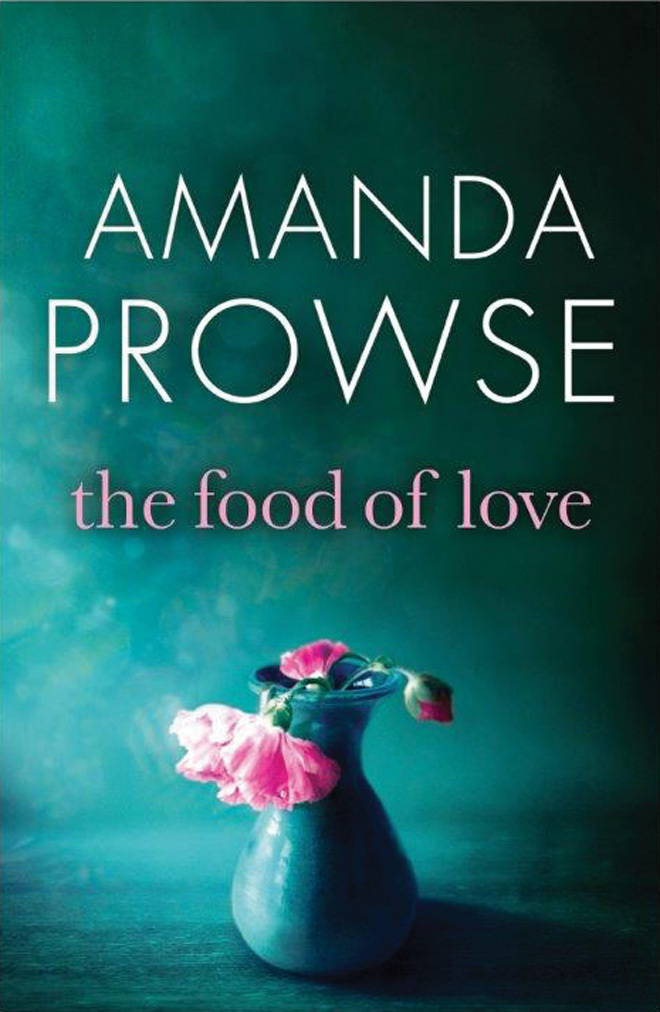
The Food of Love
A loving mother. A perfect family. A shock wave that could shatter everything.
Freya Braithwaite knows she is lucky. Nineteen years of marriage to a man who still warms her soul and two beautiful teenage daughters to show for it: confident Charlotte and thoughtful Lexi. Her home is filled with love and laughter.
But when Lexi’s struggles with weight take control of her life, everything Freya once took for granted falls apart, leaving the whole family with a sense of helplessness that can only be confronted with understanding, unity and, above all, love.
In this compelling and heart-wrenching new work by bestselling author Amanda Prowse, one ordinary family tackles unexpected difficulties and discovers that love can find its way through life’s darkest moments.
Freya Braithwaite knows she is lucky. Nineteen years of marriage to a man who still warms her soul and two beautiful teenage daughters to show for it: confident Charlotte and thoughtful Lexi. Her home is filled with love and laughter.
But when Lexi’s struggles with weight take control of her life, everything Freya once took for granted falls apart, leaving the whole family with a sense of helplessness that can only be confronted with understanding, unity and, above all, love.
In this compelling and heart-wrenching new work by bestselling author Amanda Prowse, one ordinary family tackles unexpected difficulties and discovers that love can find its way through life’s darkest moments.
362 pages, Paperback
First published December 1, 2016
About the author
Amanda Prowse
70 books2,124 followersWelcome to my Goodrerads page. If you love relatable, emotionally driven, character lead fiction that shines a light on family life and the trials and tribulations that affect us all, then you’re in the right place!
My name is Amanda Prowse, now nearly sixty, I started writing in my mid-forties. I divide my time between London where I live by the river and our farm in the West Country.
I’m passionate about the representation of women. My characters range in age from six to ninety-six and come from all walks of life.
The women in my stories face adversity head on, they grab opportunity by the handful and run towards the horizon, often doing so with a large dollop of humour.
My stories sometimes punch you in the gut with their realism but also leave you with a glimmer of hope – and the feeling that you are not alone. Tales that will make you ugly cry and laugh out loud – sometimes on the same page!
I’ve sold millions of books, translated into dozens of languages all around the world. Described by the Daily Mail as ‘The queen of family drama’ my novels have won awards, including the coveted Sainsbury's eBook of the year Award and I’ve had two books selected as World Book Night titles; 'Perfect Daughter' in 2016 and 'The Boy Between' (co-written with my son Josiah Hartley) in 2022.
I’m a huge supporter of libraries and am a proud ambassador for The Reading Agency. My ambition is to create stories that keep people from turning the bedside lamp off at night, great characters that ensure you take every step with them and tales that fill your head so you can't possibly read another book until the memory fades...
I’m a passionate advocate of ageing naturally and gratefully, and see every wrinkle, every line, every blemish on my face as a badge of honour – remembering always what a gift ageing is. This part of my wider belief that when women support women, magical things can happen.
When the time comes – this is what I’d like written on my headstone:
‘Wrote great stories, made a cracking roast potato…’ – what more could I ask for?
Praise for Amanda Prowse:
‘Amanda Prowse is “The Queen of Family Drama”’ – Daily Mail
'You'll fall in love with this...' – Cosmopolitan
'Powerful and emotional drama that packs a real punch' – Heat
‘Heartbreaking and heartwarming in equal measure’ – The Lady
'Deeply moving and emotional’ – Red
‘Amanda Prowse handles her explosive subjects with delicate skill’ – Daily Mail
‘Captivating, heartbreaking and superbly written’ – Closer
‘Amanda Prowse is the new Amanda Prowse’ – Mr Prowse
‘Uplifting and positive but you will still need a box of tissues’ – Hello!
List of Amanda Prowse works in order (oldest at top, newest at the bottom)
NOVELS
Poppy Day
What Have I Done
Clover’s Child
A Little Love
Will You Remember Me?
Christmas for One
A Mother’s Story
Perfect Daughter
The Second Chance Café (was 'The Christmas Café')
Three and a Half Heartbeats
Another Love
My Husband’s Wife
I Won’t be Home for Christmas
The Food of Love
The Idea of You
The Art of Hiding
Anna
Theo
Kitty (was ‘How to Fall in Love Again; Kitty’s Story’)
The Coordinates of Loss
The Girl in the Corner
The Things I Know
The Light in the Hallway
The Day She Came Back.
An Ordinary Life
Waiting to Begin
To Love and Be Loved
Picking Up the Pieces
All Good Things
Swimming to Lundy
This One Life
Ever After
Life as Planned
The Way Home (publishing August 2026)
Holding On Tight (publishing January 2027)
MEMOIRS
The Boy Between
Women Like Us
NOVELLAS
The Game
Something Quite Beautiful
A Christmas Wish
The Ten Pound Ticket
Imogen's Baby
Miss Potterton's Birthday Tea
Mr Portobello's Morning Paper
I Wish…
A Whole Heap of Wishes
A Wish for Forgiveness
Fifteen Minutes
COMPILATION OF FIRST SEVEN NOVELLAS
Something Quite Beautiful
Notes on Books.
All books are standalone stories, but some do share characters who pop up for cameo appeara
My name is Amanda Prowse, now nearly sixty, I started writing in my mid-forties. I divide my time between London where I live by the river and our farm in the West Country.
I’m passionate about the representation of women. My characters range in age from six to ninety-six and come from all walks of life.
The women in my stories face adversity head on, they grab opportunity by the handful and run towards the horizon, often doing so with a large dollop of humour.
My stories sometimes punch you in the gut with their realism but also leave you with a glimmer of hope – and the feeling that you are not alone. Tales that will make you ugly cry and laugh out loud – sometimes on the same page!
I’ve sold millions of books, translated into dozens of languages all around the world. Described by the Daily Mail as ‘The queen of family drama’ my novels have won awards, including the coveted Sainsbury's eBook of the year Award and I’ve had two books selected as World Book Night titles; 'Perfect Daughter' in 2016 and 'The Boy Between' (co-written with my son Josiah Hartley) in 2022.
I’m a huge supporter of libraries and am a proud ambassador for The Reading Agency. My ambition is to create stories that keep people from turning the bedside lamp off at night, great characters that ensure you take every step with them and tales that fill your head so you can't possibly read another book until the memory fades...
I’m a passionate advocate of ageing naturally and gratefully, and see every wrinkle, every line, every blemish on my face as a badge of honour – remembering always what a gift ageing is. This part of my wider belief that when women support women, magical things can happen.
When the time comes – this is what I’d like written on my headstone:
‘Wrote great stories, made a cracking roast potato…’ – what more could I ask for?
Praise for Amanda Prowse:
‘Amanda Prowse is “The Queen of Family Drama”’ – Daily Mail
'You'll fall in love with this...' – Cosmopolitan
'Powerful and emotional drama that packs a real punch' – Heat
‘Heartbreaking and heartwarming in equal measure’ – The Lady
'Deeply moving and emotional’ – Red
‘Amanda Prowse handles her explosive subjects with delicate skill’ – Daily Mail
‘Captivating, heartbreaking and superbly written’ – Closer
‘Amanda Prowse is the new Amanda Prowse’ – Mr Prowse
‘Uplifting and positive but you will still need a box of tissues’ – Hello!
List of Amanda Prowse works in order (oldest at top, newest at the bottom)
NOVELS
Poppy Day
What Have I Done
Clover’s Child
A Little Love
Will You Remember Me?
Christmas for One
A Mother’s Story
Perfect Daughter
The Second Chance Café (was 'The Christmas Café')
Three and a Half Heartbeats
Another Love
My Husband’s Wife
I Won’t be Home for Christmas
The Food of Love
The Idea of You
The Art of Hiding
Anna
Theo
Kitty (was ‘How to Fall in Love Again; Kitty’s Story’)
The Coordinates of Loss
The Girl in the Corner
The Things I Know
The Light in the Hallway
The Day She Came Back.
An Ordinary Life
Waiting to Begin
To Love and Be Loved
Picking Up the Pieces
All Good Things
Swimming to Lundy
This One Life
Ever After
Life as Planned
The Way Home (publishing August 2026)
Holding On Tight (publishing January 2027)
MEMOIRS
The Boy Between
Women Like Us
NOVELLAS
The Game
Something Quite Beautiful
A Christmas Wish
The Ten Pound Ticket
Imogen's Baby
Miss Potterton's Birthday Tea
Mr Portobello's Morning Paper
I Wish…
A Whole Heap of Wishes
A Wish for Forgiveness
Fifteen Minutes
COMPILATION OF FIRST SEVEN NOVELLAS
Something Quite Beautiful
Notes on Books.
All books are standalone stories, but some do share characters who pop up for cameo appeara
Ratings & Reviews
Friends & Following
Create a free account to discover what your friends think of this book!
Community Reviews
Displaying 1 - 30 of 785 reviews

August 8, 2021
How is it that this amazing woman can write such beautiful books that punch me in the gut every single time? Amanda Prowse is that rare writer who simply understands the way to develop characters such that you love them and you are angry with them and you just want to hold them and fix everything. But you can't. They are broken, and until they reach their very lowest point, all we can do is watch the spiral with bated breath and the anticipation of knowing Prowse always mends it in the end. The Food of Love is simply wonderful and while the topic is difficult beyond belief, it must be read.
Anorexia. Bulimia. Any sort of issues with food that result in harming oneself. It comes seemingly from nowhere. And when it's your own teenage daughter, and you are a food writer who's done everything she can to teach her daughters healthy eating, it's a heartwarming and perilous journey. Freya is a good mom, but she missed many signs. Lexi is savvy at hiding her problems. But when the school intervenes, Freya is shocked at their accusations. In time, she learns they were true. And Lexi knocks at Death's door way too many times. Imagine putting your daughter in a facility where they tie her down and force her to eat food?
Emotions ran so high in this one, I was certain Lexi died. Freya and family write letters to Lexi in alternating chapters via hourly countdowns. Readers don't know whether Lexi is coming home from the hospital or if her family is attending her funeral. The suspense nearly killed me, and I stopped myself three times from flipping ahead to the end to know before I got there. Prowse just slaps you and slaps you and slaps you until you can't take it anymore -- all in a good way. She understands human nature in a way many of us do not, and it always shines in her writing. I have three more of her books set in my TBR queue this year, and that will bring me to 12, about half her collection thus far. She writes faster than I can read, and that's saying a lot! :)
Anorexia. Bulimia. Any sort of issues with food that result in harming oneself. It comes seemingly from nowhere. And when it's your own teenage daughter, and you are a food writer who's done everything she can to teach her daughters healthy eating, it's a heartwarming and perilous journey. Freya is a good mom, but she missed many signs. Lexi is savvy at hiding her problems. But when the school intervenes, Freya is shocked at their accusations. In time, she learns they were true. And Lexi knocks at Death's door way too many times. Imagine putting your daughter in a facility where they tie her down and force her to eat food?
Emotions ran so high in this one, I was certain Lexi died. Freya and family write letters to Lexi in alternating chapters via hourly countdowns. Readers don't know whether Lexi is coming home from the hospital or if her family is attending her funeral. The suspense nearly killed me, and I stopped myself three times from flipping ahead to the end to know before I got there. Prowse just slaps you and slaps you and slaps you until you can't take it anymore -- all in a good way. She understands human nature in a way many of us do not, and it always shines in her writing. I have three more of her books set in my TBR queue this year, and that will bring me to 12, about half her collection thus far. She writes faster than I can read, and that's saying a lot! :)

December 7, 2016
SPOILERS INCLUDED:
This is a story about anorexia. The horrifying, pervasive, immersively devastating illness of anorexia, and the author lays out the process and powerlessness of her characters' journeys in painful detail and with tremendous passion and heart.
As much as you may think you know about the disease, the stomach-churning, revoltingly visceral and corporeal details of a child who spends every waking moment avoiding, analyzing, regurgitating, and rejecting food in the need to starve herself are brutal. Sickening. Horrifying. But then there's really no other way to depict this disease, as it IS all those things.
The family at the center, dominated by the maternally-driven Freya, is a warm, cohesive, loving group at the story's beginning. One of the most successful, if wrenching, elements of the book is following their steady downward trajectory as younger daughter, Lexi, becomes entrenched in the process of starvation; older daughter, Charlotte, functional and healthy, finds herself lonely and unattended as her parents fixate on saving their youngest, and father/husband, Lockie, struggles mightily to keep the entire family from fracturing beyond repair. The roller coaster nature of their journey as they stumble through the unfolding drama is shattering and difficult, and Prowse is courageously unvarnished in her depictions of exactly what they endure.
There are, however, certain parenting and medical choices that come across as problematic and we wonder: are we supposed to support and agree with those? Are they meant to stoke sympathy or rage? Not completely clear, and as one who knows nothing about anorexia but a fair amount about partnering and parenting, I got frustrated and annoyed several time throughout the book when Freya's enabling, somewhat needy and pathetic behavior led her, as a wife and a mother, to behave like a hysterical, desperate teen. I get it, on some level, but we were taken there too often, to the point that I wanted to shake her, hard, and say, "man up, babe, this kid is DYING!"
My biggest issue with the book, however, is in the pacing of that trajectory and, sorry to say, the end. The book is weighted very heavily on the side of showing us, over and over, the dashing of hopes, the "one step forward, three steps back" aspect of what they experience. We witness the seemingly inexorable decline and disintegration of Lexi, in every way imaginable, with the attendant whiplash effects on the family as they continue to grasp hope only to be repeatedly slammed to the concrete. While all this feels authentic, that excruciating downward slide makes up the bulk of the book, interspersed with chapters comprised of sweet letters to Lexi written by the family... which lead to the sense -- in what I presumed was an intended red herring --that success was not to be theirs. Right up until the last chapter, when Lexi is down to 63 pounds, with brittle bones, a damaged heart, checked into a mental medical facility, with seemingly no chance for survival, we mourn the imminence of that end, and then....
The epilogue arrives and, lo and behold, the family is all together on a sunny beach, the girls are bouncing around in glee; Lexi has, unfathomably, not only survived but flourished, and, it seems, we're meant to applaud the fortitude and perseverance of all involved. To which I reacted: WHAT? How did THAT happen?
It's not that I minded the author ending on a sunny note. She obviously had to choose SOME ending: whether to make this a cautionary tale in which the victim succumbs, an open-ended treatise in which we leave without knowledge of her fate, or a heart-warming wrap-up in which all's well that ends well. The author chose the last, but the problem is: there was no support, no lead up, no foundation for that ending.
We saw, witnessed, read, experienced, none of it. After spending 98% of the book immersed in the horrors the family endured, we get NONE of Lexi's healing process, none of what, finally, tipped her toward health; none of what she experienced as she transitioned from a mentally-ill, desperately delusional, minutes-from-death wreck to the happy, smiling teen bounding toward the waves at the book’s conclusion.
Frankly, I was stunned by that. It felt inauthentic and narratively shallow. That arc not only short-changed readers by leaving out those details, it was a disservice to the very important theme of understanding the illness in a real way. Without clarity about HOW this person beat anorexia, the book is left only as a "compelling depiction of the horrors of anorexia," with a fluffy Hallmark ending slapped on the end.
So I leave this with 3 stars. It was well-written, touching at times, with well-defined characters, and a compelling theme, but the ending misses an opportunity to educate us on how the character gets to the sunny denouement the author chooses, diminishing its importance as an authentic narrative about anorexia.
Why no voting buttons? We don't let customers vote on their own reviews, so the voting buttons appear only when you look at reviews submitted by others.
Permalink
This is a story about anorexia. The horrifying, pervasive, immersively devastating illness of anorexia, and the author lays out the process and powerlessness of her characters' journeys in painful detail and with tremendous passion and heart.
As much as you may think you know about the disease, the stomach-churning, revoltingly visceral and corporeal details of a child who spends every waking moment avoiding, analyzing, regurgitating, and rejecting food in the need to starve herself are brutal. Sickening. Horrifying. But then there's really no other way to depict this disease, as it IS all those things.
The family at the center, dominated by the maternally-driven Freya, is a warm, cohesive, loving group at the story's beginning. One of the most successful, if wrenching, elements of the book is following their steady downward trajectory as younger daughter, Lexi, becomes entrenched in the process of starvation; older daughter, Charlotte, functional and healthy, finds herself lonely and unattended as her parents fixate on saving their youngest, and father/husband, Lockie, struggles mightily to keep the entire family from fracturing beyond repair. The roller coaster nature of their journey as they stumble through the unfolding drama is shattering and difficult, and Prowse is courageously unvarnished in her depictions of exactly what they endure.
There are, however, certain parenting and medical choices that come across as problematic and we wonder: are we supposed to support and agree with those? Are they meant to stoke sympathy or rage? Not completely clear, and as one who knows nothing about anorexia but a fair amount about partnering and parenting, I got frustrated and annoyed several time throughout the book when Freya's enabling, somewhat needy and pathetic behavior led her, as a wife and a mother, to behave like a hysterical, desperate teen. I get it, on some level, but we were taken there too often, to the point that I wanted to shake her, hard, and say, "man up, babe, this kid is DYING!"
My biggest issue with the book, however, is in the pacing of that trajectory and, sorry to say, the end. The book is weighted very heavily on the side of showing us, over and over, the dashing of hopes, the "one step forward, three steps back" aspect of what they experience. We witness the seemingly inexorable decline and disintegration of Lexi, in every way imaginable, with the attendant whiplash effects on the family as they continue to grasp hope only to be repeatedly slammed to the concrete. While all this feels authentic, that excruciating downward slide makes up the bulk of the book, interspersed with chapters comprised of sweet letters to Lexi written by the family... which lead to the sense -- in what I presumed was an intended red herring --that success was not to be theirs. Right up until the last chapter, when Lexi is down to 63 pounds, with brittle bones, a damaged heart, checked into a mental medical facility, with seemingly no chance for survival, we mourn the imminence of that end, and then....
The epilogue arrives and, lo and behold, the family is all together on a sunny beach, the girls are bouncing around in glee; Lexi has, unfathomably, not only survived but flourished, and, it seems, we're meant to applaud the fortitude and perseverance of all involved. To which I reacted: WHAT? How did THAT happen?
It's not that I minded the author ending on a sunny note. She obviously had to choose SOME ending: whether to make this a cautionary tale in which the victim succumbs, an open-ended treatise in which we leave without knowledge of her fate, or a heart-warming wrap-up in which all's well that ends well. The author chose the last, but the problem is: there was no support, no lead up, no foundation for that ending.
We saw, witnessed, read, experienced, none of it. After spending 98% of the book immersed in the horrors the family endured, we get NONE of Lexi's healing process, none of what, finally, tipped her toward health; none of what she experienced as she transitioned from a mentally-ill, desperately delusional, minutes-from-death wreck to the happy, smiling teen bounding toward the waves at the book’s conclusion.
Frankly, I was stunned by that. It felt inauthentic and narratively shallow. That arc not only short-changed readers by leaving out those details, it was a disservice to the very important theme of understanding the illness in a real way. Without clarity about HOW this person beat anorexia, the book is left only as a "compelling depiction of the horrors of anorexia," with a fluffy Hallmark ending slapped on the end.
So I leave this with 3 stars. It was well-written, touching at times, with well-defined characters, and a compelling theme, but the ending misses an opportunity to educate us on how the character gets to the sunny denouement the author chooses, diminishing its importance as an authentic narrative about anorexia.
Why no voting buttons? We don't let customers vote on their own reviews, so the voting buttons appear only when you look at reviews submitted by others.
Permalink

December 22, 2018
Mixed review from me for The Food of Love, a story about the Braithwaites, a seemingly put together, nuclear family. Freya is a food writer and doting mother. Her husband, Lockie, is a photographer. They have 2 teenage daughters - Charlotte, who is wrapping up school before she heads off to university, and Lexi, their 15 year old. Lexi and Charlotte bicker like teenage sisters often do, however as a whole, the family is a strong, united group.
The story is centered around Lexi’s anorexia and how it deeply affects the entire family. Freya and Lockie are shocked, frustrated, and devastated as they deal with the eating order and its impact on both of their daughters and their relationships, with each of them and with each other.
I can’t imagine the toll this takes on a family and know it is realistic, to a degree. It’s easy to say “I’d never do that” until directly faced with a situation yourself. That said, the parents’ behavior, particularly Freya’s, annoyed me to no end through the majority of this book! Denial with a capital D. Her failure to acknowledge what was truly going on and admit the severity of the situation, then address it authoritatively as a mom, instead of a friend longing to be the best friend, drove me nuts! Your kid is dying and you passively sitting by, thinking a hug and a good cry will make it all better. I wasn’t trying to read a Lifetime Movie - That’s what a lot of this story felt like. It also became repetitive. Charlotte got shafted and I know if it was me, I wouldn’t stand for it. She must be a better person. I did not enjoy the epilogue which felt incredibly neat and tidy for such a rocky, jagged path throughout the book.
The Food of Love is a darker, more intense story than I anticipated it to be. This is the first Amanda Prowse book I’ve read and while I have mixed reactions to the story itself, I would probably read more of her work.
The story is centered around Lexi’s anorexia and how it deeply affects the entire family. Freya and Lockie are shocked, frustrated, and devastated as they deal with the eating order and its impact on both of their daughters and their relationships, with each of them and with each other.
I can’t imagine the toll this takes on a family and know it is realistic, to a degree. It’s easy to say “I’d never do that” until directly faced with a situation yourself. That said, the parents’ behavior, particularly Freya’s, annoyed me to no end through the majority of this book! Denial with a capital D. Her failure to acknowledge what was truly going on and admit the severity of the situation, then address it authoritatively as a mom, instead of a friend longing to be the best friend, drove me nuts! Your kid is dying and you passively sitting by, thinking a hug and a good cry will make it all better. I wasn’t trying to read a Lifetime Movie - That’s what a lot of this story felt like. It also became repetitive. Charlotte got shafted and I know if it was me, I wouldn’t stand for it. She must be a better person. I did not enjoy the epilogue which felt incredibly neat and tidy for such a rocky, jagged path throughout the book.
The Food of Love is a darker, more intense story than I anticipated it to be. This is the first Amanda Prowse book I’ve read and while I have mixed reactions to the story itself, I would probably read more of her work.

February 2, 2017
If I could award this book 10 stars I would.
I have never read a book so intense, so heartbreaking yet so frustrating, so insightful as The Food of Love.
Amanda took me on a journey and opened my eyes wide to Anorexia and the heartache and struggles this poor little girl faces on a daily basis.
I shed many a tear whilst reading this book which never happens to me, and believe me when I say I have read a lot of true horrific stories. But this one touched me like no other book has.
You can see how much time and research Amanda has done whist writing each and every page.
She mentions the Pro Ana websites and the tricks and sneaky ways in which Anorexia takes hold. One moment sticks in my mind, when Lexi puts money in her shoes to make herself weigh more.
I really don't know where to begin.
Lexi has Anorexia. She lives at home with her big sister Charlotte and her Parents Freya and Lockie.
At first Lexi's Mum gets called into the school after Lexi faints skipping meals.
Freya dismisses the fact her little girl has the start of an eating disorder, until she finds her drawer in which contains bags and bags of sick. In which she's been hiding from her family.
Then begins the harrowing journey of self destruction, heartache, family melt downs, not to mention the painfull journey of recovery.
There are many points within the book I want to shake Freya and tell her to wake up get Lexi medical attention.
But I can also see her point of view when she feels like she let her down, she bought Lexi into the world, fed her and gave her life. So she should be the one to save her.
But it soon becomes apparent Anorexia has other ideas and takes control of Lexi.
I applaud Amanda for making the story so real but showing the reader how Anorexia effects the whole family. Not just the person suffering but every single member of the family.
It consumed every single waking moment of their lives.
Charlotte, Lexi's older sister found it very difficult dealing with Lexi, her school life and trying to stay strong for her family.
There are a few moments within the book that you see Charlotte has been forgotten. For example her school trip.
Not once does she complain. But you can clearly see how much she is suffering in silence.
Lockie, Lexi's Dad was very interesting he was so strong at times, but I wished he had been stronger at times.
As you could see Freya needed him to makes the tough love decisions even though she said she didn't necessarily agree.
It broke my heart to see them struggling and trying to be United yet clearly they was on opposite pages.
I thought I knew a fair bit about Anorexia, however Amanda opened my eyes and heart.
I highly recommend The Food of Love. I laughed, cried, got frustrated, but still I could not put this book down.
I needed to know how it ended I wanted to see if Lexi had her happy ending.
I hope when you read this book it touches you the way it has done to me.
I thank Amanda and the publisher for allowing me to read this gem of a book.
I Received an advance reader copy in exchange for a fair review via NetGalley.
I have never read a book so intense, so heartbreaking yet so frustrating, so insightful as The Food of Love.
Amanda took me on a journey and opened my eyes wide to Anorexia and the heartache and struggles this poor little girl faces on a daily basis.
I shed many a tear whilst reading this book which never happens to me, and believe me when I say I have read a lot of true horrific stories. But this one touched me like no other book has.
You can see how much time and research Amanda has done whist writing each and every page.
She mentions the Pro Ana websites and the tricks and sneaky ways in which Anorexia takes hold. One moment sticks in my mind, when Lexi puts money in her shoes to make herself weigh more.
I really don't know where to begin.
Lexi has Anorexia. She lives at home with her big sister Charlotte and her Parents Freya and Lockie.
At first Lexi's Mum gets called into the school after Lexi faints skipping meals.
Freya dismisses the fact her little girl has the start of an eating disorder, until she finds her drawer in which contains bags and bags of sick. In which she's been hiding from her family.
Then begins the harrowing journey of self destruction, heartache, family melt downs, not to mention the painfull journey of recovery.
There are many points within the book I want to shake Freya and tell her to wake up get Lexi medical attention.
But I can also see her point of view when she feels like she let her down, she bought Lexi into the world, fed her and gave her life. So she should be the one to save her.
But it soon becomes apparent Anorexia has other ideas and takes control of Lexi.
I applaud Amanda for making the story so real but showing the reader how Anorexia effects the whole family. Not just the person suffering but every single member of the family.
It consumed every single waking moment of their lives.
Charlotte, Lexi's older sister found it very difficult dealing with Lexi, her school life and trying to stay strong for her family.
There are a few moments within the book that you see Charlotte has been forgotten. For example her school trip.
Not once does she complain. But you can clearly see how much she is suffering in silence.
Lockie, Lexi's Dad was very interesting he was so strong at times, but I wished he had been stronger at times.
As you could see Freya needed him to makes the tough love decisions even though she said she didn't necessarily agree.
It broke my heart to see them struggling and trying to be United yet clearly they was on opposite pages.
I thought I knew a fair bit about Anorexia, however Amanda opened my eyes and heart.
I highly recommend The Food of Love. I laughed, cried, got frustrated, but still I could not put this book down.
I needed to know how it ended I wanted to see if Lexi had her happy ending.
I hope when you read this book it touches you the way it has done to me.
I thank Amanda and the publisher for allowing me to read this gem of a book.
I Received an advance reader copy in exchange for a fair review via NetGalley.

March 23, 2017
"Food is her sickness and food is her cure."
Tears are rolling down on my cheeks,
My heart is heavy,
My mind get exhausted,
All is irresistible.
I exactly don't know how I'm feeling right now but this is so excruciating.
An excerpt from the book that explains what ' The food of love" is all about.
"I live in a house where anorexia has swept all of the joy associated with eating out of the door and in its place left an awkward dust that lingers on surfaces, tainting our everyday actions and yes, even tainting the food we place in our mouths."
I seriously don't know whether I like this book or not but it stabbed my heart badly.
The helplessness of parents, the stubbornness of Lexi, the anger of Lockie (father), the motherly nature of Freya, the sufferings of Charollete, all the feelings are uncontrollable & failing infront of the giant 'Anorexia'.
I hate you Anorexia seriously it made me hate you.
I sleep restlessly throughout the night.
Tears are rolling down on my cheeks,
My heart is heavy,
My mind get exhausted,
All is irresistible.
I exactly don't know how I'm feeling right now but this is so excruciating.
An excerpt from the book that explains what ' The food of love" is all about.
"I live in a house where anorexia has swept all of the joy associated with eating out of the door and in its place left an awkward dust that lingers on surfaces, tainting our everyday actions and yes, even tainting the food we place in our mouths."
I seriously don't know whether I like this book or not but it stabbed my heart badly.
The helplessness of parents, the stubbornness of Lexi, the anger of Lockie (father), the motherly nature of Freya, the sufferings of Charollete, all the feelings are uncontrollable & failing infront of the giant 'Anorexia'.
I hate you Anorexia seriously it made me hate you.
I sleep restlessly throughout the night.

February 21, 2017
In a world obsessed with body image, this had the potential to be an insightful read about one young girls struggle with anorexia nervosa, if it had been told from said girls perspective. Instead, it is told from the viewpoint of her rather overbearing mother who just happens to be a food blogger.
Almost every piece of dialect in the book is too upbeat to be taken seriously, to the point where it borders on cheesiness. I understand the author wanted to create a relatively happy family picture before anorexia happened but in real life parents do not speak to their teenagers with such enthusiasm about Every. Little. Thing. Similarly, unless you are considering a caricature of a teenager, they do not do the whole "Daaaaad, you're so embarrassing!!!" thing either. So many verbal sentences in this book ended with an exclamation point it made my head hurt.
That being said, I appreciate the sentiment of drawing focus on a very misunderstood mental illness. It's just a shame the story failed to intrigue me enough to learn more about it; instead I was merely reading to get to the last page.
Almost every piece of dialect in the book is too upbeat to be taken seriously, to the point where it borders on cheesiness. I understand the author wanted to create a relatively happy family picture before anorexia happened but in real life parents do not speak to their teenagers with such enthusiasm about Every. Little. Thing. Similarly, unless you are considering a caricature of a teenager, they do not do the whole "Daaaaad, you're so embarrassing!!!" thing either. So many verbal sentences in this book ended with an exclamation point it made my head hurt.
That being said, I appreciate the sentiment of drawing focus on a very misunderstood mental illness. It's just a shame the story failed to intrigue me enough to learn more about it; instead I was merely reading to get to the last page.

August 25, 2025
Freya and Lockie have been happily married for nineteen years, raising their two daughters, Lexie and Charlotte, in what outwardly seems like a content, ordinary family life.
When Freya and her husband discover that Lexie is suffering from anorexia, the entire family dynamic is upended. Each member is forced to navigate their own difficulties, confronted to inevitable strains and challenges.
This was an beautifully rendered story; I have not experienced such unfiltered emotion from a book in a long time. I felt for each family member in unique ways, as the author conveyed their inner turmoil with such poignancy that at times I could feel a knot in my stomach. Charlotte had to fend for herself while pushed into the background to allow her parents to focus on Lexie’s illness.
I withheld a full five stars because the ending left me ambivalent. Without spoiling the plot, I believe the narrative could have concluded in two different ways. One of them aligned naturally with the trajectory of the story and the one we actually got that felt as though it lacked crucial details for it to truly work, giving the sense that the narrative was incomplete.
All in all, I rate this four stars — a profoundly moving, well-written novel with layered characters and a resonant theme.
When Freya and her husband discover that Lexie is suffering from anorexia, the entire family dynamic is upended. Each member is forced to navigate their own difficulties, confronted to inevitable strains and challenges.
This was an beautifully rendered story; I have not experienced such unfiltered emotion from a book in a long time. I felt for each family member in unique ways, as the author conveyed their inner turmoil with such poignancy that at times I could feel a knot in my stomach. Charlotte had to fend for herself while pushed into the background to allow her parents to focus on Lexie’s illness.
I withheld a full five stars because the ending left me ambivalent. Without spoiling the plot, I believe the narrative could have concluded in two different ways. One of them aligned naturally with the trajectory of the story and the one we actually got that felt as though it lacked crucial details for it to truly work, giving the sense that the narrative was incomplete.
All in all, I rate this four stars — a profoundly moving, well-written novel with layered characters and a resonant theme.

November 17, 2016
I honestly don't think a lot of this book. It's not terrible, but it's nowhere near the best book about anorexia that I've ever read. It feels like someone did a lot of research on anorexia and then just wrote a story about what they think it's like to have a suffering family member. I didn't feel the characters were that fleshed out and there just wasn't a lot of meat in the story.
I also had a lot of issues with the mother, who was much more interested in being a friend to her daughter than in being a mother. I don't understand parents who firmly believe their teenagers would never ever lie to them, about anything, or who feel that they know better than any doctor.
The moment I find out my 5'6" daughter weighs only 87 lbs is the moment that kid is admitted into the hospital. She doesn't want a feeding tube inserted? Tough sh!t. Save the kid's life first and then deal with the psychological reasons, but if you don't get her fed then there won't be anything to help. This mother is in denial until the girl is a moment away from dying in her arms.
And there's an hour by hour countdown throughout the book, leading up to something... something really tense and scary.... Oh nevermind, that whole countdown thing is NOTHING. It's absolutely nothing. It's a fake-out to get you all worked up and concerned about things, and then PSYCH! It's nothing.
The epilogue as well annoyed me. The book as a whole is a sort of serious story set as a light and fluffy read. I was never able to care whether the daughter lived or died, and I mostly just wanted to shake the mother. It's not terrible, it's just not a very good book.
I also had a lot of issues with the mother, who was much more interested in being a friend to her daughter than in being a mother. I don't understand parents who firmly believe their teenagers would never ever lie to them, about anything, or who feel that they know better than any doctor.
The moment I find out my 5'6" daughter weighs only 87 lbs is the moment that kid is admitted into the hospital. She doesn't want a feeding tube inserted? Tough sh!t. Save the kid's life first and then deal with the psychological reasons, but if you don't get her fed then there won't be anything to help. This mother is in denial until the girl is a moment away from dying in her arms.
And there's an hour by hour countdown throughout the book, leading up to something... something really tense and scary.... Oh nevermind, that whole countdown thing is NOTHING. It's absolutely nothing. It's a fake-out to get you all worked up and concerned about things, and then PSYCH! It's nothing.
The epilogue as well annoyed me. The book as a whole is a sort of serious story set as a light and fluffy read. I was never able to care whether the daughter lived or died, and I mostly just wanted to shake the mother. It's not terrible, it's just not a very good book.

December 15, 2016
My mum has always used the Eleanor Roosevelt quote “A woman is like a tea bag. You never know how strong she is until she gets into hot water” and that was the first thing that popped into my head when I met Freya in The Food of Love. She is happily married (possibly even a smug happily married!) to Lockie with teenage daughters Charlotte and Lexie. Being a mum to teenage girls is a tough job (I know!!!) but the unexpected horror of discovering Lexie is anorexic comes as a HUGE shock to all the family. Amanda Prowse doesn’t shrink away from showing this awful condition in its shocking entirety, stripping away the layers of romanticism of what people assume is just a desire to be slim. It’s such a misunderstand mental health issue and I hope this book will bring some clarity to a very difficult to raise subject. She shows a family desperate to understand what is happening to their child and their utter helplessness in a situation that is totally beyond their control. As a mother, you would assume that the character I empathised with most would be Freya but my heart went out to Charlotte, who was forced to take a back seat in her family while her parents put their entire focus onto Lexie and getting her “better”. I didn’t like the way Lockie behaved throughout certain events that happened but think it was a brilliant illustration of how many men struggle to deal with this type of family dilemma.
I’ve said it before and I’ll say it again, nobody does domestic drama like Amanda Prowse. She writes about characters who could be any one of our friends or family….or even us. She has a gift for understanding family dynamics and making her fictional families feel like real people. I always feel like an emotionally wrung out wreck after finishing her books-I don’t know how she does it!
This is another triumph for Amanda Prowse. From the moment I saw that breathtakingly beautiful cover I knew this was going to be one of the most heartbreaking and emotive portraits of a normal family thrown into turmoil that I have ever read. I think this is by far one of her most powerful books to date so be prepared for a wave of emotions that will stay with you long after you’ve put it down.
I’ve said it before and I’ll say it again, nobody does domestic drama like Amanda Prowse. She writes about characters who could be any one of our friends or family….or even us. She has a gift for understanding family dynamics and making her fictional families feel like real people. I always feel like an emotionally wrung out wreck after finishing her books-I don’t know how she does it!
This is another triumph for Amanda Prowse. From the moment I saw that breathtakingly beautiful cover I knew this was going to be one of the most heartbreaking and emotive portraits of a normal family thrown into turmoil that I have ever read. I think this is by far one of her most powerful books to date so be prepared for a wave of emotions that will stay with you long after you’ve put it down.

August 21, 2017
The Food of Love is a difficult story to read, and I am not quite sure how to review it. The story touches on some very complicated issues, so I will give it a bit of a think before I write a longer review. For now, I'll just say I recommend it!
Find more reviews and bookish fun at http://www.princessandpen.com
Find more reviews and bookish fun at http://www.princessandpen.com

August 22, 2017
Full review to follow.

December 20, 2016
I received a copy of this via NetGalley and the publishers in return for a fair and honest review.
This turned out to be a much darker read than I was imagining as it deals with the devastating effects that an eating disorder has on a family.
The Braithwaite family seem to be the perfect family - a loving couple, Freya and Lockie, and their two daughters, Charlotte and Lexi. Even the teenage girls squabbling seems to fit the normality of the family, but it soon becomes clear that one of the daughters, Lexi, is hiding a very big secret from the rest of her family. And when that secret is revealed we get to see just how it affects every member of the family.
I haven't read many books that discuss the topic of anorexia and bulimia and this story reveals the brutality of the illness - from the many ways in which the sufferer goes to hide the problems, to how the parents and sister try and deal with getting through to their loved one.
I did find myself not finding much empathy with the mother Freya. While she struggled to find ways to get through to her daughter, all she seemed to do is push the medical opinions away and think that she could fix the problem by just pandering to her daughter and keeping her at home, when she clearly needed more medical help. I understand that most parents don't know how to deal with such issues but they often seemed to stick their heads in the sand and hope the problem would 'go away'.
I also found myself feeling sympathy for the other sister, Charlotte, as she was often forgotten about and left to deal with her own issues by herself and be an afterthought while her parents were too busy dealing with how the illness made them feel, and look as parents.
It was an eye-opening read and did keep my attention as the struggles the family go through were moving, although I would have liked to have seem more from Lexi's point of view maybe to try and understand more and think this would have added an extra dimension to the story.
This turned out to be a much darker read than I was imagining as it deals with the devastating effects that an eating disorder has on a family.
The Braithwaite family seem to be the perfect family - a loving couple, Freya and Lockie, and their two daughters, Charlotte and Lexi. Even the teenage girls squabbling seems to fit the normality of the family, but it soon becomes clear that one of the daughters, Lexi, is hiding a very big secret from the rest of her family. And when that secret is revealed we get to see just how it affects every member of the family.
I haven't read many books that discuss the topic of anorexia and bulimia and this story reveals the brutality of the illness - from the many ways in which the sufferer goes to hide the problems, to how the parents and sister try and deal with getting through to their loved one.
I did find myself not finding much empathy with the mother Freya. While she struggled to find ways to get through to her daughter, all she seemed to do is push the medical opinions away and think that she could fix the problem by just pandering to her daughter and keeping her at home, when she clearly needed more medical help. I understand that most parents don't know how to deal with such issues but they often seemed to stick their heads in the sand and hope the problem would 'go away'.
I also found myself feeling sympathy for the other sister, Charlotte, as she was often forgotten about and left to deal with her own issues by herself and be an afterthought while her parents were too busy dealing with how the illness made them feel, and look as parents.
It was an eye-opening read and did keep my attention as the struggles the family go through were moving, although I would have liked to have seem more from Lexi's point of view maybe to try and understand more and think this would have added an extra dimension to the story.

December 23, 2016
Originally posted on This Chick Reads
In January this year (2016) I had the pleasure to read Amanda Prowse's 'Another Love' and I loved every second of it. Though we're at the end of the year now and I've read so many good books through out this year, 'Another Love' is definitely one of my top 5 2016 releases. Naturally, loving Amanda's writing so much, I was very excited to read her latest book, 'The Food of Love'. This book is among the last I'll read this year (if not even the last), so I do like the symbolism, starting and ending 2016 with a book by one of my favourite authors.
Needless to say I had really high hopes for this book. I know this might seem like a terrible pressure for the authors, but it comes with the territory. No matter how much I try to have as little expectations as possible for a book, it's very hard to persist especially if it's from an author I love.
'The Food of Love' is definitely going to be a hard one to review as there were parts which I totally loved and some which I disliked strongly (mostly connected with the characters). If you've read Amanda's books (or at least some of them) you'd know that Amanda is not the kind of author who does fluff and all her books explore difficult topics. If there's one thing I admire most about her writing is that courage to dive into subjects which are so difficult to explore, creating characters the readers will not necessarily like or in the best case, which can be easily misunderstood.
As I previously said, I adored 'Another Love' which explores the subject of alcoholism and the impact it had on a whole family. I was reading that book with tears in my eyes and I felt such compassion for the main character I haven't felt for any other in a very long time. When I read the blurb of 'the Food of Love' and realised it's about another heavy topic, anorexia, I prepared myself emotionally as I knew what I'm in for. Now after I've read, I must say I was slightly disappointed. But not in the emotional effect it lacked, because I was deeply moved by the story and what the family goes through. However, I strongly disagree with some of the choices the characters made (by this I mean Freya, Lexi's mum).
But let me start from the beginning and how a solid, happy family was shattered to pieces. Freya is happily married and has two lovely daughters, Charlotte and Lexi. Lexi's always been the slightly chubby one, loving the food her mum made. And boy, does Freya love cooking. Writing articles on food, she's always in the kitchen preparing not only tasty but very healthy foods. However, at the age of 14 Lexi starts changing, eating less and less... literally starving herself. The most confusing thing for me was that Freya didn't really know or feel any of these changes, until one day she's called to Lexi's school hearing that her daughter might be having anorexia. She wasn't even familiar with these terms, anorexia, bulimia... she didn't even think her daughter had any issues of that sort. A mother always knows, e? WRONG! She was so wrong and soon, Lexi is on the verge of weighting just about 70 pounds and everything goes downhill. Lexi's health, the family's stability, Freya's marriage... everything goes to hell.
As you see, this is a hard book to read. No matter if you or anyone you know hasn't experienced these issues, it's still hard to read. Amanda's so descriptive when it comes to the state the whole family is in, there were times when I had to put the book down as I felt my stomach in knots. Still, this is a good thing, I could feel the pain Lexi was going through and all those desperate acts of her trying to deceive her parents and doctors. However, the thing which confused me was that I didn't really understand the emotional reasons for Lexi's anorexia. Maybe I've missed it in the book or it wasn't enough emphasized, but what were the reasons that made Lexi torture herself like this? I didn't find any strong reasons in the book, didn't read about any severe trauma, bullying of any sort... so why did she feel the way she did? I'm no expert on anorexia, but I've gone thorough some periods in my life when my diet was anything but healthy. I've been through periods when I would stuff myself with food or eat as little as 600 cals a day... and it ALWAYS were repressed emotions behind it. The control I was losing in situations, I would try to gain back by monitoring carefully my food intake. What are Lexi's deeper reasons for starving herself? If I'm on the wrong path here, please excuse me and I would be very grateful for other readers/reviewers to point out to me if I'm getting something wrong.
However, there are many things I liked too. My favourite character was Charlotte (and I see many reviewers feel the same) who's role isn't that big (deserves more space in my opinion, maybe in another book?) and who's the only character I could fully understand. While I wasn't that big a fan of Freya, my heart was breaking for her since as a mother I know she has the best intentions at heart. There's a part in the book, when Freya talks to Lexi while watching the sky and stars commenting how we are all made of stardust and what would the other do If someone decided to leave and 'see what's on the other side of the Universe'. Now that's a hard conversation for a mother (or anyone for that matter) to have and I burst into tears. Big, heavy, ugly tears.
Whether you like or dislike Freya, whether you agree or disagree with the choices she makes (which I won't reveal as not to spoil the book for you), one thing is for sure - this book will make you think a lot. Even more so if you're a parent. Do we really know our kids that well? What are the boundaries and until when should one tolerate someone's behavior? Teenagers might think they know it all, but there's a good reason they don't get their vote on many things. If you're like me, prepare yourself for an emotional ride and have those tissues ready. While 'Another Love' is still my favourite book by Amanda (read my review here), I'm most definitely looking forward to reading more books by her. As Amanda is one of the most prolific authors I've had the chance to read, I have no doubts there'll be a new book out very soon.

January 3, 2019
I have been having a bit of a binge read of this authors books recently. Every one of them has touched me in some way but more so this one.
This certainly wasn’t an easy read by any means. I’m sure we are all aware of eating disorders, through Freya and her family, we get to see first hand what it is like to live with anorexia.
I found this to be an extremely emotional read. My heart literally broke in so many pieces, not just for Lexi or Freya, but for the whole family. It was awful seeing Lexi on a road to self destruction and taking her family with her.
Having never witnessed this disorder first hand, it was such an eye opener seeing how much it affects the people closest to it. I wanted to reach out to Lexi and get through to her. The authors skill of getting across the characters emotions is just exceptional. I felt every bit of their pain as if it was my own. Absolutely heart breaking.
The Food Of Love is just a superb novel that fully gets across life with an eating disorder. The story line hit me hard, at times leaving me breathless. I cried so many tears over the families ups and downs. Such an emotional and heart breaking read and bravo to the author for such an exceptional read.
This certainly wasn’t an easy read by any means. I’m sure we are all aware of eating disorders, through Freya and her family, we get to see first hand what it is like to live with anorexia.
I found this to be an extremely emotional read. My heart literally broke in so many pieces, not just for Lexi or Freya, but for the whole family. It was awful seeing Lexi on a road to self destruction and taking her family with her.
Having never witnessed this disorder first hand, it was such an eye opener seeing how much it affects the people closest to it. I wanted to reach out to Lexi and get through to her. The authors skill of getting across the characters emotions is just exceptional. I felt every bit of their pain as if it was my own. Absolutely heart breaking.
The Food Of Love is just a superb novel that fully gets across life with an eating disorder. The story line hit me hard, at times leaving me breathless. I cried so many tears over the families ups and downs. Such an emotional and heart breaking read and bravo to the author for such an exceptional read.

July 22, 2019
This is one of the most compelling stories I have read in a long time. Anorexia and it's devastating effects on it's victim along with the collateral damage to those who love the victim are portrayed here.
Freya and Lockie have two beautiful teenage daughters. They skate along, happy and generally content with their lives. Freya is alerted by the school that her youngest, Lexie is showing signs of stress. At first, Freya is sure that whatever the problem is she can handle it. When it becomes clear the gravity of the problem is much deeper that she realized, she throws herself into "fixing" it. Afterall, she is Lexie's mom, she knows her daughter better than anyone.
The horror of anorexia is on full display early on, as Lexie is drawn ever closer to the point of no return. And as the slide continues, Frey's once happy secure family scrambles frantically to stay afloat and stay together all the while trying desperately to keep Lexie alive.
I cannot overstate what a compelling, frustrating and informative read this was for me. The mark of a truly great book for me is one that educates as well as entertains . This hit a bullseye on both levels.
Freya and Lockie have two beautiful teenage daughters. They skate along, happy and generally content with their lives. Freya is alerted by the school that her youngest, Lexie is showing signs of stress. At first, Freya is sure that whatever the problem is she can handle it. When it becomes clear the gravity of the problem is much deeper that she realized, she throws herself into "fixing" it. Afterall, she is Lexie's mom, she knows her daughter better than anyone.
The horror of anorexia is on full display early on, as Lexie is drawn ever closer to the point of no return. And as the slide continues, Frey's once happy secure family scrambles frantically to stay afloat and stay together all the while trying desperately to keep Lexie alive.
I cannot overstate what a compelling, frustrating and informative read this was for me. The mark of a truly great book for me is one that educates as well as entertains . This hit a bullseye on both levels.

December 1, 2016
Originally reviewed on Becca's Books.
In this brand-new raw, emotional and powerful novel by the incredible Amanda Prowse, readers are invited into the story unfolding on the pages and are witness to the fallout of what it's like when an eating disorder rears its head within a close-knit and loving family, seemingly out of nowhere.
In Prowse's The Food of Love, we're introduced to the Braithwaite family. There's Freya, the loving, caring and kind mother. There's Lockie, Freya's wonderful husband and father to their two teenage girls, and then there's Charlotte and Lexi. At first glance, this family are just like any other. Busy with work and school, but still managing to find the time to care and nurture for their family. They have laughs and cuddles, and it's fair to say that the marriage between Freya and Lockie is still going strong, even after all of these years. They're both head over heels in love with each other, which of course radiates over the rest of the family. Freya is undeniably happy with her lot in life, and who can blame her? She's got everything that she ever hoped for and more. But of course, things are never as perfect as they appear to be on the surface...
As always, with Amanda Prowse's novels, the subjects that the author writes about are handled with the upmost respect. It's clear that this author does her research in order to get the facts spot on, and that was definitely the case in The Food of Love. When Freya discovers what has been going on with her daughter, she is shocked to her very core and, I suppose in a small way, in a tiny bit of denial. This is her family. She's done her absolute best to take care of them all and ensure that something like this can never happen. It's the kind of thing that people think never happens to them until it does, and so it's understandable, and Prowse manages to get the emotions that Freya feels absolutely spot on, as well as the emotions from the rest of the family.
This novel isn't only about anorexia. Prowse focuses and zooms in on the devastating and heart-breaking effects that this horrible illness has on the families of those that it affects, and the separate relationships within those families. I'm not ashamed to say that as the fight began and the family all stood tall at Lexi's side, I certainly shed a few tears. You just can't imagine being in their shoes, yet Amanda delivers it excellently, with no dramatics, nothing but the hard truth which makes reading it all the more powerful and memorable. It certainly sticks with you and stays in your mind for a long time after you've finished and closed the book and that, in my opinion, is a signifier of a superb novel.
Once again, Prowse has knocked my socks off with her latest novel The Food of Love. I'm not sure I've read an author quite like this one, and I know that with each book announcement, my love for her writing is only going to increase. This was absolutely superb, with so much heart, warmth, and a whole lot of love. The characters were utterly real to me and their lives felt so incredibly important to me as the reader. I was concerned for them all, that's for sure, and truly hoped for nothing but the best for them. Moving on a whole new level, and educational too, this is a must-read from Amanda Prowse. Just be sure to have those tissues at hand, and a loved one's hand to squeeze.
Becca's Books is awarding The Food of Love by Amanda Prowse with five of my bookish cupcakes. Prowse's novels only seem to be getting better and better. Not only does she write a fantastic story, but her love for writing itself positively shines through from the pages, heightening my own enjoyment even more.
In this brand-new raw, emotional and powerful novel by the incredible Amanda Prowse, readers are invited into the story unfolding on the pages and are witness to the fallout of what it's like when an eating disorder rears its head within a close-knit and loving family, seemingly out of nowhere.
In Prowse's The Food of Love, we're introduced to the Braithwaite family. There's Freya, the loving, caring and kind mother. There's Lockie, Freya's wonderful husband and father to their two teenage girls, and then there's Charlotte and Lexi. At first glance, this family are just like any other. Busy with work and school, but still managing to find the time to care and nurture for their family. They have laughs and cuddles, and it's fair to say that the marriage between Freya and Lockie is still going strong, even after all of these years. They're both head over heels in love with each other, which of course radiates over the rest of the family. Freya is undeniably happy with her lot in life, and who can blame her? She's got everything that she ever hoped for and more. But of course, things are never as perfect as they appear to be on the surface...
As always, with Amanda Prowse's novels, the subjects that the author writes about are handled with the upmost respect. It's clear that this author does her research in order to get the facts spot on, and that was definitely the case in The Food of Love. When Freya discovers what has been going on with her daughter, she is shocked to her very core and, I suppose in a small way, in a tiny bit of denial. This is her family. She's done her absolute best to take care of them all and ensure that something like this can never happen. It's the kind of thing that people think never happens to them until it does, and so it's understandable, and Prowse manages to get the emotions that Freya feels absolutely spot on, as well as the emotions from the rest of the family.
This novel isn't only about anorexia. Prowse focuses and zooms in on the devastating and heart-breaking effects that this horrible illness has on the families of those that it affects, and the separate relationships within those families. I'm not ashamed to say that as the fight began and the family all stood tall at Lexi's side, I certainly shed a few tears. You just can't imagine being in their shoes, yet Amanda delivers it excellently, with no dramatics, nothing but the hard truth which makes reading it all the more powerful and memorable. It certainly sticks with you and stays in your mind for a long time after you've finished and closed the book and that, in my opinion, is a signifier of a superb novel.
Once again, Prowse has knocked my socks off with her latest novel The Food of Love. I'm not sure I've read an author quite like this one, and I know that with each book announcement, my love for her writing is only going to increase. This was absolutely superb, with so much heart, warmth, and a whole lot of love. The characters were utterly real to me and their lives felt so incredibly important to me as the reader. I was concerned for them all, that's for sure, and truly hoped for nothing but the best for them. Moving on a whole new level, and educational too, this is a must-read from Amanda Prowse. Just be sure to have those tissues at hand, and a loved one's hand to squeeze.
Becca's Books is awarding The Food of Love by Amanda Prowse with five of my bookish cupcakes. Prowse's novels only seem to be getting better and better. Not only does she write a fantastic story, but her love for writing itself positively shines through from the pages, heightening my own enjoyment even more.

December 3, 2016
In The Food of Love, Amanda Prowse has written another superb insight into a normal family whose life has been unexpectedly and dramatically turned upside down. Freya is very content with her family and her life. She adores her two teenage daughters and is still crazy about her husband Lockie. Then, out of the blue, their happy family is sent reeling when it becomes apparent that her youngest daughter Lexi is having issues with food. This is particularly ironic as Freya is a food writer and Lockie photographs food for magazines. She has always tried to make sure that her family eats healthily and it hasn't crossed her mind that anyone in the family would ever have problems with food. The book follows the heart-breaking journey of the family as Lexi's battle with food takes her to the brink and back so many times.
What Amanda Prowse does so brilliantly as always, is to write about a family which could easily be mine or yours. I have two teenage daughters pretty much Charlotte and Lexi's age and I have been married for 19 years, just like Freya and Lockie. Anyone with teenage daughters will know how important body image is to them and will know doubt worry about the unrealistic images presented in the media. They will also know, like Freya, how sometimes you feel like you are walking on eggshells trying to give advice without coming across as preachy. I could sympathise with Lockie initially wondering if giving Lexi's condition a name was in fact pandering to her and making it more of an issue than it was. And I could definitely relate to Freya who was just bewildered by what her 'baby girl' was doing to herself and, though terrified, was sure that she could help her through this difficult time in her life. My heart also went out to older daughter Charlotte, sitting her A-levels, applying for university and feeling she was being neglected by her parents whose focus was understandably on her sister and her problems.
I felt so many emotions when reading this book and felt like I had lived through the fear, worry and dread that it was all a never-ending cycle along with Freya. Amanda Prowse is so skilled at taking a situation and putting her reader right there experiencing everything alongside her characters. I am thankful that eating disorders are not something which have affected my family but am all too aware how easily it could happen to anyone. This novel, which must have been so carefully researched, was a real insight into what it must be like living with this condition and how it affects all the members of the family, not just the person battling the condition.
I genuinely could not put this book down, reading late into the evening then picking it up again as soon as I awoke the next morning. The situation and characters played on my mind and I found it a totally compelling read. Once again, Amanda Prowse has proved that she can get right to the heart of contemporary issues and make her reader understand more about situations which could affect any one of us.
What Amanda Prowse does so brilliantly as always, is to write about a family which could easily be mine or yours. I have two teenage daughters pretty much Charlotte and Lexi's age and I have been married for 19 years, just like Freya and Lockie. Anyone with teenage daughters will know how important body image is to them and will know doubt worry about the unrealistic images presented in the media. They will also know, like Freya, how sometimes you feel like you are walking on eggshells trying to give advice without coming across as preachy. I could sympathise with Lockie initially wondering if giving Lexi's condition a name was in fact pandering to her and making it more of an issue than it was. And I could definitely relate to Freya who was just bewildered by what her 'baby girl' was doing to herself and, though terrified, was sure that she could help her through this difficult time in her life. My heart also went out to older daughter Charlotte, sitting her A-levels, applying for university and feeling she was being neglected by her parents whose focus was understandably on her sister and her problems.
I felt so many emotions when reading this book and felt like I had lived through the fear, worry and dread that it was all a never-ending cycle along with Freya. Amanda Prowse is so skilled at taking a situation and putting her reader right there experiencing everything alongside her characters. I am thankful that eating disorders are not something which have affected my family but am all too aware how easily it could happen to anyone. This novel, which must have been so carefully researched, was a real insight into what it must be like living with this condition and how it affects all the members of the family, not just the person battling the condition.
I genuinely could not put this book down, reading late into the evening then picking it up again as soon as I awoke the next morning. The situation and characters played on my mind and I found it a totally compelling read. Once again, Amanda Prowse has proved that she can get right to the heart of contemporary issues and make her reader understand more about situations which could affect any one of us.

December 15, 2016
Another powerful story from the pen of Amanda Prowse. I felt the way it was written gave me an insight into what it's like to live with someone suffering from an eating disorder, the lies, deceit, feelings of helplessness and sometimes anger. You felt the strain of how the family used to live, laugh and love each other, how their lives revolved around food and social activities and how their world shrank into one house and the all consuming battle to get their daughter to eat. The story is told from the point of view of Freya, the mother, and to be honest I did get a little irritated with her at times but that's all part of the story and who's to say how I would react in the same situation. Thank you to Netgalley for the opportunity of reading this book.

November 22, 2016
Read some of the negative reviews and thoughts on this book and how the parents come close to child neglect and endangerment and I agree.
Glad this was a Kindle First book and I did not have to pay for it. How anyone enjoyed this book is beyond me. It doesn't take anorexia seriously, parents are endangering a child by not getting proper medical treatment, thinking they know whats best.
This book is mainly told from Freya's point of view with some of the oldest daughters view sprinkled in in the form of writing letters/stories to her youngest sister Lexi. Freya is a mother of two teenage daughters, a health nut/food blogger, and whose youngest daughter Lexi develops anorexia.
Reflecting on some of the other reviewers comments I have to agree that Freya's obsession with healthy eating, frowning on those that might not be as healthy as her definitely contributed to her daughters eating disorder. As well as the fact that Freya told her own daughter she was fat, and had lost weight.
Freya also thinks she knows better then her child's teachers and nurses because it's her own daughter and she knows everything about what goes on in their lives. *eye roll* Before she visits the doctor with Lexi Freya has the nerve to think (at 14%) Lexi was doing this for attention! Are you kidding me!
Throughout this whole book you have a woman whose daughter needs inpatient and urgent care but refuses to listen to the doctors because she thinks she knows best. Also the author writes a scene in such a way discrediting and portraying a younger doctor as this cold guy who doesn't care about his patients, but an older doctor who was the nicest man in the whole wide world.
Freya also bends to Lexi's every little whim and tantrum. The girl freaks out about her scales being taken away so Freya not wanting to upset her daughter lets the child have them even though the doctor told Freya to take the scales away so her daughter can get better not worse. Freya doesn't listen, allows her daughter to keep the scales in order to placate her daughter and not cause a scene. Freya was so afraid of her daughter being mad and upset at her that she would rather contribute to the problem then try to fix it. The father seems to be the only voice of reason at the moment and takes the stupid scales away.
Over and over again throughout this book and world the author constructed NO ONE has either heard of anorexia or doesn't think it's that serious of a disease. How, in the 21st century does Freya not know anything about anorexia, especially being a food blogger and health nut! Freya sees Lexi's disease as a small 'blip' and nothing to worry about.
Freya only cares about herself, how Lexi's disease affects her, how her daughters are upset that they are no longer a happy family. Freya wants to keep Lexi as calm and as happy as possible to not upset her. THAT'S NOT HOW PARENTING WORKS. You are not supposed to be a friend to your kid, if your kid has a grave illness you do not do anything in your power to placate them because you don't want to upset them. You be the adult and do what's best, what the doctor said to do.
I don't feel the author handled anorexia well at all and barely did any research into the disease and how it affects families and the lives of those that suffer from the disease. Perhaps if she had wrote the book from Lexi's point of view instead of the mother it might have gone better. But Freya was not a likable character, none of them were. I felt pity for Lexi for what she had to go through but it didn't feel real, it felt like a gross exaggeration.
I feel like Lexi's portrayal of how she felt about the disease and how she felt about food was handled well, but how the adults/parents reacted to it and sought to get help for Lexi was not.
Shouting/threatening that Lexi will be forced to go the hospital if she doesn't eat hasn't worked, but they keep trying it, they try it up until the very end of the novel when an ambulence has to be called. Why is Freya so reluctant to get her daughter the proper care? How had they let it get as bad as they did? They knew their daughter wasn't eating but did nothing. I feel like the stubbornness and spitefulness and 'I know whats best/better then everyone even professional' attitude had no build up regarding Freya's character. There's no stubbornness in any other area of Freya's life.
Lexi continually states how much she hates food, the thought, smell, taste, sight, anything to do with it but Freya continues to try and shove food down her throat. Seeing that this doesn't work what does Freya do? She keeps trying it anyways. She got annoyed when Lexi wouldn't eat tuna she had gone to the store to get, as if her daughter were a child throwing a tantrum at not wanting to eat broccoli.
The father too tries to force his daughter to eat. Saying tears won't work and he's tired of all the moping around she's doing. As if it's as simple as forcing Lexi to eat and gain weight that she will be better. They are not addressing the clear mental and emotional issues she has with food. Something the therapist should have addressed and helped Lexi deal with, but they haven't, which is why Lexi is still failing! How can these parents be so stupid and pig headed to see that it's not as simple as forcing her to eat food!!! So frustrating!
I feel like Lexi is also under greats amount of stress, her parents saying her disease, which is killing her is only a blip, and that they see her traveling the world, and what a wild child she was when she was younger. They are not addressing the issue at heart, why Lexi developed anorexia in the first place, and are not taking the proper steps to help their daughter. The fact that Lexi is skin and bones and doing rigorous amounts of sit ups and the parents don't do anything to stop it is just as concerning as them not taking Lexi to inpatient care!!
The only reason they end up taking Lexi to the hospital is because she slammed her wrists on the table and broke them because her bones were so frail. Not because of her refusal to eat. A doctor once again said that Lexi was losing bone (mass?) and has an electrolyte imbalance, parents know this but decided to keep her at home, where she wasn't eating, instead of taking her to a professional. What does Freya have against doctors and hospitals!?
The only character I felt any pity for is Charlotte, who is pretty much ignored the whole book.
Freya doesn't want Lexi to go away to the hospital with 'people like that' (78). Is this woman serious!? People like what?? Others that have eating disorders as well? Why is Lexi some special snow flake who is too good for a hospital? More importantly what is the authors problem with hospitals and doctors??
Lexi is finally admitted to inpatient care, but the whole portion of this part of the book seemed really weird and strange. How the place was described. Like what kind of inpatient facility has such a high demand for beds that if patients don't comply with every little demand made they will be discharged?! That is an fu***ed up place to be!! And in no way akin to real life! There is no way a hospital/facility would allow a patient to be discharged in Lexi's condition. This place should have therapists to intensely work on her mental and emotional state as well as making sure she is getting nutrients, not just making sure she doesn't rip the feeding tube out again.
Did the author do any research up into anorexia? The complicated nature of the disease? It's not as simple as getting Lexi to eat, it's addressing the mental and emotional damage that has been done as well.
The ending, where do I even start? What a cop out. I feel like half the book is missing. We're left with Lexi going to a very intensive inpatient care facility, that is apparently worse/more strict then the place she had gone to before. Freya still doesn't seem to get that it's not about her and that Lexi's disease is more complex and complicated then just forcing her to eat. To the very end Freya thought they could do it her way and force the "poorly" child to eat. The doctor comes visiting to the house because Lexi refuses to go to the hospital, and Freya once again not wanting to be the bad guy agrees and gets the doctor to make a house call. Lexi is then taken by ambulance to the hospital where she is told she must undergo treatment or die. With much much kicking and screaming by Lexi, and with reluctance Freya finally admits her to the strict inpatient facility.
Next they pop up a year later and they're at the beach! A year is not nearly enough time for Lexi to be recovered given her state! And so much is left unanswered. How did the family as a unit and their relationships change and fair during this year? Did Freya ever really see that her way didn't work and that Lexi's anorexia wasn't a blip? Doubt it.
Why the bloody hell are there discussion questions at the end? Part of me wanted to answer them but they are just so absurd.
What an utter disappointment, don't think I'll be picking up anything else by this author.
Glad this was a Kindle First book and I did not have to pay for it. How anyone enjoyed this book is beyond me. It doesn't take anorexia seriously, parents are endangering a child by not getting proper medical treatment, thinking they know whats best.
This book is mainly told from Freya's point of view with some of the oldest daughters view sprinkled in in the form of writing letters/stories to her youngest sister Lexi. Freya is a mother of two teenage daughters, a health nut/food blogger, and whose youngest daughter Lexi develops anorexia.
Reflecting on some of the other reviewers comments I have to agree that Freya's obsession with healthy eating, frowning on those that might not be as healthy as her definitely contributed to her daughters eating disorder. As well as the fact that Freya told her own daughter she was fat, and had lost weight.
Freya also thinks she knows better then her child's teachers and nurses because it's her own daughter and she knows everything about what goes on in their lives. *eye roll* Before she visits the doctor with Lexi Freya has the nerve to think (at 14%) Lexi was doing this for attention! Are you kidding me!
Throughout this whole book you have a woman whose daughter needs inpatient and urgent care but refuses to listen to the doctors because she thinks she knows best. Also the author writes a scene in such a way discrediting and portraying a younger doctor as this cold guy who doesn't care about his patients, but an older doctor who was the nicest man in the whole wide world.
Freya also bends to Lexi's every little whim and tantrum. The girl freaks out about her scales being taken away so Freya not wanting to upset her daughter lets the child have them even though the doctor told Freya to take the scales away so her daughter can get better not worse. Freya doesn't listen, allows her daughter to keep the scales in order to placate her daughter and not cause a scene. Freya was so afraid of her daughter being mad and upset at her that she would rather contribute to the problem then try to fix it. The father seems to be the only voice of reason at the moment and takes the stupid scales away.
Over and over again throughout this book and world the author constructed NO ONE has either heard of anorexia or doesn't think it's that serious of a disease. How, in the 21st century does Freya not know anything about anorexia, especially being a food blogger and health nut! Freya sees Lexi's disease as a small 'blip' and nothing to worry about.
Freya only cares about herself, how Lexi's disease affects her, how her daughters are upset that they are no longer a happy family. Freya wants to keep Lexi as calm and as happy as possible to not upset her. THAT'S NOT HOW PARENTING WORKS. You are not supposed to be a friend to your kid, if your kid has a grave illness you do not do anything in your power to placate them because you don't want to upset them. You be the adult and do what's best, what the doctor said to do.
I don't feel the author handled anorexia well at all and barely did any research into the disease and how it affects families and the lives of those that suffer from the disease. Perhaps if she had wrote the book from Lexi's point of view instead of the mother it might have gone better. But Freya was not a likable character, none of them were. I felt pity for Lexi for what she had to go through but it didn't feel real, it felt like a gross exaggeration.
I feel like Lexi's portrayal of how she felt about the disease and how she felt about food was handled well, but how the adults/parents reacted to it and sought to get help for Lexi was not.
Shouting/threatening that Lexi will be forced to go the hospital if she doesn't eat hasn't worked, but they keep trying it, they try it up until the very end of the novel when an ambulence has to be called. Why is Freya so reluctant to get her daughter the proper care? How had they let it get as bad as they did? They knew their daughter wasn't eating but did nothing. I feel like the stubbornness and spitefulness and 'I know whats best/better then everyone even professional' attitude had no build up regarding Freya's character. There's no stubbornness in any other area of Freya's life.
Lexi continually states how much she hates food, the thought, smell, taste, sight, anything to do with it but Freya continues to try and shove food down her throat. Seeing that this doesn't work what does Freya do? She keeps trying it anyways. She got annoyed when Lexi wouldn't eat tuna she had gone to the store to get, as if her daughter were a child throwing a tantrum at not wanting to eat broccoli.
The father too tries to force his daughter to eat. Saying tears won't work and he's tired of all the moping around she's doing. As if it's as simple as forcing Lexi to eat and gain weight that she will be better. They are not addressing the clear mental and emotional issues she has with food. Something the therapist should have addressed and helped Lexi deal with, but they haven't, which is why Lexi is still failing! How can these parents be so stupid and pig headed to see that it's not as simple as forcing her to eat food!!! So frustrating!
I feel like Lexi is also under greats amount of stress, her parents saying her disease, which is killing her is only a blip, and that they see her traveling the world, and what a wild child she was when she was younger. They are not addressing the issue at heart, why Lexi developed anorexia in the first place, and are not taking the proper steps to help their daughter. The fact that Lexi is skin and bones and doing rigorous amounts of sit ups and the parents don't do anything to stop it is just as concerning as them not taking Lexi to inpatient care!!
The only reason they end up taking Lexi to the hospital is because she slammed her wrists on the table and broke them because her bones were so frail. Not because of her refusal to eat. A doctor once again said that Lexi was losing bone (mass?) and has an electrolyte imbalance, parents know this but decided to keep her at home, where she wasn't eating, instead of taking her to a professional. What does Freya have against doctors and hospitals!?
The only character I felt any pity for is Charlotte, who is pretty much ignored the whole book.
Freya doesn't want Lexi to go away to the hospital with 'people like that' (78). Is this woman serious!? People like what?? Others that have eating disorders as well? Why is Lexi some special snow flake who is too good for a hospital? More importantly what is the authors problem with hospitals and doctors??
Lexi is finally admitted to inpatient care, but the whole portion of this part of the book seemed really weird and strange. How the place was described. Like what kind of inpatient facility has such a high demand for beds that if patients don't comply with every little demand made they will be discharged?! That is an fu***ed up place to be!! And in no way akin to real life! There is no way a hospital/facility would allow a patient to be discharged in Lexi's condition. This place should have therapists to intensely work on her mental and emotional state as well as making sure she is getting nutrients, not just making sure she doesn't rip the feeding tube out again.
Did the author do any research up into anorexia? The complicated nature of the disease? It's not as simple as getting Lexi to eat, it's addressing the mental and emotional damage that has been done as well.
The ending, where do I even start? What a cop out. I feel like half the book is missing. We're left with Lexi going to a very intensive inpatient care facility, that is apparently worse/more strict then the place she had gone to before. Freya still doesn't seem to get that it's not about her and that Lexi's disease is more complex and complicated then just forcing her to eat. To the very end Freya thought they could do it her way and force the "poorly" child to eat. The doctor comes visiting to the house because Lexi refuses to go to the hospital, and Freya once again not wanting to be the bad guy agrees and gets the doctor to make a house call. Lexi is then taken by ambulance to the hospital where she is told she must undergo treatment or die. With much much kicking and screaming by Lexi, and with reluctance Freya finally admits her to the strict inpatient facility.
Next they pop up a year later and they're at the beach! A year is not nearly enough time for Lexi to be recovered given her state! And so much is left unanswered. How did the family as a unit and their relationships change and fair during this year? Did Freya ever really see that her way didn't work and that Lexi's anorexia wasn't a blip? Doubt it.
Why the bloody hell are there discussion questions at the end? Part of me wanted to answer them but they are just so absurd.
What an utter disappointment, don't think I'll be picking up anything else by this author.
This entire review has been hidden because of spoilers.

October 14, 2020
I can only imagine how hard this book was to write. To cover such a difficult topic and covey it in such a way that works for readers and treats what is a very difficult subject with respect. And the author definitely did that! It was harrowing, so sad, frustrating and almost a raw account of what life could be like to have a child with anorexia.
Yet there was undertones of such hope and love, support and connection throughout the family that was beautiful to read. I was absolutely crushed by many events in this book but I’m so so glad I read it.
I can’t even begin to put myself into the shoes of parents of family members that have had their lives touched by this illness but this book certainly goes a long wait to help you start to understand just how hard, turbulent and difficult it would be. The thought processes of the parents, the daily torturous events and the trials and tribulations of a life with this illness as well as the struggle to hold a family together that was facing such difficult times was a snapshot insight into what it would be like.
It was such a beautiful, sad yet strong book and the epilogue at the end too was a fantastic addition. I’ve never read anything from this author before but I definitely want to read more of her work now after I’ve read this one.
Yet there was undertones of such hope and love, support and connection throughout the family that was beautiful to read. I was absolutely crushed by many events in this book but I’m so so glad I read it.
I can’t even begin to put myself into the shoes of parents of family members that have had their lives touched by this illness but this book certainly goes a long wait to help you start to understand just how hard, turbulent and difficult it would be. The thought processes of the parents, the daily torturous events and the trials and tribulations of a life with this illness as well as the struggle to hold a family together that was facing such difficult times was a snapshot insight into what it would be like.
It was such a beautiful, sad yet strong book and the epilogue at the end too was a fantastic addition. I’ve never read anything from this author before but I definitely want to read more of her work now after I’ve read this one.

December 13, 2016
‘A loving mother.
A perfect family.
A shockwave that could shatter everything.’
The Food of Love is more than just a story. It is a frightening look at the effects of an eating disorder on the family unit.
Please read on for my thoughts on this truly wonderful book…
The Braithwaite family appear to have it all. A wonderfully happy household where jokes and love are dispensed in equal measures.
Freya is a freelance writer of journalistic articles, food related. She has always made sure that her family eat in a very healthy manner. For Freya, it’s one of the many ways she can express her love to her family.
‘Freya placed the napkin-lined basket full of delicious-smelling, hot, fresh pitta bread in the centre of the table and put the plates in front of everyone, pre-loaded with a folded omelette, heaps of salad, and salsa’
Lockie, Freya’s husband, is a freelance photographer. It’s obvious from the opening pages that his love for Freya is as strong as it was when they first got married nineteen years previously.
They have two daughters, Charlotte and Lexi, who behave like any siblings do. They annoy each other, they shout at each other but underneath it all they love each other.
Freya and Lockie live life in a very relaxed manner never sure where their next pay-check will come from but yet unencumbered by the fear of the unknown. They live life to the full.
A family to envy…..a family that has it all…..
A phone-call from the school one day changes the lives of the family forever.
Lexi’s weight has come to the attention of a teacher and Freya is called in for a meeting. Freya remains in denial at the beginning, not able to come to terms with the school’s observations that Lexi may have an eating disorder.
Freya is the expert on food. She feeds her family. Lexi eats…..doesn’t she?
Inspired by Amanda’s own extreme struggle with body image and a family history of anorexia, the reader is taken on a journey with the Braithwaites as they struggle to comprehend what is happening.
Lexi’s decline is traumatic. Her feelings of inadequacy and her comprehension of how ‘fat’ she is, is very difficult to read.
What’s excellently achieved in this novel is the portrayal of the effects of Lexi’s condition on the family as a whole.
Charlotte, the eldest is a cellist and is also sitting her A-levels. In the midst of Lexi’s illness, Charlotte is almost sidelined. She is struggling to deal with her own issues as a teenager and her disappointment with her parents is palpable off the pages.
Lockie is a frustrated father, husband, man. His wife is caught up with Lexi’s illness, no longer able to see the wood from the trees. Lockie, while having some level of understanding of Lexi’s illness, is prepared to dispense tough love but Freya’s motherly instinct cannot let her go down this road.
It is fascinating to see how their relationship changes. Their opposing views at times lead to arguments but can their love survive this tragedy in their lives?
The Food of Love is a book that will affect you right to your core. The emotions, the tears, the feeling of complete uselessness will take over your world as you turn the pages in the hope that all will work out for Lexi and her family.
I have previously read and reviewed Another Love by Amanda Prowse where my emotions were put in a complete spin.
In The Food of Love, Amanda Prowse has done it again….
Her writing in this book feels very personal, described as ‘ a compelling and heart-wrenching look at family, food and the challenge of raising teenagers in our self-obsessed, image conscious society.’
Social media features in The Food of Love but not in a positive light. It is the fear of all parents that our children will be affected by the society we live in today and the immediacy of images on Facebook, Snapchat etc The internet is a wide open world to teenagers where all information is at their fingertips and the influence of the celebrity lifestyle can be very dangerous. Our own obsession, as adults, with diets and health, while important to an extent, does affect our children.
If there is any lesson to be learnt from The Food of Love, let it be that of openness in the family dynamic with food. Eat together, observe your kids/friends/family. Be very aware of the dangers that society is constantly putting at the feet of our young people. It is a scary world for many and it is our job to help them navigate through it.
The Food of Love is a must-read for everyone. It is a novel that will grab your heart. It is an emotional and poignant read so hankies at the ready folks….
A perfect family.
A shockwave that could shatter everything.’
The Food of Love is more than just a story. It is a frightening look at the effects of an eating disorder on the family unit.
Please read on for my thoughts on this truly wonderful book…
The Braithwaite family appear to have it all. A wonderfully happy household where jokes and love are dispensed in equal measures.
Freya is a freelance writer of journalistic articles, food related. She has always made sure that her family eat in a very healthy manner. For Freya, it’s one of the many ways she can express her love to her family.
‘Freya placed the napkin-lined basket full of delicious-smelling, hot, fresh pitta bread in the centre of the table and put the plates in front of everyone, pre-loaded with a folded omelette, heaps of salad, and salsa’
Lockie, Freya’s husband, is a freelance photographer. It’s obvious from the opening pages that his love for Freya is as strong as it was when they first got married nineteen years previously.
They have two daughters, Charlotte and Lexi, who behave like any siblings do. They annoy each other, they shout at each other but underneath it all they love each other.
Freya and Lockie live life in a very relaxed manner never sure where their next pay-check will come from but yet unencumbered by the fear of the unknown. They live life to the full.
A family to envy…..a family that has it all…..
A phone-call from the school one day changes the lives of the family forever.
Lexi’s weight has come to the attention of a teacher and Freya is called in for a meeting. Freya remains in denial at the beginning, not able to come to terms with the school’s observations that Lexi may have an eating disorder.
Freya is the expert on food. She feeds her family. Lexi eats…..doesn’t she?
Inspired by Amanda’s own extreme struggle with body image and a family history of anorexia, the reader is taken on a journey with the Braithwaites as they struggle to comprehend what is happening.
Lexi’s decline is traumatic. Her feelings of inadequacy and her comprehension of how ‘fat’ she is, is very difficult to read.
What’s excellently achieved in this novel is the portrayal of the effects of Lexi’s condition on the family as a whole.
Charlotte, the eldest is a cellist and is also sitting her A-levels. In the midst of Lexi’s illness, Charlotte is almost sidelined. She is struggling to deal with her own issues as a teenager and her disappointment with her parents is palpable off the pages.
Lockie is a frustrated father, husband, man. His wife is caught up with Lexi’s illness, no longer able to see the wood from the trees. Lockie, while having some level of understanding of Lexi’s illness, is prepared to dispense tough love but Freya’s motherly instinct cannot let her go down this road.
It is fascinating to see how their relationship changes. Their opposing views at times lead to arguments but can their love survive this tragedy in their lives?
The Food of Love is a book that will affect you right to your core. The emotions, the tears, the feeling of complete uselessness will take over your world as you turn the pages in the hope that all will work out for Lexi and her family.
I have previously read and reviewed Another Love by Amanda Prowse where my emotions were put in a complete spin.
In The Food of Love, Amanda Prowse has done it again….
Her writing in this book feels very personal, described as ‘ a compelling and heart-wrenching look at family, food and the challenge of raising teenagers in our self-obsessed, image conscious society.’
Social media features in The Food of Love but not in a positive light. It is the fear of all parents that our children will be affected by the society we live in today and the immediacy of images on Facebook, Snapchat etc The internet is a wide open world to teenagers where all information is at their fingertips and the influence of the celebrity lifestyle can be very dangerous. Our own obsession, as adults, with diets and health, while important to an extent, does affect our children.
If there is any lesson to be learnt from The Food of Love, let it be that of openness in the family dynamic with food. Eat together, observe your kids/friends/family. Be very aware of the dangers that society is constantly putting at the feet of our young people. It is a scary world for many and it is our job to help them navigate through it.
The Food of Love is a must-read for everyone. It is a novel that will grab your heart. It is an emotional and poignant read so hankies at the ready folks….

December 4, 2016
Freya loves her two teenage daughters with all her heart. Charlotte and Lexi are her world. Freya thinks she has it all, two beautiful girls, a husband she's close to and a flexible work schedule. Their life is comfortable and that makes Freya proud. This changes when Freya receives a disturbing phone call. It's the beginning of a discovery that will change her family forever.
The Food Of Love is an impressive emotional story about food, family and unconditional love. Freya is a mother who thinks she's doing all the right things. She's in control and that's exactly the way she likes it. When being confronted with a different reality she doesn't know what to do. She wants to be the perfect mother who does everything for her girls and she doesn't want to upset them in any way. Her husband Lockie is less soft with them, but he's also a concerned and loving father. Lexi is a sweet girl. She's a wonderful girl and it broke my heart to read about her weight issues. Charlotte is a typical older sister, she can tease, but she's also fiercely loyal and protective. Freya's family used to be quite normal before Lexi's problems began. They have their flaws and I loved how Amanda Prowse writes about the good as well as the bad things that are happening in life.
Lexi is ill and she needs help. It was terrible to read about her problems. It's hard to have such a difficult relationship with food and weight. Amanda Prowse wrote about that in a sympathetic way. She shows her readers how awful it is to see someone you love wither away. There are nerves, tears and sleepless nights, but there's also an abundance of love, which is something I loved about this book. By appreciating small things the family keeps fighting. While Lexi is going through something incredibly tough her parents and sister are trying to be there for her. At the same time they're being torn apart by grief. I think Amanda Prowse described that process in a beautiful way.
The Food Of Love is a typical Amanda Prowse book. She writes thought-provoking stories that are always filled with empathy. Her main characters make mistakes and they are multidimensional, just like real people. I love how Amanda Prowse always has a surprising worldview. She writes from the point of view of someone who needs to have a voice, who could use some extra understanding. She chooses sensitive topics that will make her readers feel many different things. I love her books and The Food Of Love is another great story by a very talented author.
The Food Of Love is an impressive emotional story about food, family and unconditional love. Freya is a mother who thinks she's doing all the right things. She's in control and that's exactly the way she likes it. When being confronted with a different reality she doesn't know what to do. She wants to be the perfect mother who does everything for her girls and she doesn't want to upset them in any way. Her husband Lockie is less soft with them, but he's also a concerned and loving father. Lexi is a sweet girl. She's a wonderful girl and it broke my heart to read about her weight issues. Charlotte is a typical older sister, she can tease, but she's also fiercely loyal and protective. Freya's family used to be quite normal before Lexi's problems began. They have their flaws and I loved how Amanda Prowse writes about the good as well as the bad things that are happening in life.
Lexi is ill and she needs help. It was terrible to read about her problems. It's hard to have such a difficult relationship with food and weight. Amanda Prowse wrote about that in a sympathetic way. She shows her readers how awful it is to see someone you love wither away. There are nerves, tears and sleepless nights, but there's also an abundance of love, which is something I loved about this book. By appreciating small things the family keeps fighting. While Lexi is going through something incredibly tough her parents and sister are trying to be there for her. At the same time they're being torn apart by grief. I think Amanda Prowse described that process in a beautiful way.
The Food Of Love is a typical Amanda Prowse book. She writes thought-provoking stories that are always filled with empathy. Her main characters make mistakes and they are multidimensional, just like real people. I love how Amanda Prowse always has a surprising worldview. She writes from the point of view of someone who needs to have a voice, who could use some extra understanding. She chooses sensitive topics that will make her readers feel many different things. I love her books and The Food Of Love is another great story by a very talented author.

December 3, 2016
Lots of people warned me to read this book with a box of hankies by my side, I didn't pay heed as I'm usually quite strong when reading books and can distance myself - I was wrong! Hankies are definitely required.
However, I think I probably read this book from a different perspective from a lot of people, Lexi's anorexia was harrowing to read about and as a mum it tore at my heart-strings but I read this book from the perspective of parents trying to parent a teen with a mental health condition and that is what had me blubbing.
I had already read some of the negative reviews and got mad because they all missed the point. Freya and Lockie didn't always handle the situation in the way that they should have as parents - but your book wasn't a guide to parenting a teen with anorexia - it was a story of the immense and intense internal struggle and conflict that is part of being a parent of a child with a mental health condition. The conflict, guilt, need to pander against the need to do what is right for your child, the well-meaning input from others about how it's just about some tough love - all of it so very real and it is told from the heart in this book.
The only part I didn't like was at the very end of the book as I kind of wanted to be left with more questions than I was - but maybe that's just an indication of my twisted mind ;)
Yes if you are reading this book expecting a guide on how to deal with anorexia, or looking for examples of perfect parenting and parents understanding the root cause of anorexia and the need for control then you are going to be disappointed - but you know what I thought that this book showed a brilliant perspective of 2 parents struggling to deal with something that hit them like a bolt out of the blue, it showed the impact it has across a whole family and life and it was done with compassion, understanding and love. Did Freya and Lockie annoy me - of course they did as I so wanted them to be able to do right for Lexie and for Charlotte who was suffering from the impact too! But this book was a much more realistic approach to the actual feelings that parents and families go through.
I'd urge you to read this book but have a think of what perspective you are reading it from before you pick it up.
Thank you to Amanda Prowse and Lake Union Publishing for the ARC which I chose to read and give my unbiased review.
However, I think I probably read this book from a different perspective from a lot of people, Lexi's anorexia was harrowing to read about and as a mum it tore at my heart-strings but I read this book from the perspective of parents trying to parent a teen with a mental health condition and that is what had me blubbing.
I had already read some of the negative reviews and got mad because they all missed the point. Freya and Lockie didn't always handle the situation in the way that they should have as parents - but your book wasn't a guide to parenting a teen with anorexia - it was a story of the immense and intense internal struggle and conflict that is part of being a parent of a child with a mental health condition. The conflict, guilt, need to pander against the need to do what is right for your child, the well-meaning input from others about how it's just about some tough love - all of it so very real and it is told from the heart in this book.
The only part I didn't like was at the very end of the book as I kind of wanted to be left with more questions than I was - but maybe that's just an indication of my twisted mind ;)
Yes if you are reading this book expecting a guide on how to deal with anorexia, or looking for examples of perfect parenting and parents understanding the root cause of anorexia and the need for control then you are going to be disappointed - but you know what I thought that this book showed a brilliant perspective of 2 parents struggling to deal with something that hit them like a bolt out of the blue, it showed the impact it has across a whole family and life and it was done with compassion, understanding and love. Did Freya and Lockie annoy me - of course they did as I so wanted them to be able to do right for Lexie and for Charlotte who was suffering from the impact too! But this book was a much more realistic approach to the actual feelings that parents and families go through.
I'd urge you to read this book but have a think of what perspective you are reading it from before you pick it up.
Thank you to Amanda Prowse and Lake Union Publishing for the ARC which I chose to read and give my unbiased review.

November 13, 2016
See my reviews on www.snazzybooks.com
Amanda Prowse is an author I've heard a lot about but I've never actually read any novels by - until now. I hugely enjoyed The Food of Love; it was such a brilliant, thought-provoking novel that both terrified and completely absorbed me, making me want to read on even when there were some truly difficult parts to comprehend.
Focusing on the Braithwaite family's struggle as the youngest daughter, Lexi, is diagnosed with anorexia, we experience the ups and downs with them all, from the time 'before', when everything was normal - or at least as far as the parents Freya and Lockie knew - and charting the demise of Lexi as she becomes more and more ill with this terrible mental health condition. They really seem like a 'normal' family, and Amanda Prowse presents everything in a really realistic, exaggerated way (or as far as I can tell, anyway, as someone who isn't particularly experienced about this condition). Obviously anorexia is a condition that can be varying degrees of severity but in Lexi's case, as someone who is very very ill, this novel showed how horrendous this illness really is -and potentially fatal.
Amanda Prowse enables the reader to really see how this affects everyone, not just Lexi - the whole family suffers and I felt for them all so much. I can't even begin to imagine how awful it must be trying to cope with this in your family, and I hope with all my heart that I never have to. I felt frustrated with both Freya and Lockie at points, and with Lexi too, but ultimately everyone has different ways of dealing with things.
The Food of Love is written so well, with some scenes that horrified me and others where I felt the hopes of Freya, Lockie and Charlotte (their other daughter) with them. This made it a truly powerful book which stayed with me long after I finished it - what a great read.
* Many thanks to Lake Union Publishing and Netgalley for providing a copy of this novel on which I chose to write an honest and unbiased review. *
Amanda Prowse is an author I've heard a lot about but I've never actually read any novels by - until now. I hugely enjoyed The Food of Love; it was such a brilliant, thought-provoking novel that both terrified and completely absorbed me, making me want to read on even when there were some truly difficult parts to comprehend.
Focusing on the Braithwaite family's struggle as the youngest daughter, Lexi, is diagnosed with anorexia, we experience the ups and downs with them all, from the time 'before', when everything was normal - or at least as far as the parents Freya and Lockie knew - and charting the demise of Lexi as she becomes more and more ill with this terrible mental health condition. They really seem like a 'normal' family, and Amanda Prowse presents everything in a really realistic, exaggerated way (or as far as I can tell, anyway, as someone who isn't particularly experienced about this condition). Obviously anorexia is a condition that can be varying degrees of severity but in Lexi's case, as someone who is very very ill, this novel showed how horrendous this illness really is -and potentially fatal.
Amanda Prowse enables the reader to really see how this affects everyone, not just Lexi - the whole family suffers and I felt for them all so much. I can't even begin to imagine how awful it must be trying to cope with this in your family, and I hope with all my heart that I never have to. I felt frustrated with both Freya and Lockie at points, and with Lexi too, but ultimately everyone has different ways of dealing with things.
The Food of Love is written so well, with some scenes that horrified me and others where I felt the hopes of Freya, Lockie and Charlotte (their other daughter) with them. This made it a truly powerful book which stayed with me long after I finished it - what a great read.
* Many thanks to Lake Union Publishing and Netgalley for providing a copy of this novel on which I chose to write an honest and unbiased review. *

April 3, 2017
This is the first book I’ve read by Amanda Prowse. And even though I’ve been hearing nothing but praise for this author over the last two years I’ve been blogging, I just never seemed to get around to reading any of her books until now. I’d seen a lot of hype for The Food of Love so where better to start than with this.
As the book description say’s Freya has the perfect family, a loving husband and two beautiful teenage daughters until everything is turned upside down when Lexi develops an eating disorder. I’ve never had experience with eating disorders but having 3 children ( 2 teenagers and a nearly teenager ) this is something that as many parents would probably agree with plays on my mind so I was really interested to see how the author dealt with it. What I found was that Amanda Prowse deals with it sympathetically, its an emotional story that drew me in completely and sometimes I forgot it was just a story.
The characters come alive in this book, it’s so easy to imagine and picture the scenes as you read through. Each character feels real and reading how they go from a loving family to a family faced with such sadness and turmoil, how each one copes with Lexi’s illness was just heart breaking but eye opening as well.
You can really tell the author has done her research for this story. This isn’t a story just about Lexi who has anorexia, this is a story about a family, each one deals with it in a different way and each family member is affected in a different way. I really felt for mum Freya, as a mum you feel it is your job to protect your children and even when it is something out of your control the guilt that a mum feels is horrendous and all you want to do is protect and please your child. I really felt like I connected to Freya, having had a child go through a horrendous illness everything Freya was feeling and trying to do resonated with me.
This is a story that will stay with me for a long time and one that I highly recommend.
As the book description say’s Freya has the perfect family, a loving husband and two beautiful teenage daughters until everything is turned upside down when Lexi develops an eating disorder. I’ve never had experience with eating disorders but having 3 children ( 2 teenagers and a nearly teenager ) this is something that as many parents would probably agree with plays on my mind so I was really interested to see how the author dealt with it. What I found was that Amanda Prowse deals with it sympathetically, its an emotional story that drew me in completely and sometimes I forgot it was just a story.
The characters come alive in this book, it’s so easy to imagine and picture the scenes as you read through. Each character feels real and reading how they go from a loving family to a family faced with such sadness and turmoil, how each one copes with Lexi’s illness was just heart breaking but eye opening as well.
You can really tell the author has done her research for this story. This isn’t a story just about Lexi who has anorexia, this is a story about a family, each one deals with it in a different way and each family member is affected in a different way. I really felt for mum Freya, as a mum you feel it is your job to protect your children and even when it is something out of your control the guilt that a mum feels is horrendous and all you want to do is protect and please your child. I really felt like I connected to Freya, having had a child go through a horrendous illness everything Freya was feeling and trying to do resonated with me.
This is a story that will stay with me for a long time and one that I highly recommend.
November 21, 2016
When I started reading this book, I thought it was just more chic lit. It did stay that way through the book, but I hadn't read anything this detailed about anorexia and what the person with the disease feels, so I stayed with it. I did end up skimming through the last fourth of the book because it went on and on about the Mother's feelings and I just wanted to shake her and say her daughter's life is in danger, this isn't about worrying whether her daughter would still love her if she put her in a mean old hospital. She said she felt like she had to defend her daughter from the doctors and therapists. I think this kid needs to be protected from her own mother! What about defending her from her disease which is killing her and damaging her heart, thinning her bones, making her hair fall out? I think people have gone to jail for child abuse and neglect for this kind of thing. What doctor would let this emotionally (and maybe mentally) ill woman determine care for her child? I finished the book so I gave it three stars since I was interested in anorexia and what finally happened to the victim of the disease. There must be other books on the subject that are better, though.
November 24, 2016
Freya and Lockie think that they have the perfect family - two great kids - and Freya has a successful career as a food blogger - so she is not prepared to accept that their is anything wrong with her daughter Lexi.
Freya thinks that Lexi has now lost all of her puppy fat and has slimmed down nicely so when the school tell her that they think Lexi has a problem with eating she doesn't believe it and struggles to come to terms with the fact that her daughter has got anorexia.
I found this book interesting and quite an emotional roller coaster, I found Freya quite an unlikeable character who was too caught up in healthy eating and not being fat and was so unable to recognise symptoms in her own daughter - but having got a friend with a teenage daughter struggling with this I can sympathise and I know what great lengths they will go to remain undetected - a good book tackling a problem that is becoming all to common!
Freya thinks that Lexi has now lost all of her puppy fat and has slimmed down nicely so when the school tell her that they think Lexi has a problem with eating she doesn't believe it and struggles to come to terms with the fact that her daughter has got anorexia.
I found this book interesting and quite an emotional roller coaster, I found Freya quite an unlikeable character who was too caught up in healthy eating and not being fat and was so unable to recognise symptoms in her own daughter - but having got a friend with a teenage daughter struggling with this I can sympathise and I know what great lengths they will go to remain undetected - a good book tackling a problem that is becoming all to common!

May 24, 2025
Really beautifully told story, I’m sure if this is your default genre it would be absolutely rated higher. The thriller girl in me was making a subplot in my head that didn’t come to light. Don’t want to share what that was Incase someone else feels that tension and I give a spoiler of it not happening but that’s not the books issue, it’s mine and my other preferred genres sneaking in. Was a good listen on audiobook ☺️

April 27, 2017
An utterly compelling and heartbreaking story of a family plunged into a situation beyond their control. This is not a subject I personally know a great deal about but I feel that Amanda Prowse wrote with insight and compassion. It is very harrowing at times but completely absorbing and believable.
November 15, 2016
Not recommended
This story was so saccharine I could barely stand it. Yes, the story was sad but it was so overdone. The language was too flowery and the plot was extremely repetitive. I found it tiresome.
This story was so saccharine I could barely stand it. Yes, the story was sad but it was so overdone. The language was too flowery and the plot was extremely repetitive. I found it tiresome.
Displaying 1 - 30 of 785 reviews