Gurmukh'un öğrettiği Yoga çalışmaları, bedenimizdeki temel enerji merkezleri olan ve insanın sekiz yeteneğinin kaynağını oluşturan sekiz çakrayı uyandırmaktadır. Bu benzersiz insan yetenekleri, Kabullenicilik, Yaratıcılık, Gerçek ve Sezgi gibi niteliklerden oluşmaktadır. Aynı şekilde her yeteneğimizin, Öfke, Korku Suçluluk gibi bir gölge duygusu vardır. Bu çakralardan birinde dengesizlik olduğunda ve bunun sonucunda da gölge taraf güçlendiğinde hastalıklar yaratılmaya başlanır. Eğer yaratıcılığınızı artırmak, sezgilerinizi güçlendirmek, daha sağlıklı ve sevecen olmak istiyorsanız, İnsanın Sekiz Yeteneği sizin içindir. Sizi yiyip bitiren korkulardan ve öfkeden kurtulmak istiyorsanız, bu kitap, yaşamınızı kökten değiştirecek araçlar ile donanmanızı sağlayacaktır.
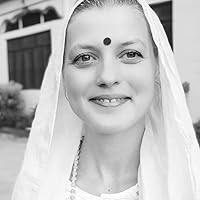
Gurmukh Kaur Khalsa is a teacher of Kundalini Yoga and a pioneer in the field of pre-natal yoga. She is the co-founder and director of the Golden Bridge Yoga Center in Los Angeles.
The Eight Human Talents is part-story and part-instruction manual for the practice of Kundalini yoga. I've only ever practiced hatha yoga and this is very different from what I've learned. I've tried a couple poses and this is definitely going to take some practice.
If I learned anything from this book, it is to breathe deeply. One of Gurmukh's main points is that by connecting with the breath, we reconnect with ourselves.
Also, don't be afraid to try, even if you fail. "If we can make one step towards happiness, towards healing, towards change, miracles begin to happen. The Kundalini Yoga and Meditation in this book are a way of making those small steps towards happiness. If you will try even one thing from this book-one breathing exercise, one stretch, one meditation- know that somewhere I am cheering right out loud for you, because I know that making that first step is the hardest thing to do..." introduction, xxii.
Some of Gurmukh's stories were saccharine sweet, but I enjoyed most of them. "We are powerless over every other person on the planet, and we only have power over our own lives. No matter how problematic the people in your life are, you are always the solution." pg 125.
I'll have to get back to you on if these exercises deliver on the myriad of promises that Gurmukh makes. So far, I've discovered that my lower back needs to be strengthened and I should work on my neck flexibility.
She ties all of her suggested poses to different chakras and energies found within the body. If that concept is too far out for you, you may be better served with a different introduction to Kundalini yoga.
Recommended for beginners to moderately experienced practitioners.
This is probably the best overview of Kundalini yoga I've read to date. I would recommend it both as an introduction to the "newbie" and as a "go deeper" book for someone who wants to know more. It can be experienced and enjoyed on both levels.
A disclaimer: This is a very spiritual + God-ful book. As an atheist, this is something that I find I sometimes have to work really hard to get past, you know? The author has such a personal and profound relationship with a very specific kind of God, and I neither have that nor aspire to it, and in most cases, that creates a barrier--it makes it hard for me to really sink into the book, because there is a part of me that just goes, "But that is not my worldview, and I don't believe any of this" and I can't get past that to the material that is applicable to me anyway. But Gurmukh achieves--I'm not quite sure how to express it. I don't share her religious or spiritual faith. But I drank from the text she provided anyway, and I didn't have to spit God out.
That sounds terrible. Let me rephrase: although her approach to Kundalini yoga, meditation, chakras, all the material she presents is in large part faith-based (she is an American Sikh, as many Western Kundalini yoga teachers are and as she discloses on page one of the book), this atheist didn't have a "not for me" reaction as a result. I'm not sure why. Maybe because it's presented so gently and lovingly. Maybe because I can mentally substitute "Divine" "Creation" "Universe" "Life" "Higher Self" or any of those words for God (I know it's a semantics game... but it's an important one). Maybe because the underlying message/practice is so clear and faith-free... and the faith--whatever it is from you--grows from that?
Anyway. Highly recommend this book to anyone, atheist or not, who is interested in learning more about Kundalini yoga, meditation, chakras... the world + universe.
I'll be re-reading this book for months if not years.
This is a book about Kundalini Yoga, which is an ancient Sanskrit practice. The '8 Human Talents' refer to the energy chakras in our body, which each represent certain energies and intentions and feelings, etc. I would love to believe in it 100%, I truly would. We're all looking for ways to feel better. I do take it all with a grain of salt. I tried many of the yoga exercises in this book, specifically designed to help with whatever physical and/or mental ailments are discussed in certain chapters. And, son-of-a-gun, those poses and breathing techniques made a difference. So much so, that I now regularly attend Kundalini Yoga classes in my neighborhood. Negative aspect of that: doing those rather strange poses and techniques ('Breath of Fire', anyone?)in front of strangers fills me with dread and anxiety. Hmm...something I need to work on? I believe Gurmukh would suggest that to be possible. (Perhaps I'll start doing it more at HOME.)
Most of the anecdotes I found very unbelievable. Towards the second half of the book I wasn't really taking it in, just skimming past them. I did find the meditations and breathing exercises useful, though, and I enjoyed reading about the role each of the power centers plays in every day life. I also liked reading about each chakra's "shadow side."
I've tried quite hard to live a more positive life over the past few years and decided to read this book after having it in my house for a few months. I found every page to be captivating and thought-provoking. It will easily be referenced at an almost biblical-level. This book gave me the comfort and insight I needed, when I needed it. It's daunting to practice self-care but this book really reminds you of the importance and was never once too "hokey" or unbelievable.
I read this book as part of my yoga teacher training, and honestly it is one of the best books I've read. The way she breaks down the chakras/energy centers is fascinating, and I love her first hand account of stories from clients and her own stories. I'm not going to lie, when I read "yoga instructor to the stars" I was a bit put off. But after reading it, I realized why Gurmukh is well loved. Very inspiring as a budding yoga teacher!
I love this book the breathing and physical poses for each evolving each chakra are so helpful. I keep this book as a reference book and use it regularly to create my yoga practices for the week. I decided to read the book in its entirety again and I am glad I did. I highly recommend especially if you study yoga.
I wasn't expecting much after I saw asanas - I've read a ton of yoga books, but this was actually pretty fantastic. LOTS of anecdotes, stories, but lots of inspiring moments that make me want to deepen my yogic path and practices.
"Misery is a choice we can always count on. Misery is not elusive, it's always there for us." (p.xxii)
"We call Kundalini Yoga the “Yoga of Awareness,” because it teaches you how to become aware of the energies you contain, and then it teaches you how to shift gears when you need to. To be successful in life, you have to learn to change your gears to meet the circumstances around you. If you are not in control of your own transmission, life will be a disaster for you, no matter who you are. You have to learn to control your own energy." (p.xxvi)
"Yoga is similar to what keeps most animals fit. One only has to watch the stretching exercises that a cat does, and then see her magnificent body in action as she chases a bird, to understand that the systematic stretching and relaxation of our muscles can keep us fit for life." (p.xxxv)
"As long as we deny that we have anything in common with the person we are resenting, it will be impossible to accept him or her. If, instead, we try to imagine what another person is feeling, we find the iron chains of resentment automatically begin to loosen." (p.17)
"Generally, people associate creativity with artists; in actuality, creativity is everyone's birthright. It is the act of living here and now, finding out what makes you happy, and then pursuing that path or way. It involves discovering what it is you genuinely love to do, and allowing it to manifest in your life. Your creativity, like every one of your human talents, is a direct gift from God." (p.30)
"If you define abundance in terms of feeling there is plenty, you will be rich every day of your life." (p.38)
"A generation of babies who are welcomed to the planet by their parents will lead this earth to peace."(p.39)
"When we commit to something, anything that is basically good, no matter how small, it has a huge effect on other people, in ways that are almost impossible to quantify." (p.68)
"Death is not unimportant or important- but FEAR is very important. Any moment of life is a dead moment when you are not at your highest frequency. To die is an art. Great are those who have learned to die with smiles on their faces." (p.100)
"If you sit still, God will come to you. In fact, everything will." (p.119)
"The people who really love you will eventually realize that you need to be your most authentic self. Try to remember that anyone who doesn't love you when you are being the best person you know how to be, might be someone who is not really your friend." (p.123)
"Learn to give up blame so you can find your own truth and live it." (p.124)
"We are powerless over every other person on the planet, and we only have power over our own lives. No matter how problematic the people in your life are, you are always the solution." (p.125)
"If you deny parts of who you are and why you are here on earth, it will inevitably manifest itself as disease in the body." (p.128)
"Addiction is the separation of you and your soul. The separation is so painful, you could die from the pain. So you fill that space with an addiction until you are shown a way to bring your body and your soul as one." (p.133)
"Take whatever you do and give it meaning. That is the essence of yoga itself." (p.178)
"Our struggles are always our growth opportunities. Usually, when people describe life-altering events from which they learned and grew and progressed, there is some element of commitment and keeping up. What yoga provides is a safe, nurturing environment to allow yourselves to experience struggle, to feel pain, and to learn from it. Each exercise we do can become a metaphor for a larger life experience that we will undoubtedly go through on the 'outside'. Yoga makes us more flexible, but not just in our bodies. A flexible spine creates a flexible mind." (p.179)
No joke, this is the recommended book that I'm supposed to be reading for my yoga college course.
Here's my problem with it...
I understand that the chakras are a tricky business, and that it's going to be kind of hard to explain them without sounding all neo-crazy. That's okay I suppose, I'd like as much hard science as possible but she's explaining something only partially backed by such.
My problem? Constant mention of God. That negates the entire study for me. I'm an atheist, and yes I'm alright with theists, but how can I pick up a book that I paid $15.00 for in good faith for my college class, to have it link everything to God?
I've only gotten through a matter of pages so far.
This is a personal thing, and to me it makes me uncomfortable and frustrated. To someone else it would not be an issue, and certainly it's true that Kundalini Yoga has brought a greater level of happiness to many people. But I will have a hard time getting through this book if I manage at all.
A friend of mine advised me to look into Kundalini Yoga. Because there are no Kundalini Yoga teachers in my vicinity, I explored the Internet and found Gurmukh, who had been teaching Kundalini Yoga for about twenty years, when writing the book. I really liked reading the book. Not so much because it gave me new insights, moreover because it reflected my own insights and did a wonderful job at integrating them. It felt like coming home. It didn't answer all the questions I had and it didn't give me a straightforward answer to that one question that's on my mind for most of the day recently, but it did give me some ways to explore and I am grateful for that. Sat Nam.
Hm. I'm not exactly part of the target audience for this book, as I don't believe in chakras and auras. So a book about "balancing" them doesn't do much for me. But I did take a class at the author's studio in Hollywood, and I have to say it was a great experience: physically challenging and mentally refreshing. The author spends some time on her life story, which I found compelling, and some of the anecdotes about her students were interesting. If aura-reading is your thing, you'll like this one... if not, best skip it!
There's a TON of kriyas (exercises) and meditation techniques scattered throughout the book. Great if you're an experienced yogi or someone just starting out along your path and you'd like to delve a little deeper into the chakra system and Kundalini Yoga.
I loved hearing her journey and those of her students gathered from her 30+ years as a Kundalini teacher and practitioner. Gurmukh has a great knack for storytelling. I was inspired while reading this book because her aliveness and connection to this practice pretty much seeps from the pages!!
I'm only 50 pages into this book, but it's delightful. The explanations of the talents and shadow emotions related to each chakra are really fascinating and easy to relate to. Stories are employed to illustrate the manifestation of the chakras, and it really gets you hooked. I hate to admit it, but I usually have a hard time paying attention when I read yoga philosophy. This is so different and conversational and has just the right amount of asana and pranayama mixed in.
I have the author's yoga DVD and have found it one of the better available for beginners to yoga. That's what spurred me to pick up the book.
I'm not sure what to think of the book. It's very uneven. There are some terrific explanations of breathing and exercises to practice. There are some interesting insights. Then there are some anecdotes that simply defy reason and are unbelievable...as in I literally cannot believe them.
so i pretty much read this entire book today. i'll admit i didn't read every word. and i might have skipped the entire last chapter. but i did some of the exercises. it's very conversational for a yoga book. six tenths self help four tenths yoga. that said it must have something worth while if i was compelled to read it in a day.
I read this book for my yoga class. There is a chapter on each of the 8th chakras. I did gain a few insights and ideas (ie breathing techniques) to help myself improve in certain areas, but there was a lot of stuff that is hard to take seriously. Overall it's a feel-good book that could probably help you improve in all aspects of your life, if you let it.
A good book on the eight chakras and some basic exercises to "open" them. Gurmukh is a very well-respected teacher of kundalini yoga ("the yoga of awareness"), and I think her videos do a better job of introducing kundalini practice and I definitely recommend those. This book is a good supplement to the videos for those who want to learn more.
Each chapter is devoted to one of the chakras. Kundalini yogis see the aura as the 8th chakra, thus the title. Each chapter contains Kundalini yoga exercises to strengthen/awaken that chakra. What's not to love about Gurmukh!
If you are openminded and feel inspired, read this book. It is one of my "go to's" weekly. It teaches mindfullness and enlightenment through chakra balance. I love Kundalini Yoga!