The USS Sharkfin was twelve hours out of the Strait of Gibraltar on course 278 degrees true, destination New London. The men on sonar watch weren’t listening for the approach of an enemy. They were primarily concerned with the sonar search patterns that were being beamed out ahead and to each side of the submarine’s bow. There was a chance that the sonar operators might have heard the whining, high-pitched noise of a torpedo racing up the submarine’s wake but it was a remote chance. The Sharkfin’s big seven-bladed propeller was turning fast enough to drive the huge submarine at a steady twenty knots, making just enough noise to almost muffle any sound that came from directly astern. The torpedo zeroed in on the spinning propeller and exploded with a roar....The stricken submarine shuddered and slowed, its interior utterly still, filled with water, as the Sharkfin coasted downward on a long, planing descent into the black sea.It was an unprovoked attack, a deliberate act of aggression. When Vice Admiral Mike Brannon of the U.S. Navy received word that the wreck of the Sharkfin had been found, with a gaping hole in its stern, he could only conclude that the Soviets had, without warning, attacked and destroyed a U.S. nuclear submarine. He could not let the incident pass unretaliated. Yet whatever steps he took, he risked leading the two superpowers into a state of war. If he informed the President, it might take weeks for Congress to take action — too long. Whatever response was to be made, it had to be made decisively and immediately.Harry Homewood, author of Final Harbor and Silent Sea, has written a novel of mounting tension; a story of today’s naval superpowers locked in a deadly battle that brings an unknowing world to the brink of nuclear holocaust.Harry Homewood was a qualified submariner before he was seventeen years old, having lied to the Navy about his age, and serving in a little "S"-boat in the old Asiatic Fleet. After Pearl Harbor he reenlisted and made eleven war patrols in the Southwest Pacific. He later became Chicago Bureau Chief for Newsweek, chief editorial writer for the Chicago Sun-Times, and for eleven years had his own weekly news program syndicated to thirty-two PBS television stations.
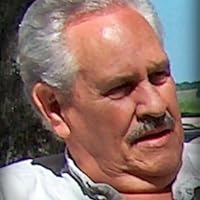
Harry Homewood was a qualified submariner before he was seventeen years old, having lied to the U.S. Navy about his age. He served in a little "S"-boat in the old Asiatic Fleet. After Pearl Harbor, he re-enlisted and made eleven war patrols in the Southwest Pacific.
After the war, Homewood became Chicago Bureau Chief for Newsweek magazine, chief editorial writer for the Chicago Sun-Times, and for eleven years had his own weekly news program syndicated to 43 PBS television stations.
Homewood was the author of 6 books and lived with his wife in Tucson, Arizona, until his death in 1984.
This is the last book of a trilogy about submarines. Unlike most of Homewood’s books which were about World War II submarines, this book is about the Cold War. Homewood is well educated about the Silent Service and has written many books on the subject. But I felt the plot of this story was a bit unrealistic; that being said, I did enjoy the book. I found it to be exciting and loaded with action and suspense.
I read this as an audiobook downloaded from Audible. The book is six hours and twenty-eight minutes. Corey M. Snow does a good job narrating the book. Snow is a full-time audiobook narrator.
This book was written in 1982, I read it in 2024. The story in this book takes place in the 1980s and the environment is dramatically different from Homewood’s books that take place in the Second World War. The United States submarines seem to have an important advantage over the USSR in silence, tracking and automation, and targeting of submarine based nuclear missiles. This means that Russia can never win a nuclear war, even if they destroy all US land and air missiles. This is obviously unacceptable to the USSR who designed and deployed a much better torpedo that could fully destroy US submarines at much longer ranges.
The Russians decided to try one of their new torpedoes with a live test on an unsuspecting, surprised US submarine. The torpedo performed as expected and the US sub was destroyed and sunk with the loss of the entire crew in 12,000 feet of water. The US commanding Admiral responded to the USSR action with his own unsuspecting, surprised USSR submarine. This triggered another response from the USSR that could trigger nuclear war between the two hostile countries. But, not just the two countries. Other countries plan to take advantage of this confusion to initiate their own surprise actions against long term enemies.
Most of the rest of the book is taken up with the odd jab delivered by US and USSR personnel to find out what each other is doing and who is doing it. Third-party personnel are also involved considering mobilizing their troops and or trying to communicate with the heads of state of both countries. Submarines are communicating with their headquarters or doing their own thing in preparing for battle or other orders.
The climax comes with a totally surprising action. Submariners’ lives on shore training, between missions and fighting their own ‘within the navy’ battles that could impact their rank and even tenure. This gives the characters a more rounded, believable dimension and tells what tools they have. I found the Admiral’s reaction following the sinking of one of his submarines to be totally unlikely without approval from above. I could not stop thinking that this one action rendered the entire plot to be unlikely. Non-the-less, this was an interesting story with enough action to satisfy. Three & half stars.
With few exceptions this story could have happened. US Attack Submarines have been shadowing g Russian sea craft since at least the 60's. Ours have always been slightly ahead of them in tech firms stealth and detection. Interesting note that other than the USS Thresher in 1962 and the USS Scorpion in 1968, we have not lost a boat. Neither of them released an ounce of radiation. Admiral Rickover lived long enough to see the 100th nuke boat commissioned. Never a Boat Skipper always an engineer. Very peronav Blend to white hats and tough as nails on "his officers" there were many Ricky Rejects serving on fleet boats. The interaction between fore and aft was real. An attack had two crews and pretty much separated aboard and definitely on liberty. We called the glow worms. Recommend this book to any devotee of WWII and cold war history.
Unfortunately, despite the author's previous two books being pretty good, this third book is another book where I found the main premise to be completely unbelievable. That really made the whole story not work for me, so I didn't enjoy this book. The writing was OK, but the characters weren't particularly well-drawn, so sometimes I had a difficult time trying to keep track of who was who. I wouldn't really recommend this book, even to someone who is interested in submarines - there are much better books out there.
I read a lot of books. I have, of late finished a 26 book series by another author. I am extremely pleased that I said to myself "I think I'll try these". Try may mean to see if something fits. Believe me, your three books on submarines fit to a tee. I truly truly enjoyed them each for what it was, and the third for "making it right". My appreciation for your writing skill. My only complaint is that they all three kept me up past my bed time, and the last would have kept me up regardless the hour.
This book sort of reminded me a little bit of the movie Crimson Tide. Although the stories are different the edge of your seat non stop drama adding in the fact that each side sank another's sub. Tensions are extremely high throughout.
Makes you wonder if stuff like this really did happen.
The world leaders referenced in this book are very dated and consequently sets a world stage about 20-30 years ago. Aside from that distraction Torpedo is still a thought provoking and well written work of military fiction. I will include this author in future book searches.
This entire review has been hidden because of spoilers.
Not really a torpedo or submarine story. The almost mutual world destruction scenario could have been with land based missiles or bomber aircraft. Still an entertaining read.
Sorry to have finished the sub book series. Being a retired snipe, I enjoyed the reading. I was onboard a rescue salvage ship when the Thresher went down, and we where the first on scene. subs have always been my passion. Good books.
You would need to know how to play chess to figure out this book It kept me awake with my dog each night while he did his business Excellent story I'm glad we did so good so did my dog think so too
It well could of happened, or something similar that we were never told the truth about. The unknown cause of the submarines Scorpion, and Thrashed come to mind.
This book goes further in Mike Brannon's career. There is a lot more politics, but plenty of suspense as well, but not much in the way of battle scenes since WW II ended in book II.
The question to ponder is if you are one of the two big boys on the block as far as military might is concerned, when do you flex your muscle? As you develop more high tech weapons that have no means to legitimately test except in battlefield, how do you resist the urge to test them...or do you? Think about that as you read this book.
This is a good read (no pun intended) and the completion of the Silent War trilogy. I liked them all. I recommend them to anyone who likes military novels.
As a self proclaimed student of WW II, I really enjoyed the first two books I read by Mr. Homewood, and thought I'd take a chance and read his third book, "Torpedo". I thoroughly enjoyed it and recommend it to anyone who likes War Stories. I would like to be able to ask the author the reason he made a point of putting two officers in his first two books who were obviously Jewish, the sonarman who went down with the sub whose name I believe was Cohen, the rabbinical student, and then Stein in the second book.