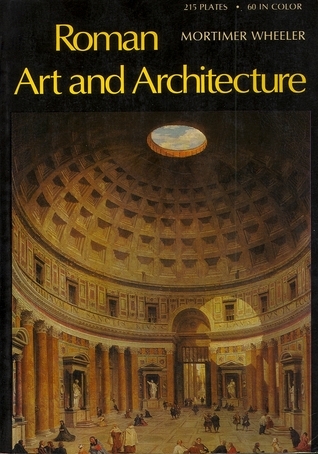
This book constitutes a summary, pleasant introduction to its subject, written not to overawe readers ignorant of its topics but equally not to speak down to them.
The book occasionally wants for a more systematic approach, It is reasonable to desire, for instance, having been told of certain exemplars of the second and fourth Pompeian style, that the first and third might at least be mentioned, but that is not so. More seriously, after saying that the interior of the Pantheon is “one of man’s rare masterpieces”, Wheeler could reasonably be expected to describe it in some detail; instead, he passes on to bath-buildings with an abruptness that is as “thoroughly uncomfortable” as the disharmony between portico and rotunda in that famous temple.
Nevertheless, such breeziness contributes to the conversation style of the book; after reading it, one could easily imagine having Wheeler as an erudite and entertaining dinner guest. His thesis that Rome’s aesthetic achievements deserve respect as being different in kind, not inferior in degree, to those more renowned from Greece is convincingly put while never dominating the factual basis of the book. Overall, it is an excellent read.