

What do you think?

Andělé nad Teheránem
Liliina matka se jedné noci promění v anděla a odlétne neznámo kam. Její dcera po ní začíná pátrat. Barvitá sága o osudu a zakázané lásce čerpající z tradic perské a židovské kultury. Kniha Giny B. Nahai, která se opírá o důkladnou znalost íránské židovské historie, oživuje rodový řetězec žen, které jsou sice pevně zakořeněny ve své zemi, avšak pokoušejí se zbavit vlády osudu a dát svému životu nový směr v zemi nových možností - v Americe.
352 pages, Hardcover
First published January 1, 1998
About the author
Gina B. Nahai
16 books100 followersGina B. Nahai is a best-selling author, and a professor of Creative Writing at USC. Her novels have been translated into 18 languages, and have been selected as “One of the Best Books of the Year” by the Los Angeles Times and the Chicago Tribune. They have been finalists for the Orange Award, the IMPAC Award, and the Harold J. Ribalow Award. She is the winner of the Los Angeles Arts Council Award, the Persian Heritage Foundation’s Award, the Simon Rockower Award, and the Phi Kappa Phi Award. Her writings have appeared in the Los Angeles Times, Chicago Tribune, San Francisco Chronicle, Los Angeles Magazine, and Huffington Post. She writes a monthly column for the The Jewish Journal of Greater Los Angeles, for which she has been twice a finalist for an L.A. Press Club award.
Nahai’s first novel, Cry of the Peacock (Crown, 1992) told, for the first time in any Western language, the 3,000-year story of the Jewish people of Iran. It won the Los Angeles Arts Council Award for Fiction. Her second novel, Moonlight on the Avenue of Faith (Harcourt, 1999), was a finalist for the Orange Prize in England, the IMPAC award in Dublin, and the Harold J. Ribalow Award in the United States. A #1 L.A. Times bestseller, it was named as “One of the Best Books of the Year” by the Los Angeles Times. Her third novel, Sunday’s Silence (Harcourt, 2001), was also an L.A. Times bestseller and a “Best Book of the Year.” Her fourth novel, Caspian Rain was published in September ‘07, was also an L.A. Times bestseller, was named “One of the Best Books of the Year” by the Chicago Tribune, and won the Persian Heritage Foundation’s Award.
Nahai is a frequent lecturer on the contemporary politics of the Middle East, has been a guest on PBS, CNBC, as well as a number of local television and radio news programs, and has guest-hosted on NPR affiliate KCRW (The Politics of Culture). A judge for the Los Angeles Times Book Awards (Fiction, First Fiction), she has lectured at a number of conferences nationwide, and served on the boards of PEN Center USA West, The International Women’s Media Foundation, and B’nai Zion Western Region.
Nahai holds a BA and a Master’s degree in International Relations from UCLA, and an MFA in Creative Writing from USC. She lives in Los Angeles, where she’s at work on a new novel.
Nahai’s first novel, Cry of the Peacock (Crown, 1992) told, for the first time in any Western language, the 3,000-year story of the Jewish people of Iran. It won the Los Angeles Arts Council Award for Fiction. Her second novel, Moonlight on the Avenue of Faith (Harcourt, 1999), was a finalist for the Orange Prize in England, the IMPAC award in Dublin, and the Harold J. Ribalow Award in the United States. A #1 L.A. Times bestseller, it was named as “One of the Best Books of the Year” by the Los Angeles Times. Her third novel, Sunday’s Silence (Harcourt, 2001), was also an L.A. Times bestseller and a “Best Book of the Year.” Her fourth novel, Caspian Rain was published in September ‘07, was also an L.A. Times bestseller, was named “One of the Best Books of the Year” by the Chicago Tribune, and won the Persian Heritage Foundation’s Award.
Nahai is a frequent lecturer on the contemporary politics of the Middle East, has been a guest on PBS, CNBC, as well as a number of local television and radio news programs, and has guest-hosted on NPR affiliate KCRW (The Politics of Culture). A judge for the Los Angeles Times Book Awards (Fiction, First Fiction), she has lectured at a number of conferences nationwide, and served on the boards of PEN Center USA West, The International Women’s Media Foundation, and B’nai Zion Western Region.
Nahai holds a BA and a Master’s degree in International Relations from UCLA, and an MFA in Creative Writing from USC. She lives in Los Angeles, where she’s at work on a new novel.
Ratings & Reviews
Friends & Following
Create a free account to discover what your friends think of this book!
Community Reviews
Displaying 1 - 30 of 141 reviews

February 18, 2018
I was keen on finding a read with hints of magical realism in it, when I came across this wonder of a book centered on just that, with the added bonus of featuring the Jewish ghetto of Tehran.
Similar to one of my favorite multigenerational books, The Beauty Queen of Jerusalem, this reads starts off on a prominent related cast of female characters with a hint of otherworldliness in their everyday life. Spinning tales of signs and superstitions, falling victim to the inevitability of Destiny, featuring dreams and memories of ghosts, and stories of wayward ancestors, it seemed like I'd hit jackpot with picking up Moonlight on the Avenue of Faith.
All they wanted was to stay in one place long enough to belong.
And for the first part of the book, I had nothing but praise in my words. I especially appreciated the grand, layered storytelling that reveals itself with time. You’re never sure of a single thing until you've followed the tale and its characters to the end. Which is where my appreciation for the peculiar side characters comes in. Their world, full of superstition, had me in its spinning webs. Most notably, Alexandra the Cat, whose every move was clouded with an air of mystery, was the first to catch my attention.
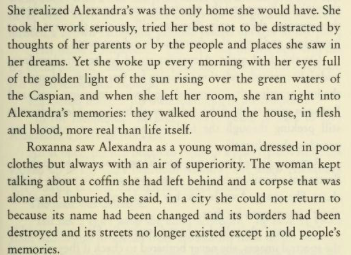
This above passage was a prime example of having a storyline that doesn’t disappear with the next chapter. And having it all click together was beyond satisfying to experience.
Which is what saddened me most about the novel, knowing that the minute our main character, Roxanna, would move away from her family's home, and later her place at Alexandra's, the book would deteriorate in time.
Because unlike the novel I mention at the start of my review, the Jewish theme, which I thought would be a prevalent one and what had me so keen on reading this book, was practically non-existent the more I read on; it disappeared with the generations. And I don't feel like I learned anything solid about the cultural value within the Jewish ghetto of Tehran. I feel like we barely received any scenes of camaraderie, or even simple dialogue exchanged between the Iranian-Jewish characters to receive some semblance of home and community.
It also didn't help that at the same time that I put all these points together, Moonlight on the Avenue of Faith was starting to lose its steam for me. Knowing this book wasn't going to have a saving grace in the upcoming pages for me, I decided it best to quit ahead, as I could feel myself growing agitated and furious with the upcoming storyline.
It's such a shame as well because this started out as an interesting tale of intersecting family lines and dealing with the burden of Destiny, yet ended on such a miserable case of virtually abandoning all the character building we had for Roxanna's family, and instead putting the focus on her new marital home where she feels like an outsider, and as a result, so did I as the reader. All this leads in the end to her daughter, Lili, being stuck in the hands of strangers, which is where the utter disregard for their religion is shown most notably in the form of sending her off to a Catholic school... While her mother is off doing who knows what to reach her supposed 'freedom' that she didn't even get to receive.
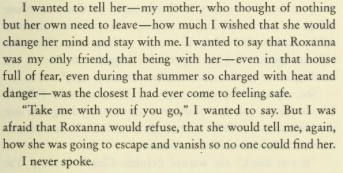
At a certain point, the book just hit a point where the story wasn't really moving forward or contributing any valid information that propelled the characters along. Like, there's literally a whole page dedicated to expanding on a random bus driver who has no point in the overarching theme... And I had to put a stop to it by declaring enough is enough.
Bottom line: I'd only recommend reading this book for its introducing fifty-something pages that encompass and expand on so much.


Note: I'm an Amazon Affiliate. If you're interested in buying Moonlight on the Avenue of Faith, just click on the image below to go through my link. I'll make a small commission!

Support creators you love. Buy a Coffee for nat (bookspoils) with Ko-fi.com/bookspoils

Similar to one of my favorite multigenerational books, The Beauty Queen of Jerusalem, this reads starts off on a prominent related cast of female characters with a hint of otherworldliness in their everyday life. Spinning tales of signs and superstitions, falling victim to the inevitability of Destiny, featuring dreams and memories of ghosts, and stories of wayward ancestors, it seemed like I'd hit jackpot with picking up Moonlight on the Avenue of Faith.
All they wanted was to stay in one place long enough to belong.
And for the first part of the book, I had nothing but praise in my words. I especially appreciated the grand, layered storytelling that reveals itself with time. You’re never sure of a single thing until you've followed the tale and its characters to the end. Which is where my appreciation for the peculiar side characters comes in. Their world, full of superstition, had me in its spinning webs. Most notably, Alexandra the Cat, whose every move was clouded with an air of mystery, was the first to catch my attention.
This above passage was a prime example of having a storyline that doesn’t disappear with the next chapter. And having it all click together was beyond satisfying to experience.
Which is what saddened me most about the novel, knowing that the minute our main character, Roxanna, would move away from her family's home, and later her place at Alexandra's, the book would deteriorate in time.
Because unlike the novel I mention at the start of my review, the Jewish theme, which I thought would be a prevalent one and what had me so keen on reading this book, was practically non-existent the more I read on; it disappeared with the generations. And I don't feel like I learned anything solid about the cultural value within the Jewish ghetto of Tehran. I feel like we barely received any scenes of camaraderie, or even simple dialogue exchanged between the Iranian-Jewish characters to receive some semblance of home and community.
It also didn't help that at the same time that I put all these points together, Moonlight on the Avenue of Faith was starting to lose its steam for me. Knowing this book wasn't going to have a saving grace in the upcoming pages for me, I decided it best to quit ahead, as I could feel myself growing agitated and furious with the upcoming storyline.
It's such a shame as well because this started out as an interesting tale of intersecting family lines and dealing with the burden of Destiny, yet ended on such a miserable case of virtually abandoning all the character building we had for Roxanna's family, and instead putting the focus on her new marital home where she feels like an outsider, and as a result, so did I as the reader. All this leads in the end to her daughter, Lili, being stuck in the hands of strangers, which is where the utter disregard for their religion is shown most notably in the form of sending her off to a Catholic school... While her mother is off doing who knows what to reach her supposed 'freedom' that she didn't even get to receive.
At a certain point, the book just hit a point where the story wasn't really moving forward or contributing any valid information that propelled the characters along. Like, there's literally a whole page dedicated to expanding on a random bus driver who has no point in the overarching theme... And I had to put a stop to it by declaring enough is enough.
Bottom line: I'd only recommend reading this book for its introducing fifty-something pages that encompass and expand on so much.
Note: I'm an Amazon Affiliate. If you're interested in buying Moonlight on the Avenue of Faith, just click on the image below to go through my link. I'll make a small commission!
Support creators you love. Buy a Coffee for nat (bookspoils) with Ko-fi.com/bookspoils

March 31, 2017
Odporúčam. Tak ako som ju zobrala do rúk a začala čítať, tak som len nemo čakala, čo bude ďalej. Neviem, čo k nej napísať iba prečítajte si ju. :)
October 28, 2011
I really, really wanted to like this book more than I did. It has everything I normally like in a book: magical realism, interesting settings, immigration and exile themes. Unfortunately, it just didn't come together for me. I think the flaws were that the "magical" parts were introduced too early, neglected, and then brought back too late; and that the characters weren't fleshed out enough (there were too many of them). The only saving grace was that I learned a tad bit about the pre-revolutionary existence of a Jewish community in Iran. As someone who doesn't know much about Iran beyond contemporary news reports, the image of a Farsi-speaking Iranian rabbi sort of blows my mind! I wouldn't totally write off this author, though this book was disappointing.

January 3, 2008
When we claim a moment to be magical, we feel as if that moment transcends our normal experiences, our ingrained rules, and our cultural outcomes. Magic raises us out of skepticism slowly but if it is good enough, we become fervent believers.
Magic realism is a literary term describing how a story is told. The stories are grounded in reality but some characters have "supernatural" or larger-than-life abilities. With magical realism, women can take flight with dewy, velvet wings, fleeing a life that only had one outcome by trying to escape her iron-clad destiny.
Authors such as Gabriel Garcia Marquez (author of One Hundred Years of Solitude and Love in the Time of Cholera - which was just released as a movie) and Isabel Allende (author of The House of Spirits) and Gina B. Nahai (author of Moonlight on the Avenue of Faith) are some authors who write magical realism. Gina Nahai's character, Roxanna the Angel, took flight from a generational destiny and from Tehran where a woman's ability to escape her fate is so difficult that she must don silky white wings and leap from a balcony with all the faith that she will land softly in a new place.
"Moonlight on the Avenue of Faith" is a powerful, compelling, and fascinating novel depicting several women's lives, women who refuse to meekly accept the lot they were assigned in life and women who forged a new life for themselves.
These women didn't create their new lives without sacrifice, humiliation, pain, loss, or mistakes, yet they succeeded in reinventing themselves and elevating their human experience beyond the level of survival.
Mercedes the Movie Star used her extreme beauty to control the men who thought they controlled women. Fräulein Claude completely overhauled herself by denying her national heritage and insisting that she was of German noble descent. Alexandra the Cat also claimed a noble birth and presumed all the dignity that comes with such a claim. Roxanna the Angel literally flew away from her destiny until she could no longer avoid past and her choices.
The story is mostly about Roxanna and the effect her choices had on the people she loved, including her daughter Lili. When trying to make sense of her life and understanding her choices, Roxanna told her daughter:
"In the beginning, I tell Lili, there were many choices and I believing I was doomed, let them go to waste."
Even though Roxanna fled, she never believed she could truly escape her destiny and maintain any relationship with her family and friends - they were incompatible. This conviction led her to make devastating, painful choices.
I've heard the voices of many women who feel so trapped that they become convinced that absolute escape is the only solution. Famous female authors like Sylvia Plath and Virginia Woolf are two women who chose death as their reconciliation. Other women are not as extreme but they fight the chasm between who they think they should be and who they believe they are with an exhaustive force.
Do you ever feel like reinventing yourself or simply escaping? How would you do it? What would you be escaping? Is your reinvention completely incongruent with your current life?
I encourage you to read "Moonlight on the Avenue of Faith" (1999) by Gina B. Nahai to see how her characters managed their reinvention.
Magic realism is a literary term describing how a story is told. The stories are grounded in reality but some characters have "supernatural" or larger-than-life abilities. With magical realism, women can take flight with dewy, velvet wings, fleeing a life that only had one outcome by trying to escape her iron-clad destiny.
Authors such as Gabriel Garcia Marquez (author of One Hundred Years of Solitude and Love in the Time of Cholera - which was just released as a movie) and Isabel Allende (author of The House of Spirits) and Gina B. Nahai (author of Moonlight on the Avenue of Faith) are some authors who write magical realism. Gina Nahai's character, Roxanna the Angel, took flight from a generational destiny and from Tehran where a woman's ability to escape her fate is so difficult that she must don silky white wings and leap from a balcony with all the faith that she will land softly in a new place.
"Moonlight on the Avenue of Faith" is a powerful, compelling, and fascinating novel depicting several women's lives, women who refuse to meekly accept the lot they were assigned in life and women who forged a new life for themselves.
These women didn't create their new lives without sacrifice, humiliation, pain, loss, or mistakes, yet they succeeded in reinventing themselves and elevating their human experience beyond the level of survival.
Mercedes the Movie Star used her extreme beauty to control the men who thought they controlled women. Fräulein Claude completely overhauled herself by denying her national heritage and insisting that she was of German noble descent. Alexandra the Cat also claimed a noble birth and presumed all the dignity that comes with such a claim. Roxanna the Angel literally flew away from her destiny until she could no longer avoid past and her choices.
The story is mostly about Roxanna and the effect her choices had on the people she loved, including her daughter Lili. When trying to make sense of her life and understanding her choices, Roxanna told her daughter:
"In the beginning, I tell Lili, there were many choices and I believing I was doomed, let them go to waste."
Even though Roxanna fled, she never believed she could truly escape her destiny and maintain any relationship with her family and friends - they were incompatible. This conviction led her to make devastating, painful choices.
I've heard the voices of many women who feel so trapped that they become convinced that absolute escape is the only solution. Famous female authors like Sylvia Plath and Virginia Woolf are two women who chose death as their reconciliation. Other women are not as extreme but they fight the chasm between who they think they should be and who they believe they are with an exhaustive force.
Do you ever feel like reinventing yourself or simply escaping? How would you do it? What would you be escaping? Is your reinvention completely incongruent with your current life?
I encourage you to read "Moonlight on the Avenue of Faith" (1999) by Gina B. Nahai to see how her characters managed their reinvention.

March 14, 2007
I worried when everyone compared Nahai to Isabel Allende- that is a TALL order, you know? But the book is beautiful, absolutely beautiful and powerful, and all-encompassing. I put it down truly impressed.
The novel is about Lili, a girl whose mother Roxana one night sprouts wings and flies into the sky, not to be seen again for many years. And then it goes into what preceded that night and of course how this event affects the extended family around. I loved this book on two levels, both as a piece of literary loveliness and as a beautiful report about Jewish Iranian culture before the Revolution and the Los Angeles immigrant experience after it.
I flew through the book, falling in love with the characters one by one, consistently surprised at myself for not having read it earlier. Half the time I just shook my head wondering where Nahai came up with some of the details and these characters who will stay with me for a long time to come.
Bravo!
The novel is about Lili, a girl whose mother Roxana one night sprouts wings and flies into the sky, not to be seen again for many years. And then it goes into what preceded that night and of course how this event affects the extended family around. I loved this book on two levels, both as a piece of literary loveliness and as a beautiful report about Jewish Iranian culture before the Revolution and the Los Angeles immigrant experience after it.
I flew through the book, falling in love with the characters one by one, consistently surprised at myself for not having read it earlier. Half the time I just shook my head wondering where Nahai came up with some of the details and these characters who will stay with me for a long time to come.
Bravo!

June 19, 2016
The magical realism element did not connect me with the overall plot because it has too many historical events. If it wouldn't have been for Roxana the Angel's ability to fly with her wings, the rest of the story is based on historical events. Although it's beautifully written, loaded with imagery, towards half of the novel I felt that the majority of the female characters were evil, cruel, lusty, materialistic and children haters. The women were stronger than men, yet horrible mothers and wives, unexpected of Jewish-Iranians. The second half got better because Miriam demonstrated unconditional love, however, the ending is absurd! The fact that Roxana gained hundreds of pounds from one day to the other made no sense at all, although it's symbolic to the accumulation of her tragedies, it did not make any sense. It did keep me reading though, I just could not stop it.
August 19, 2016
This was a very different book. I turns out to be a family saga taking place in Iran from 1936 until 1972. This is the first time I have ever read or heard about some of these Iranian customs, superstitions and religious beliefs. Wow....what an eye opener.
Because of the originality, I had a hard time putting this book down.
Because of the originality, I had a hard time putting this book down.

March 19, 2017
S magickým podtónom v rozprávkovom šate zaobalený krutý príbeh.
Miestami rozprávka, miestami krutá realita a to sa prelínalo v celej knihe. Nechcela som byť jedinou postavou knihy, ale napriek tomu ma priťahovala. Nechcela som spoznať jediné miesto v deji, a predsa som ich videla pred sebou. Nechcela som zdieľať jediný osud z knihy, a predsa som s nimi žila.
Rozporuplná. A magická.
Miestami rozprávka, miestami krutá realita a to sa prelínalo v celej knihe. Nechcela som byť jedinou postavou knihy, ale napriek tomu ma priťahovala. Nechcela som spoznať jediné miesto v deji, a predsa som ich videla pred sebou. Nechcela som zdieľať jediný osud z knihy, a predsa som s nimi žila.
Rozporuplná. A magická.

September 30, 2014
Not for you if you're put-off by magic realism, which I am not. The author has crafted a lyrical novel which readers with a taste for the fantastic will enjoy. That would be me. And I most certainly did. I didn't read it. I ate it.

September 22, 2016
Moc pěkné čtení. Něco úplně jiného, něco trochu magického, ale bylo to nádherné.

May 22, 2013
Moonlight on the Avenue of Faith...the title jumped out at me in the stacks, when I read the cover and realized it was set in Iran, in Tehran's Jewish ghetto, I was so excited to have stumbled upon it.
In the beginning, this book reminded me of Gabriel Garcia Marquez...but now I am wondering if it is actually a cultural Persian style. In the last year I have read a handful of Iranian based fiction and there is always this poetic magic. Like dark fairytales, full of wonder and sorrow and the reality of suffering. Perhaps its the understanding and acceptance of the jinn and the desert that creates these metaphoric dances. Its so beautiful to me, it is so easy for me to digest and savor... words that are painted in the aroma of the unseen.
The story will break your heart over and over again and if you are lucky, you will look at yourself a little differently at the end.
In the beginning, this book reminded me of Gabriel Garcia Marquez...but now I am wondering if it is actually a cultural Persian style. In the last year I have read a handful of Iranian based fiction and there is always this poetic magic. Like dark fairytales, full of wonder and sorrow and the reality of suffering. Perhaps its the understanding and acceptance of the jinn and the desert that creates these metaphoric dances. Its so beautiful to me, it is so easy for me to digest and savor... words that are painted in the aroma of the unseen.
The story will break your heart over and over again and if you are lucky, you will look at yourself a little differently at the end.

October 9, 2007
One of the best books that I have read this year. It was actually recommended to me at the West Hollywood Book Fair and I bought it without even looking at it, good decision on my part.
Magical Realism is one of my favorite genres and they are kind of few and far between. This book was epic is scope, spanning many generations and families, each with their own stories. The book takes place primarily in Iran, Turkey and America and has a lot to say about cultural, political and generational issues. I really don't know what else to say about this book, other than it was completely captivating and I loved it!
Magical Realism is one of my favorite genres and they are kind of few and far between. This book was epic is scope, spanning many generations and families, each with their own stories. The book takes place primarily in Iran, Turkey and America and has a lot to say about cultural, political and generational issues. I really don't know what else to say about this book, other than it was completely captivating and I loved it!
May 14, 2007
this book will get you right between the eyes, so be sure you can have both of em open when you start this one - I read it all the way til the end, but I am a sap for the whole magic and history rolled into fiction.

September 7, 2009
I heard this author speak at the Decatur Book Festival. She is a fantastic speaker, so I decided to read her book. The book was such a nice story. This book gave me an idea of what Iran used to be like.

July 18, 2017
někdy tam bylo tolik postav,že jsem se ztrácela... ale celkově jsem snad tak něžnou knihu ještě nečetla. rodinná sága s neobyčejných lidech, která je napsána neobvykle a přitom úžasně. já rozhodně doporučuji, ovšem náročnějším čtenářům.
April 29, 2007
one of the most beautifully written books i've ever read. elements of magical realism make it a bit strange, but wonderful nonetheless.

December 9, 2023
I really enjoyed this book. It's a generation spanning story centering primarily around unlucky daughter Roxanna and her own daughter Lili. We begin in a Jewish ghetto in Tehran and travel widely through the years from Turkey to Istanbul to America. It's also a magic realism tale that weaves in fable-like elements to delve deeper into gender roles, cultural ties, and our ability to choose our destinies.
I went with four stars - overall I thought the movement of POV from chapter to chapter was handled well, but in some cases the perspectives became tangled and distracted me from the story.
But overall, a memorable family with resonant hopes, fears, rage, and tears. Recommended for those who like historical fiction, magical realism, or fiction that explores women's roles.
I went with four stars - overall I thought the movement of POV from chapter to chapter was handled well, but in some cases the perspectives became tangled and distracted me from the story.
But overall, a memorable family with resonant hopes, fears, rage, and tears. Recommended for those who like historical fiction, magical realism, or fiction that explores women's roles.
August 19, 2024
Reading a multi generational story told so well is such a gift. I loved this book. I so appreciated the magical realism intertwined in the most tasteful way

September 2, 2008
Roxanna is born into the Jewish ghetto of Tehran in the middle of the 20th century. A strain of bad luck follows her family and is thought to rest in her in particular. In her endeavour to save her family from this curse, she abandons them, leaving misery and heart-ache in her wake.
Can anyone escape their fate? Was she really always fated to cause this pain in the first place? Can the wounds be healed?
Gina B. Nahai uses dreamy imagery and a Persian version of magic realism to tell her tale of a family growing and struggling in Iran. They live through the rise and fall of the Shah, and the deadly revolution that put the Ayatollah Khomeini in power. The main character, Roxanna, is this generation's carrier of the bad luck that haunts the women of this family. Rather than be that bad luck, she chooses to run away. This abandonment carries with it a whole other set of painful consequences.
The narrative is sprawling and whimsical. It examines what is really fated to happen and what is simply the outcome of our choices. Either way, how does one not only survive those events, but thrive?
I really liked the message of personal responsibility, forgiveness, and the importance of family. As with other Persian/East Indian novels I've read, there is a curious distance to the story-telling. The narrative is laid out in a matter-of-fact fashion, with the characters rarely showing much self-knowledge or introspection. Unlike those other novels, however, this one gives the reader some hope that the characters are willing and able to find happiness.
I will be reading more by this author.
Can anyone escape their fate? Was she really always fated to cause this pain in the first place? Can the wounds be healed?
Gina B. Nahai uses dreamy imagery and a Persian version of magic realism to tell her tale of a family growing and struggling in Iran. They live through the rise and fall of the Shah, and the deadly revolution that put the Ayatollah Khomeini in power. The main character, Roxanna, is this generation's carrier of the bad luck that haunts the women of this family. Rather than be that bad luck, she chooses to run away. This abandonment carries with it a whole other set of painful consequences.
The narrative is sprawling and whimsical. It examines what is really fated to happen and what is simply the outcome of our choices. Either way, how does one not only survive those events, but thrive?
I really liked the message of personal responsibility, forgiveness, and the importance of family. As with other Persian/East Indian novels I've read, there is a curious distance to the story-telling. The narrative is laid out in a matter-of-fact fashion, with the characters rarely showing much self-knowledge or introspection. Unlike those other novels, however, this one gives the reader some hope that the characters are willing and able to find happiness.
I will be reading more by this author.

September 27, 2020
"There is a sorrow within me so deep, I have not been able to give it a name...
It is my mother's sorrow, and her mother's--the tears that they shed in the tear jar, that they drank alone, inconsolable.
I did not want my daughter to have this sorrow. I did not want to leave you those tears.
That is why I left: to take the sorrow out of your eyes."
At the age of five, Lilli watches her mother jump off the balcony of their house in Tehran, vanishing into the dark Iranian night as if she had grown wings and taken flight. Moonlight on the Avenue of Faith tells the tale of Lilli's mother's tragic life and the circumstances that led to the leap of faith that stole her away from her little girl.
This novel is steeped in magical realism, colorful characters, lyrical language, and an intimate look inside Iranian culture. It is a tale of generational curses, predestined sorrow, the sting of betrayal, and the power of forgiveness. ☆☆☆☆
It is my mother's sorrow, and her mother's--the tears that they shed in the tear jar, that they drank alone, inconsolable.
I did not want my daughter to have this sorrow. I did not want to leave you those tears.
That is why I left: to take the sorrow out of your eyes."
At the age of five, Lilli watches her mother jump off the balcony of their house in Tehran, vanishing into the dark Iranian night as if she had grown wings and taken flight. Moonlight on the Avenue of Faith tells the tale of Lilli's mother's tragic life and the circumstances that led to the leap of faith that stole her away from her little girl.
This novel is steeped in magical realism, colorful characters, lyrical language, and an intimate look inside Iranian culture. It is a tale of generational curses, predestined sorrow, the sting of betrayal, and the power of forgiveness. ☆☆☆☆

September 21, 2008
The question of fate - is it predetermined or is it of our own making is the subject of many books. This book took an interesting twist on the idea by using many different characters to examine this idea.
Following one main character and the people who have come before her and are facets of her existence made for a good read. The author did a very good job weaving the mystical with the historical with what life was like in a Jewish ghetto in Tehran from the late 19 century through the Islamic revolution.
While the ending seems a bit rushed and unfulfilled, it does not diminish the journey that has preceded it. While I didn’t need a literal “where is everyone now” ending, it did seem to just stop short of finding true resolution – leaving too much up to the reader to interpret.
Following one main character and the people who have come before her and are facets of her existence made for a good read. The author did a very good job weaving the mystical with the historical with what life was like in a Jewish ghetto in Tehran from the late 19 century through the Islamic revolution.
While the ending seems a bit rushed and unfulfilled, it does not diminish the journey that has preceded it. While I didn’t need a literal “where is everyone now” ending, it did seem to just stop short of finding true resolution – leaving too much up to the reader to interpret.
October 4, 2008
Moonlight on the Avenue of Faith reflects on the Jewish Iranian population of Teheran around the time of the revolution deposing the Shah, the consequences of which pushed the community into a diaspora fleeing a hostile home. The story, using “magical realism” as an occasional narrative thread, which sometimes flows naturally through the story, sometimes less so, focuses on a family believing itself cursed by an unlucky girl born in every generation. The core of the novel, which chronicles the path of the latest generation’s unlucky girl, and delves into what is fate, luck and chance, is engaging but I found myself, especially toward the end, feeling that the story could have been edited to positive effect.
December 9, 2011
I read this book in one full night - it was that brilliant. And although the main story is focused on the lives of Iranian emigrants, it is underlined with magical, emotional and enchanting atmosphere, shaded with deep sorrow and also contoversial (self-destructive main heroin's decisions and their far-reching consenquencies were especially painful). It's been several months since I read it, but only now I feel that I can gather all my impressions - and I may say that Mrs.Nahai's characters with their tragic destinies, relentless perseverance in pursuit of self, left me with deep impressions as no other book had for long time.
Moonlight on the Avenue of Faith is a true gem of contemporary literature.
Moonlight on the Avenue of Faith is a true gem of contemporary literature.

July 1, 2016
Pokud mate radi komiks Habibi nebo Persepolis, bavi vas perske pribehy nebo magicky realismus a nejlepe vsechno dohromady, bude se van tahle knizka moc libit. Zivot iranske holky Roxany, ktera ve snech umi letat k dalekemu mori a cele zenske pokoleni jeji rodiny trpi prokletim, se propleta divokou historii Teheranu, kde se si sah stavi palace ze zlata a diamantu a v zidovskem ghettu umiraji lide zizni. Lahev zalu, do ktere zeny na dukaz sveho smutku placou, spinave nevestince, podivna jmena jako Kocka Alexandra a Hrisnik Sohrab, uteky z Iranu za americkym snem stopem, vune mandloveho oleje a tak dale a tak dale. Pro letni sneni ❤️

March 16, 2011
This is a beautiful book about a family of Jews in the ghetto of Tehran. For generations the women are cursed or destined to run away or perish in the attempt. When Lili sees her mother, Roxanna the Angel, fly away into the Iranian night, her life of sorrow has just begun. In a journey from the Avenue of Faith, through a whorehouse in Turkey, and a slum in Istanbul, then finally the streets of Los Angeles, Roxanna struggles to free herself and her abandoned daughter of their predestined future. A very enjoyable, and moving book, filled with magical realism, and ultimate hope.

August 5, 2016
I've been wanting to read this for years, and finally did. It was so good! A blurb on the book says it's "a passionate saga of destiny and forbidden love sure to captivate fans of Gabriel Garcia Marquez and Isabel Allende." This description is spot-on; the book is magical realism from start to finish. It has a strong mother/daughter theme and was beautifully written.
With this I have finished The 2016 Read Harder Challenge! This book fulfilled the task Read a Book That is Set in the Middle East.
With this I have finished The 2016 Read Harder Challenge! This book fulfilled the task Read a Book That is Set in the Middle East.
July 4, 2009
A girl growing up in a confusing world of false people and her sad loss of her mother (her mother's choice) and betrayal by her father. Her lonliness is huge and her life a large void even when surrounded by her family. The story is a bit mystical/mysterious too but that part can be taken however the reader interprets it. A pretty good story, it starts out in Iran in a Jewish ghetto and continues as some characters immigrate to America.

January 3, 2009
I'm a bit of a sucker for Gina Nahai, and not only because I love finding novels about non-Ashkenazic Jews. I tend to have a hard time getting into epic generational stories, but somehow when they involve magic realism in the Jewish ghetto of Tehran (and as far as I'm concerned, she has this market cornered), I can do it. It's a sad and lovely book.
January 30, 2009
This story was a wonderful- fall in the rabbit hole - look at how we voice ourselves to make our realities. I sometimes feel that I will not find another book to pull me in to the point that I am seeing the picture and not just reading the words, this story I was on that magic carpet,flying over Iran at all different levels,it was brilliant. I read it in one full day,-night.

August 3, 2011
I can't pinpoint what exactly, but something about Nahai's writing really captures my interest. I am drawn into the world of her characters and enter into their struggles (which is mostly what the characters in her novels have--joy is a preciously rare commodity here.) This is the second of her books I have read this year and so far they are among my favorite books of the year.
Displaying 1 - 30 of 141 reviews