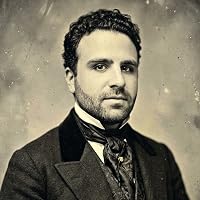
Hicks was born in Marshalltown, Iowa in 1920. He graduated cum laude from Northwestern University, then served as a U.S. Marine during World War II, earning the Silver Star. In 1945, he joined the staff of Popular Mechanics magazine, and became a special projects editor in 1963. He wrote the magazine's Do-It-Yourself Materials Guide and edited the Do-It-Yourself Encyclopedia.
In 1959, Hicks penned his first children's book, First Boy on the Moon, which was dubbed Best Juvenile Book of the Year by the Friends of American Writers. The next year, he wrote The Marvelous Inventions of Alvin Fernald, the first of a series of books about a boy who relies on his "Magnificent Brain" to solve problems. The books inspired a pair of two-part Disney television movies: The Whiz Kid and the Mystery at Riverton (1974), and The Whiz Kid and the Carnival Caper (1976).
Hicks wrote one non-fiction children's book, The World Above (1965), which discusses the Earth's atmosphere and the universe beyond. In 1971, he began the Peter Potts series, which follows the misadventures of a small town boy who often gets into trouble "by accident". Hicks also wrote a two-act play, Alvin Fernald, Mayor for a Day (1992), which was based on one of his Alvin Fernald books.
On September 29, 2010, Hicks died at his home in Brevard, North Carolina at the age of 90.
Alvin, his friend Shoie, and his sister The Pest, tackle both water and air pollution for a school project.
I read this series of books as a kid and loved them all. This is the fourth one I've re-read as an adult and they're still fun. It's a light-hearted look at how kids can make a difference in the world, along with Alvin Fernald silliness (it's a great idea to don a costume with cape and weasel mask, until you're trying to climb a ladder on the side of a smokestack, and the mask is making it hard to breathe!). I'd rank this as my third favorite in the series (best = Alvin's Secret Code, then The Marvelous Inventions of AF). On to "Alvin's Swap Shop"!
Sometime between when I read this in the 70's, and forgetting what the book was even called, and re-reading this book, I had forgotten about all the breaking and entering and property destruction and risking death in the name of vigilante ecological activism.
Still, it inspired me to want to keep my town clean as a kid. So that's good.
I never read this as a child; we picked up a copy years ago when my oldest was young and he read it, so now, since I write for children myself, I figured it was time to give it a go. It's part of a series, and better-informed Alvin Fernald fans will know where this fits in, but even as a stand-alone novel for, I'd say, 8-to-13 year-olds, it's completely coherent and self-contained—a fun, rather swashbuckling adventure with an environmental theme that's as timely now as it was in 1974.
It's timely, but it's not timeless. The book shows its age (which is fine) in two primary ways. The first is how it approaches the issue of environmental protection. Of course there's not a peep about global warming yet, but it focuses entirely on pollution, specifically with three big adventures for our three heroes featuring water pollution, air pollution, and litter. So, about 30 pages in I checked the copyright date—1974—and searched for when the Environmental Protection Agency was formed—1970, which was also the year the Clean Air Act was passed. So we have to rail against how our current administration is tearing these apart today, but looking at them just in the context of the 70s you can see how Hicks was writing about a timely topic, and what protecting the environment meant back then. In fact, the whole world was a little unrecognizable in 2026: Alvin, Shoie, and the Pest are out blocking the toxic ooze from a cartoonishly bad "chemical factory" and plugging up the industrial smokestacks of another in ways that today would have been done via miles of red tape, dozens of inspections, regulations, etc., rather than be left up to vigilante grade school kids. And that's kind of a testament to government regulation which itself was the result of advocacy and a shift in public consciousness. Silent Spring was published in 1962, the first Earth Day was also in 1970, and here Hicks is contributing to the growing wave of environmentalism by making this story for young Gen X kids, who grew up expecting—and demanding—a cleaner Earth.
I laughed that Alvin's big final task was getting all the city's kids to pick up the litter. I live in New York City, which you'd expect to be a litter capital of the country, yet we've just got things like the occasional potato chip bag that blew out of a trash can. Our worst litter after a Friday night of street barbecues is always swept up first thing in the morning by each building's super. So I thought gathering litter would be underwhelming after cleaning up the town's two major factories, but then Hicks had the kids marching through town with rusty swing sets, concrete staircases, and even an entire derelict car. If this is an accurate portrayal of what small town "litter" was like in 1974, then we today must be very grateful for all the progress made in city sanitation in the past fifty years.
Anyway, the second way it shows its age is the free-roaming children, out at all hours of the night, running from security guards, getting guns pointed at them, breaking into office buildings to fill their decorative fountains with sludge, throwing dead fish into swimming pools, running from cops across rooftops, and climbing towering smoke stacks in the dark. These were the halcyon days I still remember somewhat from my childhood in the 80s in which parents just set their kids loose, like Harriet the Spy, so you really get the sense of a world before cell phones and tracking apps and, well, 13-year-olds out doin' crime. Alvin et al promise not to do any "vandalism," but they do back up a chemical release pipe enough to damage the entire factory's floors and parking lot—that goo must have burst the pipe and be going somewhere costly. These are just really crazy antics from the viewpoint of today's parenting style/societal norms. But I love it. It just adds to the sense of adventure, and subversive adventure at that, which young readers love. This kind of behavior would never get past Nickelodeon's censors today.
So yeah it's a fantastic book. The morals are still on point, not just about the environment but how, at the end, , which is not what I expected to happen. So those are life lessons that all young readers can learn, without having to break into factories. That was a really nice moment, followed by a long denouement in which the imposter still has to (willingly) pay for his crimes.
I envy everyone who got to grow up with these books, and I'm glad my kid read this when he was young. It's still worth giving this to young readers today, and maybe inspire them to make new friends or do something for the environment.
A week ago I read a juvenile novel that I thought was a book we read in 4th grade. For some reason, the book came back in my memory because my teacher, Mr. Whitehead, dearly loved it. I only had a few memories of the book and admittedly, I probably didn’t read it at that age. The book I read last week was NOT the book but was still good. THIS book however, is the right one.
The plot: Alvin Fernad, a mischievous but inventive boy decides to, with is his sister (The Pest) and his best friend (Shoie) invent a super hero to clean up the town for a school project. This involves quite a bit of law breaking and property damage, as the gang, collectively known as Superweasel, stop pollution in various ways: damming a sewage pipe at a factory, blocking a smokestack at a foundry, etc. Alvin is funny and ridiculous, seeing the world in the way only an American boy could. Somehow, he wins in the end and gets an A.
Hicks writes children incredibly well. I felt lost in the book while reading, and that’s good as this is meant for children. Now I know why my teacher adored it so much. This book idealizes American towns and suburbs, boyhood, the great outdoors, and fun that children had before the internet. It makes one miss “simpler times”.
The author writes that he was a WW2 survivor and that Shoie is based on his friend who died in his arms in the war. The author passed away at the age of ninety in Brevard, NC in 2010.
I received this book, I believe, as part of the Scholastics Book Club as a kid when it first came out. I remember just tearing through this book; i don't think my folks would have been too pleased to know I was being sent books on ecoterrorism practice! :)
Looking back, I am surprised this book received such broad distribution given the actions of the characters. But, as an 8 year old, it definitely put the idealistic spark in me that i didn't just have to put up with adults doing bad things.
Those embers of resistance have become especially poignant in our current socio-political climate.
I loved Alvin's Secret Code when I was a kid, but never read any of the other books until now. This was a fun adventure, and I would definitely read more in the series next time I'm in the mood for light middle grade book.
The only concerns for content here would depend on how you feel about your kids imitating the vigilante pollution fighting--there's really no strong language or other typical content concerns.
I like to go back and re-read the books I enjoyed when I was younger. The Alvin Fernald series was one I really liked a lot. Clifford B. Hicks has a very enjoyable style. This one doesn't seem to be as good as I remember it. A little disappointing, but I still recommend this book to kids in grade 4-6.
I think I read all of the Alvin Fernald stories in grade school. Halfway through this one now, I started to lose interest, but am SO GLAD I kept reading. I loved it! Power to Superweasel!
I loved the Alvin Fernald series when I was a kid. I distinctly remember reading this, and while I enjoyed it, I did not like it as much as other books in the series.
It is about how Alvin, his friend Shoie, and Alvin's sister "The Pest" secretly combat pollution in their small town. They call themselves Superweasel, and The Pest even makes a costume for her brother. It is a really good book to start kids thinking about our environment, and definitely an early ecological book.
Alvin Fernald gets all environmentally conscious with another exciting adventure. Not much ecological information in this book, but hey, it's an Alvin Fernald adventure, so you gotta love it for that.