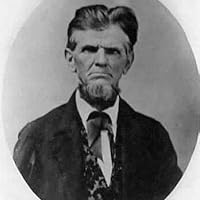
Comme un thème que propose un compositeur, auquel les interprètes musiciens peuvent apporter toutes sortes de variations personnelles, c’est un thème que Samuel Beckett nous propose dans Le Dépeupleur. Il crée avec une rigueur mathématique et géométrique un microcosme totalement clos, un « cylindre surbaissé » qu’il peuple d’une foule d’êtres captifs. Il y fait régner des castes, des hiérarchies très précises, et des lois extrêmement rigoureuses. Pour autant, l’interprétation du thème reste ouverte et c’est même dans la multiplicité des lectures qu’il suscite que réside son infinie richesse.
Novels of Samuel Barclay Beckett, Irish writer, include Murphy in 1938 and Malone Dies in 1951; a wider audience know his absurdist plays, such as Waiting for Godot in 1952 and Krapp's Last Tape in 1959, and he won the Nobel Prize of 1969 for literature.
Samuel Barclay Beckett, an avant-garde theater director and poet, lived in France for most of his adult life. He used English and French. His work offers a bleak, tragicomic outlook on human nature, often coupled with black gallows humor.
People regard most influence of Samuel Barclay Beckett of the 20th century. James Augustine Aloysius Joyce strongly influenced him, whom people consider as one modernist. People sometimes consider him as an inspiration to many later first postmodernists. He is one of the key in what Martin Esslin called the "theater of the absurd". His later career worked with increasing minimalism.
People awarded Samuel Barclay Beckett "for his writing, which—in new forms for the novel and drama—in the destitution of modern man acquires its elevation".
In 1984, people elected Samuel Barclay Bennett as Saoi of Aosdána.
HISTORY IS A NIGHTMARE FROM WHICH I AM TRYING TO WAKE UP. - James Joyce
All roads lead to Rome, and all the pathways of our modern labyrinth lead us back to our demonic Minotaur:
Agenbite of Inwit.
How that succinct Life Sentence from Joyce’s Ulysses must have bounced back and forth between the walls of Samuel Beckett’s skull as he wrote The Lost Ones!
As he became older and had sufficiently objectified his anguish - and dovetailed it with the inescapable facts of modern life - Beckett was able to hone his thought into the starkly compressed prose of a Master.
For he was beginning to find Peace.
Such a hard thing to find when you refuse to compromise!
In this, I believe, his greatness was comparable to that of Sigmund Freud...
Freud’s longtime friend, colleague and biographer, Ernest Jones, tells a story about Freud’s death that is hard to imagine, from our comfortable modern viewpoint:
Freud was dying of cancer of the mouth, and sternly refused any painkillers other than aspirin. The progress of the disease was so advanced and deforming that his beloved pet dog wouldn’t go near him.
At the final, most unendurable point of pain, Freud signalled to his physician that he would welcome some morphine.
A tiny amount was administered, and Freud immediately passed to final perfect peace.
In The Lost Ones, we find a similarly uncompromising but finely crafted paysage raisonné within a detailed though uneasy microcosm of modernity.
It’s not an easy read, and its facade of sharp fatalism makes us squirm. But that’s life.
What do you when all the lights go on? There's "Nowhere to Run, Nowhere to Hide" when all the world is purged of mystery. Can you read lips?
Yes - it's THAT Bad.
Yes, that’s Life, stripped of our endless media feed; Life that has a simple moral, as Freud had also found at the end:
In the resignation of our will is Peace, “costing not less than everything.”
A hope beyond hopeless hope.
Without any distractions.
That should make life easy. It doesn't. Evil never rests. So we just keep trying our best - that's what Beckett is saying here.
Even if it's the best of a bad situation!
So it’s certainly not the dystopian doom-and-gloom story so many have seen in it, because, if you have eyes to see it, there’s Hope.
For in The Lost Ones there is compassion for our human condition - real, hard-won, heartfelt compassion.
There is no hard and fast answer in life for us. But once we see that and really accept it, our lives may find rest in the midst of Ceaseless Flux.
Compassion is key.
And Beckett, when young, learned compassion the hard way.
There he was, working full-time in the James Joyce household for what spare cash the dying author could afford in the mad milieu of pre-Nazi Europe, being hounded relentlessly by the debt collectors and by Joyce’s incurably schizophrenic daughter - who was hopelessly smitten with him.
In that suffocating hothouse, and in the supercharged pressure cooker of the war that followed, Beckett’s heart was wrenched into pieces.
And after the hospitalizations that later followed for him Samuel Beckett had to pick up the shattered fragments of his life.
And that this gentle soul did through the solace of writing nonstop about the penniless and dispossessed victims who populate the mad cityscapes we think we know so well.
Sure, he had learned to bury his anguish in the compressed and rigid prose that the facts of life had compelled him to develop.
But for Beckett, as for me, the anguish became alleviated in time by steady insight. Call us The Found Ones. Hell finally and ruefully expectorated the two of us losers like withered apple seeds.
“Dites-moi si je ne suis pas joyeux!” translates in T.S.Eliot’s Lines for an Old Man into “Tell me if I am not glad!”
And so we are, if we resign our wills, for we are free at last.
So that’s the method in Beckett’s madness - to stare fixedly at the awful face of the Gorgon until she bans you from her Hotel California - law-abiding madame that she is!
Then, the task is to slay the Minotaur with our accumulated insight, and, like Mallarme’s Igitur, to lie down on the tomb of our ancestors without rancour and blow out our candle...
To escape the world quietly and without fanfare - as in John of the Cross’ The Dark Night of the Soul, in which we ultimately see that the key thing is meeting God face to face during that dark night when “our house (our soul) is all at rest.”
For nobody else is going to do it for us. We have to face the Face.
And in time peace will come.
And, oh, the beauty of Beckett’s pure classical prose! Its form is surely its content.
Masterful.
He was more intensely human than so many of us current readers can understand. You have to look at the late works of his great mentor Flaubert to guess at the raw emotion that went into this wonderful simple prose.
His emotion during the Night of this biting Purgatory is the voiceless cry of Everyman, the eternal victim who has fallen into the grinding Crucible of Life -
And patiently bears its Cross till the arrival of a new Dawn.
A hell that is geometrically measured against Dasein without reference...Beckett at 'his' best. There are times when I think that Samuel Beckett may be the best 'unintentional' horror writer there ever was: yet he does not seem to be trying to intentionally do this - it is the revelation of mankind and his place in the universe that evokes this tone of despair.
Where: in a flattened cylinder with rubber walls fifty meters in circumference and eighteen meters high, constantly illuminated by a dim, yellow light, and with temperature fluctuations between 5°C to 25°C, sometimes in as small an interval as four seconds
Why: Because it's Judy's turn to cry
*
Now I'm quick to assume that there's some who would say that there's a lotta, whatcha call it, 'Subutex' going on here, but I don't wanna put words in anyone's mouth. One may be prone to calling this all matadorical or somesuch, supposing it ain't just what it says on the paper. That there ain't no 200 Godless gray masspulps of the 'distended mucus membrane' variety, t'all. As if The Lost Ones wasn't the fully-idealized, skeletized, and alchemized Ping—escargot, positing this 'closed room' Beckett novel as possibly his greatest realization of the form. Sheeeeeeeeet.
People: it's clearly a documentary/cinema de Mornay of life in a cylindrical hellgatory in which blind, violent, naked people into 'no-strings' screwing just rawk when the annual semihard strikes the distaff. Yeah, and a bunch of ladders and shit. Quit trying to hang your paper on another fella's wall, guys.
Get this: one fella tried to tell me that the flattened cylinder was the interior landscape of Beckett's mind, Unconscious Division. Hah! We ain't buying none of that claptrap here. It's on the page, it's what happened. If that wasn't the case, how could we ever trust anything we ever read? Brrrrrrr. 'Nuff to give you gooseflesh just thinking about something like that there.
Αισθάνομαι πως, με την απουσία αναφοράς στο χαϊντεγκεριανό dasein, ο συντάκτης του επιμέτρου έχασε μια μεγάλη ευκαιρία.
Ο κύλινδρος της ιστορίας, η οποία είναι γραμμένη σαν ένα εγχειρίδιο φυσικής, μου έφερε στο νου το κολαστήριο της αναυθεντικής ύπαρξης, ένα κολαστήριο όπου ' όλοι είναι οι άλλοι, και κανένας ο εαυτός του '. Ο αφαιρετικός τρόπος με τον οποίο η δευτερογενής πραγματικότητα ξεδιπλώνεται μπροστά στα μάτια ενός αποστασιοποιημένου αφηγητή, φέρνει τον αναγνώστη σε κλειστοφοβική αμηχανία.
Όλα εξελίσσονται και σβήνουν σαν αστραπή, τρισεκατομμύρια μόρια εμπειριών, φόβων και αναζητήσεων μπαίνουν στο λογοτεχνικό μικροσκόπιο ενός παντογνώστη - μυστικιστή. Μια γοητευτική απροσδιοριστία, ένα κείμενο - συντροφιά σε βραδιές εσωστρεφούς ανασκόπησης και διαλογισμού, όταν όλα τα εγκόσμια ξεγυμνώνονται από το σαρκικό τους τίποτα.
Η έκδοση είναι άρτια και το επίμετρο είναι βοηθητικό. Ωστόσο το κείμενο είναι αινιγματικό και τόσο αποξενωτικό, που καταργεί κάθε ευχαρίστηση ανάγνωσης.
In many cases, a successful work of art will "erase" the viewer in some way or another. Hence, we talk about a person being "lost" in a painting or "wrapped up" in a novel. But not all artworks operate in this way. Quite the contrary, some strive to accentuate the relationship between art and audience. And when succesful, these creations constitute an "experience" in the truest sense of the word. Here, I'm thinking of works like Koyaanisqatsi (which tests the limits of the watcher's visual perception) or Catherine Christer Hennix's "The Electric Harpsichord" (in which the avant-garde composer explores the cognitive effects of sound).
Samuel Beckett's The Lost Ones also belongs on such a list. On the surface, the book reads as an anthropological report on a host of nameless "lost bodies," inhabiting a cylinder-shaped universe fifty meters round and eighteen meters tall. Over 60-odd pages of terse prose, we learn about their habits and practices, as they search restlessly for their "lost ones." Yet even with this barest of ontologies, Beckett manages a profound exploration of love and life, in which (to paraphrase the dust jacket) the human condition is distilled into its barest essentials.
However, this very profundity raises questions of its own. Are we humans really that simple? Or if not, where does Beckett's "parable" break down? A challenging and disorienting work, one that forces you to reflect on what it means to be human. Highly recommended.
(Part of my current project of reading everything Beckett published in precise chronological order.)
The very first thing I read by Beckett, and probably the piece of his I've re-read the most. In Lessness - the last piece he composed before completing The Lost Ones - Beckett shows us one of his hellishly confined solitary figures being freed from its confinement into an infinite and virtually undifferentiated landscape. In light of this fact, I find it hard not to see The Lost Ones as Beckett managing to build a structured world within this vista of endless ashen grey.
This world is simple, and the narrator attempts (not without self-contradiction) to describe it exhaustively in a detached, almost academic manner. At the beginning, they tell us that this world is a giant cylinder, fifty meters in circumference and sixteen (or eighteen) meters high. Its rubbery interior surface emits a blurry yellow light whose strobing is torment to the eyes. Its air pulses from freezing cold to oppressive heat and back again every eight seconds. And within it, two hundred bodies wander, 'each in search of its lost one'.
From here, the narrator describes the norms and social groupings that structure the lives of these figures. Some are 'searchers' who wander the interior, constantly examining one another in search of their 'lost one'. Some are 'climbers', who use the fifteen ladders available to climb and descend from the niches in the wall. And, since the possibility of actually finding their 'lost one' isn't so much as broached, some are 'vanquished' - those who have simply given up their search to sit on the ground with their heads bowed. The actions and interactions of these various groups are shaped by unwritten and unstated rules that are nevertheless studiously obeyed. However, we are told, everything they do is headed toward one inevitable end: eventually all these bodies will become vanquished. When the very last wanderer sits down and bows their head for good, the light will dim for the last time, the air will freeze, and all will remain forever more in a state of total entropy.
What struck me when I first read this piece was that it's an exercise in worldbuilding at its purest. There is very little narrative here, and certainly there are no individual characters. It's simply the description of a world: a cosmogeny, a cosmology, and an eschatology of sorts. The world is bleak, its workings simple, but it is a world - an entire cosmos with a mythos all its own. In this respect, The Lost Ones can be seen as Beckett's managing to find his way toward a new kind of affirmative, constructive act after plumbing the depths of absolute deprivation and erasure in the series of texts that preceded it. In other words, having lost all other worlds, Beckett found a way of building a new one.
Although this is the most wholly realized and elaborate of the short prose texts of the period from 1956 to 1976 in which Beckett produced very little of note in the way of novels (my preferred form) with the exception of How It Is, I still just don't think too highly of this one. Oddly, it's one of the first Beckett novels I ever read (in a Nouveau Roman course at SF State back in the early 1980s taught by Greek surrealist poet Nanos Valaoritis) and it had me very intrigued, got me started reading the master, but I do remember feeling pretty lukewarm about it then and the intervening years haven't really changed my mind much--it remains my least favorite text by a favorite author.
For the record: I remember that Nanos's take was that the cylinder represented the author's skull (and "skull" is a key word that returns again and again in the short Beckettian texts of the period) and the lost ones figures of his mental process. While not wholly discountable, I see it more as a kind of half allegory half invented and terribly stripped down vision of the uselessness of the human condition--as I think others here have stated perhaps better than I since it just kind of leaves me cold--as does life often so perhaps Sam's on to something here. Heh heh.
This story was begun in 1966, completed in 1970 – written in French, of course, then translated by the author into English. It’s essentially a prose exploration of a section of The Inferno: one of the particular torments of Hell. (Is it an actual story from the Inferno? I don’t know.) But it’s very mechanical – it sounds almost like a Sears catalog:
“The ladders. These are the only objects. They are single without exception and vary greatly in size. The shortest measure not less than six metres. Some are fitted with a sliding extension. They are propped against the wall without regard to harmony. Bolt upright on the top rung of the tallest the tallest climbers can touch the ceiling with their fingertips.”
The torments of this age are designed by engineers, Beckett seems to be implying. Is he referring to the Holocaust? Or something more general? The story is very helpless, hopeless, about being confined in a steel drum from which there is almost certainly no escape – but certain tantalizing possibilities. There are ladders, niches, and maybe somewhere an exit.
The book is completely “depressing” – though written in huge print like a children’s book – but something else is happening; it’s depressing without being SAD. Beckett was very smart, and realized there was only one way to write about contemporary life: through the lens of unmitigated horror.
“Somewhere in here is an affirmation,” I kept on feeling, but I couldn’t quite find it. The fact is we cannot escape death; why pretend otherwise?
This short book is almost all setting, but what place does its claustrophobic prose describe? Are the nameless inhabitants of the 70-page dimly lit "cylinder" inmates wandering an abstracted prison camp? Loose thoughts zombie-stumbling the contours of a deadened mind? Is this society? Neutrinos on the relative universe of an atom?
Weird is what it is, and compelling. I wanted to figure out the choreography of this dull human movement, this place of impotence and sick yellow light. Prison? And then a panic struck: why do I want to know this? Is this procession really any different from those which one deems understanding to be reasonable and necessary?
Beckett is so good at this, even in a minor work/world like this. All the worlds are perhaps as small as this.
کتابی که از روی جلد شروع میشود و کلمات خسته اش بقدری جذاب است که نمیشود بازش نکرد و ادامه نداد. گمگشتگان ماییم. دنیای ماست. تلفیقی از سوژه و اوبجه ی ذهنی و یک ایده که به بهترین شکل خود یعنی به شیوه ساموعل بکت و با دست های او آراسته شده.
It's one of those stories which could be translated to a short movie or a collection of paintings. The scenery does include all the consisting forms of beings there in itself. Takes one's fancy with it, even though at times you feel you have just gone through a paragraph or a passage of the text with it getting faded away as soon as you read it, as it's characteristic of Beckettian style (a least for most of his shorter stories) to my opinion. Nonetheless, the effects is definitely affective without a doubt.
An (ironic) geometry of geometry where that is an infinite series of plans to map the infinite meanings (otherwise meaninglessness) in a closed circle with no way out, and no way to not search to find the way out. the lost ones are the imagined lost, the present lost (husband/wife, family) in the cylinder, the lost present (presence and now) and so on, forth and thus in an allegorical movement of this and that, reflexion, internarrativity etc, but most of allegory itselves. Quite a challenging story but printed with big letters, and involving the reader in an evolving revolution where the general is spcifically exceptional and singular in its 'gleams'. But it's fun too.
Completed in 1970, this is the last book the Nobel Winner wrote. It is difficult to categorize (63 pages long), the work's jacket describes it as a story. In the story people are trapped in a cylinder and struggle to get out, using ladders and passageways leading nowhere. They are consumed to escape but stumble upon each other and knock one another down and aside. The short book blurs the distinctions between prose poetry, short stories and theater, though no character speaks a word of dialogue throughout. It is as if Beckett looks down upon the people from high like a God. The prose is stunning in places. The theme is man stuck in an abyss.
Checked Samuel Beckett's The Lost Ones out of the MSUM Library. The last time it was checked out was Aug of 1989. Christian Gion, Luke Safely, Sam Gunderson, Helena Thompson: recommended. "So on infinitely until towards the unthinkable end if this notion is maintained a last body of all, by feeble fits and starts is searching still."
A haunting tail told with breathtaking originality; the first work of Beckett's that I devoured, setting me on the path to the rest of his amazing catalog.
My what a handsome book the Grove Press hardcover edition is! The typesetter deserves lengthy applause. And the statuesque, uncredited, font! Heaven for those of us who don’t want to squint while flogging ourselves with pretension! And kudos to the author for having an oversized reputation that allows such gigantic lettering. As for the actual text, it is about what one might expect from a writer who would be diagnosed as on the spectrum today, but after he has attained financial and career success which frees him from writing for lucre.
At least he spared a translator and did the dirty work himself, rendering Le Depleupleur as The Lost Ones then tackling page after page of writing that is but a technical description of decaying organic matter obeying the laws of physics in a cylinder. Beckett would never rely on exact cognates, so the linguists have a veritable ball. However, why this text took four years to finish and translate is beyond me. It’s not inscrutable or overly difficult, just bereft of any joy or enticement. Given a choice, I’d rather navigate an AI voice menu and then chat with tech support reading a script in a foreign land. “I’m sorry we’ve not met your expectations.”
The characters are nameless and have no volition. They just wander in habitual patterns, occasionally straying, but not for long, so as to remain part of an eternal cavalcade of zombie-like souls resigned to pointless orbit within a cramped overcrowded cylinder. There is no respite or salvation, typical of an author who has often been obsessed with Hell. Only eternal endurance within a fifty-meter wide, eighteen-meter-wide cylinder, with climate controls that fluctuate in a manner that reminds me of how the CIA tortures political prisoners bound for Guantanamo Bay. The beings are basically thoughtless masses of organic matter, little better than atoms that, now and again, lose their pointless paths. It’s all so Beckett, a novelist and playwright who, as he became more renown, reduced any possible agency of actors in his plays until they become little more than a mouth speaking with pauses dictated by Beckett himself.
Samuel Beckett is one of the great authors of the 20th Century. Regrettably, he wrote himself into a corner after his Trilogy comprised of Molloy, Malone Dies and the Unnamable, a volume I’m in awe of, but also nickname The Unreadable. Where is an author to go from there? From disembodied voices in a void? Rightfully awarded the Nobel Prize in 1969, Beckett felt somehow compelled to keep writing within the genre he created, rendering his later output a pale imitation of his best works and leaving completist readers and Beckett acolytes with the unenviable task of reading this book, even if it only requires a half hour.
Παρά το μικρό του μέγεθος, το βιβλίο είναι ιδιαίτερα απαιτητικό, όμως η δυσκολία εδώ λειτουργεί περισσότερο ως "πύλη" και πρόκληση παρά ως εμπόδιο. Ο Μπέκετ δεν προσφέρει μια συνηθισμένη ιστορία αλλά έναν κλειστό, παλμικό χώρο: ένα τεράστιο κύλινδρο μέσα στον οποίο εκατοντάδες σώματα κινούνται ασταμάτητα, απορροφημένα σε μια αναζήτηση της οποίας το αντικείμενο δεν αποσαφηνίζεται ποτέ. Το φως τρεμοπαίζει, η θερμοκρασία αλλάζει απότομα, και οι ρυθμικές κινήσεις του πλήθους δημιουργούν μια ξηρή, μηχανική κόπωση που η γραφή του συγγραφέα μεταφέρει με απόκοσμη ακρίβεια.
Η δύναμη του βιβλίου βρίσκεται στο πώς ο Μπέκετ μεταμορφώνει τον υλικό αυτό χώρο σε μια εσωτερική αρχιτεκτονική της συνείδησης. Οι θύλακες μέσα στον τοίχο, τα στενά τούνελ που τους συνδέουν, οι ουρές αναμονής, οι κατηγορίες ανθρώπων και οι μικρές, σχεδόν ανεπαίσθητες μετατοπίσεις στη συμπεριφορά τους λειτουργούν σαν ψυχικές καταστάσεις σε έναν λαβύρινθο χωρίς έξοδο. Η επανάληψη γίνεται αφηγηματικό εργαλείο και υπαρξιακό σχόλιο, καθώς η παραμικρή αλλαγή στον ρυθμό ή στην κίνηση αποκτά παράλογο βάρος που παράγει ένταση χωρίς να χρειάζεται πλοκή.
Το πιο εντυπωσιακό επίτευγμα του βιβλίου είναι ότι καταφέρνει να δημιουργήσει ουσιαστικό φιλοσοφικό νόημα μέσα από την απουσία δράσης. Ο Μπέκετ δείχνει πως η λογοτεχνία μπορεί να φτάσει εξαιρετικά μακριά χωρίς ηρωικές σκηνές ή κορυφώσεις. Αρκεί η καθαρότητα μιας εικόνας, ο εμμονικός ρυθμός μιας περιγραφής και η αίσθηση ότι ο κόσμος που περιγράφεται είναι ταυτόχρονα εξωτερικός και εσωτερικός. Το "Αυτοί που έχουν χαθεί" είναι δύσκολο, πρωτότυπο και βαθιά ανησυχητικό. Ένα κείμενο που ταιριάζει απόλυτα σε όποιον θέλει να δει τι συμβαίνει όταν η λογοτεχνία απελευθερώνεται από κάθε σύμβαση και κοιτάζει κατευθείαν μέσα στο σκοτάδι της ανθρώπινης ύπαρξης. Προσωπικά το διάβασα δύο φορές και είμαι απόλυτα πεπεισμένος ότι πρόκειται για ένα από τα πιο ιδιόμορφα και συναρπαστικά κείμενα της μοντέρνας λογοτεχνίας.
Υπάρχει μια αδιαμφισβήτη γοητεία σ' ένα κείμενο αμφίσημο, ανοιχτό σε κάθε ερμηνεία απ' τον εκάστοτε αναγνώστη. Διαβάζοντας το 'Αυτοί που έχουν χαθεί' αισθάνθηκα την ελευθερία αυτή μέσα στο ασφυκτικά περιορισμένο πλαίσιο ενός κυλίνδρου, μια συμπιεσμένη αν θέλετε κοινωνία που μόλις βρεθείς μέσα της σαν παρατηρητής ξεδιπλώνεται στο μυαλό σου, γεμίζει παραλληλισμούς, σε βάζει στη διαδικασία να σκέφτεσαι τι μπορεί να εννοεί εδώ κι εκεί ο Μπέκετ, με τις κατηγορίες των ανθρώπων, τις ζώνες στις οποίες είναι χωρισμένος, το μουντό κίτρινο χρώμα που γεμίζει έναν κατά τ' άλλα ημισκότεινο χώρο, τις σκάλες κάτω απ' τις οποίες σχηματίζονται ουρές από εκείνους που επιθυμούν να φτάσουν στην οροφή του κύλινδρου είτε για να εξερευνήσουν τις κόγχες είτε τις σήραγγές του. Κι όλη η δραστηριότητα μέσα στον κύλινδρο να συνοδεύεται από έντονες θερμοκρασιακές διακυμάνσεις. Περισσότερα εδώ: https://spirosglykas.blogspot.com/202...
Beckett describes a cylindrical room full of some 200 searchers who have no exit other than up 15 ladders into 20 niches which have no exit, and who live by formal rules regarding queueing for the use of the ladders, and who all ultimately pass into a state of complete inactivity. It is like a surrealist painting brought to life, a mood poem of 50 or 60 pages, and infused with Beckett's dense expression of ideas as in this remarkable sentence: "So true it is that when in the cylinder what little is possible is not so it is merely no longer so and in the least less the all of nothing if this notion is maintained."