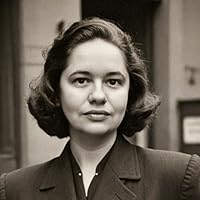
Sabinus est un Balesta - comme Melchior, comme Philomène - mais un Balesta de la mer, un Balesta corsaire, de ceux qu'on a surnommés "Barca" dan la famille. Ce vieil homme, ayant donc écumé les mers - Dieu sait comment ! - pendant une cinquantaine d'années, tombe un beau jour en Provence, à Pierrelousse, où ses lointains cousins, Balesta de la terre, vivent depuis deux siècles. D'emblée, il s'installe dans la plus belle maison du quartier noble, celle des comtes de Bruissane. Et Pierrelousse stupéfaite apprend que celle-ci revient de droit à Christine, petite-fille du corsaire. Elle est, en effet, par son père, d'ailleurs disparu, une Bruissane. Voilà Pierrelosse fort bouleversée. Mais Ameline, la mystérieuse ennemie des Balesta, se réveille et essaye de séduire le vieux Sabinus. Coup droit porté à la famille. Réussira-t-il ? Le pouvoir étrange qu'a celle-ci, "le don", pouvoir qui frappe tous ses ennemis, après une éclipse, renaît et exerce a nouveau, maIgre eux, ses ravages. D'où de nombreux événements et la reprise, jusqu'à son tragique dénouement, de ce drame qui opposait les Balesta à Ameline. Mais "le don" garde son secret. Le monde, d'ailleurs, est hanté, plus qu'on ne croit, de tels mystères. Il suffit d'en nommer un seul : celui du mal. Et, peut-être, ici , peut-on le nommer...
He was born of an Italian family from Cipressa, above San Remo, who had settled in Marseille, France, between 1837 and 1847. His father, Louis Bosco, was a stone-cutter before becoming a highly talented opera singer. His childhood and his youth were spent a few kilometers from Avignon, in the neighbourhood of Monclar, which was still in the country at that time. He studied classics at the Lycée d'Avignon, and took music for eight years at the Conservatory in Avignon. His university studies in Grenoble led to the successful completion of the Italian agrégation in 1912. In 1913, he was appointed to Philippeville, Algeria, where he taught classics.
First World War: H.Bosco fought in the Armée de l'Orient (Macedonia, Serbia, Albania). He was injured in 1915 and discharged in 1919.
From 1920 to 1930, he was seconded by the Institut Français de Naples. This period was very important in both intellectual and literary terms. He published his first book, "Pierre Lampédouze", in 1924. He also participated with R.Laurent-Vibert in the restoration of the Château de Lourmarin which would become a cultural foundation.
On July 16 1930, Henri Bosco married. From 1930 to 1931, he taught French and Italian in Bourg-en-Bresse.
Autumn 1931: He arrived in Rabat, Morocco, where he taught classics at the Lycée Gouraud (Hassan II). He was president of the Alliance Française in Morocco. In 1936 he founded the journal "Aguedal", that he edited until 1945. He contributed actively to intellectual life both in North Africa and in France. The influence of friends and the ordeal of war and defeat led Bosco to embark on a true initiation that directed his inner life toward a profound spiritual quest and ushered in a new period of original works that began with "L'Ane Culotte" (1937).
Henri Bosco retired in 1945, the year in which "Le Mas Théotime" received the Prix Renaudot, earning him renown. Subsequently he devoted himself to his literary career and published novels that attracted considerable attention ("Le Jardin d'Hyacinthe", "Malicroix", "Un Rameau de la Nuit", ...). He left Morocco permanently on April 9, 1955, after spending twenty-four of the richest and most prolific years of his life there.
He settled on the hill of Cimiez in Nice, in an old Provençal mas which soon became a Mecca of friendship and spiritual life. He travelled extensively giving lectures, but persistently continued to expand his work.
He frequently stayed in Lourmarin where, in 1947, he had acquired a bastidon isolated in the hills, a place of silence, daydreams, and meditation. From 1947, he was administrator of the R.Laurent-Vibert Foundation and gave much of his time and efforts to the brilliant intellectual, literary, and artistic activity of this place that was so dear to him.
Henri Bosco died in Nice in his eighty-seventh year. He is buried in Lourmarin, with Madeleine Bosco, who passed away in 1985.
His work was honoured with numerous prizes, including the "Grand Prix National des Lettres" in 1953 and the "Grand Prix de Littérature de l'Académie Française" in 1968.
Difficile de parler de Sabinus. Le style de Bosco est un régal, c’est poétique, presque onirique. Il retranscrit les ambiances, les atmosphères, d’une manière bien à lui, c’est ce qui m’avait marquée lors de la lecture de Un rameau de la nuit quand j’étais adolescente. On y retrouve cet univers indescriptible de poésie, presque mystique. Les personnages sont intéressants, l’histoire aussi, pourtant on reste un peu sur sa faim. J’aurais bien aimé plus d’événements, mais l’ensemble est agréable et étrange à lire, on a l’impression de traverser un rêve, où les impressions et les sous-entendus compensent les faits eux-mêmes.