What do you think?
Rate this book


276 pages, Paperback
First published February 8, 2011
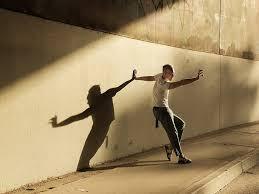

Every decision - where to turn left, how long to remain lost in thought in front of an abandoned building, whether to watch the sun set over New Jersey, or lope in the shadows on the East Side looking across to Queens - was inconsequential and was for that reason a reminder of freedom.
"[de Man's] theory has to do with an insight that can actually obscure other things, that can be a blindness. And the reverse, also, how what seems blind can open up possibilities."
“How petty seemed to me the human condition, that we were subject to this constant struggle to modulate the internal environment, this endless being tossed about like a cloud.”
“We experience life as a continuity, and only after it falls away, after it becomes the past, do we see its discontinuities. The past, if there is such a thing, is mostly empty space, great expanses of nothing, in which significant persons and events float.”
“Each person must, on some level, take himself as the calibration point for normalcy, must assume that the room of his own mind is not, cannot be, entirely opaque to him. Perhaps this is what we mean by sanity: that, whatever our self-admitted eccentricities might be, we are not the villains of our own stories.”
Instinctively saving a baby: a little happiness; spending time with Rwandans, the ones who survived: a little sadness; the idea of our final anonymity: a little more sadness; sexual desire fulfilled without complication: a little more happiness. And it went on like that, as thought succeeded thought. How petty seemed to me the human condition, that we were subject to this constant struggle to modulate the internal environment, this endless being tossed about like a cloud, Predictably, the mind noted that judgment, too, and assigned it its place: a little sadness.
Farouq turned to me and said, It's very busy, as you can see. Not only for all the people making New Year greetings but also for a lot of people calling home for the Eid. He gestured to the computer monitor behind him, and on it was a log of the calls ongoing in all twelve booths: Colombia, Egypt, Senegal, Brazil, France, Germany. It looked like fiction, that such a small group of people really could be making calls to such a wide spectrum of places. It's been like this for the past two days, Farouq said, and this is one of the things I enjoy about working here. It's a test case of what I believe; people can live together but still keep their own values intact. Seeing this crowd of individuals from different places, it appeals to the human side of me, and the intellectual side of me (112).
Farouq's face -- all of a sudden, it seemed, but I must have been subconsciously working on the problem -- resolved itself, and I saw a startling resemblance: he was the very image of Robert De Niro, specifically in De Niro's role as the young Vito Corleone in The Godfather II... A famous Italian-American actor thirty years ago and an unknown Moroccan political philosopher in the present, but it was the same face. What a marvel that life repeated itself in these trivial ways, and it was something I noticed only because he hadn't shaved for a day or two...
What was the meaning of De Niro's smile? He, De Niro, smiled, but one had no idea what he was smiling about. Perhaps this is why, when I first met Farouq, I had been taken aback. I had subconsciously overinterpreted his smile, connecting his face to another's, reading it as a face to be liked but feared. I had read his face as that of the young De Niro, as a charming psychopath, for this most trivial of reasons. And it was this face, not as inscrutable as I had once feared, that spoke now: For us, America is a version of Al-Qaeda. The statement was so general as to be without meaning. It had no power, and he said it without conviction. I did not need to contest it, and Khalil added nothing to it. "America is a version of Al-Qaeda." It floated up with the smoke, and died. It might have meant more, weeks back, when the one speaking was still an unknown quanity. Now he had overplayed his hand, and I sensed a shift in the argument, a shift in my favor" (121-122).
I had made some tea, and I drank it as I watched the woman pray. Others are not like us, I thought to myself, their forms are different from ours. Yet I prayed, too, I would gladly face a wall and daven, if that was what had been given to me. Prayer was, I had long settled in my mind, no kind of promise, no device for getting what one wanted out of life; it was the mere practice of presence, that was all, a therapy of being present, of giving a name to the heart's desires, the fully formed ones, the as yet formless ones (215).
TEJU COLE: We don't experience our lives as plots. If I asked you to tell me what your last week was like, you're not really gonna give me plot. You're gonna give me sort of linked narrative. And I wanted to see how do we bring that into fiction without losing the reader. But of course, I'm not the first person to think about this. This is actually a problem that the Modernists like James Joyce and Virginia Wolfe solved pretty well. So part of my thinking was going back a little bit to re-inventing that particular wheel, which only seems innovative because most novels that are written today are being written on Jane Austen or Charles Dickens, 19th century novel.
The text is a tissue of quotations drawn from innumerable centers of culture. Similar to Bouvard and Pécuchet, those eternal copyists, at once sublime and comic and whose profound ridiculousness indicates precisely the truth, of writing, the writer can only imitate a gesture which is anterior, never original. His power is to mix writings, to counter the ones with the others, in such a way as never to rest on any one of themOften authors are discussed in terms of their "influences": the seams of borrowed thread which prop up at odd corners of the text: which flash a bit of foreign color, tantalize our collective literary memories. Cole's novel is very much a tapestry of these imitations. This is not to say that the novel is not well written, or unoriginal, but that what it borrows exceeds what it bears. "Sebaldian," "Proustian," even a bit of a Barthesian or Benjaminian ("Benjaminisch"? "Benjaminig"?) cultural skepticism and lyrical insight: all of these influences are present, but they feel a bit to bare. Sebald's Rings of Saturn is the closest mother of Cole's Open City:
But the fact is that writing is the only way in which I am able to cope with the memories which overwhelm me so frequently and so unexpectedly. If they remained locked away, they would become heavier and heavier as time went on, so that in the end I would succumb under their mounting weight.If one were to replace "writing" with "walking" it would believably be an excerpt from Cole's novel. The novel's texture is one of sinusoidal dips into memory from the present: there is little plot in the present (and in fact, little plot which directly concerns the protagonist, Julius), but a deep plenitude which lies in the past. "Each one of us carries within himself his necropolis" said Flaubert in a letter to George Sand, a sentiment which is manifest manifold in Open City, wherein the city may very well be the city of the dead, a necropolis of memories walking among the living: always boiling at the surface, constantly re-forming the present.
To be alive, it seemed to me, as I stood there in all kinds of sorrow, was to be both original and reflection, and to be dead was to be split off, to be reflection alone.For Cole, the past is a reflection of the present: a point-for-point double, a mime. As one ages, as there are many aged and aging figures in Open City: from Prof. Saito to Dr. Mailotte, the equilibrium between the power of reflection and the power of the living self shifts: in death one is all reflection, all past and no present. In this view, we are all eased into death by our memories, and when we die out memories live without us: shadows on the edifice of time.
Perhaps this is what we mean by sanity: that, whatever our self-admitted eccentricities might be, we are not the villains of our own stories. In fact, it is quite the contrary: we play, and only play, the hero, and in the swirl of other people’s stories, insofar as those stories concern us at all, we are never less than heroic. Who, in the age of television, hasn’t stood in front of a mirror and imagined his life as a show that is already perhaps being watched by multitudes?The spectacular media loves to remind us that ours is the age of narcissism, spectacle, illusion. I can think of no more astute way to define our modern normalcy than a self-styled heroism, a moral impunity, and a constant flirtation with the dream of celebrity. What is often lost in our modern era is the self-communion, the walks about town, the mental and psychological ordering and re-ordering which we must do when we are humbly ourselves: when we are Odysseus, but Odysseus in Ogygian exile. Julius is often alone within himself, even in crowds he is the isolated observer: but his spectatoriship is false, a defense against his own memories which at turns haunt and amuse him. He retreats into the memories of others, into larger-than-self issues such as race, war and oppression, to escape the tiny daemon of his own villainy.
every decision - where to turn left, how long to remain lost in thought in front of an abandoned building, whether to watch the sun set over New Jersey, or to lope in the shadows on the East Side looking across to Queens...was for that reason a reminder of freedom.
I became aware of just how fleeting the sense of happiness was and how flimsy its basis: a warm restaurant after having come in from the rain, the smell of food and wine, interesting conversation, daylight falling weakly on the polished cherrywood of the tables. It took so little to move the mood from one level to another, as one might push pieces on a chessboard. Even to be aware of this, in the midst of a happy moment, was to push one of those pieces, and to become slightly less happy.