

What do you think?

The Diamond Lens
Fitz-James O'Brien (1828-1862) was an author and is often considered one of the forerunners of today's science fiction. While he was in college he had shown an aptitude for writing verse, and two of his poems—"Loch Ine" and "Irish Castles"—were published in The Ballads of Ireland (1856). His earliest writings in the United States were contributed to The Lantern. Subsequently he wrote for The Home Journal, The New York Times, and The American Whig Review. His first important literary connection was with Harper's Magazine, and beginning in February 1853 with The Two Skulls, he contributed more than sixty articles in prose and verse to that periodical. He likewise wrote for the New York Saturday Press and The Atlantic Monthly. To the latter he sent "The Diamond Lens" (1858) and "The Wondersmith" (1859), which are unsurpassed as creations of the imagination, and are unique among short magazine stories. Amongst his other works are "What Was It?" (1889), "My Wife's Tempter", "The Child Who Loved a Grave", and "The Golden Ingot".
48 pages, Paperback
First published January 1, 1858
About the author
Fitz-James O'Brien
268 books27 followersHe was born Michael O'Brien in County Cork, and was very young when the family moved to Limerick, Ireland. He attended the University of Dublin, and is believed to have been at one time a soldier in the British Army. On leaving college he went to London, and in the course of four years spent his inheritance of £8,000, meanwhile editing a periodical in aid of the World's Fair of 1851. About 1852 he came to the United States, in the process changing his name to Fitz James and thenceforth he devoted his attention to literature.
While he was in college he had shown an aptitude for writing verse, and two of his poems—"Loch Ine" and "Irish Castles"—were published in The Ballads of Ireland (1856).
His earliest writings in the United States were contributed to The Lantern, which was then edited by John Brougham. Subsequently he wrote for The Home Journal, The New York Times, and The American Whig Review. His first important literary connection was with Harper's Magazine, and beginning in February 1853, with The Two Skulls, he contributed more than sixty articles in prose and verse to that periodical. He likewise wrote for the New York Saturday Press, Putnam's Magazine, Vanity Fair, and The Atlantic Monthly. To the latter he sent "The Diamond Lens" (1858) and "The Wondersmith" (1859), which are unsurpassed as creations of the imagination, and are unique among short magazine stories. "The Diamond Lens" is probably his most famous short story, and tells the story of a scientist who invents a powerful microscope discovers a beautiful female in a microscopic world inside a drop of water. "The Wondersmith" is an early predecessor of robot rebellion, where toys possessed by evil spirits are transformed into living automatons who turns against their creators. His 1858 short called "Horrors Unknown" has been referred to as "the single most striking example of surrealistic fiction to pre-date Alice in Wonderland" (Sam Moskowitz, 1971). "What Was It? A Mystery" (1859) is one of the earliest known examples of invisibility in fiction.
His pen was also employed in writing plays. For James W. Wallack he made A Gentleman from Ireland, that held the boards for a generation. He also wrote and adapted other pieces for the theatres, but they had a shorter existence.
In New York he at once associated with the brilliant set of Bohemians of that day, among whom he was ranked as the most able. At the weekly dinners that were given by John Brougham, or at the nightly suppers at Pfaff's on Broadway, he was the soul of the entertainment.
In 1861 he joined the 7th regiment of the New York National Guard, hoping to be sent to the front, and he was in Camp Cameron before Washington for six weeks. When his regiment returned to New York he received an appointment on the staff of General Frederick W. Lander. He was severely wounded in a skirmish on February 26, 1862, and lingered until April, when he died at Cumberland, Maryland.
From Wikipedia.
While he was in college he had shown an aptitude for writing verse, and two of his poems—"Loch Ine" and "Irish Castles"—were published in The Ballads of Ireland (1856).
His earliest writings in the United States were contributed to The Lantern, which was then edited by John Brougham. Subsequently he wrote for The Home Journal, The New York Times, and The American Whig Review. His first important literary connection was with Harper's Magazine, and beginning in February 1853, with The Two Skulls, he contributed more than sixty articles in prose and verse to that periodical. He likewise wrote for the New York Saturday Press, Putnam's Magazine, Vanity Fair, and The Atlantic Monthly. To the latter he sent "The Diamond Lens" (1858) and "The Wondersmith" (1859), which are unsurpassed as creations of the imagination, and are unique among short magazine stories. "The Diamond Lens" is probably his most famous short story, and tells the story of a scientist who invents a powerful microscope discovers a beautiful female in a microscopic world inside a drop of water. "The Wondersmith" is an early predecessor of robot rebellion, where toys possessed by evil spirits are transformed into living automatons who turns against their creators. His 1858 short called "Horrors Unknown" has been referred to as "the single most striking example of surrealistic fiction to pre-date Alice in Wonderland" (Sam Moskowitz, 1971). "What Was It? A Mystery" (1859) is one of the earliest known examples of invisibility in fiction.
His pen was also employed in writing plays. For James W. Wallack he made A Gentleman from Ireland, that held the boards for a generation. He also wrote and adapted other pieces for the theatres, but they had a shorter existence.
In New York he at once associated with the brilliant set of Bohemians of that day, among whom he was ranked as the most able. At the weekly dinners that were given by John Brougham, or at the nightly suppers at Pfaff's on Broadway, he was the soul of the entertainment.
In 1861 he joined the 7th regiment of the New York National Guard, hoping to be sent to the front, and he was in Camp Cameron before Washington for six weeks. When his regiment returned to New York he received an appointment on the staff of General Frederick W. Lander. He was severely wounded in a skirmish on February 26, 1862, and lingered until April, when he died at Cumberland, Maryland.
From Wikipedia.
Ratings & Reviews
Friends & Following
Create a free account to discover what your friends think of this book!
Community Reviews
Displaying 1 - 30 of 75 reviews

February 4, 2024
I Think I Need New Glasses.
Linley is a scientist madly obsessed with microscopic investigations. Always bent over his microscope, perfecting it, and relentlessly researching every little thing; but to reach the maximum degree of magnification he needs a special kind of lens, an exorbitantly costly diamond lens he wouldn’t be able to afford not even in a million years. But when he finally obtains it, he discovers a whole new realm, an incredible tiny new world, with the most precious beautiful thing.
This was one weird but awesome story! So horrifically memorable, the kind that doesn’t strike you at the beginning, nor even after finishing it, but somehow stays with you nevertheless. It’s like it has some sort of delayed enjoyment, and the more and more I think about it, the more I find myself admiring it, or the general idea of it anyway. It’s the weirdest thing.
Widely considered the best by Fitz-James O'Brien, and for just reasons. And even though I haven’t read anything else by the man, I’m inclined to agree; because I see it quite hard to top this one. Not a fan of the style of writing tbh, but LOVED the idea, and looking forward to reading more of the author someday.
Recommendable, for meager forty something pages.
It’s public domain. You can find it HERE.

-----------------------------------------------
PERSONAL NOTE : Animula
[1858] [48p] [Sci-Fi] [Horror] [Recommendable]
-----------------------------------------------
★★★★☆ The Diamond Lens.
★★★★☆ What Was It? [3.5]
-----------------------------------------------
Creo Que Necesito Anteojos Nuevos.
Linley es un científico locamente obsesionado con las investigaciones microscópicas. Siempre inclinado sobre su microscopio, perfeccionándolo, e investigando sin descanso cada pequeño detalle; pero para alcanzar el máximo grado de aumento necesita un tipo de lente especial, una exorbitante costosa lente de diamante que no podría comprar ni siquiera en un millón de años. Pero cuando finalmente la consigue, descubre una realidad completamente nueva, un mundo nuevo increíblemente pequeño, con la cosa más preciosa y hermosa.
Esta fue una historia extraña, ¡pero asombrosa! Tan horriblemente memorable, del tipo que no te llama la atención al principio, y ni siquiera después de terminarla, pero que por algún motivo permanece con vos de todos modos. Es como si tuviera una especie de disfrute con efecto retardado, y cuanto más y más pienso en ella, más me encuentro admirándola, o la idea general de ella al menos. Es de lo más extraño.
Ampliamente considerado lo mejor de Fitz-James O'Brien, y por justas razones. Y aunque no he leído nada más del hombre, me inclino a estar de acuerdo; porque lo veo bastante difícil superar esta. Para ser honestos no soy fanático del estilo de escritura, pero AME la idea, y espero leer más del autor algún día.
Recomendable, para sus escasas cuarenta y tanto páginas.
Es dominio público, lo pueden encontrar ACA.
-----------------------------------------------
NOTA PERSONAL : Animula
[1858] [48p] [Ciencia Ficción] [Horror] [Recomendable]
-----------------------------------------------
Linley is a scientist madly obsessed with microscopic investigations. Always bent over his microscope, perfecting it, and relentlessly researching every little thing; but to reach the maximum degree of magnification he needs a special kind of lens, an exorbitantly costly diamond lens he wouldn’t be able to afford not even in a million years. But when he finally obtains it, he discovers a whole new realm, an incredible tiny new world, with the most precious beautiful thing.
This was one weird but awesome story! So horrifically memorable, the kind that doesn’t strike you at the beginning, nor even after finishing it, but somehow stays with you nevertheless. It’s like it has some sort of delayed enjoyment, and the more and more I think about it, the more I find myself admiring it, or the general idea of it anyway. It’s the weirdest thing.
Widely considered the best by Fitz-James O'Brien, and for just reasons. And even though I haven’t read anything else by the man, I’m inclined to agree; because I see it quite hard to top this one. Not a fan of the style of writing tbh, but LOVED the idea, and looking forward to reading more of the author someday.
Recommendable, for meager forty something pages.
It’s public domain. You can find it HERE.
-----------------------------------------------
PERSONAL NOTE : Animula
[1858] [48p] [Sci-Fi] [Horror] [Recommendable]
-----------------------------------------------
★★★★☆ The Diamond Lens.
★★★★☆ What Was It? [3.5]
-----------------------------------------------
Creo Que Necesito Anteojos Nuevos.
Linley es un científico locamente obsesionado con las investigaciones microscópicas. Siempre inclinado sobre su microscopio, perfeccionándolo, e investigando sin descanso cada pequeño detalle; pero para alcanzar el máximo grado de aumento necesita un tipo de lente especial, una exorbitante costosa lente de diamante que no podría comprar ni siquiera en un millón de años. Pero cuando finalmente la consigue, descubre una realidad completamente nueva, un mundo nuevo increíblemente pequeño, con la cosa más preciosa y hermosa.
Esta fue una historia extraña, ¡pero asombrosa! Tan horriblemente memorable, del tipo que no te llama la atención al principio, y ni siquiera después de terminarla, pero que por algún motivo permanece con vos de todos modos. Es como si tuviera una especie de disfrute con efecto retardado, y cuanto más y más pienso en ella, más me encuentro admirándola, o la idea general de ella al menos. Es de lo más extraño.
Ampliamente considerado lo mejor de Fitz-James O'Brien, y por justas razones. Y aunque no he leído nada más del hombre, me inclino a estar de acuerdo; porque lo veo bastante difícil superar esta. Para ser honestos no soy fanático del estilo de escritura, pero AME la idea, y espero leer más del autor algún día.
Recomendable, para sus escasas cuarenta y tanto páginas.
Es dominio público, lo pueden encontrar ACA.
-----------------------------------------------
NOTA PERSONAL : Animula
[1858] [48p] [Ciencia Ficción] [Horror] [Recomendable]
-----------------------------------------------

April 10, 2018
I went into reading this with genuine interest in the premise, and I felt pretty hopeful. To say this was a letdown is a bit of an understatement honestly. I hated this.
The premise is incredibly interesting. I was interested in the idea of a mid-nineteenth century microscopist looking for the perfect microscope. I didn't even dislike it right away. The first few pages seemed to have a fairly standard writing style for the time, and I was still interested in seeing where it went. When he visited a medium to communicate with a long dead scientist, I was still interested in where it went. Where it went is... he kills his Jewish roommate (because science, because he's Jewish, because he just knows his roommate is a murderer for no reason other than his being a thief and Jewish). After he makes the murder look like a suicide, he creates the perfect microscope. He looks at a water droplet. He spends a million years describing what he sees, but terribly so you can't picture it at all. Then he sees this little microscopic lady that he spends just as long describing, to the same effect. Then he falls in love with the little microscopic being for no real reason, which leads to an incredibly unsatisfying ending.
Bad ending. Anti-Semitic. Awful descriptions (I can live with lengthy descriptions if I can at least picture what you're describing). I recommend this for no one.
The premise is incredibly interesting. I was interested in the idea of a mid-nineteenth century microscopist looking for the perfect microscope. I didn't even dislike it right away. The first few pages seemed to have a fairly standard writing style for the time, and I was still interested in seeing where it went. When he visited a medium to communicate with a long dead scientist, I was still interested in where it went. Where it went is... he kills his Jewish roommate (because science, because he's Jewish, because he just knows his roommate is a murderer for no reason other than his being a thief and Jewish). After he makes the murder look like a suicide, he creates the perfect microscope. He looks at a water droplet. He spends a million years describing what he sees, but terribly so you can't picture it at all. Then he sees this little microscopic lady that he spends just as long describing, to the same effect. Then he falls in love with the little microscopic being for no real reason, which leads to an incredibly unsatisfying ending.
Bad ending. Anti-Semitic. Awful descriptions (I can live with lengthy descriptions if I can at least picture what you're describing). I recommend this for no one.

May 19, 2025
Biztos mondtam már (ahogy telnek az évek, egyre több dolgot biztos mondtam már), de az olvasói ingerküszöb az utóbbi pár száz évben komoly változáson ment át. Az 1850-es években még borzongató volt olvasni, hogy valakit laudánummal megmérgeznek egy nagy gyémántért, de manapság csak annyira kapjuk fel erre a fejünket, mint az állatkerti gondozó, amikor azt hallja, hogy "Nézd már Jani! Ott egy galamb." A tudományos-fantasztikus irodalom határai is elmozdultak - akkoriban még sci-fi-számba ment, hogy az önjelölt tudós felfedez a mikroszkópjával egy vadító külsejű nőt a vízcseppben, majd halálosan (és a dolog természetéből fakadóan: reménytelenül) beleszeret - de így a XXI. században ezt nehéz komolyan venni. Ettől függetlenül O'Brien elbeszélései szórakoztató, üdítő miújságok. Kifejezetten jól áll nekik például, ha a szerző a Hoffmannra hajazó mágikus rémmesék vizeire evez - ezek ugyanis igencsak kompatibilisek az egzaltált mondatkezeléssel, amit O'Brien elég ügyesen művel. Itt van például "A Csodamíves" c. novella, ami igazán jópofa, már ha eltekintünk attól, hogy az alapsztorija szerint szabadkőműves roma mágusok állnak össze, hogy puszta gonoszságból bűbájjal kivégezzenek egy csomó ártatlan keresztény gyereket. Hiába na, akkoriban még a rasszizmust se vették olyan szigorúan.
March 21, 2017
1 star meaning: it really isn't worth it
That was a pretty random story that constantly got me confused (not because my first language isn't English, but because of the nonsense it mostly was for me) and unintentionelly skipping paragraphes. I wasn't even able to properly finish it;
There is, however, this one quote that I really liked.
it goes:
"Every great genius is mad upon tha subject in wich he is greatest. The unsuccessful madman is disgraced and called lunatic"
That was a pretty random story that constantly got me confused (not because my first language isn't English, but because of the nonsense it mostly was for me) and unintentionelly skipping paragraphes. I wasn't even able to properly finish it;
There is, however, this one quote that I really liked.
it goes:
"Every great genius is mad upon tha subject in wich he is greatest. The unsuccessful madman is disgraced and called lunatic"

March 14, 2025
Listened to it while I took my dog for a walk, and it was a wild walk from start to finish.

January 29, 2021
The Diamond Lens is a story that had an interesting idea, but it failed to wow me in the way I had hoped. I couldn’t help but compare this story with the work of Poe. Not only did this come from the same era, but there were many elements in this one that reminded me of Poe’s work. A bit of obsession with a single goal, a bit of murder, and a strange twist of science. Due to comparing the two, this one felt lacking.
As much as I would like to blame my comparison with Poe for my inability to connect with this one, there was more to it than that. Although there were many interesting elements in this one, it was bogged down by lengthy details that were far from clear and there were details included that some might consider okay (even explain it away by the time when this was written) but for me I could not ignore them.
All in all, I can see why some would enjoy this, but it didn’t work for me.
As much as I would like to blame my comparison with Poe for my inability to connect with this one, there was more to it than that. Although there were many interesting elements in this one, it was bogged down by lengthy details that were far from clear and there were details included that some might consider okay (even explain it away by the time when this was written) but for me I could not ignore them.
All in all, I can see why some would enjoy this, but it didn’t work for me.
June 14, 2022
Cute entertaining listening 🎶🔰
Another will written British 🏰 fantasy Sci-Fi adventure thriller short story by Fitz James O'BRIEN about a young 👦 man 🚹 who is obsessed with the microscope. He even kills a friend to get a diamond 💎 for the microscope which he polishes for use. When it is in he 👀 sees a young 👦 girl who is captured and killed. Which drives him crazy and his life. I would recommend this novella to anyone looking for something different to read. Enjoy the adventure of all kinds of novels 👍🔰 and books 📚. 2022 👒😊💑⌚
Another will written British 🏰 fantasy Sci-Fi adventure thriller short story by Fitz James O'BRIEN about a young 👦 man 🚹 who is obsessed with the microscope. He even kills a friend to get a diamond 💎 for the microscope which he polishes for use. When it is in he 👀 sees a young 👦 girl who is captured and killed. Which drives him crazy and his life. I would recommend this novella to anyone looking for something different to read. Enjoy the adventure of all kinds of novels 👍🔰 and books 📚. 2022 👒😊💑⌚

September 1, 2012
Rereading this for my class, I am struck again by the balance of the Gothic and the scientific in O'Brien's story. This is the first known published tale in which another world is perceived through a microscope, and O'Brien does great justice to the sense of wonder and longing this sight evokes. It's a powerfully dark and haunting story despite its brevity.

November 23, 2017
When the narrator finally meets Animula, the way that is is presented makes me think of this as the earliest example (1858) of Toonophilia. The microscopic being of light he falls in love with may as well be Jessica Rabbit or Sailor Moon. The other side of the microscope lens is as an incalculable gulf as falling in love with an animated fiction.

October 18, 2018
Brilliantly written short story about achieving ones ambition at any cost.
'What care I if I waded to the portal to this wonder through another's blood'
'What care I if I waded to the portal to this wonder through another's blood'
January 6, 2024
I have a bit of a hard time rating this one because I just feel... vaguely neutral about it? I can't decide if I enjoyed it or not.
I like the concept and the writing style was enjoyable but the story just didn't catch me the way I wanted it to.
From the murder a) he decided on within like three lines and justified with racism and b) that just didn't have consequences to the whole story just kind of... existing, I just wanted more.
I like the idea of a scientist being willing to sacrifice everything for science and going mad over loving an insentient object but the different points throughout the story lack connection. The decision to murder for science comes out of nowhere, suddenly it's fine and he's in love with water but this story also didn't manage to get that fever dream feeling you need to justify this lack of understanding for the character / what is actually happening.
I think this story would've benefited from being just a little longer to give the main character time to develop or, alternatively, preestablish the characterization of the main character a bit more.
2.5/5
I like the concept and the writing style was enjoyable but the story just didn't catch me the way I wanted it to.
From the murder a) he decided on within like three lines and justified with racism and b) that just didn't have consequences to the whole story just kind of... existing, I just wanted more.
I like the idea of a scientist being willing to sacrifice everything for science and going mad over loving an insentient object but the different points throughout the story lack connection. The decision to murder for science comes out of nowhere, suddenly it's fine and he's in love with water but this story also didn't manage to get that fever dream feeling you need to justify this lack of understanding for the character / what is actually happening.
I think this story would've benefited from being just a little longer to give the main character time to develop or, alternatively, preestablish the characterization of the main character a bit more.
2.5/5
This entire review has been hidden because of spoilers.
March 1, 2023
3.25⭐
This is the story of a narrator, Mr. Linley who is so obsessed with his own desire and quasi-scientific aims to create the perfect microscope that the entire world of the story centers on his obsession.
This is the story of a narrator, Mr. Linley who is so obsessed with his own desire and quasi-scientific aims to create the perfect microscope that the entire world of the story centers on his obsession.
January 31, 2026
primer cuento del libro de ciencia ficción

July 17, 2025
Awesome
January 29, 2026
weird story but also very creative and brilliant for its time

April 3, 2013
As far as I can make out this is a story of mankind looking at nature with destructive admiration, with a moral along the lines of The Little Prince - we're responsible for who we discover and observe, due to some quantum mechanical effects, anticipated by O'Brien all the way in 1858. Another trope that seems to be at the basis of the story is the blood and madness trail that is routinely left by especially large jewels.
One bit - and if you're spoiler-averse then close your eyes - reminded me of Raskolnikov:
...except as a mad scientist the microscopist was thorough enough to avoid being caught. His method of faking the suicide and his attention to detail made me expect some Pinkerton figure it all out by the end, but no, this murder goes unpunished, except maybe for some karmic debt.
And as a bonus: some diamond lenses from Russia.
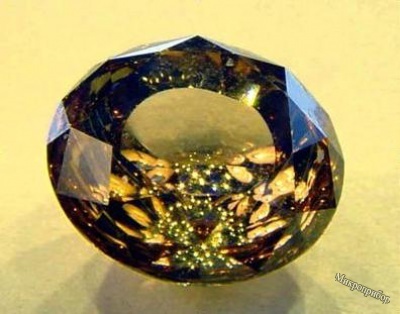
(Their process descriptions reminded me of the Microscopist's)
One bit - and if you're spoiler-averse then close your eyes - reminded me of Raskolnikov:
I did not for an instant contemplate so foolish an act as a common theft, which would of course be discovered, or at least necessitate flight and concealment, all of which must interfere with my scientific plans. There was but one step to be taken—to kill Simon. After all, what was the life of a little peddling Jew in comparison with the interests of science? Human beings are taken every day from the condemned prisons to be experimented on by surgeons. This man, Simon, was by his own confession a criminal, a robber, and I believed on my soul a murderer. He deserved death quite as much as any felon condemned by the laws: why should I not, like government, contrive that his punishment should contribute to the progress of human knowledge?
...except as a mad scientist the microscopist was thorough enough to avoid being caught. His method of faking the suicide and his attention to detail made me expect some Pinkerton figure it all out by the end, but no, this murder goes unpunished, except maybe for some karmic debt.
And as a bonus: some diamond lenses from Russia.
(Their process descriptions reminded me of the Microscopist's)

April 30, 2020
"Could she but see me once! Could I for one moment pierce the mystical walls that so inexorably rose to separate us, and whisper all that filled my soul, I might consent to be satisfied for the rest of my life with the knowledge of her remote sympathy. It would be something to have established even the faintest personal link to bind us together—to know that at times, when roaming through those enchanted glades, she might think of the wonderful stranger, who had broken the monotony of her life with his presence, and left a gentle memory in her heart!
But it could not be. No invention of which human intellect was capable could break down the barriers that nature had erected. I might feast my soul upon her wondrous beauty, yet she must always remain ignorant of the adoring eyes that day and night gazed upon her, and, even when closed, beheld her in dreams. With a bitter cry of anguish I fled from the room, and, flinging myself on my bed, sobbed myself to sleep like a child."
Fellas, I think I have managed to find the first waifu-loving proto-weeaboo in all of literature! (Besides Pygmalion, but he doesn't count, as Galatea eventually came to life.) This makes this story hilarious, and a must-read.
But it could not be. No invention of which human intellect was capable could break down the barriers that nature had erected. I might feast my soul upon her wondrous beauty, yet she must always remain ignorant of the adoring eyes that day and night gazed upon her, and, even when closed, beheld her in dreams. With a bitter cry of anguish I fled from the room, and, flinging myself on my bed, sobbed myself to sleep like a child."
Fellas, I think I have managed to find the first waifu-loving proto-weeaboo in all of literature! (Besides Pygmalion, but he doesn't count, as Galatea eventually came to life.) This makes this story hilarious, and a must-read.

December 24, 2021
This is one of the earliest of science fiction stories, about a man who builds a powerful microscope and peers into another world, seeing a beautiful woman. On the surface it is juvenile for this idea to be raised just to have the character fall in love with a microscopic woman. He has nothing better to do than lust after some tiny creature? He just discovered another world!
But I think you have to look beyond that and see this story in another light. It is really about how our ideals are more precious to us than reality, but that our ideals are fragile, wispy things that can quickly die. We neglect our real lives by pining after things which we can never have, failing to appreciate what we do have, seeing our reality as ugly by comparison. Fantasy is a good thing to help us escape from the stress of the real world, but we need to stay grounded enough to appreciate what we have in our lives. We can’t allow the pursuit of fantasy to destroy our lives and cloud our judgement to the good of the people in our lives.
This is a pretty good story.
-Gregory Kerkman
But I think you have to look beyond that and see this story in another light. It is really about how our ideals are more precious to us than reality, but that our ideals are fragile, wispy things that can quickly die. We neglect our real lives by pining after things which we can never have, failing to appreciate what we do have, seeing our reality as ugly by comparison. Fantasy is a good thing to help us escape from the stress of the real world, but we need to stay grounded enough to appreciate what we have in our lives. We can’t allow the pursuit of fantasy to destroy our lives and cloud our judgement to the good of the people in our lives.
This is a pretty good story.
-Gregory Kerkman

April 2, 2017
Set in the 1850’s, a young man is obsessed with microscopes and the knowledge he can glean from looking into them. On the pretence of studying to become a doctor, he goes to New York. Rather than attend medical school as he is supposed to, he spends all of his time researching. Disappointed at his lack of microscopic findings, he seeks out a medium who contacts a former microscopist and answers his questions. He is advised to build a lens from a diamond. This takes the story in a completely unexpected direction which I had not foreseen.
Although dated, the diamond lens is an intriguing short story. The twists were unforeseen and the ending quite unexpected. In fact, the story could almost be considered dark. The suspense was such that I could not stop reading and was compelled to finish it in one sitting. I would recommend it to anyone who likes these sorts of short stories and does not mind old-fashioned prose.
Although dated, the diamond lens is an intriguing short story. The twists were unforeseen and the ending quite unexpected. In fact, the story could almost be considered dark. The suspense was such that I could not stop reading and was compelled to finish it in one sitting. I would recommend it to anyone who likes these sorts of short stories and does not mind old-fashioned prose.

February 8, 2013
Considering the era in which this short story was written, O'Brien was impressive in his capacity to imagine a world within the world. Even more impressive though was his capacity to demonstrate the humility that was lacking in many other pieces of science fiction, wherein although the human capacity could discover but only to reveal a better reality than the one lived. Some very interesting theological reflections can be borne out reading this piece

May 7, 2018
One of the prototypical mad-scientist stories, The Diamond Lens is a tale of insanity and science overstepping its ethical bounds. It's interesting to note how often science and the occult are linked in early speculative fiction. Was it a symbol of society's fear, or a comment on how science and the occult attempt to utilize forces mankind does not fully understand? Or is it both? While not the best early science fiction I've read, The Diamond Lens is a well-written enough morality tale.

November 21, 2020
L'ho preso principalmente per "What was it?" Il quale sembrava essere un gran racconto.
Lo é, ma per tematiche e atmosfera preferiró sempre "L'Horla" di Maupassant il quale tratta per me in maniera migliore un espediente soprannaturale identico.
Gli altri sono racconti che vanno dal discreto all' ottimo racconto ma nessuno ti fa urlare al miracolo.
Nonostante ciò va detto che Fitz James O'Brien era un buono scrittore di soprannaturale e senza dubbio sapeva ricreare bene certe atmosfere.
Lo é, ma per tematiche e atmosfera preferiró sempre "L'Horla" di Maupassant il quale tratta per me in maniera migliore un espediente soprannaturale identico.
Gli altri sono racconti che vanno dal discreto all' ottimo racconto ma nessuno ti fa urlare al miracolo.
Nonostante ciò va detto che Fitz James O'Brien era un buono scrittore di soprannaturale e senza dubbio sapeva ricreare bene certe atmosfere.

April 18, 2020
Has all the flaws you'd expect from its time, but it does what it aims at about as well as possible.
I read it in The Road to Science Fiction 1.
I read it in The Road to Science Fiction 1.
December 11, 2020
Don't read if you're easily offended. The diamond lense is a great book for anyone who loves reading classic novels. The book reminds me of Frankenstein, the main character who becomes obsessed with microscopy to the point of stealing a large diamond from his neibor in order to make the perfect lense for his microscope.
January 28, 2021
Quite a well formulated story with each section in proportion to its overall size, and despite the length there was a lot going on in the story. The author did quite well I think to bring you in to the world he has created, rather like a microscopist may want to be brought into a world he is observing through his eyepiece...
November 24, 2022
This book is pure history as it was written in 1858. This story is probably the most interesting science fiction story at that time since it is full of twists and more things like that. Although it seems like a kids book since it is so short (in amount of pages) but the vocabulary will probably will all be introduced to students in 10th grade.
September 16, 2018
This short story was written by Irish-American author Fitz James (Michael) O’Brien, who was also a soldier and poet, and very importantly, he is known as an early writer of science fiction.
“The Diamond Lens†was published in 1858, and tell
“The Diamond Lens†was published in 1858, and tell

May 19, 2019
Very original stories, the Diamond lens, the one with a creatures of another parallel universe that is invisible and the one with the toy maker are the ones I remember most. I enjoyed them, recommendable

August 26, 2021
“Every great genius is mad upon the subject in which he is greatest. The unsuccessful madman is disgraced and called a lunatic.”
What a diamond to discover, this story written in 1858 and so clearly prefiguring sci-fi and horror that would come much later.
What a diamond to discover, this story written in 1858 and so clearly prefiguring sci-fi and horror that would come much later.

January 2, 2017
Short story, and an iconic one. Always fun to read these stories that are the deep roots of science-fiction/fantasy.
Displaying 1 - 30 of 75 reviews