A giant of 20th century art criticism, Clement Greenberg (1909-1994) set the terms of critical discourse from the moment he burst onto the scene with his seminal essays "Avant-Garde and Kitsch" (1939) and "Towards a Newer Laocoon" (1940). In this work, which gathers previously uncollected essays and a series of seminars delivered at Bennington College in 1971, Greenberg provides his most expansive statement of his views on taste and quality in art. He insists that despite the attempts of modern artists to escape the jurisdiction of taste by producing an art so disjunctive that it cannot be judged, taste is inexorable. He maintains that standards of quality in art, ohe artist's responsibility to seek out the hardest demands of a medium, and the critic's responsibility to discriminate, are essential conditions for great art. He discusses the interplay of expectation and surprise in aesthetic experience, and the exalted consciousness produced by great art. Homemade Esthetics allows us to watch the critic's mind at work, defending (and at times reconsidering) his controversial and influential theories. Charles Harrison's introduction to this volume places Homemade Esthetics in the context of Greenberg's work and the evolution of 20th century criticism.
"When art is under scrutiny as art and nothing but art, then the question of the relation of art to life, of esthetic to moral value, is beside the point." -- Clement Greenberg, from his essay The Experience of Value
For anyone interested in the arts and aesthetics, this collection of essays and university discussions is a breath of fresh air since Clement Greenberg grounds his observations relating to intuition, beauty, taste, creativity and the visual arts not on extensive scholarship (there are NO FOOTNOTES!) but on his own direct experience, having spent hours every day visiting museums and galleries and his fifty years as an art critic based in New York City. Here are several quotes from the book along with my comments:
“Esthetic intuition is never a means, but always an end in itself, contains its value in itself, and rests in itself.”
Greenberg gives a simple example: if we look at the sky to see if it is going to rain, this is a practical consideration – we want to know if we should bring our umbrella; if we look at the sky to see the blue, this is esthetic – our looking has no other end or function beyond the simple pleasure of our seeing. Of course, the esthetic extends to works of art: if we view art with a practical aim, say, purchasing a painting as a financial investment, this is non-esthetic; if we look at the same painting totally for the pleasure of the viewing, this is esthetic.
My own observation: the esthetic requires a capacity to slow down and really become observant, trust our eyes, our ears, our feelings, our immediate connection with the present moment. With even a modest amount of practice, we can begin to take our time as we move through our day, making room for the esthetic, acting less and less like a chicken with its head cut off, constantly hankering after whatever comes next.
“A good, a large part of the satisfaction to be gotten from art over the course of time consists in overcoming newer and newer challenges to your taste, whether in art of the present or art of the past. To keep on doing this you have also – my experience says – to keep on learning from life apart from art.”
There is a rhythm here: the deeper our understanding of life, the greater chance we have to expand and refine our tastes in appreciating art; the more we open ourselves to the various periods and styles in the history of art, including contemporary art, the better chance we have of increasing our understanding of other peoples, societies and cultures.
From my own experience, I have a greater appreciation and empathy for the peoples living in the calamitous 14th century, with all its war, famine and plague after my acquaintance with the art and music of the period.
“In effect –to good and solid effect – the objectivity of taste is demonstrated in and through the presence of a consensus over time. That consensus makes itself evident in judgments of esthetic value that stand up under the ever-renewed testing of experience.”
Greenberg acknowledges art does not lend itself to objectivity in the sense of exact formulas or precise calculations as in the fields of mathematics and science; rather objectivity transcending subjective appraisal results from a consensus of judgment, particularly learned judgment, over generations. Is Rembrandt a superior artist as a matter of objective truth? Yes he is, according to Greenberg, since generation after generation of art critics have judged him to be one of the great masters within the Western tradition.
“Art moves and lives by changing, by innovating. When expectations of art stop changing – which means in effect when surprise is no long wanted from art or in art – then a tradition sickens and begins to die or become paralyzed. For it is only through continued newness, continued originality and surprise that esthetic quality gets maintained – and the life of a tradition of art is its quality.” -
Very true, Clement! When any form of art begins to repeats itself, refusing infusions of fresh energy and interpretation, this is a sure-fire recipe for the death of that form.
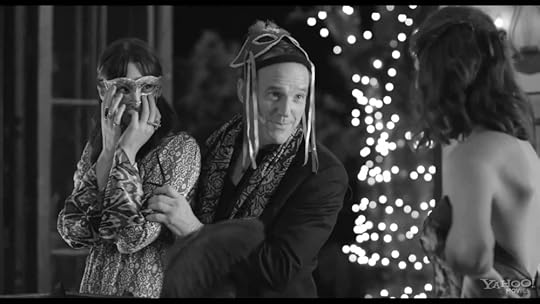
As for a positive example of an art form welcoming novel shots of energy, think of all the modernized film and stage versions of Shakespeare's Much Ado About Nothing – creating theater as lively and vital today as it was in Shakespeare’s time.
Joss Whedon’s modern film version of Much Ado About Nothing
“Experience also reveals that there is no such thing as intellectual art. For a work of art to be properly intellectual would require its proceeding from a universally accepted datum by as strictly logical a chain of inferences as that by which a truth of knowledge is arrived at.”
There is something truly unique about each painting, print, sculpture or photo. Certainly, any art can be intellectual in tone - the painting of Piet Mondrian or sculpture of Donald Judd, for example - but each and every individual work must be seen with the eyes to be appreciated artistically and esthetically. This is the very nature of visual arts.
“The last thing I want to do is condemn a species of art as a species. When I keep on pointing at far-out art as deceptive that does not mean I take everything I consider far-out art and consign it to the same low level. I’d still want to go and see each work for itself, and I’m still talking only about the far-out art I’ve seen, and I’d still insist on value discriminations, even there.”
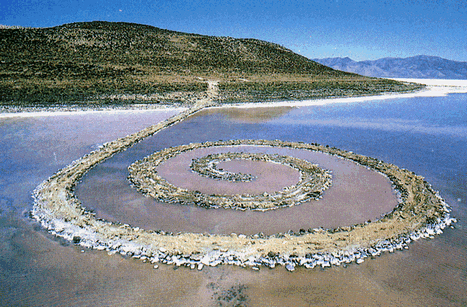
Clement Greenberg had the wisdom to know when it comes to art, even if he previously viewed nine works within a specific outlandish, far-out, shocking species, say, electronic instillation art or body paint art or political-earth art and all nine were appallingly bad art, he had to remain open and free from prejudgments when viewing number ten, since, well, who knows?
This collection of essays, by the critic most responsible for the success of Abstract Expressionism, is mostly about taste, about the absolute aspects of taste. Here are a few quotes to give you a taste of what he says about taste:
"Kitsch effectively displaced the art of the avant-garde by rendering its difficulty consumable."
"The moment … an act of intuition stops with itself and ceases to inform or point, it changes from ordinary intuition into an esthetic one."
"The pleasure of esthetic expeience is the pleasure of consciousness: the pleasure that it takes in itself."
Some good rule-of-thumb insights, although the theoretical aspects seem too redundent, and also, like a scientific/philosophical paper, you can deduce a lot of the conclusions from the first essay/essays, making most of the book obsolete. I would say you could read 1/3 of it without losing much of the meat that the book has to offer. Although the 'content' is shuffled throughout the book; my tip: skip the intro parts of the seminars which are just reiterrations of the essays and go straight to the q&a parts.
Now let's mention some of the side dishes, the potatoes of disagreement.
Greenberg mentions how in art there is no proof, that it's not like the facts of the world: there is only one problem, he is factually wrong. The world could be a fiction of the mind like a brain in a vet or any other theories/thought experiments that shake our foundations, making the world not 'provable'; all we can do is provide evidence; there is no proof and no problem with it since we can have knowledge without proof as seen in the philoshopical claim of fallibilism. So when he mentions that 2+2=4 is easily 'provable' it doesn't deter from the task of the critic/artist to present the evidence for their claims. Yeah, Greenberg, you don't have to say that 'brooding' or 'flowery' lines are always better, but you should go case by case as you yourself would agree, and scientists, too. A work of art is a universe in itself, now that's too flowery.
A nice point that Greenberg brings up is objectivity in art through the historical corrective. He harkens it back to moral objectivity and how--and I am using my own interpretation to fill in some of Greenberg's words--it's similar to moral progress. The problem is that the 'progress' is evidence for the object, not the object itself, it is us humans that is the object in Greenberg's view; Cogito, ergo sum is, most certainly, the only thing we can be sure of (because we can't exist and not exist at the same time) therefore it's a good starting point for the rooting of art's objectivity. Now, back to the already forshadowed problematic part, art is a fiction as demonstrated, for example, in Magritte's "Treachery of Images", and the innner world of humans is no different: since languages, mathematics, etc, are are only 'factual' in relation to an object. So what is the problem? Art's objectivity has to be objective outside of humanity. Again, it can provide evidence through the historical context, but the object of objectivity has to be something like a Platonic object, evolutionary fitness, or what may you.
Anyhow, there is more to state, but I am tired now and sleepy, but I'll leave it open ended so when I feel like writing again, I'll add more to the review.
Almost 50 years have passed since these esseys were written, and they are still amazingly fresh and inspiring. However, even if you are a fan of Greenberg's, you should consider other ways of approaching the book than reading it cover to cover. After the foreword (not to be missed) and Introduction (extremely useful), come the final essays, as they were published (Part I). This is followed by the transcript of the original Bennington College Seminars, which includes Greensberg's presentations of the original "buds" of the essays followed by Q&A sessions. Finally, there is an appendix that contains the first draft of Chapter 1. What I found the most useful was to read the transcript of the seminar first, and then go to the final essay. This approach worked for me at least in two ways -- first of all, the lectures during seminars were delivered in a much more approachable language (witty, sharp, fun), which encouraged and equipped me to read the academic paper; secondly, in this way you can follow the evolution of ideas in Greenberg's mind, and the usefulness or unusefullness of the seminar proces, with his own thoughts sometimes building on it, but more often exploring other paths.