Dziennikarz Bryan Benson opisuje historię Harolda Jamesa Nicholsona, wysokiego rangą funkcjonariusza CIA, który w 1994 roku rozpoczął współpracę z wywiadem Federacji Rosyjskiej, a następnie, skazany w Ameryce za szpiegostwo, w czasie pobytu w więzieniu, skłonił własnego syna, Nathana Nicholsona, by nawiązał kontakt z wywiadem rosyjskim. Ostatecznie w 2009 roku Nathan Nicholson również został skazany za szpiegostwo, lecz otrzymał wyrok w zawieszeniu. Książka Bensona, oparta na pięcioletnim śledztwie dziennikarskim, szczegółowo opisuje przebieg wypadków, które doprowadziły do powstania niezwykłego tandemu szpiegowskiego złożonego z ojca i syna. Autor tworzy fascynujący portret psychologiczny głównych bohaterów, a dzięki licznym wywiadom z funkcjonariuszami FBI i CIA prowadzącymi śledztwo w sprawie Nicholsonów oraz skrupulatnej analizie dokumentów daje także znakomity wgląd w metody pracy amerykańskiego kontrwywiadu.
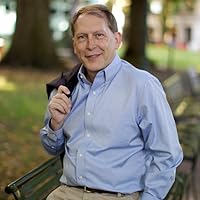
Bryan Denson is the author of "The Spy's Son: The True Story of the Highest-Ranking CIA Officer Ever Convicted of Espionage and the Son He Trained to Spy for Russia."
The book is available for purchase now, but hits bookstores in the USA and Canada May 5, 2015. The Spy's Son also will be published in the U.K., Australia and New Zealand in June 2015. Rights also have sold in Poland and Estonia.
Movie rights to the book were sold to Paramount Pictures. The studio has attached Robert De Niro and Shia LaBeouf to play the father-son spy duo. The film is to be directed by D.J. Caruso. The screenplay was written by Kario Salem, a guy with a genius understanding of narrative.
Denson is a veteran journalist who has worked on the East, Gulf, and West coasts of the United States at five daily newspapers. He currently works for The Oregonian newspaper and OregonLive, where he covers the federal courts.
I took five years to finish this book, but only because I wrote it. I hope you find it as exciting in the reading as I found it in the research and writing.
Sometimes non-fiction is better than fiction because it's not fiction. That was my reaction to The Spy's Son in which Bryan Denson recounts the story of Jim and Nathan Nicholson -- a father and son pair of spies. If this book had been fiction, it would simultaneously seem too off the wall and too mundane. But because it's real, both of these qualities made this book fascinating. Denson has done a tremendous amount of research, and tells the story of how Jim who was a spy with the CIA changed sides and began selling information to the Russians in the 1990s. After Jim was caught and incarcerated, he recruited his son Nathan in the mid 2000s to approach the Russians and supply them with information in exchange for money. At first, I was not sure I was going to enjoy this book -- it is somewhat long and detailed -- but after a while I found myself getting absorbed, having trouble putting it down and -- when I did put it down -- talking about it to anyone willing to listen. Denson does a great job trying to understand Jim and Nathan, what motivated them, the world in which they operated, describing in detail the unromantic reality of what they were doing, and the impact they had on others. He really drills down on the human element in this story, especially the complex bond and feelings between Jim and Nathan. The end is particularly moving, when Denson discusses his interviews with Nathan and the relationship he has developed with Nathan. And because this all takes place starting in the mid-90s, it's also an interesting look at the world of espionage post Cold War. I'm sure this book will not be everyone's cup of tea, but I sometimes like to be taken outside my usual genres, and this one worked for me. Thanks to Netgalley and the publisher for an opportunity to read it.
A gripping story of espionage, family, trust and betrayal.
I read this over a couple of days and found it hard to put down. I resisted googling the story of Nicholson who was the highest ranking CIA officer charged with espionage to date.
I’d heard of Aldrich Ames and Robert Hanssen but Nicholson was much more unfamiliar to me. Despite being arrested 2 years after offering secrets to the Russians in 1994, Nicholson recruited his son Nathan in 2004 to act as his courier passing further secrets to the Russians.
Denson is the only journalist granted an interview with Nathan so this is an insider account like no other.
The book reads like a spy novel, with the obvious benefit a journalist’s touch in adding background tension and context to the action.
For example Nathan’s meet in with the Russian intelligence services in Cyprus is described thus.
“The young man from Oregon zigzagged the ancient cobblestone lanes of Nicosia, pausing to scan the traffic and palm-lined sidewalks for signs someone was tailing him. He ducked down so many unfamiliar avenues that he blundered off course. He reached the rendezvous spot, 12 Diagarou Ave., on that cool December night in 2008 and looked at his watch. He was so keyed up for his next meeting with the Russian spy he knew as George that he'd arrived an hour early.”
The book is detailed showing the aspects of the spy craft involved in both the Nicholson’s work with the Russians and the joint CIA/FBI investigation that resulted in their detection and arrest.
Nicholson senior comes across as a distinctly unlikeable character showing the same characteristics of so many spies before him, self-belief, narcissism and greed. No sign here of the ideological spies of the likes of Philby, Burgess, Maclean Cairncross and Blunt, this was purely about the money, regardless of the damage it would do the US.
Nathan was a paratrooper with the 82nd Airborne and while making a routine jump, he fractured two bones and injured his shinbones making him unable to continue his military career. He worshipped his father and in the book Nathan is portrayed as shy, vulnerable and naïve resulting in his father working him like one of his CIA assets.
A fascinating book about for me, a little known father son espionage ring and well worth a read if you are at all interested in espionage. Apparently Shia LaBeouf and Robert De Niro are up for the father and son film roles.
What a heart rending true story. Bryan Denson spent 5 years researching, retracing the steps and interviewing those involved, observers both casual & official, but never had a chance to interview Harold James "Jim" Nicholson because the government forbade it. Jim had been in the infantry, became a Ranger and later joined the CIA. He was excellent at his job and was acquainted with foreign locations all over the world. He was the spy's spy & had been nicknamed "Batman". And then because of his champagne lifestyle on a beer income, especially his fascination with electronic gadgets he suddenly decides to sell secrets to the Russians for money. He is sent to "the Farm" as an instructor and delivered the names of all the Career Trainees "CT"s to his handler. He was a GS-15, the highest pay grade possible when suspicions mounted and eventually led to his conviction for espionage. He was sent to a medium security Federal prison in Oregon so he could maintain contact with his parents & children that lived close by. He then manipulated his youngest son, Nathaniel, who adored him & didn't believe he had done anything wrong, into being his courier to carry information to the Russians. Eventually the FBI became aware of what was going on and accumulated enough evidence to bring both Jim & Nathan to trial. What a sad story all because of a father's claims of love and the true love of his children.
This book reads more like a spy novel than a non-fiction book. It grabbed my attention right off and held it throughout the book.
In June 1997 Judge James Cacheris sentenced Harold James Nicholson, the highest ranking CIA officer ever convicted of espionage to 23 years in prison. He was placed in a federal prison in Oregon where his family lived. He was arrested and convicted while in prison, again for espionage for running his own son. He had another eight years added to his sentence. Nicholson had recruited his youngest son Nathan to carry messages to his Russian contact and bring home the money they paid him.
Bryan Denson is a reporter with The Oregonian newspaper. He drew upon FBI reports, court documents, military records, personal correspondence and hundreds of hours of interviews (with Nathan) for this award winning book.
The book is full of fascinating details of the clock and dagger techniques of the KGB and CIA operatives, double agents and spy catchers. The author tells the story of the Nicholson family and what happened to it when betrayed by the father.
I found this a most interesting story. I read this as an audiobook downloaded from Audible. Jason Culp does an excellent job narrating the book.
This book was quite a drag , the entire plot and story feels like it could have been covered in 50 pages. But to pad the book the author brings in every possible character that he could find and then explain their backstory. While this does provide a bit of a interesting human perspective , it gets really boring after a while. The actual story as well is pretty cliched and feels like I have either read the same story or watched the same thing in a movie. The most interesting bits occurred when the FBI hunted down the two main characters, sadly this is really short lived and doesn't save the book. Also while I am not well versed in trade-craft , the op sec that both Jim and Nathan employed seemed really weak (it was decent in the start but got really weak towards the end), while this is probably what caused them to be caught I feel like it was part of the story that should be been explained more considering that Jim at least was trained to do spy-craft.
Highly readable and riveting account of real life spy vs spy. And even more timely given the recent Russian hacking issues. No doubt spying and betrayal is continually ongoing and perhaps even more intense these days. Bryan Denson's book is an inside look at the tradecraft and potential motives of traitors.
Astonishingly enough, here's a relatively recent and relatively high profile real life spy story I was not at all familiar with. Detailed and engagingly told, this intriguing father and son espionage tale made for a rather enthralling read of the "truth that sounds more farfetched than fiction" variety.
I had difficulty getting into this book; I even read two books after I started it. I was hoping it would get better as I got further, but that wasn't the case. The story just wasn't interesting enough to hold my attention, I found myself drifting and daydreaming while reading. There was too much information on people who were mentioned briefly This book could have been much shorter.
Probably longer than it needed to be, but interesting. Let down a little by the interviews that weren't done - which the author admits in the epilogue.
This is a well written book that is just mind-boggling. How can a father do this to his child... I can understand Nathan's naivety to be honest, just really feel for him
Two main stories are at the heart of this book. There’s an introductory teaser chapter which sets up the second story after which we begin with the story of former CIA officer Jim Nicholson. The first story is very good and would have made a solid book on its own.
The second story (about Nicholson and his youngest son Nathan) also happens to be very good (slightly less so than the first) and kept the book moving along.
The best way to convey my feelings is to talk about the main sections of the book:
The opening chapter (Hola Nancy), which I described as a teaser, was disappointingly overwritten. The language is too eagerly descriptive and laden with adjectives. I was tempted to stop there but was glad I stayed with it.
The following chapters on Nicholson were fantastic. They were interesting and well-paced and had just enough tidbits to be informative without weighing down the narrative.
The second story, focusing on father and son, kept the pace well but slowed a bit when it shifted focus to court procedures, towards the end of the book. While Jim Nicholson’s story was fascinating early he was tiresome later on.
True story. Jim Nicholson worked for the CIA. This is his story as written by Bryan Denson, who tells a good tale. But that is not all of the story. After being convicted of spying and imprisoned in Sheridan [Oregon], Nicholson enlists the aid of his youngest son, Nathan. Nathan was twelve when his father was incarcerated, but is asked to carry secrets to the Russians for his father and receive money for it! Some of the things related in the book, the reader might already suspect, and some might already have been known.
The book is a fast read, yet I wanted to get savor every bit of it. It is well annotated and indexed also.
The information is particularly timely with the alleged Russian hacking of the Democratic National Committee e-mails repeatedly in the news - over and over. And sanctions by Obama - as if we don't do the same thing! hahaha. It is so easy, Nathan says, to avoid discovery, that every teenager knows how to avoid detection!
A friend gave me the book as a present and I totally enjoyed reading it.
Thanks Dad? This story is heartbreaking. A convicted felon leads his son into the same tragic life that he traveled...i.e. selling out his country for personal gain and, in the father's case, for ego issues. The son literally seems to want to do anything to gain his father's respect so he goes along with his dad's prison fueled plot to further make money and play with super spies. The son travels to exotic locations and gives our world enemies ammunition to use against us. The really bizarre thing is he really didn't get much money. I dare you to finish this book and have any sympathy for this father. At least with the son we can assume he has a psychological need to please his dad and make him proud. The father is despicable. The positive thing about this book is that it's well and clearly written and let's reader's know the inside of how spies operate.
Thank you to the publisher for providing an e-copy.
Very entertaining and emotive non-fiction/true-crime. While it may not have the explosions you expect from a classic spy yarn, the exploration of how espionage effects people on an interpersonal level is very interesting and highly revealing. If anything it helped me understand the spy's purpose outside of 007 films, and how a job that doubles down in secrets must be a hard pull for someone as narcissistic as Jim. (Especially when the best spy work goes unnoticed.)
I had never heard of James Nicolson, convicted spy, who was a high ranking CIA man. Not only was Nicolson convicted of spying, but years later, from inside a federal prison he convinces his youngest son Nathan to contact the Russians and begin spying for his dad. This is a true story that reads like a novel. Well researched and fascinating to read.
I loved The Spy's Son, I couldn't put it down and finished in 1 week (pretty fast for me). I thought the author grabbed you into the story right at the first page. I find the work of spy's so interesting so this was right up my alley. I highly recommend this book and hope to see the movie soon.
Liked this a lot. A journalist writes about an appalling situation where a CIA agent, convicted of selling secrets to the Russians, persuades his naive son into continue a relationship with Russia.
True story, heartbreaking in its impact on the family.
This is a fascinating book with lots of thrilling espionage vignettes and psychological insights into Jim and Nathan Nicholson. I wish we could hear what Jim Nicholson had to say for himself after everything, but unfortunately the author was not allowed to interview him.
This book is so well written. The author went to great lengths to get this story and portray it as honestly as possible. It was endearing to hear how he stayed in touch with one of the subjects of the book even after it was completed. I was in tears about this level of compassion.
I am in awe with the amount of research that Denson did for this book. The Spy's Son is a fascinating true story that is both well written and perfectly paced.
Devastatingly sad. I wish this weren't a true story.
Excerpts
Marcos' principle antagonist, former Filipino politician Benigno "Ninoy" Aquino Jr., had aligned himself with the left in hopes of overthrowing the regime's ruthless government. Aquino, once expected to ascend to the presidency in 1973, was instead imprisoned. When he suffered a major heart attack, the Marcos regime allowed him to fly to Dallas for bypass surgery. He remained there in exile as his people fell into years of withering poverty. In the summer of 1983, Aquino flew home to the Philippines to confront the sagging political climate and talk to Marcos about a peaceful restoration of democracy. Aquino told journalists he was returning of his own free will, and was prepared for the worst. "A death sentence awaits me," he prophesied in an undelivered speech. And he was right.
The assassination of Aquino triggered angry protests across Manila, and many Filipinos believed Marcos had ordered the slaying. The Communist Party's labor and women's movements organized massive demonstrations outside the U.S. Embassy and other spots across the city, calling for the end of the U.S.-backed Marcos government and carrying posters emblazoned with the hammer and sickle.
---
They bought a house in Lee's Summit, Missouri, where Jim joined the Church of Jesus Christ of Latter-day Saints and grew a beard. When Jim told his parents he'd become a Mormon, his mom, who raised him Presbyterian, wasn't pleased.
"It's up to you," said Betsy. "But you'll never convince me I'm a second-class citizen."
"We don't believe that," Jim told her.
Betty didn't buy it, but she let it rest.
---
Laurie discovered the loneliness of the long-distance CIA relationship during Jim's ten months at The Farm. As Jim learned how to make disguises, detect surveillance, and recruit foreign assets, Laurie learned how to keep house with a potty-training toddler. As Jim took the agency's paramilitary course, parachuting out of planes, firing machine guns, and rigging handmade explosives, Laurie scrubbed toilets and paid the bills. When her husband came home for short weekends, he couldn't talk about his training. Jim was obsessively secretive about his work, maintaining his cover as a Department of State diplomat even with his parents. Laurie wearied of the separations, and she sometimes felt like a single mom.
---
The agency had no reason to suspect Jim of secretly using the meets to chart his course as the CIA's new betrayer.
As far as the CIA knew, Jim was performing bona fide intelligence work in Kuala Lumpur. The very month that he switched teams, the director of Malaysia's spy service, known as the Special Branch of the Royal Malaysian Police, awarded Jim a gold ceremonial dagger, a kris with a serpentine blade.
On the last day of June, Jim wired $12,000 into his savings account at the SELCO Credit Union in Eugene, Oregon. This put him in position to square things with Laurie. That summer, they would finalize the terms of their divorce. Jim was ordered to pay Laurie $4,000 for her share of their land, and $2,000 for her legal fees. The judge thought Jim and Laurie were both good parents. But Jim was a steady government worker with an excellent salary, and Laurie was a broke college student. The judge ruled that Jim would serve as the primary caregiver, and that he must fly the kids home to spend Christmas breaks and summer vacations with their mother.
---
Five days after Dudayev's death, Jim drove up from The Farm to CIA headquarters and went door to door asking colleagues to provide him with background information on Chechnya. He pretended to be collecting details about the troubled region's struggles as part of a training exercise for students at The Farm. He drove him with a packet of papers.
Jim's request, juxtaposed against the SVR's interest in Chechnya, ramped up concerns that Jim might be a mole.
---
McClurg's cyber career had begun, quite by accident, when one of his bosses in the FBI's counterespionage group yelled, "Who here knows anything about UNIX?" McClurg raised his hand, and his boss handed him a paper file. Get right on this, he said. Only after reading the document did McClurg realize his mistake. He thought his boss had said "eunuchs," something that he knew quite a lot about. McClurg had grown up in Libya hearing the story of an Egyptian pharaoh who defeated an invading army of Libyans and took as trophies the uncircumcised penises of more than six thousand enemies. Now his big mouth consigned him to the study of UNIX. McClurg saved himself by reaching out to Sun Microsystems, a company specializing in computer operating systems.
---
It galled Maguire that Jim burnished his image as a minivan-driving, Boy Scout-hustling, father-of-the-year type. It seemed that Jim, much like a professional actor, had lost himself in the deceit of a role—just another cover in a career full of them.
Maguire also saw Jim as rootless, with few if any close confidants in the building. Jim had forsworn allegiances to the Mormons, and was now attending Christian worship services. But he maintained friendships with brother officers in what has often been called the CIA's "Mormon Mafia."
---
The agents were extremely careful not to let either of the Nicholson kids' cats—Megacin and Maxina—flee through the front door. (There is an old story in the bureau about agents who accidentally freed a cat during a covert entry. After a frantic effort, they recaptured the fugitive feline and put it back inside before they left, only to later learn—the hard way—that it wasn't the right cat.
---
The FBI waited until Monday to publicly announce Jim's arrest.
Nathan and Star were sitting in their hotel room that morning, watching TV as the hours ticked down to their flight to Oregon. Suddenly their dad's face appeared on the screen. They heard a voice saying Harold James Nicholson had been charged with espionage, and that he potentially faced the death penalty.
Star began to sob, and Nathan tried to calm her down. But she was beyond consolable. The FBI had jailed her dad, torn up their home, and sent them packing with little more than their cats and the clothes on their backs. Nathan had never seen his sister more anguished, and he would never forget her next words, a declaration that bared the sudden, terrible upheaval in their young lives.
"I don't believe in God anymore!"
---
He was the sixth American charged that year with spying.
---
Reno and the U.S. government would go to almost any length to protect its sources—so much so that government prosecutors might have found themselves offering Jim a light sentence for espionage rather than risk public exposure of the Russian's identity.
---
Jim's giving up the names of NOCs—bona fide secret agents with nonofficial cover—killed the careers for which they had trained. The government had spent a lot of money putting them in some of the most dangerous spots on earth, and they had gone deep undercover to plumb the secrets of hostile governments and their militaries. Now they would be called back to Langley, where they would take desk jobs or quit the agency altogether. In all, Jim had given up the identities of several classes at The Farm—blowing the covers of hundreds of officers.
---
Maguire caught his former boss's eye for an instant as he walked past. They exchanged a short glance, and Jim's face registered abject confusion. Maguire needed that. He wanted Jim to understand that he had been the inside man. They had gone spy-versus-spy under the roof at Langley, both playing a brutal game of betrayal. But only one of them would go home to his family that night.
---
"Dear Judge," he wrote, "As you know, my Dad is in jail. Please let him out as soon as possible because I miss him very much. My Dad did what he did out of his love for us. . . We are going through a tough time right now and releasing my Dad would help a lot. Please don't make me wait for a long time."
---
"I reasoned I was doing this for my children—to make up for putting my country's needs above my family's needs and for failing to keep my marriage together by having done so. I am, in so many ways, so very sorry."
Government lawyers and federal agents who took part in the investigation were flabbergasted by Jim's I-did-it-for-the-kids speech. Some would recall his words years later as the most destructive guilt trip a dad ever laid on his children.
---
The judge recommended that the U.S. Bureau of Prisons (BOP), Jim's new keeper, let him serve his time in Oregon. Perhaps there, in the bosom of his family, Jim would make good on the declaration he had made to a court officer before his sentencing: "I would greatly appreciate the opportunity to offer some positive example to my children before I die."
---
Jeremi scolded his little brother, telling him he was an idiot because the U.S. government would never let him rise through the rank's after their dad's crime.
---
Nathan knew that his cover meetings with the Russians—not to mention the sacks of money they paid—had rejuvenated his dad. Their venture made the old man's life behind bars more bearable. Nathan sense that he was desperate for their arrangements to continue, and that his dropping out might scotch his father's plans to move to Russia after prison. He didn't want to hurt his dad, but his anxieties were torturing his ulcerous gut. He sometimes caught himself feeling suspicious of strangers, wondering whether they might be federal agents. Only later would it dawn on him how deeply he'd been drawn into the spy world.
---
The illegals lived in the U.S. under their legends with a long-term goal to be come so Americanized they could gather U.S. secrets and identify targets ripe for recruitment inside U.S. policy-making circles. For ten years, the illegals posed as yuppies as they inveigled their way into U.S. culture. They bought homes, took white-collar jobs. Some of them married and raised children who had no clue their parents were foreign spies. They ate American food, rooted for American sports teams, and befriended Americans in financial, political, and government circles. In time—had they not been betrayed by one of their own—they undoubtedly would have helped Moscow Center penetrate the seats of U.S. power. The illegals were the best of the SVR's best, patiently gathering human intelligence and receiving codes by secure wireless.
---
Oregon's top FBI official, Art Balizan, got to the heart of Jim's betrayals: "During his career with the CIA, this country entrusted [him] with some of its most sensitive secrets. Not once—but twice—he betrayed his oath, our nation, and his family. Unfortunately, this is a legacy he and his children will live with from now on." . . . Nathan couldn't stop calculating the damage. He was now a felon facing prison. He had betrayed the country he loved. His dad was now a two-time felon who'd be well into his seventies before he was freed. . . . Nathan felt certain the judge would impose a no-contact order, meaning he'd be well into middle age before he could mend things eye to eye with his dad. As he told a psychologist, "This is like the death of my father. I doubt I will ever have the opportunity to talk to him again."
---
"I would like to add that the Russians owed me nothing. And insofar as their efforts were truly to help my children, I regret the embarrassment that this has caused them as well." Jaws dropped among the FBI agents against the back wall. The [man] had just apologized for embarrassing the Russians.
---
Jim had just sealed two more superlatives in the annals of American spying. He was already the highest-ranking CIA officer ever convicted of espionage. Now he was the only U.S. spy caught betraying his country twice, and the only American convicted of spying for a foreign government inside the bars of a federal prison.
---
When the courtroom doors closed, Jim swiveled in his high-backed chair as his family pressed closer to the wooden railing separating them. Jim had not laid eyes on his family in more than two years.
"Hi, guys," he began.
Jim told Nathan and Star how much he loved them. Through tears, they told him how much they missed and loved him. His parents, Nick and Betty, and siblings, Rob and Tammie, also pushed a little closer to say hello and let Jim know he still had their unconditional love and support. Conspicuously absent was Jeremi, still furious with his father for reaching back to the Russians. Jeremi also remained troubled by Nathan's willingness to take part in Jim's harebrained scheme, which only brought more shame to the Nicholson family name and put their dad behind bars even longer.
---
Nathan and Jim had grown incredibly close during their years as spy and son, and Nathan sometimes choked up, in our many interviews, as he measured that bond against its outcomes. Some of Jim's words carried special relevance now, revealing, in the objective world, what manipulations they were.
---
Jim's earliest release date is June 27, 2024. If he gets out then, he will be seventy-three years old and will find himself at a crossroads. He can stay put in the U.S., where Jeremi and Nastia have borne him a grandson (they named him James) and Star bore him another grandson, or he can bolt for the Russian Federation and the pension that awaits him. His decision will prove to his family where his loyalties lie.
---
By court order, [Nathan] was forbidden from communicating with his dad by any means, even through a third party. But Nathan didn't need a judge to tell him he should put some distance between himself and the naïve young man who'd been so easily seduced into serving as his dad's agent.
A true story of espionage and counter espionage that you won’t want to put down. The Spy’s Son begs the questions: 1) How could a man who devoted his career to serving his country with distinction then betray his country? and 2) How could a father knowingly lead his trusting son down a similar path of betrayal knowing that his son was risked his own freedom?
A respected career CIA officer, a man considered an expert in his field, Jim Nicholson sold information about the US Government, including the identities of hundreds of CIA trainees, to Russian spys. His top-secret security clearance gave him access to cables pouring in from around the world, many of which were potentially valuable to the Russians. He printed out files and took them home, where he typed up summaries. Going through an expensive divorce and custody battle, he tells himself he’s doing this to manage his bills. Later, he tells his kids that he did it for them - so he could buy them “stuff”. (Talk about a head trip for these kids! Imagine feeling like it’s your fault that your father has been arrested). Jim was, at least initially, motivated by money -he had champagne tastes, especially in electronics. . Later he began to tell himself that the US Gov’t didn’t appreciate all his years of dedication and the toll it took on him and his family.
Jim approached a top Russian official: “I need twenty-five thousand dollars,” he said. Vlasov sat for a moment, taking it all in. ”That should not be a problem,” he said. Jim had simply volunteered to spy against the very nation he had served with distinction for twenty years. Incredibly self-centered with a very big ego, Jim tried to rationalize such a betrayal. He figured the CIA had long ago turned him into a criminal. He had broken into houses, planted bugs for the agency. With his incredible ego Jim and believed that the government (our government) “owed him”.
The CIA built a matrix around information provided by several sources—including the CIA’s key Russian tipster—and matched it against the data on the group of CIA officers. The evidence wasn’t conclusive, Bowman said many years later. But it pointed to Jim. In 1997 Jim Nicholson became the highest-ranking Central Intelligence Agency officer ever convicted of espionage. Jim never once shows remorse for his betrayal of his country and these feelings are infuriatingly clear at his sentencing.
Nathan was 13 years old when his father first went to prison. Now 24 years old, still young and naive, Nathan continued to adore his father and wanted to be just like him. More than anything, he wanted his father’s approval. Following his imprisonment, Jim approached his son about delivering information to his Russian operative. Praising his son and telling him how much alike they were and using biblical quotes to lead his son into believing in his mission and believing in his father, Nathan jumped at the chance to be like his dad. Though in prison, Jim taught Nathan the basics of spying and smuggling his dad’s secret messages to Russian spys in other countries. Nathan never considered himself a traitor but thought that his dad was the victim. It took Nathan’s lawyers a long time to help Nathan understand how his father had used him.
Full of the juicy information that makes for a great spy story, including: pinhole cameras, key impression kits, brush-passes, polygraph tests, handlers, double agents, moles, dead-drops, leaked-secrets, cipher locked doors, encrypted material, counterespionage, covert communications, rendezvous, black rooms, Foreign Intelligence Surveillance Court, the Justice Department as well as the KGB, CIA, FBI, The Spy’s Son has it all. Written by a veteran journalist who spent 5 years investigating this case. A story of trust, family and betrayal. Riveting and intriguing. I couldn’t put it down. *****
For more book reviews follow me on Instagram at #emptynestreader and on Goodreads. #thespysson #bryandenson #truecrime
This real espionage story is sad more often than exciting. It suffers from the problem that actual spying is mostly dull. In this case, so are the real spies. The elder Nicholson fits the pattern of Aldrich Ames, a man with a tremendous ego and a passion for luxury goods. The younger Nicholson is a much more complex personality and his involvement provides the focus of the story. The painfully slow investigation that ultimately led to the arrest of Nicolson's son Nathan and the elder Nicholson's second trial showed both the stunning ease with which a convicted spy was able to commit espionage from inside a Federal prison and the miserable state of U.S. counterintelligence. The best part of this book is the aftermath. The problems facing U.S. intelligence in 2009 stemmed directly from the damage done by Ames and Robert Hanssen a decade earlier. The CIA had recruited several new moles in the SVR, but the winds of political change coming the new Obama administration which wanted a "fresh start" with Putin's Russia made espionage a low priority. The naivete of this approach was revealed when the investigation into Nathan's activities revealed that his controller 'George' was SVR General Vasiliy Fedotov brought out of retirement to spearhead the search for the mole who betrayed the elder Nicholson. Unlike the Obama administration, Medvedev and Putin had no interest in a 'better' relationship and were relentlessly working to obtain technical secrets, military, and financial data and to place agents in key positions to influence U.S. policymakers. A chain of revelations and betrayals led to the swap of four convicted Russian spies for the famous 'ten illegals' in July 2010. Their work was publically trivialized by then VP Joe Biden, and the FBI didn't release its report on the Russian illegals program until October 2011. In 2015, when this book was published, the full extent of the fall out from the collapse of Obama's "fresh start" wasn't clear. It was the first step on a road that led to the transformation of Putin into the ultimate bogeyman of U.S. politics. That's another story. This story ends more or less happily with Nathan's recovery and return to normal life after making a plea deal that kept him out of prison. Recommended only for those interested in the nuts and bolts of modern espionage.