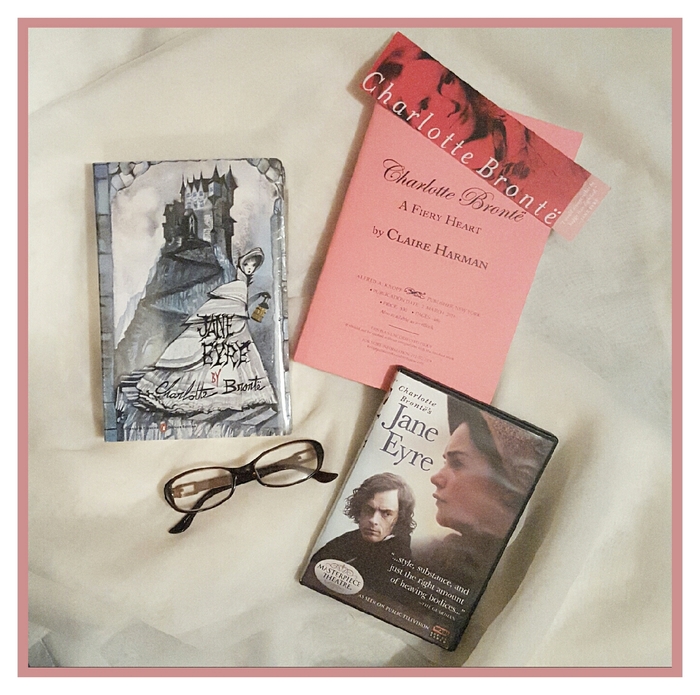
Charlotte Bronte famously lived her entire life in an isolated parsonage on a remote English moor with a demanding father and with siblings whose astonishing creativity was a closely held secret. The genius of Claire Harman s biography is that it transcends these melancholy facts to reveal a woman for whom duty and piety gave way to quiet rebellion and fierce ambition. Drawing on letters unavailable to previous biographers, Harman depicts Charlotte s inner life with absorbing intensity. Bronte s blazingly intelligent female characters brimming with hidden passions transformed English literature, even as a heartrending series of personal losses followed the author s literary success. Charlotte Bronte: A Fiery Heart is a groundbreaking view of the beloved writer as a young woman ahead of her time.
Claire Harman began her career in publishing, at Carcanet Press and the poetry magazine PN Review, where she was co-ordinating editor.
Her first book, a biography of the writer Sylvia Townsend Warner, was published in 1989 and won the John Llewellyn Rhys Prize for ‘a writer of growing stature’ under the age of 35. She has since published biographies of Fanny Burney and Robert Louis Stevenson and edited works by Stevenson and Warner. She writes short stories for radio and publication and was runner-up for the V.S.Pritchett prize for short fiction in 2008. Her latest book is a mixture of biography and criticism, Jane's Fame: How Jane Austen Conquered the World.
Claire has taught English at the Universities of Manchester and Oxford and creative writing at Columbia University in New York City. She has appeared on radio and television and writes regularly for the literary press on both sides of the Atlantic, reviewing books, films, plays and exhibitions.
She was elected a Fellow of the Royal Society of Literature in 2006.
Reading this biography was like being punched in the gut over and over. Charlotte was a revolutionary, a catalyst for change, not only in fiction, but also in how people perceive others. I am so moved by the Brontë's story that I feel I have been forever changed. I swear I will visit you one day Charlotte and weep at your grave, my soul sister. <3 (okay, that was a little dramatic, but GUYS SRSLY).
Some life stories are so canonical that they don’t bear retelling, so much as demand it. That’s why every 20 years or so, we get a new biography of Charlotte Brontë, the patron saint of every bookish brown mouse who has ever screamed silently to the world, “One day you will notice me and be dazzled by my sun!"
“Charlotte Brontë: A Fiery Heart” is by turns charming, devastating, heartbreaking, and exciting. Claire Harman has meticulously researched the life of the Brontë family, and of Charlotte in particular, and brought them to life for 21st century readers. Harman has an extraordinary knack for evoking the triumphs, frustrations, and prickly contradictions of Charlotte’s character. Her portrait of the Brontë family, in all its dysfunction, is both pointed and poignant.
In the books final pages, I both celebrated the life, and grieved the loss of this extraordinary woman. I get to know a person who both longed to be forever known, but clung to anonymity in order to achieve it; a woman much more concerned about truthfulness than personal fame; and someone who felt compelled to put into words her own terrible sufferings (most notably her bereavements and her agonizing unrequited love) as being the only way to deal with them.
I will never look at her novels the same way again.
"I am no bird; and no net ensnares me; I am a free human being with an independent will."
-- Charlotte Brontë, Jane Eyre
If Jane's fieriness of spirit seems to belong more to our own times than to hers, it could be because her ardor came straight from her revolutionary author. And I feel nothing but admiration for Charlotte: a woman determined to make her own way, and live her life by her own set of standards -- dictated not by society but by herself, and herself alone.
"...there's a fire and fury raging in that little woman, a rage scorching her heart."
I suppose I'd be a sucker for anything about Charlotte Brontë, who has been My Hero since I was around nine or ten. But as it happens, even after reading the breathlessly starry-eyed Girl With A Pen: Charlotte Bronte and the far more worthy, but slightly sniffy The Brontës, this biography really made Charlotte into a completely believable person, one that you could imagine beavering away at her writing determinedly if very short-sightedly, handling expertly a difficult father and demanding siblings, and trotting off down to London with Anne (or should that be up? I assume London always thinks it is up, and the railways agree) to prove to her publishers that Currer, Ellis and Acton Bell were not one and the same person. And were female, to boot.
Claire Harman manages that precarious balancing act of mining the fictional work for possible autobiographical elements without reducing CB's creative talent to nothing more than a fictionalized version of her own life. She explodes myths without removing all the magic, is constantly engaging without ever becoming glib, and is acutely aware of how even ladies, nineteenth century ladies brought up in a Church of England clergyman's household, must have had desires. Desires that she herself was intelligent enough to recognize as being unattainable. Would that we could all be as wise.
Even if you know the life of Charlotte Bronte (the facts of her life were not new to me), there are insights here for you. This account of her too-short life, heartbreaking at times due to the famous tragedies that beset the family, is gripping and engrossing: I hated that it had to end.
*
At first I was a bit disconcerted at the way the notes at the back of the book were handled, but I quickly became attuned to them.
What a strange, isolated and yet amazing life! The sheer volume of intense emotion simmering beneath the reserved, Victorian surface of Charlotte Brontë is simply staggering. It’s a wonder that she lived as long as she did while repressing that ocean of feeling.
And oh how the Brontës hated having to go to work and earn a living! They were a family of huge egos, every one of them convinced that they were geniuses and that such trivialities as going to work and dealing with regular people were far beneath them. If you were admitted into their magic circle, you were one of them for life (as several servants were) but everyone else was suspect (and stupid).
They were talented—they were right about that—but they let that talent turn them away from the world, leaving them awkward and inappropriate when they had to go out into regular society. Branwell, Charlotte’s brother, seems to have been the most at ease among non-family, but he managed to always screw up any opportunity that presented itself, either by drunkenness, opium consumption, or fooling around with the master’s wife. His casual entitledness consistently ruined his chances at recognition or advancement, things which Charlotte would have cheerfully murdered for. As children, Branwell had been her alter-ego and partner in the role-playing imaginative world that was the basis for their writing. As an adult, she seethed with resentment, knowing what use she could have made of his situations. When he returned home in disgrace after his disastrous affair with his employer’s wife, he simply refused to work any longer and basically killed himself through substance abuse. Harman points out that Charlotte was “secretly furious at the ease with which he had been able to indulge his passions, while she was almost killing herself with the suppression of her own.” She is still, at this point, obsessed with her Belgian school master, a married man who wisely won’t answer her letters.
The old saying goes that if you love what you do, you will never work a day in your life. Once the Brontë women could support themselves through writing, their lives improve immeasurably simply because they can live the way they want to, i.e. isolated. Unfortunately, only Charlotte lived long enough to enjoy this state of affairs, and she is haunted by the loss of those siblings and servants who provided the snug, creative circle in which she wrote.
When Charlotte finally unbent enough to marry the parish curate, her life improves again. She discovered that the “grand passion” of love couldn’t compete with an ordinary guy who actually cared about her. One wonders what exactly her former obsession, her French instructor in Belgium, thought of the torrent of fiction which features men who are obviously based on him. He and his wife were well aware of Charlotte’s books and must have spent some uneasy hours speculating on what she might do next.
We are the recipients of the glorious fiction produced by the Brontës, fiction that probably would never have existed if they had lived an untroubled, ordinary, comfortable life.
3.5 stars - Because I slightly disagree with the way Harman characterizes a very niche part of Bronte's life (her religious beliefs), I probably wasn't quite as warm on this one as most folks seem to be. Still, this is clearly a richly researched and told biography that is well worth the time of anyone interested in Charlotte's often bittersweet life
Terrific biography of Charlotte Brontë. Filled with fascinating insights and details into the lives and interactions of the inhabitants of the Brontë Parsonage. Moving, thought-provoking, detailed and profoundly erudite, yet thrilling and accessible. One of the best biographies I've read in recent years...
Description: Hattie Morahan reads Claire Harman's new and intimate biography of Charlotte Bronte, one of the nation's greatest novelists. This vivid and complex portrait is published ahead of the two hundredth anniversary of the writer's birth in April 2016.
The events of Charlotte Bronte's life - her motherless childhood on the Yorkshire moors, the early and tragic deaths of her beloved siblings and a great and unrequited love - all found their way into her novels. Claire Harman unravels the complexities of Bronte's life to reveal a fiercely passionate and determined woman who gave us some of our best loved novels and heroines, most famously Jane Eyre.
Claire Harman is an acclaimed and award winning biographer. Her books include Sylvia Townsend Warner, Fanny Burney, Robert Louis Stevenson and Jane's Fame which tells the story of Jane Austen's renown.
With her bicentennial approaching in April 2016, it is the perfect time to revisit Charlotte Brontë’s timeless stories. One of the things Harman’s wonderful biography does best is to trace how the Brontës’ childhood experiences found later expression in their fiction. A chapter on the publication of Jane Eyre (1847) is a highlight. Diehard fans might not encounter lots of new material, but Harman does make a revelation concerning Charlotte’s cause of death – not TB, as previously believed, but hyperemesis gravidarum, or extreme morning sickness.
This will help you appreciate afresh the work of a “poet of suffering” whose novels were “all the more subversive because of [their] surface conventionality.”
This was a very intimate look into Charlotte Bronte's life.
I LOVED the copies of the letters and other authentic pieces of history, along with anecdotes that may not have been found elsewhere. I enjoyed the book's setup, but it got a bit dry in places.
Overall, it was apparent that the Author was a significant fan of Charlotte and wanted to try to show her as raw of a persona s she could. This is definitely worth the read if you are a Charlotte Bronte fan.
Moving, hard-to-put-down, sometimes heartbreaking, and utterly fascinating, Charlotte Bronte: A Fiery Heart is less massive than Juliet Barker’s The Brontës: Wild Genius on the Moors, but it’s a good choice for someone not ready to dive into the delights of Barker’s thorough, 1,000+ page tome. In spite of the title, Charlotte is the main but not only focus this new biography, because it also covers the lives of Emily, Anne, Branwell and their father--they were such a close family it would be impossible to leave any of them out. All four of the siblings were imaginative and obsessive writers so that from a very young age they were creating their own shared literary worlds. I especially enjoyed the way Harman related the novels the sisters published to their life experiences. Anyone who loves Jane Eyre, or who is interested in life outside of London during the middle of Victoria's reign, will find this biography fascinating. I read an advanced review copy given to me by the publisher; review opinions are mine.
When I saw this hefty biography at the library (just before the pandemic took over, when such things were still open) I thumbed through it and then put it back on the shelf. I doubted I’d have time to read such a tome before the due date.
And then I reconsidered and took the book home— just in case. Little did I know the library would soon be closed, and all due dates suspended indefinitely. And this fat book suddenly appeared more like a comfort than a chore.
This is a dense, detailed work, best suited for serious fans of the Bronte sisters. The book purports to be about Charlotte Brontë but since she outlived all her siblings this biography covers them all.
It is interesting to note how much these three women and their books have created a thriving tourism industry in Haworth and the surrounding countryside (“Bronte country”). Is it sad or instead inspirational that these lonely, isolated children created a rich and vast fantasy world to sustain them? Take a moment in your current isolation to contemplate that situation— which is better, a busy outer life or a rich (perhaps obsessive) inner life?
I'm probably easily pleased, but I was very excited earlier this year when I read that Claire Harman would be publishing a new biography of Charlotte Brontë and I made sure I got my hands on a copy as soon as I could. Harman is a great writer and I hoped she'd make a success of the biography- and she most certainly has.
The book starts off, cleverly I thought, with an absolutely pivotal moment in Charlotte's life. It's a Sunday afternoon in 1843 and she is in Brussels, lonely and alone. The school where she is working as a teacher is closed, and in an effort to occupy herself (and wear herself out physically) she walks to her friend Martha Taylor's grave on the edge of the city. At this point in her life Charlotte is emotionally, physically and sexually obsessed with her 'Master' at the school, the enigmatic Constantin Héger On the way back the fiercely anti-Catholic Charlotte calls into a Catholic church and persuades a priest to hear her confession. What I'd have given to be a fly on the wall when she did that!
Harman writes coolly and objectively and isn't tempted by supposition thank goodness. However her admiration for her subject shines through.
I also liked the way she was able to bring Charlotte's brother and younger sisters so vividly into the narrative - Charlotte was inextricably bound up with them. However, despite giving each of these siblings a life and character she never takes her eye off her main subject.
I found no startlingly new revelations, no cache of secret letters, or previously unknown photographs or anything remotely sensational. Instead I found a superbly written biography which I thoroughly enjoyed.
I read Jane Eyre for the first time when I was 10 years old. My 4th grade teacher didn't it think it was an appropriate choice for my book report; she recommended something by Beverly Cleary instead. I was highly indignant at the time, but I can see her point now. But there will always be some children who pay no attention to what is developmentally appropriate, and instead choose to race ahead into uncharted intellectual and emotional territory - looking for information about the world, or perhaps seeking emotional intensity. (This was somewhat true of me, and even more true of Charlotte Bronte and her siblings.) Truly, Jane Eyre has been one of my most consistently beloved books, in some 40 years of reading, although my understanding and interpretation of it have undoubtedly changed over the years. When I was 20 I visited England, and virtually the first thing I wanted to do was visit Haworth - which is marvellously atmospheric. A few years later, when I was in graduate school, I did an in-depth study of Charlotte Bronte. We studied her three major novels - Jane Eyre, Shirley and Villette - and we went into some depth about the extraordinary, legendary life she shared with siblings Emily, Anne and Branwell. I say this as a sort of personal preface, and also to explain that I approached this biography with a certain amount of information about its subject. I wouldn't say Claire Harman's work has transformed my understanding of Charlotte Bronte, but certainly that it has deepened and underscored what I already knew about her. In the US, this biography has been published with the subtitle "A Fiery Heart" - an entirely appropriate description. Charlotte Bronte was nothing if not intense. Her undersized, frail body housed a disproportionately large brain - teeming with ideas, longings and strong (mostly suppressed) emotions.
Harman tells her story chronologically; not all biographers choose to do so, but I think it is especially appropriate in this case. As the recent BBC programme "To Walk Invisible" did so admirably, Harman shows how the children's imaginary worlds - and the enormous amount of juvenilia they produced - was not only a writing apprenticeship, but a deeply characterological bent. As Anne is says in "To Walk Invisible," "I never feel more alive than when I am writing." For all of the Brontes, their fantasy world was more important than the real world. Self-conscious, constrained and private in company, they were bold, independent, and sometimes deeply unconventional in private. Charlotte and Anne, at least, did have strong religious beliefs and convictions, but their adherence to Victorian mores was in outward form only. Charlotte, in particular, resented the limited scope of a woman's life; and Emily took almost no notice of it.
Although the loss of her mother and two older sisters was undoubtedly important to the formation of Charlotte's character, not to mention the rather odd and febrile atmosphere of their household, Harman identifies Charlotte's infatuation/obsession with Constantin Heger as the emotional catalyst for much of, if not most, of her work. Originally her French teacher in Brussels, and then later a rather unequal peer, Heger's brief involvement in Charlotte's life was like a boulder being thrown into a small pond. The ripples it caused were certainly disproportionate to the amount of time she spent with him. Heger's appreciation of Charlotte's talents and intellects may have been both limited and guarded, but combined as they were with her attraction to him, his person seemed to have been a lasting source of both literary inspiration and emotional neediness.
This is not an easy book to read, but then Charlotte Bronte's life was not an easy one to live. There is something so potent, in that gothically romantic sense, about the Bronte's isolated lives on the Yorkshire moors; but reading in minute detail about death, physical suffering, emotional suffering and loneliness does take a toll. If you are interested in Charlotte Bronte, though, or her place in 19th century literature, this is a must-read work.
This book offers a good recap of what is known about the Brontë family - the three authors Charlotte, Emily and Anne, the two oldest sisters Maria and Elizabeth that died before their teens, their brother Branwell and the father Patrick. The focus is on Charlotte. She lived the longest of the six children. She died at the age of 38 in 1855! Their mother, Maria, died when Charlotte, the third oldest child, was five years old. Patrick was the perpetual curate of the parsonage in Haworth, West Yorkshire, where the family moved after living in Thornton, West Riding of Yorkshire. England of course.
There is a heavy reliance upon The Life of Charlotte Brontë by Elizabeth Gaskell which was published in 1857, soon after her death. We hear so much of what Gaskell thought; I wondered repeatedly if it would have been better to simply read that book instead! Her book emphasizes the private details of her life. In Harman’s book attention is also paid to the letters from Charlotte to Constantin Héger, the husband of the headmistress at the boarding school in Brussels where Charlotte and Emily had been teaching English and music respectively in exchange for board and tuition. Charlotte was there from 1842-1844. She was infatuated with Héger. The Brussels sojourn is clearly the inspiration for her last novel, Villette, and The Professor, published in 1857 after her death.
I would have appreciated a more questioning analysis of the accepted facts. Repeatedly I felt that what was stated was subjective. Clearly Gaskell’s views were not unbiased. She omitted details of Charlotte’s love for Héger! When Gaskell first came to the parsonage she saw it with unappreciative eyes, desolate moors with the wind “piping and wailing”. I have vacationed in Yorkshire. I liked the moors and enjoyed walking there. Gaskell’s perception has colored how we see the Brontës’ existence. It is said by Gaskell that Patrick forbid the eating of meat, but there are other sources that refer to meat being eaten and cooked. The author does not point out the discrepancy between these contradictory statements found in different parts of the book.
The deaths and illnesses, their father’s egotism and favoring of the son, the unrequited love, the girls’ struggle to support themselves and their brother’s dissolute lifestyle draw a dark picture. The girls’ aspirations to become writers are all the more admirable, topped off by the era’s prejudice against women writers! All three published under male pen names to hide their true identity. I knew that Charlotte did finally , but this book made her mine. I was deeply moved.
After completing this book I still cannot grasp the close relationship between the siblings. How did it come to be they turned toward each other to the extent that they did? My guess is that even if their mother died when they were very young, she played a role. I wish the author had provided more information about her significance. Neither do I understand how Charlotte could be such a loving daughter? Their mother’s sister, Elizabeth Branwell, came to care for the widower and children at the parsonage after the death of their mother. Too little is said about her and her relationship with the children.
I do not recommend listening to the audiobook narrated by Corrie James. It is difficult to distinguish between what is a quote and what are the views of the author. Sometimes the text says that this is a letter from X to Y, or this is what so-an-so wrote, and then there is no problem understanding. However other times you hear the author’s view followed immediately by a quote that exemplifies that view, but you do not see the quote punctuation. Then the text switches back to the author’s lines. In that the author uses an old fashioned wordy way of speaking it is extremely difficult to keep straight who is saying what. Take my word for it, you get confused. The intonation is very British, old-fashioned and all too often dreary and melancholic. At particularly dire moments the words are slurred together. Numerous times I had to backtrack to listen several times. Did she say 90 of 19?! Did she say Brunty or Prunty or what? I prefer clear, easily deciphered words rather than dramatized lines dripping sentiment. The poor narration does not influence my rating though.
I am glad I read this; it is a satisfactory review of what is already well known. It is just that I wanted a bit more.
Such an enjoyable biography and audiobook experience. Does contain spoilers for the Brontë sisters’ seven novels. Loved the mix of primary sources and narrative by Harman.
Listening to Claire Harman’s biography of Charlotte Bronte made me realise I had seriously underestimated the remarkableness of her and her sisters and their novels.
Claire Harman’s account reads like a story of survival; money was always a worry for the Brontë family, and the three sisters only hope for a better life was for their brother, Bramwell.
This book is a stunning gem. I'm dying to share so many of the quotes and poems from it, however I can't if I'm to follow the publishers wishes to not quote from the unfinished proof without checking it against the finished and there is no question that this will be a book I'll be buying a finished copy of. Even at 400+, nearly 500 pages it physically has a quality to it which is just the first realization of the depth of love and care that went into it. The writing and research, the depth of detail is incredible. This is hands down one of my most cherished books.
I see other reviews which have compared it to other Bronte books, some good and some not so good, but I don't have anything to compare it to. Even if I did I know I'd still be swooning over this book as profoundly as I am now. I think it's safe to say and obvious that I've skimmed some because this book has been on my "currently reading" shelf for quite awhile, the release date is right around the corner and I've read enough to know that it's something special.
As soon as I get the finished copy I'll most definitely be back to add quotes, pictures and more detail. I wish there was a loophole or another way which would allow us to share from an ARC, however there isn't, so I will patiently wait and then excitedly share what's so fascinating, eye opening, stunning, shocking, and absolutely Beautiful in this book from a life long Jane Eyre/Bronte fan.
Please head over and pre-order! It's an incredible biography and one I highly recommend. Star rating it is an understatement. It flat out deserves an award more than stars.
Many thanks for the copy of this book from the Publisher #Knopf #PenguinRandomHouse and through my entry from the#GoodreadsFirstReadsProgram for my honest thoughts. It was a pleasure and honor to have had a chance to be holding and reading this incredible book!
Knopf does it again with putting out yet another extraordinary book! This one by Claire Harman
From Amazon.com Product Details Hardcover: 480 pages Publisher: Knopf (March 1, 2016) Language: English ISBN-10: 0307962083 ISBN-13: 978-0307962089 Product Dimensions: 6.7 x 1.5 x 9.5 inches
After all these years, the books, the movies, the plays, the documentaries, the reviews and the endless discussions, one would think all has been said and written about these remarkable sisters...boy was i wrong in that assumption!
First of all, anyone who loves and knows Charlotte and her work, knows just how impossible it is to separate her life from that of her siblings - truly her center and her source of support her whole life, until their deaths. So yes this is indeed a biography of Charlotte/Currer Bell but also to a certain extent of Anne (Acton Bell) and Emily (Ellis Bell), their influence in Charlotte´s character and life (and their own literary efforts).
Harmann truly does all the ladies more than justice, in successfully bringing them to life in the 21st century, by setting all, but of course mostly Charlotte, in perspective, as regards the age she lived in and her own life journey.
This is, beyond a doubt, impeccably and lovingly researched - the clear fascination with the woman behind the pseudonym and the myth is visible from page one, and yet perspective is never lost by the author. Charlotte is seen here in all her qualities and flaws, her journey of transformation into a confident writer who succeeds in getting herself published is brilliantly told - picking up the many letters Charlotte wrote to friends (and her own books) Harmann gives an insightful analysis of the mind and motivations of Charlotte Bronte. I wont go into a description of their life, much has been written/said and a good deal of it untrue as we can see here. Bad childhood? no, not really, because no one could write such amazing things from a very young age like they did - be in in the shape of a story or a play or a poem - unless they had to a certain extent enjoyed a good, carefree, and yes it can be said, happy childhood.
Harmann takes you on a journey here, a journey to see where and when it all began and to understand some of literature´s most influential works - you may not end the book a fan of Charlotte but i sincerely doubt you wont end it with a good deal of respect and admiration for the sheer genius of Miss Bronte and her siblings.
After this one i am so going after Juliet Barker´s biography on all the family!
Considerations of a practical nature - style of writing - a bit more on the scholarly side, but still a very engaging and "educational" experience! (i am embarrassed to admit, as an english lit major, my ignorance regarding a lot of info here). Allow yourself some pages and really give this a try, just for the care put into the research its worth the "effort" of reading all 390 pages of it! (the rest is thanks yous, notes, bibliography and such).
And if i may be so bold as to make a suggestion - read this and pick up Jane Eyre or even Wuthering Heights or Agnes Grey...you will see them in a whole new light! Happy Readings!
This is a moving and thorough biography of Charlotte Bronte. It also contains some discussion of her books, though not as much as I would have liked. But then it would have been 1,000 pages long. Harman explains why Jane Eyre has magnetized so many readers: Its predominant emotion is anger. I hadn't thought of that before, but I see that Harman is right. Far from being a romance, it's a cry in the wilderness, an act of rebellion. I learned things about Charlotte and her family that I hadn't known before. The book provides a description of the life of Patrick Bronte, the father, that was more detailed than any I have seen. I knew that he chose the name Bronte because it meant thunder, but I didn't know that it came from a dukedom given by the King of Naples to Admiral Nelson, whom Patrick idolized. One detail about Charlotte struck me: She was missing several teeth, with no replacements. I can imagine what a horror that must have been to a young woman. No wonder she always felt unattractive and others described her as unattractive. The fact of the missing teeth was in my mind as I read every page of the book. One thing in the book made me feel better about her painful life. Apparently she really was happy in her short married life with Arthur Bell Nicholls. I'm glad. How much death struck her family! The book also gives a vivid description of Emily and Anne's short lives, as well as the sisters' interconnection and the terrible deterioration of their brother Branwell. Surely anyone who enjoys reading the Brontes' novels -- and who does not? -- would want to read this book.
Nakon što sam pročitala i ovu biografiju, mogu da kažem da me Gaskelova mnogo više pogodila i opsedala, koliko god svi bili protiv njenog prikaza života Šarlot Bronte. Harmanova nam daje sveobuhvatnije delo, ne krije Konstantina Hegera (možda se i previše fokusirala na njega za moj ukus) i pruža nam informacije do kojih ne možemo tek tako da dođemo, ali nijednog trenutka me nije „uništila“ kao što je to uradila Gaskelova niti me u potpunosti prenela u Havort (normalnoj osobi bi to bio plus nakon svega što sam osetila čitajući "The Life of Charlotte Brontë"). Zaključak je da autorka baš i nema izgrađen stil i da se od tolikog truda da bude objektivna nametnula kao neko ko ne gaji preteranu strast prema Bronteovima. 3.5⭐
This biography is so well written, in my opinion, it felt like a story itself, it was so easy to read and incredibly informative. I've not read a lot about the Brontes, but I've read a few of their main books, such as Jane Eyre and Wuthering Heights, so this was a very interesting read into the life of Charlotte, but also about the relationships with her family, and how this translated into her fiction. In a way, this book is almost like a story in that Charlotte Bronte is such an interesting individual, and her life is just so riveting it's unreal, with both incredible fortune and sadness. The relationship with her family is so depressing, especially in terms of her father and brother, and the deaths of her sisters genuinely made me upset, she had to endure so much 😢.
I think as well, how she is portrayed is refreshing, as the author strays away from overly romanticising her or criticising her too much, and so Charlotte Bronte just becomes another person and is not overly revered or condemned. Obviously, some of her behaviours were not normal or healthy, such as the intense relationships and attachments she formed throughout her life, especially obvious during her early years in Brussels with her students and 'Master', but the way the author of this biography portrays these balances with the other aspects of her personality. Claire Harman was extremely successful in summoning the individual of Charlotte Bronte, a flawed individual just as much as anyone else is, without romanticising her, something which I find incredibly rare, and why I found this book to be such an interesting read.
Healing, "recovering," from a death is also a form of estrangement, a further loss.
Biyografi kesinlikle benim rahat olduğum bir alan değildi. Aksine "çok sıkıcı olacağını düşündüğüm" sonu belli olduğu için okumanın hiçte keyifli olmayacağını düşündüğüm türlerdendi. Geçen sene kurgu dışı kitapları okuyup sevmeye başlayınca neden olmasın ki, neden biyografi okumayayım ?
Bu yüzden uzun zamandır hayatlarını merak ettiğim Juliet Barker tarafından yazılmış The Brontës 'i aldım kitap küçücük yazılarıyla neredeyse 1000 küsür sayfaydı başlamasına başladım ama bu arada gözüm sürekli Claire Harman'nın Charlotte Brontë biyografisindeydi. Nihayet başka girişimlerin sayesinde kitaba başlamak için kendimi ikna ettim.
Yazarın sesinden dinlediğim bu kitap 17 saatlik bir yolculuk oldu. Her gün birer saat, genellikle sabahları işlerimi hallederken dinledim kitabı. Şunu hiç çekinmeden söyleyebilirim bu kitap tek kelimeyle bir efsane! Eğer kitaplarını okumadan önce Charlotte ve Brontë'ler hakkında daha fazla bilgi edinmek istiyorsanız bu kitap aradığınız her şey. Kitabın Charlotte'ın hikayesini anlatıyor gibi dursa da aslında tüm Brontë'lerin hikayesini anlatıyor bizlere.
Klasik edebiyatın en meşhur ailelerinden Brontë'ler. Hatta etraflarında bir mit oluşturacak kadar da esrarengizler kimilerine göre!
Benim için Brontë'ler (İlk okuduğum Emily Brontë'ın Uğultulu Tepeleri olsa da benim gözümde ayrılmaz bir parçalar) sadece dönemine edebiyatına ve daha sonrasında bir çok yazar tarafından kullanılacak temaları işlemeleri yüzünden değil birer birey olarak da bir hayli ilginçler. Sanırım bu yüzden kitapseverlerin biyografi okuması gerekiyor başka türlü kitabın anlamı sadece gördüğünden ibaret kalıyor.
Charlotte Brontë, 21 Nisan 1816 'da Thornton Yorkshire'da doğdu. Ailenin üçüncü çocuğuydu, Maria ve Elizabeth'in de kız kardeşiydi. Ailesiyle birlikte ömrünün geri kalanını vahşi kırlara ve arnavut kaldırımlara ev sahipliği yapan küçük ve şirin bir kasaba olan Haworth'da geçirdi. Önce ailenin en büyük çocuğu Maria'yı sonra da Elizabeth'i veremden kaybettiklerinde Charlotte tüm yaşananlara yakından tanık olmuştu nitekim bu acı tecrübeler ileride yazacağı Jane Eyre için bir zemin oluşturdu. Çünkü ablalarıyla birlikte kaldıkları okuldaki yaşam standartları Jane'in Lowood'da yaşadıklarıyla aynıdır. Dahası Jane'i sevmeyen teyze figürünün, anneleri öldükten sonra çocuklara bakmaya gelen Branwell teyzeye benzediğine dair görüşler var. En aızndan Charlotte'a olan ilgisizliği yüzünden öyle olduğu söyleniyor.
Charlotte, Miss Wooler'ın okulunda ömür boyu sürecek bir arkadaşlığında adımını atmış oldu. Ellen Nussey, Charlotte 'ın hem yakın arkadaşı hem de ölümünden sonra hayatıyla ilgili en doğru bilgileri öğrenmemizi sağlayan kişiydi. Charlotte daha sonra bu okula öğretmen olarak gelse de onun arzusu hiçbir zaman öğretmenlik yapmak değildi. O gerçek hayatın karanlığında değil Gondal ve Angria'nın zenginlikleri içinde yaşamak istiyordu. Melankolik ruh hali sırf maddi sıkıntılar yüzünden yapmak zorunda kaldığı işin getirdiği zorunlu iletişim onu gerçek hayata çekiyor ve orada oldukça daha da mutsuz oluyordu. En sonunda okulu bırakıp kendi okullarını açma hayaliyle Charlotte ve Emily Brüksel'de Fransızca ve Almanca eğitim veren bir yatılı okula gitmeye karar verdiler. Amaçları kendilerini olabildiğince donanımlı hale getirip Haworth'a dönüp hayalini kurdukları okulu açmaktı. Oysa Charlotte, Brüksel'e gittiğinde onu hayal dünyasından çekip çıkarak başka bir şey buldu: Constantin Héger! Héger Charlotte ve Emily'nin Fransızca öğretmeniydi. Charlotte'ın Héger'den etkilendiği hatta Héger'in de kızlardan etkilendiği ortadaydı. Babalarının onlara okuduğu günlük gazete haberleri dolayısıyla gündeme hakim oluşları dahası Charlotte'ın küçüklüğünden beri gelen Wellington Dükü hayranlığı Héger'in dikkatini çekmişti. Charlotte daha sonra Brüksel'e öğretmen olarak dönmesinde Héger'e karşı duyduğu tutkunun payı büyüktür. Bu tutku Héger'in evli olması aynı zamanda Charlotte'a aynı tutkuyla bakmaması nedeniyle karşılıksız kalsa da (Bu kısımda da farklı görüşler var!) Charlotte ülkesine geri döndüğünde Héger'e yazmaya devam etmiştir. Jane Eyre, Charlotte'ın kaybettiği ablaları ve berbat okul deneyiminden esinlenerek yazılmıştır, ilk romanı olan ve bir edebiyat ünü olsa da defalarca reddedilen kitabı Profesör ise Constantin Héger'e hissettikleri dolayısıyla yazılmıştır. Kitapta bir profesörün öğrencisine olan aşkı anlatılırken kitaptaki Madam Héger, kitabın baş kadın karakteri Lucy'i kıskanmaktadır. Tıpkı Charlotte'ın gerçekte olduğunu düşündüğü gibi. Villette, Brüksel esintileri taşıyan kitaplardan biridir. Charlotte'ın Brüksel'de herkesin yaz tatiline gittiği bir dönemde Brüksel sokaklarını dolaşıp Katolik kilisesine girmesi ve sırf merakından günah çıkarması kitabın yazılmasına ilham olan olaylardan biridir. Shirley bile gündemi takip eden romanlardan biridir.
Charlotte ve kız kardeşleri edebiyat dünyasına Currer, Ellis ve Acton Bell olarak takma adlarıyla girdiklerinde özellikle Jane Eyre, Victoria edebiyatında bir bomba etkisi yarattı çünkü daha önce hiçbir yazar bir çocuğun gözünden bakıp da ona yapılan haksızlıkları anlatmamıştı. Charles Dickens, Currer Bell ile tanışmış Jane Eyre'i okumamasına rağmen bir arkadaşının önerisiyle David Copperfield'i yazmıştır. Büyük eleştirilere ve övgülere sebep olan bu kitap Uğultulu Tepelerin (Emily Brontë) ve benzer bir temayla yazılan Agnes Grey'in ( Anne Brontë) Currer Bell adıyla yayınlanmasına neden olmuştur.
Uğultulu Tepelerin basılmasından bir yıl sonra Mayıs 1848 'da Emily vefat etti ardından bir yıl sonra bu kez Anne ailenin yakasını bırakamayan vereme yenik düşüp hayatını kaybetti. Charlotte tek başına Haworth'daki papaz evine döndüğünde geride babası ve onun dışında kimse kalmamıştı evde.
Currer Bell'in gerçekte kim olduğu ortaya çıktığında Charlotte yalnızlığını Londra'nın görkemiyle doldurmaya çalıştı. Hala gizli kalmayı umuyordu ama diğer taraftan hiç değilse evde oturma odasında bir zamanlar kız kardeşleriyle geçirdiği zamanların özlemini yoğun bir şekilde yaşamıyordu. Elizabeth Gaskell ile tanışması Emily ve Anne'in yerini Londra'nın ışıltılı hayatından daha çok doldurmuştu. Sonrasında Charlotte öldüğünde Elizabeth Gaskell, Charlotte'ın hayatını anlatan bir biyografi yazacaktı ki bu sayede Brontë'lerin hayatı hakkındaki önemli ayrıntıları öğrenme fırsatı bulacaktık. Gerçi Charlotte 'la arkadaş olduğu için Gaskell'in biyografiyi biraz yanlı yazdığına dair görüşler var ama Brontë'lerin hayatları hakkında sağlam bilgilere sahip Gaskell'in biyografisi.
Ne kadar yazarsam yazayım asla bitiremeyeceğim bir yorum bu o yüzden son bir şey daha ekleyip yorumu bitireceğim. Bana her zaman ilginç gelmiştir Brontë'lerin bu kadar yetenekli oluşu. Bir ailede bir yazar, bir ressam çıkar belki ama bir şekilde belki Haworth'ın vahşi doğası, çocukların birbirlerinden başka arkadaşları olmaması ya da Patrick Brontë'nin sadece dini metinleri değil aynı zamanda edebi metinleri çocuklarına okutturması (bir papaza göre evinde Byron şiirlerin bir kopyası olması bir hayli ilginç!) ya da çocuklarıyla geçirdiği kısacık zaman dilimlerinde onlara Dük Wellington ile ilgili haberleri okuması sebep her neyse bilmiyorum Branwell'da dahil olmak üzere Brontë ailesinin dört çocuğunun da hem edebiyata hem de resime yetenekli oluşu oldukça ilginç!
Eğer biyografi seviyorsanız bu kitabı kesinlikle öneririm. Özellikle Charlotte'ın hiçbir kitabını okumadıysanız bu kitap kesinlikle iyi bir başlangıç!
I found this a lot more illuminating than I expected to. I've read a fair bit about the Brontes, but I still learned a lot of new information. Although the focus was on Charlotte, all the family were well documented here. It's a big book, but a breeze to read. Highly recommend for Bronte fans.
”Charlotte Bronte had, in some respects, given her imaginative life over to her readers for them to foster and enjoy; she had found she couldn’t live it herself, only write it.”
Claire Harman has succeeded in creating a brilliantly constructed and highly detailed biography of the Bronte sisters, especially the use of various sources was balanced well. It was fascinating to learn how the seven novels Charlotte, Anne and Emily wrote came to be and upon rereading them I’ll be able to approach them differently, starting with Jane Eyre - a book that impacted me strongly as a teenager and that I'll soon pick up again. Some sections I found slightly wearing, but was able to appreciate Harman's dedication to depicting as accurate version of the Brontes as possible. Even though the title is Charlotte Bronte - A Life, the other members of the family become very familiar too.
I listened to 6 of the 16 hours of this audio book from the library. The narrator is excellent and the writing is engaging. However, I will not be finishing this book. I have read a lot about the Brontes and I know their story very well. The facts do not change but with each new biography, the interpretation can change and I didn't agree with some of the implications of this author-- they seemed rather simplistic and 21st century in their conclusions for my taste.
This is an excellent, comprehensive and well-written biography, and a good counterbalance to Juliet Barker's sometimes acerbic take on Charlotte Bronte in Wild Genius on the Moors. Though I also admire Barker's book very much and don't suppose either biographer -- or any biographer -- to have a monopoly on truth. People are complicated, and no one is a better example of that than Charlotte Bronte.



 BOTW
BOTW http://www.bbc.co.uk/programmes/b06mc8jf
 Childhood