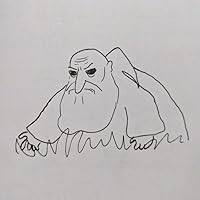
Seven Nights gathers seven lectures delivered by Borges in Buenos Aires at the Teatro Coliseo, between June and August 1977. As usual, the erudition is overwhelming, the subjects enthralling, the interpretation original and the passion catching. Most of all, they offer, as usual, keys for reading not only the classics but also Borges’s works, revealing his obsessions, his views and his literary games.
The first conference is dedicated to his book of all books, The Divine Comedy, which can be read in infinite ways, in which the expression defines the content and vice versa, whose most insignificant characters have more life that any main character in other books, and which, above all, is the ultimate proof that mankind was made for art. Therefore,
The Commedia is a book that everyone ought to read. Not to do so is to deprive oneself of the greatest gift that literature can give us; it is to submit to a strange asceticism.
After a dissertation about nightmares, suspected to be cries from hell, Borges speaks of the Thousand and One Nights, the book the Arabs say that it cannot be finished. Probably because it is infinite, like literature. I remember the little volumes aligned in my mother’s library that I read one by one. I always thought I’d read them all. I was obviously wrong.
The lecture about Buddhism offers two explanations for its longevity: tolerance (resulted from that discipline of the self taught by yoga) and the request of faith (you have to feel the four truths and the eightfold path) and recalls the dream-like quality of life.
Poetry develops Croce’s theory that literature is expression, to emphasize that language is an aesthetic creation, since it is always a matter of choice, dictated by feelings. This is why, Borges jokes,
There are people who barely feel poetry, and they are generally dedicated to teaching it.
Kabbalah developed an interesting (although not original) theory about the existence of evil. We were created by the last emanation of God, the almost zero God. The evil is nothing more that this divine imperfection translated into the material world. This explanation given by the cabbalists surpasses others, among which:
• the theologians’, who declared that evil is negative, an absence of good, forgetting that physical pain, misfortune etc. are felt positive. “When we are miserable, we feel it as misery.”
• Leibniz’s, who compared two libraries: one containing only the Aeneid, the other thousand books and Aeneid, to emphasize that the second is superior because evil is necessary for the variety of the world. “But he seems to forget that it is one thing that there are bad books in the library, and another thing to be those books. And if we are those books we are condemned to hell.”
• Kierkegaard’s,” who said that if there were one soul in hell necessary for the variety of the world, and if that soul were his, he would sing from the depths of hell the praises of the Almighty.”
The last lecture, reminding Oscar Wilde’s presumption that “Antiquity had deliberately represented Homer as blind” argues that blindness can be a powerful tool to better understand literature:
We may believe that Homer never existed, but that the Greeks imagined him as blind in order to insist on the fact that poetry is, above all, music; that poetry is, above all, the lyre; that the visual can or cannot exist in a poet.
In fact, Borges’ own ability to listen to the music of the spheres, sight or no sight, is proof enough.