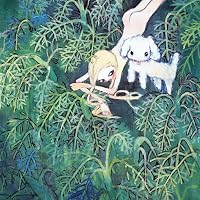
Maura Dooley's poetry is remarkable for embracing both lyricism and political consciousness, for its fusion of head and heart. These qualities have won her wide acclaim. Helen Dunmore (in Poetry Review) admired her 'sharp and forceful' intelligence. Adam Thorpe praised her ability 'to enact and find images for complex feelings...Her poems have both great delicacy and an undeniable toughness...she manages to combine detailed domesticity with lyrical beauty, most perfectly in the metaphor of memory ' (Literary Review). The Silvering is her first new collection since Life Under Water, which was shortlisted for the T.S. Eliot Prize in 2008. Looking in, looking out, looking through are the recurring perspectives offered by these poems. These are poems interested in shifting light and what it reveals, reflects or conceals and especially, perhaps, in what remains 'caught in the silvering'. Poetry Book Society Recommendation.
Maura Dooley was born in Truro, grew up in Bristol.
Educated at the University of York, she gained a postgraduate certificate of Education at Bristol. She is Lecturer in Creative Writing at Goldsmiths College, University of London.
She edited Making for Planet Alice: New Women Poets (1997) and The Honey Gatherers: A Book of Love Poems (2002) for Bloodaxe, and How Novelists Work (2000) for Seren. Life Under Water (Bloodaxe Books, 2008) is her first new collection since Sound Barrier: Poems 1982-2002 (Bloodaxe Books, 2002), which drew on collections including Explaining Magnetism (1991) and Kissing a Bone (1996), both Poetry Book Society Recommendations. Kissing a Bone was shortlisted for the T.S. Eliot Prize and Life Under Water was shortlisted for the T. S. Eliot Prize 2008.
She was a Centre Director at the Arvon Foundation and founded and directed the Literature programme at the South Bank Centre. She works in film and theatre and has recently helped develop educational films for Jim Henson Productions. Her work in the theatre includes running workshops for Performing Arts Labs, devising new plays for young people. In 2001 she was a judge for the T. S. Eliot Prize, the National Poetry Competition and the London Arts' New London Writers Awards. She has also chaired the Poetry Book Society.
I wasn't really attached to any of these poems. It just seemed like an excuse to write in short verse. The first and last poems showed promise, along with 'Grotto', but even those were not overly inspiring or arresting, in my opinion. Disappointed with this one. Another collection that shows how subjective poetry can be.