

What do you think?

Hermano de hielo
Esta es la historia de una fascinación por el hielo y de una obsesión por los polos de la Tierra. Una atracción por la parte estrictamente erudita –el proceso histórico de comprensión física de estas zonas extremas, el funcionamiento magnético y climatológico de los extremos más fríos del planeta– y también una fascinación por la historia de la conquista de los centros polares tras las sucesivas expediciones árticas y antárticas de Scott, Amundsen y Shackleton. Pero hay otros hielos en esta novela: está el hermano de hielo de la narradora, el hermano auténtico, que vive congelado dentro de sí mismo –bella y cruda metáfora del autismo–, como congeladas están las relaciones que envuelven a toda la familia de la protagonista, un espacio de convivencia frío, cargado de complejidades y mutismos. En su primera novela, Alicia Kopf traza la tenue línea de separación entre dos mundos: el de la realidad y el del deseo, el de la proximidad afectiva y la lejanía legendaria, el del silencio y el gran silencio.
Hermano de hielo es una obra lírica y erudita que trata sobre huir y reencontrarse, y sobre permanecer y no perder la esperanza. Esta novela se alzó ganadora del Premio Documenta 2015 y cosechó un aluvión de críticas extraordinarias y un cálido recibimiento por parte de lectores y libreros tras su publicación en catalán. Recientemente ha sido reconocida con el prestigioso premio Llibreter 2016, concedido por el Gremio de Libreros de Cataluña.
Hermano de hielo es una obra lírica y erudita que trata sobre huir y reencontrarse, y sobre permanecer y no perder la esperanza. Esta novela se alzó ganadora del Premio Documenta 2015 y cosechó un aluvión de críticas extraordinarias y un cálido recibimiento por parte de lectores y libreros tras su publicación en catalán. Recientemente ha sido reconocida con el prestigioso premio Llibreter 2016, concedido por el Gremio de Libreros de Cataluña.
256 pages, Paperback
Published September 1, 2016
About the author
Alicia Kopf
6 books53 followersAlicia Kopf (àlies d'Imma Ávalos Marquès, Girona 1982) és una escriptora i artista multidisciplinària gironina. Llicenciada en Belles Arts, graduada en Teoria literària i Literatura Comparada per la Universitat de Barcelona (2010) i diplomada en estudis avançats (2007), treballa amb vídeo, escriptura i dibuix. També treballa com a professora al Grau de Comunicació de la Universitat Oberta de Catalunya (UOC) i ha col·laborat amb el Centre de Cultura Contemporània de Barcelona.
En la seva obra artística actual s’interessa pel concepte d’exploració, enllaçant l’èpica de les històriques conquestes polars amb elements personals i autoreferencials. Per exemple, emmarcat dins del seu projecte Articantàrtic, trobem un mapa de H.C Selous, fet durant el viatge de John Ross al Pol Nord (1829-1833), però canviant els espais geogràfics reals pels de l'imaginari propi de l'artista. Aquesta obra es va poder veure en una exposició temporal a la Fundació Antoni Tàpies el 2013 i al Bòlit Centre d'Art Contemporani de Girona el 2014.
Publicacions:
]heterotopías[ (2007) (Llibre d'artista, Col·lecció de la Universitat de Barcelona)
Maneres de (no) entrar a casa (2011)
Germà de gel (L'Altra Editorial, 2016) (Premi Documenta de narrativa 2015 i Premi Llibreter 2016)
En la seva obra artística actual s’interessa pel concepte d’exploració, enllaçant l’èpica de les històriques conquestes polars amb elements personals i autoreferencials. Per exemple, emmarcat dins del seu projecte Articantàrtic, trobem un mapa de H.C Selous, fet durant el viatge de John Ross al Pol Nord (1829-1833), però canviant els espais geogràfics reals pels de l'imaginari propi de l'artista. Aquesta obra es va poder veure en una exposició temporal a la Fundació Antoni Tàpies el 2013 i al Bòlit Centre d'Art Contemporani de Girona el 2014.
Publicacions:
]heterotopías[ (2007) (Llibre d'artista, Col·lecció de la Universitat de Barcelona)
Maneres de (no) entrar a casa (2011)
Germà de gel (L'Altra Editorial, 2016) (Premi Documenta de narrativa 2015 i Premi Llibreter 2016)
Ratings & Reviews
Friends & Following
Create a free account to discover what your friends think of this book!
Community Reviews
Displaying 1 - 30 of 137 reviews

September 19, 2020
Ganadora de diversos premios y alabada por la crítica, Hermano de hielo es la historia del hechizo que desprende el hielo. La obsesión por los icebergs, los polos de la Tierra, las expediciones a lugares blancos y silenciosos, y otras cosas heladas como el hermano de la autora -usando este recurso como metáfora del autismo- o la fría y compleja relación de su familia. Lo recuerda ella misma citando el principio de Anna Karenina: «Todas las familias felices se parecen unas a otras, pero cada familia infeliz lo es a su manera».
Por cierto que tras Alicia Kopf está Imma Ávalos, una escritora y artista multidisciplinar española que se licenció en Bellas Artes. Graduada en Teoría Literaria y Literatura Comparada, también trabaja como profesora y ha colaborado con el Centro de Cultura Contemporánea de Barcelona.
Publicada en 2016 y con el hielo como metáfora, nos lleva a un viaje espectacular de investigación, exploración y profunda reflexión en el que el flujo de emociones varía del frío al calor en una misma frase. Es de lo mejor que he leído este año. Por alguna razón me hacía muchísima falta y la sensación de vacío -también helada- al acabarlo ha sido brutal.
Por cierto que tras Alicia Kopf está Imma Ávalos, una escritora y artista multidisciplinar española que se licenció en Bellas Artes. Graduada en Teoría Literaria y Literatura Comparada, también trabaja como profesora y ha colaborado con el Centro de Cultura Contemporánea de Barcelona.
Publicada en 2016 y con el hielo como metáfora, nos lleva a un viaje espectacular de investigación, exploración y profunda reflexión en el que el flujo de emociones varía del frío al calor en una misma frase. Es de lo mejor que he leído este año. Por alguna razón me hacía muchísima falta y la sensación de vacío -también helada- al acabarlo ha sido brutal.

February 21, 2019
I’m not interested in the polar explorers in and of themselves, but rather in the idea of investigation, of seeking out something in an unstable space. I’d like to talk about all of that as a metaphor, because what interests me is the possibility of an epic, a new epic, without foes or enemies; an epic involving oneself and an idea. Like the epic that artists and writers undertake.
Alicia Kopf is the penname of the writer and artist Imma Ávalos Marquès (taken from a character's name in her first novel).
This novel is part of a wider work of art exhibitions called Àrticantàrtic, and was originally published as Germà de Gel in 2015 in Catalan, before being translated by the author herself into Spanish. The English version, Brother In Ice, was translated by Mara Faye Lethem, perhaps best known for her rendition of Confessions by Jaume Cabré, and who does an excellent job, earnings the author's praise, from an interview:
I return to the anchorage point, the word pols (poles) and its range of literal meanings in Catalan:
pols, el, n. masc: the steadiness of hand needed to carry out certain acts, such as writing or holding a weapon.
And then, when you swap the masculine article for the feminine one, you arrive at more meanings of the word, which veer off in an unlikely direction yet could possibly link to my research:
pols, la, n. fem: fine, dry powder consisting of tiny particles of earth or waste matter lying on the ground or on surfaces or carried in the air. Also, a type of snow: powder snow.
Kopf both passes on key, and attributed, observations from her own research into polar exploration, such as the controversy over the first person to reach the North Pole (scientific consensus is now that neither claimant did):
Frederick Cook’s polar obsession started when his first wife and their baby son died during the birth. It was as a surgeon on one of Robert Peary’s expeditions that the doctor began his explorations. The so-called ‘polar controversy’ took place when, years later and on different expeditions, in 1909 Peary and Cook returned at the same time from the Arctic claiming to have been the first to reach the North Pole. One of the documents that Cook brought back from the expedition was the photograph of his companion reaching the summit of Mount McKinley, the highest peak in Alaska, which is actually still quite far from the North Pole. Peary was convinced that the photograph had been retouched, and thus began the first argument questioning his adversary’s honesty, as a means to call into question his having made it to the North Pole.
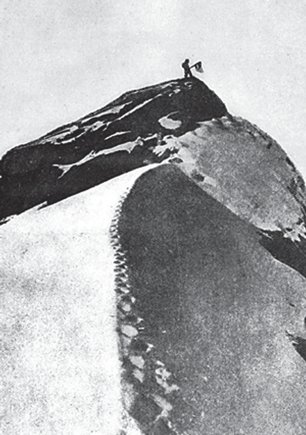
But she also uses the polar exploration concept as a metaphor for an auto-fictional treatment of her own life - both her artistic career (the white blankness of the poles, as a white page or a blank canvas) but also her, often troublesome, family relationships. The -fictional side coming in because, as she has admitted in interviews, she has selected the stories to meet the metaphor. From an interview
My brother is a man trapped in ice. He looks at us through it; he is there and he is not there. Or more precisely, there is a fissure inside him that periodically freezes over. When he is present, his outline is more clearly defined; other times he’s submerged for a while. His focus is at times ten thousand meters high (he likes to watch planes cross the sky) or, when the ice is thicker, ten thousand meters inward. In addition to planes, he’s interested in trains, cars, dogs, cats, and birds. In his day-to-day life, the fissure within him leaves him stranded between one action and the next. But because his body is fully there, we have to make every decision for him. There is no outward indication of what’s going on inside him.
It's a fascinating approach and one with many literary echoes, acknowledged by Kopf herself.
As one that occured to me, the discussion of polar photography within auto-fiction provides a wonderful link to Rachel Cusk's annihilated perspective. The novel tells us:
The so-called heroic age of polar expedition - taken as stretching from the last decade of the nineteenth century to Captain Shackleton’s death in 1922 - coincided with the development of photographic cameras and the invention of cinema, so it’s not surprising many polar explorers saw the potential of this new medium as a research tool.
From my own research, in 1911 the photographer Herbert Ponting joined Captain Scott's, ultimately ill-fated, Terra Nova Expedition, the first professional to join an Antarctic expedition. He didn't go on to the later, fatal, part of the journey over the ice-fields to the South Pole since, as he explained in his book The Great White South: Traveling with Robert F. Scott's Doomed South Pole Expedition, there would be nothing to photograph but the level plain of boundless, featureless ice.
And in the photographs he took in in his time there, such as:
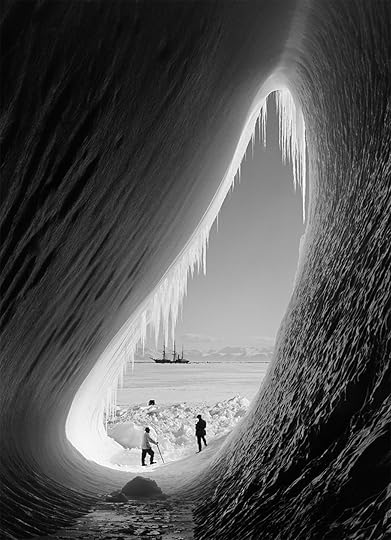
he had to resort to various ingenious techniques to overcome the challenges the landscape posed. As Stephen J. Pyne puts it in The Ice: A Journey To Antarctica, light was either too brilliant or missing altogether. Foreground and background were difficult to establish, and there was often no horizon on which to organise perspective. The objects, scenes and symbols which normally populated a painting were absent. Pyne summarises Ponting's view as needing to counter the fact that the natural landscape annihilated perspective.
But while Kopf's idea for the novel is fascinating, it is not always entirely satisfactory in its execution.
The polar exploration research at times doesn't seem to go beyond what a quick wikipedia search will reveal, and to be fair Kopf doesn't hide this. When her attention turns to the race to the south pole, she begins: Comparing the Amudsen and Scott expeditions on Wikipedia it appears...”. Perhaps this is defensible though: in the age of wikipedia and Google perhaps authors are better directing our attention to the internet sources rather than passing on detailed facts.
More troublingly for me, the auto-fictional side in the second half of the novel escapes from the confines of the metaphor and becomes less interesting. Her difficult relationship with her mother seems too personal to really come across to the reader, and a large part of the text came across as rather stereotypical millennial moans. Born in 1982, she is very much at the start of that generation, but belongs due to delayed adulthood from long studying. Her first novel, in her own words here talked about getting ‘no’ as an answer when you want to enter the adult world of work and love, which she did in the immediate aftermath of 2008.
I perhaps should have read enricocioni's review before I read the book as he sums up my feelings perfectly:
https://www.theguardian.com/books/201...
https://therumpus.net/2018/06/the-rum...
https://www.studiointernational.com/i...
3.5 stars rounded down to 3
Alicia Kopf is the penname of the writer and artist Imma Ávalos Marquès (taken from a character's name in her first novel).
This novel is part of a wider work of art exhibitions called Àrticantàrtic, and was originally published as Germà de Gel in 2015 in Catalan, before being translated by the author herself into Spanish. The English version, Brother In Ice, was translated by Mara Faye Lethem, perhaps best known for her rendition of Confessions by Jaume Cabré, and who does an excellent job, earnings the author's praise, from an interview:
I write in Catalan and translate myself into Spanish. Sometimes I even write in both languages at the same time. After I finish, I translate the bilingual book into a one-language book. The process of translating the text gives you new perspectives on it and makes you look carefully through each sentence. For me, doing a translation is the best way to proof a text. In the case of the English translation, I worked closely with Mara Faye Lethem. English is an appropriate language for this kind of work, because it is a book about something very sharp, which is ice. It is transparent, sharp and creates constellations in the form of snowflakes. For me, the language has sharp words and it is easy to create new concepts with it. I was glad that Brother in Ice was translated by her.Brother in Ice is a "hybrid novel", as the publisher describes it, "part research notes, part fictionalised diary, and part travelogue", with pictures and Kopf's own artwork, centering around the theme of polar exploration.
I return to the anchorage point, the word pols (poles) and its range of literal meanings in Catalan:
pols, el, n. masc: the steadiness of hand needed to carry out certain acts, such as writing or holding a weapon.
And then, when you swap the masculine article for the feminine one, you arrive at more meanings of the word, which veer off in an unlikely direction yet could possibly link to my research:
pols, la, n. fem: fine, dry powder consisting of tiny particles of earth or waste matter lying on the ground or on surfaces or carried in the air. Also, a type of snow: powder snow.
Kopf both passes on key, and attributed, observations from her own research into polar exploration, such as the controversy over the first person to reach the North Pole (scientific consensus is now that neither claimant did):
Frederick Cook’s polar obsession started when his first wife and their baby son died during the birth. It was as a surgeon on one of Robert Peary’s expeditions that the doctor began his explorations. The so-called ‘polar controversy’ took place when, years later and on different expeditions, in 1909 Peary and Cook returned at the same time from the Arctic claiming to have been the first to reach the North Pole. One of the documents that Cook brought back from the expedition was the photograph of his companion reaching the summit of Mount McKinley, the highest peak in Alaska, which is actually still quite far from the North Pole. Peary was convinced that the photograph had been retouched, and thus began the first argument questioning his adversary’s honesty, as a means to call into question his having made it to the North Pole.
But she also uses the polar exploration concept as a metaphor for an auto-fictional treatment of her own life - both her artistic career (the white blankness of the poles, as a white page or a blank canvas) but also her, often troublesome, family relationships. The -fictional side coming in because, as she has admitted in interviews, she has selected the stories to meet the metaphor. From an interview
The writing process comes from both journaling and rewriting to shape a literary artifact where everything is connected through a metaphor. In Brother in Ice the metaphor was polar exploring. This metaphor is something I research quite deeply as it gives a structure to the whole book; it’s the lens through I will look at reality during a long period of time. In real life there is not a general concept, things are often meaningless and disperse, so I reshape my experience into something that makes some sense, that illuminates some kind of aspect of life beyond the real people and facts that inspired it.The clearest example is the moving portrayal of her relationship with her autistic brother, whose sobriquet gives the novel it's title (or perhaps more accurately the novel gives him the sobriquet):
My brother is a man trapped in ice. He looks at us through it; he is there and he is not there. Or more precisely, there is a fissure inside him that periodically freezes over. When he is present, his outline is more clearly defined; other times he’s submerged for a while. His focus is at times ten thousand meters high (he likes to watch planes cross the sky) or, when the ice is thicker, ten thousand meters inward. In addition to planes, he’s interested in trains, cars, dogs, cats, and birds. In his day-to-day life, the fissure within him leaves him stranded between one action and the next. But because his body is fully there, we have to make every decision for him. There is no outward indication of what’s going on inside him.
It's a fascinating approach and one with many literary echoes, acknowledged by Kopf herself.
As one that occured to me, the discussion of polar photography within auto-fiction provides a wonderful link to Rachel Cusk's annihilated perspective. The novel tells us:
The so-called heroic age of polar expedition - taken as stretching from the last decade of the nineteenth century to Captain Shackleton’s death in 1922 - coincided with the development of photographic cameras and the invention of cinema, so it’s not surprising many polar explorers saw the potential of this new medium as a research tool.
From my own research, in 1911 the photographer Herbert Ponting joined Captain Scott's, ultimately ill-fated, Terra Nova Expedition, the first professional to join an Antarctic expedition. He didn't go on to the later, fatal, part of the journey over the ice-fields to the South Pole since, as he explained in his book The Great White South: Traveling with Robert F. Scott's Doomed South Pole Expedition, there would be nothing to photograph but the level plain of boundless, featureless ice.
And in the photographs he took in in his time there, such as:
he had to resort to various ingenious techniques to overcome the challenges the landscape posed. As Stephen J. Pyne puts it in The Ice: A Journey To Antarctica, light was either too brilliant or missing altogether. Foreground and background were difficult to establish, and there was often no horizon on which to organise perspective. The objects, scenes and symbols which normally populated a painting were absent. Pyne summarises Ponting's view as needing to counter the fact that the natural landscape annihilated perspective.
But while Kopf's idea for the novel is fascinating, it is not always entirely satisfactory in its execution.
The polar exploration research at times doesn't seem to go beyond what a quick wikipedia search will reveal, and to be fair Kopf doesn't hide this. When her attention turns to the race to the south pole, she begins: Comparing the Amudsen and Scott expeditions on Wikipedia it appears...”. Perhaps this is defensible though: in the age of wikipedia and Google perhaps authors are better directing our attention to the internet sources rather than passing on detailed facts.
More troublingly for me, the auto-fictional side in the second half of the novel escapes from the confines of the metaphor and becomes less interesting. Her difficult relationship with her mother seems too personal to really come across to the reader, and a large part of the text came across as rather stereotypical millennial moans. Born in 1982, she is very much at the start of that generation, but belongs due to delayed adulthood from long studying. Her first novel, in her own words here talked about getting ‘no’ as an answer when you want to enter the adult world of work and love, which she did in the immediate aftermath of 2008.
I perhaps should have read enricocioni's review before I read the book as he sums up my feelings perfectly:
I love everything I've read ABOUT this book, including in the book itself.In a way my own review is intended as a contribution to that - I enjoyed talking here about the book at times more than I did reading it. And I will end by directing the reader to some interviews about the book, which include the sources for the quotes above:
BUT.
I don't think BROTHER IN ICE quite delivers on its promises.
https://www.theguardian.com/books/201...
https://therumpus.net/2018/06/the-rum...
https://www.studiointernational.com/i...
3.5 stars rounded down to 3

March 9, 2022
‘Bazı dağcılar en büyük zirvelerine şiddetli bir kişisel krizin ardından, bir çıkmaz sokağa girdiklerinde ulaştılar. Annemi, bakıma muhtaç anne babası veya çocuklarıyla ilgilenen çok sayıda insanı ya da vücudun hastalığı gibi çözümlenemez bir duruma karşı koyan herkesi düşünüyorum. Bunlar da epik, mücadele. Ama henüz bunlar için güzel görseller ya da iyi metaforlar yok.
Onları ben arıyorum.’
Alicia Kopf bunları buluyor. En azından okuduğum bu kitapta hem güzel görseller hem de iyi metaforlar var. Buzdan bir ülkenin içinde hatta! Otuz yaşında teşhisi konulan bir ağabey, sorunlu ikili ilişkiler, kariyer dalgalanmaları ve bunları kapsayan beyaz merak.
.
Buzdan Ağabey, sadece ‘şu’ diyebileceğim bir kitap değil. Tanımdan veya benzetmelerden ziyade, kitabın bana neler hissettirdiğini söylemeye çalışabilirim:
*Görünen’in ardında ondan çok daha geniş yer kaplayan bir ‘görülmeyen’ var, her zaman akılda tutmalı!
*İçindeki merak, bir şeyleri gerçekleştirmek için harcadığın emek, ona ismini koyduğun an ya da onu somut-elle tutulur hale getirdiğinde görünür kılınacak. Yoksa içinde, belki de hiçlikte, kaybolup gidecek.
*Okumak seni kurtarmayabilir ama seni avutacak, ellerinden tutacak ve seninle -sen istediğin müddetçe- kalacak.
*Adım atmadıkça, yürümenin hayalini kurmak sana acı verecek.
Ve sanırım daha da fazlası var. Kopf kendini anlatırken, kendinden kilometrelerce uzakta, başka bir dili yaşayan bir kadını bu kadar etkileyeceğini düşünür müydü bilmiyorum. Keşif’in sadece mekânsal değil; içsel bir yolculuk da içerdiğini, gündelik olayların da kar taneleri kadar çeşitli olabileceğini üstelik kimi zaman ‘bozuk’ da çıkabileceğini bana gösterdiği için Alicia Kopf’a minnettarım.
.
Şöyle özetleyeyim: yine yeniden aynı heyecanla okuyacağım bir kitap Buzdan Ağabey. Kutupları yeniden keşfedercesine…
.
İdil Dündar’ın özenli çevirisi, Dilek Şişli baktıkça ‘işte tam da bu’ dediğim kapak tasarımıyla ~
Onları ben arıyorum.’
Alicia Kopf bunları buluyor. En azından okuduğum bu kitapta hem güzel görseller hem de iyi metaforlar var. Buzdan bir ülkenin içinde hatta! Otuz yaşında teşhisi konulan bir ağabey, sorunlu ikili ilişkiler, kariyer dalgalanmaları ve bunları kapsayan beyaz merak.
.
Buzdan Ağabey, sadece ‘şu’ diyebileceğim bir kitap değil. Tanımdan veya benzetmelerden ziyade, kitabın bana neler hissettirdiğini söylemeye çalışabilirim:
*Görünen’in ardında ondan çok daha geniş yer kaplayan bir ‘görülmeyen’ var, her zaman akılda tutmalı!
*İçindeki merak, bir şeyleri gerçekleştirmek için harcadığın emek, ona ismini koyduğun an ya da onu somut-elle tutulur hale getirdiğinde görünür kılınacak. Yoksa içinde, belki de hiçlikte, kaybolup gidecek.
*Okumak seni kurtarmayabilir ama seni avutacak, ellerinden tutacak ve seninle -sen istediğin müddetçe- kalacak.
*Adım atmadıkça, yürümenin hayalini kurmak sana acı verecek.
Ve sanırım daha da fazlası var. Kopf kendini anlatırken, kendinden kilometrelerce uzakta, başka bir dili yaşayan bir kadını bu kadar etkileyeceğini düşünür müydü bilmiyorum. Keşif’in sadece mekânsal değil; içsel bir yolculuk da içerdiğini, gündelik olayların da kar taneleri kadar çeşitli olabileceğini üstelik kimi zaman ‘bozuk’ da çıkabileceğini bana gösterdiği için Alicia Kopf’a minnettarım.
.
Şöyle özetleyeyim: yine yeniden aynı heyecanla okuyacağım bir kitap Buzdan Ağabey. Kutupları yeniden keşfedercesine…
.
İdil Dündar’ın özenli çevirisi, Dilek Şişli baktıkça ‘işte tam da bu’ dediğim kapak tasarımıyla ~

March 28, 2018
I found myself telling someone, recently, that I couldn't recall the last non-fiction I'd read. Which was foolish -- I'd been reading Duras essays a week before. And now, this, clearly exactly the sort of non-fiction I do and must read, which nonetheless does not spring to mind whatsoever when I think "nonfiction". A mix of essay, (novelized?) diary, classic true-adventure narrative, and an artist's feel for bricolage and juxtaposition. Fascinating, eloquent, and an ever-surprising, shifting joy to read throughout, even if the tangents lengthen and strain the form a little towards the end. For me, this most evokes the equally personal film-essay-history of Nathalie Léger's Suite for Barbara Loden, another favorite.
December 18, 2016
Éste libro contiene otros cuatro libros en sus 250 páginas a doble espacio:
Uno con historias sobre las conquistas polares, el frío y la nieve en general.
Uno muy breve ,de unas diez páginas, sobre el autismo del hermano de la escritora.
Otro, que supone 2/3 de la breve extensión , un diario de una artista treintañera moderna.
Por último un viaje ¿iniciático? a Islandia, de apenas 20 paginas.
Parece ser que los dos primeros temas y el último están relacionados de alguna manera que yo no he visto, y son las únicas partes del libro que aportan algo interesante.
La manera de narrar las expediciones resulta interesante por lo febril e irracional del acto de ir a un sitio como el polo. La parte del hermano resulta curiosa como superficial acercamiento al drama del autismo.
Y el viaje a Islandia es...bueno, nada reseñable, y poco justificado, un cuasi mini Erasmus (sacad vuestras conclusiones).
Si esto os parece poco, la parte del diario de una treintañera artista moderna no aporta otra cosa que tópicos (e insisto que supone 2/3 del libro).
Desgranados:
En la parte de treintañera el tópico de "no consigo arrancar mi vida adulta, no tengo una pareja, mi familia no me entiende ".
En la parte de moderna los tópicos de "esta sociedad es alienante, ligo por apps, sólo tengo relaciones pasajeras".
En la parte de artista el tópico de "el gusano que se arrastra para llegar a ser mariposa" , el tópico de "los artistas somos incomprendidos y sufrimos" ("y viajamos a Islandia a encontarnos a nosotros mismos", supongo)
Este libro no habla del autismo, ni de los viajes polares, ambos son excusas y metáforas (que además la autora va espaciando y olvidando a medida que avanza su diario, como si no supiera cómo construir más metáforas y abandonase la idea original del hielo, aunque al final lo justifique todo con su viaje a Islandia).
De lo que realmente habla es de una chica que quiere ser artista y tiene los problemas que cualquiera, en su edad y en su situación, tiene.
Sirvan como ejemplo la página 188 en la que leemos la reflexión: "me pregunto si después de estos años de estudio , trabajo , y relaciones amorosas más o menos fallidas ,me he pulido o me he desgastado, ¿es una joya o una piedrecita lo que queda en mi?"
O esta otra cuando discute con su madre y le reprocha: "mi habitación es un agujero oscuro, es el trastero.Una habitación de la que entrabas, salías y cambiabas la decoración cuando te daba la gana, por eso me marche a los 17 años"
Puede que esta autora se desarrolle y escriba algo realmente relevante (se percibe una voz, y un uso rico del lenguaje, y como ejemplo de lo que podría llegar a ser su narrativa valga el capítulo (de cuatro páginas) llamado "Auditoría", donde trata el tema de la familia de una manera adulta y reflexiva.Lo mejor del libro), pero desde luego este libro no es más que un ejercicio de autoafirmación, que probablemente le haya servido más a ella (no olvidemos que todo el libro está narrado como un diario o cuaderno de notas), que a mi.
¿Por qué las editoriales venden sus libros como lo que no son?
Uno con historias sobre las conquistas polares, el frío y la nieve en general.
Uno muy breve ,de unas diez páginas, sobre el autismo del hermano de la escritora.
Otro, que supone 2/3 de la breve extensión , un diario de una artista treintañera moderna.
Por último un viaje ¿iniciático? a Islandia, de apenas 20 paginas.
Parece ser que los dos primeros temas y el último están relacionados de alguna manera que yo no he visto, y son las únicas partes del libro que aportan algo interesante.
La manera de narrar las expediciones resulta interesante por lo febril e irracional del acto de ir a un sitio como el polo. La parte del hermano resulta curiosa como superficial acercamiento al drama del autismo.
Y el viaje a Islandia es...bueno, nada reseñable, y poco justificado, un cuasi mini Erasmus (sacad vuestras conclusiones).
Si esto os parece poco, la parte del diario de una treintañera artista moderna no aporta otra cosa que tópicos (e insisto que supone 2/3 del libro).
Desgranados:
En la parte de treintañera el tópico de "no consigo arrancar mi vida adulta, no tengo una pareja, mi familia no me entiende ".
En la parte de moderna los tópicos de "esta sociedad es alienante, ligo por apps, sólo tengo relaciones pasajeras".
En la parte de artista el tópico de "el gusano que se arrastra para llegar a ser mariposa" , el tópico de "los artistas somos incomprendidos y sufrimos" ("y viajamos a Islandia a encontarnos a nosotros mismos", supongo)
Este libro no habla del autismo, ni de los viajes polares, ambos son excusas y metáforas (que además la autora va espaciando y olvidando a medida que avanza su diario, como si no supiera cómo construir más metáforas y abandonase la idea original del hielo, aunque al final lo justifique todo con su viaje a Islandia).
De lo que realmente habla es de una chica que quiere ser artista y tiene los problemas que cualquiera, en su edad y en su situación, tiene.
Sirvan como ejemplo la página 188 en la que leemos la reflexión: "me pregunto si después de estos años de estudio , trabajo , y relaciones amorosas más o menos fallidas ,me he pulido o me he desgastado, ¿es una joya o una piedrecita lo que queda en mi?"
O esta otra cuando discute con su madre y le reprocha: "mi habitación es un agujero oscuro, es el trastero.Una habitación de la que entrabas, salías y cambiabas la decoración cuando te daba la gana, por eso me marche a los 17 años"
Puede que esta autora se desarrolle y escriba algo realmente relevante (se percibe una voz, y un uso rico del lenguaje, y como ejemplo de lo que podría llegar a ser su narrativa valga el capítulo (de cuatro páginas) llamado "Auditoría", donde trata el tema de la familia de una manera adulta y reflexiva.Lo mejor del libro), pero desde luego este libro no es más que un ejercicio de autoafirmación, que probablemente le haya servido más a ella (no olvidemos que todo el libro está narrado como un diario o cuaderno de notas), que a mi.
¿Por qué las editoriales venden sus libros como lo que no son?

October 6, 2016
“Hermano de hielo” de Alicia Kopf
MIEDO A UN CLUB FEMINISTA
Me van a perdonar la introducción, pero no quiero evitarla. Verán, me metieron el otro día en un berenjenal. Un berenjenal pequeñito, no se crean. Carmen G. de la Cueva, militante profesional y tutoranda de talleres feministas de lectura, se indignaba con motivo de algunos comentarios que servidor había dejado caer en la reseña de Me llamo Lucy Barton, de Elizabeth Strout. «El machismo sale a borbotones de este post de Tongoy», decía, ella, soliviantada. En aquel post, yo, es verdad, insinué, medio en broma medio en serio o, dicho de otro modo, con todo el humor que me permiten temas de semejante transcendencia, que había un tendencia, por parte de algunas mujeres, a hacer buenos según qué libros (muchos libros, casi todos los libros) por la única razón de haber sido escritos por otras mujeres. Esto sería un poco lo de dar por bueno, en un bar de carretera, todo lo que escriba, no sé, Dan Brown, únicamente tener pene.
«Pensé que podrían criticarme por muchísimas cosas, pero nunca por hacer que la gente lea. [Ingenuidad máxima] Y sí, que lea libros escritos por mujeres ya que al señor Tongoy le cuesta tanto terminar cualquiera que haya escrito una mujer. Por poner dos ejemplos según sus últimas reseñas/ posts en el FB: "Las chicas" de Emma Cline o "Hermano de hielo" de Alicia Kopf al que compara con Marie Claire.
Yo no sé qué quieres que te diga, amigo, creo que soy bastante libre como para decir si un libro me gusta o no en mi muro de FB [todavía no lo había leído] y los demás son igualmente libres para que el libro no les guste, pero no me parece bien que ridiculices los libros que escriben las mujeres y a las mujeres que los leen. Al final, estás haciendo lo mismo que se lleva haciendo durante siglos: llamarnos histéricas, fanáticas, chillonas porque, en este caso, recomendamos con entusiasmo un libro, ¿no es esa una forma de silenciarnos? ¿de quitarnos autoridad?»
Y no, claro que no le quito autoridad. No hace falta; ya solita ella se la quita cuando asegura que no le parece bien ridiculizar los libros que escriben otras mujeres, como si las mujeres no pudiesen escribir basura. O cuando afirma que al señor Tongoy, servidor, le cuesta mucho (tanto) terminar cualquier libro escrito por una mujer cuando aquí lo que nos gusta es defenestrar, cuantos más géneros mejor. ¿Cuándo le hemos hecho ascos a nadie? Ya lo que nos faltaba era ponernos tiquismiquis con la cuestión sexual. Un poquito de por favor.
Y termina el discurso viniéndose arriba, a grito pelado y con el puño en alto, creyendo que lo suyo es el no va más: «¿POR QUÉ LE TEMES TANTO A UN CLUB DE LECTURA FEMINISTA?»
Angelito.
RESEÑA
El caso es que hoy quiero hablarles, desde el machismo más recalcitrante, inevitablemente, de un libro escrito, que ya es casualidad también, por otra mujer. Concretamente uno de los que nombra Carmen en su diatriba. Se trata de Hermano de hielo de Alicia Kopf, que se me acusa de comparar con Marie Claire. Dejen que se lo aclare: lo que yo dije, en su momento, fue lo siguiente: «El instante exacto en el que una novela se convierte en un artículo de Marie Claire y a uno le pierde el poco respeto que le quedaba». Se acompañaba la sentencia de la fotografía de página en la que Kopf hace una relación de todas las variantes negativas de regalo que se le ocurrían: regalo-envenenado, regalo-pongo, regalo-traición, y algunos más. Y esto sí es Marie Claire total, se pongan como se pongan la liga de la justicia y sus secuazas.
Todo el libro (y cuando digo todo quiero decir todo) es un poco Wikipedia y otro poco yo y mis circunstancias: el diario de una niña que se hace mayor y nos lo viene a contar. El libro se estructura en tres partes bien diferenciadas:
Primera parte: a Alicia Kopf le fascina el hielo y por extensión los polos (norte, sur, de naranja y de limón). Esto se traduce en una suerte de breves artículos sobre exploradores árticos, sus relaciones, sus aventuras, sus odios, sus errores, sus aciertos. Se acompaña de fotografías, extractos de periódicos, se citan fuentes. Algunos a esto lo llaman ensayo pero está claro que hay gente para todo. Esta primera parte es, sin lugar a dudas, la mejor y más entretenida, no sólo porque parece que la novela sí conduce a alguna parte (a ratos incluye fragmentos, aunque pocos, autobiográficos) sino porque toda aventura, a poco que el narrador sea medianamente solvente, crea adicción y suscita interés.
La segunda parte se olvida prácticamente por completo de todo esto (en la página 139 repite lo que había contado en la 51 y siguientes) y se centra única y exclusivamente en el pasado de Alicia Kopf, su pasado más reciente. Ires y devenires en formato blog (breves episodios autoconclusivos) de una niña que quiere ser artista. Lo es. El arte es su vida y a él se consagra en la medida de sus posibilidades. Vende cosillas, la exponen, la premian. Se va al extranjero. Se vende bien, esta chica, así, en general. Se acompaña, es parte, de reflexiones varias sobre temas variados tipo la familia, el amor, la soledad, las redes sociales: me gusta ese chico, le agrego en face, le doy me gustas compulsivamente, él a mí no, no le gusto, ay, ay. Y así.
Leyendo a esta chica se alcanzas nuevas cotas de aburrición.
Vaya por delante que yo a Alicia Kopf no la conocía de nada. Me dicen que por Barcelona es lolastdelolast. Yo no sé, cualquiera se fía. Cuando saqué el libro de la biblioteca lo hice creyendo (creencia que se basaba en el nombre, la foto de la solapa y esa referencia al frío) que se trataba de una noruega de ascendencia judía. No me digan que no hubiera sido mucho mejor que darse de bruces con la cruda autoficción de patetismo más absoluto. Sirva como ejemplo que en un momento equis, durante un enfrentamiento generacional, a la madre se le escapa la palabra superdotada. Así, como sin querer: ups, llevaba treinta años ocultándolo y mira tú que me va a escapar hoy. Alicia no duda ni un segundo: esto va para la novela: sinceridad máxima: para lo bueno y para lo malo: si la gente ha de saberme genial, sea. Lo llevaré con dignidad.
«Ah, y M [su hermano, de hielo] es discapacitado, por si no lo recuerdas, y eso lo sufro cada día desde hace cuarenta años y no me quejo. Y a ti a los seis te dijeron que eras superdotada. —Estupefacción, eso es nuevo—. ¿Y te parece poco para esta vida? ¿Te parece poco? Y unos padres que te quieren pero no son perfectos».
Esto, claro, explica muchas cosas. Explica, por ejemplo, que una escritora que no tiene absolutamente nada que aportar y que, de hecho, no aporta absolutamente nada a la literatura toda vez que su libro es puro tedio y engreimiento, encadene fragmentos de un pasado que sólo destaca (que sólo es destacado por ella, eso sí, desde esa humildad ejemplarizante) por la consecución de no sé qué premio y una supuesta arrolladora personalidad que no acaba de creerse nadie.
Me gustaría, de verdad que me gustaría, que alguien me explicase cuál exactamente el valor de esta segunda parte, la única que puede ser tenida en cuenta toda vez que la primera es la novela de aventuras que otros escribieron y la tercera un viaje turístico a Islandia que más tarde, en la presentación de los libros, se venderá como un ejemplo del arrebatado espíritu documental de la escritora.
Por ego que no quede.
Conste que puedo entenderlo. Su mera existencia, digo. En su momento, Alicia Kopf, autoconsiderada «Artista y escritora. Trabajo especialmente en formatos híbridos entre lo literario y lo expositivo» se hizo un Verkami a medida para publicar una colección de relatos que, se ve, va camino de ser la única manera de vender libros de relatos en este país. Pidió 2.500 euros. Recogió 2.668. A esto ahora se le llama tener éxito. Y encima le sobró pasta para cenar. Sabido es que a poco que te apoyes en las redes y pongas cara de artista conceptual, ya tienes alphadecay para rato. Pues tal cual. Tras su publicación en catalán y viendo que aquello rompía la pana, a la editorial de Ana S. Pareja le faltó tiempo para hacerse con los derechos de esto que hoy nos ocupa y que no es otra que cosa que otra de esas vacuas moderneces a las que nos tiene acostumbrados.
Pero volvamos a la novela o no acabaremos nunca.
La tercera parte es la más breve y trata, ya lo he dicho, sobre Alicia en el país de las estalactitas, esto es, la Kopf viajando a Islandia. Que qué bonita y tal y yo qué atrevida que voy a lugares desaconsejados y prácticamente secretos porque tengo un hermano autista y además esto me va a venir genial para el cutis. Y que si la piedra no vale para hacer museos, que si es casi todo glaciar y no sé qué manía de dejarlo todo perdido de wikidatos y reflexiones de Perogrullo:
«Excursión organizada. Salimos a las ocho de la mañana en bus. La guía, una señora islandesa, seca y vivaz de unos sesenta años, toma el altavoz, se presente y después de un par de bromas sarcásticas para calentar el ambiente empieza a informarnos: «Islandia está situada entre dos placas tectónicas, la del continente americano y la del continente europeo. Las placas se mueven a causa de la deriva continental y provocan una separación anual de la falla central de dos centímetros y medio aproximadamente… El volcán Snaefells, la entrada al centro de la tierra según Verne, está activo, y se espera que vuelva a entrar en erupción dentro de doscientos cincuenta años… La energía geotérmica que abastece la isla…». Eso me hace pensar que se puede extraer energía de estar instalado en una zona de inestabilidad. Como la perpetua necesidad de construir sentido de los que se encuentran en situaciones de fricción continua con el mundo. Sigo tomando nota: «El tipo de roca que abunda en la isla se forma cuando la tierra entra en contacto con el hielo. Es una roca blanda, joven, con la que no se puede construir. Entre las dos placas tectónica de los continentes visitamos la falla que los separa en el valle de Thingvallavatn. El nombre de este valle surge de la yuxtaposición de los términos thing (‘asamblea’) y vellir (‘valle’ o ‘llano’), y en él los habitantes islandeses instituyeron uno de los primeros parlamentos del mundo».
Y así todo hasta el final. No bromeo. Muchos a esto lo llaman LITERATURA y a Kopf, joven promesa. Promesa de qué, me pregunto, si se puede saber. ¿De lo que ya hemos visto QUE NO? Pues vaya.
Pero hacia esto vamos, no les quepa duda. Este es el nivel y no tiene pinta de mejorar. Por eso, cuando ya todo sea un páramo desolado y nada más que podamos recurrir a los clásicos en busca de consuelo, recuerden que fueron ustedes, con sus clubs de lecturas feministas y sus apoyos incondicionales a la nueva narrativa de arte y ensayo, quienes lo hicieron posible.
Pena de país.
http://lamedicinadetongoy.blogspot.co...
MIEDO A UN CLUB FEMINISTA
Me van a perdonar la introducción, pero no quiero evitarla. Verán, me metieron el otro día en un berenjenal. Un berenjenal pequeñito, no se crean. Carmen G. de la Cueva, militante profesional y tutoranda de talleres feministas de lectura, se indignaba con motivo de algunos comentarios que servidor había dejado caer en la reseña de Me llamo Lucy Barton, de Elizabeth Strout. «El machismo sale a borbotones de este post de Tongoy», decía, ella, soliviantada. En aquel post, yo, es verdad, insinué, medio en broma medio en serio o, dicho de otro modo, con todo el humor que me permiten temas de semejante transcendencia, que había un tendencia, por parte de algunas mujeres, a hacer buenos según qué libros (muchos libros, casi todos los libros) por la única razón de haber sido escritos por otras mujeres. Esto sería un poco lo de dar por bueno, en un bar de carretera, todo lo que escriba, no sé, Dan Brown, únicamente tener pene.
«Pensé que podrían criticarme por muchísimas cosas, pero nunca por hacer que la gente lea. [Ingenuidad máxima] Y sí, que lea libros escritos por mujeres ya que al señor Tongoy le cuesta tanto terminar cualquiera que haya escrito una mujer. Por poner dos ejemplos según sus últimas reseñas/ posts en el FB: "Las chicas" de Emma Cline o "Hermano de hielo" de Alicia Kopf al que compara con Marie Claire.
Yo no sé qué quieres que te diga, amigo, creo que soy bastante libre como para decir si un libro me gusta o no en mi muro de FB [todavía no lo había leído] y los demás son igualmente libres para que el libro no les guste, pero no me parece bien que ridiculices los libros que escriben las mujeres y a las mujeres que los leen. Al final, estás haciendo lo mismo que se lleva haciendo durante siglos: llamarnos histéricas, fanáticas, chillonas porque, en este caso, recomendamos con entusiasmo un libro, ¿no es esa una forma de silenciarnos? ¿de quitarnos autoridad?»
Y no, claro que no le quito autoridad. No hace falta; ya solita ella se la quita cuando asegura que no le parece bien ridiculizar los libros que escriben otras mujeres, como si las mujeres no pudiesen escribir basura. O cuando afirma que al señor Tongoy, servidor, le cuesta mucho (tanto) terminar cualquier libro escrito por una mujer cuando aquí lo que nos gusta es defenestrar, cuantos más géneros mejor. ¿Cuándo le hemos hecho ascos a nadie? Ya lo que nos faltaba era ponernos tiquismiquis con la cuestión sexual. Un poquito de por favor.
Y termina el discurso viniéndose arriba, a grito pelado y con el puño en alto, creyendo que lo suyo es el no va más: «¿POR QUÉ LE TEMES TANTO A UN CLUB DE LECTURA FEMINISTA?»
Angelito.
RESEÑA
El caso es que hoy quiero hablarles, desde el machismo más recalcitrante, inevitablemente, de un libro escrito, que ya es casualidad también, por otra mujer. Concretamente uno de los que nombra Carmen en su diatriba. Se trata de Hermano de hielo de Alicia Kopf, que se me acusa de comparar con Marie Claire. Dejen que se lo aclare: lo que yo dije, en su momento, fue lo siguiente: «El instante exacto en el que una novela se convierte en un artículo de Marie Claire y a uno le pierde el poco respeto que le quedaba». Se acompañaba la sentencia de la fotografía de página en la que Kopf hace una relación de todas las variantes negativas de regalo que se le ocurrían: regalo-envenenado, regalo-pongo, regalo-traición, y algunos más. Y esto sí es Marie Claire total, se pongan como se pongan la liga de la justicia y sus secuazas.
Todo el libro (y cuando digo todo quiero decir todo) es un poco Wikipedia y otro poco yo y mis circunstancias: el diario de una niña que se hace mayor y nos lo viene a contar. El libro se estructura en tres partes bien diferenciadas:
Primera parte: a Alicia Kopf le fascina el hielo y por extensión los polos (norte, sur, de naranja y de limón). Esto se traduce en una suerte de breves artículos sobre exploradores árticos, sus relaciones, sus aventuras, sus odios, sus errores, sus aciertos. Se acompaña de fotografías, extractos de periódicos, se citan fuentes. Algunos a esto lo llaman ensayo pero está claro que hay gente para todo. Esta primera parte es, sin lugar a dudas, la mejor y más entretenida, no sólo porque parece que la novela sí conduce a alguna parte (a ratos incluye fragmentos, aunque pocos, autobiográficos) sino porque toda aventura, a poco que el narrador sea medianamente solvente, crea adicción y suscita interés.
La segunda parte se olvida prácticamente por completo de todo esto (en la página 139 repite lo que había contado en la 51 y siguientes) y se centra única y exclusivamente en el pasado de Alicia Kopf, su pasado más reciente. Ires y devenires en formato blog (breves episodios autoconclusivos) de una niña que quiere ser artista. Lo es. El arte es su vida y a él se consagra en la medida de sus posibilidades. Vende cosillas, la exponen, la premian. Se va al extranjero. Se vende bien, esta chica, así, en general. Se acompaña, es parte, de reflexiones varias sobre temas variados tipo la familia, el amor, la soledad, las redes sociales: me gusta ese chico, le agrego en face, le doy me gustas compulsivamente, él a mí no, no le gusto, ay, ay. Y así.
Leyendo a esta chica se alcanzas nuevas cotas de aburrición.
Vaya por delante que yo a Alicia Kopf no la conocía de nada. Me dicen que por Barcelona es lolastdelolast. Yo no sé, cualquiera se fía. Cuando saqué el libro de la biblioteca lo hice creyendo (creencia que se basaba en el nombre, la foto de la solapa y esa referencia al frío) que se trataba de una noruega de ascendencia judía. No me digan que no hubiera sido mucho mejor que darse de bruces con la cruda autoficción de patetismo más absoluto. Sirva como ejemplo que en un momento equis, durante un enfrentamiento generacional, a la madre se le escapa la palabra superdotada. Así, como sin querer: ups, llevaba treinta años ocultándolo y mira tú que me va a escapar hoy. Alicia no duda ni un segundo: esto va para la novela: sinceridad máxima: para lo bueno y para lo malo: si la gente ha de saberme genial, sea. Lo llevaré con dignidad.
«Ah, y M [su hermano, de hielo] es discapacitado, por si no lo recuerdas, y eso lo sufro cada día desde hace cuarenta años y no me quejo. Y a ti a los seis te dijeron que eras superdotada. —Estupefacción, eso es nuevo—. ¿Y te parece poco para esta vida? ¿Te parece poco? Y unos padres que te quieren pero no son perfectos».
Esto, claro, explica muchas cosas. Explica, por ejemplo, que una escritora que no tiene absolutamente nada que aportar y que, de hecho, no aporta absolutamente nada a la literatura toda vez que su libro es puro tedio y engreimiento, encadene fragmentos de un pasado que sólo destaca (que sólo es destacado por ella, eso sí, desde esa humildad ejemplarizante) por la consecución de no sé qué premio y una supuesta arrolladora personalidad que no acaba de creerse nadie.
Me gustaría, de verdad que me gustaría, que alguien me explicase cuál exactamente el valor de esta segunda parte, la única que puede ser tenida en cuenta toda vez que la primera es la novela de aventuras que otros escribieron y la tercera un viaje turístico a Islandia que más tarde, en la presentación de los libros, se venderá como un ejemplo del arrebatado espíritu documental de la escritora.
Por ego que no quede.
Conste que puedo entenderlo. Su mera existencia, digo. En su momento, Alicia Kopf, autoconsiderada «Artista y escritora. Trabajo especialmente en formatos híbridos entre lo literario y lo expositivo» se hizo un Verkami a medida para publicar una colección de relatos que, se ve, va camino de ser la única manera de vender libros de relatos en este país. Pidió 2.500 euros. Recogió 2.668. A esto ahora se le llama tener éxito. Y encima le sobró pasta para cenar. Sabido es que a poco que te apoyes en las redes y pongas cara de artista conceptual, ya tienes alphadecay para rato. Pues tal cual. Tras su publicación en catalán y viendo que aquello rompía la pana, a la editorial de Ana S. Pareja le faltó tiempo para hacerse con los derechos de esto que hoy nos ocupa y que no es otra que cosa que otra de esas vacuas moderneces a las que nos tiene acostumbrados.
Pero volvamos a la novela o no acabaremos nunca.
La tercera parte es la más breve y trata, ya lo he dicho, sobre Alicia en el país de las estalactitas, esto es, la Kopf viajando a Islandia. Que qué bonita y tal y yo qué atrevida que voy a lugares desaconsejados y prácticamente secretos porque tengo un hermano autista y además esto me va a venir genial para el cutis. Y que si la piedra no vale para hacer museos, que si es casi todo glaciar y no sé qué manía de dejarlo todo perdido de wikidatos y reflexiones de Perogrullo:
«Excursión organizada. Salimos a las ocho de la mañana en bus. La guía, una señora islandesa, seca y vivaz de unos sesenta años, toma el altavoz, se presente y después de un par de bromas sarcásticas para calentar el ambiente empieza a informarnos: «Islandia está situada entre dos placas tectónicas, la del continente americano y la del continente europeo. Las placas se mueven a causa de la deriva continental y provocan una separación anual de la falla central de dos centímetros y medio aproximadamente… El volcán Snaefells, la entrada al centro de la tierra según Verne, está activo, y se espera que vuelva a entrar en erupción dentro de doscientos cincuenta años… La energía geotérmica que abastece la isla…». Eso me hace pensar que se puede extraer energía de estar instalado en una zona de inestabilidad. Como la perpetua necesidad de construir sentido de los que se encuentran en situaciones de fricción continua con el mundo. Sigo tomando nota: «El tipo de roca que abunda en la isla se forma cuando la tierra entra en contacto con el hielo. Es una roca blanda, joven, con la que no se puede construir. Entre las dos placas tectónica de los continentes visitamos la falla que los separa en el valle de Thingvallavatn. El nombre de este valle surge de la yuxtaposición de los términos thing (‘asamblea’) y vellir (‘valle’ o ‘llano’), y en él los habitantes islandeses instituyeron uno de los primeros parlamentos del mundo».
Y así todo hasta el final. No bromeo. Muchos a esto lo llaman LITERATURA y a Kopf, joven promesa. Promesa de qué, me pregunto, si se puede saber. ¿De lo que ya hemos visto QUE NO? Pues vaya.
Pero hacia esto vamos, no les quepa duda. Este es el nivel y no tiene pinta de mejorar. Por eso, cuando ya todo sea un páramo desolado y nada más que podamos recurrir a los clásicos en busca de consuelo, recuerden que fueron ustedes, con sus clubs de lecturas feministas y sus apoyos incondicionales a la nueva narrativa de arte y ensayo, quienes lo hicieron posible.
Pena de país.
http://lamedicinadetongoy.blogspot.co...

April 6, 2020
This novel (that to me didn’t feel like a novel) has a compelling structure: autofiction interspersed with nonfiction narrative, research notes, and photographs. The author’s bio describes it as ‘the culmination of an artistic cycle of exhibitions’. And in fact it feels very project-driven, as if it were systematically constructed for a specific purpose. A strong element of self-awareness pervades the work. For the author, a parallel exists between arctic exploration and artistic inquiry:
Because I’m not interested in the polar explorers in and of themselves, but rather in the idea of investigation, of seeking out something in an unstable space. I’d like to talk about all that as a metaphor, because what interests me is the possibility of an epic, a new epic, without foes or enemies; an epic involving oneself and an idea. Like the epic that artists and writers undertake.I struggled with the novelistic segments. The degree to which autofiction mirrors a writer’s actual life matters more to some readers than others. And perhaps the amount it matters is also dependent on how much a reader is interested in those actual life events, be they lightly or heavily fictionalized. The question nagged at me of whether the protagonist’s personal life history was carefully orchestrated by the author to appear haphazardly exploratory in its telling, or whether it was actually drafted with little artifice in this somewhat random, journal-like manner. I don’t know why this bothers me but I found it distracting, especially when at times the autofiction sections read so much like what could easily be a laundry list of thinly veiled events in the author’s life. It screamed memoir, yet it is not. Why? Why should I care? I don’t know. This is why I can’t read Knausgård. That said, I enjoyed this more than Book One of My Struggle, which is where I stopped with him. I did find some of Kopf’s observations on writing to be quite perceptive:
Narration as a place to fictionalize memory, which is constructed, partial, voluble, and will be reinvented in the text and therefore always destroyed again in the text.Which might succinctly describe what is happening in the book itself. In the end Kopf's work succeeded most for me in generating reflection on the creative process and how integrated it is (or has the potential to be) with our everyday lives. Though I was initially intrigued by the polar exploration theme, its integration into the text was erratic, making for an uneven reading experience.

May 21, 2018
I love everything I've read ABOUT this book, including in the book itself. Take this extract:
"I'm not interested in polar explorers in and of themselves, but rather in the idea of investigation, of seeking out something in an unstable space. I'd like to talk about all that as a metaphor, because what interests me is the possibility of an epic, a new epic, without foes or enemies; an epic involving oneself and an idea. Like the epic that artists and written undertake."
Or this quote from a recent interview:
“It is me appropriating these old-fashioned, colonialist, masculine epics. I wanted to turn them upside down and appropriate them as a woman and as an artist.”
And it's the sort of book that's difficult to put down whenever you pick it up to read a chapter or two.
And the translator, Mara Faye Lethem, done a good job of making the English sound as loose and informal as you'd want from a work that incorporates diary- and note-like formats, but without sacrificing elegance and fluidity.
BUT.
I don't think BROTHER IN ICE quite delivers on its promises. I don't think Kopf convincingly ties together the polar exploration bits with the semi-autobiographical bits about being a struggling artist in Barcelona: there's something slightly "fun fact" about those exploration chapters. I was never fully persuaded this is a book about autism, as there are several long stretches where the brother barely appears. It often felt like I was reading the fans-only behind-the-scenes notes for an interesting exhibition.
As ever, though, it's possible I missed something.
"I'm not interested in polar explorers in and of themselves, but rather in the idea of investigation, of seeking out something in an unstable space. I'd like to talk about all that as a metaphor, because what interests me is the possibility of an epic, a new epic, without foes or enemies; an epic involving oneself and an idea. Like the epic that artists and written undertake."
Or this quote from a recent interview:
“It is me appropriating these old-fashioned, colonialist, masculine epics. I wanted to turn them upside down and appropriate them as a woman and as an artist.”
And it's the sort of book that's difficult to put down whenever you pick it up to read a chapter or two.
And the translator, Mara Faye Lethem, done a good job of making the English sound as loose and informal as you'd want from a work that incorporates diary- and note-like formats, but without sacrificing elegance and fluidity.
BUT.
I don't think BROTHER IN ICE quite delivers on its promises. I don't think Kopf convincingly ties together the polar exploration bits with the semi-autobiographical bits about being a struggling artist in Barcelona: there's something slightly "fun fact" about those exploration chapters. I was never fully persuaded this is a book about autism, as there are several long stretches where the brother barely appears. It often felt like I was reading the fans-only behind-the-scenes notes for an interesting exhibition.
As ever, though, it's possible I missed something.

January 29, 2019
La veritat és que no puc entendre la fama que va tenir aquest llibre fa tres anys. N'havia vist ressenyes que l'entronitzaven com a un nou cim de la literatura catalana. I ara el llegeixo i veig que és una cosa petita, sense massa ambició d'arribar enlloc. La prosa fa panxa per tot arreu. És flàccida. Les parts on s'explica l'exploració polar són bàsiques, tota la informació que s'hi diu és la que tots hem vist en documentals de National Geographic o en el primer paràgraf de la Viquipèdia. Una mica d'aprofundiment no estaria malament, o de donar alguna dada curiosa. Hi ha un parell de capítols amb alguna reflexió interessant. Això és tot. L'al·legoria central del llibre és senzilla, sense gaire profunditat. No revela cap veritat. Una mica el tòpic sobre qualsevol autista. Precisament, quan es parla del germà autista sembla que es parli d'un autista estàndard en un reportatge de TV3. En fi. He acabat el llibre i tinc la sensació que no he aprés res de nou, no m'ha donat cap visió nova de res, que és el que acostumen a fer els bons llibres. És simptomàtic de veure com, només passats tres anys, ja ningú en parla.
No escriuria això de no ser per aquelles ressenyes que deien que era tan bo, desconec si per necessitat de màrqueting.
En fi, que no m'ha agradat gaire :)
No escriuria això de no ser per aquelles ressenyes que deien que era tan bo, desconec si per necessitat de màrqueting.
En fi, que no m'ha agradat gaire :)

April 8, 2018
"Irmão de gelo" não é um livro sobre esse irmão autista. Ele inexiste. É um livro honesto, entre a autobiografia e o documentário, construído em cima de uma metáfora em que o gelo representa o vazio, a solidão e a distância que a própria autora sente em relação ao que a rodeia. A escrita é assumida como projeto de exploração e de descoberta interior, num paralelismo com as viagens aos polos. Um processo penoso em que a imagem é anterior à palavra e à compreensão. As referências à Wikipédia são, no entanto, excessivas e o leitor pode sentir-se muitas vezes à deriva. Vale pela ousadia e autenticidade do retrato, que é também o de uma geração de jovens artistas no pós-crise.
This entire review has been hidden because of spoilers.

September 2, 2018
I thoroughly enjoyed this eclectic and inventive blend of autobiographical fiction, arctic-inspired scientific and historical diversions, all in a wise and thoughtful meditation about family, identity, and the challenges of trying to explore ons’e self and the world through art.
My full review can be found here: https://roughghosts.com/2018/09/05/to...
My full review can be found here: https://roughghosts.com/2018/09/05/to...

October 8, 2016
Aquí en podeu llegir la ressenya sencera:
http://especulacionsapeudepagina.blog...
Què he de dir, un altre llibre que m'ha sorprès molt positivament.
Una mena d'assaig/experiment/conjunt d'imatges que estira els límits de l'autoficció (gènere que cada cop m'avorreix més) per crear un llibre més que interessant.
Un viatge al coneixement del rol que ha jugat un/a mateixa en el sí d'una família desestructurada, amb un "germà de gel" que no s'ha pogut valdre per sí mateix durant gran part de la seva vida.
Paral·lelament a aquest autodescobriment, la narració dels punts culminants, triomfants, però sobretot tràgics, de les conquestes dels continents àrtics i antàrtics. I entremig, multitud de texts científics, referències artístiques, literàries, però sempre amb una cosa en comú: el gel, la neu, el fred.
Un text ple d'intel·ligència i de profunditat, encara que sense ínfules de pretensió.
Si li hagués de posar un "però", seria que en alguns moments no acabava d'entendre què pretén l'autora, i a voltes el lligam entre l'autoficció i la història de les ficcions acaba sent una mica difús (gratuït?).
Malgrat això darrer, m'ha agradat molt.
http://especulacionsapeudepagina.blog...
Què he de dir, un altre llibre que m'ha sorprès molt positivament.
Una mena d'assaig/experiment/conjunt d'imatges que estira els límits de l'autoficció (gènere que cada cop m'avorreix més) per crear un llibre més que interessant.
Un viatge al coneixement del rol que ha jugat un/a mateixa en el sí d'una família desestructurada, amb un "germà de gel" que no s'ha pogut valdre per sí mateix durant gran part de la seva vida.
Paral·lelament a aquest autodescobriment, la narració dels punts culminants, triomfants, però sobretot tràgics, de les conquestes dels continents àrtics i antàrtics. I entremig, multitud de texts científics, referències artístiques, literàries, però sempre amb una cosa en comú: el gel, la neu, el fred.
Un text ple d'intel·ligència i de profunditat, encara que sense ínfules de pretensió.
Si li hagués de posar un "però", seria que en alguns moments no acabava d'entendre què pretén l'autora, i a voltes el lligam entre l'autoficció i la història de les ficcions acaba sent una mica difús (gratuït?).
Malgrat això darrer, m'ha agradat molt.
July 6, 2024
Buzdan Ağabey beklediğimden çok daha samimi duyguların anlatımına sahip bir kitap oldu. Alicia Kopf aslında çok dağınık başlayıp bize yavaş yavaş kendi hayatından detaylar vermeye başlayıp bizi alıştırdığı kısımda tamamen kendini anlatıyor. Başta otizim belirtileri olan ama teşhisi yaşadığı dönem nedeniyle uzun süre tam konulmayan abisiyle yaşadığı çocuklukla başlıyor. Burada asıl kurgu kutuplara olan merakı, araştırmaları, kutup kaşiflerinin gerçekleri derken hepsi aslında kendi ailesiyle olan ve terapiyle açığa çıkartmaya başladığı gerçeklerle yüzleşmesiyle yazarın otobiyografik anlatımına dönüşüyor. Türünü tam olarak bilmediğim ama okuyucusunu kesinlikle mutlu edeceğini düşündüğüm bir kitap.

November 6, 2016
La mitad son datos copiados directamente de la Wikipedia, el resto de la trama (si se le puede llamar así) es insoportable (se resume en los devaneos de una niñata pija y sus numerosas quejas con que si no la quiere uno, si no liga con el otro, si el de más allá la ha dejado, si no encuentra trabajo, blablablá) y aun así esta bazofia está siendo premiada y alabada por todos, sabe Dios por qué oscura razón, pero da idea de lo embarrado que está el panorama editorial actual.

May 28, 2018
Why do I so often see published diary writing as an indulgent exercise in narcissism? Especially when the writing is about searching for purpose or the origin of certain traumas-- why do I find myself so reluctant to identify with these themes, so quick to defend the idea that we are better off exploring other venues? Why do I keep a diary myself if I think this type of excessive introspection about identify & meaning is better left to the Salingers and Pessoas of my adolescence? I feel defensive about this, for some reason, as if, in Literature, there's some sort of merit in masking one's "diary" by filtering it through some other narrative, other characters.
But the narrative is easy enough to identify with, if you're an artistic type under 30 struggling to balance Your Projects with Paying for a Place to Live. She keeps names and personal details to a minimum so you can interpret it according to your own life, like a horoscope. In the same vein as Woolf’s “A Room of One’s Own”, Kopf laments the financial constraints placed on most young artists today. The sad “reality” that in order to produce a Great Work you need to have enough time where you’re not working to pay rent, where the only options you have to avoid this are: 1. AirBnBing your apartment 2. Staying with your parents 3. Living in an okupa, until you’ve fully emerged from your artistic adolescence and can subsist on grants and residencies. “How can you tell a story with that depth without the necessary time that a trust fund brings?” she asks? Ikr?? Sooo relatable. It’s difficult to live as an artist.
But I found myself wanting something more original. Sure, art is hard, but what can we make of this, where can we go from here? Kopf hints at some possible critical directions: “I’m worried about creating things only the upper class will be able to buy, and in most cases will leave those of us who produce them in a precarious financial state” calling for a “critical form that has not been absorbed by the system”. Cool, let’s do it!
Maybe complaining about how difficult it is to be an artist is reserved for the few who have the privileged platform to complain about how difficult it is to be an artist. There are two non-artistic characters that serve as counterpoints to Kopf’s struggle- her autistic brother and her single mother, that I think are used to show how things “could have” turned out instead. The conversation with her mother blatantly reveals this, who tells Kopf to be lucky for what she was given in the first place, that she can spend time questioning her artistic identity instead of raising a family by herself and then later caring for a completely dependent autistic adult.
So Kopf is aware of this privilege, although the precise who-is-entitled-to-what is murky and complex. Every family presupposes a balancing act of of imposition and entitlement. A child imposes upon its parents by being entitled to a certain amount of care, but the way that this is divvied up is specific to each situation:
I love her critique of the “territorial struggle in every family story” here. Family units are naturalized structures based on “unjust” and “arbitrary” internal logics. According to Kopf, this is a source of her trauma, her “what’s wrong with me”, her Great Big Problem that’s as vague and incalculable as the precise location of the north pole.
I guess that’s where all the arctic exploration stuff comes in. At first I found the link between the narrative and the research notes tenuous at best-- the arctic expeditions just served as a poetic analogy for describing certain “icy” attitudes or the inaccessibility of certain characters. But then she writes about these fatally dangerous expeditions humans have undertaken to a point on the planet with little to no economic or cultural value, a point that is constantly shifting and difficult to locate precisely, a point that the explorers could only prove to have reached with a photograph of themselves standing with a flag in a field of white. And I guess this serves as some kind of parallel to Kopf’s (or any young artist’s) life, this idea of undertaking this perilous journey to reach some vague, indefinite point, for reasons equally vague and indefinite.
So in a way, it’s a exploration narrative just like any other, like the Odyssey or the writings of Ernest Shackleton or Ponce de León, but without all the masculine bravado of conquest, because there really is no thing to conquer. Kopf writes: “Is it possible for an epic not to be imperialist, athletic, or totalitarian?” I think so-- it’s this book.
But the narrative is easy enough to identify with, if you're an artistic type under 30 struggling to balance Your Projects with Paying for a Place to Live. She keeps names and personal details to a minimum so you can interpret it according to your own life, like a horoscope. In the same vein as Woolf’s “A Room of One’s Own”, Kopf laments the financial constraints placed on most young artists today. The sad “reality” that in order to produce a Great Work you need to have enough time where you’re not working to pay rent, where the only options you have to avoid this are: 1. AirBnBing your apartment 2. Staying with your parents 3. Living in an okupa, until you’ve fully emerged from your artistic adolescence and can subsist on grants and residencies. “How can you tell a story with that depth without the necessary time that a trust fund brings?” she asks? Ikr?? Sooo relatable. It’s difficult to live as an artist.
But I found myself wanting something more original. Sure, art is hard, but what can we make of this, where can we go from here? Kopf hints at some possible critical directions: “I’m worried about creating things only the upper class will be able to buy, and in most cases will leave those of us who produce them in a precarious financial state” calling for a “critical form that has not been absorbed by the system”. Cool, let’s do it!
Maybe complaining about how difficult it is to be an artist is reserved for the few who have the privileged platform to complain about how difficult it is to be an artist. There are two non-artistic characters that serve as counterpoints to Kopf’s struggle- her autistic brother and her single mother, that I think are used to show how things “could have” turned out instead. The conversation with her mother blatantly reveals this, who tells Kopf to be lucky for what she was given in the first place, that she can spend time questioning her artistic identity instead of raising a family by herself and then later caring for a completely dependent autistic adult.
So Kopf is aware of this privilege, although the precise who-is-entitled-to-what is murky and complex. Every family presupposes a balancing act of of imposition and entitlement. A child imposes upon its parents by being entitled to a certain amount of care, but the way that this is divvied up is specific to each situation:
“The laws of each family are created within it, and are practically devoid of external judgements-- except for serious cases such as homicide, violence, and sexual abuse. This “law,” which generates a certain lack of protection against injustice, is usually written off as family patterns. Therefore, the unequal distribution of emotional and economic resources (which are often impossible to “carve up” equally) of expectations and demands, and also of the enforcement or not of norms (linked to random circumstances such as the gender of the infant or birth order) usually go unpunished, and in the best case scenario, are left to be resolved among siblings.”
I love her critique of the “territorial struggle in every family story” here. Family units are naturalized structures based on “unjust” and “arbitrary” internal logics. According to Kopf, this is a source of her trauma, her “what’s wrong with me”, her Great Big Problem that’s as vague and incalculable as the precise location of the north pole.
I guess that’s where all the arctic exploration stuff comes in. At first I found the link between the narrative and the research notes tenuous at best-- the arctic expeditions just served as a poetic analogy for describing certain “icy” attitudes or the inaccessibility of certain characters. But then she writes about these fatally dangerous expeditions humans have undertaken to a point on the planet with little to no economic or cultural value, a point that is constantly shifting and difficult to locate precisely, a point that the explorers could only prove to have reached with a photograph of themselves standing with a flag in a field of white. And I guess this serves as some kind of parallel to Kopf’s (or any young artist’s) life, this idea of undertaking this perilous journey to reach some vague, indefinite point, for reasons equally vague and indefinite.
So in a way, it’s a exploration narrative just like any other, like the Odyssey or the writings of Ernest Shackleton or Ponce de León, but without all the masculine bravado of conquest, because there really is no thing to conquer. Kopf writes: “Is it possible for an epic not to be imperialist, athletic, or totalitarian?” I think so-- it’s this book.
March 13, 2021
Es raro que a mi me guste una autoficción. Pero esta autora tiene una conciencia sobre las relaciones familiares que deja sin aliento, además, combina sus conocimientos de arte para escribir más allá del texto, ya sea con las imágenes del libro o con la constante intertextualidad hacia otras obras plásticas. Me gusta que la autora rompa con esa frontera entre los académicos y los artistas

September 12, 2021
Alicia Kopf (Imma Ávalos Marqués) inizia a interessarsi al ghiaccio quasi per caso nel 2008 e ne fa un ambito di ricerca, un progetto artistico e uno strumento di introspezione e conoscenza a partire da sé e di cui l’autofiction Fratello di ghiaccio rappresenta uno dei risultati. Con una scrittura fresca, agile, originale, spumeggiante, l’autrice mescola, in modo garbato e straordinariamente funzionale, elementi autobiografici a materiale storico selezionato e rielaborato, ”All’inizio, mi sono avvicinata alle ricerche storiche sull’immaginario degli esploratori polari nei primi anni del XX secolo con l’intenzione di redigere una tesi di dottorato. Mi sono poi resa conto che era proprio l’aspetto irrisolto dell’attrazione per queste immagini a interessarmi, e che suscitavano domande sulla mia identità o ponevano questioni che confluivano tra le pagine di questi documenti polari.
Da lì, l’esplorazione doveva essere interiore, doveva andare verso l’interno per trovare le origini dei ghiacciai. Nelle diverse perforazioni degli strati di ghiaccio sono arrivata alla nostra prima radice, la famiglia. Da quel momento l’indagine storica ha iniziato a sembrarmi una sorta di distrazione. La creazione visiva, ambigua. L’introspezione, insufficiente.”
Il percorso narrativo parte dalla a dir poco singolare tesi di Symmes ”secondo cui alle due estremità opposte della Terra c’erano due buchi comunicanti. Come le matrioske, la Terra ospitava l’entrata a sette mondi che, a loro volta, si contenevano l’uno dentro l’altro. Dalle sue aperture entrava luce sufficiente affinché potessero sopravvivere alcune forme di vita, cosa che Symmes cercava di dimostrare con complicati calcoli e diagrammi. Se si fosse riusciti ad arrivare a un polo, si avrebbe avuto a portata di mano tutto il suo universo interno.”
Alicia Kopf utilizza questa tesi come artificio narrativo in due punti: all’inizio, come in un gioco, mostra le diverse sagome di sé stessa come sei superfici di sfere cave sino a incontrare ”tra la neve, più avanti, la figura più piccola del gioco, la figura che non è cava ma piena: la matrice che, espandendosi, ha dato vita alle altre sagome e situazioni.”, e al termine, quando immagina di riscrivere il finale di Stromboli, il film di Rossellini, in cui il vulcano islandese del libro di Verne è comunicante con quello siciliano, ”Penso a Ingrid Bergman nel film Stromboli, che si sposa con un pescatore per andar via dal campo d’internamento. La coppia si sistema in un paesino sotto le continue minacce del vulcano è lo stesso dove fanno la loro apparizione Otto Lidenbrock e suo nipote Axel alla fine di ‘Viaggio al centro della Terra’. Oppressa da un paesino che la rifiuta, Bergman (Karin) fugge passando per lo Stromboli in eruzione. Alla fine, vicina al cratere, Karin chiede aiuto a Dio. Nella mia versione, stanca di aspettare una risposta, la protagonista si addentra nelle profondità della camera magmatica. Attraversa mari di lava per giorni e notti fino a uscire dalla bocca dello Snæfells. Nell’ultima scena del film c’è lei che fa l’autostop tra campi di lava islandesi.”
Quello che emerge, alla fine, non è tanto il raggiungimento di un approdo conclusivo, quanto il percorso di una esplorazione interiore, degli affetti, con gli strumenti delle grandi esplorazioni, ”Mi inceppo di continuo durante questo progetto. Attorno a me, niente, bianco. Sotto sì che ci sono diverse cose. I versi delle foche. Era dei poli che volevo parlare, o è solo l’immagine della neve che mi affascina? Instabilità, perdita dell’orientamento, freddo (fa caldo), determinazione. Sensazioni che accompagnano gli esploratori polari e anche tutti i lavori che iniziano da una pagina bianca. Alla fine non mi interessano gli esploratori di per sé, ma l’idea di ricerca in uno spazio instabile. Mi piacerebbe parlare di tutto questo come metafora, perché vorrei dare forma a un’epica nuova, senza contendenti o nemici; l’epica di una sola persona e della sua idea. Come quella degli artisti e degli scrittori. […] Penso a mia madre e alle tante persone che si occupano di genitori o di figli che dipendono da loro, o a qualunque persona che resiste in situazioni irrisolvibili, come la malattia. Questo anche è epico, è lotta. Ma per loro non esistono ancora immagini o metafore adeguate.”
Crisi famigliare, crisi economica, un fratello affetto da un disturbo dello spettro autistico (”Mio fratello è un uomo intrappolato nel ghiaccio. Ci guarda da lì. O, con più esattezza, dentro di lui c’è una fessura che a volta ghiaccia. Lui c’è e non c’è.”), relazioni affettive problematiche, sono i fattori che spingono Alicia Kopf a intraprendere questo percorso che è poi un processo di disgelo, di fusione di quel ghiaccio che intrappola affetti e sentimenti, ”La zona più fredda” che le fa assimilare il cuore all’Antartide, ”Nel continente bianco è stato battuto il record assoluto della più bassa temperatura registrata: 93,2 gradi centigradi sotto lo zero, il 10 agosto del 2010.” […] L’immagine dell’Antartide mi fa venire in mente un cuore: -93,2°C”. Non una risoluzione dei nodi, ma almeno un processo di riconoscimento e di accettazione, anche della diversità.
Ottimo libro, direi.
Da lì, l’esplorazione doveva essere interiore, doveva andare verso l’interno per trovare le origini dei ghiacciai. Nelle diverse perforazioni degli strati di ghiaccio sono arrivata alla nostra prima radice, la famiglia. Da quel momento l’indagine storica ha iniziato a sembrarmi una sorta di distrazione. La creazione visiva, ambigua. L’introspezione, insufficiente.”
Il percorso narrativo parte dalla a dir poco singolare tesi di Symmes ”secondo cui alle due estremità opposte della Terra c’erano due buchi comunicanti. Come le matrioske, la Terra ospitava l’entrata a sette mondi che, a loro volta, si contenevano l’uno dentro l’altro. Dalle sue aperture entrava luce sufficiente affinché potessero sopravvivere alcune forme di vita, cosa che Symmes cercava di dimostrare con complicati calcoli e diagrammi. Se si fosse riusciti ad arrivare a un polo, si avrebbe avuto a portata di mano tutto il suo universo interno.”
Alicia Kopf utilizza questa tesi come artificio narrativo in due punti: all’inizio, come in un gioco, mostra le diverse sagome di sé stessa come sei superfici di sfere cave sino a incontrare ”tra la neve, più avanti, la figura più piccola del gioco, la figura che non è cava ma piena: la matrice che, espandendosi, ha dato vita alle altre sagome e situazioni.”, e al termine, quando immagina di riscrivere il finale di Stromboli, il film di Rossellini, in cui il vulcano islandese del libro di Verne è comunicante con quello siciliano, ”Penso a Ingrid Bergman nel film Stromboli, che si sposa con un pescatore per andar via dal campo d’internamento. La coppia si sistema in un paesino sotto le continue minacce del vulcano è lo stesso dove fanno la loro apparizione Otto Lidenbrock e suo nipote Axel alla fine di ‘Viaggio al centro della Terra’. Oppressa da un paesino che la rifiuta, Bergman (Karin) fugge passando per lo Stromboli in eruzione. Alla fine, vicina al cratere, Karin chiede aiuto a Dio. Nella mia versione, stanca di aspettare una risposta, la protagonista si addentra nelle profondità della camera magmatica. Attraversa mari di lava per giorni e notti fino a uscire dalla bocca dello Snæfells. Nell’ultima scena del film c’è lei che fa l’autostop tra campi di lava islandesi.”
Quello che emerge, alla fine, non è tanto il raggiungimento di un approdo conclusivo, quanto il percorso di una esplorazione interiore, degli affetti, con gli strumenti delle grandi esplorazioni, ”Mi inceppo di continuo durante questo progetto. Attorno a me, niente, bianco. Sotto sì che ci sono diverse cose. I versi delle foche. Era dei poli che volevo parlare, o è solo l’immagine della neve che mi affascina? Instabilità, perdita dell’orientamento, freddo (fa caldo), determinazione. Sensazioni che accompagnano gli esploratori polari e anche tutti i lavori che iniziano da una pagina bianca. Alla fine non mi interessano gli esploratori di per sé, ma l’idea di ricerca in uno spazio instabile. Mi piacerebbe parlare di tutto questo come metafora, perché vorrei dare forma a un’epica nuova, senza contendenti o nemici; l’epica di una sola persona e della sua idea. Come quella degli artisti e degli scrittori. […] Penso a mia madre e alle tante persone che si occupano di genitori o di figli che dipendono da loro, o a qualunque persona che resiste in situazioni irrisolvibili, come la malattia. Questo anche è epico, è lotta. Ma per loro non esistono ancora immagini o metafore adeguate.”
Crisi famigliare, crisi economica, un fratello affetto da un disturbo dello spettro autistico (”Mio fratello è un uomo intrappolato nel ghiaccio. Ci guarda da lì. O, con più esattezza, dentro di lui c’è una fessura che a volta ghiaccia. Lui c’è e non c’è.”), relazioni affettive problematiche, sono i fattori che spingono Alicia Kopf a intraprendere questo percorso che è poi un processo di disgelo, di fusione di quel ghiaccio che intrappola affetti e sentimenti, ”La zona più fredda” che le fa assimilare il cuore all’Antartide, ”Nel continente bianco è stato battuto il record assoluto della più bassa temperatura registrata: 93,2 gradi centigradi sotto lo zero, il 10 agosto del 2010.” […] L’immagine dell’Antartide mi fa venire in mente un cuore: -93,2°C”. Non una risoluzione dei nodi, ma almeno un processo di riconoscimento e di accettazione, anche della diversità.
Ottimo libro, direi.

February 13, 2022
scaraventatemi in un deserto, su un ghiacciaio o in prossimità di un vulcano e farete di me la persona più felice del mondo. qui si parla di ghiacciai, di vulcani, di esplorazioni polari, di anime congelate.
quattro stelle sono d'obbligo.
quattro stelle sono d'obbligo.
February 17, 2024
Un libro que no se puede clasificar. Tiene partes de ensayo, autoficción, bitácora de viaje y pequeñas reflexiones, todo en torno a una obsesión con el hielo y el frío. A través de hermosas metáforas, la autora nos muestra fragmentos de su vida, mientras hace una expedición hacia adentro, similar a la que hicieron varios exploradores a inicios del siglo pasado para conquistar las regiones más frías de nuestro planeta.
A manera de exploración, va descubriendo cómo es la entrada a la adultez en la actualidad y la describe de una manera que hace que sea fácil identificarse.
A manera de exploración, va descubriendo cómo es la entrada a la adultez en la actualidad y la describe de una manera que hace que sea fácil identificarse.
March 30, 2025
O gelo como metáfora. Atingir o cume, descobrimento dos Polos como alegoria da exploração de si mesmo.
Um género difícil de classificar cuja forma de exploração me atrai imenso. Sair do óbvio e trazer reflexões na mesma. De outras formas, de outras perspectivas ou quando um tipo de escrita convencional não chegaria ou não seria sequer possível, por falta de atração por esse tipo de estética, mantendo, ainda assim, o tom lírico, renovado.
Um género difícil de classificar cuja forma de exploração me atrai imenso. Sair do óbvio e trazer reflexões na mesma. De outras formas, de outras perspectivas ou quando um tipo de escrita convencional não chegaria ou não seria sequer possível, por falta de atração por esse tipo de estética, mantendo, ainda assim, o tom lírico, renovado.
February 4, 2020
‘Hermano de hielo’ empieza con un tanteo por los territorios polares, una especie de ensayo sobre el frío, el hielo y las expediciones antárticas que se va entretejiendo con un relato autobiográfico en el que lo primero actúa como indagación sobre una metáfora de lo indecible. La soledad, la carencia de afectos familiares y un hermano con capacidades disminuidas conforman el paisaje gélido y desolado por el que transita la autora, una novela de formación en la que el arte contemporáneo sirve de herramienta para la introspección, mucho más eficaz que el psicoanálisis.
January 9, 2021
El hielo, el frío y el silencio que fascinaban a los exploradores de los polos a principios del siglo XX no son algo ajeno a la fascinación por el acto creador que siente cualquier artista. Crear, pintar, escribir, es una búsqueda, un viaje, puede serlo externo o no, pero internamente no hay elección. Y vivir, a veces, cuando la pobreza, la familia, el abandono o la negligencia tachan la existencia, puede ser también un viaje digno de esculpirse, exponerse o escribirse. Creación, búsqueda de Sentido y conciencia de clase, eso este libro. Para mí no hay otra fórmula posible.
August 10, 2019
3,5*
Interessante, bem documentado_historial das diversas e adversas explorações aos pólos_como influência na Vida da protagonista e do cidadão comum.
"Os desejos congelados de quando não se tem dinheiro ou não se é correspondido são diferentes daqueles que congelados porque renunciamos a eles. Estes últimos têm o brilho de uma heroicidade estóica. Porém e renunciamos aos desejos é porque temos medo e passámos a vida cegos, sem nada sentirmos ou vermos... Por outro lado se lhes obedecermos sempre podemos acabar perdidos."
"Porque é que a atracção nem sempre é mútua ? Devia ser"
"Puz o pé em cima de uma camada de gelo muito fina. Primeiro escorreguei. Agora afundo-me. Momentos de sol alternam com rajadas de dor e saudade que me atravessam o peito como o ganido de um cão atropelado."
"As imagens antecipam-se sempre ao pensamento e com frequência contêm a resposta para muitos enigmas."
"... trata-se de uma responsabilidade colectiva social. Como estar num emprego alienante..., num desemprego..., ou numa familia..., ou num presente sem futuro, ou ter sido traído, ou despedido... sem se poder sair. Estes comprimidos que nos poupam também evitam o colapso do sistema. Evitam que as pessoas saiam à rua e peçam ajuda e exijam responsabilidades, que haja conflitos, mas talvez também soluções."
"Enquanto escrevo, apercebi-me de que viajar sozinho tem certas vantagens; faz-nos estar muito atentos. Somos o interlocutor do lugar, sem mais intermediários, interrupções nem mediações."
Interessante, bem documentado_historial das diversas e adversas explorações aos pólos_como influência na Vida da protagonista e do cidadão comum.
"Os desejos congelados de quando não se tem dinheiro ou não se é correspondido são diferentes daqueles que congelados porque renunciamos a eles. Estes últimos têm o brilho de uma heroicidade estóica. Porém e renunciamos aos desejos é porque temos medo e passámos a vida cegos, sem nada sentirmos ou vermos... Por outro lado se lhes obedecermos sempre podemos acabar perdidos."
"Porque é que a atracção nem sempre é mútua ? Devia ser"
"Puz o pé em cima de uma camada de gelo muito fina. Primeiro escorreguei. Agora afundo-me. Momentos de sol alternam com rajadas de dor e saudade que me atravessam o peito como o ganido de um cão atropelado."
"As imagens antecipam-se sempre ao pensamento e com frequência contêm a resposta para muitos enigmas."
"... trata-se de uma responsabilidade colectiva social. Como estar num emprego alienante..., num desemprego..., ou numa familia..., ou num presente sem futuro, ou ter sido traído, ou despedido... sem se poder sair. Estes comprimidos que nos poupam também evitam o colapso do sistema. Evitam que as pessoas saiam à rua e peçam ajuda e exijam responsabilidades, que haja conflitos, mas talvez também soluções."
"Enquanto escrevo, apercebi-me de que viajar sozinho tem certas vantagens; faz-nos estar muito atentos. Somos o interlocutor do lugar, sem mais intermediários, interrupções nem mediações."

February 20, 2020
The first book that my book club read from the "year of publishing women" set (from And Other Stories).
We all liked it & found it a good book for various discussion points: coming of age universality, families living with a disabled relative, obligation, art, exploration, metaphors of ice, the often-blurred line between non-fiction & fiction, the hybrid writing style, & more.
I think in one interview I read w/ the author, she said she wanted to upend the very male-centric world of polar exploration; not sure she achieved this as, overall, the book still seemed to be very male-dominated (the explorers, her brother, her dad to a lesser extent). While there were females (the narrator, the mother, a friend or two), they seemed to occupy less space in the narrative & in thought.
Glad we read this one for its discussion value.
We all liked it & found it a good book for various discussion points: coming of age universality, families living with a disabled relative, obligation, art, exploration, metaphors of ice, the often-blurred line between non-fiction & fiction, the hybrid writing style, & more.
I think in one interview I read w/ the author, she said she wanted to upend the very male-centric world of polar exploration; not sure she achieved this as, overall, the book still seemed to be very male-dominated (the explorers, her brother, her dad to a lesser extent). While there were females (the narrator, the mother, a friend or two), they seemed to occupy less space in the narrative & in thought.
Glad we read this one for its discussion value.

May 4, 2018
3.5 stars. A young Catalan artist tells her story of making sense of the world, a shadow to her older, Autistic brother and raised by a hardworking mother who has little time or energy to devote to the needs of her sensitive daughter. Through the use of a fictionalized diary, research notes, and travelogue, her main focus is on the history of Polar exploration and other icy topics which she uses to signify her existence within her family.
I thought this project of the artist/writer, Alicia Kopf, was creatively constructed.
I thought this project of the artist/writer, Alicia Kopf, was creatively constructed.

June 28, 2016
Sí, cinc estrelles. M'ha interessat moltíssim la intel·ligència que es desprén del text. Intel·ligència, sí. Aquesta dona escriu per poder pensar, i pensa molt bé. Crec que fa arribar les paraules on vol, i acaricia els pensaments que vol acariciar. I això no és fàcil. Potser és més un «artefacte» que una novel·la: un llibre que se situa entre l'assaig, el dietari, el llibre de viatges, el llibre de memòries. No ho sé. M'ha fascinat.
March 12, 2021
Es mereix un 4'5, però no li poso 5 estrelles perquè el començament m'ha costat una mica.
Una relació curiosa entre el gel, el nord, el jo narratiu i la seva família. M'ha deixat amb una sensació rara, com de tranquil·litat però a la vegada intensa.
Una relació curiosa entre el gel, el nord, el jo narratiu i la seva família. M'ha deixat amb una sensació rara, com de tranquil·litat però a la vegada intensa.

November 14, 2016
Germà de gel és un llibre estrany: és novel·la, assaig, document d'investigació, diari... Alicia Kopf agafa la congelació, agafa el gel i els utilitza per donar forma a la seua obra. Expedicions polars, una relació íntima refredada, una família congelada i un germà de gel es junten per conformar aquesta peça amb la que gaudir d'una lectura diferent. Ressenya ací: http://www.luckybuke.com/2016/11/germ...
December 10, 2016
Espantoso. No he sido capaz de terminarlo.

December 23, 2018
Alicia Kopf (alter ego de la artista Inma Ávalos), arriesga el todo por el todo, creando su primera novela, un trabajo bellísimo y a la vez, difícil de reseñar o clasificar, lleno de fotografías magnificas, de referencias artísticas, de investigación y de datos autobiográficos.
Un libro sobre buscar tu lugar en el mundo y no morir en el intento, atravesando tormentas emocionales, familiares, laborales, una historia sobre la capacidad de resistir, sobre cómo convertir el sufrimiento en metáforas.
¿Cómo no sentirme cautivada, si yo, como la autora, siempre he sentido esa misma fascinación por los Polos y su descubrimiento?.
Advertencia: No es un libro “fácil” de leer, ni es (ni pretende serlo) un libro apto para gustar a todos los públicos. Pero ¿qué sería de la literatura si todos los libros se parecieran entre sí?.
⚡️
* “¿ Por qué sufrimos tanto ? Porque queremos cosas no nos dan. Por los autoengaños que suelen acabar involucrando a los demás. Por no saber lo que queremos o no saber comunicarlo. Por las facturas acumuladas y no pagadas de tantos años. Ahora mismo agradezco viajar sola.”
*”¿Era de los polos de lo que quería hablar ? ¿ O es sólo la imagen de la nieve lo que me fascina? Inestabilidad, desorientación, frio(hace calor), determinación. Sensaciones que acompañan a los exploradores polares y también a aquellos que trabajamos con el blanco. Porque no me interesan los exploradores polares por sí mismos, sino la idea de búsqueda en un espacio inestable.”
Un libro sobre buscar tu lugar en el mundo y no morir en el intento, atravesando tormentas emocionales, familiares, laborales, una historia sobre la capacidad de resistir, sobre cómo convertir el sufrimiento en metáforas.
¿Cómo no sentirme cautivada, si yo, como la autora, siempre he sentido esa misma fascinación por los Polos y su descubrimiento?.
Advertencia: No es un libro “fácil” de leer, ni es (ni pretende serlo) un libro apto para gustar a todos los públicos. Pero ¿qué sería de la literatura si todos los libros se parecieran entre sí?.
⚡️
* “¿ Por qué sufrimos tanto ? Porque queremos cosas no nos dan. Por los autoengaños que suelen acabar involucrando a los demás. Por no saber lo que queremos o no saber comunicarlo. Por las facturas acumuladas y no pagadas de tantos años. Ahora mismo agradezco viajar sola.”
*”¿Era de los polos de lo que quería hablar ? ¿ O es sólo la imagen de la nieve lo que me fascina? Inestabilidad, desorientación, frio(hace calor), determinación. Sensaciones que acompañan a los exploradores polares y también a aquellos que trabajamos con el blanco. Porque no me interesan los exploradores polares por sí mismos, sino la idea de búsqueda en un espacio inestable.”
Displaying 1 - 30 of 137 reviews