

What do you think?

Von Bek #5
Το Ματωμένο Παιχνίδι
Ο Ρενάρκ γεννήθηκε για να περιπλανηθεί κάτω από τη διαμαντένια λάμψη μυριάδων ήλιων. Δεν ήταν ποτέ μόνος, γιατί διαισθανόταν τη δύναμη των αόρατων χεριών που τον οδηγούσαν στην άμπωτη και την πλημμυρίδα του σύμπαντος. Ύστερα, αφού για δυο χρόνια μελέτησε και παρακολούθησε, ήταν έτοιμος για το μεγάλο ταξίδι προς τα σύνορα του γαλαξία -και πέρα απ αυτά. Εκεί βρήκε τον εαυτό του μέσα στην αρένα του Ματωμένου Παιχνιδιού. Το έπαθλο ήταν πολύ βαρύ: για την ανθρωπότητα σήμαινε εξαφάνιση ή αναγέννηση.
267 pages, Mass Market Paperback
First published January 1, 1962
About the author
Michael Moorcock
1,243 books3,894 followersMichael John Moorcock is an English writer primarily of science fiction and fantasy who has also published a number of literary novels.
Moorcock has mentioned The Gods of Mars by Edgar Rice Burroughs, The Apple Cart by George Bernard Shaw and The Constable of St. Nicholas by Edward Lester Arnold as the first three books which captured his imagination. He became editor of Tarzan Adventures in 1956, at the age of sixteen, and later moved on to edit Sexton Blake Library. As editor of the controversial British science fiction magazine New Worlds, from May 1964 until March 1971 and then again from 1976 to 1996, Moorcock fostered the development of the science fiction "New Wave" in the UK and indirectly in the United States. His serialization of Norman Spinrad's Bug Jack Barron was notorious for causing British MPs to condemn in Parliament the Arts Council's funding of the magazine.
During this time, he occasionally wrote under the pseudonym of "James Colvin," a "house pseudonym" used by other critics on New Worlds. A spoof obituary of Colvin appeared in New Worlds #197 (January 1970), written by "William Barclay" (another Moorcock pseudonym). Moorcock, indeed, makes much use of the initials "JC", and not entirely coincidentally these are also the initials of Jesus Christ, the subject of his 1967 Nebula award-winning novella Behold the Man, which tells the story of Karl Glogauer, a time-traveller who takes on the role of Christ. They are also the initials of various "Eternal Champion" Moorcock characters such as Jerry Cornelius, Jerry Cornell and Jherek Carnelian. In more recent years, Moorcock has taken to using "Warwick Colvin, Jr." as yet another pseudonym, particularly in his Second Ether fiction.
Moorcock has mentioned The Gods of Mars by Edgar Rice Burroughs, The Apple Cart by George Bernard Shaw and The Constable of St. Nicholas by Edward Lester Arnold as the first three books which captured his imagination. He became editor of Tarzan Adventures in 1956, at the age of sixteen, and later moved on to edit Sexton Blake Library. As editor of the controversial British science fiction magazine New Worlds, from May 1964 until March 1971 and then again from 1976 to 1996, Moorcock fostered the development of the science fiction "New Wave" in the UK and indirectly in the United States. His serialization of Norman Spinrad's Bug Jack Barron was notorious for causing British MPs to condemn in Parliament the Arts Council's funding of the magazine.
During this time, he occasionally wrote under the pseudonym of "James Colvin," a "house pseudonym" used by other critics on New Worlds. A spoof obituary of Colvin appeared in New Worlds #197 (January 1970), written by "William Barclay" (another Moorcock pseudonym). Moorcock, indeed, makes much use of the initials "JC", and not entirely coincidentally these are also the initials of Jesus Christ, the subject of his 1967 Nebula award-winning novella Behold the Man, which tells the story of Karl Glogauer, a time-traveller who takes on the role of Christ. They are also the initials of various "Eternal Champion" Moorcock characters such as Jerry Cornelius, Jerry Cornell and Jherek Carnelian. In more recent years, Moorcock has taken to using "Warwick Colvin, Jr." as yet another pseudonym, particularly in his Second Ether fiction.
Ratings & Reviews
Friends & Following
Create a free account to discover what your friends think of this book!
Community Reviews
Displaying 1 - 30 of 39 reviews

June 3, 2012
Moorcock's signature vision of a multiverse where eternal champions fight eternal battles makes an early appearance in this 1962 space opera (later retconned as a part of his Von Bek cycle). in the far-flung future of perhaps another dimension, the moody superhuman Renark and the deadly dandy Asquiol attempt to halt the destruction of their universe by flinging themselves and a couple supporting characters into the nightmarish Sundered Worlds - a solar system which drifts unpredictably throughout the many dimensions. the tone and atmosphere of the novel are as unpredictable as the shifting array of 'Ghost Worlds' where they find themselves trapped. starting off with a distinctly Old West feel to its narrative as our heroes deal with the saloons and dusty towns of the worlds Migaa and the aptly-named Entropium, the story rarely pauses to take a breath as it leaves those worlds behind and plunges into the history of a war between two alien-canine species, metaphysical trippiness as the two encounter and are armed by the universe's makers, an escape odyssey as humanity flees its home dimension, more alien encounters, a rescue operation, a couple tragic love stories, and humankind's last stand as they send representatives (primarily psychologists!) to compete in the psycho-emotional battlefield of The Blood Red Game. and this book is only 150 pages or so. The Sundered Worlds rarely pauses to take a breath and that breathless pace happily works in its favor: the novel reads like an early work of a young genius who is beside himself with excitement, almost carelessly flinging around mind-boggling concepts about sentience and evolution, alternate dimensions, God and godlike beings, psychic locators, and heroes who live across multiple dimensions. and, of course, it actually is an early work of a young genius - Moorcock was 23 when he wrote this tale. particularly intriguing to me was the transformation of Asquiol from foppish warrior to a trans-dimensional post-human whose physical appearance is in constant flux as different aspects of himself cycle endlessly - he becomes literally impossible for other characters to even look at. nice. despite the occasional dated joke, this book felt fresh and vital to me in the way typical to many futuristic pulp novels whose gleaming exteriors often conceal an ambitious, spiky intelligence and a mournful, brooding sort of depth.

January 28, 2011
- Mike, great to see you! How's it going?
- Ah, not so good. Magazine's in trouble again. Had to write another bloody novel to keep it afloat.
- Well, tell me about the novel. What's it called?
- The Blood Red Game. I think.
- You think? You wrote it, right?
- Yeah, well, it was two weeks ago and I must have got through a bottle and a half of Lagavulin...
- Look, I bet it's not as bad as you're making out. What's the story?
- Um, well, there are these three guys, and one of them has superpowers, and they discover the universe is going to end...
- Sounds good so far. And then? They save the universe?
- Ah, no, they can't do that. They organise this plan to escape from the universe and they end up in another universe...
- Another universe?
- Yeah, why not? Only there are these dangerous aliens there and they make them play this thing they call the Blood Red Game.
- So the guy with the superpowers must be pretty useful?
- No, he goes back to our universe and dies there. You know, captain goes down with the ship.
- Um, I see...
- You're sure you want to know more about this?
- Well, maybe we should talk about the cricket instead.
- Good call. Have some more Lagavulin. Cheers!
- Cheers!
- Ah, not so good. Magazine's in trouble again. Had to write another bloody novel to keep it afloat.
- Well, tell me about the novel. What's it called?
- The Blood Red Game. I think.
- You think? You wrote it, right?
- Yeah, well, it was two weeks ago and I must have got through a bottle and a half of Lagavulin...
- Look, I bet it's not as bad as you're making out. What's the story?
- Um, well, there are these three guys, and one of them has superpowers, and they discover the universe is going to end...
- Sounds good so far. And then? They save the universe?
- Ah, no, they can't do that. They organise this plan to escape from the universe and they end up in another universe...
- Another universe?
- Yeah, why not? Only there are these dangerous aliens there and they make them play this thing they call the Blood Red Game.
- So the guy with the superpowers must be pretty useful?
- No, he goes back to our universe and dies there. You know, captain goes down with the ship.
- Um, I see...
- You're sure you want to know more about this?
- Well, maybe we should talk about the cricket instead.
- Good call. Have some more Lagavulin. Cheers!
- Cheers!

March 6, 2022
Not one of MM's proudest creations. He was smoking something during its creation, and probably spent less time writing it, than I did reading it.
It's from the early 60s when the universe was the size of your average solar system and before faster than light speeds had an impact on time or space.
It can be split into 2 parts:
1. Our 3 heroes are traveling to a planetary system that shifts between universes.
2. The remains of our heroic party is trying to save the human race from extinction by an alien race (who we never actually meet).
Travel to worlds in different universes is like catching a bus downtown. Everyone is telepathic. Humans are unable to share a universe with an alien race, I guess because it is too small. It helps if you are high, so you don't care how insane the multi-verse is.
It's from the early 60s when the universe was the size of your average solar system and before faster than light speeds had an impact on time or space.
It can be split into 2 parts:
1. Our 3 heroes are traveling to a planetary system that shifts between universes.
2. The remains of our heroic party is trying to save the human race from extinction by an alien race (who we never actually meet).
Travel to worlds in different universes is like catching a bus downtown. Everyone is telepathic. Humans are unable to share a universe with an alien race, I guess because it is too small. It helps if you are high, so you don't care how insane the multi-verse is.

April 2, 2012
After reading 'The Dancers at the End of Time' I knew I lover Michael Moorcock. I bought 30 of his books at a collectors fair, and started reading 'The Blood Red Game'. Not the greatest choice after 'The Dancers' but an ok read.
One note: the back-text does NOT discribe what the book is about, maybe the last few chapters, so don't expect that.
One note: the back-text does NOT discribe what the book is about, maybe the last few chapters, so don't expect that.

November 14, 2020
I didn’t enjoy this book at all. It is not one I would recommend.
June 21, 2020
Picked up this book in a thrift store due to that crazy cover.
Started reading it in February, each day I went to the gym, during about fifteen minutes of cardio. So I slogged through about 15-20 minutes of reading it...about every other day.
Then COVID-19 hit, and the gym closed mid-March...and I finally fished it out of my gym bag in June and finished it.
Makes me wonder if this is something George Lucas read in the 1960s and subconsciously cribbed some of the concepts and characters for Star Wars. The opening scenes on the planet / town Migaa bears quite a resemblance to Mos Eisley.
This book didn't benefit from being tucked away in a gym bag for three months. Not the kind of book that you can start and stop. I had to go back about twenty pages to get reacquainted with the plot when I started up again with it.
I'm surprised by its high Good Reads rating. I thought it started out kind of interesting but then got bogged down by too much stuff going on, and became pretty confusing. I stuck it out to a dull, unsatisfying end, but didn't enjoy it enough to spend any more time writing a review about it.
Started reading it in February, each day I went to the gym, during about fifteen minutes of cardio. So I slogged through about 15-20 minutes of reading it...about every other day.
Then COVID-19 hit, and the gym closed mid-March...and I finally fished it out of my gym bag in June and finished it.
Makes me wonder if this is something George Lucas read in the 1960s and subconsciously cribbed some of the concepts and characters for Star Wars. The opening scenes on the planet / town Migaa bears quite a resemblance to Mos Eisley.
This book didn't benefit from being tucked away in a gym bag for three months. Not the kind of book that you can start and stop. I had to go back about twenty pages to get reacquainted with the plot when I started up again with it.
I'm surprised by its high Good Reads rating. I thought it started out kind of interesting but then got bogged down by too much stuff going on, and became pretty confusing. I stuck it out to a dull, unsatisfying end, but didn't enjoy it enough to spend any more time writing a review about it.

April 22, 2020
This is a novel from quite early in Moorcock's career (1962), and has also appeared as The Sundered Worlds. It's been ret-conned into the multiverse continuity as part of the von Bek sequence, but that's just trappings and wrappings and can be safely ignored. It starts as a rather standard straight-sf adventure in a back-water part of the galaxy, but a shifting-worlds travel and game-pawn theme develops that presages the works that Moorcock would become famous for in the following decades. There's a hasty, rushed feel to the prose that does lend an air of enthusiasm to the story that his later, highly-polished work sometimes lacks. It's still a pretty good sf story, and great for Moorcock fans.

March 23, 2017
Sometime ago, Michael Moorcock assisted one of his (many) fans to work out a very rough reading order for Moorcock's Eternal Champion series. Certainly not an easy task, as the different series that comprise the whole rarely have any direct (or even indirect) connection to one another, and perhaps not really a necessary task, as the individual series generally can be read in any order without trouble. This book is listed as being next to read after The Eternal Champion, the first book in the Eternal Champion cycle. Somewhat strange, as Erekosë doesn't appear in this book, and there are two (three if the graphic novel is included) further books in the Eternal Champion series. My supposition is that where The Eternal Champion offered a definition of what the Eternal Champion actually is, The Blood Red Game (released in the US as The Sundered Worlds) offers a definition of the multiverse, so the two books together provide the framework for the Eternal Champion series. This may, of course, be complete crap :) Anyway, on to the review.
Edit: This story was apparently later revised to make Renark, the initial protagonist, a member of the Von Bek family, no doubt to make it tie in with the Eternal Champion mythology better. The Mayflower edition I have (3rd printing, 1977) has no such revisions, and it seems obvious that Moorcock did not initially consider this book to be part of the Eternal Champion cycle - especially as these were originally published as two short stories in 1962, well before there was an Eternal Champion cycle.
Moorcock is a writer of vast imagination, sometimes too vast I think. When he writes in the fantasy genre, he seems to be somewhat more bound by the tropes of the genre and this makes these books more accessible to a larger audience. When he writes speculative science fiction, he seems largely unrestricted by genre tropes and this gives his books a more psychedelic, trippy feel. This isn't really what I'm looking for in a science fiction novel. I find it makes the story harder to follow (particularly noticeable in his Jerry Cornelius novels), as the plot moves forward at a somewhat uneven pace and occasionally seems to have disappeared altogether.
The writing style and the characters are reasonably typical of this period of Moorcock's career (60s and 70s) and I am certain there are many of his fans who will enjoy this book a lot more than I did.
Edit: This story was apparently later revised to make Renark, the initial protagonist, a member of the Von Bek family, no doubt to make it tie in with the Eternal Champion mythology better. The Mayflower edition I have (3rd printing, 1977) has no such revisions, and it seems obvious that Moorcock did not initially consider this book to be part of the Eternal Champion cycle - especially as these were originally published as two short stories in 1962, well before there was an Eternal Champion cycle.
Moorcock is a writer of vast imagination, sometimes too vast I think. When he writes in the fantasy genre, he seems to be somewhat more bound by the tropes of the genre and this makes these books more accessible to a larger audience. When he writes speculative science fiction, he seems largely unrestricted by genre tropes and this gives his books a more psychedelic, trippy feel. This isn't really what I'm looking for in a science fiction novel. I find it makes the story harder to follow (particularly noticeable in his Jerry Cornelius novels), as the plot moves forward at a somewhat uneven pace and occasionally seems to have disappeared altogether.
The writing style and the characters are reasonably typical of this period of Moorcock's career (60s and 70s) and I am certain there are many of his fans who will enjoy this book a lot more than I did.

August 1, 2015
What do you do when you discover that your entire universe is collapsing and will be destroyed? If you're Renark, you seek a way to escape the universe to a strange wandering star system out of phase with it except at random intervals, and look for a way to save the entire human race. That's the premise for this early Moorcock story, and it just get wilder from there. The inventor of the term multiverse features concepts of alternate universes, super powerful evolved beings, aliens who wage war in a game of sensory psychological battles, and more into less than 200 pages.
One of his more obscure works, The Blood Red Game features most of the same concepts of stagnation and change, evolution and decadence, as well as possible hints as to the origin of the Eternal Champion (though not called so by name), into this story, which features little direct combat scenes, but remains a face paced action read that keeps your brain hooked on trying to figure out the strange rules of the multiverse and never prepared for what really is coming next. While written in 1962, this book feels very modern and cutting edge, both stylistically or scientifically. I can't believe as a life long Moorcock fan I've never heard of it before discovering it at a used book store earlier this year.
One of his more obscure works, The Blood Red Game features most of the same concepts of stagnation and change, evolution and decadence, as well as possible hints as to the origin of the Eternal Champion (though not called so by name), into this story, which features little direct combat scenes, but remains a face paced action read that keeps your brain hooked on trying to figure out the strange rules of the multiverse and never prepared for what really is coming next. While written in 1962, this book feels very modern and cutting edge, both stylistically or scientifically. I can't believe as a life long Moorcock fan I've never heard of it before discovering it at a used book store earlier this year.

June 24, 2015
It's not always fair to compare older books with books that were inspired by them but man, I've read this book before, just in much better forms. David Brin's Uplift series springs to mind, though not perfectly. Regardless, this book is lacking in character development, scene setting, consistency, just about everything. Even the plot, which moves forward at breakneck speed, is lacking, with giant holes and weird consistencies. It's inventive as heck, though, and I can really see where other authors were inspired by Moorcock. He comes up on many, many lists. But I won't be reading him again. Not soon, anyway.

August 27, 2017
In the distant future, Jon Renark comes to the wretched hive of scum and villainy known as Migaa, where the criminals and misfits of the galaxy have gathered. It’s the closest world to where the Shifter System will at some point appear, their one chance to escape the rigidly ordered society that rules humanity. For the Shifter System normally exists outside the universe as we know it, orbiting into it sideways from time to time.
Jon Renark has also come to go to the Shifter System, but with a nobler cause. He is a Guide Senser, a powerful psychic able to detect the shape of things, down to the very atoms of a human body or up to the location of every star in the galaxy. And he has learned that the universe is contracting at a rate faster than the speed of light. Renark has a hunch he’ll find answers in the Shifter…somehow.
Gathering up his two best friends, technician Paul Talfryn and former prince Asquiol of Pompeii, as well as Asquiol’s current squeeze Willow Kovacs, Renark makes the dangerous journey to the Shifter when it appears.
Within the Shifter System, the normal physical laws don’t seem to consistently apply, and the visitors are immediately attacked by beings they will learn are called the Thron, absolute xenophobes whose lust to destroy all other intelligent life is indirectly responsible for the existence of the Shifter in the first place. Renark and his crew are rescued by ships from the exile planet Entropium.
Entropium, filled with the refugees of a dozen different universes, has one governmental law–do what you like, as long as you don’t try to tell anyone else what to do. It’s not a happy place, but everyone has to get along, as the other planets are worse, and there’s no leaving the Shifter system once you’re inside. Talfryn and Willow decide to play it safe and stay, leaving Renark and Asquiol to planet-hop within the system to learn the truth of the multiverse!
This book is some of Michael Moorcock’s earliest published work, cobbled together from two novellas. It’s primarily important because it introduced the Multiverse concept he’d use heavily in his future work. Later editions have a bit of editing to fix the multiple typos in this first U.S. printing, and to tie the story into his Eternal Champion cycle.
It’s not much like Moorcock’s more famous New Wave fiction, being space opera in the tradition of E.E. “Doc” Smith. This story is all about the big concepts, and characterization is told, not shown. In the first half of the story, Willow seems to exist solely to be a female character. She’s quickly consigned to the galley (and never does finish cooking a meal), then dumped on the first alien planet, not to be seen for a while.
There’s a bit of mild humor in a side character who’s a parody of “beat” musicians, on Entropium since the galactic government outlaws his kind of music.
In the second half of the story, Renark and Asquiol return from the Shifter System changed both mentally and physically by their discovery of the nature of reality. It’s impossible, it turns out, to save their home universe, but they can preserve large portions of galactic humanity by getting them on spaceships fitted with dimensional drives, and emigrating en masse to another universe. Renark stays behind for vague reasons, and is the last living mind as the universe shrinks to zero.
The new universe is already inhabited, and while Asquiol tries to negotiate with the natives, the story focus switches to Adam Roffrey, a rebellious type who’s barely stayed within the law up to this point. Now he deserts the rest of humanity, piloting his ship to the new position of the Shifter System.
Turns out Roffrey is the husband of the madwoman Mary the Maze, briefly met on Entropium in the first half of the story. She’s been missing a long time, and until now Roffrey hadn’t known where. Roffrey retrieves Mary, and as an afterthought Talfryn and Willow, and heads back to where he left the rest of humanity. An understated love triangle begins.
Meanwhile, the natives of the new universe have proved to be hostile, but they’ve challenged the invading humans to a game to determinate who will be master. The Blood Red Game consists of teams beaming disturbing mental images at each other until one side collapses. (The cover illustrates a hallucination caused by the Game.) The humans are losing badly, but Mary the Maze may be the key to victory!
Overall, some great concepts with two-dimensional characters who do things because that’s what the plot says they do. Mostly for Moorcock completists, and even for them I’d recommend the later revised editions.
Jon Renark has also come to go to the Shifter System, but with a nobler cause. He is a Guide Senser, a powerful psychic able to detect the shape of things, down to the very atoms of a human body or up to the location of every star in the galaxy. And he has learned that the universe is contracting at a rate faster than the speed of light. Renark has a hunch he’ll find answers in the Shifter…somehow.
Gathering up his two best friends, technician Paul Talfryn and former prince Asquiol of Pompeii, as well as Asquiol’s current squeeze Willow Kovacs, Renark makes the dangerous journey to the Shifter when it appears.
Within the Shifter System, the normal physical laws don’t seem to consistently apply, and the visitors are immediately attacked by beings they will learn are called the Thron, absolute xenophobes whose lust to destroy all other intelligent life is indirectly responsible for the existence of the Shifter in the first place. Renark and his crew are rescued by ships from the exile planet Entropium.
Entropium, filled with the refugees of a dozen different universes, has one governmental law–do what you like, as long as you don’t try to tell anyone else what to do. It’s not a happy place, but everyone has to get along, as the other planets are worse, and there’s no leaving the Shifter system once you’re inside. Talfryn and Willow decide to play it safe and stay, leaving Renark and Asquiol to planet-hop within the system to learn the truth of the multiverse!
This book is some of Michael Moorcock’s earliest published work, cobbled together from two novellas. It’s primarily important because it introduced the Multiverse concept he’d use heavily in his future work. Later editions have a bit of editing to fix the multiple typos in this first U.S. printing, and to tie the story into his Eternal Champion cycle.
It’s not much like Moorcock’s more famous New Wave fiction, being space opera in the tradition of E.E. “Doc” Smith. This story is all about the big concepts, and characterization is told, not shown. In the first half of the story, Willow seems to exist solely to be a female character. She’s quickly consigned to the galley (and never does finish cooking a meal), then dumped on the first alien planet, not to be seen for a while.
There’s a bit of mild humor in a side character who’s a parody of “beat” musicians, on Entropium since the galactic government outlaws his kind of music.
In the second half of the story, Renark and Asquiol return from the Shifter System changed both mentally and physically by their discovery of the nature of reality. It’s impossible, it turns out, to save their home universe, but they can preserve large portions of galactic humanity by getting them on spaceships fitted with dimensional drives, and emigrating en masse to another universe. Renark stays behind for vague reasons, and is the last living mind as the universe shrinks to zero.
The new universe is already inhabited, and while Asquiol tries to negotiate with the natives, the story focus switches to Adam Roffrey, a rebellious type who’s barely stayed within the law up to this point. Now he deserts the rest of humanity, piloting his ship to the new position of the Shifter System.
Turns out Roffrey is the husband of the madwoman Mary the Maze, briefly met on Entropium in the first half of the story. She’s been missing a long time, and until now Roffrey hadn’t known where. Roffrey retrieves Mary, and as an afterthought Talfryn and Willow, and heads back to where he left the rest of humanity. An understated love triangle begins.
Meanwhile, the natives of the new universe have proved to be hostile, but they’ve challenged the invading humans to a game to determinate who will be master. The Blood Red Game consists of teams beaming disturbing mental images at each other until one side collapses. (The cover illustrates a hallucination caused by the Game.) The humans are losing badly, but Mary the Maze may be the key to victory!
Overall, some great concepts with two-dimensional characters who do things because that’s what the plot says they do. Mostly for Moorcock completists, and even for them I’d recommend the later revised editions.
August 11, 2024
I rated this novel " C " when I read it on July 1, 1971.
I don't remember anything about this novel - but I would speculate that it is from Michael Moorcock's early days, when he was perhaps writing in an over-prolific fashion (cranking them out, so to speak). Like Robert Silverberg, he managed to "re-invent himself" as an author, and moved on to writing novels that are considered classics of SF & F.
At one point, during my insane book-acquisition phase, I was manically visiting used bookstores, annual university used book sales, library book sales, etc. etc. I carried a list in my car of every bookstore in every town and city where I might visit, and my lists of books I "needed". Needed, as in books that were in David Pringle's Best 100 SF Novels, or his Best 100 Fantasy novels, or his "Ultimate Guide to SF”, or David Hartwell’s list of books to read, or the list in “A Reader’s Guide to Sc. Fic., and on and on ad infinitum.
Eventually, some problems emerged. This was especially true after I fell into the trap of “condition upgrades” – yes, sure, I have that book, but my copy of Stranger in a Strange Land has no front cover, and might even be missing a few pages. Surely it would be reasonable to upgrade to a copy that is merely in “poor condition”, or maybe good condition, or even fine or mint condition. (Sorry – true book collecting aficionados will notice that these terms are incorrect – and I will have to admit that these terms are from comic collecting – a previous manic hobby. I blame The Silver Snail). And Not Long Before the End (to borrow a Larry Niven-ism), I had fallen into the black hole of “Trade Paperback” and/or “Hardcover” upgrades. At some point in this evolution from a hobby to a pursuit to an obsession, a few other facts emerged.
Inevitably, I realized that I did not have an infinite number of bookshelves, or infinite space, or infinite money to spend . . . Then I had to deal with the issue of reducing my book purchasing to a manageable level, and the later to downright downsizing (does this copy of L. Ron Hubbard’s “Battlefield Earth” spark joy?)
Sorry - that's rather a long meander away from this book.
And my recommendation re this book is - that I have no idea, it's been 53 years since I read it.
I don't remember anything about this novel - but I would speculate that it is from Michael Moorcock's early days, when he was perhaps writing in an over-prolific fashion (cranking them out, so to speak). Like Robert Silverberg, he managed to "re-invent himself" as an author, and moved on to writing novels that are considered classics of SF & F.
At one point, during my insane book-acquisition phase, I was manically visiting used bookstores, annual university used book sales, library book sales, etc. etc. I carried a list in my car of every bookstore in every town and city where I might visit, and my lists of books I "needed". Needed, as in books that were in David Pringle's Best 100 SF Novels, or his Best 100 Fantasy novels, or his "Ultimate Guide to SF”, or David Hartwell’s list of books to read, or the list in “A Reader’s Guide to Sc. Fic., and on and on ad infinitum.
Eventually, some problems emerged. This was especially true after I fell into the trap of “condition upgrades” – yes, sure, I have that book, but my copy of Stranger in a Strange Land has no front cover, and might even be missing a few pages. Surely it would be reasonable to upgrade to a copy that is merely in “poor condition”, or maybe good condition, or even fine or mint condition. (Sorry – true book collecting aficionados will notice that these terms are incorrect – and I will have to admit that these terms are from comic collecting – a previous manic hobby. I blame The Silver Snail). And Not Long Before the End (to borrow a Larry Niven-ism), I had fallen into the black hole of “Trade Paperback” and/or “Hardcover” upgrades. At some point in this evolution from a hobby to a pursuit to an obsession, a few other facts emerged.
Inevitably, I realized that I did not have an infinite number of bookshelves, or infinite space, or infinite money to spend . . . Then I had to deal with the issue of reducing my book purchasing to a manageable level, and the later to downright downsizing (does this copy of L. Ron Hubbard’s “Battlefield Earth” spark joy?)
Sorry - that's rather a long meander away from this book.
And my recommendation re this book is - that I have no idea, it's been 53 years since I read it.

December 19, 2019
I’ve read a lot of Moorcock’s eternal champion fantasy novels but less of his science-fiction explorations of his mythos. The Sundered Worlds (AKA The Blood Red Game) is foundational because it contains the first vision of the multiverse, written around the time of the first Elric novellas.
One surprising aspect of this book was how it felt very similar to Elric. Asquiol exhibits of lot of the albino’s personality and there’s plenty of existential striving through fields of pure formless Chaos for an ultimate meaning and purpose.
I really enjoyed the first half of The Sundered Worlds, which was called “Book One: The Fractured Universe” in the edition I read. It could’ve been strong as a novella by itself. The protagonist, renamed Renark von Bek in a 90’s revision, is strong willed and driven, and his motivations really propel the plot. There’s startling, unique events and imagery, even after reading lots of Moorcock books, especially once they get to The Sundered Worlds of the title. The second half shifts protagonists, which is jarring at first, but it builds to an exciting conclusion. The blood-red game mentioned in the alternative title is a wonderfully psychedelic twist on alien battles.
I would recommend that fans of Elric or Philip K Dick check this one out.
One surprising aspect of this book was how it felt very similar to Elric. Asquiol exhibits of lot of the albino’s personality and there’s plenty of existential striving through fields of pure formless Chaos for an ultimate meaning and purpose.
I really enjoyed the first half of The Sundered Worlds, which was called “Book One: The Fractured Universe” in the edition I read. It could’ve been strong as a novella by itself. The protagonist, renamed Renark von Bek in a 90’s revision, is strong willed and driven, and his motivations really propel the plot. There’s startling, unique events and imagery, even after reading lots of Moorcock books, especially once they get to The Sundered Worlds of the title. The second half shifts protagonists, which is jarring at first, but it builds to an exciting conclusion. The blood-red game mentioned in the alternative title is a wonderfully psychedelic twist on alien battles.
I would recommend that fans of Elric or Philip K Dick check this one out.

August 13, 2017
THE BLOOD RED GAME (aka THE SUNDERED WORLDS) was apparently Moorcock's first published novel, the result of combining two magazine novellas into one halfway cohesive narrative. Unfortunately, at such an early point in his career, Moorcock lacked the writing chops to pull off such a grandiose story so jam-packed with ambitious ideas. As a result, some of the coolest sci-fi concepts I've ever come across wind up completely wasted in service of schlocky storytelling, underdeveloped characters, stilted dialog, and uninspired prose. At first, THE BLOOD RED GAME reminded me of a cross between Christopher Nolan and Japanese anime, but by the end it was more like reading a novelization of a Roger Corman movie.
Especially frustrating is the fact that many of the plot elements don't really make sense. For example, why insist on colonizing a random universe populated by hostile aliens, when you could just slip over to the universe next door?
The best thing I can say about THE BLOOD RED GAME is that it would make a wonderful basis for a TV series. As a novel, though, it has little to recommend it. Only read it if you are a die-hard Moorcock fan or someone who loves stories that fail spectacularly at living up to their potential.
Especially frustrating is the fact that many of the plot elements don't really make sense. For example, why insist on colonizing a random universe populated by hostile aliens, when you could just slip over to the universe next door?
The best thing I can say about THE BLOOD RED GAME is that it would make a wonderful basis for a TV series. As a novel, though, it has little to recommend it. Only read it if you are a die-hard Moorcock fan or someone who loves stories that fail spectacularly at living up to their potential.

August 11, 2022
I was honestly really impressed by this book. I had approached it because of its status as the first book to describe a "multiverse" in the terms we commonly accept it now in pop culture. Besides this historical importance, the content was actually quite well executed. The base narrative was intriguing, the scientific concepts were entertaining, and the characters pretty well developed for 160 pages. The writing was also deliciously varied, with equal parts beautiful imagery and moderated plot development. The Blood Red Game is something whose possible metaphors I'll be thinking about a lot in coming weeks.

July 21, 2023
This one tried to do a lot of things, too many things and didn't quite pull any of them off in a truly satisfying way. There were some interesting ideas and characters but they weren't sufficiently developed and felt largely superficial, lacking any depth of emotion or character. For example it's fine to tell me as the reader that a character is a psychopath, it's a lot more interesting to describe to me how that plays out and how it manifest over the course of the story. Meh, overall.
December 19, 2021
Early Michael Moorcock has the beginnings of the multiverse that ties together much of his writing, but lacks the memorable iteration of The Eternal Champion his other stories possess. Story is filled with intriguing ideas but they are confusingly presented, only fitfully achieving coherence.
March 1, 2022
Ich habe die Elric-Bücher als Teen verschlungen!
Dieses hier ist in der ersten Hälfte echt kein Vergnügen, zu psychedelisch, zu viel bla bla und ein unsympathischer Protagonist, dabei ist die zweite Hälfte wirklich spannend und hat mir sehr gut gefallen!
Dieses hier ist in der ersten Hälfte echt kein Vergnügen, zu psychedelisch, zu viel bla bla und ein unsympathischer Protagonist, dabei ist die zweite Hälfte wirklich spannend und hat mir sehr gut gefallen!

April 19, 2022
Extremely enjoyable, despite the occasional meandering. The Arthur has introduced us to the Multiverse, and we are all very thankful (marvel fans rejoice). I do not know how I hadn’t heard of this book before!!

March 30, 2020
One of the most experimental and interesting of Moorcock's early works. Set up well a lot for what is going to come later.
July 8, 2020
love this book. just epic. wish moorcock did more outer space stuff

Read
September 14, 2022not liked.
protagonista arriva in questa sezione parallela dove tutti gli dicono che on si sa nulla ecc... e in tre secondi scopre mille cose.
No.
protagonista arriva in questa sezione parallela dove tutti gli dicono che on si sa nulla ecc... e in tre secondi scopre mille cose.
No.

May 10, 2023
This one has potential. The problem for me is that it's short, chaotic, undeveloped characters, flat... you name it. With this plot and sequence of events it's missing some 150 pages, at least.

July 7, 2024
Όχι, όχι και πάλι όχι
May 27, 2025
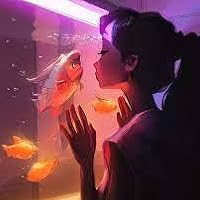
i have absolutely no idea why this is the cover, and the writing was kind of simplistic
January 14, 2026
Reading this was like rattling a bottle full of marbles; occasionally some beauties come out, but mainly it's just a lot of rattling

June 18, 2012
Originally published on my blog here.
The contents of this novel are actually from the very beginning of Moorcock's career, appearing as a pair of stories in a science fiction magazine in 1962, at around the same time as the first Elric novel, which was much more of a signpost to the type of writing he was going to go on to become known for. This packaging of the stories together which appeared in the mid-seventies must have seemed rather out of step with the cool New Wave work he was writing at the time; The Blood Red Game is, by contrast, clearly derivative from pulpy SF writers like E.E. Smith and A.E. van Vogt, especially the latter. (I should perhaps mention that, according to Fantastic Fiction, the two stories also appeared as - extremely short - separate novels in 1966.)
The first story, originally entitled The Sundered Worlds, has a hero, Renark, who has the psychic ability to sense the universe as a whole. He realises that it is beginning to contract, threatening the total destruction of humanity, a slightly strange premise that is apparently forgetting that it would take billions of years to contract the universe, even if the contraction occurred at almost the speed of light. No explanation is given of why it poses such an urgent problem, or even any indication that the contraction is very fast. The sundered worlds of the title are a small group of planets which travel between dimensions, and Renark thinks that they will hold the key to saving the galaxy. So he, with a small group of friends, travels to the sundered worlds the next time they pass through our universe, even though no human has ever returned from similar trips.
The second story, sharing its title with this book, follows immediately on from the end of The Sundered Worlds, so much so that I suspect some re-writing was done to cover the join for publication as one. The story now sees humanity facing a different external crisis, being forced to participate in a series of incomprehensible psychic games against alien species, for the amusement of more powerful beings.
In themselves, the two stories are fairly mediocre. To the Moorcock fan, they do have interesting ideas which relate to important concepts behind his later work, including an undeveloped form of the multiverse, with clashes between universes playing a part as they do in several later stories. I can see that they would have been of sufficient interest to a magazine editor in 1962 to publish, but I don't think that anyone would have bothered to re-package them as a novel without Moorcock's name associated with them - if, say, they had been the only published stories by someone who went on to become an advertising executive or a banker, instead of a world famous and hugely influential science fiction editor and author. As things turned out, it is still interesting to read them in the context of Moorcock's other work.
The contents of this novel are actually from the very beginning of Moorcock's career, appearing as a pair of stories in a science fiction magazine in 1962, at around the same time as the first Elric novel, which was much more of a signpost to the type of writing he was going to go on to become known for. This packaging of the stories together which appeared in the mid-seventies must have seemed rather out of step with the cool New Wave work he was writing at the time; The Blood Red Game is, by contrast, clearly derivative from pulpy SF writers like E.E. Smith and A.E. van Vogt, especially the latter. (I should perhaps mention that, according to Fantastic Fiction, the two stories also appeared as - extremely short - separate novels in 1966.)
The first story, originally entitled The Sundered Worlds, has a hero, Renark, who has the psychic ability to sense the universe as a whole. He realises that it is beginning to contract, threatening the total destruction of humanity, a slightly strange premise that is apparently forgetting that it would take billions of years to contract the universe, even if the contraction occurred at almost the speed of light. No explanation is given of why it poses such an urgent problem, or even any indication that the contraction is very fast. The sundered worlds of the title are a small group of planets which travel between dimensions, and Renark thinks that they will hold the key to saving the galaxy. So he, with a small group of friends, travels to the sundered worlds the next time they pass through our universe, even though no human has ever returned from similar trips.
The second story, sharing its title with this book, follows immediately on from the end of The Sundered Worlds, so much so that I suspect some re-writing was done to cover the join for publication as one. The story now sees humanity facing a different external crisis, being forced to participate in a series of incomprehensible psychic games against alien species, for the amusement of more powerful beings.
In themselves, the two stories are fairly mediocre. To the Moorcock fan, they do have interesting ideas which relate to important concepts behind his later work, including an undeveloped form of the multiverse, with clashes between universes playing a part as they do in several later stories. I can see that they would have been of sufficient interest to a magazine editor in 1962 to publish, but I don't think that anyone would have bothered to re-package them as a novel without Moorcock's name associated with them - if, say, they had been the only published stories by someone who went on to become an advertising executive or a banker, instead of a world famous and hugely influential science fiction editor and author. As things turned out, it is still interesting to read them in the context of Moorcock's other work.

January 23, 2008
Michael Moorcock, The Blood Red Game (Dale Press, 1970)
I found it odd that this book was the only one by Dale Press in my collection until I cracked the cover. Hopefully, Dale have gone out of business, but not before a long, tortured obscurity. I'd say a year for every typo in this book, but were that the case, they'd still be around well into the twenty-second century, and we can't have that.
Typos that a week-old dead cockroach would have caught aside, the book itself is pretty standard Moorcock. Fans of the eternal champion will feel right at home in this particular science fiction universe; while it would be stretching things somewhat to call any of the protagonists here an aspect of the eternal champion, they're most certainly on a quest (though they don't realize it at first) for Tanelorn, the eternal city.
The book starts with three old acquaintances, Renark, Asquiol, and Talfryn. Renark is a former government employee with a price on his head, Asquiol a prince who was forced to abdicate, and Talfryn is, well, just along for the ride. As we open, the three of them are on a lawless planet near the rim of the galaxy, waiting for the legendary coming of a planetary system which pops into existence now and then, a place all the lawless wait for. After all, if you hop into a different planetary system that's not a part of your universe, it's not going to be subject to the same laws, right? The system comes, the three of them take off, and the real fun begins.
The hard part of reviewing a book like this is that a plot synopsis is impossible. The above paragraph takes you through well under a quarter of the book, but to say anything else would be a spoiler. You'll just have to read for yourself. Yes, the title does come to make sense, but only in the last third of the book or thereabouts, and there's a lot of ground in between the two.
One interesting thing about The Blood Red Game, in relation to the other Moorcock novels I've read over the past few months. Moorcock is a writer who seems more concerned with description and plot advancement rather than mysterious subplots most of the time. In The Blood Red Game, however, Moorcock holds a few things back to spring on you in the grand Agatha Christie tradition; no one is what they seem, and no one's part is quite what it first appears to be. It's somewhat jarring, and pleasurably so, to find in a Moorcock novel.
It's slightly less readable than the Elric novels, but that may be a personal preference thing more than anything; I almost always find science fiction harder than fantasy. This is, to my experience so far, a rare treat where Moorcock is concerned, and a fine one. ****
I found it odd that this book was the only one by Dale Press in my collection until I cracked the cover. Hopefully, Dale have gone out of business, but not before a long, tortured obscurity. I'd say a year for every typo in this book, but were that the case, they'd still be around well into the twenty-second century, and we can't have that.
Typos that a week-old dead cockroach would have caught aside, the book itself is pretty standard Moorcock. Fans of the eternal champion will feel right at home in this particular science fiction universe; while it would be stretching things somewhat to call any of the protagonists here an aspect of the eternal champion, they're most certainly on a quest (though they don't realize it at first) for Tanelorn, the eternal city.
The book starts with three old acquaintances, Renark, Asquiol, and Talfryn. Renark is a former government employee with a price on his head, Asquiol a prince who was forced to abdicate, and Talfryn is, well, just along for the ride. As we open, the three of them are on a lawless planet near the rim of the galaxy, waiting for the legendary coming of a planetary system which pops into existence now and then, a place all the lawless wait for. After all, if you hop into a different planetary system that's not a part of your universe, it's not going to be subject to the same laws, right? The system comes, the three of them take off, and the real fun begins.
The hard part of reviewing a book like this is that a plot synopsis is impossible. The above paragraph takes you through well under a quarter of the book, but to say anything else would be a spoiler. You'll just have to read for yourself. Yes, the title does come to make sense, but only in the last third of the book or thereabouts, and there's a lot of ground in between the two.
One interesting thing about The Blood Red Game, in relation to the other Moorcock novels I've read over the past few months. Moorcock is a writer who seems more concerned with description and plot advancement rather than mysterious subplots most of the time. In The Blood Red Game, however, Moorcock holds a few things back to spring on you in the grand Agatha Christie tradition; no one is what they seem, and no one's part is quite what it first appears to be. It's somewhat jarring, and pleasurably so, to find in a Moorcock novel.
It's slightly less readable than the Elric novels, but that may be a personal preference thing more than anything; I almost always find science fiction harder than fantasy. This is, to my experience so far, a rare treat where Moorcock is concerned, and a fine one. ****

September 3, 2008
My first months back in Chicago after leaving New York were very lonely ones. Having no entertainment in my studio apartment other than a clock radio and books, I spent my first days looking for work and evenings reading, WFMT playing in the background. The other tenants were friendly enough, most of them women in their seventies and above, but I had little in common with them or with the poor blacks who seemed to inhabit the rest of my block and the surrounding area. Fortunately, there was a junk store on the block which sold books and a thrift store associated with the Rogers Park Community Church diagonally across the intersection of Morse and Ashland from the apartment. I could afford a quarter for a paperback and a half dollar for a hardcover.
But how much can one read and still enjoy it? In an excess of self-indulgence I was pretty much confining myself to my favorite genre, science fiction, which previously I'd had to confine to vacations during all the long years of college and seminary. Initially, it was fun, but I was finding myself done with one book by the late afternoon with nothing to do in the evening but open another.
Moorcock, whose Behold the Man I'd thoroughly enjoyed in New York, was a hopeful find, but by this time even his better-than-average fiction wasn't more than a brief distraction from grey depression.
But how much can one read and still enjoy it? In an excess of self-indulgence I was pretty much confining myself to my favorite genre, science fiction, which previously I'd had to confine to vacations during all the long years of college and seminary. Initially, it was fun, but I was finding myself done with one book by the late afternoon with nothing to do in the evening but open another.
Moorcock, whose Behold the Man I'd thoroughly enjoyed in New York, was a hopeful find, but by this time even his better-than-average fiction wasn't more than a brief distraction from grey depression.

June 25, 2016
Αγόρασα αυτό το βιβλίο με ενθουσιασμό. Λατρεύω τον M. Moorcock. Τον θεωρώ έναν από τους τρεις μεγαλύτερους συγγραφείς που υπάρχουν!
Το πρώτο σοκ ήταν ότι η ιστορία διαδραματίζεται στο μέλλον. Ποτέ δεν μου άρεσαν τα sci-fi, αλλά και πάλι σκέφτηκα Moorcock είναι θα μου αρέσει.
Ξεκινώντας να διαβάζω, ήρθε το δευτερο σοκ. Καλογραμμένο, αλλά όχι κάτι που να με πιάσει από το λαιμό και να μην με αφήνει να σταματήσω το διάβασμα-όπως έκαναν όλα τα προηγούμενα βιβλία του Mooorcock.
Σιγά-σιγά, η ιστορία με κέρδισε(ίσως γιατί όπως και να το κάνουμε είμαι fanboy) και τελικά ήρθε και το τελικό σοκ. Η ιστορία αποτελείται από μικρές ιστορίες και στο τέλος όλα παίρνουν νόημα...καλά όχι όλα, αλλά τα περισσότερα. Και αυτό με άφησε με αναπάντητα ερωτήματα. Ισως γιατί στο ιδιαίτερο και πολύπλοκο σύμπαν του Μoorcock πρέπει να αφήνονται αναπάντητα ερωτήματα μέχρι το επόμενο βιβλίο του.
Στην αρχή πίστευα ότι δεν θα μου αρέσει καθόλου το βιβλίο. Τελικά είναι ένα καλό βιβλίο, απλά επειδή αγαπάω τον Moorcock, τον κρίνω αυστηρά. Σίγουρα δεν είναι η καλύτερη επιλογή για καποιον που δεν ξέρει τον συγγραφέα, αλλά σε όποιον άρεσαν οι τηλεοπτικές σειρές Babylon 5 και Star Trek ίσως βρουν εδώ ένα βιβλίο που θα απολαύσουν.
Το πρώτο σοκ ήταν ότι η ιστορία διαδραματίζεται στο μέλλον. Ποτέ δεν μου άρεσαν τα sci-fi, αλλά και πάλι σκέφτηκα Moorcock είναι θα μου αρέσει.
Ξεκινώντας να διαβάζω, ήρθε το δευτερο σοκ. Καλογραμμένο, αλλά όχι κάτι που να με πιάσει από το λαιμό και να μην με αφήνει να σταματήσω το διάβασμα-όπως έκαναν όλα τα προηγούμενα βιβλία του Mooorcock.
Σιγά-σιγά, η ιστορία με κέρδισε(ίσως γιατί όπως και να το κάνουμε είμαι fanboy) και τελικά ήρθε και το τελικό σοκ. Η ιστορία αποτελείται από μικρές ιστορίες και στο τέλος όλα παίρνουν νόημα...καλά όχι όλα, αλλά τα περισσότερα. Και αυτό με άφησε με αναπάντητα ερωτήματα. Ισως γιατί στο ιδιαίτερο και πολύπλοκο σύμπαν του Μoorcock πρέπει να αφήνονται αναπάντητα ερωτήματα μέχρι το επόμενο βιβλίο του.
Στην αρχή πίστευα ότι δεν θα μου αρέσει καθόλου το βιβλίο. Τελικά είναι ένα καλό βιβλίο, απλά επειδή αγαπάω τον Moorcock, τον κρίνω αυστηρά. Σίγουρα δεν είναι η καλύτερη επιλογή για καποιον που δεν ξέρει τον συγγραφέα, αλλά σε όποιον άρεσαν οι τηλεοπτικές σειρές Babylon 5 και Star Trek ίσως βρουν εδώ ένα βιβλίο που θα απολαύσουν.
Displaying 1 - 30 of 39 reviews