From grief to reckoning to reflection to solace, a marine biologist shares the solo journey she took—through war-ravaged Eastern Europe, Israel, and beyond—to find peace after her fiancé suffered a fatal attack by a box jellyfish in Thailand.
In the summer of 2002, Shannon Leone Fowler, a twenty-eight-year-old marine biologist, was backpacking with her fiancé and love of her life, Sean. Sean was a tall, blue-eyed, warmhearted Australian, and he and Shannon planned to return to Australia after their excursion to Koh Pha Ngan, Thailand. Their plans, however, were devastatingly derailed when a box jellyfish—the most venomous animal in the world—wrapped around Sean’s leg, stinging and killing him in a matter of minutes as Shannon helplessly watched. Rejecting the Thai authorities attempt to label Sean’s death a “drunk drowning,” Shannon ferried his body home to his stunned family—a family to which she suddenly no longer belonged.
Shattered and untethered, Shannon’s life paused indefinitely so that she could travel around the world to find healing. Travel had forged her relationship with Sean, and she hoped it could also aid in processing his death. Though Sean wasn’t with Shannon, he was everywhere she went—among the places she visited were Oświęcim, Poland (the site of Auschwitz); war-torn Israel; shelled-out Bosnia; poverty-stricken Romania; and finally to Barcelona, where she first met Sean years before. Ultimately, Shannon had to confront the ocean after her life’s first great love took her second great love away.
Cheryl Strayed’s Wild meets Helen Macdonald’s H Is for Hawk in this beautiful, profoundly moving memorial to those we have lost on our journeys and the unexpected ways their presence echoes in all places—and voyages—big and small.
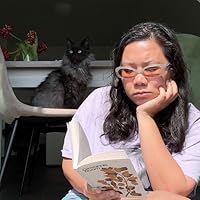
Shannon Leone Fowler is a writer, marine biologist, and single mother of three young children. Since her doctorate on Australian sea lions, she’s taught marine ecology in the Bahamas and Galápagos, led a university course on killer whales in the San Juan Islands, spent seasons as the marine mammal biologist on board ships in both the Arctic and Antarctic, taught graduate students field techniques while studying Weddell seals on the Ross Ice Shelf, and worked as a science writer at National Public Radio in Washington DC. Originally from California, she currently lives in London. Traveling with Ghosts is her first book.
“This is a story about finding love and learning to live with loss. But mostly, it’s a story about all the places in between.” In August 2002, Fowler was traveling in Thailand with her fiancé Sean. They were a cosmopolitan couple: he was Australian and had recently taught in China; she was from California but PhD studies in marine biology took her halfway across the world. She had only recently realized she was pregnant. They were embracing in shallow water outside their cabana when Fowler felt something brush past her thigh. The highly toxic box jellyfish stung Sean on his leg, and by the time she brought help he was already dead, though clinic staff went through the motions of trying to resuscitate him.
This memoir concentrates on the four and a half months that followed Sean’s death, a time that Fowler filled with constant travel through Eastern Europe – “a place where the endings [in folk tales as well as in real life] were rarely happy, but the stories were told just the same.” Although she had the usual fears of a woman traveling alone – she evaded a Hungarian flasher and her heart pounded as she walked past groups of male workers – she had a compulsion to keep moving, as if Sean’s death was something she could outrun. She sought out risky places, going to Bosnia and then to Tel Aviv to visit the Israeli girls who helped her deal with the practicalities of Sean’s death. “[I]t was hard to see the purpose of being cautious. We hadn’t been taking any risks on Ko Pha Ngan. And the worst had already happened.”
Fowler toggles between her blithe trips with Sean in the few years they had together, her somber travels after his death, and the immediate aftermath of his death. Each short section is headed by the date and place, but the constant time shifts are meant to be disorienting and reflect how traumatic memories linger. She also includes occasional news stories about similar accidental deaths. Sean’s death was considered a total fluke – that kind of jellyfish shouldn’t have been there in that season – yet others died in Thailand under similar circumstances, and no public health warning was ever issued. Had her Israeli guardian angels not insisted, Sean’s death would have been labeled a drunk drowning on his death certificate. Yet, “[o]nce someone you love falls fatally on the wrong side of statistics, the numbers stop meaning much,” Fowler acknowledges.
Your average memoir would have brought things up to the present day by showing how the author learned and grew from the experience. This is not your average memoir. It delves into the thick of the grief and stays there. It doesn’t give any easy answers about how to get over things. It doesn’t suggest that life will later become perfect, just in a different way. (Fowler is now a divorced single mother of three, living in London.) It’s honest and unusual and has stayed in my mind even though I finished it several weeks ago. I’d highly recommend it to memoir readers.
Releases February 21, 2017.
Note: The author is the daughter of Karen Joy Fowler.
Traveling with ghosts by Shannon Leone Fowler 4.5 out of 5 stars
This memoir had an a profound affect on me. It seemed to reach right into the heart. Shannon writes with raw honesty, in a touching, unsensational manner, and I found her sad story of loss utterly disarming. Her fiance, Sean's death by the sting of a box jellyfish in Thailand - utterly tragic, as is the death of anyone so young, but oh so pointless - is presented in a candid, unsentimental way that had me gripped from the very 1st chapter.
But Traveling with ghosts is so much more than the story of her loss. In her memoir, Fowler recognises her fiancé as well as others before and since his death, who have died from the sting of these Chirodropidae, Box jelly fish. Her memoir also exposes efforts made by the tourism industry in Thailand to cover up these not so rare deaths, officially ruling them as accidental, death by drunk drowning incidents. She presents a shocking, transparent and incredibly detailed account of the nightmare ordeal she faced in Ko Pha Ngan, and steps she took, the administrative minutia that eventually allowed her to bring home to Sean's parents, the body of their son.
Fowler's memoir is multi faceted. It reads somewhat like a thriller, or perhaps more accurately a horror, but it is really an ode to love lost and also a well documented and atmospheric travel journey. In Sean’s honour and almost in search of a part of him, she visits Eastern Europe. As marine biologist, now struggling with being anywhere near the ocean, she remains land locked. The memoir moves between 3 timeframes. The nightmare on Kho Pha Ngan in the direct aftermath of Sean's death. Accounts of solo travel in Romania, Bulgaria, Bosnia and Israel, where she encounters more suffering, destruction and countries in mourning soon after his funeral. Back in time to fond memories she has of their travels before Sean's untimely death.
Fowler’s portrayal of her husband to be is tender, warm and lovable. She makes the reader feel so welcome in their moments of intimacy. There seem to be no boundaries here, she is seeking to let us in, her relationship offered up like a gift. We see clearly why she fell for this guy. The depth of their feeling for one another is clear, their relations are genuine and we really get to know him. It is clear that he was a well loved, uniquely wonderful guy, everyones favourite. One almost feels echoes of one’s own lovers in him, and so the sense of loss, the sense of tragedy, the humanness of it all is immediate.
Fowler also touches on grief. How as Westerners do we grieve? Do we as Westerners really know how to grieve, or does the Western culture not hold enough court for grief? Anat & Talia, 2 religious Israeli girls on the island give selflessly of their time to protect Shannon, to bear witness to her, to assist her during the immediate aftermath of Sean’s death. Indirectly, she learns (later on) that they were bringing their religion to her, in sitting shiva with her, a touching Jewish custom that ends up meaning so very much more to her.
Poignant, touching and heartbreaking, Traveling with ghosts is beautifully crafted prose with a gentle distinctive rhythm that seems almost incidental, yet it is also a purposeful study of the grieving journey. At once a beautiful elegy to someone loved so deeply and a powerful lament to the randomness of the strike that can change your life in an instant.
Every now and then I need a break from the psychological thrillers and the crime procedurals that I love to read. At times like that, I often love to immerse myself in a true story or a memoir and so this book came along at just the right time for me.
Having read the blurb of this book, I really wanted to get my hands on a copy. Although the subject matter sounded sad - being a story of love and loss - there was a part of me that really wanted to read this book for the travel stories that, from the blurb, I knew it would contain. Being a passionate traveler myself, that aspect definitely appealed to me.
The second reason that made me want to read this book was that the author lost her fiance off an island in Thailand, a part of the world that I'm familiar with and that my own fiance and I have traveled to. We both absolutely loved Thailand, it's people and it's gorgeous islands and so when I read that the authors fiance had died there, from a box jellyfish sting, my heart just dropped. It's the type of thing that you never expect to happen but yet it can happen to anyone. I couldn't imagine being on such an amazing holiday in such an amazing country and something so terrible and devastating happening. It's one of those freak things that happen to people and, as selfish as it sounds, all you can do is say, "thank God that didn't happen to me". The hard hitting nature of the tragedy is also made to feel more real when the events take place somewhere that you, as the reader, have been and in a place that you know.
This book is part ode to a lost loved one and part travel memoir. The author did an exceptional job of introducing the reader to Sean, her 25 year old boyfriend who died in 2002 and to their loving and fun relationship. The pain that the author experienced and the utter devastation to her life are palpable. My heart went out to her in every way possible. It was also fascinating to read about how the author, who was studying to become a marine biologist at the time and who loved the ocean and all its creatures, lost her passion for the sea and was unable to step foot into it until a year after Sean's death.
This story jumps between the years prior to Sean's death, to the days around his death in 2002 and then to the 4 month period after his death when the author traveled around Eastern Europe on her own. I must be honest and say that although I enjoyed the chapters about her travels in Europe, I wasn't riveted by them and at times I found myself skimming some of the pages. I think this was more of a personal thing and I'm sure others will enjoy those chapters, especially if you have an interest in Bosnia, Israel, Poland and so on. I found myself loving the story of the relationship, of lost love and of the author's journey to acceptance, but some of the chapters on the Eastern European countries that she traveled to didn't always hold my full interest.
This is a well written book, a great salute to the man that the author once loved. It was sad, upsetting and tugged at the heart strings but it was also fascinating and I'm very glad that I read it.
Many thanks to author Shannon Leone Fowler and to Jonathan Ball publishers for my copy.
This book could have been maudlin in tone and so incredibly depressing. However, it was not. The circumstance Fowler found herself in was unbelievably, tragically, gut-wrenchingly sad. She conveyed her utter devastation and her road to try and find a measure of peace in prose so adept that I would not expect from a first time author. Her storytelling is descriptive enough to make the reader feel that they are with her in every locale. It is hard to say that one loves a book that is based on someone's tragedy but I did love this book. For the humble way that Fowler recounts the events, for her advocacy for other victims of this type of box jellyfish attacks, and for her courage. I will admit that Booklist's recommendation of this book as being akin to Cheryl Strayed's Wild: From Lost to Found on the Pacific Crest Trail was the impetus behind my reading this book. Reviewers need to stop doing this and they need to stop comparing every thriller to Gone Girl and The Girl on the Train. In this case, I was certainly not disappointed but still this practice needs to stop. A warning to those who thought Wild: From Lost to Found on the Pacific Crest Trail was a book about hiking, this is not a book about being a marine biologist. It is a deeply personal account of how one tries to overcome grief.
This is one of those things that was perhaps greatly cathartic to the writer (for good reason), but just didn't resonate with me the way I thought it might. It was fine, it might resonate with others a lot more than me. But I never rose above, "Oh, okay," in my response to it.
I don't usually give memoirs a star rating because they are so personal in their respective journeys but I had to with this one as I thought it was beautifully written.
It originally caught my eye, as it was likened to Cheryl Strayed's - Wild, which is one of my favourite books and it certainly lives up to expectations. Traveling With Ghosts tells us of Shannon's grief, which is so very palpable and trying to come to terms with the unexpected death of fiancé Sean, in Thailand from the deadly Box Jellyfish. A situation that they had no inkling of the danger and which the authorities refused to admit to. As their relationship was forged through travelling, unable to settle she decides to travel solo to work through her grief. Told in three time periods, her and Sean's relationship and travels prior to his death, the time pertaining to Sean's death and then her solo travel in the months after, the going to and fro between each period was easy to follow. As you keep reading, things in their relationship are explained and we come to know Sean as a person. One thing that struck me, was how lucky Shannon was to be taken care of by the two Israeli girls Anat and Talia, at the time of Sean's death in Thailand. It wasn't until later in the book that their actions were explained and I got quite emotional. I really found Shannon's travels by herself engrossing, not depressing but not sugar coated either, which I think some travel based memoirs are. A lot of places she visits have been torn by war or poverty but there is always hope.
A very moving book that will that will stay with me for a long time. Thank you to the publisher and Netgalley for a copy to read and review.
I bought this book because there are a lot of similarities between Shannon's story and my own - my fiancé also died while we were traveling in South East Asia. Reading about Shannon's journey after Sean's death was really helpful for me: Shannon had a lot of the same questions that I have, and experienced a lot of the same things. The journey that she took after Sean's death through Eastern Europe and the Middle East is really inspiring - she visits places where people are undergoing significant hardships, like Israel and Sarajevo, or where terrible things have happened in the past, like Auschwitz, and it helps her to understand her own grief, and to see how other people have moved on in the wake of tragedy. The story is ultimately inspiring, and will be helpful to anyone who have experienced a loss.
A very thoughtful book about coping with the loved ones' death. Imagine your doctorate thesis is about biology, marine biology to be specific. And your lover’s cause of death is a jelly fish sting. Ironic, right? I would be so frustrated with the world if that happened and that was exactly the case for Shannon Fowler. In this novel, she offers a thoughtful view of death and how she copes with it. One thing that is sure is that we all have different manners to cope with it. From page to page, you can feel all the emotions she’s been through: rage, frustration, confusion, betrayal, the sadness that I can’t even imagine. This book was so provokingly human, it makes me want to live even more.
I’ve been staring at the cursor for a few days now trying to find the words to ‘review’ this book – it seems a crazy prospect, to review something as raw and personal as this memoir, and maybe clinical or self-absorbed to talk about ‘what it did for me as a reader’. I guess a good place to start is with a punchy one-liner, so here goes: buy and read this book !
Now I know that’s my unsupported opinion, so I’ll try to divulge some reasons why you should do exactly that.
First of all, if you’re somewhere in a marine biology career, or if you love the ocean in any of its forms; if you’re travelling to any of the places described here, or if you’ve been to them already; if you’re about to embark on something – travel, moving house, a new career, anything – especially alone and especially as a female; if you’ve experienced the loss or death of somebody close to you; if you’re looking for some sort of direction generally in the great muddle that is life, then most likely, something in this book’s exquisitely depicted scenes will speak to you. I wasn’t expecting there to be so many lessons, of a sort, in Travelling with Ghosts, but from the way that Shannon approaches unfamiliar countries, cities and situations, the way she interacts with strangers, the way she plans and fearlessly attacks being in new places and situations ‘outside her comfort zone’ in light of, but also regardless of and before, the death of her fiancé, I was incredibly inspired and empowered, as a 21 year old female. Whilst Travelling with Ghosts is a beautiful ode to Sean and the countless, sometimes nameless, others whose lives have been taken by jellyfish stings, there is so much richness in Shannon’s story as an individual, and a traveller, and a marine biologist that you can certainly empathise with even if the tragedy of the reason for her travel and this book is something you fear you may not be able to comprehend.
That’s not to say that I didn’t spend almost every page of Travelling with Ghosts in tears – a lot of reviews mention Shannon’s meticulous attention to detail which means that we, as the reader, burn our mouths on the baked cheese that we’re too hungry to wait for to cool down, or brace against the cold that hits our face as we step off the train, grateful for its freshness having been cooped up in a carriage with heavy smokers for the past however many hours, just as Shannon describes. These details bring Shannon’s experience to life and are so powerful that they feel like our own memories. This book is as human as Shannon, as any of us – and though, just as these scenes are not our personal memories, and Shannon’s pain is not our own, Sean’s death becomes something that we, as the reader, also mourn.
This book is stunning, haunting, chilling, comforting, friendly, foreign, and so real. It isn’t a whine or lament, but neither does Shannon force a redeeming silver lining because, as she repeats throughout, death and grief isn’t as ‘Hollywood’ as the films make it out to be. In this day-and-age of falsities on every face of the media, stories about real life are the reassuring ones, and are refreshing in a way, reminding us that it’s ok to be a breakable, hurting human, and that it’s ok to feel and to need time to deal with whatever emotions we have.
I stumbled across Shannon’s story whilst researching box jellyfish for a university assignment, as it is this field within which I hope to work in the future. Maybe that makes my opinion on how important this story is a little biased, I don’t know. But it doesn’t require bias to surmise that it must have taken a lot for Shannon to share this story with the world, and that, to me, would be reason enough, if I’d come far enough to be reading a review, debating whether or not to buy this book, to just … buy and read this book. :)
This book is complicated to review. I feel that negative comments are out of place because it's not my tale to read, but rather the tale that the author wants to tell. I appreciate that she put her story out there. I know this book was not easy to write.
That said, the description, even the title, suggest a different book. I greedily picked up a book about traveling around Eastern Europe in the fall of 2002, but the book was actually not much about that at all. Aside from a lengthy - and interesting - chapter on Sarajevo, the book left much of the experiences in Eastern Europe to the side. They were disjointed mini-vignettes in which the author seemed vastly under-impressed by Eastern Europe. Far more of this book relived every excruciating second in Thailand. That was clearly the tale the author needed to tell. It is no less important - likely far more important - but it is not exactly what the book is advertised as. For example, she left out vast chunks of her travels in Eastern Europe. She teases with a train ticket to Brasov and ends up four chapters later, when she remembers she was writing about Eastern Europe, suddenly in Bulgaria. She didn't, for the most part, seem interested in any way to connect with the countries or the people of Eastern Europe. It was just a step in her personal journey, another place she could say she has been. She barely recognizes the cultural differences. Romania is not Slavic, but she washes them all with more or less the same, grey brush. The people of Eastern Europe were cast in her story that really took place on the other side of the world, and they didn't always behave how she wanted the supporting characters to behave. She expressed frustration that few people tried to help her, as if her presence greeted her a right to be helped. She was, at all times, happily an outsider. She calls Australians and Israelis as Westerners, reminding herself and everyone else that Eastern Europe is NOT Europe. Get me the heck back to Barcelona! Her palpable disdain for Eastern Europe stained the book for me. (P.S. Romanian is very much a Romance language - and WITH the romance!)
Finally, the book generally made me feel uncomfortable because it was a tale of immense privilege that doesn't even get recognized. The idea of having months to aimlessly wander a corner of a continent because something bad happened is entirely foreign to most people. For the author, who has already done this for most of her adult life, it just feels like the natural progression. This is not to say that her grief is any less powerful, and I know the journey and the book must have been horribly difficult to write. But not once does the author recognize the idea to postpone life at will is a true privilege, regardless of the reasons for it.
I enjoyed the book, despite my criticisms, and I can only imagine the difficulty she had writing it. There were parts that were really great travel stories - her trip to Israel was a highlight. And, really, it was not my tale to judge. (Although Eastern Europe is close to my heart, so it's really hard to get past the very Western Eurocentric view of it.)
Ultimately, I admire her for getting the story out there.
This book is unfairly compared to Eat, Pray, Love (or even Wild--ick!). But it is so much deeper and better than those stories.
Shannon's lifelong love, the ocean, takes the life of her soulmate, Sean, and she is set adrift trying to make sense of a senseless death and trying to reconcile with the ocean. The ocean is a big force in her life as she is a marine biologist. All of her education and lifelong work are tied to water.
Shannon, an American, met Sean, an Australian, in Spain while both were backpacking across countries. After Sean's death, she decides to go back to traveling solo. But she can't bear to go anyplace that reminds her of Sean and she wants to be far from the ocean. So she ends up in some of the most despairing, war-torn places in Eastern Europe: Bosnia, Croatia, Israel, Romania, Poland, Auschwitz.
She is an attractive American woman traveling alone in places where few foreigners go. It's risky, she has no phone, and while I wouldn't say she was suicidal in choosing these locations, I think that she would not have cared if death had found her there.
Shannon does a beautiful job weaving stories of her 2 years of travel with Sean before his death with her grief journey across Eastern Europe. She takes you to places that most of us would not have the courage, or desire, to venture to.
This is an exquisitely wrought love story of heartbreak and resilience. I often had to put it down for a bit and just breathe—it's very intense. I kept looking over at my SigO and thinking about how I would feel if he were to die suddenly, and I think he benefitted from my reading this, because I found renewed appreciation for what we share.
It is heartbreaking and simply told, the narrative circling back and forth between the "now" of the narrative and the past, with snippets of relevant facts woven in. It can be hard to follow narratives braided this way, but not once did I lose track or feel jolted by the time-shifts. It works the way memory works—one memory unfolding into another one.
I can't remember the last time a memoir touched me so deeply, lived in my bones the way this did.
"This is a story about finding love and learning to live with loss. But mostly, it's a story about all the places in between."
I was lucky enough to win a proof copy of Travelling with Ghosts from Hachette Australia via Instagram earlier this year (2017) and from the first page I loved it. A wonderful memoir full of love, life and loss. I couldn't help but smile reading the stories of how Shannon and Sean met, how they grew together and their travels; I cried...oh how I cried, but mostly I enjoyed a greater sense of wanderlust imagining the cities and towns in foreign countries Shannon experienced on her journey through Eastern Europe and through her grief.
A wonderful read that shall hold a place in heart for countless years to come.
This entire review has been hidden because of spoilers.
A captivating and exciting read about a tragic time in the author's life. The thrills and woes of backpacker adventures are artfully woven into the before and after of the tragedy. Having traveled a little around the same time, the experiences and references to world events were especially vivid. Highly recommend!
This story is both memoir & travelogue of Ms. Fowler’s journey through devastating grief & grief-stricken landscapes. A moving testament to the power of love, the resilience of humans, & also to Ms. Fowler’s beautifully constructed writing. I highly recommend it.
I loved this memoir so much. Shannon Leone Fowler is a gorgeous writer, and I'm sure we're of the same era, because she took me right back to my own travels to Ko Pha Ngan in 1998/1999. There I am: on the lookout for the green flash as the sun sets, there I am playing endless card games on the long ferry ride from the mainland to the island. There I am, the piece of wood attached to the cabana key, heavy in my shorts pocket. Her evocation of time and place meant that she took me with her to the beach the day Sean died. I was there, shocked by the jellyfish wounds on Sean's legs. I was there with her as she made that awful phone call to his mother, Audrey.
The structure is a work of art in three parts. Throughout the book she slips back and forth through time, from the horrific days of and after his death, to the weeks, months and years after. In a lesser talented writer's hands it might have felt stilted, making you feel impatient for one strand to finish so you can get back to the more engaging one. But not Fowler—it was ALL fascinating, moving and beautiful.
At one point, soon after Sean's death, she sits down and writes down every single thing she can remember about him and his death. The whole book feels like this, a record of all that happened. A record of love. A tribute to that time and how it shaped the woman, and mother, she is today. A remembering. It also feels like this story was a long time coming, that it had been written many times, approached from many different angles, before enough time had passed, and there was enough distance between what happened and now, to see the patterns, to connect the dots and realise what it all meant.
Becoming a mother has softened the hurt caused by how Sean's family treated her after his death—something she's understandably found difficult over the years. I hope that Audrey reads this book and understand the lengths that, back in 2002, on a beach far away from home, alone, Shannon Leone Fowler went to, for her son.
Favourite quote: "I'll always be haunted by his death. I'll always be enchanted by his life." Page 284.
Shannon Fowler's memoir of love, loss and her travels through some of the less well known Eastern European countries in an effort to make peace with her life is one of the best pieces of writing I've read in a very long time. I say this, not because she's a home grown talent and daughter of Karen Joy Fowler, another well regarded writer, but because she has a gift for description and fusing time frames to make her story come to life with courage and dignity - even when a few of her travel decisions were perhaps based on impulse and not safety. As a mother. I fretted each time she arrived in a new city without prearranged lodging, but I expect that was part of her process - to travel as she had with her fiancé. And travel with a backpack and a Lonely Planet guide was safer 15 years ago than perhaps it is today with a smart phone and Google maps. Every detail rings true and clearly her copious journal entries as she travelled ensured that the she has not conflated memory with reality. This is the best book I have read this year. It speaks to anyone who has lost a loved one or anyone who looks for the road less travelled. Read it and see for yourself.
There were times, especially in the beginning of this book that I had chills. There were parts that were haunting and parts that made me cry. I loved learning about what backpacking through eastern Europe used to be like.
One thing I kept thinking about throughout the book was my need to legitimate things- even if only to myself. The way that Shanon said she hated that she was his fiance and not his wife, that she didn't have more legal claim over his body when he died. You don't feel secure enough in your position. People downplay how important things are to you sometimes in this way. Like not having a college degree basically means all of the college you did doesn't count. Like visiting a country is not the same as living there. Like knowing someone and KNOWING someone arent the same.
This one time I was at a friend's party. Me and the friend went to high school together and had been friends for like 8 years, I was at his father's funeral, his brother is one of my favorite people in the world, I had slept in their childhood home more times than I could count. And at this party some asshole insinuated that I didnt even know the host. That I didnt even know who's party I was at. And I was so pissed. Because I thought he could never know and understand that I wasnt just some random. That I had a claim to these people and this place more than he did. But instead of getting someone to kick his ass, or telling him off... I just walked away. I would have rather not even tried to justify my position and my place and leave it unspoken then to feel like someone who HAS to justify my positionality. Defending your claim feels like something that people in weak positions do. When you feel secure you just let it go. That's what I think now. I don't know if that's right or not. I still assert claims of legitimacy sometimes. Sometimes I dont.
Sometimes when I'm in the middle of an argument with some loser in my japanese class about how far the drive from tampa to Orlando is I throw it out there that I lived in Florida for 14 years and still visit my family there every year. Sometimes when a stranger brings up that she's used to hurricanes because she lives in Carolina (assuming that I've never seen one, having lived in memphis my whole live ofc) I just silently nod and smile.
Sometimes I cant have a more legitamate claim on something than someone else. Like books. My experience of them is so deeply personal that I dont want to listen to someone else talk about it as if they had a less deep experience. I don't want someone to trivialize something that meant everything to me. But my claim cant be more legit then theirs. They're both just experiences.
But I like the power that legitimacy gives me. Like that thing is mine. Like no one can tell me otherwise. Its like ownership over the things that have happened to me. And sometimes its just about feeling like I deserve to feel how I feel.
It's like in high school when you feel devastated that some guy you like starts going out with someone else. You dont feel like you have a reason to be upset. If you had dated or if there had been something there then it would make sense for you to be upset. But you never exchanged words so the level of sadness you feel is stupid and illogical. I dont know. Maybe other people don't think like that. That's how I was. Right now I dont tell people about the last thing to make me sad because I dont think that they could understand it. And i'd rather no one know then someone misunderstand something important to me. I couldn't give myself a definate position in time and space and in relation to the other characters. I dont feel like I have a good enough reason to be as sad as I was. So I just chalk it up to novel fodder. Like everything else.
So back to the book.
I've been thinking a lot about moving to Spain recently so I was really excited to read those like 2 pages on it in the end. I was also floored by the conclusion about how people might not even know how many people have died this way. It was obvious reading through that that was true but to say it explicitely really tied it all together I loved the way she used language, themes and symbols to connect things together too, even though it was very subtle until the end.
I think I have a hard time imagining going on to live life after that kind of tragedy. I havent experienced anything like that so Its hard for me to imagine that happneing at all. The fact that life continues is just something I cant come to terms with. Because It feels like it would stop. I'm sure thats how she felt. I dont know if I could share my stories for fear that people wouldnt "get it." But life does continue and you live WITH the grief and the pain. You dont just get over it. I loved how that tied back to the places she had been.
Because of the way it was written it almost felt like her marriage didnt happen. I know the book wasnt focused on that part of her life. But everything after was so detail-less that it felt dream-like. Hazy. I think it's because I'm so much younger and I havent been able to get that kind of perspective on my life yet because im still in the middle of everything happening. Because I havent experienced that kind of tragedy yet its just unthinkable. Everything would stop. Except it wouldnt.
Dealing with grief is hard but I like how the girls she encountered managed it. I learned a lot about how to handle other peoples grief from this, which previously I had been very uncomfortable with. Grief is kind of like a place and until you've been there you can't help other people find their way out of it.
Picked this up from my local library. Interesting read- in detail about grieving for a lost one, how do people manage. A topic that is often shied away in this society. Thank you for sharing, Shannon! Enjoyed reading the book!
A lesson in history, a lesson in geography, a lesson in living after loss. Every location merits an online search for visuals/images. I want to put on my backpack and go explore after reading this.
Another book I listened to on audio. Absolutely devastating set of freak circumstances led Shannon Fowler, a marine biologist studying to get her PHD to embark on a pilgrimage of war torn countries to find solace. When her fiancée dies from a jellyfish bite, Shannon is forced to test the waters alone.
(4.5/5) THIS BOOK. When I say it took everything I had not to make annotations in the margins of a public library book, I mean it. This book was AMAZING. It's one of the few I've read where, out of 250+ pages, I enjoyed nearly every single one of them as much as the first, like being stuck in a literary honeymoon phase.
This was arguably one of the best memoirs I've ever read. One of the things that (selfishly) bothers me about memoirs is the cheesecloth, patchwork picture we often get of an author's life/experiences. None of that here. Those "what happened between X and Y" or "who is Z character" or "why is this story relevant" moments were practically nonexistent. Everything was weaved together in such a meaningful, whole way, and every portion was told with such gorgeous detail.
Shannon's story of losing Sean and travelling the world was as heartbreaking as it gets, but she wrote it in such an honest, authentic way that I learned about much more than tragedy. This book made me want to explore, learn new languages, take risks, write things down, and be kind to others. It opened my eyes to a couple of my own weaknesses and taught many humbling lessons about grief. It made me anxious to make my own travels to see the abundance of resilience and kindness people across the globe have to offer.
All in all, totally stunning. I did not expect to love this as much as I did, but I'm so glad I read it. READ THIS BOOK!
There are some times where I wonder at the ability of the right book to find you at just the right time. That's how I felt about Traveling with Ghosts. It's been far too long since I've read a book about the power of travel and Fowler's book reminded me just how powerful travel can be. Fowler also shows us that, as powerful as travel is, it cannot bring back those we have lost--although it can be a conduit to repairing the holes left inside of us.
Shannon and her new fiance were traveling together, a passion that brought and kept them together, when they made a stop in Thailand. During their stay Fowler's fiance was stung by an extremely venomous jellyfish, dying almost instantly. Fowler takes the reader through her experiences on the beach, at the hospital and through the red tape surrounding death abroad. She details the funeral and its aftermath up until the point she decides that a trip to dreary, frostbitten Eastern Europe may help numb her pain. Fowler talks about her travels and the lessons she learned along the way.
This book was also the most honest portrayal of grief I've read in a while.
"This is a story about finding love and learning to live with loss. But mostly, it's a story about all the places in between."
"When I first started writing this story down, an early reader said, 'I didn't find the silver lining.' But this is what Poland taught me--that real tragedies don't need to be redeemed, they need to be remembered."
"This is what Israel and it's rules for sitting shiva taught me--that as much as grief needs solitude, memories need to be shared and mourning needs to be recognized. Grief needs time and space, but it also needs company."
I was so glad that Fowler didn't pull any punches in her description of her grief. I think her ability to travel laid out some of the "stages of grief" in a more obvious way than most. It also allowed her to heal in small ways over a series of unplanned encounters, enabling her to learn the lessons necessary to move on. Most of the descriptions were captivating and reminded me so much of the brief times I've been able to travel abroad. A very select few of the stories got tedious and I found my mind wandering before I was pulled back in. I think the layout of the book, jumping between the travel/healing and the very initial experiences of grief was very smart.
This book shows some of the darkest places a human soul can wander but it also shows its resilience. One also gets an unexpected look at the beauty of the human capacity to give love, compassion and quiet caring (even from perfect strangers) in the story of Talia and Anat who prove that even when we feel the most alone that sometimes just the right strangers are close at hand just like the right book sometimes is.
The box jellyfish (Chironex fleckeri) is one of the deadliest creatures on earth. When one wrapped its tentacles around the legs of Shannon Fowler's fiance, Sean, it killed him and upended her life. This book is the story of that tragedy in 2002, interwoven with stories of their relationship and Fowler's solo travels afterward, numbed with grief.
Shannon and Sean were at a resort in Ko Pha Ngan, Thailand, cavorting in the water with her legs wrapped around his waist, when he suddenly dropped her and ran to shore, had trouble breathing and told her to get help. Soon she was arguing with local officials who wanted her to sign that he had died from "drunk drowning."
After the funeral in Sean's native Australia, Shannon went home to California briefly, suspended her graduate studies of sea lions and embarked on a journey of grief. She mostly went places other tourists didn't go, to eastern Europe, to concentration camps, to war-torn cities, learning how others had survived great hardship and tragedy.
Beautifully written story that probably will resonate with others who have known deep grief.
(P.S. Wear a full body suit if you want to swim in Thailand or elsewhere in box jellyfish territory. And be sure vinegar is in your beach bag to treat any jellyfish sting.)
Shannon takes you on a journey of grief and still trying to find it. Each page was written like a friend is talking to you for support and for needing to be heard. Aside from her story, she also raised an awareness here, which is something we truly need. Highly recommend reading this memoir.