

What do you think?

Aickman's Heirs
*** Finalist for the Shirley Jackson Award ***
Edited by Simon Strantzas, "Aickman's Heirs" is an anthology of strange, weird tales by modern visionaries of weird fiction, in the milieu of Robert Aickman, the master of strange and ambiguous stories. Editor and author Strantzas, an important figure in Weird fiction, has been hailed as the heir to Aickman's oeuvre, and is ideally suited to edit this exciting volume. Featuring all-original stories from Brian Evenson, Lisa Tuttle, John Langan, Helen Marshall, Michael Cisco, and others.
Edited by Simon Strantzas, "Aickman's Heirs" is an anthology of strange, weird tales by modern visionaries of weird fiction, in the milieu of Robert Aickman, the master of strange and ambiguous stories. Editor and author Strantzas, an important figure in Weird fiction, has been hailed as the heir to Aickman's oeuvre, and is ideally suited to edit this exciting volume. Featuring all-original stories from Brian Evenson, Lisa Tuttle, John Langan, Helen Marshall, Michael Cisco, and others.
258 pages, Kindle Edition
First published May 1, 2015
About the author
Simon Strantzas
98 books290 followersSimon Strantzas is the author of Nothing is Everything, Burnt Black Suns, Nightingale Songs, Cold to the Touch and Beneath the Surface and has been nominated for the British Fantasy and Shirley Jackson Awards. His work has been appeared in The Mammoth Book of Best New Horror (ed. Stephen Jones), The Year's Best Dark Fantasy & Horror (ed. by Paula Guran), Best Horror of the Year (ed. by Ellen Datlow), Cemetery Dance, and Nightmare. He lives in Toronto, Canada.
Ratings & Reviews
Friends & Following
Create a free account to discover what your friends think of this book!
Community Reviews
Displaying 1 - 30 of 61 reviews

May 26, 2015
Table of Contents:
ix - Introduction
3 - “Seaside Town” by Brian Evenson
21 - “Neithernor” by Richard Gavin
35 - “Least Light, Most Night” by John Howard
47 - “Camp” by David Nickle
61 - “A Delicate Craft” by D.P. Watt
73 - “Seven Minutes in Heaven” by Nadia Bulkin
85 - “Infestations” by Michael Cisco
101 - “Drying Season” by Lynda E. Rucker
119 - “A Discreet Music” by Michael Wehunt
135 - “Underground Economy” by John Langan
147 - “Vault of Heaven” by Helen Marshall
165 - “Two Brothers” by Malcolm Devlin
183 - “The Lake” by Daniel Mills
197 - “Change of Scene” by Nina Allan
239 - “The Book That Finds You” by Lisa Tuttle
259 - Contributors
Two books came out about a week apart. Robert Aickman's Heirs, and Robert Sickman's "The Strangers and Other Writings" from Tartarus Press in the UK.
Most of the stories in this anthology were within the range of OK to pretty good. Many of the stories contained a certain amount of ambiguity instead of that magic that Mr. Aickman can perform
Ambiguity can be ok as the reader can "fill in the blank" with the narrative that they have created within their own heads.
With all of Aikman's writing being available currently I would recommend reading the his original fiction instead of fiction by authors paying homage to his work. There were some pretty good stories in this collection in their own merits.
This copy is signed by Simon Strantzaas.
ix - Introduction
3 - “Seaside Town” by Brian Evenson
21 - “Neithernor” by Richard Gavin
35 - “Least Light, Most Night” by John Howard
47 - “Camp” by David Nickle
61 - “A Delicate Craft” by D.P. Watt
73 - “Seven Minutes in Heaven” by Nadia Bulkin
85 - “Infestations” by Michael Cisco
101 - “Drying Season” by Lynda E. Rucker
119 - “A Discreet Music” by Michael Wehunt
135 - “Underground Economy” by John Langan
147 - “Vault of Heaven” by Helen Marshall
165 - “Two Brothers” by Malcolm Devlin
183 - “The Lake” by Daniel Mills
197 - “Change of Scene” by Nina Allan
239 - “The Book That Finds You” by Lisa Tuttle
259 - Contributors
Two books came out about a week apart. Robert Aickman's Heirs, and Robert Sickman's "The Strangers and Other Writings" from Tartarus Press in the UK.
Most of the stories in this anthology were within the range of OK to pretty good. Many of the stories contained a certain amount of ambiguity instead of that magic that Mr. Aickman can perform
Ambiguity can be ok as the reader can "fill in the blank" with the narrative that they have created within their own heads.
With all of Aikman's writing being available currently I would recommend reading the his original fiction instead of fiction by authors paying homage to his work. There were some pretty good stories in this collection in their own merits.
This copy is signed by Simon Strantzaas.
June 18, 2015
In his introductory note, editor Simon Strantzas describes the new anthology Aickman’s Heirs as “a sampler of how Robert Aickman’s work has become a significant source of inspiration for contemporary writers.” The volume’s fifteen original tales have been contributed by some of today’s finest practitioners of strange fiction.
What is it about Aickman’s work—often described as “quiet horror”—that continues to influence and intrigue? For one thing, his most compelling, frequently noted stories are delightfully ambiguous. There is no magical or monstrous reveal in the last paragraph. Actions and images are open to interpretation. And although his characters are psychologically convincing, their motives are subtle, complex, deeply personal, and sometimes unidentifiable.
Set in a modern era yet employing a style associated with more traditional literature, Aickman’s fiction points to the warping influence of random events in a society increasingly less grounded in shared beliefs and common pursuits. The variety of modern life adds to its confusion. The conviction that happiness is attainable, and left up to the individual to attain, leads to an all-pervasive loneliness infecting our technologically advanced world. Loneliness and the flinty nature of modern identity are themes so prevalent in Aickman’s writing as to be described as obsessions. And the estimable new stories in this anthology owe a good deal to those obsessions.
“Seaside Town,” by Brian Evenson, opens with middle-aged Hovell trying to reason his way out of an unwanted vacation. He is bullied into visiting a location where he doesn’t understand the language or customs. His hearty companion, Miss Pickaver, knows her way around, while Hovell’s introspection defines the boundaries of his life. When Miss Pickaver leaves to pursue her own adventure, Hovell begins to observe odd patterns that a more active tourist might not notice. Capturing Aickman’s pacing and paranoia without lapsing into pastiche, Evenson’s story subtly demonstrates the dangerous mutability of identity.
Richard Gavin excels at establishing the atmosphere and weird logic of nightmares. In “Neithornor,” the narrator recalls his encounters with a gallery owner and a mysterious artist named Vera, who is a distant cousin. Vera’s art objects contain bizarre elements, material whose origin appears more freakish and menacing, the more the narrator investigates. “Neithornor” is shadowy, beautifully written, and haunting. In common with Aickman’s “The Inner Room,” the imagery of Gavin’s weird tale tantalizes with terrifying possibilities.
In John Howard’s “Least Light, Most Night” the main characters are acquainted through employment. Thomas agrees to visit Bentley only as a courtesy. But when he comes to call, he is drawn into Bentley’s world—physically, psychologically, maybe supernaturally. The interior of Bentley’s house is the first clue to his state of mind. The creepiness of Aickman’s “The School Friend” resounds in the halls. “Least Light, Most Night” conjures the awful feeling one has at the realization that good manners have lured one into a very bad situation.
“Camp” by David Nickle plays on our suspicions when an elderly, straight couple invites two younger male newlyweds to visit their home on a lake. A sudden tragic event transforms the trip and its purpose into a metaphysical journey. The ending may divide readers into the delighted and the mildly confused but the lead-up to that scene is convincing and highly suspenseful.
“A Delicate Craft” by D.P. Watt is also about a transformation. This time the encounter is between a disillusioned Polish laborer and an elderly woman expert in the art of lacemaking. The final event comes as no surprise, so the selling point of the story is the author’s excellent attention to detail, demonstrating a thorough knowledge of a beautiful, bygone craft.
In “Seven Minutes in Heaven,” Nadia Bulkin takes an incisive look at small town American life. The young protagonist grew up surrounded and protected by secrets regarding a local disaster. As she uncovers bits and pieces of the truth over the years, she is inexorably drawn away from the so-called comforts of home. It’s a lesson in (collective) selective memory, which can all too easily morph into hypocrisy.
“Infestations” by Michael Cisco dissects the lives of two women, both named Miriam. One has returned to New York to close up the apartment of the other, who died recently. As Miriam sorts through her memories and the belongings of the dead woman, she finds both retreat and a certain solace. The reader is left to decide the value and the danger involved in being absorbed by another person’s perspective.
“The Dying Season” by Lynda E. Rucker is a satisfying tale exploring the mysteries of intimacy. Sylvia has allowed her lover to talk her into a brief stay at a leisure resort where he spent childhood holidays with his parents. Sylvia and John are not getting along, and most of Sylvia’s time is spent in solitude. Meeting another couple causes the already frayed relationship to unravel at an alarming pace, while Sylvia questions the validity of everything she sees. Does her fear rise from a real apprehension of the situation, or from inexplicable influences? Rucker is a master of the mysteriously menacing detail glimpsed out of context.
“A Discreet Music” by Michael Wehunt chronicles another kind of metamorphosis. An aging man faces widowhood by recalling a passionate affair from his youth. As he wanders through the emotional detritus of his life, he begins a startling physical transformation. The Yeats epigraph and final scene are clearly a reference to Leda and the swan. But the reader will have to determine how this very specific myth ties into the man’s story, other than as an example of unbridled physical expression.
John Langan’s “Underground Economy” strikes a refreshingly odd and contemporary note. It’s a tale of two strippers, one of whom has a bizarre connection to a group of thugs in a van. The point of view is perhaps a response to the relentless male gaze of Aickman’s “The Swords.” In any event, it’s a joy to find these women portrayed as intelligent free agents rather than wisecracking stereotypes or eye candy. Langan writes multilayered stories, and this one will no doubt yield further nuances with each reading.
“The Vault of Heaven” by Helen Marshall follows an antiquities scholar to a less than desirable post at an impoverished museum in Greece. Of all the stories in the anthology dealing with a typical Aickman protagonist, this one conveys the greatest wit. The author follows the stuffy scholar through an ill-fated affair, showing how he misses the treasures of life at every turn. His snobbish approach limits his experience in profound ways. At the same time, Marshall makes a deft comparison between earthly or earthbound scholarly interests and a desire to seek connection with the cosmic unknown.
“Two Brothers” by Malcolm Devlin is an unabashed period piece set on a family estate where a neglected brother awaits his older sibling’s return from boarding school. All of the fretful thoughts of the younger boy are portrayed with great skill. He concocts anecdotes about things that never happened, as a preliminary step in regaining his brother’s attention. This is a heart-wrenching coming-of-age story told precisely and without sentimentality.
“The Lake” by Daniel Mills is perfectly constructed. It may be the most painful of all the stories in this volume. Three boys grow up in a typically stifling small town. One follows the path of his father while the others diverge into routine and tragedy. All of the signs of their fate are present in childhood. Only in hindsight does the protagonist examine those signs, and the deep, mysterious circumstances that pull the boys apart.
For longtime readers and fans of Aickman’s fiction, Nina Allan’s “Change of Scene” will be worth the cost of the anthology. Allan has given us a vibrant new story written between the lines and in the possible past and future of characters from “Ringing the Changes.” The narrator joins her old school chum Phrynne on a sentimental journey with some very disturbing edges. This layered, mature tale of missed opportunities and mistaken paths will surely stand the test of time, both as an independent work and as a companion piece to Aickman’s classic.
“The Book That Finds You” by Lisa Tuttle has a charmingly spooky moment at about the midpoint. A woman discovers a very limited edition in an old bookstore, and can’t resist the temptation it presents. Tuttle knows her craft so well, she is able to weave past, present, and imagined life into a smart story of regret and revenge. There are no loose ends here, only paths not taken and love not chosen.
If I made one suggestion to improve this handsome volume, it would be to add a second introduction. While the editor's intro describes his personal intentions and why he likes the stories selected, it does little to enlighten readers approaching Aickman's body of work for the first time. But the fiction is superb. I would therefore give the book an over-all 4.5 or 4.75. So I've changed my rating from 4 to 5.
Most of the stories are quite effective even if you’re not familiar with Aickman’s writing. But a leap into his world will provide better context for this fine tribute anthology. Recommended.
What is it about Aickman’s work—often described as “quiet horror”—that continues to influence and intrigue? For one thing, his most compelling, frequently noted stories are delightfully ambiguous. There is no magical or monstrous reveal in the last paragraph. Actions and images are open to interpretation. And although his characters are psychologically convincing, their motives are subtle, complex, deeply personal, and sometimes unidentifiable.
Set in a modern era yet employing a style associated with more traditional literature, Aickman’s fiction points to the warping influence of random events in a society increasingly less grounded in shared beliefs and common pursuits. The variety of modern life adds to its confusion. The conviction that happiness is attainable, and left up to the individual to attain, leads to an all-pervasive loneliness infecting our technologically advanced world. Loneliness and the flinty nature of modern identity are themes so prevalent in Aickman’s writing as to be described as obsessions. And the estimable new stories in this anthology owe a good deal to those obsessions.
“Seaside Town,” by Brian Evenson, opens with middle-aged Hovell trying to reason his way out of an unwanted vacation. He is bullied into visiting a location where he doesn’t understand the language or customs. His hearty companion, Miss Pickaver, knows her way around, while Hovell’s introspection defines the boundaries of his life. When Miss Pickaver leaves to pursue her own adventure, Hovell begins to observe odd patterns that a more active tourist might not notice. Capturing Aickman’s pacing and paranoia without lapsing into pastiche, Evenson’s story subtly demonstrates the dangerous mutability of identity.
Richard Gavin excels at establishing the atmosphere and weird logic of nightmares. In “Neithornor,” the narrator recalls his encounters with a gallery owner and a mysterious artist named Vera, who is a distant cousin. Vera’s art objects contain bizarre elements, material whose origin appears more freakish and menacing, the more the narrator investigates. “Neithornor” is shadowy, beautifully written, and haunting. In common with Aickman’s “The Inner Room,” the imagery of Gavin’s weird tale tantalizes with terrifying possibilities.
In John Howard’s “Least Light, Most Night” the main characters are acquainted through employment. Thomas agrees to visit Bentley only as a courtesy. But when he comes to call, he is drawn into Bentley’s world—physically, psychologically, maybe supernaturally. The interior of Bentley’s house is the first clue to his state of mind. The creepiness of Aickman’s “The School Friend” resounds in the halls. “Least Light, Most Night” conjures the awful feeling one has at the realization that good manners have lured one into a very bad situation.
“Camp” by David Nickle plays on our suspicions when an elderly, straight couple invites two younger male newlyweds to visit their home on a lake. A sudden tragic event transforms the trip and its purpose into a metaphysical journey. The ending may divide readers into the delighted and the mildly confused but the lead-up to that scene is convincing and highly suspenseful.
“A Delicate Craft” by D.P. Watt is also about a transformation. This time the encounter is between a disillusioned Polish laborer and an elderly woman expert in the art of lacemaking. The final event comes as no surprise, so the selling point of the story is the author’s excellent attention to detail, demonstrating a thorough knowledge of a beautiful, bygone craft.
In “Seven Minutes in Heaven,” Nadia Bulkin takes an incisive look at small town American life. The young protagonist grew up surrounded and protected by secrets regarding a local disaster. As she uncovers bits and pieces of the truth over the years, she is inexorably drawn away from the so-called comforts of home. It’s a lesson in (collective) selective memory, which can all too easily morph into hypocrisy.
“Infestations” by Michael Cisco dissects the lives of two women, both named Miriam. One has returned to New York to close up the apartment of the other, who died recently. As Miriam sorts through her memories and the belongings of the dead woman, she finds both retreat and a certain solace. The reader is left to decide the value and the danger involved in being absorbed by another person’s perspective.
“The Dying Season” by Lynda E. Rucker is a satisfying tale exploring the mysteries of intimacy. Sylvia has allowed her lover to talk her into a brief stay at a leisure resort where he spent childhood holidays with his parents. Sylvia and John are not getting along, and most of Sylvia’s time is spent in solitude. Meeting another couple causes the already frayed relationship to unravel at an alarming pace, while Sylvia questions the validity of everything she sees. Does her fear rise from a real apprehension of the situation, or from inexplicable influences? Rucker is a master of the mysteriously menacing detail glimpsed out of context.
“A Discreet Music” by Michael Wehunt chronicles another kind of metamorphosis. An aging man faces widowhood by recalling a passionate affair from his youth. As he wanders through the emotional detritus of his life, he begins a startling physical transformation. The Yeats epigraph and final scene are clearly a reference to Leda and the swan. But the reader will have to determine how this very specific myth ties into the man’s story, other than as an example of unbridled physical expression.
John Langan’s “Underground Economy” strikes a refreshingly odd and contemporary note. It’s a tale of two strippers, one of whom has a bizarre connection to a group of thugs in a van. The point of view is perhaps a response to the relentless male gaze of Aickman’s “The Swords.” In any event, it’s a joy to find these women portrayed as intelligent free agents rather than wisecracking stereotypes or eye candy. Langan writes multilayered stories, and this one will no doubt yield further nuances with each reading.
“The Vault of Heaven” by Helen Marshall follows an antiquities scholar to a less than desirable post at an impoverished museum in Greece. Of all the stories in the anthology dealing with a typical Aickman protagonist, this one conveys the greatest wit. The author follows the stuffy scholar through an ill-fated affair, showing how he misses the treasures of life at every turn. His snobbish approach limits his experience in profound ways. At the same time, Marshall makes a deft comparison between earthly or earthbound scholarly interests and a desire to seek connection with the cosmic unknown.
“Two Brothers” by Malcolm Devlin is an unabashed period piece set on a family estate where a neglected brother awaits his older sibling’s return from boarding school. All of the fretful thoughts of the younger boy are portrayed with great skill. He concocts anecdotes about things that never happened, as a preliminary step in regaining his brother’s attention. This is a heart-wrenching coming-of-age story told precisely and without sentimentality.
“The Lake” by Daniel Mills is perfectly constructed. It may be the most painful of all the stories in this volume. Three boys grow up in a typically stifling small town. One follows the path of his father while the others diverge into routine and tragedy. All of the signs of their fate are present in childhood. Only in hindsight does the protagonist examine those signs, and the deep, mysterious circumstances that pull the boys apart.
For longtime readers and fans of Aickman’s fiction, Nina Allan’s “Change of Scene” will be worth the cost of the anthology. Allan has given us a vibrant new story written between the lines and in the possible past and future of characters from “Ringing the Changes.” The narrator joins her old school chum Phrynne on a sentimental journey with some very disturbing edges. This layered, mature tale of missed opportunities and mistaken paths will surely stand the test of time, both as an independent work and as a companion piece to Aickman’s classic.
“The Book That Finds You” by Lisa Tuttle has a charmingly spooky moment at about the midpoint. A woman discovers a very limited edition in an old bookstore, and can’t resist the temptation it presents. Tuttle knows her craft so well, she is able to weave past, present, and imagined life into a smart story of regret and revenge. There are no loose ends here, only paths not taken and love not chosen.
If I made one suggestion to improve this handsome volume, it would be to add a second introduction. While the editor's intro describes his personal intentions and why he likes the stories selected, it does little to enlighten readers approaching Aickman's body of work for the first time. But the fiction is superb. I would therefore give the book an over-all 4.5 or 4.75. So I've changed my rating from 4 to 5.
Most of the stories are quite effective even if you’re not familiar with Aickman’s writing. But a leap into his world will provide better context for this fine tribute anthology. Recommended.

Read
May 16, 2015somewhere between a 4 and 4.5 on the 5-star scale.
Well, I must say that there is nothing like writing about a book two months after you've read it, but I saw this book just sitting here and realized I'd never posted about it. Doh! I do have a long post about it here at the strange/weird fiction page of my online reading journal if you're really inclined to read a brief blurb about each story. If not, let me just say this:
Last year when I was first started looking at Aickman's work, and as I was trying to get more of a feel for him and for his work, I came across and bookmarked an article at The Millions called "The Art of Terror: Robert Aickman's Strange Tales." Here, the author of the piece wrote the following:
My feeling about Aickman's Heirs is that the majority of these stories leave that "lingering doubt over the precise nature of the epiphany, or atrocity, that seems to have occurred," and that there are most definitely stories in this collection that represent the feel of "locked doors" that "should remain unopened." Nearly all of these tales left me with that uneasy feeling that something is just so very wrong here, so very off-kilter, but yet explanations as to the underlying whys often proved elusive and left me scratching my head and putting on the proverbial thinking cap. In other words, in my own non-literary-person sort of way, and as a reader of strange tales, Aickman's Heirs works very well both conceptually and on an individual-author basis. And frankly, a handful of these stories just knocked my socks off.
A definite must-read, if you ask me.
Well, I must say that there is nothing like writing about a book two months after you've read it, but I saw this book just sitting here and realized I'd never posted about it. Doh! I do have a long post about it here at the strange/weird fiction page of my online reading journal if you're really inclined to read a brief blurb about each story. If not, let me just say this:
Last year when I was first started looking at Aickman's work, and as I was trying to get more of a feel for him and for his work, I came across and bookmarked an article at The Millions called "The Art of Terror: Robert Aickman's Strange Tales." Here, the author of the piece wrote the following:
"Aickman's readers are a bit like the narrator of "The Inner Room," who never gains access to her forlorn dollhouse's hidden sanctum where all mystery is laid bare. What one remembers most from Aickman's stories are not the ghosts, vampires, psychopaths, goddesses, or lake monsters, but rather a feeling of dread and a lingering doubt over the precise nature of the epiphany, or atrocity, that seems to have occurred. After reading an Aickman tale, one feels as if one's vision is occluded by the very "self-renewing, perennial" debris that covers every surface of the mansion in "The Unsettled Dust," a story in which the prying narrator is curtly told: "The key of your room doesn't open every door." And perhaps that's for the best; some locked doors should remain unopened."
My feeling about Aickman's Heirs is that the majority of these stories leave that "lingering doubt over the precise nature of the epiphany, or atrocity, that seems to have occurred," and that there are most definitely stories in this collection that represent the feel of "locked doors" that "should remain unopened." Nearly all of these tales left me with that uneasy feeling that something is just so very wrong here, so very off-kilter, but yet explanations as to the underlying whys often proved elusive and left me scratching my head and putting on the proverbial thinking cap. In other words, in my own non-literary-person sort of way, and as a reader of strange tales, Aickman's Heirs works very well both conceptually and on an individual-author basis. And frankly, a handful of these stories just knocked my socks off.
A definite must-read, if you ask me.

January 7, 2019
I first dipped into Aickman’s Heirs a couple of years ago, when I was eagerly trying to consume every last word by Nina Allan that I could get my hands on, in order to read her brilliant contribution, ‘A Change of Scene’. I always meant to come back and read the rest; reading the collection Dark Entries, and subsequently wanting to revisit ‘A Change of Scene’, gave me the perfect excuse to do so.
The editor’s introduction cautions against expecting fiction that feels ‘the same’ as Aickman’s, suggesting that such a thing is impossible, that his style was truly inimitable. However, the strongest stories – Allan’s among them – do indeed achieve that (the introduction seems, therefore, more like it’s pre-empting criticism of the stories that don’t). ‘A Change of Scene’ is by far the best in the book, but there are plenty of other highlights: ‘The Book That Finds You’ by Lisa Tuttle, ‘Underground Economy’ by John Langan and ‘The Vault of Heaven’ by Helen Marshall are all fantastic stories, Aickmanesque or not, while ‘The Dying Season’ by Lynda E. Rucker nails the brief, doing the best job of updating Aickman’s knack for the deeply uncomfortable to a present-day setting.
---
‘A Change of Scene’ by Nina Allan: I cannot emphasise how much I love this story. It is PERFECT. Hands down one of the best short stories I have ever read, to rank alongside Elizabeth Hand’s ‘Near Zennor’ (also Aickman-inspired and set on the English coast – that must be my thing) and also one of Allan’s best, to rank alongside ‘Four Abstracts’, ‘Maggots’, ‘The Silver Wind’, ‘Vivian Guppy and the Brighton Belle’, ‘Bellony’, ‘The Muse of Copenhagen’, etc. (I really need to do a top 10 at some point.)
It’s based on – effectively a sequel to – Robert Aickman’s story ‘Ringing the Changes’. Some years after the events of the original, Phrynne and her best friend Iris are both widows. Shortly after Gerald’s death, Phrynne insists they should take a holiday together, and Iris – from whose perspective the story is told – reluctantly agrees. Phrynne refuses to reveal their destination and, naturally, it turns out to be Holyhaven. She’s also booked rooms at the same ‘hotel’ she and Gerald stayed in, a pub called The Bell. The bells are not actually ringing this time, but the custom is immortalised in a series of lurid murals; Phrynne and Iris visit a church to see them, and both women have equally strong, though very different, responses to these disturbing images.
While Aickman’s original story is suffused with strangeness, Allan’s betters it because she gives the characters such strong psychological foundations. The friendship between Iris and Phrynne is somewhat uneven, with Phrynne both prettier and bolder (reminding me of the characters in another Aickman tale, ‘The Trains’). Iris worries that grief has made Phrynne dangerously erratic: her mood alters rapidly, her memories of Holyhaven seem to shift from moment to moment. Yet Iris herself is nursing a secret, something she feels great guilt about, and briefly becomes convinced the holiday is all part of an elaborate plot to humiliate her. Later, Phrynne has a vitriolic outburst towards Iris and, once again mirroring the original story, this creates an irreparable rift between the two main characters.
Another stroke of genius comes right at the end of the story. A two-pronged approach leaves the characters’ fates in doubt, and the very last line is brilliant and horrifying at the same time as it is inscrutable. (It made me think of the ending of Inception.) The ambiguity makes for a perfect tribute to Aickman.
---
‘Seaside Town’ by Brian Evenson: On holiday with his partner, the docile protagonist finds himself alone in a rather terrifying, seemingly hostile hotel. I didn’t exactly like this, but it certainly creates a feeling of dread – and in that, it’s very similar to many Aickman stories.
‘Neithernor’ by Richard Gavin: A man discovers his cousin has become an artist, creating odd sculptures from copper and human hair. Maybe the purple prose is a deliberate attempt to mock the narrator’s pretentions, but I still found it torturous to read. (Actually, purple isn’t strong enough, it’s more like puce.)
‘Least Light, Most Night’ by John Howard: Mr Thomas receives an invitation to visit his colleague Mr Bentley at home, and approaches the event with some trepidation. While I wish this had been longer, it does a great job of communicating Thomas’s sense of fearful apprehension.
‘Camp’ by David Nickle: Taking a detour from their planned honeymoon, James and Paul find themselves in trouble when they attempt to kayak across a lake. A solid story in its own right, if not quite what I expected from this anthology.
‘A Delicate Craft’ by D.P. Watt: Bogdan, an out-of-work plumber, forms an unlikely friendship with an elderly lady who teaches him the art of lace-making. An original idea; I didn’t see where it was going, and found the ending beautifully enigmatic.
‘Seven Minutes in Heaven’ by Nadia Bulkin: A girl grows up near a ghost town and is fascinated by it. Again, this wasn’t the type of thing I was expecting (I tended to feel this most often with the American stories). I really enjoyed it all the same. Weird and vivid.
‘Infestations’ by Michael Cisco: A woman returns to New York after the death of her parents’ close friend, after whom she is named. I don’t have anything good to say about this.
‘The Dying Season’ by Lynda E. Rucker: Sylvia is trying to get through an off-season leisure park holiday with her horrible partner John, a task that becomes harder when a peculiar couple befriend them. A triumph of Aickmanesque discomfort filled with squirming unease.
‘A Discreet Music’ by Michael Wehunt: Hiram mourns his wife, Sandra, and struggles to cope on the day of her funeral. While this is a better story than ‘Neithernor’, the writing is similarly florid in a way that undercuts the emotion of the premise. Thematically it’s oddly similar to ‘Camp’ – presumably coincidentally, as neither seem to be referencing a particular Aickman tale.
‘Underground Economy’ by John Langan: A woman working at a strip club watches with alarm as her coworker is drawn into a dangerous game. Sexist depictions and descriptions of women are rife in horror, and Langan writes about strippers without that coming into play at all; I know this is real ‘the bar is on the floor’ stuff but I’m impressed nonetheless (and I still want to know the story of Nikki’s tattoo!).
‘The Vault of Heaven’ by Helen Marshall: A naive archaeologist inherits a post at a small Greek museum, his predecessor having ‘dropped out’ for reasons unknown. A strange, evocative story about art and beauty, and the terror in both.
‘Two Brothers’ by Malcolm Devlin: A story I had already read in Devlin’s collection You Will Grow Into Them, but was happy to revisit. A boy eagerly awaits the return of his brother from boarding school, only to find him unpleasantly changed. Inscrutable, absorbing.
‘The Lake’ by Daniel Mills: A group of boys swim together at a local lake; years later, one of them remains haunted. Not my cup of tea, and not the strongest.
‘The Book That Finds You’ by Lisa Tuttle: A young woman becomes obsessed with the work of a horror writer (clearly intended as an analogue of Aickman himself) and falls in love with a bookseller who shares her passion. This is a fantastic contribution, combining unsettling horror with the sort of ‘literary treasure hunt’ plot I find hard to resist.
TinyLetter | Linktree
The editor’s introduction cautions against expecting fiction that feels ‘the same’ as Aickman’s, suggesting that such a thing is impossible, that his style was truly inimitable. However, the strongest stories – Allan’s among them – do indeed achieve that (the introduction seems, therefore, more like it’s pre-empting criticism of the stories that don’t). ‘A Change of Scene’ is by far the best in the book, but there are plenty of other highlights: ‘The Book That Finds You’ by Lisa Tuttle, ‘Underground Economy’ by John Langan and ‘The Vault of Heaven’ by Helen Marshall are all fantastic stories, Aickmanesque or not, while ‘The Dying Season’ by Lynda E. Rucker nails the brief, doing the best job of updating Aickman’s knack for the deeply uncomfortable to a present-day setting.
---
‘A Change of Scene’ by Nina Allan: I cannot emphasise how much I love this story. It is PERFECT. Hands down one of the best short stories I have ever read, to rank alongside Elizabeth Hand’s ‘Near Zennor’ (also Aickman-inspired and set on the English coast – that must be my thing) and also one of Allan’s best, to rank alongside ‘Four Abstracts’, ‘Maggots’, ‘The Silver Wind’, ‘Vivian Guppy and the Brighton Belle’, ‘Bellony’, ‘The Muse of Copenhagen’, etc. (I really need to do a top 10 at some point.)
It’s based on – effectively a sequel to – Robert Aickman’s story ‘Ringing the Changes’. Some years after the events of the original, Phrynne and her best friend Iris are both widows. Shortly after Gerald’s death, Phrynne insists they should take a holiday together, and Iris – from whose perspective the story is told – reluctantly agrees. Phrynne refuses to reveal their destination and, naturally, it turns out to be Holyhaven. She’s also booked rooms at the same ‘hotel’ she and Gerald stayed in, a pub called The Bell. The bells are not actually ringing this time, but the custom is immortalised in a series of lurid murals; Phrynne and Iris visit a church to see them, and both women have equally strong, though very different, responses to these disturbing images.
While Aickman’s original story is suffused with strangeness, Allan’s betters it because she gives the characters such strong psychological foundations. The friendship between Iris and Phrynne is somewhat uneven, with Phrynne both prettier and bolder (reminding me of the characters in another Aickman tale, ‘The Trains’). Iris worries that grief has made Phrynne dangerously erratic: her mood alters rapidly, her memories of Holyhaven seem to shift from moment to moment. Yet Iris herself is nursing a secret, something she feels great guilt about, and briefly becomes convinced the holiday is all part of an elaborate plot to humiliate her. Later, Phrynne has a vitriolic outburst towards Iris and, once again mirroring the original story, this creates an irreparable rift between the two main characters.
Another stroke of genius comes right at the end of the story. A two-pronged approach leaves the characters’ fates in doubt, and the very last line is brilliant and horrifying at the same time as it is inscrutable. (It made me think of the ending of Inception.) The ambiguity makes for a perfect tribute to Aickman.
---
‘Seaside Town’ by Brian Evenson: On holiday with his partner, the docile protagonist finds himself alone in a rather terrifying, seemingly hostile hotel. I didn’t exactly like this, but it certainly creates a feeling of dread – and in that, it’s very similar to many Aickman stories.
‘Neithernor’ by Richard Gavin: A man discovers his cousin has become an artist, creating odd sculptures from copper and human hair. Maybe the purple prose is a deliberate attempt to mock the narrator’s pretentions, but I still found it torturous to read. (Actually, purple isn’t strong enough, it’s more like puce.)
‘Least Light, Most Night’ by John Howard: Mr Thomas receives an invitation to visit his colleague Mr Bentley at home, and approaches the event with some trepidation. While I wish this had been longer, it does a great job of communicating Thomas’s sense of fearful apprehension.
‘Camp’ by David Nickle: Taking a detour from their planned honeymoon, James and Paul find themselves in trouble when they attempt to kayak across a lake. A solid story in its own right, if not quite what I expected from this anthology.
‘A Delicate Craft’ by D.P. Watt: Bogdan, an out-of-work plumber, forms an unlikely friendship with an elderly lady who teaches him the art of lace-making. An original idea; I didn’t see where it was going, and found the ending beautifully enigmatic.
‘Seven Minutes in Heaven’ by Nadia Bulkin: A girl grows up near a ghost town and is fascinated by it. Again, this wasn’t the type of thing I was expecting (I tended to feel this most often with the American stories). I really enjoyed it all the same. Weird and vivid.
‘Infestations’ by Michael Cisco: A woman returns to New York after the death of her parents’ close friend, after whom she is named. I don’t have anything good to say about this.
‘The Dying Season’ by Lynda E. Rucker: Sylvia is trying to get through an off-season leisure park holiday with her horrible partner John, a task that becomes harder when a peculiar couple befriend them. A triumph of Aickmanesque discomfort filled with squirming unease.
‘A Discreet Music’ by Michael Wehunt: Hiram mourns his wife, Sandra, and struggles to cope on the day of her funeral. While this is a better story than ‘Neithernor’, the writing is similarly florid in a way that undercuts the emotion of the premise. Thematically it’s oddly similar to ‘Camp’ – presumably coincidentally, as neither seem to be referencing a particular Aickman tale.
‘Underground Economy’ by John Langan: A woman working at a strip club watches with alarm as her coworker is drawn into a dangerous game. Sexist depictions and descriptions of women are rife in horror, and Langan writes about strippers without that coming into play at all; I know this is real ‘the bar is on the floor’ stuff but I’m impressed nonetheless (and I still want to know the story of Nikki’s tattoo!).
‘The Vault of Heaven’ by Helen Marshall: A naive archaeologist inherits a post at a small Greek museum, his predecessor having ‘dropped out’ for reasons unknown. A strange, evocative story about art and beauty, and the terror in both.
‘Two Brothers’ by Malcolm Devlin: A story I had already read in Devlin’s collection You Will Grow Into Them, but was happy to revisit. A boy eagerly awaits the return of his brother from boarding school, only to find him unpleasantly changed. Inscrutable, absorbing.
‘The Lake’ by Daniel Mills: A group of boys swim together at a local lake; years later, one of them remains haunted. Not my cup of tea, and not the strongest.
‘The Book That Finds You’ by Lisa Tuttle: A young woman becomes obsessed with the work of a horror writer (clearly intended as an analogue of Aickman himself) and falls in love with a bookseller who shares her passion. This is a fantastic contribution, combining unsettling horror with the sort of ‘literary treasure hunt’ plot I find hard to resist.
TinyLetter | Linktree

September 8, 2018
1. Seaside Town by Brian Evenson- 4 stars
2. Neithornor by Richard Evenson- 2 stars
3. Least Light Most Night by John Howard- 4 stars
4. Camp by David Nickle- 2 stars
5. A Delicate Craft by D.P. Watt- 5 stars
6. Seven Minutes in Heaven by Nadia Bulkin- 5 stars
7. Infestations by Michael Cisco- 1 star
8. The Dying Season by Lynda E. Rucker- 4.5 stars
9. A Discreet Music by Michael Wehunt- 2 stars
10. Underground Economy by John Langan- 2 stars
11. The Vault of Heaven by Helen Marshall- 2 stars
12. Two Brothers by Malcolm Devlin- 5 stars
13. The Lake by Daniel Mills- 3 stars
14. A Change of Scene by Nina Allan- 3.5 stars
15. The Book That Finds You by Lisa Tuttle- 5 stars
This, like most anthologies, was a mixed bag, but I did find some stories that I absolutely loved and some new authors to check out, which is always appreciated!
Average Rating: 3.33
2. Neithornor by Richard Evenson- 2 stars
3. Least Light Most Night by John Howard- 4 stars
4. Camp by David Nickle- 2 stars
5. A Delicate Craft by D.P. Watt- 5 stars
6. Seven Minutes in Heaven by Nadia Bulkin- 5 stars
7. Infestations by Michael Cisco- 1 star
8. The Dying Season by Lynda E. Rucker- 4.5 stars
9. A Discreet Music by Michael Wehunt- 2 stars
10. Underground Economy by John Langan- 2 stars
11. The Vault of Heaven by Helen Marshall- 2 stars
12. Two Brothers by Malcolm Devlin- 5 stars
13. The Lake by Daniel Mills- 3 stars
14. A Change of Scene by Nina Allan- 3.5 stars
15. The Book That Finds You by Lisa Tuttle- 5 stars
This, like most anthologies, was a mixed bag, but I did find some stories that I absolutely loved and some new authors to check out, which is always appreciated!
Average Rating: 3.33

September 7, 2018
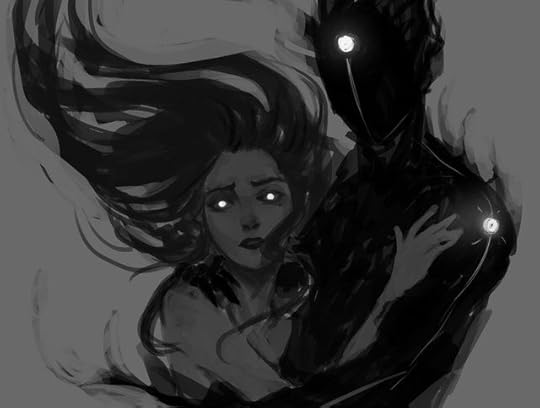
The Book That Finds You by Lisa Tuttle ★★★★★
“Does anything—like that—ever really end?”
Strong finish! Books, lust, fate, ghosts; all a little eldritch, a little soiled.

Two Brothers by Malcolm Devlin ★★★★☆
Well that was damn good and ominous. I'd love to read a longer version.

Seaside Town by Brian Evenson ★★★★☆
“For a moment he hesitated, wanting to understand what was happening, to give it a logical explanation. This turned out to be his undoing.”
A man unknowingly blunders unto a caste of bodythieves. Likely known to the locals, the hotel concierge tried to warn him but he didn’t speak French.
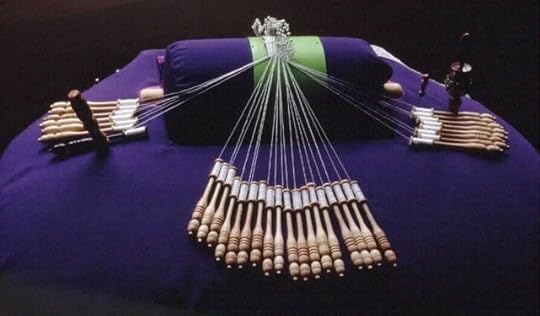
A Delicate Craft by D.P. Watt ★★★★☆
Wow, that takes me back. I feel like the last person on earth who knows how to bobbin lace. While reading I could hear the pleasant sound our wood bobbins made when my mother and I worked lace together.
Would you like to learn? 😈

Neithernor by Richard Gavin ★★★½☆
Anahit by Giacinto Scelsi is a twelve minute violin piece that sounds as if it’s written by forlorn extraterrestrial mosquitoes. Richard Gavin has written a paranormal break up story set to Anahit. It is a creative idea, emotional, but ultimately unsatisfying.
Music Link: https://itunes.apple.com/us/album/ana...

The Vault of Heaven by Helen Marshall ★★★½☆
Welcome back to the misogynistic late 60s. Today you will be watching a short trippy film collaboration between Dario Argento and David Lynch.

Least Light, Most Night by John Howard ★★★☆☆
It’s the Winter Solstice and an average guy is asked to participate in something extraordinary.

Seven Minutes in Heaven by Nadia Bulkin ★★★☆☆
“Christ the divine scarab... God bestows the gift of life unto those who have faith...”
Girl grows up in strange town with strange customs next to a dead town. This was set up to be great but just whimpered to nothing.

The Dying Season by Lynda E. Rucker ★★★☆☆
An artist finds her way out of a poisonous relationship.

Underground Economy by John Langan ★★★☆☆
Remember that crazy stripper friend you had? No? Well... maybe it's better that way.
A Change of Scene by Nina Allen ★★★☆☆
“The scars of some betrayals do not fade.”
A frenemies story that was exhausting to read.

Camp by David Nickle ★★½☆☆
Kayaking honeymoon gone wrong. I felt this story devoted itself to being weird and little else.

The Lake by Daniel Mills ★★☆☆☆
A nostalgic childhood summer story with ghostly elements that was too long.
Infestations by Michael Cisco ★★☆☆☆
I had a hard time keeping my eyes open for this ghost story with many tangents.
3.25 Average
March 4, 2017
I felt it needed more chills and less ambiguity.

September 7, 2018
Like all anthologies this was a hit-and-miss one for me. I'm not familiar with much of Aickman's work so I possibly may have enjoyed it more if I 'got' all the references. While the writing in all the stories was spot-on, there were four stand-outs for me that left me with that unsettled creeping sense of dread that I crave in short stories, without too much of my bewilderbeast showing.
Seaside Town - Brian Evenson. Very creepy, felt like the protagonist was in some sort of twilight zone.
Neithernor - Richard Gavin I'll never look at copper wire the same way again.
Two Brothers - Malcolm Devlin the only 5 star rating in the book, a dark twist on the boy-coming-of-age and patriarchal rights-of-passage theme.
The Book That Finds You - Lisa Tuttle A story about a reader who loves stories, and it's Lisa Tuttle so it was always going to be good.
Seaside Town - Brian Evenson. Very creepy, felt like the protagonist was in some sort of twilight zone.
Neithernor - Richard Gavin I'll never look at copper wire the same way again.
Two Brothers - Malcolm Devlin the only 5 star rating in the book, a dark twist on the boy-coming-of-age and patriarchal rights-of-passage theme.
The Book That Finds You - Lisa Tuttle A story about a reader who loves stories, and it's Lisa Tuttle so it was always going to be good.

May 18, 2016
Aickman is in my top handful of horror/weird authors, but calling his stories "horror" does them a disservice because people have too many preconcieved notions about what that entails. Aickman called his stories "strange stories." His writing is subtle, nebulous, unsettling and haunting, often long-term. He's probably the most "sophisticated" writer of horror I could name.
Aickman's writing isn't surreal or dream-like as is the case with a lot of weird fiction by prominent writers like Michael Cisco or Livia Llewellyn for example. No, it's written with more realism than otherwise. We mostly see everything that's going on in fairly plain language; however what we witness is increasingly puzzling. When the story ends we're left with more questions than answers and the dreaded implications are what horrifies us. Add in that there's typically multiple and conflicting interpretations of the story, and so we continue to turn it over in our minds, unsure what side to take. We're not sure quite how to digest it, and so it lingers and haunts.
Whenever I hear an author's writing has an "Aickman-esque atmosphere" I jump on it. It goes straight to the top of my to-read list. (Hint: Books published by Tartarus Press are a good place to look!) So I had to read this. Strantzas warns us in the opening paragraph of his introduction that Aickman's style is so idiosyncratic that it cannot truly be reproduced, so you shouldn't look for that here. Instead these stories will represent his lasting influence. I would agree with that, but there's a few stories here I could _almost_ have seen Aickman writing.
One thing I would say, which isn't a criticism of this collection and I can understand why it wasn't practical to do, but Aickman's stories gain their atmosphere as much from their content as their length typically. Most stories here are around 4-7k words, Aickman's usually start around 10k, and go up from there. But this collection would be far longer (not something I'd mind) or would have to have fewer authors if this was attempted.
Seaside Town - Brian Evenson - This certainly has that Aickman flavor of one feeling lost in an exotic, foreign town. Just enough unsettling hints and open-ended ambiguity to leave you wondering, with many possibilities. An excellent start to the collection. A man visits Europe with his domineering girlfriend, and stays alone in a seaside town in France, with some very strange nocturnal goings-on.
Neithernor - Richard Gavin - Given the author I knew this would be a great story, I was very impressed with his collection, "At Fear's Altar." This one leaves you wondering, and is one of the most "Aickman-esque" and it's more unsettling than the average here. An art critic discovers some of his long-lost cousin's sculptures in an obscure gallery, which are strangely inspired.
Least Light, Most Night - John Howard - A very strange one, somewhat more open-ended than others here, still satisfying. It has a very British, restrained, even lonely feel. A man visits the home of his boss on request and is invited to join in a very strange club.
Camp - David Nickle - Wow. First, I as a gay guy I fully understand the unsettling feeling of being in an extremely rural place, around people you're not sure you can trust. This was captured well here. In addition, this story brought to mind Aickman's story "Niemandswasser," also about a lake, with what I thought were subtle homosexual themes. Besides all of this, the story is very well-written besides and quietly sinister. A gay couple planning to kayak and camp on their honeymoon are invited to stay at an isolated camp with a friendly old couple -- a bad idea as it turns out.
A Delicate Craft - D.P. Watt - It's true this one has a weird twist at the end, and a sort of expectancy merely from being in this collection. But this one is far more touching and less unsettling than most of the others. One could even find the end to be humorous. A young Polish man, largely out of work befriends a kindly old woman who teaches him to knit, but isn't what she seems.
Seven Minutes in Heaven - Nadia Bulkin - Interesting entry here, different. It starts off with a near-Bradbury-esque nostalgic feel all about childhood, but by the end it's in a very different, dark place. I would say one of the least conventionally Aickman-esque stories, but it's extremely good in terms of it's realistic detail. A woman recalls growing up in her small town, and the ghost town nearby which she gradually learns about throughout her life.
Infestations - Michael Cisco - Cisco is an author I have come to appreciate more over time, and this is an excellent story. It's one of the more scary in the collection, with some genuinely creepy moments, and a Leiber-esque feel of urban dread. A woman returns to New York to sort out the effects of a dead friend, and to confront old ghosts.
The Dying Season - Lynda E. Rucker - I've been curious to read some of Rucker's stories for some time now, ever since I read reviews on Goodreads saying that her stories reminded some readers of Aickman. This one certainly does, it's very effective at generating that disorientating, lost feeling without overplaying it. It also saves most of it's weirdness for the end. A couple in a stormy relationship vacation at a seaside leisure park with cabins late in the season, where it seems only one other strange couple is staying.
A Discreet Music - Michael Wehunt - Another great story. Some parts of this one almost transcend the weird and have a bizarro feel. This is one of the most emotional in the collection. A man recently widowed tries to deal with a long-held guilt, and a very bizarre physical transformation.
Underground Economy - John Langan - Very entertaining read, I enjoy Langan's work but this was one of the least interesting stories I thought. It's amusing at first then takes a sinister turn. A nude dancer relates a strange experience at her nightclub, and a dancer who isn't at all what she appears.
The Vault of Heaven - Helen Marshall - This has a dry wit, bitter cynicism and a sophisticated implied horror. Still I felt the underpinning philosophy was more obscured than I would have liked. An English archaeologist arrives in a Greek island to curate a small museum, and gets involved with a strange local girl and learns what real beauty is.
Two Brothers - Malcolm Devlin - This story brilliantly (and in very creepy fashion) explores the sad subject of how people change as you grow up together, how they can change so much you lose your connection with them. It's got some pretty eerie moments and a nice setting. A boy tries to come to terms with his brother growing up fast, and growing apart.
The Lake - Daniel Mills - Wow, this story is was scary and actually got to me. I wouldn't say this one strongly exhibits a distinctly "Aickman atmosphere," but it's was so good I can forgive that, and it did haunt me, long after reading it. I expected no less, Mills' collection "The Lord Came at Twilight" was superb. After a swim at a lake goes wrong two friends are haunted by it for the rest of their lives.
A Change of Scene - Nina Allan - At 15,000~ words, this story is twice as long as most others here, which works since it's very character-driven. It's a sort of sequel to Aickman's "Ringing the Changes" and has a better feel for his work than the average here. Two widows who have been friends for years travel to a seaside town to vacation, a place that brings back memories best left alone.
The Book That Finds You - Lisa Tuttle - Not among my tip-top favorites, but it certainly has some memorably eerie moments. And anyone who loves books or obscure art will love it. A woman traces how the works of an obscure author enter into her life, and influenced it.
Aickman's writing isn't surreal or dream-like as is the case with a lot of weird fiction by prominent writers like Michael Cisco or Livia Llewellyn for example. No, it's written with more realism than otherwise. We mostly see everything that's going on in fairly plain language; however what we witness is increasingly puzzling. When the story ends we're left with more questions than answers and the dreaded implications are what horrifies us. Add in that there's typically multiple and conflicting interpretations of the story, and so we continue to turn it over in our minds, unsure what side to take. We're not sure quite how to digest it, and so it lingers and haunts.
Whenever I hear an author's writing has an "Aickman-esque atmosphere" I jump on it. It goes straight to the top of my to-read list. (Hint: Books published by Tartarus Press are a good place to look!) So I had to read this. Strantzas warns us in the opening paragraph of his introduction that Aickman's style is so idiosyncratic that it cannot truly be reproduced, so you shouldn't look for that here. Instead these stories will represent his lasting influence. I would agree with that, but there's a few stories here I could _almost_ have seen Aickman writing.
One thing I would say, which isn't a criticism of this collection and I can understand why it wasn't practical to do, but Aickman's stories gain their atmosphere as much from their content as their length typically. Most stories here are around 4-7k words, Aickman's usually start around 10k, and go up from there. But this collection would be far longer (not something I'd mind) or would have to have fewer authors if this was attempted.
Seaside Town - Brian Evenson - This certainly has that Aickman flavor of one feeling lost in an exotic, foreign town. Just enough unsettling hints and open-ended ambiguity to leave you wondering, with many possibilities. An excellent start to the collection. A man visits Europe with his domineering girlfriend, and stays alone in a seaside town in France, with some very strange nocturnal goings-on.
Neithernor - Richard Gavin - Given the author I knew this would be a great story, I was very impressed with his collection, "At Fear's Altar." This one leaves you wondering, and is one of the most "Aickman-esque" and it's more unsettling than the average here. An art critic discovers some of his long-lost cousin's sculptures in an obscure gallery, which are strangely inspired.
Least Light, Most Night - John Howard - A very strange one, somewhat more open-ended than others here, still satisfying. It has a very British, restrained, even lonely feel. A man visits the home of his boss on request and is invited to join in a very strange club.
Camp - David Nickle - Wow. First, I as a gay guy I fully understand the unsettling feeling of being in an extremely rural place, around people you're not sure you can trust. This was captured well here. In addition, this story brought to mind Aickman's story "Niemandswasser," also about a lake, with what I thought were subtle homosexual themes. Besides all of this, the story is very well-written besides and quietly sinister. A gay couple planning to kayak and camp on their honeymoon are invited to stay at an isolated camp with a friendly old couple -- a bad idea as it turns out.
A Delicate Craft - D.P. Watt - It's true this one has a weird twist at the end, and a sort of expectancy merely from being in this collection. But this one is far more touching and less unsettling than most of the others. One could even find the end to be humorous. A young Polish man, largely out of work befriends a kindly old woman who teaches him to knit, but isn't what she seems.
Seven Minutes in Heaven - Nadia Bulkin - Interesting entry here, different. It starts off with a near-Bradbury-esque nostalgic feel all about childhood, but by the end it's in a very different, dark place. I would say one of the least conventionally Aickman-esque stories, but it's extremely good in terms of it's realistic detail. A woman recalls growing up in her small town, and the ghost town nearby which she gradually learns about throughout her life.
Infestations - Michael Cisco - Cisco is an author I have come to appreciate more over time, and this is an excellent story. It's one of the more scary in the collection, with some genuinely creepy moments, and a Leiber-esque feel of urban dread. A woman returns to New York to sort out the effects of a dead friend, and to confront old ghosts.
The Dying Season - Lynda E. Rucker - I've been curious to read some of Rucker's stories for some time now, ever since I read reviews on Goodreads saying that her stories reminded some readers of Aickman. This one certainly does, it's very effective at generating that disorientating, lost feeling without overplaying it. It also saves most of it's weirdness for the end. A couple in a stormy relationship vacation at a seaside leisure park with cabins late in the season, where it seems only one other strange couple is staying.
A Discreet Music - Michael Wehunt - Another great story. Some parts of this one almost transcend the weird and have a bizarro feel. This is one of the most emotional in the collection. A man recently widowed tries to deal with a long-held guilt, and a very bizarre physical transformation.
Underground Economy - John Langan - Very entertaining read, I enjoy Langan's work but this was one of the least interesting stories I thought. It's amusing at first then takes a sinister turn. A nude dancer relates a strange experience at her nightclub, and a dancer who isn't at all what she appears.
The Vault of Heaven - Helen Marshall - This has a dry wit, bitter cynicism and a sophisticated implied horror. Still I felt the underpinning philosophy was more obscured than I would have liked. An English archaeologist arrives in a Greek island to curate a small museum, and gets involved with a strange local girl and learns what real beauty is.
Two Brothers - Malcolm Devlin - This story brilliantly (and in very creepy fashion) explores the sad subject of how people change as you grow up together, how they can change so much you lose your connection with them. It's got some pretty eerie moments and a nice setting. A boy tries to come to terms with his brother growing up fast, and growing apart.
The Lake - Daniel Mills - Wow, this story is was scary and actually got to me. I wouldn't say this one strongly exhibits a distinctly "Aickman atmosphere," but it's was so good I can forgive that, and it did haunt me, long after reading it. I expected no less, Mills' collection "The Lord Came at Twilight" was superb. After a swim at a lake goes wrong two friends are haunted by it for the rest of their lives.
A Change of Scene - Nina Allan - At 15,000~ words, this story is twice as long as most others here, which works since it's very character-driven. It's a sort of sequel to Aickman's "Ringing the Changes" and has a better feel for his work than the average here. Two widows who have been friends for years travel to a seaside town to vacation, a place that brings back memories best left alone.
The Book That Finds You - Lisa Tuttle - Not among my tip-top favorites, but it certainly has some memorably eerie moments. And anyone who loves books or obscure art will love it. A woman traces how the works of an obscure author enter into her life, and influenced it.

September 3, 2017
I found this book at the Necronomicon 2017 conference, and it called out to me. I was in the mood for weird, dark lit, and am also an Aickman fan. (If you don't know Robert Aickman, and he has little traction outside the UK, he was a 20th-century writer and editor. As a writer, he described his tales as "strange stories". I view them as supernatural or weird fiction, touching on the Gothic, gently building up a sense of unease: far removed from gory horror. He reminds me of the great M.R. James, except with an acidic sense of social and psychological commentary. As an editor, he published a series of ghost story collections which were very influential.)
Aickman's Heirs is a kind of Aickman tribute volume, a collection of stories aiming for the Aickman style and effect, often updated for modern times and situations.
Overall, it's a treat. If you like well written stories, dive in. If you're a fan of fantasy or horror, please do read this; the stories are a syllabus on understatement.
All but one story is short, circa 10-15 pages, and each offers a different perspective, so the reader can enjoy a great deal of creativity. Every story is a good short story, meaning (for me) focused and unpadded.
The anthology offers an interesting mix of themes. There are several based on personal transformation, sometimes physical, as they increase their engagement with fantasy. Many turn on memories related or revised. As with the source material, nearly all are about romance or friendship.
So many of the authors get Aickman's stinging prose down well. For example,
To the stories: I'll try to avoid spoilers.
“Neithernor” by Richard Gavin. One of my favorites. The curdled narrative voice is perfect. A fine eerie scene towards the end.
“Vault of Heaven” by Helen Marshall: also gets the mean narrator down well, with a touch of what might be cosmic horror.
“Seven Minutes in Heaven” by Nadia Bulkin. A reflection back on childhood that becomes something else. Also a nicely hinted alternate history. (I just met her at a reading; she's brilliant, and someone to watch.)
“Infestations” by Michael Cisco. The act of mourning and the power of place. More of Cisco's striking, unsettling style. For example, a quiet use of "they" to great effect (you'll see).
“Seaside Town” by Brian Evenson. Fine opener to the story, with a clueless point of view character who stumbles onto weirdness.
“Least Light, Most Night” by John Howard. Very muted encounter with a sect, and a hint of something larger.
“Camp” by David Nickle. An outdoor adventure that goes sideways. Always good to see gay characters in horror who aren't villains. (I'm still not sure about the title's pun.)
“A Delicate Craft” by D.P. Watt. Interesting focus on gendered labor and different forms of craft. Always good to see working-class and immigrant characters in horror.
“Drying Season” by Lynda E. Rucker. The portrayal of bad husband and wronged wife is too flat and programmatic.
“A Discreet Music” by Michael Wehunt. Mourning and love.
“Underground Economy” by John Langan. This felt like one of the most American stories, concerning strippers and the weird.
“Two Brothers” by Malcolm Devlin. Childhood and aging. Grim.
“The Lake” by Daniel Mills. Also about growing up, but more unsettling. One of the best in the book. (I'm a fan of this rising young writer)
“Change of Scene” by Nina Allan. Unusually long for this collection, and well worth it. It's a tribute to "Ringing the Changes", and fits that story's mix of stasis and dread. The last line sends the reader back through the story, but not in a trick ending way.
“The Book That Finds You” by Lisa Tuttle. One of my favorites, because it's about bibliophilia, and also very well done.
Overall: recommended.
Aickman's Heirs is a kind of Aickman tribute volume, a collection of stories aiming for the Aickman style and effect, often updated for modern times and situations.
Overall, it's a treat. If you like well written stories, dive in. If you're a fan of fantasy or horror, please do read this; the stories are a syllabus on understatement.
All but one story is short, circa 10-15 pages, and each offers a different perspective, so the reader can enjoy a great deal of creativity. Every story is a good short story, meaning (for me) focused and unpadded.
The anthology offers an interesting mix of themes. There are several based on personal transformation, sometimes physical, as they increase their engagement with fantasy. Many turn on memories related or revised. As with the source material, nearly all are about romance or friendship.
So many of the authors get Aickman's stinging prose down well. For example,
The place was part of a gated community, a little triangle of buildings full of apartments, some of which had motorized metal shutters that could be brought down at night, sealing you in like a tin of preserved meat. (5)Yes, some of these are very unpleasant characters.
It was his upturned flare of the nose, his dirty blue eyes flecked with green like an algae-stained pond. (121)
[O]ne thing my Cambridge years taught me - pleasant though they were in most respects - was that those of an academic mind are quick to judge; and, having judged, quicker still to slaughter. (147)
There were and are obvious advantages to my relationship with Cara [the narrator's wife].
Companionship always puts one more at east with one's own eccentricities. Alone, one's compulsions can become forces of anguish and alienation. Betrothed, they twist into endearing quicks in the eye of one's lover. This of course i so much easier than the futile quest to entirely remake one's self to fit an ideal. (24-5)
I ignored her, mostly, and I think she liked it. Most women do. (153)
To the stories: I'll try to avoid spoilers.
“Neithernor” by Richard Gavin. One of my favorites. The curdled narrative voice is perfect. A fine eerie scene towards the end.
“Vault of Heaven” by Helen Marshall: also gets the mean narrator down well, with a touch of what might be cosmic horror.
“Seven Minutes in Heaven” by Nadia Bulkin. A reflection back on childhood that becomes something else. Also a nicely hinted alternate history. (I just met her at a reading; she's brilliant, and someone to watch.)
“Infestations” by Michael Cisco. The act of mourning and the power of place. More of Cisco's striking, unsettling style. For example, a quiet use of "they" to great effect (you'll see).
“Seaside Town” by Brian Evenson. Fine opener to the story, with a clueless point of view character who stumbles onto weirdness.
“Least Light, Most Night” by John Howard. Very muted encounter with a sect, and a hint of something larger.
“Camp” by David Nickle. An outdoor adventure that goes sideways. Always good to see gay characters in horror who aren't villains. (I'm still not sure about the title's pun.)
“A Delicate Craft” by D.P. Watt. Interesting focus on gendered labor and different forms of craft. Always good to see working-class and immigrant characters in horror.
“Drying Season” by Lynda E. Rucker. The portrayal of bad husband and wronged wife is too flat and programmatic.
“A Discreet Music” by Michael Wehunt. Mourning and love.
“Underground Economy” by John Langan. This felt like one of the most American stories, concerning strippers and the weird.
“Two Brothers” by Malcolm Devlin. Childhood and aging. Grim.
“The Lake” by Daniel Mills. Also about growing up, but more unsettling. One of the best in the book. (I'm a fan of this rising young writer)
“Change of Scene” by Nina Allan. Unusually long for this collection, and well worth it. It's a tribute to "Ringing the Changes", and fits that story's mix of stasis and dread. The last line sends the reader back through the story, but not in a trick ending way.
“The Book That Finds You” by Lisa Tuttle. One of my favorites, because it's about bibliophilia, and also very well done.
Overall: recommended.

September 10, 2018
✭✭✭
“Seaside Town”, Brian Evenson ✭✭✭✭
“Neithernor”, Richard Gavin ✭✭✭
“Least Light, Most Night”, John Howard ✭✭½
“Camp”, David Nickle ✭✭✭
“A Delicate Craft”, D. P. Watt ✭✭✭
“Seven Minutes in Heaven”, Nadia Bulkin ✭✭✭½
“Infestations”, Michael Cisco ✭✭
“The Dying Season”, Lynda E. Rucker ✭✭✭✭½
“A Discreet Music”, Michael Wehunt ✭✭✭½
“Underground Economy”, John Langan ✭✭✭½
“The Vault of Heaven”, Helen Marshall ✭½
“Two Brothers”, Malcolm Devlin ✭✭✭
“The Lake”, Daniel Mills (2015) ✭✭✭
“A Change of Scene”, Nina Allan ✭✭✭½
“The Book That Finds You”, Lisa Tuttle ✭✭✭✭
“Seaside Town”, Brian Evenson ✭✭✭✭
“Neithernor”, Richard Gavin ✭✭✭
“Least Light, Most Night”, John Howard ✭✭½
“Camp”, David Nickle ✭✭✭
“A Delicate Craft”, D. P. Watt ✭✭✭
“Seven Minutes in Heaven”, Nadia Bulkin ✭✭✭½
“Infestations”, Michael Cisco ✭✭
“The Dying Season”, Lynda E. Rucker ✭✭✭✭½
“A Discreet Music”, Michael Wehunt ✭✭✭½
“Underground Economy”, John Langan ✭✭✭½
“The Vault of Heaven”, Helen Marshall ✭½
“Two Brothers”, Malcolm Devlin ✭✭✭
“The Lake”, Daniel Mills (2015) ✭✭✭
“A Change of Scene”, Nina Allan ✭✭✭½
“The Book That Finds You”, Lisa Tuttle ✭✭✭✭

May 28, 2015
Robert Aickman's stories were all about the irrational and the unknowable. The authors in this homage anthology put those same qualities to good use in fifteen intriguing tales of the unknowable's intrusion upon seemingly normal lives.
The writing is uniformly beautiful, although this reader will admit to finding a few of the stories frustratingly oblique. Regardless, there were many standouts for me, including Brian Evenson's "Seaside Town," which makes great use of the dream or nighttime logic that Aickmann reveled in; Michael Cisco's "Infestations," a surreal meditation on identity, voyeurism, loss, and insanity; John Langan's "Underground Economy," which mixes exotic dancers and insect mating rituals; Malcolm Devlin's "Two Brothers," which I found to be one of the more straightforward horror tales in the anthology, and as a result one of the most effective; Nina Allan's remarkable novelette "A Change of Scene," which does a great job of keeping the reader off-balance; and my favorite of all of them, Nadia Bulkin's "Seven Minutes in Heaven," in which our narrator discovers she's part of a terrible secret reflected in a children's game she used to play.
Bulkin's story is outstanding and well worthy of the Shirley Jackson Award nomination it received. As is AICKMAN'S HEIRS, which won the Shirley Jackson Award in the anthology category. Editor Simon Strantzas has created something special with this anthology, a rich compendium of extraordinary and strange tales that I hope will find the many readers it deserves.
The writing is uniformly beautiful, although this reader will admit to finding a few of the stories frustratingly oblique. Regardless, there were many standouts for me, including Brian Evenson's "Seaside Town," which makes great use of the dream or nighttime logic that Aickmann reveled in; Michael Cisco's "Infestations," a surreal meditation on identity, voyeurism, loss, and insanity; John Langan's "Underground Economy," which mixes exotic dancers and insect mating rituals; Malcolm Devlin's "Two Brothers," which I found to be one of the more straightforward horror tales in the anthology, and as a result one of the most effective; Nina Allan's remarkable novelette "A Change of Scene," which does a great job of keeping the reader off-balance; and my favorite of all of them, Nadia Bulkin's "Seven Minutes in Heaven," in which our narrator discovers she's part of a terrible secret reflected in a children's game she used to play.
Bulkin's story is outstanding and well worthy of the Shirley Jackson Award nomination it received. As is AICKMAN'S HEIRS, which won the Shirley Jackson Award in the anthology category. Editor Simon Strantzas has created something special with this anthology, a rich compendium of extraordinary and strange tales that I hope will find the many readers it deserves.

October 30, 2016
The first words you read in this book are from the editor: ‘Let’s get this over with, right off the bat: if you’ve picked up this book because you’re a fan of Robert Aickman’s fiction and are looking for more of the same, you’ve come to the wrong place.’ Oh. Right. Well, first of all, most of us won’t have ‘picked up’ this book, we’ll have paid for it. It seems disingenuous at best to mention Aickman eponymously if you weren’t looking to attract a demographic that wanted more of the same. You could always label it a strange fiction collection. Maybe I’m being unfair, or I’ve misunderstood, because the editor does goes on to say that this is because nobody can replicate his unique style. Fair enough. I still think it’s an odd way to pitch the book.
Delving into it we find a mixed bag, which occasionally serves to prove the editor’s point: Aickman was a one-off, and I’m not sure he’d be too impressed with all of his self-appointed ‘heirs’ although there’s some fantastic writing in here. There was one story which I found fully justified the title of the anthology (even though we’re not supposed to read anything into that). Least Night, Most Night by John Howard perfectly captured the unsettling suburban anxiety and otherworldliness of Aickman’s writing, the story leaving you disquieted and uneasy, though you’re not exactly sure why. This alone made the anthology worth reading for me. It’s a stunning piece of writing. There’s also a brave attempt to write Ringing The Changes 2 in A Change Of Scene by Nina Allan. One of Aickman’s strengths is his ability to leave us without a neat resolution, so it seems antithetical to revisit one of his most famous stories. Bringing us back to a location which we were glad to escape the first time, only serves to dispel the magic.
So I’d look on this anthology as an experiment. There are a lot of authors that mess about with powerful ingredients only to find themselves with blackened faces and bewildered expressions. Others successfully find the right alchemical blend. Worth a read, 3 stars from me.
Delving into it we find a mixed bag, which occasionally serves to prove the editor’s point: Aickman was a one-off, and I’m not sure he’d be too impressed with all of his self-appointed ‘heirs’ although there’s some fantastic writing in here. There was one story which I found fully justified the title of the anthology (even though we’re not supposed to read anything into that). Least Night, Most Night by John Howard perfectly captured the unsettling suburban anxiety and otherworldliness of Aickman’s writing, the story leaving you disquieted and uneasy, though you’re not exactly sure why. This alone made the anthology worth reading for me. It’s a stunning piece of writing. There’s also a brave attempt to write Ringing The Changes 2 in A Change Of Scene by Nina Allan. One of Aickman’s strengths is his ability to leave us without a neat resolution, so it seems antithetical to revisit one of his most famous stories. Bringing us back to a location which we were glad to escape the first time, only serves to dispel the magic.
So I’d look on this anthology as an experiment. There are a lot of authors that mess about with powerful ingredients only to find themselves with blackened faces and bewildered expressions. Others successfully find the right alchemical blend. Worth a read, 3 stars from me.

July 5, 2016
While this just won the 2015 Shirley Jackson award in its category, I think it's a bit of a mixed bag. I didn't go into it expecting Aickman tributes, but it did make me recall and appreciate more Aickman's best work.
There are writers here that I love and trust (and ones that I don't, but let's not worry about that). I can't remember where I've come across Brian Evenson's "Seaside Town" before, but it's a terrific and darkly funny story, with a surprising twist at the end that comes out of nowhere. And Evenson's clean, precise prose, and economic approach to exposition and atmosphere, invoke (well) Aickman himself. I love most of David Nickle's "Camp", with all the subtle tensions, though the ending seems rather unsatisfying to me. Helen Marshall's "Vault of Heaven" is also quite enjoyable (and Aickman-esque), though I think the stories in Hair Side, Flesh side are much stronger.
Most of the rest have interesting ideas, and try at least to maintain a kind of open-endedness and ambiguity that is admired in Aickman's best stories. I love ambiguous narratives, but I don't think they are easy to manage effectively; some of the stories here really don't work for me in that respect. The best Aickman stories are also very economical and effective in their scene-setting and expositions; many dark fiction writers in this collection (and elsewhere) seem to favor an almost indiscriminate piling on of extraneous detail, in my opinion.
I really liked the ideas behind Malcolm Devlin's "Two Brothers" and Nina Allan's "Change of Scene" (with its odd two-pronged ending), but both could (in my opinion) be much tighter.
There are writers here that I love and trust (and ones that I don't, but let's not worry about that). I can't remember where I've come across Brian Evenson's "Seaside Town" before, but it's a terrific and darkly funny story, with a surprising twist at the end that comes out of nowhere. And Evenson's clean, precise prose, and economic approach to exposition and atmosphere, invoke (well) Aickman himself. I love most of David Nickle's "Camp", with all the subtle tensions, though the ending seems rather unsatisfying to me. Helen Marshall's "Vault of Heaven" is also quite enjoyable (and Aickman-esque), though I think the stories in Hair Side, Flesh side are much stronger.
Most of the rest have interesting ideas, and try at least to maintain a kind of open-endedness and ambiguity that is admired in Aickman's best stories. I love ambiguous narratives, but I don't think they are easy to manage effectively; some of the stories here really don't work for me in that respect. The best Aickman stories are also very economical and effective in their scene-setting and expositions; many dark fiction writers in this collection (and elsewhere) seem to favor an almost indiscriminate piling on of extraneous detail, in my opinion.
I really liked the ideas behind Malcolm Devlin's "Two Brothers" and Nina Allan's "Change of Scene" (with its odd two-pronged ending), but both could (in my opinion) be much tighter.

June 17, 2022
A fitting tribute to an excellent author of strange stories. This is a quality anthology, and almost every story resonated with me in some way, my three favorites being Seaside Town (Brian Evenson), Neithornor (Richard Gavin), and The Dying Season (Lynda E. Rucker).
None of the stories here read like Aickman pastiche. Instead each author finds there own voice while drawing on Aickman’s sensibilities of the bizarre and unexplainable, of things hidden just out of view. If you are familiar with Aickman, it’s great to see how his work has reverberated through the literary unconscious of weird fiction. I for one hope that authors continue to pick up on those echoes and that their ringing never fades.
None of the stories here read like Aickman pastiche. Instead each author finds there own voice while drawing on Aickman’s sensibilities of the bizarre and unexplainable, of things hidden just out of view. If you are familiar with Aickman, it’s great to see how his work has reverberated through the literary unconscious of weird fiction. I for one hope that authors continue to pick up on those echoes and that their ringing never fades.

July 10, 2016
I'm a huge fan of Robert Aickman's work and was curious to see what an anthology of modern writers working to one degree or another under his influence would be like. My favorite tales here are Lisa Tuttle's and John Langan's, both writers whose work I enjoy. Lisa is an old friend too, so she and I have traded Aickman enthusiasms for many years. Far too many of the other stories in this book, however, are missing the essential frisson that makes a ghost story (or a strange story, to use Aickman's term) work, although most are well written and quite readable. The strength of Aickman's best stories lies, of course, in what goes unsaid and he, better than any other writer I know, made the shape of unspeakable things in the spaces between his words. The "why" of his plots is often unspoken and the exact nature of his characters' fates defies concrete exposition. By contrast, too many of the stories in this anthology arise from predictable "whys," nostalgia, lost childhoods, grief, and the outcomes are either unexciting or too certain to put them in the same haunted library with, say, "The Trains" or even "Growing Boys."
Finally, a minor quibble with publishing generally these days and especially e-books: there are a fair number of typos, missing words, and other minor problems with the text. In writing that depends so strongly on the establishment of a mood, the errors are especially glaring.
Finally, a minor quibble with publishing generally these days and especially e-books: there are a fair number of typos, missing words, and other minor problems with the text. In writing that depends so strongly on the establishment of a mood, the errors are especially glaring.

December 16, 2020
Yet another fantastic collection from Undertow! The stories collected here by Simon Strantzas are all (big surprise) indebted to some degree to the writing of Robert Aickman, but as Strantzas says in his introduction, Aickman's writing is inimitable. So what we're presented with here is a family of stories which all have that same quiet weirdness and sudden turning to the uncanny that he was known for, all in other authors' voices. And it's great!
The collection houses authors I love (Cisco, Watt, Wehunt, Langan, and Evenson), authors whose work I've wanted to look into (Bulkin, Gavin, Marshall, Rucker) and those I've not heard of previously (the rest). All of them wrote some fantastic entries, and I'm hard-pressed to pick a favorite. Almost all of them were very good or better, and the rest were 'merely' good. I'd read the stories by Watt, Wehunt, and Langan previously, and in fact I skipped Langan's this time 'round as I just recently read it in his fantastic newest collection. Everything here was original to this publication.
Long story short, if you're into the quiet weird and uncanniness of authors like Aickman, you owe it to yourself to check out the authors collected here.
The collection houses authors I love (Cisco, Watt, Wehunt, Langan, and Evenson), authors whose work I've wanted to look into (Bulkin, Gavin, Marshall, Rucker) and those I've not heard of previously (the rest). All of them wrote some fantastic entries, and I'm hard-pressed to pick a favorite. Almost all of them were very good or better, and the rest were 'merely' good. I'd read the stories by Watt, Wehunt, and Langan previously, and in fact I skipped Langan's this time 'round as I just recently read it in his fantastic newest collection. Everything here was original to this publication.
Long story short, if you're into the quiet weird and uncanniness of authors like Aickman, you owe it to yourself to check out the authors collected here.
September 13, 2026
Solid anthology. Kudos to the editor for taking the approach of authors influenced by Aickman and how he influenced them, rather than trying to replicate his work. A lot of authors here to keep an eye out for, and who are still writing.

June 10, 2018
So many of my fave contemporary horror authors creating fascinating characters and situations. Unfortunately, too many arrive at clunky, unnatural, purposefully ambiguous endings that erase the charm of what came previously in the story. Still some nice work, though.

June 27, 2016
This anthology just won the Shirley Jackson award for best anthology. It is that good.
I am not a Robert Aickman fan, but the quality of fiction produced by those who feel his influence is astounding. I will need to dig out my Aickman collections and reread them. Maybe it'll click.
In the meantime, buy this anthology. Show some actual support for the small presses you claim to love. This anthology will 'f**k your couch'!
I am not a Robert Aickman fan, but the quality of fiction produced by those who feel his influence is astounding. I will need to dig out my Aickman collections and reread them. Maybe it'll click.
In the meantime, buy this anthology. Show some actual support for the small presses you claim to love. This anthology will 'f**k your couch'!

January 6, 2022
A mixed bag of a collection here — some stories fall flat on their face, coasting on atmospheric prose and ambiguity to shore up what is an ultimately substanceless narrative. Others feel exemplary of the genre, balancing mood, tone and suspense perfectly to build upon Aickman's own work.
Also, why is it that both stories which feature gay (or otherwise queer) men prominently conclude with those men turning into birds?
Also, why is it that both stories which feature gay (or otherwise queer) men prominently conclude with those men turning into birds?

July 29, 2015
Originally published at Risingshadow.
Aickman's Heirs (edited by Simon Strantzas) is an impressive and outstanding anthology of strange stories to readers who love the weirder side of speculative fiction and want to be mesmerised by skillful storytelling and quiet horror. On the pages of this anthology, you'll find fascinating strangeness and exquisite storytelling seasoned with beautiful literary prose.
Robert Aickman and his stories are doubtlessly known to many readers of strange fiction, but if there are readers out there who haven't heard of Robert Aickman, I can mention that Robert Aickman is one of the most significant and influential masters of strange fiction. His stories are subtly strange and enthralling, because in them, reality blends and intertwines with strangeness in a captivating way. His stories have cast a long shadow over many weird fiction authors and they still continue to influence new authors.
Robert Aickman has written only 48 stories, but they have established him as one of the undeniable masters of weird fiction. They perfectly encapsulate the essence of quiet horror and literary strange fiction, because they're atmospheric and well written stories.
The stories in this anthology are not imitations or emulations of Robert Aickman's writing style, but magnificent homages to him and his writing skills. Each of the stories offers something unique and thrilling to readers, because they're strange, intriguing and unsettling stories about different themes and issues ranging from difficult relationships to vacation trips gone wrong. What unites them is the authors' love and respect for Aickman's stories.
I'm glad I had an opportunity to read and review Aickman's Heirs, because it's excellent in every sense of the word. In my opinion, this kind of beautifully written and unsettling quiet horror is the best kind of fiction for speculative fiction readers who appreciate refined storytelling and haunting stories.
This anthology contains the following fifteen stories:
- Seaside Town by Brian Evenson
- Neithornor by Richard Gavin
- Least Light, Most Night by John Howard
- Camp by David Nickle
- A Delicate Craft by D. P. Watt
- Seven Minutes in Heaven by Nadia Bulkin
- Infestations by Michael Cisco
- The Dying Season by Lynda E. Rucker
- A Discreet Music by Michael Wehunt
- Underground Economy by John Langan
- The Vault of Heaven by Helen Marshall
- Two Brothers by Malcolm Devlin
- The Lake by Daniel Mills
- A Change of Scene by Nina Allan
- The Book That Finds You by Lisa Tuttle
Simon Strantzas has perfectly succeeded in editing this anthology, because it reflects the impact that Robert Aickman has had on the authors. It's easy to see how much Aickman's stories have affected the authors, because they write subtly strange fiction that resonates with quiet and unsettling power.
I was very impressed by all of these stories and their Aickmanesque qualities. I found no faults in any of them, because all of them were perfect and beautifully told stories.
Here's more information about the stories and my thoughts about them:
Seaside Town by Brian Evenson:
- A well written story about James Hovell and his lady friend, Miss Pickaver, who decide to take a vacation in Europe. They arrive in a French seaside town and soon Miss Pickaver leaves James there alone, because she has other plans. James experiences strange things when he is left alone.
- An excellent and atmospheric story in which the author gradually awakens feelings of dread in the reader as the protagonist experiences strange things.
- This story intriguingly paves the way for the other stories.
Neithornor by Richard Gavin:
- A story about a man who accidentally comes upon the name of his cousin when he's on assignment and visits a tiny art gallery. He looks at the pieces in the gallery and finds out that they're part of a series called Neithornor.
- A fascinating and beautifully written piece of stange and unsettling fiction that will delight readers of strange stories.
- This story is one of the author's best and most impressive stories, because it gives readers a thrilling glimpse into his strange fiction.
Least Light, Most Night by John Howard:
- In this story, Mr. Thomas accepts an invitation from his co-worker, Mr. Bentley, to attend a social gathering.
- An intriguingly strange story that has a good atmosphere.
- When I read this story, I said to myself that I have to read more stories written by this author, because he is a talented author.
Camp by David Nickle:
- A well told story about a newlywed gay couple on a camping trip in the Canadian wilderness.
- The author writes fluently about the protagonists - James and Paul - and their relationship.
- This is one of the best and most gripping stories I've read during the recent months. There was something in this story that slightly reminded me of Richard Gavin's "The Abject".
- I haven't read any of the author's books yet, but I will take a look at them as soon as possible, because I enjoyed this story.
A Delicate Craft by D. P. Watt:
- A well written story about a Polish immigrant worker and his new and slightly unlikely hobby.
- This story is a fine example of the author's writing skills and subtle command of English language.
- The author writes fascinatingly about the protagonist and the elderly woman, Agnes.
Seven Minutes in Heaven by Nadia Bulkin:
- A fascinating and atmospheric story about a small American town with a secret.
- It was intriguing to read about the protagonist and her fascination with the town, Manfield, where an industrial accident had killed all the people.
- I liked the way the author wrote about the protagonist and the happenings, because she had created a good story.
Infestations by Michael Cisco:
- A powerful story about a woman who returns to her home town to clean and pack up the apartment of a deceased family friend.
- The author writes excellently about the woman's struggle with her feelings and memories.
- Because Michael Cisco's stories have been on my reading list for a long time, I'm glad I could read this story, because it gave a glimpse into his writing skills (I definitely have to read more of his stories).
The Dying Season by Lynda E. Rucker:
- A story about Sylvia and John who stay at a leisure park where John used to spend his childhood holidays. During their stay, they meet another couple.
- The author writes intriguingly about Sylvia and John's relationship.
- A well written and memorable story with a haunting atmosphere.
A Discreet Music by Michael Wehunt:
- A well written and mesmerising story about an aging man, Hiram, who has to confront widowhood. He visits his old lover, Jim, and tries to sort out his feelings.
- This excellent and impressive story about a metamorphosis will linger on your mind for a long time after you finish reading it.
- I haven't read many stories by Michael Wehunt yet, but I intend to take a more thorough look at his works, because I was impressed by this story.
Underground Economy by John Langan:
- A fascinatingly strange story about two strippers and a strip club.
- A refreshingly modern and a bit different kind of a story that has a faint touch of David Lynch. To be honest, I never would've expected to find this kind of a story in an Aickmanesque anthology.
- This story is a good example of John Langan's imagination and potent writing skills.
The Vault of Heaven by Helen Marshall:
- This is a fascinating story about a British archaeologist who works in Greece.
- This story has a distinct and wonderful feel of atmosphere and style. The protagonist's relationship with Pelagia is described well.
- An excellent and beautifully written story that highlights the author's ability to write mesmerising strange fiction.
Two Brothers by Malcolm Devlin:
- An excellently written story about two brothers who have different lives. William, who has stayed at home, awaits Stephen's return from a boarding school. Stephen is a year older than William.
- I enjoyed this story very much, because it's a fascinatingly unsettling and memorable story without any kind of sentimentality.
- I'll have to keep an eye out for Malcolm Devlin, because this story is amazing.
The Lake by Daniel Mills:
- A story about three boys - Samuel, Jason and Nick - who live in a small town and spend time together, but gradually drift apart.
- This is a beautifully written and subtly unsettling growing up story with a brilliantly disturbing atmosphere. The author tells what happens to the boys and how past events shape their lives in a subtle yet powerful way.
- I was very impressed by this story, because the author excels at writing memorable and powerful Aickmanesque fiction.
A Change of Scene by Nina Allan:
- An unsettling story about a woman, Iris, who joins an old friend of hers, Phrynne, on a vacation that goes wrong.
- An original and beautifully written story that will linger on your mind. This story has plenty of quiet power that will captivate many readers.
- The author writes excellently about the two women and their friendship. I was impressed by her way of writing about their lives.
- This is one of the finest and strongest Aickmanesque stories I've read in a while. Nina Allan creates a perfect atmosphere and delivers a story that is filled with quiet horror and subtle nuances.
The Book That Finds You by Lisa Tuttle:
- An intriguing story about a woman and her obsession with a weird fiction author.
- An excellent and atmospheric tale in which the author masterfully weaves many different elements and delivers an enthralling reading experience to her readers.
- I've read several this kind of stories, but this story is definitely in a league of its own when compared to other stories, because it's an effective story with perfect prose.
The characterisation in these stories is excellent, because all of the characters are interesting and realistic. It's great that each of the authors has invested time in making their characters intriguing and are capable of writing about them in a compelling way.
I was impressed by the authors' skillful way of writing about their protagonists' feelings and relationships with different people. There was something wonderfully touching, unsettling and haunting about their feelings and relationships that intrigued me.
These stories feature gripping and multilayered storytelling which will attract and impress many readers. Some of the stories have quite a lot of depth and you'll get more out of them during a second reading, because you've had an opportunity to think about their contents.
I was charmed by how easily and fluently the authors delivered moments of dread, unease, grief and regret. All of the stories were captivating and memorable, because the authors had written excellent and nuanced stories in which the atmosphere gradually developed and deepened to an intense level of enthrallment.
The cover image by Yaroslav Gerzhedovich looks stunningly beautiful. It exudes a wonderful sense of strangeness and mystery.
Aickman's Heirs is a unique anthology of fifteen stories that pay homage to Robert Aickman's strange, subtle and unsettling stories. It contains beautifully written Aickmanesque stories with an emphasis on unsettling strangeness, creepy atmosphere and quiet horror. If you're looking for something that will captivate and thrill you, Aickman's Heirs will be of interest to you. It's one of the best and most impressive anthologies of the recent years, so please treat yourself to a captivating and haunting reading experience.
Highly recommended!
Aickman's Heirs (edited by Simon Strantzas) is an impressive and outstanding anthology of strange stories to readers who love the weirder side of speculative fiction and want to be mesmerised by skillful storytelling and quiet horror. On the pages of this anthology, you'll find fascinating strangeness and exquisite storytelling seasoned with beautiful literary prose.
Robert Aickman and his stories are doubtlessly known to many readers of strange fiction, but if there are readers out there who haven't heard of Robert Aickman, I can mention that Robert Aickman is one of the most significant and influential masters of strange fiction. His stories are subtly strange and enthralling, because in them, reality blends and intertwines with strangeness in a captivating way. His stories have cast a long shadow over many weird fiction authors and they still continue to influence new authors.
Robert Aickman has written only 48 stories, but they have established him as one of the undeniable masters of weird fiction. They perfectly encapsulate the essence of quiet horror and literary strange fiction, because they're atmospheric and well written stories.
The stories in this anthology are not imitations or emulations of Robert Aickman's writing style, but magnificent homages to him and his writing skills. Each of the stories offers something unique and thrilling to readers, because they're strange, intriguing and unsettling stories about different themes and issues ranging from difficult relationships to vacation trips gone wrong. What unites them is the authors' love and respect for Aickman's stories.
I'm glad I had an opportunity to read and review Aickman's Heirs, because it's excellent in every sense of the word. In my opinion, this kind of beautifully written and unsettling quiet horror is the best kind of fiction for speculative fiction readers who appreciate refined storytelling and haunting stories.
This anthology contains the following fifteen stories:
- Seaside Town by Brian Evenson
- Neithornor by Richard Gavin
- Least Light, Most Night by John Howard
- Camp by David Nickle
- A Delicate Craft by D. P. Watt
- Seven Minutes in Heaven by Nadia Bulkin
- Infestations by Michael Cisco
- The Dying Season by Lynda E. Rucker
- A Discreet Music by Michael Wehunt
- Underground Economy by John Langan
- The Vault of Heaven by Helen Marshall
- Two Brothers by Malcolm Devlin
- The Lake by Daniel Mills
- A Change of Scene by Nina Allan
- The Book That Finds You by Lisa Tuttle
Simon Strantzas has perfectly succeeded in editing this anthology, because it reflects the impact that Robert Aickman has had on the authors. It's easy to see how much Aickman's stories have affected the authors, because they write subtly strange fiction that resonates with quiet and unsettling power.
I was very impressed by all of these stories and their Aickmanesque qualities. I found no faults in any of them, because all of them were perfect and beautifully told stories.
Here's more information about the stories and my thoughts about them:
Seaside Town by Brian Evenson:
- A well written story about James Hovell and his lady friend, Miss Pickaver, who decide to take a vacation in Europe. They arrive in a French seaside town and soon Miss Pickaver leaves James there alone, because she has other plans. James experiences strange things when he is left alone.
- An excellent and atmospheric story in which the author gradually awakens feelings of dread in the reader as the protagonist experiences strange things.
- This story intriguingly paves the way for the other stories.
Neithornor by Richard Gavin:
- A story about a man who accidentally comes upon the name of his cousin when he's on assignment and visits a tiny art gallery. He looks at the pieces in the gallery and finds out that they're part of a series called Neithornor.
- A fascinating and beautifully written piece of stange and unsettling fiction that will delight readers of strange stories.
- This story is one of the author's best and most impressive stories, because it gives readers a thrilling glimpse into his strange fiction.
Least Light, Most Night by John Howard:
- In this story, Mr. Thomas accepts an invitation from his co-worker, Mr. Bentley, to attend a social gathering.
- An intriguingly strange story that has a good atmosphere.
- When I read this story, I said to myself that I have to read more stories written by this author, because he is a talented author.
Camp by David Nickle:
- A well told story about a newlywed gay couple on a camping trip in the Canadian wilderness.
- The author writes fluently about the protagonists - James and Paul - and their relationship.
- This is one of the best and most gripping stories I've read during the recent months. There was something in this story that slightly reminded me of Richard Gavin's "The Abject".
- I haven't read any of the author's books yet, but I will take a look at them as soon as possible, because I enjoyed this story.
A Delicate Craft by D. P. Watt:
- A well written story about a Polish immigrant worker and his new and slightly unlikely hobby.
- This story is a fine example of the author's writing skills and subtle command of English language.
- The author writes fascinatingly about the protagonist and the elderly woman, Agnes.
Seven Minutes in Heaven by Nadia Bulkin:
- A fascinating and atmospheric story about a small American town with a secret.
- It was intriguing to read about the protagonist and her fascination with the town, Manfield, where an industrial accident had killed all the people.
- I liked the way the author wrote about the protagonist and the happenings, because she had created a good story.
Infestations by Michael Cisco:
- A powerful story about a woman who returns to her home town to clean and pack up the apartment of a deceased family friend.
- The author writes excellently about the woman's struggle with her feelings and memories.
- Because Michael Cisco's stories have been on my reading list for a long time, I'm glad I could read this story, because it gave a glimpse into his writing skills (I definitely have to read more of his stories).
The Dying Season by Lynda E. Rucker:
- A story about Sylvia and John who stay at a leisure park where John used to spend his childhood holidays. During their stay, they meet another couple.
- The author writes intriguingly about Sylvia and John's relationship.
- A well written and memorable story with a haunting atmosphere.
A Discreet Music by Michael Wehunt:
- A well written and mesmerising story about an aging man, Hiram, who has to confront widowhood. He visits his old lover, Jim, and tries to sort out his feelings.
- This excellent and impressive story about a metamorphosis will linger on your mind for a long time after you finish reading it.
- I haven't read many stories by Michael Wehunt yet, but I intend to take a more thorough look at his works, because I was impressed by this story.
Underground Economy by John Langan:
- A fascinatingly strange story about two strippers and a strip club.
- A refreshingly modern and a bit different kind of a story that has a faint touch of David Lynch. To be honest, I never would've expected to find this kind of a story in an Aickmanesque anthology.
- This story is a good example of John Langan's imagination and potent writing skills.
The Vault of Heaven by Helen Marshall:
- This is a fascinating story about a British archaeologist who works in Greece.
- This story has a distinct and wonderful feel of atmosphere and style. The protagonist's relationship with Pelagia is described well.
- An excellent and beautifully written story that highlights the author's ability to write mesmerising strange fiction.
Two Brothers by Malcolm Devlin:
- An excellently written story about two brothers who have different lives. William, who has stayed at home, awaits Stephen's return from a boarding school. Stephen is a year older than William.
- I enjoyed this story very much, because it's a fascinatingly unsettling and memorable story without any kind of sentimentality.
- I'll have to keep an eye out for Malcolm Devlin, because this story is amazing.
The Lake by Daniel Mills:
- A story about three boys - Samuel, Jason and Nick - who live in a small town and spend time together, but gradually drift apart.
- This is a beautifully written and subtly unsettling growing up story with a brilliantly disturbing atmosphere. The author tells what happens to the boys and how past events shape their lives in a subtle yet powerful way.
- I was very impressed by this story, because the author excels at writing memorable and powerful Aickmanesque fiction.
A Change of Scene by Nina Allan:
- An unsettling story about a woman, Iris, who joins an old friend of hers, Phrynne, on a vacation that goes wrong.
- An original and beautifully written story that will linger on your mind. This story has plenty of quiet power that will captivate many readers.
- The author writes excellently about the two women and their friendship. I was impressed by her way of writing about their lives.
- This is one of the finest and strongest Aickmanesque stories I've read in a while. Nina Allan creates a perfect atmosphere and delivers a story that is filled with quiet horror and subtle nuances.
The Book That Finds You by Lisa Tuttle:
- An intriguing story about a woman and her obsession with a weird fiction author.
- An excellent and atmospheric tale in which the author masterfully weaves many different elements and delivers an enthralling reading experience to her readers.
- I've read several this kind of stories, but this story is definitely in a league of its own when compared to other stories, because it's an effective story with perfect prose.
The characterisation in these stories is excellent, because all of the characters are interesting and realistic. It's great that each of the authors has invested time in making their characters intriguing and are capable of writing about them in a compelling way.
I was impressed by the authors' skillful way of writing about their protagonists' feelings and relationships with different people. There was something wonderfully touching, unsettling and haunting about their feelings and relationships that intrigued me.
These stories feature gripping and multilayered storytelling which will attract and impress many readers. Some of the stories have quite a lot of depth and you'll get more out of them during a second reading, because you've had an opportunity to think about their contents.
I was charmed by how easily and fluently the authors delivered moments of dread, unease, grief and regret. All of the stories were captivating and memorable, because the authors had written excellent and nuanced stories in which the atmosphere gradually developed and deepened to an intense level of enthrallment.
The cover image by Yaroslav Gerzhedovich looks stunningly beautiful. It exudes a wonderful sense of strangeness and mystery.
Aickman's Heirs is a unique anthology of fifteen stories that pay homage to Robert Aickman's strange, subtle and unsettling stories. It contains beautifully written Aickmanesque stories with an emphasis on unsettling strangeness, creepy atmosphere and quiet horror. If you're looking for something that will captivate and thrill you, Aickman's Heirs will be of interest to you. It's one of the best and most impressive anthologies of the recent years, so please treat yourself to a captivating and haunting reading experience.
Highly recommended!

August 13, 2025
This was, as with most short story collections I've read, a mix of some that were quite good and others that were decidedly less so. Where it stood out, I thought, was being true to the premise that, stylistically at least, the stories would be reminiscent of the work of Robert Aickman. Kudos to the editor, Simon Strantzas - I thought the collection lived up to that standard to a degree not often seen. I'd read some collection of short stories recently which was billed as being inspired by Shirley Jackson. Well, slapping the name "Shirley Jackson" on a cover is undoubtedly an effective means of selling books (it roped me in!) but with the exception of one pretty good story by Elizabeth Hand, I thought the rest of the stories had virtually no discernable connection to Shirley Jackson. Thankfully, "Aickman's Heirs" doesn't suffer that fate. You'll definitely be reminded of the writing of Robert Aickman.
That being said, I'm not a huge Aickman fan. Almost always, I'll begin a story of his that's typically filled with a growing sense of dread and I'll be thinking, "Oooohhh, THIS is going to be good" - and it usually just meanders off into the sunset with nothing resolved or revealed. You never find out what the heck was going on. If you're expecting a plot to reach a boiling point and some monster of one sort or another to finally appear on the scene, Aickman's probably not going to be your favorite writer. Nonetheless, the man could certainly write - maybe I'll keep on reading and discover stories of his that appeal to my tastes a bit more.
I didn't bother reading the John Langan story in this collection (he's on my "do NOT read" list after "The Fisherman"), but of the remainder, I thought the stories by Nina Allen and Lisa Tuttle were easily the best - and, until I read this collection, I was completely unfamiliar with the work of either of these two talented writers. Now I plan on reading more from each of them, so it turns out that, when all is said and done, it may have been worth slogging through some mediocre stories that end up going nowhere to discover two authors worth reading.
That being said, I'm not a huge Aickman fan. Almost always, I'll begin a story of his that's typically filled with a growing sense of dread and I'll be thinking, "Oooohhh, THIS is going to be good" - and it usually just meanders off into the sunset with nothing resolved or revealed. You never find out what the heck was going on. If you're expecting a plot to reach a boiling point and some monster of one sort or another to finally appear on the scene, Aickman's probably not going to be your favorite writer. Nonetheless, the man could certainly write - maybe I'll keep on reading and discover stories of his that appeal to my tastes a bit more.
I didn't bother reading the John Langan story in this collection (he's on my "do NOT read" list after "The Fisherman"), but of the remainder, I thought the stories by Nina Allen and Lisa Tuttle were easily the best - and, until I read this collection, I was completely unfamiliar with the work of either of these two talented writers. Now I plan on reading more from each of them, so it turns out that, when all is said and done, it may have been worth slogging through some mediocre stories that end up going nowhere to discover two authors worth reading.

August 5, 2017
A superior anthology collection of short stories all paying tribute to the influence of Robert Aickman. Aickman's "strange stories" managed to convey an unparalleled sense of the eerie and unsettled that lurked beneath the surface of everyday life and, with their equivocal and opaque endings, he managed to give us some of the 20th Century's most wonderfully surreal and entertaining weird fiction. Simon Strantzas has done a masterful job of putting together an incredibly solid line up of authors all of whom put out work that clearly owes a debt to Aickman but none of which is slavish pastiche. As with all mixed author collections, your mileage may vary depending on the tale but real stand outs for me were: Seaside Town by Brian Evenson - a man is cajoled to go on a foreign vacation with his lady friend and things get weird - Evenson is always a treat to read and this was no exception; Neithernor by Richard Gavin - a man comes across unusual artwork by a distant cousin and decides to go meet the artist; Least Light, Most Night by John Howard - a man makes the mistake of accepting a social invitation from a co-worker; The Dying Season by Linda Rucker - a couple staying in a sort of camp ground make the mistake of socializing with another couple that they meet; Two Brothers by Malcom Devlin - Young Stephen sees how much his older brother has been changed by going away to boarding school; The Lake by Daniel Mills - teen friends are irrevocably changed by the events of a single day. Highly recommended to fans of Aickman and to anyone with an interest in weird fiction.

November 13, 2019
I’m not familiar with Mr. Aickman’s work. The stories in this collection are inspired by it so their not tribute pieces. Those bits acknowledged, I’m interested in his stories and quite pleased with this collection. I think this is a collection that anyone could enjoy.
The one dud, The Lake, read more like a romance than a weird tale and was flat for the most part. The remainder all have that sense of the weird to them. Not horror or gore but a dash of terror is nested inside all of them.
The writing is top notch. Often I get absorbed in the story and plot which ends up overshadowing the craft of writing. Not in this collection.
The opening and closing tales are great placement choices. Michael Cisco’s Infestations & Lynda E. Rucker’s The Dying Season are excellent. They draw out the panic and confusion experienced by normalcy being bent and routine expectations being contaminated.
The one dud, The Lake, read more like a romance than a weird tale and was flat for the most part. The remainder all have that sense of the weird to them. Not horror or gore but a dash of terror is nested inside all of them.
The writing is top notch. Often I get absorbed in the story and plot which ends up overshadowing the craft of writing. Not in this collection.
The opening and closing tales are great placement choices. Michael Cisco’s Infestations & Lynda E. Rucker’s The Dying Season are excellent. They draw out the panic and confusion experienced by normalcy being bent and routine expectations being contaminated.
July 7, 2021
Some years ago I was doing some reading on Zen - where the author remarked something along the lines of if you understood Zen, you couldn't talk about it - it had to be experienced. My wife has told me for years I don't do well with subtlety...which is, perhaps, why I had difficulty with these stories. I've read Aickman, and freely confess I don't always understand him - my favorite story "Pages from a Young Girl's Journal" - which details a young woman's descent into vampirism while on a vacation in Italy with her parents....
Anyway - all the stories in this volume are well crafted....but all left me feeling...nothing. As with the works of Aickman himself - I just don't "get" what these authors were trying to say.....
Anyway - all the stories in this volume are well crafted....but all left me feeling...nothing. As with the works of Aickman himself - I just don't "get" what these authors were trying to say.....

September 10, 2026
I had thought that being the only person on earth that just doesn't get Robert Aickman or the almost fanatical love much of his readership seems to hold for his writing, that maybe this book of stories by writers that must surely be attempting to emulate his style at least a little(even though we're told that's actually not the case) may actually turn out to be better than Aickman's own efforts. At least it's worth a try isn't it?
Nope. Like Aickman himself, the writers manage to write stories that are just barely OK-ish. Just barely the right side of actual tedium. But not by much.
I'm soo done with Aickman, and with his heirs too it would seem if this offering is anything to go by.
(I feel better now)
(I feel like I can breathe again)
Nope. Like Aickman himself, the writers manage to write stories that are just barely OK-ish. Just barely the right side of actual tedium. But not by much.
I'm soo done with Aickman, and with his heirs too it would seem if this offering is anything to go by.
(I feel better now)
(I feel like I can breathe again)

March 5, 2024
This is an exceptional anthology of "strange stories". The wealth of brilliant writing contained within the book's covers is immense. I loved every story so it was difficult picking just a few, but some stood out and got big stars in the margins of my notebook.
~The Book That Finds You by Lisa Tuttle ⭐
~A Change Of Scene by Nina Allen ⭐
~A Delicate Craft by D.P. Watt ⭐
~Underground Economy by John Langan ⭐
~Neithernor by Richard Gavin (WOW)
~Seaside Town by Brian Evanson
~The Lake by Daniel Mills
This is another book by Undertow Publications and I highly recommend it for those who love the strange.
~The Book That Finds You by Lisa Tuttle ⭐
~A Change Of Scene by Nina Allen ⭐
~A Delicate Craft by D.P. Watt ⭐
~Underground Economy by John Langan ⭐
~Neithernor by Richard Gavin (WOW)
~Seaside Town by Brian Evanson
~The Lake by Daniel Mills
This is another book by Undertow Publications and I highly recommend it for those who love the strange.

September 8, 2017
Robert Aickman has his own unique brand of story that cannot be mimicked. Within this anthology are not simple pastiches, but stories, unsettling in their own right, that borrow some of the magic that Aickman evoked in his own. As Simon Strantzas so eloquently states in his introduction: "You may not understand what follows. But you will remember it." My favorite stories were "Camp" by David Nickle, "Seven Minutes in Heaven" by Nadia Bulkin, "The Dying Season" by Lynda E. Rucker, and "The Vault of Heaven" by Helen Marshall.

December 20, 2019
Outstanding anthology of 15 strange stories inspired by the work of Robert Aickman and edited by author Simon Strantzas. There are standout stories from Brian Evenson, Richard Gavin, Lynda E. Rucker, Nina Allan, and Lisa Tuttle, but all the stories are entertaining, creepy, and extraordinarily well-written. The book won two Shirley Jackson awards, one for edited anthology and the other for Rucker's story "The Dying Season."
Displaying 1 - 30 of 61 reviews