Oxford, Spring 1353. When young bookseller Nicholas Elyot discovers the body of student William Farringdon floating in the river Cherwell, it looks like a drowning. Soon, however, Nicholas finds evidence of murder. Who could have wanted to kill this promising student? As Nicholas and his scholar friend Jordain try to unravel what lies behind William’s death, they learn that he was innocently caught up in a criminal plot. When their investigations begin to involve town, university, and abbey, Nicholas takes a risky gamble – and puts his family in terrible danger.
Ann Swinfen spent her childhood partly in England and partly on the east coast of America. She read Classics and Mathematics at Oxford, where she married a fellow undergraduate, the historian David Swinfen. While bringing up their five children and studying for an MSc in Mathematics and a BA and PhD in English Literature, she had a variety of jobs, including university lecturer, translator, freelance journalist and software designer.
She served for nine years on the governing council of the Open University and for five years worked as a manager and editor in the technical author division of an international computer company, but gave up her full-time job to concentrate on her writing, while continuing part-time university teaching. In 1995 she founded Dundee Book Events, a voluntary organisation promoting books and authors to the general public.
Her first three novels, The Anniversary, The Travellers, and A Running Tide, all with a contemporary setting but also an historical resonance, were published by Random House, with translations into Dutch and German. Her fourth novel, The Testament of Mariam, marked something of a departure. Set in the first century, it recounts, from an unusual perspective, one of the most famous and yet ambiguous stories in human history. At the same time it explores life under a foreign occupying force, in lands still torn by conflict to this day. Her latest novel, Flood, is set in the fenlands of East Anglia during the seventeenth century, where the local people fought desperately to save their land from greedy and unscrupulous speculators.
She now lives on the northeast coast of Scotland, with her husband (formerly vice-principal of the University of Dundee), a cocker spaniel and two Maine Coon cats.
Quite an enjoyable and easily written Medieval crime mystery novel about young bookseller Nicolas Elyot and his two young kids in Oxford, living with his sister Margaret in the university city, his young wife having recently died of pestilence.... He makes a reasonable living creating and selling books in a city building up again after the pest struck. I would say 3.6ish. It's the start of a series and I will for sure return to read more of this writer. Those who enjoy reading historical novels, will enjoy this one too.
1353. When young bookseller Nicolas Elyot discovers the body of student William Farringdon in the river Cherwell, it looks like a drowning. Soon, however, Nicolas finds evidence of murder. Who could have wanted to kill this promising student? As Nicolas and his scholar friend Jordain try to unravel what lies behind William's death, they learn that he was innocently caught up in a criminal plot. When their investigation begins to involve town, university and abbey, Nicholas takes a risky gamble - and puts his family in terrible danger.
This turned out to be an interesting and entertaining start to a series of historical mysteries set in Oxford, England.
Nicholas Elyot owns a bookshop in medieval Oxford. He lives with his sister and two small children after losing his wife to the black death. One day returning home he discovers a dead body in the river and thus begins his attempt to discover the identity of the murderer.
I really enjoyed the author's style. She writes really well with some beautiful descriptions and she captures the feel of village life in those days perfectly. She has certainly done her research too and there is lots of really interesting detail about books at the time, and their method of construction and illustration.
I enjoyed this one very much and look forward to the next book.
This was an enjoyable historical mystery, the first of what promises to be an excellent series set in medieval Oxford.
The black death has recently swept through Europe taking many lives including the beautiful young wife of bookseller Nicholas Elyot, leaving behind two young children. Nicholas is a former scholar and potential fellow of the University, but left to marry and work and work as a bookseller. As well as making copies of books, Nicholas and his apprentices sell parchment, pens and ink to the students and academics and rents out cheap copies of books to the students for their studies. When he finds the body of a student he knows floating in the river with blood on his clothes, he fears foul play and becomes involved in investigating what led to his death.
I enjoyed that the history of the time was well researched and the everyday doings and lives of the characters felt authentic with many struggling to get back on their feet economically after the plague had taken so many lives. I'll be looking out for the next in the series and hopefully featuring the same characters that I've got to know.
‘With the Death and the French wars, the world is full of widows and orphans, these days’, she said sadly.
While the current pandemic has taken over 5 million lives worldwide, it is sobering to think that the Black Death in 1346-53 killed between 70 million and 200 million people. The Booksellers Tale opens in spring 1353, at Oxford, where bookseller Nicholas Elyot lives with his two children and sister – the plague having taken their respective spouses. His is a thriving business, employing two scriveners, despite the tardiness of the colleges in paying their bills, and he gives the reader an insight into university studies back in the day.
When the students emerged from their morning lectures, the shop became busy as they crowded in to buy writing materials. Two of the older students came to return peciae of Aristotle’s Metaphysics and Boethius’s Music. Both students had completed the fundamental courses of the Trivium- Grammar, Logic and Rhetoric – and were now studying the more advanced Quadrivium –Geometry, Music, Arithmetic and Astronomy, which also included additional reading in Philosophy.
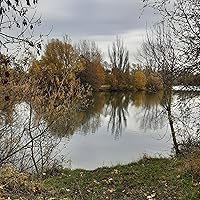
Mostly he travels on foot, avoiding the lanes and alleyways at night as it is far from safe, hiring a horse for longer journeys. He is walking home from a farm with a sack of feathers to make into quills when, as he crosses the East Bridge back into Oxford over the Cherwell, he sees a body in the river, recognising it as William Farringdon, a student at Hart Hall, who had done some work for him at one time. Nicholas is close friends with the Warden, Jordain Brinkylsworth, and after a struggle he manages to drag the body to the bank to prevent it being washed downstream into the Thames.
When it is taken to the church for safekeeping until the coroners can judge the case, Nicolas checks the body and finds the youth has been stabbed from behind, a piece torn from his shirt found upstream. With no attacker found, and blame shifted to Nicholas for not raising the “hue and cry”, it is left to the two friends to seek justice and answers, bringing unwanted attention on Nicholas’ family.
‘The coroners are weary after so many deaths and want to forget this one. As for the constables…they are ordinary townsmen, appointed for a year, and, if many are like Edric Crowmer, they undertake the duties simply for the pleasure of bullying their fellows for breaking curfew or brawling or lying drunk in the street. They will not trouble themselves with pursuing an unknown killer when the coroners themselves have dismissed the matter.'
While much of the book follows the search for the killers (and a rare book) author Ann Swinfen paints a vivid picture of the local scene, from Oxford’s colleges and shops, to the flour mills by the river, water meadows and streams, hedgerows alive with birds, the humming of bees, the trail leading to an abbey where a postulate nun keeps a secret. But the Black Death is never far from their thoughts, and Nicholas ponders on how some capitalised on the misfortunes of others.
Established shortly before the pestilence struck the town, Queen’s College – named for our popular Queen Philippa – had been able, like many other colleges of the university, to take advantage of whole families wiped out, with properties within the town fallen vacant and going cheap. The colleges and the abbeys now owned the greater portion of the town, even where they had not yet built, but had shops and houses let out to tenants. I was grateful that my father-in-law had had the foresight to buy the freehold of our shop and house outright.
Verdict: well-researched, beautifully written, with endearing characters.
This cozy fit the bill of being something completely different from my last book. I don’t read much in this genre, but the idea of a medieval bookseller involved with a murder got my attention.
The plot and characters of this story are pretty conventional. It’s the setting that makes it worthwhile. Oxford in 1353, not long after the Black Death has decimated the population, affecting nearly every household. The author incorporates thoughtful observations on how those deaths have affected the ways in which individuals interact with one another, including a reluctance to look closely into the death of a young student. They have been through enough and they just want to let this go.
But the principal character, a widowed bookseller, knew the boy and is not prepared to let the matter drop. As he conducts his investigation, we learn the details of how books were made in the Middle Ages, right down to how the parchment was processed. This was fascinating stuff to me, reading about it in the context of the different tradesmen within the community interacting with one another.
So it was fun, but I’m pretty sure one book in the series will be enough for me. On top of the bookseller’s cute daughter and cute son, there is the cute puppy they just adopted, and at the end of the book he meets a beautiful novice at a convent who hasn’t taken final vows yet …. Not my thing.
This novel was pure pleasure. I find that I have increasingly less time to read books that I have chosen just for the joy of them, but this was one of them. In fact, I became so caught up in the story of tender Nicholas Elyot that I moved immediately on to the next in the series, The Novice's Tale. Unfortunately, now I am left simply hoping that Swinfen writes the next book quickly, because I am hooked.
By setting the tale in 1353 Oxford, the author is able to explore some wonderful story elements. Besides the thoroughly lovable characters, the reader is introduced to a city of learning at a time when books were scripted and bound by hand, death has devastated the country, and some see the way of life changing as labor proves scarce. Through Elyot's amateur investigation of a young scholar's murder, we are treated to an intimate look at 14th century Oxford and its surrounding countryside.
The plague has passed, but it's shadow looms. "For those of us who survived, there remained a lingering fear of ever allowing ourselves to love anyone again, so fragile is life, so terrifying the sudden loss." Throughout both books, this theme of being careful where love is spent lies underneath the mystery. Nicholas lost his wife to the plague after he had given up a bright future for her. However, he never regrets his decision for a moment.
Nicholas is thoughtful, devout, hardworking, generous, and about as perfect a man as one could hope for, as long as one is attracted to the soft-spoken man who is more attuned to the scent of ink and parchment than the gleam of sun upon a sword blade. I found myself wishing that I could visit his bookshop and watch his scriveners at work. His joy at discovering an expertly done illumination was contagious. His love of books is second only to his devotion to his family and friends.
Against this wonderful backdrop, Swinfen paints a murder scene that tugs the heartstrings and awakens the cry for justice no less in the reader than in dear Nicholas. He was not prepared for the journey that he was set upon when he discovered a body in the twisting river enveloping his town, but I, for one, am enjoying being a part of his adventures.
I liked the 14th century Oxford setting very much (and learned a few things about medieval bookmaking!) and the mystery was satisfying. I did think a few times that Nicholas Elyot missed some obvious clues but overall a series I would be interested in continuing...
This is one of the books i picked to read during my campingtrip in France. Since i had an enormous reading dip, i chose books that were mostly not too difficult and don't require immense concentration. This one, a historic crime novel, seemed to meet the criteria. It is about widower Nicolas Elyot who lives in 14th Century Oxford. He is a bookseller. When one of the students is found murdered, Nicolas wants to find out what happened. Mostly because he knew the boy, who worked for him. But also because the murder seems to be connected with a very valuable illustrated book.
The writer has obviously done her research concerning historical accuracy. What people eat, their daily chores, 14th Century tirades and customs, it is all in the book. Ann Swinfen paints this picture well.
It's a fun read, but no more then that. I enjoyed it. I do have an issue with this book. Or actually two. I dislike it when a book is written using what is supposed to be some sort of medieval english. Usually, i don't understand the purpose and i find it distracting. Secondly, our master Elyot is extremely naive for an adult educated man who is living in a rough world filled with people who do not mind to use violence to get what they want. That makes the second part of the book, where some of the mystery is solved but no killer has been caught, a bit improbable. As a reader you can see the outcome almost after the first few pages. Do why doesn't our bookseller? Most annoying.
Event though it has it's faults, i very much enjoyed this historical crime novel and will read others in this series.
This was an okay story. I found the mystery aspect rather Micky Mouse-ish, as in it was far too easy to spot every clue and what each meant to the plot. I also found myself skimming paragraphs that were superfluous. Still, I'm glad I read it and I will probably try another.
Dieser historische Krimi aus dem Oxford des 14 Jahrhunderts legt sein Augenmerk mehr auf den historischen Hintergrund als auf die Lösung des Kriminalfalls.
Ein Student in Oxford wird vom örtlichen Buchhändler (unserem Protagonisten) tot aus dem Fluss gezogen. Wie sich herausstellt, war er erstochen worden. Der Buchhändler Nicholas, der als Ich-Erzähler agiert, will unbedingt herausfinden, was eigentlich passiert ist.
Die laienhaften Ermittlungen von Nicholas sind zunächst nicht besonders aufregend. Gegen Ende der Geschichte wird es aber doch noch spannend.
Wie schon erwähnt, liegt der Schwerpunkt des Romans auf der historischen Darstellung. Es wird sehr deutlich, dass die Autorin ungemein gründlich recherchiert hat. Sie hat sich offenbar auch intensiv mit den baulichen Gegebenheiten Oxfords auseinandergesetzt. Das hat allerdings für den Leser nicht nur Vorteile, weil sie minutiös die täglichen Gänge von Nicholas durch die Stadt beschreibt, sozusagen ein mit Worten beschriebener Stadtplan. In solchen Dingen lässt mein Vorstellungsvermögen leider zu wünschen übrig, so, dass ich diesen Beschreibungen kaum folgen konnte.
Alles in allem fand ich den Roman wirklich empfehlenswert und sehr erhellend, was die historische Periode betrifft.
----------------------
This historical thriller from 14th century Oxford focuses more on the historical background than on solving the murder mystery.
A student in Oxford is pulled dead from the river by the local bookseller (our protagonist). As it turns out, he had been stabbed to death. The bookseller Nicholas, who acts as the first-person narrator, is determined to find out what actually happened.
Nicholas' amateurish investigations are not particularly mind-blowing at first. Towards the end of the story, however, things do get exciting.
As already mentioned, the focus of the novel is on the historical account. It is very clear that the author has done extremely thorough research. She has evidently also studied Oxford's architectural features intensively. However, this does not only have advantages for the reader because she meticulously describes Nicholas' daily walks through the city, a city map described in words, so to speak. Unfortunately, my imagination leaves a lot to be desired in such matters, so I could hardly follow these descriptions.
All in all, I found the novel really recommendable and very enlightening as far as the historical period is concerned.
I love a neat and tidy mystery. The setting is in the Middle Ages (another favorite of mine). Scrivener Nicholas Elyot is a likeable character. I love that their dog’s name is Rowan. We have a two-year-old red Golden Retriever also named Rowan and it made me smile the whole book that Rowan was a part. I loved this book and look forward to more in the series.
This was a sweet little book. Set in 1300's in Oxford England, it's a fun, quick historical read. The main character is a book seller, and there is a lot of information about book making that I found fascinating. Probably a little too much description of Oxford for me, but the place did come alive. The mystery isn't that hard to figure out, and I found myself wondering how they were missing so many easy clues, but I loved the characters and the setting.
If Swinfen continues this as a series, I think I'll read the next one.
My first book written by Ann Swinfen and it won't be the last. The bookseller (Nicholas) in the title finds a body in the river. It turns out to be a student who did some writing for him in the past. The boy has been murdered but the town officials aren't very interested in investigating a "gown" murder. So that bookseller, a former student who gave up his studies for love. decides to investigate with the help of his academic friend Jordain. It transpires that the student has been copying a priceless salter which has been stolen from Merton College library.
The book gives lovely descriptions of medieval Oxford, from the navigation around the town and surrounding countryside to the way of life after the devastating plague a few years previously which had robbed the bookseller of his wife.
For anyone interested in "history mysteries" I can thoroughly recommend this book.
In the year 1353, life isn’t always easy for a bookshop owner on Oxford’s High Street. Money’s tight, with over half of the city’s residents dead from the recent plague; town-gown rivalries are common; and the university’s slow to pay its bills. “It was irksome,” says narrator Nicholas Elyot, “but the position of official bookseller to the university had the advantage of bringing in a regular income.”
In Swinfen’s lively medieval mystery The Bookseller’s Tale (Shakenoak Press, 2016), Nicholas is a youthful widower raising his son and daughter with the help of his sister, Margaret, who runs a tight household; both siblings had lost their spouses to the Black Death. Nicholas goes into crime-solving mode after finding the body of a student and former employee floating in the river Cherwell while walking home from an excursion to buy new quills. Why was William Farringdon wandering in the countryside so far from school, and who stabbed him in the back?
Nicholas is an upright fellow with serious responsibilities, but he loves his children dearly. He’s also an expert in the book business and happily shares his knowledge about quality parchments, manuscript illumination, and smart sales techniques. He’s an inexperienced investigator, though. While some of the scrapes he gets into are very funny, others pose needlessly dangerous risks to himself and his family. He’s aided in his search for justice by his friend Jordain Brinkylsworth, Warden of Hart Hall, where William had lived.
Swinfen illustrates merchant and university life in medieval Oxfordshire with a sure hand, and she gives Nicholas an intriguing backstory: he had left the celibate life of a scholar behind to marry a “shopkeeper’s wench,” his late wife, Elizabeth. Despite her early death and the resentment of some at the university, he doesn’t regret his decision. I wish this series a long and successful life.
What I enjoyed about this book was its setting and the fact that the narrator was a 14th century bookseller. As far as the mystery…. it was pretty easy to figure out, unlike what usually happens when I read mysteries. Most of the time I miss all the important clues or fail to understand them. But it never makes any difference since I read mysteries for the ambience and the characters rather than the plot. And that’s exactly why I wanted to read this one.
Swinfen has done a nice job filling in details about life in the University town of Oxford in 1353 not long after the Plague had decimated the population. The book is narrated by Nicholas Elyot, a bookseller who had given up an Oxford fellowship in order to marry the daughter of a shopkeeper because in order to hold an academic position a man had to be a celibate. I once found a short poem written in the middle ages that spelled it out this way: A student at his books so placed that wealth he might have won. From book to wife did fly in haste, from wealth to woe did run. Now who hath played a feater cast since juggling first begun in knitting of himself so fast, himself he hath undone."
For anyone who loves books, this novel is an interesting glimpse into what it was like when each book had to be laboriously written and illustrated by hand using carefully trimmed feather quills with costly inks on parchment made from animal skins and then bound in leather. As a result books were outrageously expensive and Oxford’s students couldn’t afford their own copies. Instead they went to bookshops like the one in this novel in order to rent peciae, specific sections of a manuscript that had been assigned for them to study.
It’s interesting to think about how things have changed when you consider that these days you can read whatever you want without ever setting foot in a bookshop or even opening the pages of a book. Much as I enjoy the convenience I still prefer it the old way and even though I wouldn’t have been able to afford owning an illuminated manuscript like those in Nicholas Elyot’s shop, it would have been great just to have been able to do a little window shopping there.
I enjoyed this book for the Oxford history (14th Century), the history of book selling arts, binding and parchment making and early structure of the colleges requiring students to live in halls and the family life depicted after the plague took so many lives. The first-person narrative causes some plodding on to get to the action now and then, but I would think a younger reader would find it more illuminating perhaps. Even with the overly abundant explanation for every action and reaction, and my own impatience in plodding through it - I look forward to reading the next book of the series featuring Nicholas the bookseller. In this first book, Nicholas is the first finder of a young man who has been murdered and Nicholas and his friend methodically untangle the circumstances that led to this death as it seems there is no one else who cares. The murder is connected to a priceless Irish illuminated Psalter.
Oxford England is still reeling from the devastating effects of the plague in the 1350's. Nicholas Elyot is a bookseller, who young wife died leaving him with 2 young children. While out "running errands", Nicholas discovers the body of an Oxford student in the river -- a young man that he had employed as a scrivener. When Nicholas notices a cut in the boy's clothing, he is determined to find out what happened to the boy.
This historical mystery series is very heavy on the historical detail, which I enjoyed. Nicholas, the main narrator is a very interesting character -- he left his studies at Oxford for love, which did cause some hard feelings. The author did a great job of weaving in the day to day life of medieval England as well as highlighting the how the plague impacted the town of Oxford. The mystery was also interesting. The secondary characters were also well rounded. I am looking forward to continuing with the series.
I'm a historical mystery junkie. I got hooked long ago by Brother Cadfael and have been indulging myself ever since. I'm not particular about the period but the history has to be good. This author has her history down pat, she calls forth the ambience of the time and is peopling her medieval Oxford with interesting characters. The plot was tight and moved along nicely. I look forward to additions to the story of Nicholas Elyot.
Thoroughly enjoyed this medieval mystery. It's 1353 in Oxford England. A bookseller/stationer, Nicholas Eylot sees a body in the river while crossing a bridge. That's about all I will say about the plot. I really enjoyed the pacing of this story, and the characters. I will be reading more by this author.
I've recently been on an Ann Swinfen kick....when I find a good writer, historic background and interesting, original plot it's bliss! Definite recommendation and much praise to this author as she brings into life of the 14th century England.
This novel, the first in the Oxford Medieval Mystery series, was a refreshing experience. Here is a well crafted plot surrounding Nicholas Elyot, bookseller and former student, and his friend Jourdain Brinkylsworth Master of Hart Hall as the seek to discover the truth about William Farringdon's death. The author, herself an academic, shoes an excellent knowledge of Oxford, its history and the times following the Black Death epidemic. You can feel yourself following the cast about Oxford and the surrounding area even the aches and pains following a days riding in the countryside.
Excellent use of English, a story written in complete sentences, and produced in a book that appeared to have been properly proof read before publication. A wonderful illuminated cover.
The first book of the year is the only book I got as a gift on Christmas day. That seems appropriate! I really loved this one. I love the obvious research that the author has completed. The story is not anything fast paced but it is a good mystery with characters that I like. I really came away appreciating so many of the comforts and luxuries that are mine on a daily basis, especially the availability of books!
A couple of quotes I want to remember:
"Because of the unpleasant nature of much of their craft, parchment makers are sometimes regarded with a kind of scorn, yet without them there would be no books, without books there would be no scholars. Indeed, there would be little to raise us above the level of talking beasts."
"Dafydd's English was perfect, since he had lived in Oxford for all his adult life, but he had never lost the sing-song inflection of his native land, his sentences soared and dipped like music, like the hills and valleys of Wales."
"The Bookseller's Tale" - written by Ann Swinfen and published in 2016 by Shakenoak Press. It's the mid 1300s in Oxford, England, and the town is recovering from another round of plague deaths. Nicholas, the bookseller, has lost his wife, but his sister helps him with his two young children. A murder causes him and a colleague to investigate and a beautiful Psalter takes center stage. The mystery was ordinary and I more appreciated the discussions of making parchment, scribing and illuminating books. "The makers of parchment, who must leave their scoured skins for days on end in cages in the river, till they are washed clean and pure, and rendered soft by the action of the flowing water." Swinfen has written quite a few stories taking place in medieval times and they all look interesting.
какая скучная книга... и какой контраст с классным названием серии. Ничего меня в этой книге не зацепило: тайна оказалась простой, все авторские приемы - тухлыми, а ГГ - скучным.
A solid, methodical little period mystery. The pace was a little tiring at times, and at spots Nicholas acted implausibly, but the attention to historical detail and Nicholas’ earnest character were endearing. Would recommend.
I'm such a fan of Ann Swinfen, and this book lived up to my expectations ~ don't ignore all those book promotion tweets flying past on Twitter, it's how I discovered her!
This is a cosy sort of murder mystery set in Oxford, in which bookseller Nicholas Elyot discovers the body of a student from the university floating in the river. Sure he was murdered, Nicholas takes it upon himself to solve the crime. I felt the plot came second place to the historical interest of the story, which suited me fine. The book is intricately researched, and serves as an education about the time, in the most enjoyable way possible. Beautifully written, I could imagine every scene, whether in the busy streets of the town, in the cottages, the university grounds, the dark alleys on the dangerous side of town, the roads out to Banbury, or the lanes out to the water mills.
The time of the book was of added interest to me because it takes place just a short while after the Great Plague has died out; I learned much about the long-term effects of this pestilence. Interesting to read a post apocalyptic story from over 600 years ago; I suspect the people of the time dealt with it better than we would now, mostly because they were already equipped with the skills they would need.
The characters are real people, and, as with Ms Swinfen's other books, I felt sad when I'd finished it and eager to read more. Highly recommended to all readers of well researched, literary historical fiction, and especially to anyone with a particular interest in the history of story writing, bookbinding and selling, and, of course, the history of Oxford.