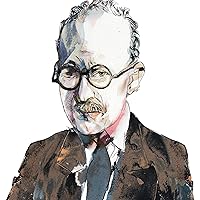
La obra del científico, filósofo y teólogo Pável Florenski (1882-1937) emerge progresivamente del olvido como uno de los pilares de la cultura rusa del siglo XX y una de las grandes figuras del pensamiento humano universal.
Ingeniero de reconocido prestigio, trabajó durante el régimen soviético en la electrificación del país. Sin embargo, sus ideas le condujeron a un campo de reeducación en las islas Solovki, donde tras cinco años de duro cautiverio fue fusilado y sepultado en una fosa común en los alrededores de Leningrado.
Su obra mayor, La columna y el fundamento de la Verdad, comparable en cierto sentido a los Stromata de Clemente de Alejandría, abre el camino a un nuevo pensamiento que se funda en una original teodicea. El autor, fiel representante de la tradición espiritual de la tierra rusa, se marca como tarea acompañar a los intelectuales de su nación a tender un puente entre la razón y la fe, la ciencia y la liturgia, Atenas y Jerusalén.
Su intento de volver a llenar los dogmas de la fe con la savia de la experiencia espiritual viviente no es ingenuo, sino que va acompañado de un impresionante caudal de conocimientos –desde la matemática a la historia del arte, desde la filosofía antigua y moderna, la lingüística, la literatura y la iconografía a la historia del dogma, la patrística y el folklore– que le han valido el título de «Leonardo da Vinci ruso».
Pavel Alexandrovich Florensky (also P.A. Florenskiĭ, Florenskii, Florenskij, Russian: Па́вел Алекса́ндрович Флоре́нский) was a Russian Orthodox theologian, philosopher, mathematician, electrical engineer, inventor and Neomartyr, sometimes compared by his followers to Leonardo da Vinci.
Literally the greatest single work of Christian theology written (in the East or West) since the Summa Theologiae. All the more impressive given that it was Florensky's doctoral dissertation. This book is the reason that I hope to learn Russian one day (though Jakim is a very able translator).
One of the most elegant and inspirational metaphysical philosophical books out there-- Florensky's argument of what "Truth" is makes it a captivating and interesting read. I recommend this book to anyone who wants to learn about the ancient Christian Orthodox way.
Florensky is a towering figure in the history of dialogue between faith and reason. He made substantial contributions to physics, mathematics, and engineering while also developing a rich theology as an ordained Russian Orthodox priest. This combination was too much for Stalin, and ––despite having multiple opportunities to flee the country–– was imprisoned and put to death in 1937.
His writings ––influenced by his interactions with the starets (spiritual elder) of the Lavra of St. Sergius of Radonezh Monetary–– are a unique blend of spiritual and deductive reflections on the path to the Truth. The Pillar and Ground of the Truth: An Essay in Orthodox Theodicy in Twelve Letters, is his most systematic and rigorous work, but Salt of the Earth (The Acquisition of the Holy Spirit in Russia Series, Vol. 2) also stands as a compelling ––if more intuitive–– account of his faith.
This was the third and final author studied in my class on Russian Personalism, and provided the best account of how the scientific method and theology can be harmonized. This text can be dense, but the efforts in following Florensky's reasoning are well worth it. Recommended to students of philosophy, theology, and history of science.
This is a beautiful book; it contains the teachings of a profound Christian and philosophical thinker. It is heart-warming and simply the work of a genius; worthwhile to read for its rigorous philosophy and its comforting life advice.
Finished THE PILLAR AND GROUND OF THE TRUTH (1914) by Russian Orthodox priest, philosopher, linguist, scientist, etc., Pavel Florensky (1882-1937), a man who was bewilderingly brilliant. The PILLAR is one of the most challenging books I’ve ever read; the introduction describes it as “strange and difficult,” at times "academically obsessive and pretentious.” In other places, it is amazingly perceptive, like having one of those deep late-night conversations with a very smart friend in graduate school. The book is divided into 12 letters exploring concepts such as antinomy, love, friendship, wisdom, the Trinity. In his own concluding words, “To arrive at the Truth, it is necessary to free oneself from one’s selfhood, to go out of oneself. But, for us, this is impossible, for we are flesh…we know that the God of Abraham, Isaac, and Jacob, not the God of the philosophers and scholars, comes to us, comes to our place of nocturnal rest, takes us by the hand, and leads us in a way we could not have conceived of.” THE PILLAR is, moreover, an immersion into the heart and soul of Russian spirituality. I’ve read works on Orthodoxy by American authors, but this is the real thing. In one place he writes that the rejection of God leads to insanity. Not surprisingly, Florensky was hated by the atheist regime of Stalin's Soviet Union and executed.