(The English review is placed beneath the Russian one)
Книга «Bears In The Streets» является сборником истории одной американки, которая три раза посещала Россию встречаясь с теми же самыми людьми, с которыми она впервые встретилась в начале 90-ых (последняя встреча датируется 2014 годом, который как мы знаем, знаменит, прежде всего, началом открытого противостояния России и Запада, которое стало следствие аннексии Крыма и участие России в событиях на Донбассе). Это три истории даже не столько одной и той же страны (с 90-ых по 2014), сколько три истории людей, чьи политические воззрения менялись в том же направлении что внешняя политика России. Если в самый первый раз, когда автор впервые посетила Россию, взгляды многих россиян были скорее дружественные в отношении США как государства, то уже когда автор посетила страну в 2014 году, она столкнулась не только с показной лояльность Путину со стороны её русских знакомых, но и в некоторых случаях с прямой агрессией в адрес США. Причина в этом проста – Украина.
Что интересного можно найти в этой книге, хочется спросить? Как всякий личный взгляд, эта книга является исключительно персональным взглядом автора. Возможно, так получилось случайно, но в большей части книги я не встретил человека, который бы критически отозвался о Путине. Возможно, это объясняется чистой случайностью, а возможно люди в России даже в те времена опасались открыто высказывать свои антиправительственные взгляды, особенно учитывая иностранный статус автора. Так же возможно, что в те дни антиправительственные взгляды были больше характерны для Москвы и Санкт-Петербурга и, за небольшим исключением, вся остальная России слепо верила и поддерживала Путина. Однако в истинности такой версии я сомневаюсь. В тоже самое время я не считаю, что это было сделано автором специально, т.е. я не считаю, что она намерено включила в свою книгу исключительно «фанатов Путина», особенно учитывая сложность структуры книги, ведь автор рассказывает историю трёх встреч с одними и теми же людьми. Но в любом случаи, это печально, что большая часть людей, с которыми была знакома автор этой книги, оказались настолько глупыми.
I wasn’t sure, but when I asked Pasha and Vika what they thought of Putin, they responded the same way the lighthouse keepers, Vasily and Valya, had: they loved him.
“I know Americans don’t really like Putin,” Pasha told me, “and that your government blames Russia for what’s happening in Ukraine. But really, America is behind it. Why is America funneling arms to Ukraine? Why is your government always stirring things up in faraway parts of the world?” I didn’t agree with his black-and-white assessment of Ukraine, but I didn’t have a good answer for his final question, either. It’s difficult to defend the notion of “American exceptionalism”— assuming I’d even want to—in a way that doesn’t sound ridiculously self-important. I’m neither an expert on Ukraine, nor am I as well versed in twenty-first-century international relations as I’d like to be. So, for purposes of this trip, I decided that it was smarter simply to listen to what Russians had to say, rather than leaping into arguments.
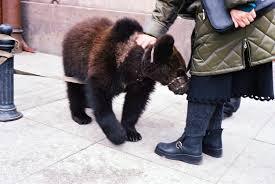
“The problem,” Vika interjected, “is that America doesn’t respect Russia. They think we’re backward—like we have bears wandering around in the streets here.”
<…>
I asked how her situation now compared to that of 1995 and 2005, and she didn’t hesitate. “Now is better than 20 years ago,” she told me, “but Soviet times were better than now, because you always knew what was what.”
“Meaning?” I asked.
“Back then, you knew the price of everything, what would happen at work, exactly when you could retire, and what your pension would be,” she replied. “Now, everything is more difficult. There are unknowns. There weren’t before.”
<…>
We engaged in small talk for a few minutes, and then he abruptly switched topics.
Liza, what do you know about Ukraine?” he asked. I wasn’t sure how to answer; was this a real question, or a challenge? I didn’t immediately respond, so he tried again: “What do Americans know about Ukraine?” He stared at me, waiting.
“That’s a pretty broad question,” I said.
“Then let me ask you this,” he said. “What if the bears suddenly came to Canada, and started handing out money, paying people there to fight against America? Would you like that? Would that be a good thing?” By “bears,” he obviously meant Russians, and he was setting up an equation: Americans wouldn’t want other countries stirring up trouble on their doorstep, so why should we stir up trouble on Russia’s? Meaning, more specifically, why does America think it’s OK to send guns and money to Ukraine?
“Let me ask you another question,” he said, still staring at me. “How many Russian military bases are near American soil? None. And how many American military bases are near Russia? Many.” This was true: the United States has multiple bases in Japan, South Korea, Turkey, the Middle East, and all over western Europe. “How would Americans like it if Russians had military bases in Canada and Mexico?” Igor asked. “Would they like that?” We both knew the answer: of course not. The Soviets once had a military presence in Cuba, after all, and look how well that had gone. The Russians had closed their base there in 2002, and one didn’t need a top-secret security clearance to know that the American government preferred to keep it that way.
“America wants to spread its influence all over the world,” Big Igor went on. “But we just want to be left alone.” He wasn’t the first to express that sentiment to me on this trip. Both Pasha in Chita and Vasily in Vladivostok had argued the same thing: that Russians want to be left alone, but we Americans keep poking our nose in their business. One could certainly argue that if Russia wanted to be left alone, it ought to leave Ukraine alone. But this much was abundantly clear: as little as Americans trust Vladimir Putin’s motives, Russians are every bit as distrustful of ours.
“How is it America’s business what happens in Ukraine?” Igor asked, his voice rising. “We have centuries of history with Ukraine. Why can’t America just mind its own business there—and in Iraq, and everywhere else?” I continued to sit silently, while Vasya began squirming in his captain’s chair.
<…>
Inevitably, the conversation soon segued to Ukraine. “Do you know the history of Ukraine?” Lyuba asked me, in an echo of Big Igor’s question two weeks earlier. I responded that I had a general idea.
“There is no such thing as Ukraine!” Sergei and Lyuba exclaimed, almost in unison. “Ukraine was invented by Lenin,” Sergei said. “How can America claim it should maintain its independence from Russia, when it has always been Russian?”
“If there is no such thing as Ukraine,” I countered, “then what is the Ukrainian language?” Sergei answered that it was a Slavic language, basically the same as Russian, and only different because there was a mix of people—Poles, Russians, and other Slavs—in those regions. “But it has always, throughout history, been Russia. So what is happening now isn’t anything new or different.”
Наверно мнение некоторых обычных россиян может кому-то представлять интерес, особенно как их мнение менялось на протяжении этих 15-20 лет, но, во-первых, книга не о политике, а во-вторых, книга представляет «туристические заметки», нежели политическую литературу. Я не являюсь большим поклонником таких вот туристических заметок именно по той причине, что невозможно сформировать точное мнение о той или иной стране основываясь на мнении 5-7 человек. Это как если посетить США и спросить мнение о США исключительно фанатов Трампа. Что касается самой страны, то Россия не просматривается у автора по той простой причине, что всё внимание автор уделяет персональным отношениям с теми русскими, с которыми она познакомилась в начале 90-ых.
The book Bears In The Streets is a collection of stories about an American woman who visited Russia three times, meeting the same people she first encountered in the early 1990s (the last meeting dates back to 2014, which, as we know, is famous primarily for the beginning of open confrontation between Russia and the West, which was a consequence of the annexation of Crimea and Russia's involvement in the events in Donbass). These are three stories not so much about the same country (from the 1990s to 2014) as three stories about people whose political views changed in the same direction as Russia's foreign policy. When the author first visited Russia, many Russians were generally friendly toward the United States as a country. However, when she visited again in 2014, she encountered not only ostentatious loyalty to Putin on the part of her Russian acquaintances, but also, in some cases, outright hostility toward the United States. The reason for this is simple: Ukraine.
What interesting things can be found in this book, you may ask? Like any personal opinion, this book is exclusively the author's personal view. Perhaps it was just a coincidence, but for the most part, I did not encounter anyone in the book who spoke critically of Putin. Perhaps this is purely coincidental, or perhaps people in Russia, even at that time, were afraid to openly express their anti-government views, especially given the author's foreign status. It is also possible that in those days, anti-government views were more prevalent in Moscow and St. Petersburg, and, with a few exceptions, the rest of Russia blindly believed in and supported Putin. However, I doubt the veracity of this version. At the same time, I do not believe that this was done deliberately by the author, i.e., I do not believe that she intentionally included only “Putin fans” in her book, especially given the complexity of the book's structure, as the author recounts the story of three meetings with the same people. But in any case, it is sad that most of the people the author of this book knew turned out to be so foolish.
I wasn’t sure, but when I asked Pasha and Vika what they thought of Putin, they responded the same way the lighthouse keepers, Vasily and Valya, had: they loved him.
“I know Americans don’t really like Putin,” Pasha told me, “and that your government blames Russia for what’s happening in Ukraine. But really, America is behind it. Why is America funneling arms to Ukraine? Why is your government always stirring things up in faraway parts of the world?” I didn’t agree with his black-and-white assessment of Ukraine, but I didn’t have a good answer for his final question, either. It’s difficult to defend the notion of “American exceptionalism”— assuming I’d even want to—in a way that doesn’t sound ridiculously self-important. I’m neither an expert on Ukraine, nor am I as well versed in twenty-first-century international relations as I’d like to be. So, for purposes of this trip, I decided that it was smarter simply to listen to what Russians had to say, rather than leaping into arguments.
“The problem,” Vika interjected, “is that America doesn’t respect Russia. They think we’re backward—like we have bears wandering around in the streets here.”
<…>
I asked how her situation now compared to that of 1995 and 2005, and she didn’t hesitate. “Now is better than 20 years ago,” she told me, “but Soviet times were better than now, because you always knew what was what.”
“Meaning?” I asked.
“Back then, you knew the price of everything, what would happen at work, exactly when you could retire, and what your pension would be,” she replied. “Now, everything is more difficult. There are unknowns. There weren’t before.”
<…>
We engaged in small talk for a few minutes, and then he abruptly switched topics.
Liza, what do you know about Ukraine?” he asked. I wasn’t sure how to answer; was this a real question, or a challenge? I didn’t immediately respond, so he tried again: “What do Americans know about Ukraine?” He stared at me, waiting.
“That’s a pretty broad question,” I said.
“Then let me ask you this,” he said. “What if the bears suddenly came to Canada, and started handing out money, paying people there to fight against America? Would you like that? Would that be a good thing?” By “bears,” he obviously meant Russians, and he was setting up an equation: Americans wouldn’t want other countries stirring up trouble on their doorstep, so why should we stir up trouble on Russia’s? Meaning, more specifically, why does America think it’s OK to send guns and money to Ukraine?
“Let me ask you another question,” he said, still staring at me. “How many Russian military bases are near American soil? None. And how many American military bases are near Russia? Many.” This was true: the United States has multiple bases in Japan, South Korea, Turkey, the Middle East, and all over western Europe. “How would Americans like it if Russians had military bases in Canada and Mexico?” Igor asked. “Would they like that?” We both knew the answer: of course not. The Soviets once had a military presence in Cuba, after all, and look how well that had gone. The Russians had closed their base there in 2002, and one didn’t need a top-secret security clearance to know that the American government preferred to keep it that way.
“America wants to spread its influence all over the world,” Big Igor went on. “But we just want to be left alone.” He wasn’t the first to express that sentiment to me on this trip. Both Pasha in Chita and Vasily in Vladivostok had argued the same thing: that Russians want to be left alone, but we Americans keep poking our nose in their business. One could certainly argue that if Russia wanted to be left alone, it ought to leave Ukraine alone. But this much was abundantly clear: as little as Americans trust Vladimir Putin’s motives, Russians are every bit as distrustful of ours.
“How is it America’s business what happens in Ukraine?” Igor asked, his voice rising. “We have centuries of history with Ukraine. Why can’t America just mind its own business there—and in Iraq, and everywhere else?” I continued to sit silently, while Vasya began squirming in his captain’s chair.
<…>
Inevitably, the conversation soon segued to Ukraine. “Do you know the history of Ukraine?” Lyuba asked me, in an echo of Big Igor’s question two weeks earlier. I responded that I had a general idea.
“There is no such thing as Ukraine!” Sergei and Lyuba exclaimed, almost in unison. “Ukraine was invented by Lenin,” Sergei said. “How can America claim it should maintain its independence from Russia, when it has always been Russian?”
“If there is no such thing as Ukraine,” I countered, “then what is the Ukrainian language?” Sergei answered that it was a Slavic language, basically the same as Russian, and only different because there was a mix of people—Poles, Russians, and other Slavs—in those regions. “But it has always, throughout history, been Russia. So what is happening now isn’t anything new or different.”
Perhaps the opinions of some ordinary Russians may be of interest to some, especially how their opinions have changed over the past 15-20 years, but, first of all, the book is not about politics, and secondly, the book is more of a collection of “travel notes” than political literature. I am not a big fan of such travel notes precisely because it is impossible to form an accurate opinion about a country based on the opinions of 5-7 people. It's like visiting the US and asking only Trump fans for their opinion about the US. As for the country itself, Russia is not visible to the author for the simple reason that she focuses all her attention on her personal relationships with the Russians she met in the early 1990s.