Jump to ratings and reviews
Rate this book

Albert Campion #1

The Crime at Black Dudley

Rate this book
Classic Crime from the Golden Age, the first in the Albert Campion Series. Margery Allingham is J.K. Rowling's favourite Golden Age author.
George Abbershaw is set for a social weekend at Black Dudley manor, hosted by Wyatt Petrie and his elderly uncle Colonel Combe, who enjoys the company of Bright Young Things. With Meggie Oliphant in attendance, George looks forward to the chance of getting closer to the girl he's set his heart on. But when murder spoils the party, the group soon find out that not only is there a killer in their midst, but the house is under the control of notorious criminals. Trapped and at their mercy, George must find a way to thwart their diabolical plans while getting himself and Meggie out alive. Luckily for Abbershaw, among the guests is Albert Campion – a garrulous and affable party-crasher with a great knack for solving mysteries and interrogating suspects. The Crime at Black Dudley , first published in 1929, is the first novel to introduce Margery Allingham's amiable and much loved sleuth – Albert Campion.

248 pages, Paperback

First published April 1, 1929

842 people are currently reading
8420 people want to read

About the author

Margery Allingham

269 books599 followers
Aka Maxwell March.

Margery Louise Allingham was born in Ealing, London in 1904 to a family of writers. Her father, Herbert John Allingham, was editor of The Christian Globe and The New London Journal, while her mother wrote stories for women's magazines as Emmie Allingham. Margery's aunt, Maud Hughes, also ran a magazine. Margery earned her first fee at the age of eight, for a story printed in her aunt's magazine.

Soon after Margery's birth, the family left London for Essex. She returned to London in 1920 to attend the Regent Street Polytechnic (now the University of Westminster), and met her future husband, Philip Youngman Carter. They married in 1928. He was her collaborator and designed the cover jackets for many of her books.

Margery's breakthrough came 1929 with the publication of her second novel, The Crime at Black Dudley . The novel introduced Albert Campion, although only as a minor character. After pressure from her American publishers, Margery brought Campion back for Mystery Mile and continued to use Campion as a character throughout her career.

After a battle with breast cancer, Margery died in 1966. Her husband finished her last novel, A Cargo of Eagles at her request, and published it in 1968.

Also wrote as: Maxwell March

Ratings & Reviews

What do you think?
Rate this book

Friends & Following

Create a free account to discover what your friends think of this book!

Community Reviews

5 stars
2,015 (21%)
4 stars
3,117 (32%)
3 stars
3,256 (34%)
2 stars
902 (9%)
1 star
257 (2%)
Displaying 1 - 30 of 886 reviews
Profile Image for Zain.
1,884 reviews286 followers
January 25, 2023
Introducing, Albert Campion…

Albert Campion is friends with Wyatt Petrie, the owner of Black Dudley, a mansion located in the boondocks.

When Wyatt invites friends there for a weekend party, Albert Campion crashes the show.

Good thing he does, because a famous parlor game becomes a catalyst for a murder.

And Albert Campion is the one who, discreetly, unravels the plot and saves the day.

The first Albert Campion mystery by Margery Allingham.

Four stars! ✨✨✨✨
Profile Image for Jeffrey Keeten.
Author 5 books252k followers
November 12, 2015
”Up the well known creek.”

I first met Albert Campion when I stumbled across the BBC TV show called Campion, starring Peter Davison. I don’t know if there is a more bizarre detective in publishing history. Having a conversation with Campion is sort of like having a conversation with Robin Williams. His mind is so brilliant that he skips ahead of us mortals, making connections, assertions, and leaps of logic that are impossible to follow step by step. We have to hope to assemble enough of the pieces to get a general idea of what he is talking about.

This is the first Campion novel, though in this book he is just a colorful supporting character. Pathologist Dr. George Abbershaw takes center stage as the lead amateur detective. After reading the book, her American publishers suggested she focus on Campion with future novels.

Sometimes publishers know what they are talking about.

Campion arrives at the ancient manor Black Dudley to crash a party, though like many such events it takes a while for the hosts to figure out he is not invited by...well...anyone. He is a man of dubious character, and as the plot continues, he plays the role of red herring, foil, and eventual hero. When Colonel Coombe, the uncle of the owner of Black Dudley, dies under dubious circumstances during the party, it seems he was not exactly on the up and up and was using the party as a cover to meet with some of his shady associates. Whatever Coombe was supposed to pass to a Benjamin Dawlish is lost.

Dawlish with the help of his criminal gang, who were posing as hired help for the household, drains the petrol from the all the cars and effectively holds all the guests hostage. No one is to leave until “the package” is retrieved.

Campion is a bit of a well meaning klutz and finds himself more than once in precarious circumstances due to his impetuous manner of investigation. Abbershaw doesn’t know exactly what Campion is up to, but he knows he can’t trust him completely.

Campion is a natural focus for the gang for retrieving their package. He is tortured but escapes through a hidden passage way to rejoin the rest of the guests. The criminal plot is rather convoluted and becomes secondary to the very real need for the guests to figure out a way to escape.

One of the gang members is referred to as The Jew. It isn’t until almost the end of the novel that Margery Allingham reveals his name as Gideon. The descriptions of him are rather odious and dripping with contempt. The anti-semitism the writer must have felt was not subtle. The book was published in 1929, but still the use of the term THE JEW bothered me. If Allingham had called him Gideon, but described him as a Jew with smarmy personality traits, it probably wouldn’t have bothered me as much. It was a distraction, but not enough to keep me from enjoying the book.

It is revealed that our sleuth Campion is not his real name. He uses a series of pseudonyms to keep his enemies confused and Scotland Yard unsure of his intentions. He doesn’t always operate on the right side of the law. He is certainly a free spirit with a “royal” pedigree that is only alluded to, but not explained, in this book. Allingham wrote 17 novels and 20 short stories featuring Campion. I’ve read that more is revealed about Campion’s past in the second book Mystery Mile. I’m hooked, so I’m in for a foot as well as the full mile.

If you wish to see more of my most recent book and movie reviews, visit http://www.jeffreykeeten.com
I also have a Facebook blogger page at:https://www.facebook.com/JeffreyKeeten
Profile Image for Hannah Greendale (Hello, Bookworm).
807 reviews4,206 followers
April 7, 2018
First published in 1929, The Crime at Black Dudley is set in a gloomy manor where a social weekend goes awry when a person is murdered. Allingham introduces her leading detective, Albert Campion, the quirky yet affable gentleman who would later be featured in another twenty mystery novels. While the opening pages are atmospheric and the setting holds promise, the characters lack depth and nuance, and the narrative suffers from the same irritating flaws as Murder on the Orient Express: Albert Campion leaps to a bizarre conclusion, and he withholds information that makes it impossible for readers to solve the murder.
Profile Image for Phrynne.
4,031 reviews2,726 followers
April 7, 2022
This was my introduction to Margery Allingham and I thought it was great fun.

In the manner of Christie the book is set at a house party in the countryside where a group of bright young things are gathered to have a good time. One way to have said good time is a game involving a special dagger and a dark, spooky house and of course it does not end well.

The main character is George Abbershaw, a pathologist and a nice enough gentleman with a good brain. He is overshadowed almost immediately by the entertaining and flamboyant Albert Campion who is obviously not as silly as he tries to appear. My first thought was that he should have been written as the MC. It was not till later when I saw the subtitle I realised that he will in fact be exactly this in future books.

My intent to follow up the series is thus ensured.
Profile Image for Ivonne Rovira.
2,531 reviews251 followers
January 29, 2015
Poor Albert Campion gets no respect — nor does his author, Margery Allingham.

Ninety years after Hercule Poirot first exercised his little grey cells in The Mysterious Affair at Styles and Lord Peter Wimsey first pranced through Whose Body?, these redoubtable detectives and their brilliant authors are still household names. But Albert Campion? Like Ngaio Marsh’s Roderick Alleyn, Gladys Mitchell’s Mrs. Bradley, or Patricia Wentworth’s Miss Silver — all of whom were quite popular in their day but have, sadly, fallen into obscurity — Campion has been cheated of the lasting fame that is his due.

But perhaps Bloomsbury Reader’s new edition of Campion’s first case, The Crime at Black Dudley, first published in 1929, can remedy the situation.

Like television’s Colombo or Lord Peter Wimsey, the fair-haired, bespectacled Albert Campion at first glance appears to be a bit of fool. Do not be taken in! Wise-cracking and with a high-pitched voice, Campion is crazy like a fox; unlike the moralistic Lord Peter, he doesn’t mind playing both on the side of the law and on the other. Campion’s in attendance at a house party at Black Dudley when the host, Colonel Gordon Coombe, a wheelchair-bound man who wears a plate on his face to cover hideous scars from the war, dies. Although his personal physician claims the death due to heart trouble, two other guests, pathologist Dr. George Abbershaw and newly minted doctor, Michael Prenderby, soon work out that Coombe was murdered. They begin trying to ferret out what secrets lie at Black Dudley, but it is Campion, of course, who truly shines when the crooks emerge.

The Crime at Black Dudley contains a good deal more suspense and more twists that you’d ever expect in a British cozy released in 1929. Although more than 85 years old, the novel remains as much of a five-star read as ever, and I read it in just a few sittings. Priced at a mere $1.99 in the Kindle format, readers owe it to themselves to get a taste of Allingham’s delightfully quirky series with The Crime at Black Dudley.

In the spirit of full disclosure, I received this ebook from NetGalley and Bloomsbury Reader in return for an honest review.
Profile Image for Bill Kerwin.
Author 2 books84.3k followers
February 27, 2019

The Crime at Black Dudley is the first in Margery Allingham’s Albert Campion series, but it is not exactly a novel featuring Albert Campion but instead a novel in which a minor character called Albert Campion appears and takes over the book.

I can see why Allingham refused to halt Campion in his coup, for he is an interesting character (certainly more interesting than the Scotland Yard pathologist George Abbershaw, whom Allingham chose for her hero). Campion appears—at first glance—to be nothing but an upper class twit, alternately amusing and annoying, but gradually reveals himself to be a sort of a Scarlet Pimpernel for hire. The difference is that, with Campion, the mask never never seems to drop: even at the heights of heroism and derring-do, he still appears to be a bit of a twit.

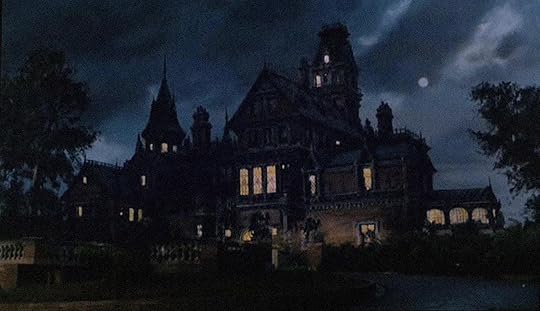
The plot is a hodge-podge of tired gothic imagery, country house mystery, romantic comedy, and saga of international crime—reminiscent of John Willards popular play The Cat and the Canary (1922). A group of attractive young people gather for a party at Black Dudley, a “gloomy old place,” a “great grey building, bare and ugly as a fortress. After dinner, an old family tale is told, concerning the bloody history of the prominently displayed “Dudley Dagger.” Soon a game is decided upon, the lights are extinguished, and the Dudley Dagger claims another victim.

I didn’t find this novel in the least compelling, for it veers off in far too many directions, and the murder and the murderer are not in themselves very interesting. Still, the individual scenes were either suspenseful or amusing, and I can see how Campion would make an entertaining hero.

Yes, I believe I may read another Campion novel someday.
Profile Image for Judy.
443 reviews117 followers
April 21, 2017
This is an endearingly bonkers Golden Age mystery, more of a thriller than a whodunit. I have a very soft spot for The Crime at Black Dudley because it is the first appearance of Margery Allingham's beloved detective, silly ass Albert Campion. There's also endless 1920s slang to enjoy, sometimes reminiscent of P.G. Wodehouse. Yet another pleasure is the fact that the book is set in the Suffolk countryside, an area Allingham knew well.

The book starts off as a house party mystery, where guests rashly agree to take part in a ritual involving a ceremonial dagger. This is an even worse idea than accepting an invitation to the house party in the first place! Inevitably, the game results in murder, and soon the plot is thickening by the minute, with various fiendish villains putting in an appearance.

Campion isn't actually the detective in this book, but for a time appears to be a suspect! The main character is a pathologist called George Abbershaw. I have read somewhere that Allingham originally fancied him as her series detective, which would have made him one of the first pathologist heroes.

However, George isn't really very interesting, and, even in this book, you can see the author's attention already shifting to Campion, with hints of his fascinating personality and multiple talents. I don't think this book is as good as the rest of the series, and the plot doesn't really hang together, but it's still an enjoyable read, largely because of all the fun Allingham has with this young and silly version of her hero.
Profile Image for Susan.
3,017 reviews570 followers
April 11, 2017
Published in 1929, this is the first Albert Campion mystery. My introduction to Campion came through a later book and, disliking reading books out of order, I found that a confusing and difficult read. However, as I enjoy Golden Age detective fiction, I determined to give Margery Allingham another try and to read the first in the series – even though I know that the book has mixed reactions. In a way, that is because this is not a traditional mystery; it has a story set in a traditional country weekend, but then descends into something of a romp concerning criminal gangs, secret passages and only has Albert Campion as a minor character.

Indeed, much of the action is told from the point of view of Dr George Abbershaw, one of the guests of a weekend party at the house of Colonel Gordon Coombe, whose nephew, Wyatt Petrie, organises groups of young people to visit and amuse his uncle. The house is a somewhat forbidding setting for a party, but Abbershaw is more interested in a young lady called Margaret Oliphant than the location. Still, romantic considerations aside, there are a mix of guests, including a keen Cambridge rugger blue, a young doctor, a couple of rather sinister guests of the Colonel and a ‘silly ass’ called Albert Campion, who nobody seems to have invited…

When Petrie tells of a family ritual involving the fifteenth century ‘Black Dudley Dagger,’ the guests agree to play along and, when the lights come back on, it seems that there has been a tragedy. Worst still, the Colonel’s rather unpleasant, and unfriendly, guests, claim to have lost something of great importance and, if it is not returned, there will be consequences. Despite appearing as a rather inoffensive, unintelligent character, Campion turns out to be very useful in the following crisis, as the guests find themselves prisoners in the isolated house, unable to escape. However, this actually turns out to be a murder mystery, wrapped in a tale of criminal gangs. Overall, I am glad I read this first book and would certainly like to read on and discover more about Albert Campion.
Profile Image for mark monday.
1,874 reviews6,306 followers
November 25, 2025
this classic "Albert Campion Mystery" is goofy and digressive and irrepressible, just like Albert Campion himself. he's not the protagonist of the book nor is he the sleuth who solves it all; he's the eccentric guest star who so completely jumps off of the page that apparently the author had to have him reappear in what would become an entire series. I think I've read somewhere that he's a parody of Lord Peter Wimsy, and I guess I can see that, but really he's unique. this bizarre gentleman is, perhaps, a fabulously wealthy aristocrat who spends his time as a mercenary for both the Law and the Criminal Element, just for fun you know, and who comes across as a fey lunatic with a google-eyed stare peering out of oversized glasses, a high-pitched voice, a silly face, and a motormouth that makes him sound developmentally disabled. although the jock in the cast dismisses him as 'one of the girls' he's actually the better man in a fight, despite preferring to use a gun as a club rather than as an actual gun. what a weirdo, I love him.

the book starts off as a typical murder mystery set on a country estate, but as soon as the murder happens, it suddenly turns into a breezy thriller about a bunch of chirpy Bright Young Things versus a gang of humorless criminals who have taken them hostage in this mansion full of secret passages and sinister servants. eventually it remembers it is a murder mystery - and by then Campion has left the story! the identity of the murderer is pretty easy to figure out and their rationale for the murder is absurd. but no matter; this was a pleasant lark and Allingham is a writer with charm and verve. she clearly had a fun time writing this. I'm looking forward to seeing Albert Campion again, hopefully in a more central role next time.
Profile Image for Mir.
4,974 reviews5,331 followers
December 8, 2014
WHOA! I had a long review for this, with a discussion thread, and now they are simply gone!

And no, I definitely wasn't talking about the author in the review, so it wouldn't have been deleted for that reason.
Profile Image for Karen.
14 reviews52 followers
October 12, 2018
A weekend house party, a ritual involving an ancient dagger, a murder, stolen documents, house guests held hostage. Sounds like the perfect weekend. This is the first of Margery Allingham's novels to feature her amateur detective Albert Campion, but strangely he is only in a supporting role here. I found this book entertaining, especially when Campion was on the scene but I expect this series gets better as it goes along.
Profile Image for Moira Fogarty.
443 reviews22 followers
November 29, 2011
Alas, I did not enjoy this mystery. The pacing was awkward, the locale aggressively gothic, the romance element flat and stilted, and the setup for the crime absurdly over-the-top, with a level of emotional maturity and depth similar to what you'd find in a Scooby-Doo cartoon.

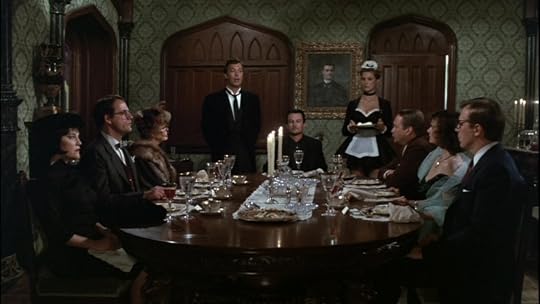
If you want to read The Crime at Black Dudley, please do so. Brace yourself for a story that feels remarkably like a transcription of the movie "Clue". Members of a random house party wander around a large isolated mansion with the lights out and a dagger being passed around. Murder! Later, a strange hostage situation develops where nobody can escape and people move around in pairs searching the house, looking for the bad guys. Where is Tim Curry? Where's the singing telegram? Sheesh.

Allingham occasionally falls prey to intensely Purple Prose. One short example: "You can call it absurd with your modern platonic-suitability complexes," he said, "but I fell in love with a woman as nine-tenths of men have done since the race began and will continue to do until all resemblance of the original animal is civilized out of us and the race ends--with her face, and with her carriage, and with her body."

I mean, come on. Allingham has a male character identify a woman's fingernails as "hideously over-manicured". What does that even mean? How is it a sinister impediment to matrimony? Worried about my own nails now.

Published in 1929, this was written in the space between the world wars, shortly after Dorothy L. Sayers began publishing. Their work follows similar lines, but their upbringing and education differed widely, and it shows in the resulting tone of their writing.

The real core of my dislike for this book is Albert Campion, who mimics my beloved Lord Peter Wimsey in many ways but inevitably falls short. They are both amateur detectives born into the British aristocracy, both talk piffle, both employ menservants and both bachelors who later marry.

Why is Peter better than Albert? Sayers once commented that Lord Peter was a mixture of Fred Astaire and Bertie Wooster. Albert seems to be more a combination of Adam Sandler and a Great Dane.

Peter has the superior manservant; Lugg is all well and good, but can't really be compared with Bunter. Peter speaks and acts like a real gentleman, bringing patience, genteel condescension and gallant civility to his associations with colleagues, ladies and the lower classes.

Above all, Peter has good manners; he is courteous and affable. Albert is unrefined, pompous, vacuous, lacking in tact and suavity. Even if Albert's foolish manner is supposed to be just a clever "front" for his underlying good breeding, it is too convincing a mask and too rarely removed to be allowed to be a costume of necessity. Albert's rudeness and general ass-hattery is a full-time facade, overwhelming his nobility.
Profile Image for Amy.
3,051 reviews620 followers
June 20, 2016
After all the research I have been doing about the Golden Age of Detective Fiction, I was excited to curl up with a real, solidly British countryside whodunit. Unfortunately, The Crime at Black Dudley was only remarkable in how disappointing it was. Not nearly as satisfying as I'd hoped!
This book is supposedly the debut novel of Margery Allingham's detective Albert Campion. Unfortunately, someone forgot to tell the plot that. The book actually focuses on a boring, insufferable, "cherubic faced", redheaded doctor named Abbershaw. I hated him from the beginning. He was uninteresting and full of himself. His love interest was even worse. She just hangs about the place trying to be brave.
Campion does prove to be an intriguing character, but his role is extremely limited. This really is Abbershaw's story. Campion does not play much, or really any, part in finding the murderer. His random, inane actions were quirky and potentially endearing but his lack of a real role left him only as an interesting side thought.
I dragged myself through the novel and thought about giving up a hundred times. It dragsssss out everything. In chapter 16, the story makes a sharp turn with another random and potentially interesting character who provides some new clues. I thought the story was about to get interesting! Unfortunately, she plays her part and disappears within a few chapters.
Abbershaw, despite being a "logical" man, relies on his gut instinct a lot. I guess that didn't break the rules because it wasn't a "woman's intuition"? I guessed the murderer almost from the start but Abbershaw's route to the discovery was random and confusing.
Overall, a disappointing, confusing, overly-long novel. If I stumbled upon it, I would read something else starring Albert Campion because some allowance has to be made for a first novel. However, I won't be specifically pursuing more by this author.
Profile Image for Richard Derus.
4,167 reviews2,263 followers
April 20, 2021
Real Rating: 3.25* of five, rounded down because WOW this didn't age that well

Albert Campion's neurodivergent character is something we're not unfamiliar with in the 21st century. It was baffling in the 19th, whence Allingham derived her world-view. I don't want to give you the wrong idea: she isn't making fun of Campion, she's making sport of him, and the difference is not mere distinction.

Campion appears for the first time in this story as comic relief. He isn't very important in the proceedings at all. This is a case of the publisher getting feedback..."we LOVE that looney, he made us laugh!"...and requiring the author to make more of him in future. A similar thing happened, in my observation, to Louise Penny: The Three Pines series was originally about Clara, a very lonely and dissatisfied married Artist living in a rural Quebecois village with an interesting history and a future as a criminal hotbed. Along came Inspector Gamache of the S&uumlaut;reté and hey presto! The books are now centered on him.

So this, the first outing, isn't A Campion Story. That's the source of my downward rounding. But that doesn't mean that it's not worth reading. I think, despite social attitudes I don't much like, that stories from this period are very fun reads because they set the standards of fair-play puzzle-based series mysteries that we-the-bookish devour with insatiable appetite. I do want to let you know that those sensitive to the portrayal of the neurodivergent should either skip the read or, and this is what I encourage you to do, go into it prepared for the attitudes of the past to prevail over your preferred standard.

And it's only $1.99 on Kindle today, 20 April 2021.
Profile Image for Paromjit.
3,080 reviews26.3k followers
February 26, 2016
Albert Campion gatecrashes a party at Black Dudley Manor in which Colonel Coombe dies in suspicious circumstances. It turns out the Colonel was supposed to give a package to Benjamin Dawlish and it is now lost. Dawlish and his criminal gang now hold the guests captive. It becomes clear that the Colonel has been murdered to Abbershaw and the medic. However, it the quirky and mercurial Albert Campion who is instrumental in getting to the bottom of the case. Even though this is a relatively old mystery story, it is full of twists and suspense. I am glad that this novel was available currently as a Bloomsbury Reader via netgalley as it is a great example of the golden age of detective fiction. Many thanks to Bloomsbury for a copy of the book via netgalley.
Profile Image for ❀Aimee❀ Just one more page....
444 reviews93 followers
January 30, 2015
2.5 STARS


This one just isn't simple to rate. This rating reflects how much I personally liked it.

But then consider this was first published by a woman (in her 20's) in 1929. Also consider that this is definitely has slang from England at that time (thank goodness for my Kindle reader - I have only to highlight the word to see the slang definition) I have not read any Agatha Christie, but I have seen a few movie adaptations of her books. I would say this book definitely has that feel. Several people at an isolated mansion for a dinner party type weekend, and a mysterious murder takes place.


There are good guys, bad guys, and some with more ambiguity.


And not only do you get an insta-love, but you get an insta-engagement!


That's right gentlemen, if you hem and haw before blurting out that you love her and ask for her hand, she will accept immediately But again....those were the times I suppose. It was not a huge focus in the book.

I can't say that the ending was very satisfying to me, but I think the author was trying to make social point.

Though this was not for me, I think there are many of you who appreciate old-time Agatha Christie type mysteries.

Thank you Netgalley for a free digital copy in exchange for an honest review.

Profile Image for Tania.
1,040 reviews125 followers
February 22, 2024
This is the first book in the series, and apparently they get much better. It felt like the author wasn't too sure what she wanted from this story. Albert
Champion wasn't her detective, and at one point he seemed like one of her suspects. It read more like a thriller, though started off as a country house mystery. First books are often weaker than others in a series, so I will be carrying on with this one and see where we go from here.
315 reviews11 followers
December 4, 2010
While I found it interesting to read this book due to the part it played in Allingham’s success as a writer and as the birthing story of Albert Campion I found it otherwise to be an extremely dated and quite unfulfilling read. The datedness of the story lies not in the language or the gender roles nor the stereotypical treatment of anyone who wasn’t a member of the English upper class but rather in the author’s need to include, as was true in so many of the mystery books of that time, a massive international criminal gang. It is as if the author, unsure that the murder itself would be sufficiently interesting to keep the reader involved in the story, felt a need to pile on more and more distractions. And, given the fact that the identity of the murderer is not discoverable without information not provided in the book and yet not hard to suspect given the mise-en-scene this reader believes the author’s worries were justified.

I doubt this book would be much remembered were it not for the fact that it marks the first appearance of Albert Campion. For the reader who knows what ‘happens next’ it is amusing to watch the author attempt to make Abbershaw a protagonist on whom a series could be hung while her own creation, Albert Campion, makes off with the heart of the author if not the reader. Campion, as he is described in this story, is very much the upper-class dilettante that English authors of the 1920s and 1930s appear to find fascinating for the very reasons that many modern readers find them annoying. This reader must admit that if Campion had been in the room while she was reading the story she would not have been able to suppress the urge to give him a shake and tell him that he was not nearly as fascinating or charming as he imagined.

The attempt, at the end of the book, to engage the reader in a philosophical discussion as to the meanings of justice, law and order seem to be motivated more by the author having written herself (and her detective) into a evidence free corner from which no arrest could be made than by anything else.
Profile Image for Jo Berry ☀️.
299 reviews17 followers
March 4, 2023
Rounding up to 3 stars. I didn’t enjoy this as much as I’d hoped. I’d not read any of the Campion books before, but I had enjoyed the BBC’s Campion tv series back in the late 80s. However, the Campion we meet in the book is nothing like Peter Davison’s cool and suave sleuth from the television. In fact, he’s a bit of an annoying twit. He only plays a secondary role too, as a character called Abbershaw was meant to be the amateur detective of the series. Apparently, publishers advised Allingham to make Campion the main character after this first book. Probably a good idea, as Abbershaw is quite dull.

However, bringing Campion to the fore wouldn’t have made the story any more interesting. I thought the first few chapters were very promising, but it soon gets stuck for ideas. For a book that’s only 208 pages, it felt more like 400. The plot becomes repetitive and confusing, and who the murderer is eventually revealed to be was quite odd. I think it was to create a twist ending, but the motive was just pulled out of thin air and wasn’t convincing.

Despite all this though, I’m going to try the second Campion book in the series, to see if things get any better.

(Note: some reviewers have commented on the antisemitism in the book regarding one of the characters, but there was no mention of this in the audiobook I was listening too - I even went back to check - so I assume modern editions have been updated).
Profile Image for Bruce Beckham.
Author 85 books460 followers
April 28, 2019
This is the first of Margery Allingham’s 19-book Albert Campion collection – although I am rather relieved to say it is not the first I have read. Campion himself plays only a cameo role, and the plot is somewhat disjointed and implausible. I guess she was finding her feet, and think I may have been put off had this been my introduction to the series. (A salutary note, here, I think!)

That said, I have been staging a run off between Margery Allingham and her contemporary in Golden Age crime, Ngaio Marsh. Amateur ‘sleuth’ Campion versus professional detective Alleyn.

My verdict is that Campion has it. Despite being somewhat batty, I find him more endearing than the supercilious, rather perfect Allyen. The latter has his Oxford education, and lets people know it – whereas Campion is evidently of blue-blooded extraction, but does his best to conceal the fact, and compensates through his warm-hearted connections with London’s ‘decent’ criminal underworld!

As for The Crime At Black Dudley it sets out as a traditional country house-party murder mystery – but then it rather breaks off at a tangent and another sequence of events altogether take over. I suspect that the author had not quite got to grips with the plodding patience that is needed to stretch out a promising yarn into a decent full-length story!

So – I would say this is a 2-star grade in my estimation – but I have given it three on the grounds that – to become a dedicated follower of Campion it is probably required reading – though not necessarily in order of publication.
Profile Image for Bill.
1,995 reviews108 followers
January 7, 2019
The Black Dudley Murder is the first Albert Campion mystery by Margery Allingham. It was originally published in 1929.

Campion is amongst a number of guests invited to a weekend party at Black Dudley Manor, located outside of London. The host, Colonel C0ombe, confined to a wheel chair, dies during a game played one evening. It is a supposed Black Dudley tradition, the passing along of an old dagger, while the house lights are turned down.

Two of the guests are doctors. At separate times they are asked to sign the death certificate to indicate that Coombe died of a heart attack. The first refuses as he is not permitted to look at the body. The second, George Abbershaw, is pretty well forced to sign the paperwork. Combe has been accompanied by three threatening individuals. While in the room, Abbershaw takes a billfold, filled with papers that seem to be in code.

Later, the mysterious guests, Dawlish and Gideon, lock the others in their rooms as they search for said documents. So there you go, this begins a relatively action-filled story, while the young guests try to keep the gang from finding the info they need. Campion, who it seems had come to the party to get the same documents from Combe, helps them. He remains a mysterious character throughout the story. As well, he is somewhat peripheral to the final action, which makes it curious as it is an "Albert Campion" mystery after all. The story focuses mainly on Abbershaw.

It's a curious, somewhat confusing story. Along with Abbershaw and his friends, we try to discover who killed Combe. What are Dawlish and Gideon and the gang looking for? Who will win the struggle between Abbershaw's friends and Dawlish's cohorts? And who is this mysterious Campion, who seems to have various aliases, who seems to be fool, but at the same time, who is effective when combating the enemy?

All in all it's an interesting story and a good intro to Campion. It leaves you wanting to know more about him. I've read others in this series and enjoyed them. Worth trying and checking out the Campion series. (3.5 stars)
Profile Image for John.
Author 537 books183 followers
June 6, 2016
This is normally listed as the first of the Albert Campion mystery series, but really that's a bit of a misnomer. In this novel he's not the detective: he's a peripheral figure of enigmatic function. Moreover, while the later versions of Campion show us a highly intelligent detective lurking behind a vacuous mask, in The Crime at Black Dudley he's portrayed as a not necessarily too bright individual (although indubitably a resourceful one) whose outward appearance is that of a blithering idiot, someone kept out of an institution solely through his harmlessness. His prattling is that of a small child; at one point, seemingly to cover up embarrassment, he starts performing a Charleston-like dance. He seems determined to out-Wimsey Wimsey . . . and herein, I think, may lie a truth.

Scholar Wyatt Petrie invites a bunch of his pals to a weekend party at his ancestral country manor, currently occupied by his decrepit uncle, Colonel Gordon Coombe. A couple of Coombe's business associates are also there, Benjamin Dawlish and Jesse Gideon, plus Coombe's medical attendant, Dr White Whitby.

Among Wyatt's guests are pathologist and occasional Scotland Yard consultant George Abbershaw (who'll be our detective), the woman George loves, Margaret "Meggie" Oliphant, and a halfwit whom no one seems to know called Albert Campion.

As anyone who reads classic detective fiction is aware, weekend parties at country houses almost invariably lead to murders. The risk can be diminished a bit if the guests decline to play party games that involve (a) ancient, evil-looking lethal weapons that have a bit of history to them and (b) running around in the dark. So the guests at Black Dudley decide to switch off the lights and reenact the ritual of the Black Dudley Dagger --
The blade of the Black Dudley Dagger was its most remarkable feature. Under a foot long, it was very slender and exquisitely graceful, fashioned from the steel that had in it a curious greenish tinge which lent the whole weapon an unmistakably sinister appearance. It seemed to shine out of the dark background like a living and malignant thing.

When the lights go up, Colonel Coombe has been murdered . . . and it's at this point that the plot starts to veer away from the established template.

Coombe's sleazy associates, Whitby included, do their best to cover up the murder, claiming that the old man had a heart attack and that it was his wish to be cremated as soon as possible. George, as a medical man, can tell by a glance at the corpse's face that Coombe was stabbed in the back. Before he can do much with this knowledge, however, Dawlish, backed up by Gideon and some thugs, announces that the entire party is effectively imprisoned here until Dawlish has located an item of his property that was stolen during the fun and games of the previous evening. Since Dawlish refuses to describe the purloined object, finding it presents a singular problem . . .

I mentioned above that Campion seemed like an exaggerated version of Dorothy Sayers's Wimsey. After the Sayers/Christie-like setup and cast of party guests, however, Allingham offers us what's essentially an Edgar Wallace-style mystery, with internationally notorious master criminals, ruthless bruisers, chases and other hijinx, a mysteriously valuable stolen item, etc., etc.

This device -- a Sayers/Wallace mashup, whodathunkit? -- gives Allingham tremendous freedom to tell a ripping yarn without having to feel constrained too much by the niceties of detective fiction. The solution to the murder is in fact clued fairly, but the solution is almost an addendum to the fun of the novel.

The only jarring note is the presence of Campion. He fades out of the picture well before the end; we keep expecting him to come bouncing back onto the stage with a cry of "Thanks to the broken petunia in the bathroom fitting and the dead scarab beetle of a species hitherto unknown to science, the murderer can be none other than . . ." but it never happens. Furthermore, he's written in an entirely different tone than the other characters -- rather as if he's the drawn Roger Rabbit interacting with live actors. And, as I implied above, he doesn't really have much of a purpose within the plot. It's almost as if Allingham's publisher had told her the book would sell better with a quasi-Wimsey in it, and she dutifully -- but without much conviction -- complied.

A while back I read an essay by Ngaio Marsh about her creation of Roderick Alleyn and the writing of her first novel, A Man Lay Dead , which appeared in 1934, a few years after The Crime at Black Dudley. Essentially Marsh wrote in the essay that, reading other people's detective novels, she decided she could do something just like that and every bit as well. I'd venture a guess that The Crime at Black Dudley was her principal model for A Man Lay Dead. The setups are extraordinarily similar: the assemblage of bright young things in a country house, the dowsing of the lights for a game (of Murder, in Marsh's instance), the ceremonial dagger . . . Alleyn, in this first appearance, has much of the blithering idiot about him, some of his prattling sounding exactly like that of the prototypical Campion: "I've been given a murder to solve--aren't I a lucky little detective?" We suspect that he, too, is playing a game with our perceptions of him, acting the simpleton so that people underestimate him.

As an introduction to Campion, The Crime at Black Dudley is probably exactly the wrong book to choose; the "real" Campion began to emerge with the publication of his second outing, Mystery Mile, in 1930. But as a standalone The Crime at Black Dudley offers us some splendid fun and some decidedly non-negligible thrills.

=====

This is an offering for Rich Westwood's "Crimes of the Century" meme at his estimable Past Offences blog. The year being treated this month is 1929.
Profile Image for Deb Jones.
805 reviews106 followers
November 13, 2019
This is the first of the Albert Campion series of mysteries. Campion is not the main character in this story, although he does play a large part in the overall plot. The reader, along with the other characters in the book who attend a weekend party at the Black Dudley estate, is left wondering just who IS Albert Campion?

A great story, first published in 1929, and an interesting introduction to a character that will carry the series.
Profile Image for Jersy.
1,200 reviews108 followers
September 20, 2025
A lot of delightful little moments in an interesting murder case with a satisfying conclusion. I absolutely want to read more in this series. However, the middle drifted too much into an adventure thriller for my personal taste and every character - except Campion and Mrs. Meade - was pretty bland.
Profile Image for Abigail Bok.
Author 4 books258 followers
May 6, 2017
The Crime at Black Dudley (1929) is the first in Margery Allingham’s series of Albert Campion novels, and it is very much a youthful production. It shows signs of borrowing from other mystery series popular in her day, as well as the kinds of overreach and sloppiness typical of an immature writer. Still—Campion! (Though it must be noted that Allingham had not yet settled on Campion as her featured sleuth, so he holds a somewhat ambivalent position in this story.)

This is a house-party mystery. An ill-assorted group of people is assembled in a remote country house. A rather bizarre parlor game is proposed in which all the lights will be put out and an antique dagger passed around in the dark; needless to say, someone is stabbed with it. There are obvious suspects (people swiftly revealed as members of a criminal gang) and non-obvious suspects (the Bright Young Things gathered to frivol), and the obvious suspects take temporary charge, holding the rest captive till they find something of value that has gone missing. The BYTs, naturally, resist in various ways, making for many twists and reversals, which pass the time while illuminating little.

The story might have come to a head at the end of the house party, but it doesn’t, so there is a long and rather awkward coda, complete with a lot of lame amateur sleuthing (Campion not involved or it wouldn’t have been nearly so amateurish!) and a motive that comes out of left field. Campion himself is somewhat overdrawn here as a buffoon with a secret genius. But do read on into future books in the series, folks, because they get ever so much better.

The highlight of this story for me is the one-chapter-long irruption of a working-class character, Mrs. Meade. She is brilliantly written, and the book has an energy while she is on the page that is missing the rest of the time. Allingham has a gift for portraying the unreasonable reasoning of ill-educated persons, and Mrs. Meade is the first sign of what we will get in spades in later novels with Magersfontein Lugg. This book is worth reading for her alone.
Profile Image for A.K. Kulshreshth.
Author 8 books76 followers
January 9, 2022
I think this review at reviewingtheevidence.com gets it right when it talks of the "time capsule quality" of The Crime at Black Dudley.

This is a book that certainly has a charm, but it has not aged as well as many more famous cozy mysteries. It is one of those rare cases where I understand that a person might want to give any number of stars from one to five, depending on how much one is ready accept "artefact" mysteries. The review above notes that the second Campion novel is much more fluent, and I do plan to read it. It is worth mentioning that though the well-designed paperback (I read a Vintage books special edition) bills this as the #1 in the Albert Campion series, Campion is clearly not the main character in the book.

If I sound too negative, I should mention that the books does have quite a few twists and turns. There is a "locked house" phase, a car chase, a bit of romance and a fairly convincing whodunit phase that comes right at the end.

Recommended for mystery buffs, with the caveat that they need to be open to time capsules.
Profile Image for LJ.
3,159 reviews305 followers
July 2, 2008
THE CRIME AT BLACK DUDLEY (aka The Black Dudley Murder) (Amateur Sleuth, Albert Campion, England, 1920s) – Good
Allingham, Margery – 1st in series (EBMRG Selection)
Penguin Books, 1929, US Paperback

First Sentence: The view from the narrow window was dreary and inexpressibly lonely.

What is supposed to be an entertaining weekend at a large country home in Suffolk, becomes the site of murder, kidnapping and suspense. Dr. George Abbershaw is forced to sign a death certificate, and foolish Albert Campion is not what he seems.

I had forgotten how silly and over-plotted this first book is of the Campion series and that Campion appears as a secondary character. And, stereotypical as they seem today, Allingham was wonderful at creating a cast of characters, each with their own voice.

The fun of the book is the setting, both in place and time. Trust me, the series does improve with subsequent books.
Profile Image for John.
1,680 reviews131 followers
March 22, 2019
A good crime story. However, it is a bit all over the place in the plot. People trapped in a gothic house by a criminal genius trying to find plans for a heist. A spooky story about a dagger which later is used for a murder in a weird pass the parcel game. Later an odd car chase and ultimately the villain is revealed.

Campion who would go on to be a recurring character only had a relatively minor role. A bit of a twit on the outside but looks can be deceiving. Dr Abbershaw was the main character and I can understand why the publishers advised the author to develop Campion more.

The plot is interesting with a group of young people trapped in a gothic house with a stereotypical German master criminal bent on getting plans for a robbery. It is a bit dated but I liked the comical bits woven in the story. Entertaining and I look forward to reading the next Campion novel.
Profile Image for Shauna.
423 reviews
December 11, 2019
This was my second attempt at reading Margery Allingham. This time I made it all the way through to the end but didn't enjoy it. Despite my great love for 'golden age' detective stories I couldn't warm to Albert Campion or indeed any of the other characters.
Profile Image for JoAnn Hallum.
104 reviews65 followers
September 13, 2024
Completely bonkers in a fun way. Sort of reminds me of 39 Steps and Nancy Drew if we mushed them together. Enough secret passages to satisfy anyone. Many times it seemed completely unbelievable but that made it exciting!
Displaying 1 - 30 of 886 reviews

Can't find what you're looking for?

Get help and learn more about the design.