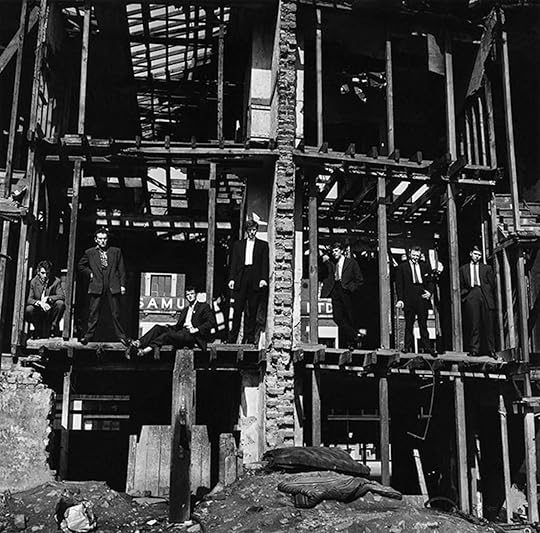
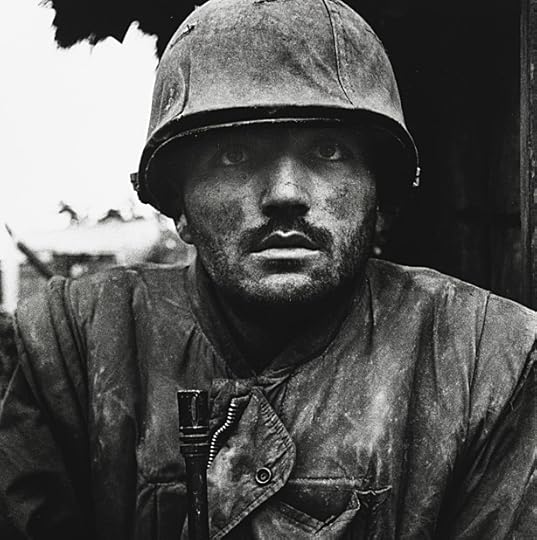
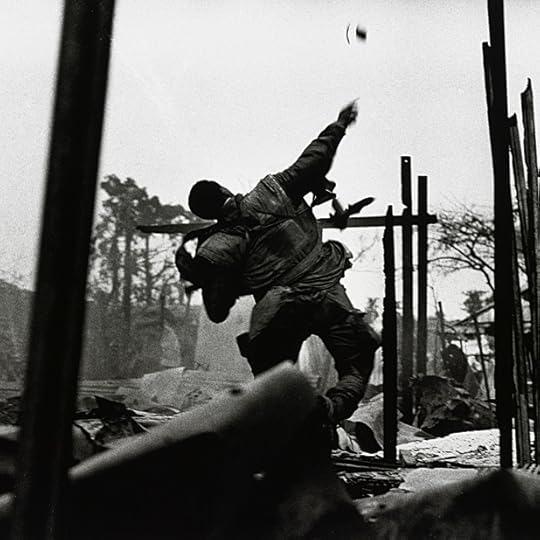
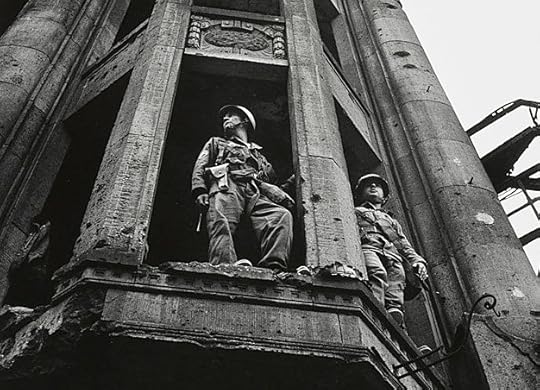
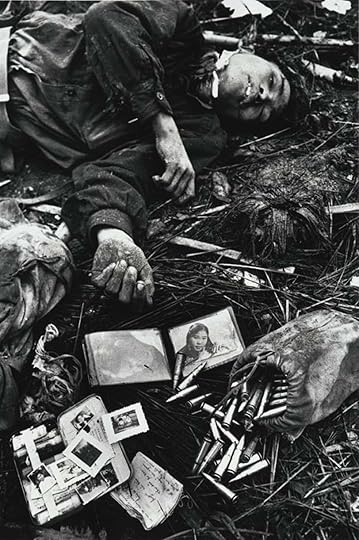
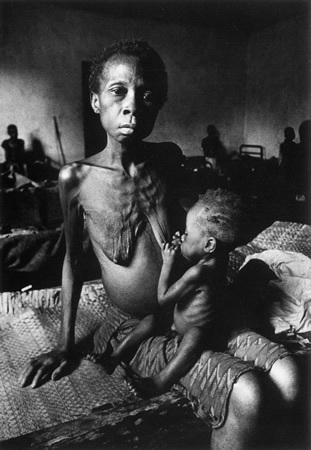
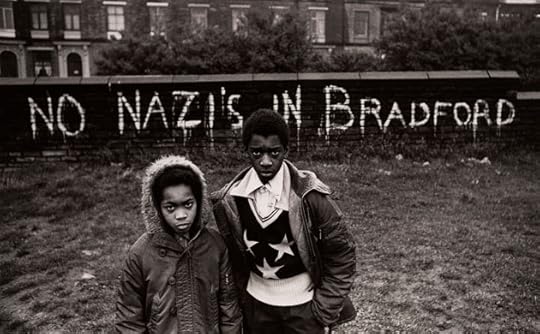
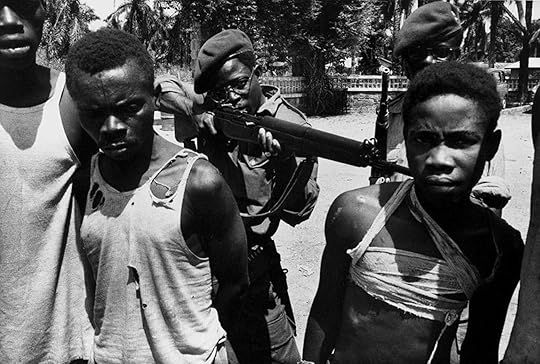
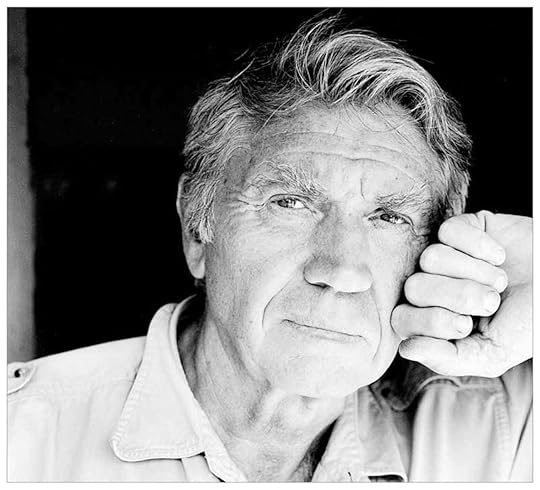
Don McCullin is one of the greatest photographers of conflict in our time. The book begins and ends in the Somerset landscape that surrounds McCullin's home, but the whole sequence of more than two hundred photographs encompasses a ravaged northern England, war in Cyprus, Biafra, Vietnam, Cambodia, Beirut and riots in Derry. The climax of the book is among the cannibals and tribespeople deep in the jungles of Irian Jaya, where McCullin focuses on humanity in an almost Stone Age condition.
Don McCullin grew up in north London and was evacuated in 1940 to Somerset. He failed the eleven-plus examination and went to Tollington Park Secondary Modern School. He won a trade art scholarship to the Hammersmith School of Arts and Crafts and Buildings. His father, who was an invalid, died, aged forty and McCullin was forced to find work to earn money for the family. He became a pantry boy on the London, Midland and Scottish Railway dining cars, travelling between London and Manchester. In 1950 he went to work in a cartoon animation studio in Mayfair before the Observer newspaper bought one of his gangland pictures and set him on the road as a photojournalist. He moved to the Sunday Times, where he worked for eighteen years. His photographs of almost every major conflict in his adult lifetime until the Falklands war provide some of the most potent images of the twentieth century. His pictures are in major museum collections all over the world. He is the holder of many honours and awards, including the C.B.E. His home is in a Somerset village.
“I don’t like distance, I like to make what I do very personal and I like to get as close as I can in war so that I can show people the extreme misery of it and the futility of it – you might say I plunged my hand right into the blood”.
Not much reading to be done with this book to be fair, there's a page or two of writing about McCullin, then a few pages of quotes from him about how he works, and his experiences of war. It's quite insightful, even though I've seen him speak in person about his work, this felt way more personal. The plates are good quality and there's a useful timeline of his life/events, as well as selected bibliography. Worth a read/look if you're interested in war photography.
I bought this following my visit to the Liverpool Tate Exhibition. It is entitled for that, not strictly what I am reviewing, as Tate Liverpool book not on Good Reads. The exhibition is always going to be more impressive and that’s the only reason I’ve gave 4. What an instinct McCullin had, for recording images from crucial, and unjust times in wield history. Civil war seems to be his specialty. Outstanding images, with good text to direct.
At first blush, one might think of a conflict photographer as simply recording the scenes in front of him. This book, of around 350 images, show that Don McCullin has a personal & recognizable style that he brings to his subjects regardless of the circumstances – whether it’s a landscape or a firefight. That he has the presence of mind to craft such images often under such trying circumstances is nothing short of remarkable. His photographs are unforgettable.
McCullin’s images show plenty of evidence of darkroom craft. I suspect much of his style & aesthetic emerges from the development tray. This is in no way a criticism. Like Ansel Adams, it appears that the negative is the score and the print is the performance.
This collection from Aperture is large-format, beautifully printed, and is as likely as much of a definitive collection as an ordinary mortal can afford, short of the £995.00, Don McCullin: Irreconcilable Truths boxed set edition. I would be remiss to omit mention of the essays by Susan Sontag and Harold Evans but, truth to be told, these photographs speak handsomely for themselves.
Questo volume è un omaggio alla carriera di don McCullin, uno dei migliori fotografi di guerra degli ultimi decenni. McCullin ha iniziato da perfetto autodidatta, proprio come tanti altri illustri fotoreporter, come lo stesso Capa. In queste pagine risalta la sua capacità di spaziare dal campo di battaglia, al reportage urbano, passando per i paesaggi campestri per giungere fino alla ricerca etnografica. La cifra unificante del lavoro di McCullin è il suo incredibile talento per la composizione, che riesce ad equilibrare anche nelle situazioni più estreme, insieme ad una costante attenzione alla persona umana, sempre inquadrata con grande rispetto. La sua tecnica preferita è il B&N, che stampa personalmente, con una preferenza per i toni scuri, il low-key. Un volume stupendo, degno della biblioteca di ogni appassionato di fotografia, disponibile anche in lingua italiana nell'edizione Contrasto Due.
Simply astounding, soul destroying images. I can't view McCullin's work in large doses... with most images of violence or extreme despair, viewers become numb with prolonged exposure, but not so with his work. You feel the power in every single one, and eventually it becomes unbearable. A truly amazing, pioneering photographer.
I saw an exhibition of his work at the Barbican in London some years back, but a lot of these photos I had not seen before. He is slightly colour-blind so all his photographs are in black-and-white. His work is superb, being non judgemental – just documenting - which makes it all the more powerful. Some of his work reminds me of Lee Miller’s fantastic photographs taken after WWII.
Unsettling, upseting, unbeleivable and uplifting ... an amazing collection by a truely gifted man. The only dissapointment was the lack of background description ... one line wasn't enough.