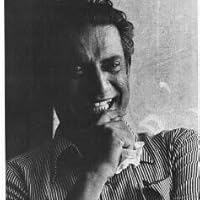
With his debut collection of short stories in English, Fair Tree of the Void (1990), Vilas Sarang established himself as a writer of great gifts, and one with a unique sensibility and literary vision. His works since—in Marathi and English—have confirmed his reputation as one of India's finest and most daring contemporary writers.
The Women in Cages brings together all his short stories written in English, both previously published and new, brilliantly highlighting his singular imagination and style. From the desecration of a funeral pyre by the simple act of warming one's hands on the blaze to the transformation of a man into a gigantic phallus enticing crowds of devoted as a live symbol of Lord Shiva; from the prostitute who uses the occult to generate numerous vaginas all over her body to a military general who abolishes an entire season for fear of revolution, Sarang presents startling thematic variety , always suggestive of strange and haunting alternative universes that transcend time and space. Gritty and disturbing, and leavened by wit and compassion, The Women in Cages is a masterful attempt at capturing the myraid nuances of modern life.
Sarang is an original: he writes clearly and beautifully about often bizarre events in a precisely realized world. —Anthony Thwaite, poet and former editor of Encounter.
One of the most significant modernist writer in Marathi writer and English, Vilas Sarang has written remarkable short stories, poems, a novel and also brilliant pieces of criticism in his first language Marathi as well as in English. His Marathi short story collections are 'Soledad' (1975) and 'Atank' (1999) and translations of his stories in English are collected in 'A Fair Tree of the Void' (1990) and more recently `The Women in the Cages' (2006). A selection of his short stories also appeared in French translation in 1988. His English novel 'The Dinosaur Ship'(2005) and his Marathi novel is `Enkichya Rajyat'. His Marathi collection of poems is published under the title Kavita 1969-1984 and his collection of English poems is published as 'A Kind of Silence'(1978) and recently he has brought out ` Another Life'. He has also written significant criticism in Marathi 'Sisyphus ani Bolakka' and 'Aksharanchya Shrama Kela'(2000).He has also published The Stylistics of Literary Translation ( 1988 ) and edited the anthology Indian English Poetry Since 1950 ( 1989. He has also edited reputed literary journals like the Bombay Review and The Post Post Review.
He holds a Ph. D. in English from Bombay University and another in comparative literature from Indiana University. He taught at the University of Basra in Iraq during the 1970s, became Professor of English and Chair of the Department of English at Bombay University in the eighties, and he has also taught at Kuwait University. He lives in Mumbai
The quest for primitive source of human existence is an important feature of his writings. His short stories are often surreal and have often been compared to Kafka. For instance, in one of his stories collected in The Women in Cages, the narrator finds himself transformed into a gigantic phallus. In another more well known story, a person named Chako is marooned on an island where women have either upper half of their bodies or the lower half. Sarang is awovedly anti-representational modernist in his aesthetics and provides a refreshing alternative to over-hyped `diaspora' and `exiled' non-resident Indian English writers like Salman Rushdie, VS Naipaul and Kiran Desai.
"The incomparable silence of Vilas Sarang" Sarang would scribble "snot green sea" on the blackboard. Long silence. Sarang would smile. Long silence. Sarang would talk about Joyce's use of water as a metaphor. Longer silence. Nothing would happen in class. All of us staring at the professor. And he staring out of the window. Some more silence. http://www.mumbaimirror.com/mumbai/ot...
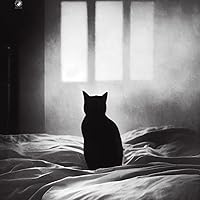
This book was a random pick from the library.Honestly speaking I was attracted to the cover image and title of the book. But I'm glad that I chose it or rather the book chose me. This is a collection of short stories in five sections. Almost all the stories revolves around Mumbai. It is not something you get to read frequently. The stories are bizarre, but interesting and haunting at the same time.
Short stories for me almost always indicate how the parts must defeat the sum. That said, life has been a bit fractionated as of late, and the benefit of such collections is they get fit into the broken parts of daze.
Anyway, overall I did find this collection highly rewarding, albeit as often repulsive as it was reflective. Perhaps steel yourself a little, and don't get knocked off balance into the muck or infected navel Sarang gazes at. Or if you revel in such grime, well.....enjoy?
That said if you have to read just one story, please check out "A Tale of Two Generals." I read it once, and then immediately re-read it. That never happens personally.
I wish I could recall who/where I was turned on Sarang, perhaps it was connected to Agnes Varda?!? I think the story referring me was the title of this collection. Part of the "Libido Zones" section, "The Women in Cages" places a mosquito-riddled rabbit on symbolic scales with a deceased prostitute. For what it's worth, that prostitute is, like the viewpoint uniting the stories here, is male. That said, the collection of stories from the last millennium is miles away from machismo masquerading as strength these days, in the midst of it, Lord Indra himself declares "I am sick of desire."
Rounding up a bit to a five, and not quite sure this is fodder for our book club, but many more people explore these. Finding more Sarang (in English) may take some work, but just because something is a bit difficult does not mean it should not be done.
Kafka influenced stories (no surprise since the author did his thesis under Prof Breon Mitchell, who has done a most remarkable translation - possibly the best till date - of The Trial ). The stories are rooted in the urban metropolis of India, but that’s where the similarity ends with other Indian writers writing in English. These stories take weird shapes , forms, revel in absurdism and abstract metaphors , punctuated by black, dry humour . The best ones are going to linger for a long time.
Is it okay to say that this book reminded me of petrichor that emanates from freshly washed, rain-swept earth? Don't know how to describe this book otherwise. Writing is so imaginative. I wonder how writers like Sarang can convey profound thoughts in simple language. The Women in Cages is my favourite short story in this. Being born and brought up in Bombay, it was such a treat to look at your city and its people from a different perspective. Simply wonderful writing.
An excellent collection of short stories that range from the bizarre to the mundane, this is a must read for anyone who is a fan of this kind of prose. Insightful, pertinent and brilliant.