Atheism Advanced answers many questions, including: Why must atheists stop "speaking Christian?"—not only to prevent religionists from setting the terms of debate but also to prevent them from determining the very thoughts we think? Are there any religions without gods? How are gods created, and are they being manufactured today? Why is science necessarily atheistic? Why must atheists advance from being simply "without gods" to being "Discredists," thinkers who reject belief-based reasoning altogether? Includes an anthropology of comparative religion.
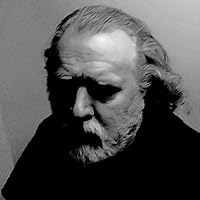
Prof. David Eller is a cultural anthropologist who has conducted field research among Aboriginal societies in Australia and now teaches anthropology in Denver, Colorado. His recent college textbook Introducing Anthropology of Religion is being hailed as the most significant introduction to the scientific study of religion in a decade. His previous AAP book Natural Atheism showed him to be as good a philosopher as scientist. Now we see he is equally skilled as a linguist and semanticist and can show that for knowledgeable atheists "atheism" means more than the absence of god-beliefs: it is the absence (indeed the rejection) of belief altogether.
After you read my review please go to http://www.amazon.com/review/RYRPGZLQ... and click like. I would certainly appreciate it. I'm just 15 positions away from making it into the top 1000 new reviewers. How cool is that? Thank in advancce.
Atheism Advanced by David Eller
"Atheism Advanced" is the interesting, and educational book that inspires atheists to advance their own words and proceed to their own worlds. It's a cogent plea backed by persuasive arguments that compels freethinkers to formulate their own experiences, an atheist culture. This 468-page book is composed of eleven chapters: 1. Atheism versus A Theism: Rethinking the Religious Debate, 2. Speaking Christian: Atheism and the Language of Religion, 3. What is Religion? Getting Beyond the Theistic View, 4. Making Gods: The Continuous Creation of Religions, 5. Religion and Violence: The Virtue of Hurting, 6. The Atheism at the Heart of Science: Why Science is Inherently and Necessarily Non-Religious, 7. Atheism in Solitude: Escaping the Madness of Crowds, 8. Religion and the Colonization of Experience, 9. My Impossible Ones: How Western Tradition Made (and Makes) Religion, 10. Of Myths and Morals: Bringing Religion to Life, and 11. Discredism: Beyond Atheism and Beyond Belief.
Positives: 1. Thought-provoking book. Many moments of enlightenment. 2. Well-written, well-researched book that completely satisfies. 3. Dr. Eller is first and foremost an educator. He makes you earn the knowledge he is sharing. You may be a little impatient at first, but ultimately, it leads to wisdom. Bravo! 4. Three ways to advance atheism. 5. Absolutely loved the aphorisms, "An atheist is not a person who knows little about religion. An atheist is a person who knows too much about religion". 6. Dr. Eller does a superb job of developing all his concepts before he establishes his arguments. 7. Great education on what religions are and the many diverse manifestations. 8. Clearly establishes what atheism is. 9. How the language of religion permeates our societies. Religious talk. Compelling stuff! 10. Great wisdom throughout this book, "It's not what you say, it's what people hear". 11. How to speak Atheist, cool. 12. The fascinating topic of how religions emerged. Many interesting theories and perspectives. "Religion in Geertz' view is about producing the kinds of people who will do the kinds of things that the religion demands that people do". 13. The evolution of religions. 14. Interesting history of the various and diverse manifestations of Christianity. 15. "All traditions were invented; it is only a matter of how far back". 16. Violence in proper perspective. To learn even more, I suggest "Cruel Creeds..." by Dr. Eller an educational book. 17. Dr. Eller's model of six degrees or sources of violence. 18. Religious sanctioned violence. 19. Science and why it doesn't know no god(s), admits no god(s), and need no god(s). 20. The superiority of science. The differences between science and religion. 21. "Groups and crowds are about feeling and doing, not thinking". Just like religions, interesting. 22. The colonization of religion, interesting stuff. "Controlling lives was more important than convincing minds". 23. How religion "colonizes" our lives. 24. Excellent section on the men and ideas that shaped and perpetuated Western-Christian thought: Plato, Tertullian, Descartes, Kant, Kierkegaard, James and C. S. Lewis. 25. One of my all-time favorite chapters, "Of Myths and Morals". Awesome! 26. The evolution of morality. 27. "The `moral' is what humans are obligated to do, or at least what they feel obligated to do". 28. "Myths are the narrative patterns that give significance to our existence". 29. The new term, discredism. 30. Great quotes, "People do not get argued out of religion because they do not get argued into religion in the first place". 31. A compelling case for a new and inspired atheism. 32. Bibliography and references. 33. General index.
Negatives: 1. An investment of time is required. 2. I would love to have the electronic version of this book. 3. Dr. Eller takes his time to establish the foundation of his concepts. Patience will pay off.
In summary, this book is like that great meal that mom fed you, it's not only nutritional but it is satisfying too. At first, you may not like some of the vegetables, you may not even like the soup but once you sink your teeth into the main course, it all comes together and the best thing...it's all good for you. That's how I feel about this book. Dr. Eller takes his time to develop his structure of knowledge. He has the blueprint and follows it methodically to a satisfying, educational conclusion. The chapter titled, "Of Myths and Morals: Bringing Religion to Life" is one of the best chapters I've ever read. Don't hesitate to get this delicious treat, I highly recommend it!
Further suggestions: "Natural Atheism" and "Cruel Creeds..." by the same author, "The Believing Brain..." by Michael Shermer is superb, "The Brain and the Meaning of Life" by Paul Thagard, "Hardwired Behavior" by Laurence Tancredi, "Superstition..." by Robert L. Park, "Braintrust: What Neuroscience Tells Us about Morality" by Patricia S. Churchland, "The Invention of God..." Bill Lauritzen, "Man Made God..." Barbara G. Walker and "The Invention of the Jewish People" by Shlomo Sand.
Fantastic. Every atheist AND theist should read this book. Good topics, good discussion, good points, well reasoned. This should make all but the most close-minded think. Recommended.
David Eller is a cultural anthropologist, and has also written “Natural Atheism.” He wrote in the Introduction to this 2007 book, “It is time for atheism to advance. For this reason I have written the book that I present here… I seek to advance, and to encourage others to help advance, atheism in three ways. First, naturally, I aim to advance atheism in the sense of promoting it. I want more people to hear it and to embrace it…. Second, I am to advance atheism in the sense of moving it in new directions… I hate to say it, but atheists tend to write the same book again and again… We do not need to publish the proofs of the non-existence of god(s) again. We do not need to trash fundamentalism again. We do not need to belly-ache about how violent some or all religions are again… Finally, I aim to advance atheism in the sense of moving BEYOND atheism … I see two ways in which I envision a ‘new atheism’… One way involves putting atheism in a much wider context… we must form and adopt something… that criticizes all ‘beliefs’ that contradict evidence and reason… The other way… is to overcome its argumentative and propositional limitations.”
He explains, “atheism is not an alternative to or refutation of all religion… ‘atheism’ and ‘religion’ are not opposites. A religion can be a-theistic … and still be a bona fide religion… most religions … simply make no reference to gods… it is entirely possible and actually entirely consistent that an a-theist might believe in all kinds of other non-god supernatural beings. An animist who believes in interactive nature spirits is, in every real sense, an atheist… So, in any meaningful way of thinking, atheism is not a-religion or anti-religion. Most religions ARE atheisms.” (Pg. 29-30)
He suggests, “We do well to begin our debunking of religion with a debunking of religious terminology… However, we cannot end our debunking there… We atheists… tend to overemphasize the empirical or cognitive … part of religion at the expense of the other, and arguably more vital, parts… religion is not only, maybe not mainly, ideas or beliefs or fact-claims.” (Pg. 45)
He asserts, “We should never use the word ‘belief’ or ‘believe’ in regard to ourselves… since its only concrete reference is to unsupported or counter-factual claims, and I hope we have none of these. We should not even use the word ‘religion’ … if we mean Christianity specifically… We should replace it with ‘religions’ or… ‘the Christian religion.’ … And we should never, under any circumstances, call atheism a religion or a church.” (Pg. 65)
After quoting comparative religion scholar Huston Smith, he comments, “This statement is so muddled that I am ashamed that an intelligent scholar could utter it. Can science tell us what is outside the universe? How do we know there is anything outside---that there even IS an ‘outside’ at all?... when he says it would be foolish not to draw on every available resource, he is talking double nonsense. It is… IMPOSSIBLE to do so… Shall we also draw on non-scientific and non-religious ‘resources’ alike, including dreams and delusions, common sense and old wives’ tales? How ridiculous.” (Pg. 207)
He states, “that atheists are congenitally a bit suspicious of groups may be a logical, even unfortunately necessary or salutary thing. Atheism does not force or command atheist individuals to be solitary. But solitude may be a contributing condition to being an atheist… groups are not conducive to thinking, let alone thinking rationally and … thinking ORIGINALLY… I would describe myself as ‘not a group kind of guy.’ More importantly, I find that I do most of my best thinking not only when I am alone but when I am quiet.” (Pg. 264-265)
He observes, “it is POSSIBLE to give a natural, evolutionary explanation, so that non-natural, supernatural, and creationist explanation are not necessary or welcome… morality is not utterly unique to humans but has its historical, evolutionary antecedents and (therefore) its biological bases. In other words, morality … emerges gradually with the emergence of certain kinds of beings living certain kinds of lives… morality, like language, is not a all-or=nothing thing but rather the kind of phenomenon that a being can exhibit more-or-less of until we cross a threshold into a full human version. The key to the evolutionary theory or morality is that particular sorts of beings---especially SOCIAL beings… tend reasonably to develop interests in the behavior of others and capacities to determine and to influence that behavior.” (Pg. 374-375)
He concludes, “People do not get argued out of religion because they do not get argued into religion in the first place… religion is not only or perhaps mostly about doctrines or creeds or ideas of beliefs. What is a religion, then? It is primarily a way of talking and secondarily a set of things to talk about… Religion is also PRACTICES more than it is ideas. It is THINGS TO DO, and it does not particularly matter what those things are.” (Pg. 424)
This book will be of keen interest to atheists, and some other skeptics.
Not without its flaws and shortcomings, but Eller amply compensates for them by his breadth and focus.
In stead of focusing on individual cognition as generator of religious concepts, Eller takes a broad look at group interaction as re-framer of non-religious concepts as if they are religious and as incubator and propagator of those re-framings. This breadth alone makes his book far more valuable than for instance J. Anderson Thomson's "Why we believe in god(s)". Eller contrasts religions and theisms against each other, investigates the madness of crowds, digs into myths and morality and their origins, and suggests that we quit accepting religions' terms (in a double sense) for the discussion and fight.
Where Eller shifts his focus to from that of Thomson (on psychology) as he increases his breadth is on those terms. Religious terms like 'religion', 'supernatural', 'belief', and so on; and other terms like 'morality', 'myth', etc. What do these words mean? Do they mean anything at all? How can we speak about the underlying subjects with greater clarity and productivity?
Even though I don't agree with absolutely everything he writes, there is a lot to learn, to think about, to let sink in, and to look into more deeply via his bibliography. Among the best books on atheism, and the best study of religion, that I have read.
PS: I highly recommend his earlier book: Natural Atheism. Either as a primer or as a supplement to this one.
Brilliant book. Should be read by every atheist and theist. Found it challenging, provocative, and carefully reasoned. One of the most compelling books I've read by an atheist. Author is an anthropologist and philosopher and the material he provides on religions generally is excellent. Promotes what he calls discredism - the complete eschewal of belief defined as something held by someone without adequate evidence. Argues that atheists must stop letting religionists (in particular Christians) set the terms of the debate in modern society. Has fascinating discussions on a range of issues including morality and the history of Western religious thought. Thoroughly enjoyed this book which was “meaty” but clearly articulated. Will add his previous book to my to-read list!