

What do you think?

Fly by Night #2
Недобрый час. Хроники Расколотого королевства
С одиннадцатилетней сиротой Мошкой Май вы могли познакомиться еще в книге "Flybynight". На этот раз Мошка снова ищет приключений. И она их находит вместе со своим другом - поэтом, аферистом и обманщиком Эпонимием Клентом. Действие книги происходит так бурно, сюжет так закручен, что оторваться невозможно.
Мошка и Клент узнают, что негодяи похитили прекрасную Лучезару, дочку мэра города Побор. Они отправляются в Побор, чтобы выручить всеми любимую девушку… Только вот Побор не простой город. Здесь есть дневные и ночные жители, есть Дневной и Ночной Побор. И когда приближается ночь, на улицы выезжает зловещая черная карета, а добрые жители Дневного города трепещут от страха за закрытыми дверями своих домов.
Мошка, рискуя жизнью, идет в Ночной Побор за похищенной дочкой мэра. Но вот вопрос, нужно ли дочке мэра, чтобы ее спасали? И кто спасет Мошку, которая может навсегда остаться в Ночном городе и больше никогда не увидеть солнечного света?
Мошка и Клент узнают, что негодяи похитили прекрасную Лучезару, дочку мэра города Побор. Они отправляются в Побор, чтобы выручить всеми любимую девушку… Только вот Побор не простой город. Здесь есть дневные и ночные жители, есть Дневной и Ночной Побор. И когда приближается ночь, на улицы выезжает зловещая черная карета, а добрые жители Дневного города трепещут от страха за закрытыми дверями своих домов.
Мошка, рискуя жизнью, идет в Ночной Побор за похищенной дочкой мэра. Но вот вопрос, нужно ли дочке мэра, чтобы ее спасали? И кто спасет Мошку, которая может навсегда остаться в Ночном городе и больше никогда не увидеть солнечного света?
512 pages, Hardcover
First published January 1, 2010
About the author
Frances Hardinge
36 books2,820 followersFrances Hardinge spent her childhood in a huge, isolated old house in a small, strange village, and the two things inspired her to write strange, magical stories from an early age. She studied English at Oxford University and now lives in Oxford, England.
Ratings & Reviews
Friends & Following
Create a free account to discover what your friends think of this book!
Community Reviews
Displaying 1 - 30 of 295 reviews

November 14, 2013
Troubles again! Unfortunately, Mosca Mye, Eponymous Clent and the goose Saracen have run into so many complications with their latest scheme that they’ve run through the first, second, and third back-up plans.
“Quaternary plan!’ gasped Clent. ‘Creative panic!'”
But at least Saracen is on their side, although Mosca needs to be cautioned by Clent against unleashing the power of the goose. “‘Be it even so, now is the time for calm calculation… and not for sending your web-footed apocalypse on a one-goose rampage…'”
The story begins with Saracen, who has been holding a village hostage with his belligerent behavior, and indirectly, Clent and Mosca for the damages he’s caused.
“Saracen, who had been swaggering to and fro in some uncertainty, was delighted to see Mosca on her feet and screaming at somebody. At last he knew how to choose his enemy. There was a froth of white wings, and a splash…”
I must say how much I love the irascible, bullying goose. Hardinge is particularly clever in avian characterization, keeping him very goose-like and leaving the details of his skirmishes behind flying feathers and howls of anguish. I suspect I find him particularly amusing because I have a Saracen of my own, an Amazon parrot that occasionally struts across the floor (he can fly, but for some reason chooses to walk during these little displays, perhaps the better to parade), bound for the lower rungs of a desk chair that he considers a back-up lair. Woe betide any toes or unsuspecting ankles coming to use the computer. Once, my mother complained she had to climb on top of the chair to escape after being subjected to his bloody ambush. I could only laugh–there is something so absurd about the power of 800 grams holding 60 kilograms hostage. David and Goliath, indeed. I share that anecdote to say that Hardinge captures that avian swagger well, and if she is exaggerating, it is likely by only a little.
So the quick sum is that Mosca and Clent are in a hard spot after leaving Mandelion, Clent particularly so as he languishes in debtor’s prison. Mosca takes a scribe job to earn enough coin for bail, but is caught in a double-cross. She’s resourceful, however, and after aid from an old acquaintance, they make haste for the open road. Unfortunately, the choice of destination is somewhat limited by Clent’s reputation, so they find themselves headed toward the town of Toll, a gateway to the eastern counties. Toll is very unusual, for more than just their critical control of the only bridge spanning a gorge that divides the country. They’ve made a science of the many little gods, and have assigned ‘dayshift’ or ‘nightshift’ to each one based on their characteristics. Unfortunately, they’ve also done the same to people, since people are named after the god in ascendance during their birth. Clent and Mosca have three days to come up with enough money to pay the exit fees to leave Toll, or they’ll be permanently assigned–Clent to the day, Mosca to the night. The main story takes place in Toll, where there’s thievery, love, duplicity, dungeons, damsels in distress, the strange habits of the inhabitants at dawn and dusk, and, of course, rebellion.
“‘Just between you and me,’ Mosca whispered, ‘radicalism is all about walkin’ on the grass.'”
Plotting is more singly focused than Fly by Night; the chief goal is to escape Toll, and action is centered around a strategy to earn money. When I was nice and settled into the plot, Hardinge again surprised, managing a clever plot twist as well as a completely satisfactory ending, even when I wasn’t sure it could be done.
Hardinge continues to impress with her imagination, both in setting and in word-smithing. She does amazing things with the town geography, and I can’t help but imagine a movie based on such a vision. I like the characterization; Clent and Mosca are so layered they achieve a rare dimensionality. Clent, in particular, shows the disenchanted but resigned acceptance adulthood often brings, while Mosca remains full of passion and youthful ideas of right and wrong. Perhaps my only complaint is an emphasis on Mosca’s irritable disposition; while it is usually connected to feelings of justice, her contrariness started to feel a little repetitive. I missed the Mosca that was filled with joy from words, learning and discovery of the larger world.
Hardinge still has a way with words, a playfulness that has me smiling as I read:
“‘So… the doors have been blocked.’ Clent was clearly becoming uneasy. ‘Plague, possibly. Or giant rats…’ He was blinking rapidly, as if his eyes had noticed that his words were not improving morale and were desperately signaling to his mouth to stop moving.”
“When she was at last woken by a young ostler politely and carefully stepping on her head in his attempts to rake out the dead coals…”
“A couple of expressions pulled Clent’s face to a fro between them, like puppies trying to fight their way out of a bag.”
Thematically, there is an interesting and indirect exploration of the power of names and the accident of birth. It leads to an even more interesting exploration of the power of social pressure–do you believe the expectations society ascribes to you because of class? Rise or sink to the occasion? I enjoyed the way Hardinge explores the issue without becoming pedantic or making Mosca into a straw-girl for an Important Life Lesson.
Overall, a great read that was highly satisfying on a number of levels. Hardinge’s made herself a spot on my ‘must-read’ authors.
Four-and-a-halfgolden eggs sassy geese
http://clsiewert.wordpress.com/2013/1...
“Quaternary plan!’ gasped Clent. ‘Creative panic!'”
But at least Saracen is on their side, although Mosca needs to be cautioned by Clent against unleashing the power of the goose. “‘Be it even so, now is the time for calm calculation… and not for sending your web-footed apocalypse on a one-goose rampage…'”
The story begins with Saracen, who has been holding a village hostage with his belligerent behavior, and indirectly, Clent and Mosca for the damages he’s caused.
“Saracen, who had been swaggering to and fro in some uncertainty, was delighted to see Mosca on her feet and screaming at somebody. At last he knew how to choose his enemy. There was a froth of white wings, and a splash…”
I must say how much I love the irascible, bullying goose. Hardinge is particularly clever in avian characterization, keeping him very goose-like and leaving the details of his skirmishes behind flying feathers and howls of anguish. I suspect I find him particularly amusing because I have a Saracen of my own, an Amazon parrot that occasionally struts across the floor (he can fly, but for some reason chooses to walk during these little displays, perhaps the better to parade), bound for the lower rungs of a desk chair that he considers a back-up lair. Woe betide any toes or unsuspecting ankles coming to use the computer. Once, my mother complained she had to climb on top of the chair to escape after being subjected to his bloody ambush. I could only laugh–there is something so absurd about the power of 800 grams holding 60 kilograms hostage. David and Goliath, indeed. I share that anecdote to say that Hardinge captures that avian swagger well, and if she is exaggerating, it is likely by only a little.
So the quick sum is that Mosca and Clent are in a hard spot after leaving Mandelion, Clent particularly so as he languishes in debtor’s prison. Mosca takes a scribe job to earn enough coin for bail, but is caught in a double-cross. She’s resourceful, however, and after aid from an old acquaintance, they make haste for the open road. Unfortunately, the choice of destination is somewhat limited by Clent’s reputation, so they find themselves headed toward the town of Toll, a gateway to the eastern counties. Toll is very unusual, for more than just their critical control of the only bridge spanning a gorge that divides the country. They’ve made a science of the many little gods, and have assigned ‘dayshift’ or ‘nightshift’ to each one based on their characteristics. Unfortunately, they’ve also done the same to people, since people are named after the god in ascendance during their birth. Clent and Mosca have three days to come up with enough money to pay the exit fees to leave Toll, or they’ll be permanently assigned–Clent to the day, Mosca to the night. The main story takes place in Toll, where there’s thievery, love, duplicity, dungeons, damsels in distress, the strange habits of the inhabitants at dawn and dusk, and, of course, rebellion.
“‘Just between you and me,’ Mosca whispered, ‘radicalism is all about walkin’ on the grass.'”
Plotting is more singly focused than Fly by Night; the chief goal is to escape Toll, and action is centered around a strategy to earn money. When I was nice and settled into the plot, Hardinge again surprised, managing a clever plot twist as well as a completely satisfactory ending, even when I wasn’t sure it could be done.
Hardinge continues to impress with her imagination, both in setting and in word-smithing. She does amazing things with the town geography, and I can’t help but imagine a movie based on such a vision. I like the characterization; Clent and Mosca are so layered they achieve a rare dimensionality. Clent, in particular, shows the disenchanted but resigned acceptance adulthood often brings, while Mosca remains full of passion and youthful ideas of right and wrong. Perhaps my only complaint is an emphasis on Mosca’s irritable disposition; while it is usually connected to feelings of justice, her contrariness started to feel a little repetitive. I missed the Mosca that was filled with joy from words, learning and discovery of the larger world.
Hardinge still has a way with words, a playfulness that has me smiling as I read:
“‘So… the doors have been blocked.’ Clent was clearly becoming uneasy. ‘Plague, possibly. Or giant rats…’ He was blinking rapidly, as if his eyes had noticed that his words were not improving morale and were desperately signaling to his mouth to stop moving.”
“When she was at last woken by a young ostler politely and carefully stepping on her head in his attempts to rake out the dead coals…”
“A couple of expressions pulled Clent’s face to a fro between them, like puppies trying to fight their way out of a bag.”
Thematically, there is an interesting and indirect exploration of the power of names and the accident of birth. It leads to an even more interesting exploration of the power of social pressure–do you believe the expectations society ascribes to you because of class? Rise or sink to the occasion? I enjoyed the way Hardinge explores the issue without becoming pedantic or making Mosca into a straw-girl for an Important Life Lesson.
Overall, a great read that was highly satisfying on a number of levels. Hardinge’s made herself a spot on my ‘must-read’ authors.
Four-and-a-half
http://clsiewert.wordpress.com/2013/1...

May 26, 2013
“But I don’t want to be grateful. I’m tired of being kicked about like a pebble, and told that I have to be happy that it’s no worse. I’ve had enough. It’s time the pebble kicked back.”
I had a blast with this clever adventure book - which is the second in the series, but me having zero memory of what happened in the first book didn’t matter. It being a Frances Hardinge book to me means that I can read it based on blind faith that Hardinge will get it right, and so far it hasn’t failed me. Her writing just clicks perfectly with my brain, just like Pratchett does, and I’m immensely thankful for that - it means that I always can rely on a good book when I need one.
It is set in a land that is more of a nasty nightmare than a fantasy, where people are dedicated to their patron saint, one of the hundreds of Beloveds, which all rule a part of a day and those born on a particular day at a particular time are considered to have the traits of a particular Beloved. Your birth hour determines your name which determines your life, and lying about your name is a taboo. It’s an awfully convenient and terribly unfair way to stereotype people, of course, and Mosca Mye, born under the patronage of what basically amounts to the Lord of the Flies, feels that acutely. It adds a nasty flavor to her already tough life as an orphan in the care of a grifter crook. Good thing she has a weapons-grade homicidal goose at her service. That, and her wits and a bit of a temper.
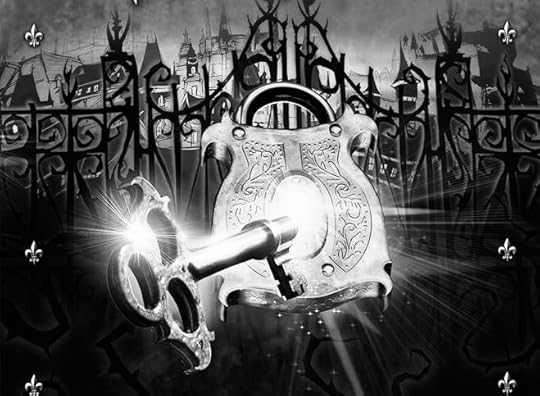
The setting is marvelous. Meet the town of Toll, a town controlling the land’s only reliable bridge over an impassable gorge, a town to get into which you need to pay a steep fee — and the town to leave which you need to pay another steep fee or else you’re stuck there. And this town — well, let Mosca voice it for you: “Yes, Toll was passing fair in the light of the sun, but she had a shrewd idea that for any who saw it by night it would be anything but fair.”
In this place the ones born with “good” names under the patronage of auspicious “good” to live in the daylight, and the “less good” are related to the nighttime and poverty and crime, and the town rearranges itself with every sunset and sunrise to keep the daylighters and the nightlighters separated. And all it takes is a sudden reclassification to consign people to the “bad” side. And if you don’t like it — well, you probably can’t afford to pay enough to leave. It’s Hotel California, really. The sinister Locksmiths are the mafia of the town, but they did not expect the havoc that one Mosca can cause.
“And below them, Toll-by-Night set about folding itself away, like a stilt-legged monster into a closet. It inhabitants crept back into the unwanted places, the crannies and cellars and forgotten attics, and locked themselves in.
A bugle blew. A silver jingling swept through the town, sealing away all bad reputations and bitter-tasting names.
Another bugle sounded. And Day swept in like a landlord, not knowing that it was only a guest in Night’s town.”
It’s a fun adventure, pretty tightly plotted and confidently and cleverly moved along through dangers and perils and street chases until the town’s life is changed forever. It reads a bit younger that most of Hardinge’s later books, but it still is a bit dark and does not shy away from things that are serious and unpleasant, and the ending lacks the cheesiness that I thought would be unavoidable - but I shouldn’t have doubted Hardinge. And her characters who start a bit unlikable (Mosca’s abrasive irritability and temper can take a toll even in the most patient reader sometimes) eventually grow on you, sneakily so, and never become vehicles for a message — Hardinge trusts the readers to figure things out without telegraphing them.
And she is just so good with her words, with just enough sardonic wit to make them stick.
“ 'That,' he whispered, 'is unthinkable.' In Mosca’s experience, such statements generally meant that a thing was perfectly thinkable, but that the speaker did not want to think it.”
————
“A couple of expressions pulled Clent’s face to and fro between them like puppies trying to fight their way out of a bag.”
————
“What made a girl a ‘damsel in distress’? Were they not allowed claws? Mosca had a hunch that if all damsels had claws they would spend a lot less time ‘in distress.”
————
“ 'Just between you and me,’ Mosca whispered, ‘radicalism is all about walkin’ on the grass.' ”
But it’s that setting and how well Hardinge plays with it that makes me really like this book. I’m a sucker for well-done settings, and even a decade after I first read this book and mostly forgot the plot I still recalled the setting and even dreamt about it once in a very odd surreal dream. And although both of my buddy readers did not care for this book, I remain a devoted fan.
4.5 stars.
My reviews of other Frances Hardinge’s books:
The Lie Tree
A Face Like Glass
Gullstruck Island
Verdigris Deep
Deeplight
Cuckoo Song
A Skinful of Shadows
April 5, 2011
As I see it, reviewing a sequel is a peculiar enterprise. One can hardly review a book without suggesting to the reader that they read the previous novel as well. And in the rare case where the sequel is better than its predecessor, one’s positive review is sort of moot if it seems as though it’s recommending the first book in any way. This is my convoluted way of saying that I don’t like reviewing them. Heck, I don’t even like to even read sequels half the time. Usually when I do I simply get more of the same old, same old. There are some authors, however, that write such magnificent books that when their sequels do appear you are helpless to resist. Such is the case of Frances Hardinge. There are only a few children’s writers in this world that I will drop everything to read. Hardinge is one of the few. Years and years ago she gave the world Fly By Night, a marvelous girl/goose/con man tale of misfits who unwittingly influence huge events. The follow-up Fly Trap (called Twilight Robbery in the UK) reunites readers with familiar characters, but does not actually require the reader to have read (or even reread) the first. The result is a rollicking adventure start to finish that does not slot neatly into any contemporary category, but still winds up charming its readers.
When we last saw our heroes, the orphaned Mosca Mye with her homicidal good Saracen, her penchant for language, and her smart mouth was still in the company of the silver-tongued con man Eponymous Clent. Having helped spark a revolution in the city of Mandelion, the three have taken off for other towns and now need to escape further. In their travels they end up in the city of Toll. Here you have a residence where the moment of your birth shapes where you may exist. Some citizens live during the daylight hours and have all the perks society can offer. Others live during the night and must do whatever they can to survive. Mosca, for her part, has a “dark” name and it soon becomes clear that if she and Eponymous can’t raise the necessary funds to leave the town, she’ll be banished to the night and have to deal with the villains there. The two cook up a plan but soon find that there is more at work in Toll (and more wrong with it) than anyone could have initially suspected.
They’ll call this book “fantasy” because they will have nowhere else to put it. This, in spite of the fact that magic plays no part in Mosca Mye’s world. However, since the book takes place in an alternate world, the only category that comes close to defining it is, indeed, fantasy. For that reason, I’ll call it a fantasy here. Now someday I will get off my lazy heinie and write an article about the use of religion in fantastical children’s novels. Generally speaking, fantasies do one of three things with religion. (A) They ignore it (Harry Potter’s a good example of this). (B) They embrace it wholeheartedly (The Lion the Witch and the Wardrobe, anyone?). (C) They make up their own. (C) is the most interesting of these options, and I’ve seen it crop up in everything from Megan Whalen Turner’s tales of Sounis to The Order of Odd Fish to the stories of Tamora Pierce. Hardinge introduced her own world and its tiny “Beloved” gods in her first book, but here the belief system is pressed even further. Mosca is an agnostic with hopes of becoming an atheist. Unfortunately, she finds herself in a town where the god you are born under (each of the hundreds of gods has a distinct date and time associated with their name) determines if you are a good or bad person. Think of it as akin to horoscopes, only much more complex. Hardinge manages to both mock this system, and yet also cause the reader to wonder at it within the course of the story. You can get a great deal of pleasure out of reading the Table of Contents, listing some of these gods and their names too. There you will find “Goodlady Blatchett, Lifter of the Stone from the Toad”, “Goodman Rankmabbley, Enemy of the Winter Spider”, “Goodlady Nizlemander, Winnower of the Chaff from the Grain,” and, naturally, “Saint Yacobray, Rider of the Horse of Bone.”
Which brings us, naturally, to Hardinge’s love of words. Like her heroine, Ms. Hardinge is a sucker for a well-turned phrase and a delicious name. Simply put, nobody writes like she does. Some of the choice sentences and descriptions I particularly enjoyed included a description of a rarely tended road called “little more than a conspiracy of stones.” A worrisome bridge contains planks that “gave a slightly tuneful xylophone thunk when you stepped on them.” At one point Mosca has to put her faith in someone untrustworthy so, “her hopes once again began their battered, indomitable spider climb up the grimy flue of her soul.” For her, the nighttime smells of “steel and rush lights and the marsh welcoming a misstep and anger souring like old blood.” A man complimented in a terrible way leads to a moment when, “A couple of expressions pulled Clent’s face to and fro between them like puppies trying to fight their way out of a bag.” And finally, a dangerous mission of Mosca leaves, “room in her core for an angry little knot of excitement, tight and fierce as a pike’s grin.” I could go on but then I’d just be rewriting the book itself, word for word. Nothing escapes Hardinge’s eye. The world is full of words that invoke and evoke by turns. Add to our already lovely roster of names from the old book (Mosca Mye, Eponymous Clent, Saracen, etc.) a cluster of new (Laylow, Paragon, Beamabeth, etc.) and you’ve a book worth reading and rereading for the sheer pleasure of it all.
With all her cleverness, it would be easy for Hardinge to lose her grip on the emotional content in this novel. Thinking back on Fly By Night, for example, I know that Mosca took an emotional journey, but I couldn’t have told you what that journey was. Here the unmistakably brilliant girl joins even closer to her chosen guardian. In Clent, Mosca has found a father figure. She would deny it to her grave, mind you, and curse you for even suggesting such a thing, but there is a tenderness between the two characters throughout the course of the story that did not seemingly appear before. Time and again they risk their own skins for one another. You can see the change in Mosca, but it’s a remarkable thing to watch it in Clent. I’ve always pictured him as a kind of W.C. Fields character, albeit one with the tongue of a transient Oscar Wilde. Yet in one scene Mosca deliberately helps Clent by insulting him with great creativity. Clent tries to respond in kind, but his insults are wistful in comparison. I’ve never heard one person call another a “thorn in my side” so tenderly before.
If there is any flaw to the book it lies with Saracen. You simply cannot tote about a homicidal goose and then use him as sparingly as Hardinge does here. At least in Fly By Night he had the great good fortune to save the day while in the presence of an enemy. Here he also plays a big role in the story, but that role is practically off-screen and only mentioned at the end. I had high hopes when, for one brief and shining moment, we got a glimpse into his head and saw that humans in his world were separated into Mosca and not-Moscas. It was a paltry offering, however, and by the end of the tale fans of the now sometimes-green gander will be wishing for his increased presence in the future. Hopefully if Ms. Hardinge gets around to writing a third book in this series, the goose will have his glory.
It is a thick sucker, weighing in at an impressive 592 pages. This is not a book to be handing the reluctant reader, then. Rather, it is intended for the clever child that likes a challenge. The one who read all of The Lord of the Rings and Harry Potter and may have even tried their hand at The Golden Compass. They dare you to challenge them, and so you hand them this beauty, or its predecessor. Because Mosca is so young (12) and likable, kids will gravitate towards her. Teens too, I suspect. As with all her books, Hardinge’s Fly Trap isn’t for all readers. It is, however, bound to entrance and delight those kids that, like Mosca, greedily suck up words and cleverness wherever they may find them. A truly delightful sequel that cannot help but leave you wanting more.
For ages 10 and up.
When we last saw our heroes, the orphaned Mosca Mye with her homicidal good Saracen, her penchant for language, and her smart mouth was still in the company of the silver-tongued con man Eponymous Clent. Having helped spark a revolution in the city of Mandelion, the three have taken off for other towns and now need to escape further. In their travels they end up in the city of Toll. Here you have a residence where the moment of your birth shapes where you may exist. Some citizens live during the daylight hours and have all the perks society can offer. Others live during the night and must do whatever they can to survive. Mosca, for her part, has a “dark” name and it soon becomes clear that if she and Eponymous can’t raise the necessary funds to leave the town, she’ll be banished to the night and have to deal with the villains there. The two cook up a plan but soon find that there is more at work in Toll (and more wrong with it) than anyone could have initially suspected.
They’ll call this book “fantasy” because they will have nowhere else to put it. This, in spite of the fact that magic plays no part in Mosca Mye’s world. However, since the book takes place in an alternate world, the only category that comes close to defining it is, indeed, fantasy. For that reason, I’ll call it a fantasy here. Now someday I will get off my lazy heinie and write an article about the use of religion in fantastical children’s novels. Generally speaking, fantasies do one of three things with religion. (A) They ignore it (Harry Potter’s a good example of this). (B) They embrace it wholeheartedly (The Lion the Witch and the Wardrobe, anyone?). (C) They make up their own. (C) is the most interesting of these options, and I’ve seen it crop up in everything from Megan Whalen Turner’s tales of Sounis to The Order of Odd Fish to the stories of Tamora Pierce. Hardinge introduced her own world and its tiny “Beloved” gods in her first book, but here the belief system is pressed even further. Mosca is an agnostic with hopes of becoming an atheist. Unfortunately, she finds herself in a town where the god you are born under (each of the hundreds of gods has a distinct date and time associated with their name) determines if you are a good or bad person. Think of it as akin to horoscopes, only much more complex. Hardinge manages to both mock this system, and yet also cause the reader to wonder at it within the course of the story. You can get a great deal of pleasure out of reading the Table of Contents, listing some of these gods and their names too. There you will find “Goodlady Blatchett, Lifter of the Stone from the Toad”, “Goodman Rankmabbley, Enemy of the Winter Spider”, “Goodlady Nizlemander, Winnower of the Chaff from the Grain,” and, naturally, “Saint Yacobray, Rider of the Horse of Bone.”
Which brings us, naturally, to Hardinge’s love of words. Like her heroine, Ms. Hardinge is a sucker for a well-turned phrase and a delicious name. Simply put, nobody writes like she does. Some of the choice sentences and descriptions I particularly enjoyed included a description of a rarely tended road called “little more than a conspiracy of stones.” A worrisome bridge contains planks that “gave a slightly tuneful xylophone thunk when you stepped on them.” At one point Mosca has to put her faith in someone untrustworthy so, “her hopes once again began their battered, indomitable spider climb up the grimy flue of her soul.” For her, the nighttime smells of “steel and rush lights and the marsh welcoming a misstep and anger souring like old blood.” A man complimented in a terrible way leads to a moment when, “A couple of expressions pulled Clent’s face to and fro between them like puppies trying to fight their way out of a bag.” And finally, a dangerous mission of Mosca leaves, “room in her core for an angry little knot of excitement, tight and fierce as a pike’s grin.” I could go on but then I’d just be rewriting the book itself, word for word. Nothing escapes Hardinge’s eye. The world is full of words that invoke and evoke by turns. Add to our already lovely roster of names from the old book (Mosca Mye, Eponymous Clent, Saracen, etc.) a cluster of new (Laylow, Paragon, Beamabeth, etc.) and you’ve a book worth reading and rereading for the sheer pleasure of it all.
With all her cleverness, it would be easy for Hardinge to lose her grip on the emotional content in this novel. Thinking back on Fly By Night, for example, I know that Mosca took an emotional journey, but I couldn’t have told you what that journey was. Here the unmistakably brilliant girl joins even closer to her chosen guardian. In Clent, Mosca has found a father figure. She would deny it to her grave, mind you, and curse you for even suggesting such a thing, but there is a tenderness between the two characters throughout the course of the story that did not seemingly appear before. Time and again they risk their own skins for one another. You can see the change in Mosca, but it’s a remarkable thing to watch it in Clent. I’ve always pictured him as a kind of W.C. Fields character, albeit one with the tongue of a transient Oscar Wilde. Yet in one scene Mosca deliberately helps Clent by insulting him with great creativity. Clent tries to respond in kind, but his insults are wistful in comparison. I’ve never heard one person call another a “thorn in my side” so tenderly before.
If there is any flaw to the book it lies with Saracen. You simply cannot tote about a homicidal goose and then use him as sparingly as Hardinge does here. At least in Fly By Night he had the great good fortune to save the day while in the presence of an enemy. Here he also plays a big role in the story, but that role is practically off-screen and only mentioned at the end. I had high hopes when, for one brief and shining moment, we got a glimpse into his head and saw that humans in his world were separated into Mosca and not-Moscas. It was a paltry offering, however, and by the end of the tale fans of the now sometimes-green gander will be wishing for his increased presence in the future. Hopefully if Ms. Hardinge gets around to writing a third book in this series, the goose will have his glory.
It is a thick sucker, weighing in at an impressive 592 pages. This is not a book to be handing the reluctant reader, then. Rather, it is intended for the clever child that likes a challenge. The one who read all of The Lord of the Rings and Harry Potter and may have even tried their hand at The Golden Compass. They dare you to challenge them, and so you hand them this beauty, or its predecessor. Because Mosca is so young (12) and likable, kids will gravitate towards her. Teens too, I suspect. As with all her books, Hardinge’s Fly Trap isn’t for all readers. It is, however, bound to entrance and delight those kids that, like Mosca, greedily suck up words and cleverness wherever they may find them. A truly delightful sequel that cannot help but leave you wanting more.
For ages 10 and up.

December 11, 2010
Mosca Mye, Eponymous Clent, and "winged warzone" Saracen are good at what they do. They're in the business of Stretching the Truth and Then Running Like Hell. Mosca and Clent, whose principal love is the spoken and written word, like to use one word too many. And we all know that using one word too many is dangerous; it makes quick the clamping of the shackle, it makes swift the dagger in the night. It causes cities to catch fire and to tumble into revolution.
Running from the trail of destruction they had wreaked in Mandelion in Fly by Night, Mosca and Clent talk and thieve their way into Toll, a city perched above a river, a city guarded by a mysterious Luck, a city with two faces, a city of intrigue. Names have power here. A good name means instant repute, and a bad name brings second-class status. Mosca, born under the not-so-favored Beloved Palpitattle, is in three days cast down into Toll-by-Night...
But this is Mosca, and three days is a very, very long time. Long enough to become embroiled in several conspiracies, a kidnapping, and generally Become Aware of Things That Should Best Be Left Unknown.
As with Fly by Night, the essence of Fly Trap lies with the author's love of words. No sentence is too boring, no word is misplaced. Hardinge writes with a sharp, tongue-in-cheek sort of wit. Her wordplay leaves the reader slightly dizzy - breathless, even, because it's that good. The prose canters ahead very much like Saint Yacobray's Clatterhorse, sometimes sly, often taunting in its humor, urging the reader to keep up. I would quote every single instance of the downright awesome language found in this book - but then I'd have to rewrite all 584 pages... For, say, "Stars were now scattered across the sky, as if the white-faced moon had grown bored waiting for something to happen and started spitting gleaming fruit pits," and, "Night air had a smell, too, Mosca decided... It smelled of steel and rushlights and the marsh welcoming a misstep and anger souring like old blood," and, "The sun sank in blood, and all over Toll shadows stretched like waking cats," and, "A couple of expressions pulled Clent's face to a fro between them, like puppies trying to fight their way out of a bag." Sheer genius, see?!
The plot itself runs ramshackle, in spirals, leaps, and zigzags. Whereas with many a boring book the reader can figure out what's going to happen next, Fly Trap is anything but boring. Mosca traces and retraces her steps, con artists find themselves conned, the double-crossed double-cross the double-crossers, and characters pick up and put down their masks at will, melting in and out of the bizarre masquerade which so often prances across the pages of Hardinge's tales. She's not without her custom moments. In Fly by Night, we're treated to a naval battle atop slow-drifting coffeehouses; in Fly Trap, there is an equally hilarious, nail-biting account of four enemies in horse costume chasing a radish through the streets of Toll by the light of the moon.
Through scraped knees, chafed hands, and many an eloquent swear word, Mosca, Clent, and homicidal goose Saracen lead us along another humorous adventure in their world, which is about to get served a healthy dose of justice, Mosca Mye-style. If anything, I learned the following things from Mosca and Eponymous:
"'Just between you and me,' Mosca whispered, 'radicalism is all about walkin' on the grass.'"
and:
"Revenge is a dish best served unexpectedly and from a distance - like a thrown trifle." (Eponymous Clent)
and, finally, as a word to the wise, and also because I could not resist:
"'I generally find,' Clent murmured after a pause, 'that it is best to treat borrowed time the same way as borrowed money. Spend it with panache, and try to be somewhere else when it runs out.'
'And when we get found, Mr. Clent, when the creditors and bailiffs come after us and it's payment time...'
'...then we borrow more, madam, at a higher interest. We embark on a wilder gamble, make a bigger promise, tell a braver story, devise a more intricate lie, sell the hides of imaginary dragons to desperate men, climb to even higher and more precarious ground...and later, of course, our fall and catastrophe will be all the worse, but later will be our watchword, Mosca. We have nothing else - but we can at least make later later.'"
Seven out of five stars. Frances Hardinge, you are my idol, my mentor, my guide. I'll just dissolve into a puddle of admiration and sob right here.
Running from the trail of destruction they had wreaked in Mandelion in Fly by Night, Mosca and Clent talk and thieve their way into Toll, a city perched above a river, a city guarded by a mysterious Luck, a city with two faces, a city of intrigue. Names have power here. A good name means instant repute, and a bad name brings second-class status. Mosca, born under the not-so-favored Beloved Palpitattle, is in three days cast down into Toll-by-Night...
But this is Mosca, and three days is a very, very long time. Long enough to become embroiled in several conspiracies, a kidnapping, and generally Become Aware of Things That Should Best Be Left Unknown.
As with Fly by Night, the essence of Fly Trap lies with the author's love of words. No sentence is too boring, no word is misplaced. Hardinge writes with a sharp, tongue-in-cheek sort of wit. Her wordplay leaves the reader slightly dizzy - breathless, even, because it's that good. The prose canters ahead very much like Saint Yacobray's Clatterhorse, sometimes sly, often taunting in its humor, urging the reader to keep up. I would quote every single instance of the downright awesome language found in this book - but then I'd have to rewrite all 584 pages... For, say, "Stars were now scattered across the sky, as if the white-faced moon had grown bored waiting for something to happen and started spitting gleaming fruit pits," and, "Night air had a smell, too, Mosca decided... It smelled of steel and rushlights and the marsh welcoming a misstep and anger souring like old blood," and, "The sun sank in blood, and all over Toll shadows stretched like waking cats," and, "A couple of expressions pulled Clent's face to a fro between them, like puppies trying to fight their way out of a bag." Sheer genius, see?!
The plot itself runs ramshackle, in spirals, leaps, and zigzags. Whereas with many a boring book the reader can figure out what's going to happen next, Fly Trap is anything but boring. Mosca traces and retraces her steps, con artists find themselves conned, the double-crossed double-cross the double-crossers, and characters pick up and put down their masks at will, melting in and out of the bizarre masquerade which so often prances across the pages of Hardinge's tales. She's not without her custom moments. In Fly by Night, we're treated to a naval battle atop slow-drifting coffeehouses; in Fly Trap, there is an equally hilarious, nail-biting account of four enemies in horse costume chasing a radish through the streets of Toll by the light of the moon.
Through scraped knees, chafed hands, and many an eloquent swear word, Mosca, Clent, and homicidal goose Saracen lead us along another humorous adventure in their world, which is about to get served a healthy dose of justice, Mosca Mye-style. If anything, I learned the following things from Mosca and Eponymous:
"'Just between you and me,' Mosca whispered, 'radicalism is all about walkin' on the grass.'"
and:
"Revenge is a dish best served unexpectedly and from a distance - like a thrown trifle." (Eponymous Clent)
and, finally, as a word to the wise, and also because I could not resist:
"'I generally find,' Clent murmured after a pause, 'that it is best to treat borrowed time the same way as borrowed money. Spend it with panache, and try to be somewhere else when it runs out.'
'And when we get found, Mr. Clent, when the creditors and bailiffs come after us and it's payment time...'
'...then we borrow more, madam, at a higher interest. We embark on a wilder gamble, make a bigger promise, tell a braver story, devise a more intricate lie, sell the hides of imaginary dragons to desperate men, climb to even higher and more precarious ground...and later, of course, our fall and catastrophe will be all the worse, but later will be our watchword, Mosca. We have nothing else - but we can at least make later later.'"
Seven out of five stars. Frances Hardinge, you are my idol, my mentor, my guide. I'll just dissolve into a puddle of admiration and sob right here.

January 31, 2024
Despite the fine writing and imaginative setting, I didn't like this one. Having DNF-ed Fly by Night, I probably had no business reading the sequel. It turns out that I still don't find our main characters Mosca Mye and Eponymous Clent compelling, either alone or as a pair of miscreants with secret hearts of gold (okay, maybe pyrite).
Mosca has stumbled upon a secret plot to kidnap the daughter of the mayor of Toll, a peculiar gateway city that costs money both to enter and to leave. Desiring to warn them (and be rewarded for their efforts, and also having run out of places where she and Clent are welcome), Mosca and co. journey to Toll, with a few near misses along the way, and find that Toll is even odder than it looks. There's the strict curfew, for one, and the townspeople's extreme fear of being caught out past curfew. There's a bewildering bias against people born at night, under the small gods ('Beloveds") of night, such as Mosca. There's vague but fervent talk of Toll's Luck, without which its all important bridge will shatter and the town will crumble. In short: there's something rotten in the state of Toll. And that's before the Locksmiths return to the scene.
Pulled along alternately by fear and impecuniousness, Mosca and Clent plumb the depths of Toll, which are as creative and grim as only a Frances Hardinge world can be, discovering along the way something a little less like ambivalent companionship...and more like ambivalent friendship?
That's not a very interesting relationship arc to me, and these characters seem oddly lacking in actual growth. In other Hardinge books, the main characters lose control of themselves or their own histories and are forced to grow and learn. Here, Mosca mostly flits around, uncovering other people's shadowy plots and remaining clever and good at heart. Almost 600 pages of this sort of capering is far, far too much and made for an exasperating read.
Sentence-level, the writing is good, and Hardinge seems to come up with good similes as easily as breathing. But I needed characters I could really root for and a plot that was driven by things these characters really cared about.
Thanks for the buddy read, Nataliya and Nastya - maybe we'll all like the next one more?
Mosca has stumbled upon a secret plot to kidnap the daughter of the mayor of Toll, a peculiar gateway city that costs money both to enter and to leave. Desiring to warn them (and be rewarded for their efforts, and also having run out of places where she and Clent are welcome), Mosca and co. journey to Toll, with a few near misses along the way, and find that Toll is even odder than it looks. There's the strict curfew, for one, and the townspeople's extreme fear of being caught out past curfew. There's a bewildering bias against people born at night, under the small gods ('Beloveds") of night, such as Mosca. There's vague but fervent talk of Toll's Luck, without which its all important bridge will shatter and the town will crumble. In short: there's something rotten in the state of Toll. And that's before the Locksmiths return to the scene.
Pulled along alternately by fear and impecuniousness, Mosca and Clent plumb the depths of Toll, which are as creative and grim as only a Frances Hardinge world can be, discovering along the way something a little less like ambivalent companionship...and more like ambivalent friendship?
That's not a very interesting relationship arc to me, and these characters seem oddly lacking in actual growth. In other Hardinge books, the main characters lose control of themselves or their own histories and are forced to grow and learn. Here, Mosca mostly flits around, uncovering other people's shadowy plots and remaining clever and good at heart. Almost 600 pages of this sort of capering is far, far too much and made for an exasperating read.
Sentence-level, the writing is good, and Hardinge seems to come up with good similes as easily as breathing. But I needed characters I could really root for and a plot that was driven by things these characters really cared about.
Thanks for the buddy read, Nataliya and Nastya - maybe we'll all like the next one more?

December 9, 2016
(скандирует): Ещё! Ещё! Ещё!
Очень классно; вроде бы и есть, к чему придраться, но ужасно, ужасно классно; на одном дыхании прочитанная (и кажется, что написанная) книжка; без глупостей, без украшательств, без романтических соплей (!) только с головокружительными, настоящими олдскульными приключениями.
Купите всем знакомым детям на Новый год, станете у них любимым классным взрослым.
Очень классно; вроде бы и есть, к чему придраться, но ужасно, ужасно классно; на одном дыхании прочитанная (и кажется, что написанная) книжка; без глупостей, без украшательств, без романтических соплей (!) только с головокружительными, настоящими олдскульными приключениями.
Купите всем знакомым детям на Новый год, станете у них любимым классным взрослым.

October 8, 2010
Wow. What to say? I thought this might well have been better than Fly-by-Night, though it's a tough call. While I missed the coffeehouses of the original (among the coolest settings I've ever read), Toll was astonishing. The relationship between Mosca and Mr Clent is also just as wonderfully depicted, and it's nice to see them that bit closer to admitting their mutual trust (in as much as either of them can trust or be trusted!) and affection (well-mixed with constant exasperation!). The new characters are fantastic, the Locksmiths as terrifying as ever, and the balance of poignancy, outright tragedy and comedy as perfect as before.
I regularly found myself wanting to stop and savour a line or phrase - the prose is fabulous - while being driven to read on and find out what happens next.
Frances Hardinge is amazing.
I regularly found myself wanting to stop and savour a line or phrase - the prose is fabulous - while being driven to read on and find out what happens next.
Frances Hardinge is amazing.

October 8, 2010
Yay, I was looking forward to this, and it was just as good, if not even better than I hoped.
The second adventure of Mosca Mye and Eponymous Clent, and it is IMO standalone-ish, the references to past events is just so to explain the relationship between characters and the worldbuilding essentials are very flawlessly introduced. It is also IMO better written than Fly by Night (which I already liked very much), the pace is better, the plot so marvelously tight, less meandering, the setting even more vivid and eccentric (this would make an absolutely marvelous Miyazaki film).
More later.
The second adventure of Mosca Mye and Eponymous Clent, and it is IMO standalone-ish, the references to past events is just so to explain the relationship between characters and the worldbuilding essentials are very flawlessly introduced. It is also IMO better written than Fly by Night (which I already liked very much), the pace is better, the plot so marvelously tight, less meandering, the setting even more vivid and eccentric (this would make an absolutely marvelous Miyazaki film).
More later.

July 13, 2012
Twilight Robbery/Fly Trap , the sequel to the excellent Fly By Night is a Shiny Beacon of Hope in the middle of a rather dreary week here at The Book Smugglers’ HQ.
A few months after leaving Mandelion, Mosca Mye and Eponymous Clent (as well as the murderous Goose Saracen) are on the run again. Unfortunately for the three amigos, Clent’s past shenanigans (lies!cons!theft!) prevent them from going anywhere near any of the towns nearby. Their chosen destination for the time being is a place called Toll – not only because this is a place strategically situated this side of a river they need to cross but also because they come by a Dastardly Plot that might involve some of its most Prominent Citizens. And where Prominent Citizens are involved, a Reward must surely follow.
Visitors may neither enter nor leave Toll without paying a price and whilst Mosca and Clent manage to get money for their entry toll, they still need to find a way to pay for their way out. Unfortunately for them, Toll has many rules and they are given only three days to hustle the money – if they can’t find money to leave at the end of those three days, Mosca will be sent to the mysteriously dangerous Toll-by-Night.
Because you see, Toll is a town divided. By day, the city is a paradise of well-behaved citizens who cease to exist at dusk, when the villainous citizens of Toll-by-Night start their existence. The citizens of Toll do not cease to exist at dusk or dawn. Not at all. They are in fact hiding in abject fear behind locked doors – they do exist but they are not allowed to. Just how this has reached this point in Toll is one of the main storylines and Mosca is at the centre of it all.
More than that, in Frances Hardinge’s world, words are dangerous and names have power. And this is all the more true in Toll: what separate its citizens are their names. This world’s main religious system is constructed around the worshipping of the Beloveds (kinda like Saints), each Beloved is known for its attributes and is allocated a certain number of hours each day. If you are born under a certain Beloved’s hours, you are named after that Beloved. In this world, your name is what defines you and even shapes your life. You can never lie about your name because that’s who you are. Mosca was born under Palpitattle, “He Who Keeps Flies out of Jams and Butter Churns” and according to Toll’s Books of the Hours, children born under this Beloved are “judged to be villainous, verminous, and everywhere that they’re not wanted”. This is why Mosca will be sent to Toll-By-Night after her three days are up: because that’s where she is meant to be. This is obviously nothing but simplistic arbitrary profiling and Mosca’s arc is to think about what this means, if this is true or not and if not, how does one fight to subvert these ideas.
“‘Just between you and me,’ Mosca whispered, ‘radicalism is all about walkin’ on the grass.’”
Because subversion is what Mosca does best (within the story but also in term of subtext). I absolutely LOVE Mosca. This is a complex female character that is allowed to be a budding atheist, a growing radical revolutionary, someone who will do absolutely everything to survive, and who often feels envy and anger but also compassion and empathy.
"“Revenge is a luxury reserved for the powerful, rich or unusually vicious.” He broke into her thoughts. “We cannot afford it, Mosca, be grateful that you have escaped this adventure with your skin.”
But I don’t want to be grateful, I’m tired of being kicked about like a pebble, and told that I have to be happy that it’s no worse. I’ve had enough. It’s time the pebble kicked back."
Just like in Fly By Night, the writing of Twilight Robbery/Fly Trap is extraordinary. Frances Harding has a way with words that for me, is at present, unparalleled:
"Revenge is a dish best served unexpectedly and from a distance – like a thrown trifle."
"Desperation is a millstone…It wears away at the very soul, grinding away pity, kindness, humanity and courage. But sometimes it whets the mind to a sharpened point and creates moments of true brilliance."
Beyond all that, there are many different subplots, including one involving Toll’s Luck (the one thing that makes Toll such a wonderful – that was irony by the way – place to live) which was SUPERBLY constructed. Sure, it does require a certain suspension of disbelief that the divide within Toll would be upheld for so long and basically all it took was a little girl with a plan to question it. On the other hand, one can certainly argue that fear is a powerful motivation – which is one of the points made in the story.
TO CONCLUDE: Twilight Robbery/Fly Trap is amazing. Brilliant. Funny. Fun. Poignant. Just like its predecessor, it is one of the best books I’ve read this year.
It has also sent me into a state of CREATIVE PANIC (TM Mosca Mye): I am bolting at high speed to buy ALL THE BOOKS by Frances Harding and proceeding with great alacrity to read them AS SOON AS HUMANLY POSSIBLE.
A few months after leaving Mandelion, Mosca Mye and Eponymous Clent (as well as the murderous Goose Saracen) are on the run again. Unfortunately for the three amigos, Clent’s past shenanigans (lies!cons!theft!) prevent them from going anywhere near any of the towns nearby. Their chosen destination for the time being is a place called Toll – not only because this is a place strategically situated this side of a river they need to cross but also because they come by a Dastardly Plot that might involve some of its most Prominent Citizens. And where Prominent Citizens are involved, a Reward must surely follow.
Visitors may neither enter nor leave Toll without paying a price and whilst Mosca and Clent manage to get money for their entry toll, they still need to find a way to pay for their way out. Unfortunately for them, Toll has many rules and they are given only three days to hustle the money – if they can’t find money to leave at the end of those three days, Mosca will be sent to the mysteriously dangerous Toll-by-Night.
Because you see, Toll is a town divided. By day, the city is a paradise of well-behaved citizens who cease to exist at dusk, when the villainous citizens of Toll-by-Night start their existence. The citizens of Toll do not cease to exist at dusk or dawn. Not at all. They are in fact hiding in abject fear behind locked doors – they do exist but they are not allowed to. Just how this has reached this point in Toll is one of the main storylines and Mosca is at the centre of it all.
More than that, in Frances Hardinge’s world, words are dangerous and names have power. And this is all the more true in Toll: what separate its citizens are their names. This world’s main religious system is constructed around the worshipping of the Beloveds (kinda like Saints), each Beloved is known for its attributes and is allocated a certain number of hours each day. If you are born under a certain Beloved’s hours, you are named after that Beloved. In this world, your name is what defines you and even shapes your life. You can never lie about your name because that’s who you are. Mosca was born under Palpitattle, “He Who Keeps Flies out of Jams and Butter Churns” and according to Toll’s Books of the Hours, children born under this Beloved are “judged to be villainous, verminous, and everywhere that they’re not wanted”. This is why Mosca will be sent to Toll-By-Night after her three days are up: because that’s where she is meant to be. This is obviously nothing but simplistic arbitrary profiling and Mosca’s arc is to think about what this means, if this is true or not and if not, how does one fight to subvert these ideas.
“‘Just between you and me,’ Mosca whispered, ‘radicalism is all about walkin’ on the grass.’”
Because subversion is what Mosca does best (within the story but also in term of subtext). I absolutely LOVE Mosca. This is a complex female character that is allowed to be a budding atheist, a growing radical revolutionary, someone who will do absolutely everything to survive, and who often feels envy and anger but also compassion and empathy.
"“Revenge is a luxury reserved for the powerful, rich or unusually vicious.” He broke into her thoughts. “We cannot afford it, Mosca, be grateful that you have escaped this adventure with your skin.”
But I don’t want to be grateful, I’m tired of being kicked about like a pebble, and told that I have to be happy that it’s no worse. I’ve had enough. It’s time the pebble kicked back."
Just like in Fly By Night, the writing of Twilight Robbery/Fly Trap is extraordinary. Frances Harding has a way with words that for me, is at present, unparalleled:
"Revenge is a dish best served unexpectedly and from a distance – like a thrown trifle."
"Desperation is a millstone…It wears away at the very soul, grinding away pity, kindness, humanity and courage. But sometimes it whets the mind to a sharpened point and creates moments of true brilliance."
Beyond all that, there are many different subplots, including one involving Toll’s Luck (the one thing that makes Toll such a wonderful – that was irony by the way – place to live) which was SUPERBLY constructed. Sure, it does require a certain suspension of disbelief that the divide within Toll would be upheld for so long and basically all it took was a little girl with a plan to question it. On the other hand, one can certainly argue that fear is a powerful motivation – which is one of the points made in the story.
TO CONCLUDE: Twilight Robbery/Fly Trap is amazing. Brilliant. Funny. Fun. Poignant. Just like its predecessor, it is one of the best books I’ve read this year.
It has also sent me into a state of CREATIVE PANIC (TM Mosca Mye): I am bolting at high speed to buy ALL THE BOOKS by Frances Harding and proceeding with great alacrity to read them AS SOON AS HUMANLY POSSIBLE.

June 14, 2021
Rating: 4 stars
Just like it's predecessor, Fly Trap was full of awesome, very quotable lines. I didn't make it clear enough in my last review, though, that there are many lines that are more serious, but I can't be bothered to put all those here. I just put the funny ones. So, now to all of them:
And the best one:
Ok I finished now. Yay.
Just like it's predecessor, Fly Trap was full of awesome, very quotable lines. I didn't make it clear enough in my last review, though, that there are many lines that are more serious, but I can't be bothered to put all those here. I just put the funny ones. So, now to all of them:
“Since that time Saracen had been making a name for himself. That name was not ‘Saracen’. Indeed the name was more along the lines of ‘that hell-fowl’, ‘did-you-see-what-it-did-to-my-leg’, ‘kill-it-kill-it-there-it-goes’ or ‘what’s-that-chirfugging-goose-done-now’.”
“Revenge is a dish best served unexpectedly and from a distance - like a thrown trifle.”
“ 'That,' he whispered, 'is unthinkable.' In Mosca’s experience, such statements generally meant that a thing was perfectly thinkable, but that the speaker did not want to think it.”
“ 'One of the two of us,' thought Mosca, 'is in a lot of trouble right now. I wonder which of us it is? She isn’t turning pale or plucking at her handkerchief. Oh draggles, I think it’s me.' ”
“What made a girl a damsel in distress? Were they not allowed claws? Mosca had a hunch that if all damsels had claws, they would spend a lot less time in distress.”
And the best one:
“ 'Just between you and me,’ Mosca whispered, ‘radicalism is all about walkin’ on the grass.' ”
Ok I finished now. Yay.

May 12, 2018
Twilight Robbery, apparently titled Fly Trap in the USA, is a long and complex tale set in an alternative Eighteenth century/early Victorian England. I was reminded very early on of Joan Aiken's series for children published in the 1960s and 1970s set in a similar alternative world and centred around a streetwise orphan named Dido Twite, and wonder if it is the author's homage to that.
The main character, a 12-year-old girl named Mosca Mye, is a scrawny, streetwise orphaned urchin with a propensity for getting involved in local politics and causing dramatic changes in the towns in which she finds herself. She has a pet goose which occasionally causes mayhem, although I worked out its role in this story as soon as the big heist that occurs in a mad blend of Keystone Kops and pantomime goes drastically wrong.
It was quite near the beginning of the story that this is not a standalone book and that momentous events had occurred earlier, but, as they are explained in several bits of exposition throughout, there was no requirement to halt and read Fly by Night first. The current story is very ingenious with the nicely novel idea of 'Beloveds' - gods that rule every hour of every day, so that if someone is born at a particular time and date they come under that deity and are given a name ruled by them. This also dictates how other people see a person regardless of what that person is really like. Because of the way in which everyone is bound up in their Beloved, no one can lie about their name - even Mosca, who is starting to doubt that Beloveds actually exist - which is rather tricky when trying to avoid the fallout from one's previous activities. Mosca and the con man with whom she travels, Eponymous Clent, have made enemies and there is a reward out on Clent due to his previous cons.
To escape this 'heat', they travel to a town called Toll, which controls the only way across a dangerous river gorge, and steal the means to enter, but then have only three days as visitors in which to try to get the fee to escape on the farside. To make matters worse, Mosca was born under a nightime Beloved, so is treated with contempt and distrust, and will become a permanent resident of the nightime town if she and Clent cannot raise the exit fee. They attempt to do so by tipping off the subject of a kidnap plot- Mosca has already nearly lost her life to the would-be kidnappers - but everything that can go wrong does, and the two are soon embroiled in umpteen hidden agendas, plots and conspiracies. At one point, I thought I had spotted a dramatic inconsistency when a villain acted against his own best interest, but it turned out to be deliberate clue and I still didn't guess the actual major plot twist.
The book is written in a lively wry tone and develops the characters well, including minor ones such as the midwife who helps Mosca. There are some great names especially of the various Beloveds and their attributes and the author obviously enjoys the word play. There are lots of twists and turns, with conspiracy, spies, plots within plots, and a town which is under a protection racket and literally changes as dusk falls, with false fronts hiding buildings or creating or shutting off roads. The question of identity is a big theme due to the total predetermination of one's natal date and time and hence name.
I did find though that the story dragged a bit towards the end until it picked up again as the various plot strands came together. An enjoyable read, but I don't feel impelled to seek out book 1 which was adequately summarised in the backstory in this one, and for these reasons am rating this as a 4-star read.
The main character, a 12-year-old girl named Mosca Mye, is a scrawny, streetwise orphaned urchin with a propensity for getting involved in local politics and causing dramatic changes in the towns in which she finds herself. She has a pet goose which occasionally causes mayhem, although I worked out its role in this story as soon as the big heist that occurs in a mad blend of Keystone Kops and pantomime goes drastically wrong.
It was quite near the beginning of the story that this is not a standalone book and that momentous events had occurred earlier, but, as they are explained in several bits of exposition throughout, there was no requirement to halt and read Fly by Night first. The current story is very ingenious with the nicely novel idea of 'Beloveds' - gods that rule every hour of every day, so that if someone is born at a particular time and date they come under that deity and are given a name ruled by them. This also dictates how other people see a person regardless of what that person is really like. Because of the way in which everyone is bound up in their Beloved, no one can lie about their name - even Mosca, who is starting to doubt that Beloveds actually exist - which is rather tricky when trying to avoid the fallout from one's previous activities. Mosca and the con man with whom she travels, Eponymous Clent, have made enemies and there is a reward out on Clent due to his previous cons.
To escape this 'heat', they travel to a town called Toll, which controls the only way across a dangerous river gorge, and steal the means to enter, but then have only three days as visitors in which to try to get the fee to escape on the farside. To make matters worse, Mosca was born under a nightime Beloved, so is treated with contempt and distrust, and will become a permanent resident of the nightime town if she and Clent cannot raise the exit fee. They attempt to do so by tipping off the subject of a kidnap plot- Mosca has already nearly lost her life to the would-be kidnappers - but everything that can go wrong does, and the two are soon embroiled in umpteen hidden agendas, plots and conspiracies. At one point, I thought I had spotted a dramatic inconsistency when a villain acted against his own best interest, but it turned out to be deliberate clue and I still didn't guess the actual major plot twist.
The book is written in a lively wry tone and develops the characters well, including minor ones such as the midwife who helps Mosca. There are some great names especially of the various Beloveds and their attributes and the author obviously enjoys the word play. There are lots of twists and turns, with conspiracy, spies, plots within plots, and a town which is under a protection racket and literally changes as dusk falls, with false fronts hiding buildings or creating or shutting off roads. The question of identity is a big theme due to the total predetermination of one's natal date and time and hence name.
I did find though that the story dragged a bit towards the end until it picked up again as the various plot strands came together. An enjoyable read, but I don't feel impelled to seek out book 1 which was adequately summarised in the backstory in this one, and for these reasons am rating this as a 4-star read.

August 18, 2020
I’ve just finished Twilight Robbery, the sequel to Fly by Night. Mosca Mye, Saracen and Eponymous Clent have been warned not to return to the city of Mandelion after their role in the revolt. By both hook and crook, they reach the gated city of Toll, a community divided into those who dwell in Toll-by-Day and those that exist in Toll-by-Night. As soon as night falls a whole other city of scoundrels and vagabonds emerges whilst the day-dwellers are locked in until dawn. Mosca and her “feathered hell-thing” are unleashed onto Toll-by-Night to help foil a kidnap plot, one that has a whiff of the Guild of Locksmiths about it
Although Hardinge is considered a YA writer, that’s semantics as far as I’m concerned. Her brilliantly imagined stories and clever use of language make her a firm favourite of mine
Although Hardinge is considered a YA writer, that’s semantics as far as I’m concerned. Her brilliantly imagined stories and clever use of language make her a firm favourite of mine

July 12, 2012
This was great fun. I liked it better than Fly By Night, if only because I liked Mosca Mye better, and thought that the relationship between her and Eponymous Clent was being developed in interesting ways. I also liked the whole concept of the city of Toll and the way it was divided into Day and Night. And I so much love the goose. He is a force to be reckoned with. I feel certain there will be more about these characters, and I look forward to it.

July 25, 2016
The good: We're back to the delightful and resourceful band of characters (and water fowls, or Winged Warzones, if you like) in yet another daring and despair-ridden adventure!
The language is still juicy, metaphors fitting, character growth evident, plot ever-moving and the banter gloriously fun.
The bad: Still, it was dragged in the beginning and the plot was not as seamless as in the first book.
The ugly: Zip, nada, zilch.
The language is still juicy, metaphors fitting, character growth evident, plot ever-moving and the banter gloriously fun.
The bad: Still, it was dragged in the beginning and the plot was not as seamless as in the first book.
The ugly: Zip, nada, zilch.
June 28, 2020
3,5 stars
Mosca Mye and Eponymous Clent, the dynamic duo, are still broke and on the run in the second installment of the Fly by Night series.
Mosca Mye is still in love with words and the thought of adventure. She's extremely likable with all her complexities - her black suspicious eyes, her anger and jealousy, her stubbornness and her warmth and compassion. Mosca's a quick learner and she's been learning a lot about grifting and conning from Eponymous Clent. I love their dynamics. They trust each other but they also don't trust each other. There's also their loyal and crazy companion, Saracen. As someone with ornithophobia, I never thought my favourite character would be a homicidal pet goose.
Mosca and Clent end up in a peculiar and crazy town, Toll. In order to enter and leave Toll, a fee has to be paid. While Toll seems normal at first, it has a sinister undercurrent. Day and night present different challenges and names mean everything. As expected, Mosca and Clent become involved in all of it.
Just like Fly by Night, the world and world building is unique and clever and the writing and dialogue is witty and humourous. The plot is full of adventure and there are plenty of twists. However, the plot is drawn-out at times and while extreme situations provide humour, some situations are too excessive.
A clever and crazy read with compelling characters, a unique world, and an interesting plot.
"Mosca's only answer was silence. Clent's first mistake was assuming that this was a sign of defeat. His second was taking his eye off her five minutes later."
Mosca Mye and Eponymous Clent, the dynamic duo, are still broke and on the run in the second installment of the Fly by Night series.
Mosca Mye is still in love with words and the thought of adventure. She's extremely likable with all her complexities - her black suspicious eyes, her anger and jealousy, her stubbornness and her warmth and compassion. Mosca's a quick learner and she's been learning a lot about grifting and conning from Eponymous Clent. I love their dynamics. They trust each other but they also don't trust each other. There's also their loyal and crazy companion, Saracen. As someone with ornithophobia, I never thought my favourite character would be a homicidal pet goose.
Mosca and Clent end up in a peculiar and crazy town, Toll. In order to enter and leave Toll, a fee has to be paid. While Toll seems normal at first, it has a sinister undercurrent. Day and night present different challenges and names mean everything. As expected, Mosca and Clent become involved in all of it.
Just like Fly by Night, the world and world building is unique and clever and the writing and dialogue is witty and humourous. The plot is full of adventure and there are plenty of twists. However, the plot is drawn-out at times and while extreme situations provide humour, some situations are too excessive.
A clever and crazy read with compelling characters, a unique world, and an interesting plot.
"Revenge is a dish best served unexpectedly and from a distance - like a thrown trifle.”

April 16, 2024
Our most beloved agents of chaos are back, Mosca and her big bad goose. Just to confuse things even more, our author has changed the name of this book from Twilight robbery to Fly trap. Musca is of course the Latin name for the common fly, so Fly trap is a good name, since Mosca has a predilection for getting in and out of traps. This is quite simply a super book, read it!

December 5, 2013
Young Mosca Mye and her dubiously loyal companion, the con man Eponymous Clent, have only just escaped Mandelion. There they'd averted one revolution and caused another, and so consider it safer to be far away from the city and its new rulers before the dust settled. But wherever they travel is sure to be full of trouble, and so too is the town of Toll.
Mosca is a wonderful character: pig headed, quick-witted, with a talent for lies and an unfortunate tendency toward fairness. The world she inhabits is strange, flavored by seventeenth century Europe but not beholden to them. I love it all, from the twisty plot to the drily sarcastic narrative style. If you like Terry Pratchett or Locke Lamora, you'll probably like this.
Mosca is a wonderful character: pig headed, quick-witted, with a talent for lies and an unfortunate tendency toward fairness. The world she inhabits is strange, flavored by seventeenth century Europe but not beholden to them. I love it all, from the twisty plot to the drily sarcastic narrative style. If you like Terry Pratchett or Locke Lamora, you'll probably like this.

November 3, 2011
Homicidal pet goose is a magical phrase to me. It pretty much guarantees I will pick up a book, given my affinity for crotchety characters. Y’all Fly Trap (Twilight Robbery in the UK) by Frances Hardinge is a door stopper, clocking in at 584 pages but reads faster than books half it’s size. It’s the sequel to Fly By Night but you don’t need to have read that to appreciate Fly Trap. Personally, I did NOT read Fly By Night and got through Fly Trap just fine.
Read the rest of my review here
Read the rest of my review here

February 3, 2014
Mye and Clent are grifters, petty conmen, always working the angles. Now they're broke, made to leave Mandelion after fomenting revolution, and trying to stay away from the people who are trying to kill them. But they're the good guys, and something is seriously wrong in the town of Toll. There's a huge cast of characters, double crosses, triple crosses, twists, turns, confusion on every side. Can a clever twelve-year-old make everything come right when everyone is against her? Of course she can, with a murderous goose watching her back.
Completely and totally awesome!
Library copy.
Completely and totally awesome!
Library copy.

October 8, 2011
Frances Hardinge is one of the most unusual and inventive writers of children’s fantasy today. I loved her first book, Fly by Night, which featured the adventures of the feisty, foul-mouthed Mosca Mye and her bad-tempered goose. Mosca and her goose, Saracen, are back in Twilight Robbery, this time getting themselves into trouble in the strange and perilous town of Toll-by-Day ... which is a very different place at night. A brilliant, fresh, funny and right-minded fantasy for reads 12+, this is possibly the best children’s fantasy I’ve read all year.

May 5, 2013
It took me far too long to finish such an amazing book, but this morning I hit the fulcrum and couldn't stop. It is a perfect sequel to Fly-By-Night, and is so impossibly smart and hard and real and funny that I'm always bewildered that it ends up in the juvenile section when it's more mature and well-thought out than most books for adults.
As always it starts with small people with small problems that become not-quite-heroes, affecting the fates of cities. And there are no better not-quite-heroes than Mosca, Saracen, and Eponymous Clent.
As always it starts with small people with small problems that become not-quite-heroes, affecting the fates of cities. And there are no better not-quite-heroes than Mosca, Saracen, and Eponymous Clent.

November 23, 2017
I️ LOVE this series... (I️ know I️ say that a lot but I️MEAN IT this time😂) It’s an entire world that you enter as soon as you open these pages:) You have to focus so you don’t miss anything! Saracean the goose is my favorite😂 They are BIG books but I️ just love them:) I️ definitely recommend to ANYONE who loves a bit of historical/fairytale/intriguing fiction:) Mosca Mye is the main character and she is such a complex girl! The plot twists catch you off guard like all good plot twists should:) “Read it! I️ know you’ll love it” - You’ve Got Mail😂
❤️❤️❤️❤️❤️❤️❤️
❤️❤️❤️❤️❤️❤️❤️

February 21, 2011
Mosca Mye, Saracen and Eponymous Clent remain my all-time favorites. I loved this book to bits--the language is just so delicious I wanted to read it aloud to everyone I met.
But perhaps the best part (especially to this reader, who hadn't even realized that there was going to be a SECOND book starring Miss Mosca Mye) was the hint at the end that we may even be treated to another Mosca adventure.
I live in hope.
But perhaps the best part (especially to this reader, who hadn't even realized that there was going to be a SECOND book starring Miss Mosca Mye) was the hint at the end that we may even be treated to another Mosca adventure.
I live in hope.

February 28, 2011
Sequel to FLY BY NIGHT, and that should be 'nuff said. Hardinge shows a real gift for crafting oddball but pointedly cogent societies, and here she does it again with the town of Toll---a strange double settlement of prosperous burghers who are only out after dawn, and impoverished, fear-ridden, despised residents allowed to come out after dusk. Her central characters are richly imagined too---but once again she doesn't give that wonderfully homicidal goose Saracen enough page time!

April 19, 2011
“Just between you and me,” Mosca whispered, “radicalism is all about walkin’ on the grass.” (Fly Trap, 337)
Reading Frances Hardinge’s books are a dangerous proposition. I recommend them to everyone aged 10 and up. In Lost Conspiracy there is colonialism, cannibalism, and genocide. In Fly By Night there is religious/political terrorism, atheism, and book burning. In Fly By Night’s sequel Fly Trap there is more oppression, at least one decapitation, a lot of theft and lying, and the return of “the winged warzone” Saracen.
Fly Trap begins 3 months after Mosca Mye and Eponymous Clent leave Mandelion and, needless to say, they have landed themselves in a bit of trouble. Between Mosca, Clent, and the goose Saracen, they’ve exhausted most if not all of the settlements this side of the Langfeather. But in order to get to the other side of the river to fresh prospects, they have to pass through the only town that has managed to bridge the impossibly wide and wild river—and Toll charges a toll. Toll is also the site of a dangerous intrigue to which Mosca happens to be recently somewhat privy. Perhaps she and Clent can use the kidnapping plot to their advantage and earn a reward that will pay their toll out of the city and with some pocket money beside.
Mosca lives is a fiction place, but in many ways it would recall Victorian England. But then, Hardinge renames and remarks upon much that will be familiar to the reader. In Mosca’s world, as you learn in the first novel, there is a belief that reading is dangerous; that certain books will make you go mad. And the subversive sort of writing just might. In Fly Trap, Mosca would make money as one of the few who could read, and it does bring her to some harm, but the focus of book two shifts greater focus to another interesting facet of Mosca’s world (though you can still plainly see where an illiterate and highly-censored society will get you).
Her world is filled with the superstition that involves an enormous panoply of “Beloveds.” Hardinge uses them with delight, naming each chapter of Fly Trap after some of them, “Goodlady Battlemap, Recorder of Unmitigated Disasters,” “Goodman Parsley, Soother of Painful Mornings.” Each of the Beloveds are known for certain things, some helpful, some causing harm and/or chaos. There are so many Beloveds that they have to share days and nights, allotted certain hours in which each are observed. If you are born during a certain Beloved’s hours you are named accordingly. They have lists they consult. And with the name comes some of the Beloved’s attributes.
One of the conflicts in the first novel is Mosca’s move toward atheism, she chooses to no longer buy into the system of the Beloveds. Hardinge continues in Mosca’s decision in the second, questioning whether the presence of the Beloved a comfort or a hindrance, and whether there is some truth to beliefs created around the Beloved or even Luck. For one group of people, the Beloved are the source of a good name, for others, they are definitely a hindrance. And how much does being born under a particular Beloved influence you? How much does a name, and the belief behind the name influence your outcomes? How much of an ass can assumptions and generalizations make you look? And how helpful/harmful is profiling? The subjects of Identity and Superstition is of incredible importance in Fly Trap and Hardinge treats the novel’s exploration with humor, and the utmost seriousness.
“Eponymous—that’s Phangavotte,” snapped the Raspberry. “Mosca—that’s Palpitattle. Kenning—the Book of the Hours!”
[…]
“Phangavotte’s names are daylight…just about,” came the boy’s thin, chirping voice from within the book. “Committee of the Hours have considered it for endarkening six times thought. On grounds of Phagavotte being a patron of wile, guile, tall tales, and ruses. Acquitted on account of Phagavotte being a patron of inspiration, myth, and proud dreams.” The whisper of more pages. “Palpitattle—night. Children of Palpitattle judged to be villainous, verminous, and everywhere that they’re not wanted. Not plans to review this judgment” (89).
There is hardly a better place to explore the consequences of Identity and Superstition than in Hardinge’s town named Toll. Once paid entrance into Toll, a complicated system has been created to classify and direct each person, citizen or visitor. As no one could possibly lie about their name (deeply ingrained belief), everyone is recorded—and found out. Have you a night-name or a day-name? If you stay in Toll, those with a night-name live in Toll-by-Night, and day-names live in Toll-by-Day. If you’ve a night-name you can only pray for the re-classification of your Beloved, because Toll believes that night names are dangerous/disruptive/dystopic. As a visitor Mosca is able to walk around in the daylight hours, but only for three days, and under the weight of a great deal of scorn and distrust.
How Hardinge creates a town that shifts personality and form completely between night and day is fantastic!—and completely worth the read alone.
The terror of the night hours is palpable, as are the horrifying realizations Toll begins to create. The intrigue surrounding the town’s oddities and a kidnapping plot create the perfect fire to bring everything to boiling point. Hardinge keeps the turns coming and writes a remarkable plot. Having protagonists like Mosca Mye and Saracen help.
Mosca Mye is not a sweet-cheeked heroine of eleven/twelve. She is oft described as having “black eyes, black hair, and ferrety features.” She is refreshingly pragmatic, even if that means stealing to eat, or outright lying to kidnappers as to the content of a certain letter, or launching herself out windows. Mosca is bent on survival, but that doesn’t mean she can’t be moved; which is important to remember. It is also crucial to remember that her goose companion Saracen has a mind of his own and is dangerously predictable—he can annihilate anyone or thing in his path. He is one of the best written/imagined characters you will have the pleasure to encounter.
Hardinge truly has a wonderful sense of invention. Her characters are wonderfully realized, her settings are ideally rendered, and her use of the English language is magnificent. (If you love words, Hardinge’s novels are a pleasurable place to visit.) She is one writer who tirelessly creates beautifully formed sentences, paragraphs, pages, chapters. Fly Trap, like other books of Hardinge’s before it, enchants the reader with its complicated plot and daring wit. Will Mosca, Clent, and Saracen escape Toll?—and if so, how could they possibly. Hardinge’s ability to sustain the reader with a careful balance of whimsy, pointed-statements, heart, and humor makes 584 pages bearable for any reader.
Just the same, if you believe books are as dangerous as the author and I do, you are likely a bit anxious about introducing her books to a young reader, even if they are 10 and up, because Fly Trap is full of dangerous ideas. Some people do exist, even if you do not want them to; the selfish and heartless take unsuspecting forms; cultural/physical environments do have consequences and they should be considered; perhaps one should be “everywhere that they’re not wanted;” and certainly a critical thinking child should never be underestimated when the potential for a revolution is in the offing (or even when it isn’t)…
“The heart of being a radical isn’t knowing all the right books, it isn’t about kings over the sea or the parliament over in the capital. It’s…looking at the world around you and seeing the things that make you sick to the stomach with anger. The things there’s no point making a fuss about because that’s just the way the world is, and always was and always will be. And then it means getting good and angry about it anyway, and kickin’ up a hurricane. Because nothing is writ across the sky to say the world must be this way. A tree can grow tow hundred years, and look like it’ll last a thousand more—but when the lightning strikes at last, it burns.” (378)
*********
If you have not read Fly By Night, please do, but you can read Fly Trap and get the gist of things. Hardinge does a nice job of reminding past readers of how they got to where they are and catching new readers up on the goings on. As a sequel, Fly Trap does better than “it doesn’t disappoint;” it has that rare pleasure of if not equally, but surpassing the book one.
L @ omphaloskepsis
http://contemplatrix.wordpress.com/20...
Reading Frances Hardinge’s books are a dangerous proposition. I recommend them to everyone aged 10 and up. In Lost Conspiracy there is colonialism, cannibalism, and genocide. In Fly By Night there is religious/political terrorism, atheism, and book burning. In Fly By Night’s sequel Fly Trap there is more oppression, at least one decapitation, a lot of theft and lying, and the return of “the winged warzone” Saracen.
Fly Trap begins 3 months after Mosca Mye and Eponymous Clent leave Mandelion and, needless to say, they have landed themselves in a bit of trouble. Between Mosca, Clent, and the goose Saracen, they’ve exhausted most if not all of the settlements this side of the Langfeather. But in order to get to the other side of the river to fresh prospects, they have to pass through the only town that has managed to bridge the impossibly wide and wild river—and Toll charges a toll. Toll is also the site of a dangerous intrigue to which Mosca happens to be recently somewhat privy. Perhaps she and Clent can use the kidnapping plot to their advantage and earn a reward that will pay their toll out of the city and with some pocket money beside.
Mosca lives is a fiction place, but in many ways it would recall Victorian England. But then, Hardinge renames and remarks upon much that will be familiar to the reader. In Mosca’s world, as you learn in the first novel, there is a belief that reading is dangerous; that certain books will make you go mad. And the subversive sort of writing just might. In Fly Trap, Mosca would make money as one of the few who could read, and it does bring her to some harm, but the focus of book two shifts greater focus to another interesting facet of Mosca’s world (though you can still plainly see where an illiterate and highly-censored society will get you).
Her world is filled with the superstition that involves an enormous panoply of “Beloveds.” Hardinge uses them with delight, naming each chapter of Fly Trap after some of them, “Goodlady Battlemap, Recorder of Unmitigated Disasters,” “Goodman Parsley, Soother of Painful Mornings.” Each of the Beloveds are known for certain things, some helpful, some causing harm and/or chaos. There are so many Beloveds that they have to share days and nights, allotted certain hours in which each are observed. If you are born during a certain Beloved’s hours you are named accordingly. They have lists they consult. And with the name comes some of the Beloved’s attributes.
One of the conflicts in the first novel is Mosca’s move toward atheism, she chooses to no longer buy into the system of the Beloveds. Hardinge continues in Mosca’s decision in the second, questioning whether the presence of the Beloved a comfort or a hindrance, and whether there is some truth to beliefs created around the Beloved or even Luck. For one group of people, the Beloved are the source of a good name, for others, they are definitely a hindrance. And how much does being born under a particular Beloved influence you? How much does a name, and the belief behind the name influence your outcomes? How much of an ass can assumptions and generalizations make you look? And how helpful/harmful is profiling? The subjects of Identity and Superstition is of incredible importance in Fly Trap and Hardinge treats the novel’s exploration with humor, and the utmost seriousness.
“Eponymous—that’s Phangavotte,” snapped the Raspberry. “Mosca—that’s Palpitattle. Kenning—the Book of the Hours!”
[…]
“Phangavotte’s names are daylight…just about,” came the boy’s thin, chirping voice from within the book. “Committee of the Hours have considered it for endarkening six times thought. On grounds of Phagavotte being a patron of wile, guile, tall tales, and ruses. Acquitted on account of Phagavotte being a patron of inspiration, myth, and proud dreams.” The whisper of more pages. “Palpitattle—night. Children of Palpitattle judged to be villainous, verminous, and everywhere that they’re not wanted. Not plans to review this judgment” (89).
There is hardly a better place to explore the consequences of Identity and Superstition than in Hardinge’s town named Toll. Once paid entrance into Toll, a complicated system has been created to classify and direct each person, citizen or visitor. As no one could possibly lie about their name (deeply ingrained belief), everyone is recorded—and found out. Have you a night-name or a day-name? If you stay in Toll, those with a night-name live in Toll-by-Night, and day-names live in Toll-by-Day. If you’ve a night-name you can only pray for the re-classification of your Beloved, because Toll believes that night names are dangerous/disruptive/dystopic. As a visitor Mosca is able to walk around in the daylight hours, but only for three days, and under the weight of a great deal of scorn and distrust.
How Hardinge creates a town that shifts personality and form completely between night and day is fantastic!—and completely worth the read alone.
The terror of the night hours is palpable, as are the horrifying realizations Toll begins to create. The intrigue surrounding the town’s oddities and a kidnapping plot create the perfect fire to bring everything to boiling point. Hardinge keeps the turns coming and writes a remarkable plot. Having protagonists like Mosca Mye and Saracen help.
Mosca Mye is not a sweet-cheeked heroine of eleven/twelve. She is oft described as having “black eyes, black hair, and ferrety features.” She is refreshingly pragmatic, even if that means stealing to eat, or outright lying to kidnappers as to the content of a certain letter, or launching herself out windows. Mosca is bent on survival, but that doesn’t mean she can’t be moved; which is important to remember. It is also crucial to remember that her goose companion Saracen has a mind of his own and is dangerously predictable—he can annihilate anyone or thing in his path. He is one of the best written/imagined characters you will have the pleasure to encounter.
Hardinge truly has a wonderful sense of invention. Her characters are wonderfully realized, her settings are ideally rendered, and her use of the English language is magnificent. (If you love words, Hardinge’s novels are a pleasurable place to visit.) She is one writer who tirelessly creates beautifully formed sentences, paragraphs, pages, chapters. Fly Trap, like other books of Hardinge’s before it, enchants the reader with its complicated plot and daring wit. Will Mosca, Clent, and Saracen escape Toll?—and if so, how could they possibly. Hardinge’s ability to sustain the reader with a careful balance of whimsy, pointed-statements, heart, and humor makes 584 pages bearable for any reader.
Just the same, if you believe books are as dangerous as the author and I do, you are likely a bit anxious about introducing her books to a young reader, even if they are 10 and up, because Fly Trap is full of dangerous ideas. Some people do exist, even if you do not want them to; the selfish and heartless take unsuspecting forms; cultural/physical environments do have consequences and they should be considered; perhaps one should be “everywhere that they’re not wanted;” and certainly a critical thinking child should never be underestimated when the potential for a revolution is in the offing (or even when it isn’t)…
“The heart of being a radical isn’t knowing all the right books, it isn’t about kings over the sea or the parliament over in the capital. It’s…looking at the world around you and seeing the things that make you sick to the stomach with anger. The things there’s no point making a fuss about because that’s just the way the world is, and always was and always will be. And then it means getting good and angry about it anyway, and kickin’ up a hurricane. Because nothing is writ across the sky to say the world must be this way. A tree can grow tow hundred years, and look like it’ll last a thousand more—but when the lightning strikes at last, it burns.” (378)
*********
If you have not read Fly By Night, please do, but you can read Fly Trap and get the gist of things. Hardinge does a nice job of reminding past readers of how they got to where they are and catching new readers up on the goings on. As a sequel, Fly Trap does better than “it doesn’t disappoint;” it has that rare pleasure of if not equally, but surpassing the book one.
L @ omphaloskepsis
http://contemplatrix.wordpress.com/20...

September 21, 2020
i didn’t realize fly by night had a sequel! mosca is as lovable as ever. brave, clever, strong-willed - she’s absolutely brilliant and a delight to follow. and i also enjoyed her relationship with eponymous client. it’s nice to see how they’ve grown to trust and rely on each other.
the plot wasn’t as exciting as the first book though. despite all the secret plans and running around, the stakes didn’t feel as high or as urgent. i knew mosca and clent would find themselves in a difficult situation and have a hell of a time getting themselves out of it again, but for most of the book i wasn’t that interested in what was going on in toll. there was a planned kidnapping, sure, but beyond that there wasn’t a lot of intrigue or politics. things didn’t pick up for me until later in the book when more was revealed.
i do love how in both books the villains have well-formulated plans that are on the verge of succeeding brilliantly until mosca discovers (and thwarts) their true goals. i appreciate how they’re smart and devious and manipulative, forcing mosca to make the most of her wits and daring in order to frustrate her adversaries.
the clatterhorse scene was probably my favorite. it’s utterly ridiculous, which is why it’s so much fun.
in any case i enjoyed this book a lot, but i feel like it just didn’t live up to its prequel, or to other hardinge novels i’ve enjoyed so far. there wasn’t as much intrigue between competing factions or general sense of potential catastrophe, which made the reading experience less exciting. i can’t help but feel it’s a bit unfair of me - hardinge is so good my expectations are higher, which means i wasn’t as wowed by this book. but mosca was great even if the plot wasn’t as mind blowing, and i would read another book about mosca in a heartbeat. 3.5 stars!
the plot wasn’t as exciting as the first book though. despite all the secret plans and running around, the stakes didn’t feel as high or as urgent. i knew mosca and clent would find themselves in a difficult situation and have a hell of a time getting themselves out of it again, but for most of the book i wasn’t that interested in what was going on in toll. there was a planned kidnapping, sure, but beyond that there wasn’t a lot of intrigue or politics. things didn’t pick up for me until later in the book when more was revealed.
i do love how in both books the villains have well-formulated plans that are on the verge of succeeding brilliantly until mosca discovers (and thwarts) their true goals. i appreciate how they’re smart and devious and manipulative, forcing mosca to make the most of her wits and daring in order to frustrate her adversaries.
the clatterhorse scene was probably my favorite. it’s utterly ridiculous, which is why it’s so much fun.
in any case i enjoyed this book a lot, but i feel like it just didn’t live up to its prequel, or to other hardinge novels i’ve enjoyed so far. there wasn’t as much intrigue between competing factions or general sense of potential catastrophe, which made the reading experience less exciting. i can’t help but feel it’s a bit unfair of me - hardinge is so good my expectations are higher, which means i wasn’t as wowed by this book. but mosca was great even if the plot wasn’t as mind blowing, and i would read another book about mosca in a heartbeat. 3.5 stars!

July 25, 2024
4,25/5
Frances Hardinge n'a vraiment rien à prouver à personne.
Il y a quelques années, après avoir terminé L'île aux mensonges, j'étais convaincue que cette autrice savait écrire des choses uniques, des histoires tirées d'une imagination sans limite, et ce nouveau one-shot fantasy me le confirme.
J'ai vraiment mis 1 mois et demi à lire ce roman, et pourtant chaque soir j'étais contente d'y retourner. L'histoire est véritablement incomparable, cette façon de traiter de la haine à travers le sort qui nait est ultra originale et qu'est-ce que c'était bien fait. Encore une fois, sa capacité à dépeindre un univers tient du génie, dès que j'ouvrais une page je me retrouvais au coeur des marais, dans cet univers un peu sombre et malaisant comme elle sait si bien les dépeindre.
Pour ce qui est des personnages, j'aurais aimé que les 2 protagonistes n'aient pas un nom si similaire (Nettle et Kellen), mais je les ai aimé tous les deux. L'histoire n'est pas faite pour qu'on s'attache à eux particulièrement, ils ne sont que les pions les plus importants dans un large échiquier. En revanche, leur mission, leur évolution et toute la morale autour des ces deux là, de l'expression des émotions, de l'accompagnement des malades, bref c'était brillant.
L'intrigue en général a aussi su me tenir en haleine avec son lot de surprise, et j'ai rarement trouvé le temps long.
Frances Hardinge ne cesse de me convaincre, et j'ai hâte d'en découvrir plus de cette autrice.
Frances Hardinge n'a vraiment rien à prouver à personne.
Il y a quelques années, après avoir terminé L'île aux mensonges, j'étais convaincue que cette autrice savait écrire des choses uniques, des histoires tirées d'une imagination sans limite, et ce nouveau one-shot fantasy me le confirme.
J'ai vraiment mis 1 mois et demi à lire ce roman, et pourtant chaque soir j'étais contente d'y retourner. L'histoire est véritablement incomparable, cette façon de traiter de la haine à travers le sort qui nait est ultra originale et qu'est-ce que c'était bien fait. Encore une fois, sa capacité à dépeindre un univers tient du génie, dès que j'ouvrais une page je me retrouvais au coeur des marais, dans cet univers un peu sombre et malaisant comme elle sait si bien les dépeindre.
Pour ce qui est des personnages, j'aurais aimé que les 2 protagonistes n'aient pas un nom si similaire (Nettle et Kellen), mais je les ai aimé tous les deux. L'histoire n'est pas faite pour qu'on s'attache à eux particulièrement, ils ne sont que les pions les plus importants dans un large échiquier. En revanche, leur mission, leur évolution et toute la morale autour des ces deux là, de l'expression des émotions, de l'accompagnement des malades, bref c'était brillant.
L'intrigue en général a aussi su me tenir en haleine avec son lot de surprise, et j'ai rarement trouvé le temps long.
Frances Hardinge ne cesse de me convaincre, et j'ai hâte d'en découvrir plus de cette autrice.

November 8, 2018
Move over, Becky Sharp, you've just been hip-checked off the winner's podium as literature's champion bad girl. Mosca Mye rules, with her homicidal pet Goose Saracen and her insatiable love of words, from thieves cant to the most orotund speeches made by her sometime friend, Eponymous Clent. If possible - and of course it's possible - this second book in the Mosca Mye story is better than the first. Here's just one of the witty lines by Frances Hardinge, long may she write: "Her ears twitched. Yes, clearly, there it was, the unmistakeable sound of something not being said."
Here's hoping Mosca's adventures continue!
Here's hoping Mosca's adventures continue!
March 12, 2025
"Revenge is a dish best served unexpectedly and from a distance - like a thrown trifle."
Brilliant follow up to Fly By Night, not a short book but it really keeps the pace up all the way through, if anything it could stand to be longer.
Very sad that so far the series hasn't continued and I may write to Ms Hardinge to voice my opinion on this injustice.
Brilliant follow up to Fly By Night, not a short book but it really keeps the pace up all the way through, if anything it could stand to be longer.
Very sad that so far the series hasn't continued and I may write to Ms Hardinge to voice my opinion on this injustice.

May 28, 2021
oohhhh this is the second one in the series... that makes sense
Displaying 1 - 30 of 295 reviews