

What do you think?

Time Traveller's Guides #3
The Time Traveller's Guide to Restoration Britain
The past is a foreign country: this is your guidebook.
If you could travel back into the past, the period from 1660 to 1700 would make one of the most exciting destinations in history. Samuel Pepys and the Great Fire of London; bawdy comedy and the libertine court of Charles II; Christopher Wren in architecture, Henry Purcell in music and Isaac Newton in science — The Civil War is over and a magnificent new era has begun.
But what was life really like in Restoration Britain? What would you wear, where would you stay and what would you eat? How much should you pay for one of those elaborate wigs? Should you trust a physician who advises you to drink fresh cow’s urine to cure your gout? And why are you unlikely to get a fair trial in court?
Although the Restoration set out to return peace and order to Britain after the upheaval created by the civil wars and Cromwell’s Commonwealth, these were truly revolutionary decades. Rapid change in all areas of life made people question long-held views and beliefs. Most of all, this is a time when religion and superstition were beginning to give way to a rational and scientific outlook on the world.
This third volume in the bestselling series of Time Traveller’s Guides tells you everything you’d need to know as a prospective traveller to seventeenth-century Britain.
If you could travel back into the past, the period from 1660 to 1700 would make one of the most exciting destinations in history. Samuel Pepys and the Great Fire of London; bawdy comedy and the libertine court of Charles II; Christopher Wren in architecture, Henry Purcell in music and Isaac Newton in science — The Civil War is over and a magnificent new era has begun.
But what was life really like in Restoration Britain? What would you wear, where would you stay and what would you eat? How much should you pay for one of those elaborate wigs? Should you trust a physician who advises you to drink fresh cow’s urine to cure your gout? And why are you unlikely to get a fair trial in court?
Although the Restoration set out to return peace and order to Britain after the upheaval created by the civil wars and Cromwell’s Commonwealth, these were truly revolutionary decades. Rapid change in all areas of life made people question long-held views and beliefs. Most of all, this is a time when religion and superstition were beginning to give way to a rational and scientific outlook on the world.
This third volume in the bestselling series of Time Traveller’s Guides tells you everything you’d need to know as a prospective traveller to seventeenth-century Britain.
464 pages, Hardcover
First published April 11, 2017
About the author
Ian Mortimer
35 books1,521 followersAKA James Forrester.
Dr Ian Mortimer is a historian and novelist, best known for his Time Traveller's Guides series. He has BA, MA, PhD and DLitt degrees from the University of Exeter and UCL. He is a Fellow of the Royal Historical Society and a Fellow of the Society of Antiquaries, and was awarded the Alexander Prize by the Royal Historical Society in 2004. Home is the small Dartmoor town of Moretonhampstead, which he occasioanlly introduces in his books. His most recet book, 'Medieval Horizons' looks at how life changed between the eleventh and sixteenth centuries.
He also writes in other genres: his fourth novel 'The Outcasts of Time' won the 2018 Winston Graham Prize for historical fiction. His earlier trilogy of novels set in the 1560s were published under his middle names, James Forrester. In 2017 he wrote 'Why Running Matters' - a memoir of running in the year he turned fifty.
At present he is concentrating on writing history books that have experimental perspectives on the past. One example is a study of England as it would have appeared to the people living in his house over the last thousand years. This is provisionally entitled 'The History of England through the Windows of an Ordinary House'. It is due for completion in December 2024 and publication in 2026.
Dr Ian Mortimer is a historian and novelist, best known for his Time Traveller's Guides series. He has BA, MA, PhD and DLitt degrees from the University of Exeter and UCL. He is a Fellow of the Royal Historical Society and a Fellow of the Society of Antiquaries, and was awarded the Alexander Prize by the Royal Historical Society in 2004. Home is the small Dartmoor town of Moretonhampstead, which he occasioanlly introduces in his books. His most recet book, 'Medieval Horizons' looks at how life changed between the eleventh and sixteenth centuries.
He also writes in other genres: his fourth novel 'The Outcasts of Time' won the 2018 Winston Graham Prize for historical fiction. His earlier trilogy of novels set in the 1560s were published under his middle names, James Forrester. In 2017 he wrote 'Why Running Matters' - a memoir of running in the year he turned fifty.
At present he is concentrating on writing history books that have experimental perspectives on the past. One example is a study of England as it would have appeared to the people living in his house over the last thousand years. This is provisionally entitled 'The History of England through the Windows of an Ordinary House'. It is due for completion in December 2024 and publication in 2026.
Ratings & Reviews
Friends & Following
Create a free account to discover what your friends think of this book!
Community Reviews
Displaying 1 - 30 of 236 reviews

December 23, 2018
This was as fabulous a read as Ian Mortimer's The Time Traveller's Guide to Elizabethan England. 10 star reads, even if you don't like history but do like non-fiction, you might well enjoy these books. Both books cover everything from the monarchical, political and religious institutions that governed the country right down to how the body was cleaned (with linen, which absorbs dirt and skin oils and was washed every day, rather than the body being washed). There were many insights into how little by little daily life evolved from one of superstition into the scientific model of today.
One insight was how the business of industry had a particular advantage in Great Britain not shared with any other European country.
"In Great Britain we often think of the defensive advantages of being an island but just think how much of an advantage the sea is for the industrial integration of the country. It is here that all the rivers do meet up – you can sail from one to another without having to cross any international borders. That is not the case for most other countries, whose waterways run through neighbouring states or, in the case of France and Spain, empty into seas thousands of nautical miles apart. As a result, Britain has an unrivalled commercial transport network – and that means there are thousands of ships and mariners available to help you sail around the coast or further abroad."
The condition of women in Restoration Britain, and before, which appears to be the same as many countries of the world, especially the Middle East, now.
I had read Samuel Pepys' diaries, but never thought of it in quite the way the author wrote. Pepys was a dirty bastard who screwed every woman he could, persecuted his wife when he was able (mostly he lived in fear of her) and had a terrible sense of humour. He was also one of the world's best diarists by the fact that he wrote English in a script, 'secretary hand' that most were unable to decipher and so he could write freely knowing his wife and others would not be able to read what he had written.
If you like a view of history that is up-close-and-personal and not just political events and the main players who are involved in them, then you might love this book as much as I did. 10 stars.
One insight was how the business of industry had a particular advantage in Great Britain not shared with any other European country.
"In Great Britain we often think of the defensive advantages of being an island but just think how much of an advantage the sea is for the industrial integration of the country. It is here that all the rivers do meet up – you can sail from one to another without having to cross any international borders. That is not the case for most other countries, whose waterways run through neighbouring states or, in the case of France and Spain, empty into seas thousands of nautical miles apart. As a result, Britain has an unrivalled commercial transport network – and that means there are thousands of ships and mariners available to help you sail around the coast or further abroad."
The condition of women in Restoration Britain, and before, which appears to be the same as many countries of the world, especially the Middle East, now.
I had read Samuel Pepys' diaries, but never thought of it in quite the way the author wrote. Pepys was a dirty bastard who screwed every woman he could, persecuted his wife when he was able (mostly he lived in fear of her) and had a terrible sense of humour. He was also one of the world's best diarists by the fact that he wrote English in a script, 'secretary hand' that most were unable to decipher and so he could write freely knowing his wife and others would not be able to read what he had written.
If you like a view of history that is up-close-and-personal and not just political events and the main players who are involved in them, then you might love this book as much as I did. 10 stars.

September 16, 2023
“It might strike you as utterly incongruous but it is a fact that in an age in which you can drink champagne and chocolate, listen to lectures by Isaac Newton and hear Purcell’s operas, bloody pieces of human corpse are still hooked up above the main roads into the cities.”
I love Ian Mortimer’s Time Traveller’s Guides to British history. They always make me realize that I *think* I know what a certain historical period was like, but in fact I really don’t. What I know is a jumble of assumptions and misconceptions that our modern minds tend to assign to the Times of Ago, and a few probably misremembered facts and dates and the names of a few bigwigs.
But what Ian Mortimer does so well is bring a certain historical period to life beyond dates and names. He shows what it would be like to actually live in those times. Cities, towns, landscapes, clothes, food, entertainment, laws, health, medicine, money, travel, lodgings, etc. After all, “the past is best viewed close up and personally – in contrast to traditional history, which emphasises the value of objectivity and distance”.
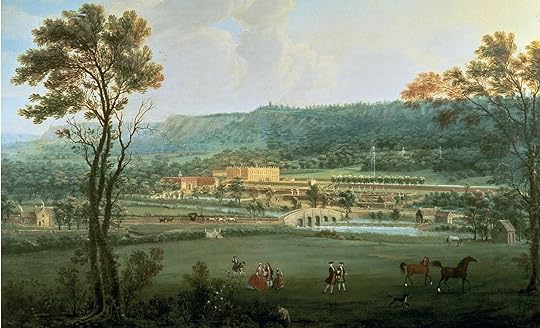
Restoration Britain refers to the period in British history from 1660 to 1700 — or for those like me who have no idea what this actually refers to, it’s the time that follows the “Commonwealth” — a king was deposed, Puritanical rule was briefly introduced and then monarchy was restored - and that’s the titular “Restoration”, during which there was a bit of a non-puritanical revival of secular life happening.
“These four decades are tumultuous. People experience everything from rapturous enthusiasm for one king to the violent expulsion of his successor. There are wars abroad and riots at home; persecutions of some religious minorities and greater toleration of others; expanding trade in the Far East and the disappearance of the plague from British shores. Most significantly, there is a marked rise of rational, scientific thinking. Professionalism enters many walks of life, the city of London grows into an international capital, and the middle sorts suddenly spring up, with their refined ways of living and fashion-conscious tastes. It is the age of many geniuses.”
“It is the age of innovations, of the arrival of tea, coffee and chocolate, exotic fruit, fine wines and new medicines. Great houses are built in the baroque style, their interiors filled with new fashions in Indian fabric and Chinese furniture and porcelain. Last but not least, this is the great age of the English constitution, during which the ideas of John Locke, the most influential philosopher in the English language, come to be espoused in the Bill of Rights, limiting the power of the king.”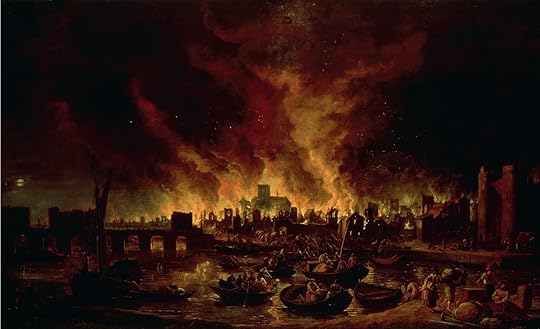
This is the time of the great fire of London of 1666 which changed the look and feel of the city. The time in which communal farming shifted to enclosed farming, altering the countryside. The time where notable advances in medicine (lithotomy or “cutting for stone” made me shudder) coexisted with drinking distilled puppies and consuming cow urine to cure your gout, and bloodletting to cure everything. The time when weird funny powdered wigs make their appearance. When professionalism enters the workforce and worldview starts shifting from magic and superstition to scientific reasoning — and yet the criminals are still quartered and their remains displayed in public spaces, and you’d better not confess to being an atheist. A great time for plays and art, and now you can also enjoy coffee and chocolate, and tobacco smoking is lauded as a great health practice.
“If you add those dying between the ages of one and fourteen, you are left cowering in the shadow of a daunting statistic: 37 per cent of all the children born in England do not make it to the age of fifteen.”
You’ll learn about hygiene (no, the idea of people then being dirty is not quite true) and even laundry (which is quite an ordeal). You learn what the diets were like - and the comparisons to present day are pretty amazing. And, of course, you can’t escape learning about the, ahem, more basic needs if you ever want to find out what *all* aspects of Restoration Britain life were like:
“If you are nowhere near the river or a public house of office, then the thing to do is to visit a public house and pay for something that entitles you to use the facilities. In 1660, faced with a sudden looseness in the bowels, Pepys does exactly that: ‘I went into a little alehouse at the end of Ratliffe and did give a groat for a pot of ale and there I did shit.’ Thank you, Samuel, for recording it for posterity.”
“You won’t laugh, however, if you witness someone defecating in the dark corners of Whitehall Palace. According to Anthony Wood, courtiers have a habit of ‘leaving their excrements in every corner, in chimneys, studies, coal houses, cellars’.”
And you’d better not break the law (especially if you are a woman). The world of that time may have been softening a bit in comparison to the earlier centuries, but it’s still a place where executing people as gruesome spectacle of public brutality is very much in vogue. So time travel wisely.
It’s fantastic — well-researched and well-presented, comprehensible and yet never boring, and often funny. One more of these guides left for me to read, and I’m excited.
4.5 stars, rounding up.
——————
Also posted on my blog.

August 19, 2017
With this book, Dr. Mortimer once again takes his readers into a fascinating era of English history. In doing so he relates things most readers would not see in a normal history book. In this entry into his Time Travelers Guide… series, the author looks at Restoration England. The time covered in this narrative is 1662 to roughly 1700. As with the other books in this series, the format is a literally a travel guide to the period. The author looks at almost every aspect of everyday life that a reader could imagine. In telling the reader what life was like, the author looks at what the people ate, where they lived, how they dressed (from the skin out), how they handled sickness, what they did for entertainment, how they worshipped and myriad of other things.
In addition to everyday life, Dr. Mortimer also looks at how some of the major events of the time affected the lives of those living in the era. Some of those events includes, but are not limited to the Great Fire of London, the outbreak of Bubonic Plague at almost the same time, and the drift of the monarchy towards Catholicism.
In his discussion of the Great Fire, the author uses the diaries of Samuel Pepys as a guide. He follows the fire from its discovery through to the reconstruction of London after the embers had finally gone out. He opines on how London was built contributed to the spread of the fire. Finally, he looks as how the fire gave Charles II and his great architect, Christopher Wren the chance to remake the street layout and modernize the City.
In looking at the other major disaster to befall London, the outbreak of Bubonic Plague, the author takes the opportunity to look at the medical practices of the day. Some of the topics include the differences in a physician and a surgeon – they were not the same thing. The way the author put it, the physician took care of the inside and the surgeon the outside. The author also looks at what it took to become either a physician or a surgeon, and why by the end of the era the two professions were starting to meld into one.
One of the aspects I enjoy about this series in Dr. Mortimer’s look at the diet of the period he is writing about and just how different their diets were from ours. One of the aspects of diet that really stood out for me was the literal tooth to tail consumption of livestock. Some of the “delicacies that would sometimes grace a well-to-do/wealthy persons table included Calf’s head (a literal Calf’s head) cows udders, along with all the various organ meats. One other morsel that caught my attention was that Carp was considered a high status fish and was one of most expensive fish on a menu. A single fish cost as much a laboror's monthly wage, 20 Shillings. I don’t know about other parts of the world, but where I live, if you are unfortunate enough to reel in a carp – you throw it back. It is considered a trash fish.
In looking a law enforcement, the author looks at the shear amount of crimes that were punished by the death penalty. Almost every crime was subject to it, even some that we in the modern world would consider relatively mild. He also discusses the difference in punishment for men and women. A man was much more likely to be hanged or beheaded, a woman to be burnt at the stake. The author also looks at domestic abuse and the indifference and almost encouragement of it that permeated society.
One of the final topics that I want to mention is Dr. Mortimer’s look at religion and the role it played. Even after the excesses of the Commonwealth and the Puritans, people as a whole were genuinely devout Protestants and had a deep fear of Roman Catholicism. The author looks at how this played out in the reign of James II, a Roman Catholic, as he eased restrictions on Catholicism in England and Scotland. It ultimately cost him his throne and Parliament invited his sister Mary and her husband William of Orange to become co monarchs.
To sum it all up, this is a very readable, occasionally funny and very well researched look at Britain in the late 17th century. I would give this 4.25 stars if GR allowed so I’ve rounded down.
In addition to everyday life, Dr. Mortimer also looks at how some of the major events of the time affected the lives of those living in the era. Some of those events includes, but are not limited to the Great Fire of London, the outbreak of Bubonic Plague at almost the same time, and the drift of the monarchy towards Catholicism.
In his discussion of the Great Fire, the author uses the diaries of Samuel Pepys as a guide. He follows the fire from its discovery through to the reconstruction of London after the embers had finally gone out. He opines on how London was built contributed to the spread of the fire. Finally, he looks as how the fire gave Charles II and his great architect, Christopher Wren the chance to remake the street layout and modernize the City.
In looking at the other major disaster to befall London, the outbreak of Bubonic Plague, the author takes the opportunity to look at the medical practices of the day. Some of the topics include the differences in a physician and a surgeon – they were not the same thing. The way the author put it, the physician took care of the inside and the surgeon the outside. The author also looks at what it took to become either a physician or a surgeon, and why by the end of the era the two professions were starting to meld into one.
One of the aspects I enjoy about this series in Dr. Mortimer’s look at the diet of the period he is writing about and just how different their diets were from ours. One of the aspects of diet that really stood out for me was the literal tooth to tail consumption of livestock. Some of the “delicacies that would sometimes grace a well-to-do/wealthy persons table included Calf’s head (a literal Calf’s head) cows udders, along with all the various organ meats. One other morsel that caught my attention was that Carp was considered a high status fish and was one of most expensive fish on a menu. A single fish cost as much a laboror's monthly wage, 20 Shillings. I don’t know about other parts of the world, but where I live, if you are unfortunate enough to reel in a carp – you throw it back. It is considered a trash fish.
In looking a law enforcement, the author looks at the shear amount of crimes that were punished by the death penalty. Almost every crime was subject to it, even some that we in the modern world would consider relatively mild. He also discusses the difference in punishment for men and women. A man was much more likely to be hanged or beheaded, a woman to be burnt at the stake. The author also looks at domestic abuse and the indifference and almost encouragement of it that permeated society.
One of the final topics that I want to mention is Dr. Mortimer’s look at religion and the role it played. Even after the excesses of the Commonwealth and the Puritans, people as a whole were genuinely devout Protestants and had a deep fear of Roman Catholicism. The author looks at how this played out in the reign of James II, a Roman Catholic, as he eased restrictions on Catholicism in England and Scotland. It ultimately cost him his throne and Parliament invited his sister Mary and her husband William of Orange to become co monarchs.
To sum it all up, this is a very readable, occasionally funny and very well researched look at Britain in the late 17th century. I would give this 4.25 stars if GR allowed so I’ve rounded down.

June 18, 2017
Sadly, even with all of our modern technologies, amenities, and comforts; we still have not created a time machine to travel back to the past. Luckily, we have historian Ian Mortimer to help us out with his ‘Time Traveler’s Guides’. Having already journeyed into Medieval and Elizabethan times; Mortimer now turns to the seventeenth century in, “The Time Traveler’s Guide to Restoration Britain”.
Those readers whom have previously donned their cloaks and have already traveled back in time with Mortimer; know on a whole what to expect in, “The Time Traveler’s Guide to Restoration Britain”. Mortimer takes readers on a journey to seventeenth century Britain (although the main focal point is England) and combines a historical and scholarly text with an actual travel guide book; exploring all aspects of life and what to expect/see if one was actually in this time period. Mortimer leaves no stone unturned from the nature/landscape to what to eat, wear, and say on top of how to travel, entertain, shop, etc. Readers will truly be ready to travel to the seventeenth century – or at least will learn a plethora of information regarding the subject.
Mortimer’s attention to detail is absolutely mesmerizing and mind-blowing. The level of research is awe-inspiring and one will wonder how Mortimer could possibly know so much without literally having lived during the Restoration. Yet, don’t worry about being overwhelmed with facts or being consumed by a slow, boring pace because on the contrary: Mortimer is a master at creating compelling and entertaining writing while also informing the reader.
Compounding on this, Mortimer infuses “The Time Traveler’s Guide to Restoration Britain” with humor and an occasional conversational tone which makes it feel as though he is at your side serving as an actual tour guide. In the most basic terms: Mortimer makes learning, fun!
There are sporadic moments when Mortimer is too number-focused presenting heavy data. This, depending on the reader’s preferences, either strengthens the information within “The Time Traveler’s Guide to Restoration Britain” or slows downs certain sections making these pages ideal for scanning.
Mortimer intersperses “The Time Traveler’s Guide to Restoration Britain” with charts, graphs, and tables which helps breakdown and solidify the text. The entire presentation is strong and noteworthy. “The Time Traveler’s Guide to Restoration Britain” makes logical sense in its arrangement. Even though there is no specific order for Mortimer to follow; each chapter flows into the next smoothly.
As the pages of “The Time Traveler’s Guide to Restoration England” progresses; Mortimer becomes increasingly humorous and sometimes narrative in his writing style which continues to strengthen the entertainment value of the history lesson. Mortimer could certainly pen a terrifically captivating historical fiction piece of he chose to do so.
The final chapter of “The Time Traveler’s Guide to Restoration Britain” focuses on the entertainment of the period and is certainly the most light-hearted of the book and the one in which readers will fly through. Mortimer then concludes his writing by completely cycling back to the beginning of the book resulting in a strong and applause-worthy ending.
Adding more strength (and an emotional element) to “The Time Traveler’s Guide to Restoration Britain” is an afterword of sorts in which Mortimer reflects on the psychological aspects/comparisons of the period to our modern sensibilities. This is a wonderful send-off and wraps up “The Time Traveler’s Guide to Restoration Britain” on a positive note.
Mortimer includes an annotated notes section which, sadly, is a bit difficult to read/refer to as it is in paragraph form. “The Time Traveler’s Guide to Restoration Britain” also has two sections of color photo plates to thicken/supplement the text.
“The time Traveler’s Guide to Restoration Britain” is a wonderful text combining perfect ratios of academia with entertainment. Mortimer is a teacher who presents his pupils (the readers) material in a captivating way making it both a pleasure to read and sticky enough to grasp. The reader is left learning about the period and realizing how modern and noteworthy it was in our history scope. “The Time Traveler’s Guide to Restoration Britain” is on par with “The Time Traveler’s Guide to Medieval England” with Mortimer getting his groove back as “The Time Traveler’s Guide to Elizabethan England” was less powerful. “The Time Traveler’s Guide to Restoration Britain” is recommended for all history lovers interested in this period and for fans of Mortimer’s writing/books.
Those readers whom have previously donned their cloaks and have already traveled back in time with Mortimer; know on a whole what to expect in, “The Time Traveler’s Guide to Restoration Britain”. Mortimer takes readers on a journey to seventeenth century Britain (although the main focal point is England) and combines a historical and scholarly text with an actual travel guide book; exploring all aspects of life and what to expect/see if one was actually in this time period. Mortimer leaves no stone unturned from the nature/landscape to what to eat, wear, and say on top of how to travel, entertain, shop, etc. Readers will truly be ready to travel to the seventeenth century – or at least will learn a plethora of information regarding the subject.
Mortimer’s attention to detail is absolutely mesmerizing and mind-blowing. The level of research is awe-inspiring and one will wonder how Mortimer could possibly know so much without literally having lived during the Restoration. Yet, don’t worry about being overwhelmed with facts or being consumed by a slow, boring pace because on the contrary: Mortimer is a master at creating compelling and entertaining writing while also informing the reader.
Compounding on this, Mortimer infuses “The Time Traveler’s Guide to Restoration Britain” with humor and an occasional conversational tone which makes it feel as though he is at your side serving as an actual tour guide. In the most basic terms: Mortimer makes learning, fun!
There are sporadic moments when Mortimer is too number-focused presenting heavy data. This, depending on the reader’s preferences, either strengthens the information within “The Time Traveler’s Guide to Restoration Britain” or slows downs certain sections making these pages ideal for scanning.
Mortimer intersperses “The Time Traveler’s Guide to Restoration Britain” with charts, graphs, and tables which helps breakdown and solidify the text. The entire presentation is strong and noteworthy. “The Time Traveler’s Guide to Restoration Britain” makes logical sense in its arrangement. Even though there is no specific order for Mortimer to follow; each chapter flows into the next smoothly.
As the pages of “The Time Traveler’s Guide to Restoration England” progresses; Mortimer becomes increasingly humorous and sometimes narrative in his writing style which continues to strengthen the entertainment value of the history lesson. Mortimer could certainly pen a terrifically captivating historical fiction piece of he chose to do so.
The final chapter of “The Time Traveler’s Guide to Restoration Britain” focuses on the entertainment of the period and is certainly the most light-hearted of the book and the one in which readers will fly through. Mortimer then concludes his writing by completely cycling back to the beginning of the book resulting in a strong and applause-worthy ending.
Adding more strength (and an emotional element) to “The Time Traveler’s Guide to Restoration Britain” is an afterword of sorts in which Mortimer reflects on the psychological aspects/comparisons of the period to our modern sensibilities. This is a wonderful send-off and wraps up “The Time Traveler’s Guide to Restoration Britain” on a positive note.
Mortimer includes an annotated notes section which, sadly, is a bit difficult to read/refer to as it is in paragraph form. “The Time Traveler’s Guide to Restoration Britain” also has two sections of color photo plates to thicken/supplement the text.
“The time Traveler’s Guide to Restoration Britain” is a wonderful text combining perfect ratios of academia with entertainment. Mortimer is a teacher who presents his pupils (the readers) material in a captivating way making it both a pleasure to read and sticky enough to grasp. The reader is left learning about the period and realizing how modern and noteworthy it was in our history scope. “The Time Traveler’s Guide to Restoration Britain” is on par with “The Time Traveler’s Guide to Medieval England” with Mortimer getting his groove back as “The Time Traveler’s Guide to Elizabethan England” was less powerful. “The Time Traveler’s Guide to Restoration Britain” is recommended for all history lovers interested in this period and for fans of Mortimer’s writing/books.

August 27, 2018
Excellent, as are Mortimer's other Time Traveller's Guides (he has written ones for the 14th century and for Elizabethan England).

January 25, 2022
I enjoyed reading this book very much. It is addressed to you, a time traveler from the 21st century. The book not only gives a broad picture of the social, political, religious and cultural landscape, but also contains all sorts of details of daily living in Restoration Britain, from what food and drink are available and how much they’d cost you, what clothes you should wear, what kind of house you’d find, how to travel around and behave properly according to your chosen character, what entertainment you should expect, etc.. etc…
The book has 12 chapters, each covering a different topic. Some of my impressions:
– London is becoming a true cosmopolitan during this period. So, it is a must-see, but do avoid the Great Fire of London in 1666.
– During this period, Britain is becoming obsessed with class. Four broad categories: the Greats, the Rich, the Middle and the Poor. Not only the dry numbers of population and income levels, but how they live under such income levels. Be careful time travelers, it is very rare that you would land in the great hall of a lord or a lady’s house. Chances are you’d end up with a poor family whose daily struggle is to feed themselves. The ancient world is not a friendly place for women, even if you are a lady of high ranks.
– Although Restoration Britain is no more puritan, religion still plays a big part. Just say you are a Protestant. Be careful if you must choose to be a nonconformist. Never tell anybody you are an atheist (God forbidden) or a Quaker (they dare to let women speak), or the worst of all–Catholic. Xenophobia is normal, especially from the lower class. Try your best to blend in. If you can’t, seek protection from a local aristocrat. A special note for women time travelers: beware of the witch hunts.
– Oyster is not a delicacy as it is today; bring your own fork; avoid drinking water; drink ale, beer, coffee or tea.
– Germ theory is yet to be discovered. Blood letting is common. Remedies from apothecaries can make you feel worse. So, do not get sick or injured.
– Get used to the smells indoors and outdoors, and the muddy roads, and the darkness and the silence of the night, unless you are invited to a party or visit a theater.
– People I’d like to meet: Sir Issac Newton, John Milton.
This kind of history book is accessible to everybody. A time traveler’s guidebook indeed.
The book has 12 chapters, each covering a different topic. Some of my impressions:
– London is becoming a true cosmopolitan during this period. So, it is a must-see, but do avoid the Great Fire of London in 1666.
– During this period, Britain is becoming obsessed with class. Four broad categories: the Greats, the Rich, the Middle and the Poor. Not only the dry numbers of population and income levels, but how they live under such income levels. Be careful time travelers, it is very rare that you would land in the great hall of a lord or a lady’s house. Chances are you’d end up with a poor family whose daily struggle is to feed themselves. The ancient world is not a friendly place for women, even if you are a lady of high ranks.
– Although Restoration Britain is no more puritan, religion still plays a big part. Just say you are a Protestant. Be careful if you must choose to be a nonconformist. Never tell anybody you are an atheist (God forbidden) or a Quaker (they dare to let women speak), or the worst of all–Catholic. Xenophobia is normal, especially from the lower class. Try your best to blend in. If you can’t, seek protection from a local aristocrat. A special note for women time travelers: beware of the witch hunts.
– Oyster is not a delicacy as it is today; bring your own fork; avoid drinking water; drink ale, beer, coffee or tea.
– Germ theory is yet to be discovered. Blood letting is common. Remedies from apothecaries can make you feel worse. So, do not get sick or injured.
– Get used to the smells indoors and outdoors, and the muddy roads, and the darkness and the silence of the night, unless you are invited to a party or visit a theater.
– People I’d like to meet: Sir Issac Newton, John Milton.
This kind of history book is accessible to everybody. A time traveler’s guidebook indeed.

January 23, 2018
Another fascinating book by Ian Mortimer that takes us to the 17th century Britain. The period has been of some interest to me for several years now and this book expands my general knowledge of those times. The Author supplies us with details regarding all main spheres of life and adds lots of anectodal information. I especially value quotes from diaries by Samuel Pepys, Thomas Baskerville and lady Celia Finnes, the first woman to travel extensively across Britain. Highly recommended if you enjoy travelling in time!

August 25, 2018
It’s not you. It’s me!
I’m calling this ‘read’ because I’ve read as much as I can. My rating does not reflect the quality of the book, it reflects my inability to focus on non fiction history books. This is why I like historical fiction. I used to think I’d like to have a bash at writing historical fiction myself but now I know myself better. I could never do the research necessary. This book does have some interesting information in it, but for me personally, the definition of ‘interesting’ actually means ‘confirms what I’ve already read in some hf novel or other!
I’m calling this ‘read’ because I’ve read as much as I can. My rating does not reflect the quality of the book, it reflects my inability to focus on non fiction history books. This is why I like historical fiction. I used to think I’d like to have a bash at writing historical fiction myself but now I know myself better. I could never do the research necessary. This book does have some interesting information in it, but for me personally, the definition of ‘interesting’ actually means ‘confirms what I’ve already read in some hf novel or other!

May 3, 2017
I'm lost in admiration for Ian Mortimer! His third Time Traveller's guide, this time to Restoration Britain, and it is superb.
The Handbook style works perfectly - we get advice on everything we'd need to know if we were to find ourselves back in time. His writing is vivid, often funny and always accessible - you are so thoroughly entertained that you don't realise how much you are learning.
I can't begin to imagine the research and scholarship that has gone into writing a book like this. Warn everyone around you that you'll bombard them with facts and figures the entire time you'll be reading it!
The Handbook style works perfectly - we get advice on everything we'd need to know if we were to find ourselves back in time. His writing is vivid, often funny and always accessible - you are so thoroughly entertained that you don't realise how much you are learning.
I can't begin to imagine the research and scholarship that has gone into writing a book like this. Warn everyone around you that you'll bombard them with facts and figures the entire time you'll be reading it!

February 21, 2018
Absolutely brilliant. I listened to the audiobook and the narration was really good. I felt like I had visited this era in time. The author made history come alive for me. Very highly recommended.

September 17, 2020
Ian Mortimer's Time Traveller's Guides to different eras in British history are a must for history buffs, students and scholars alike - and for writers of historical fiction. Mortimer immerses readers in the era in a very deliberate way, holding our hands and whispering warnings and advice as we move through London and other towns and cities and travel north into Scotland. Whether it's about what to wear, buy, say, eat, sleep, find a toilet, avail ourselves of a doctor or the law (or avoid the same), attend a church service, he conjures a violent, fascinating and ever-changing time and many, many places. The soundtrack to the Restoration is evident in every page, whether it's the noisome streets, filled with carts, carriages, horses, the cries of vendors and milkmaids, the threats of thieves or the insults being hurled at those in the various pillories. But there is also music, song, laughter, the bawdy humour of the theatre, and the imprecations of the poor. And there are the pungent odours that waft and sit in every crevice, alleyway, chimney breast and piece of clothing or wig. It was a time that was revolutionary in every sense (women were allowed on stage, the arts and sciences flourished, newspapers came into the their own (including the "gutter press"). The first female writers were established, a monarchy was returned, a king forced into exile and a foreigner given the throne), it is remembered more as something preserved in historic aspic rather than a lived and breathed experience. Mortimer changes that and for all that I glad I live in this century, I am also glad I time-travelled with him. (Second time in this period and it was even better). And, what do "they" say? Third time is a charm and so it was the case with yet another re-read. Wonderfully informative and entertaining. And, I note, Mortimer as written a Time Traveller's Guide to Regency Britain now... Having j=not long binged Bridgeton and enjoying Julia Quinn's books (and Georgette Heyer's, among others), I think it will be time to embark on another imaginative journey with him.

June 30, 2017
Not as dry as I'd feared. I'm not that interested in this period of history, but the author did make it come alive.

May 12, 2023
These books are just so fun and interesting! I love reading them.

November 16, 2022
I adore Mortimer’s still original approach to history. One learns so many new things about the everyday life of people in each age he covers. Mortimer doesn’t neglect Restoration political and literary culture, but he also covers travel, food, taxes, justice, religion, housing, hygiene, medicine, etc.

November 6, 2020
This promised more than it delivered. Ultimately, there was too much that would be covered in any standard history of the era and too much focus on the great, and not enough on the nitty-gritty details of actual life. Particularly irritating was how short shrift was given to specifically women’s lives. Menstruation? Birth control? Family and social dynamics? Daily life? That would have been much more interesting than the potted accounts of Restoration drama and religion, which couldn’t be done justice to in this sort of history anyway.

May 27, 2020
This book is not for everyone, but for those whom it's for, it's phenomenal. It's DENSE - I worked on this one most nights before bed, and it still took me a month to read it. As with other books in this series, Mortimer offers an exhaustive dive into the minutiae of everyday life of his chosen time period. The Restoration period is not one I was terribly familiar with, making this a book that taught me a lot. He also introduced the intriguing thought that he has something like 1500 ancestors who would have been alive at this time. As I'm half British, it was sort of startling to think of this history this way--that literally hundreds of my ancestors were living the life he describes in the places he describes it.
If you're not looking for exhaustive detail--think, what kinds of coins did people use, and how was farmland divided, and what did houses look like in different parts of London--this is not for you. But if you want to get as close to understanding the warp and weft of life in a different time period in England, you can't do better than this book.
My favorite part, and a feature that is actually really difficult to pull off, is Mortimer's humor. It can be hard to work humor into historical writing and not come off like you are ridiculing your subjects, but Mortimer manages to draw out the humor of some of what he finds without belittling the people he's explaining.
His next book is on Regency England, and I'm SO excited!
If you're not looking for exhaustive detail--think, what kinds of coins did people use, and how was farmland divided, and what did houses look like in different parts of London--this is not for you. But if you want to get as close to understanding the warp and weft of life in a different time period in England, you can't do better than this book.
My favorite part, and a feature that is actually really difficult to pull off, is Mortimer's humor. It can be hard to work humor into historical writing and not come off like you are ridiculing your subjects, but Mortimer manages to draw out the humor of some of what he finds without belittling the people he's explaining.
His next book is on Regency England, and I'm SO excited!

September 17, 2026
2.5
I thought the premise was really interesting, and I enjoyed a lot of the sections! However, once you spot an error in the text it really does make it difficult to trust anything else that has been said. I'm not sure if it has been corrected in later editions but my digital copy has the four humours listed as 'blood, choler, yellow bile, and black bile'. Unless I am very much mistaken, choler IS yellow bile, and phlegm is missing. What errors are there in areas I am not as familiar with?
Also as a fashion historian the fashion section was a difficult read, and I urge Ian Mortimer to get over his disdain of the history of underpinnings to approach the topic of stays in a more measured and less reactionary way. I recommend source books like those by Janet Arnold and Norah Waugh to find any (please, any) contemporary commentary from people who actually *wore* the things you're talking about instead of just including a quote from a man who did not!
On a related note, I really didn't feel comfortable with how constantly sexual and inappropriate the anecdotes and asides were throughout the book (I took note of it during the fashion section, as it was entirely unnecessary). I'd have to read others in the series to see if it is the author's style or just an attempt to reflect the sexual mores of the period. Either way, it didn't make for a fun read. I get the distinct impression that despite some comments thrown in once or twice, Ian Mortimer pictures his reading audience as predominantly male.
So sorry to intrude on your boy's club, I'll see myself out now.
I thought the premise was really interesting, and I enjoyed a lot of the sections! However, once you spot an error in the text it really does make it difficult to trust anything else that has been said. I'm not sure if it has been corrected in later editions but my digital copy has the four humours listed as 'blood, choler, yellow bile, and black bile'. Unless I am very much mistaken, choler IS yellow bile, and phlegm is missing. What errors are there in areas I am not as familiar with?
Also as a fashion historian the fashion section was a difficult read, and I urge Ian Mortimer to get over his disdain of the history of underpinnings to approach the topic of stays in a more measured and less reactionary way. I recommend source books like those by Janet Arnold and Norah Waugh to find any (please, any) contemporary commentary from people who actually *wore* the things you're talking about instead of just including a quote from a man who did not!
On a related note, I really didn't feel comfortable with how constantly sexual and inappropriate the anecdotes and asides were throughout the book (I took note of it during the fashion section, as it was entirely unnecessary). I'd have to read others in the series to see if it is the author's style or just an attempt to reflect the sexual mores of the period. Either way, it didn't make for a fun read. I get the distinct impression that despite some comments thrown in once or twice, Ian Mortimer pictures his reading audience as predominantly male.
So sorry to intrude on your boy's club, I'll see myself out now.

September 12, 2023
A pretty solid read! I love how this series is written like it is giving you top tips when you visit... I wish the book was slightly more succinct - at times it felt more like a list which made the readability harder. However, overall I would recommend this to anyone who wants to know more about the restoration period.

August 14, 2017
Done in the style of a travel guide, this is an informative and entertaining look at life in post-Interregnum Britain. Mortimer's writing brings the era to life and provides lots of intriguing little titbits about folk from all levels of society.

January 12, 2019
Who says the 17th Century wasn’t any fun? This immersion was lively and entertaining and without the odors that might put one off.

March 16, 2025
I really love this author's "Time Traveler" series, and this was no exception. Fascinating and engaging look at what life would have been like in Restoration Britain, from the clothing to the food to the societal expectations.

wish-list
August 28, 2018Spotted 4* on Susanna's timeline

November 27, 2023
Once more, I'm grateful to live in the 21st century.
March 20, 2019
I really like the idea of this book and hope to track down others--it's an easy and frankly entertaining way to learn a little history. The book runs from Charles II to William III. My knowledge of the period comes from literature, and I must say I was a little disappointed that there wasn't more about the delightful Restoration comedies in the theatre section. That aside, this is an immersive, fact-filled history. It focuses on everyday life with only a few references to well-known figures. It covers Restoration culture and society, geography, crime and punishment (I confess I had to skip some of the punishment stuff), food, manners, dress--and so much more. This is the period of the Little Ice Age, so there are details about that and the implications for the population (starvation among them). It was the end of some aspects of British life--the last witches were executed--and the start of others. Newton's Principia heralds the Industrial Revolution and Milton published Paradise Lost. The narration is okay--he's good at the companionable language: "you'll want to see" whatever the topic currently is. The book and the narrator put us there. It's not the kind of audiobook I can listen to straight through, but in bits and pieces it's quite engaging.
February 1, 2019
Ladies, might you not consider the benefits of puppy water?
Dear reader, might I recommend the services of the good Doctor Mortimer as a companionable guide to the highways and byways of life in Restoration England, with occasional, albeit brief, remarks upon the lives of the North Britons, who pride themselves upon the name of Scots. From the life of the meanest peasant to that of the most urbane and profligate rake, you will find yourself witness to the pleasures, and pains, of our forebears, as they throw off the restraints of those dismal and earnest years of Old Noll, and the Commonwealth. From the squalor and superstition of the old world, we see the glimmerings of a new and more rational age, ushered in by the gentlemen of the Royal Society, and the efforts of architects in the wake of the Great Fire. Fewer crones in their dribbling dotage now find themselves prosecuted and hanged for witchcraft, but still other women find themselves consigned to the flames for the petty treason of dispensing with an abusive husband. The law must be seen to be done, and so the highwayman sways in his creaking gibbet, and the corpse of the pirate hangs tarred on the shores of the Thames; many a thief must hang, or be indentured to the West Indies, and the heads and quarters of traitors may find a public resting place upon a spike, or nailed up somewhere for the edification of the populace.
It is an age of tumult and colour, of enlightened discovery and casual cruelty, rendered in a deft and engaging manner, channelling the observations of Pepys, Evelyn, Fiennes, and others, to transport the reader into an everyday world that we can never directly know. The impressions are vivid, and the details striking, with the consequence that this volume is a delight for any reader who possesses an interest in social history, or this particular period in time. It is also, undoubtedly, a boon for authors of historical fiction. There are details here which will in turn surprise, delight, and disgust, and sometimes all three. Ladies, might you not consider the benefits of puppy water?
Dear reader, might I recommend the services of the good Doctor Mortimer as a companionable guide to the highways and byways of life in Restoration England, with occasional, albeit brief, remarks upon the lives of the North Britons, who pride themselves upon the name of Scots. From the life of the meanest peasant to that of the most urbane and profligate rake, you will find yourself witness to the pleasures, and pains, of our forebears, as they throw off the restraints of those dismal and earnest years of Old Noll, and the Commonwealth. From the squalor and superstition of the old world, we see the glimmerings of a new and more rational age, ushered in by the gentlemen of the Royal Society, and the efforts of architects in the wake of the Great Fire. Fewer crones in their dribbling dotage now find themselves prosecuted and hanged for witchcraft, but still other women find themselves consigned to the flames for the petty treason of dispensing with an abusive husband. The law must be seen to be done, and so the highwayman sways in his creaking gibbet, and the corpse of the pirate hangs tarred on the shores of the Thames; many a thief must hang, or be indentured to the West Indies, and the heads and quarters of traitors may find a public resting place upon a spike, or nailed up somewhere for the edification of the populace.
It is an age of tumult and colour, of enlightened discovery and casual cruelty, rendered in a deft and engaging manner, channelling the observations of Pepys, Evelyn, Fiennes, and others, to transport the reader into an everyday world that we can never directly know. The impressions are vivid, and the details striking, with the consequence that this volume is a delight for any reader who possesses an interest in social history, or this particular period in time. It is also, undoubtedly, a boon for authors of historical fiction. There are details here which will in turn surprise, delight, and disgust, and sometimes all three. Ladies, might you not consider the benefits of puppy water?

January 23, 2024
Another entertaining account of a fascinating historical period covering a wide array of aspects of life, society and culture.

July 29, 2017
4.5 - I love this series and this is a very worthy installment. It's one minor detraction is that it can get a bit "laundry-listish" with the chorus line of names. Other than that its a great look into this fascinating period of English and Scottish social history. Great figures, Politics, and Wars all have their place, but learning how people actually lived day to day can be just as interesting and fun.

January 17, 2023
I loved this book and despite how long it is, I actually felt sad when I came to the end. The detail is unparalleled, covering every aspect of life that I can think of, and placing you right there. Since I was a kid I've wished I could travel back in time, so quite honestly, these books could've been written for me. Can't wait to read the others.

December 11, 2017
The next best thing to a Tardis is without doubt Ian Mortimer’s Time Travellers series. The third book in the series focuses on the Restoration period 1660-1700, a period of such importance to British history but sadly given very little attention.
Mortimer travels throughout the country, into the homes of the rich and the poor, discussing the everyday life of various people.
Everything from the social hierarchy of the period along with crime and punishment, entertainment, medicine and theatre are discussed. And major events such as the Great Fire are explores through detail and how it effected the citizens of London.
You will learn how to go about travelling from one part of the country to the other and how much you will have to pay. Where to go if you wish to send a letter or parcel and how long it is likely to take and how much it costs. Including the days when the post offices are open.
This certainly is a colourful period, as you will gather from the clothes, humour, theatre, as well the dramatic political events such as the Glorious Revolution. But as with any period, there is the murky side, the horrific inequality, lack of social justice, horrific entertainments with animals suffering and duels over simple and minor things leading to unnecessary deaths and the treatments people received when suffering with illnesses or women giving birth, will make you shudder! But as Mortimer himself says in the book, it is because we are looking through our 21st century eyes. People in the 17th century were fairly content with their life.
Mortimer brings this period to life and certainly does it justice. The buildings that no longer stand come across on the pages as if they are still standing, and the people he talks about as if they are still living, add to the easily flowing narrative.
It doesn’t matter wherever you are in the world when you read this, or if you have never visited the various parts of the country discussed. Each place is talked about in vivid detail so you feel as though are standing in magnificent stately homes and palaces, or working alongside the ordinary folk up in Scotland.
Without doubt the perfect guide to 17th century Britain.
Mortimer travels throughout the country, into the homes of the rich and the poor, discussing the everyday life of various people.
Everything from the social hierarchy of the period along with crime and punishment, entertainment, medicine and theatre are discussed. And major events such as the Great Fire are explores through detail and how it effected the citizens of London.
You will learn how to go about travelling from one part of the country to the other and how much you will have to pay. Where to go if you wish to send a letter or parcel and how long it is likely to take and how much it costs. Including the days when the post offices are open.
This certainly is a colourful period, as you will gather from the clothes, humour, theatre, as well the dramatic political events such as the Glorious Revolution. But as with any period, there is the murky side, the horrific inequality, lack of social justice, horrific entertainments with animals suffering and duels over simple and minor things leading to unnecessary deaths and the treatments people received when suffering with illnesses or women giving birth, will make you shudder! But as Mortimer himself says in the book, it is because we are looking through our 21st century eyes. People in the 17th century were fairly content with their life.
Mortimer brings this period to life and certainly does it justice. The buildings that no longer stand come across on the pages as if they are still standing, and the people he talks about as if they are still living, add to the easily flowing narrative.
It doesn’t matter wherever you are in the world when you read this, or if you have never visited the various parts of the country discussed. Each place is talked about in vivid detail so you feel as though are standing in magnificent stately homes and palaces, or working alongside the ordinary folk up in Scotland.
Without doubt the perfect guide to 17th century Britain.

October 29, 2019
This is the first "Time Traveller's Guide To..." book I have read, and I am definitely going to read the others. I hope Mortimer publishes more! I have a sort of love-hate thing with history. After being scarred by horrible, dry history teachers in school - as so many of us are - it was only once I started to find people and books who were actually gifted in narrative that I realised how fascinating history can be. The history of everyday life is particularly tricky, as many historians who cover this sort of thing really focus so much on minute details that it becomes dry and tedious. Mortimer is really gifted in his ability to take the big picture events and the small details and experiences of everyday life and people and weave them together into an interesting narrative. He really makes the Restoration Period come alive, and he does it with a good sense of humour as well. I liked that you weren't viewing the period from one single person - that would become tedious - but through several different people and from the perspective of different social classes. What made this book perhaps even better for me is that I was also studying for the "Life in the UK" test (citizenship test) at the same time, and it was such a stark contrast to see their bland list of names and dates against this book, which really gave you a feel for what life in the UK was actually like during this period and how significant it was. I think the restoration period only got a few sentences in the Life in the UK book!
My only minor criticism is that it is perhaps a little long and could have done with a little less detail in some places, but because his writing is so engaging, it didn't bother me too much.
My only minor criticism is that it is perhaps a little long and could have done with a little less detail in some places, but because his writing is so engaging, it didn't bother me too much.
Displaying 1 - 30 of 236 reviews