

What do you think?

A Tidewater Morning
In this brilliant collection of 'long short stories', the Pulitzer Prize-winning author of "Sophie's Choice" returns to the coastal Virginia setting of his first novels. Through the eyes of a man recollecting three episodes from his youth, William Styron explores with new eloquence death, loss, war and racism.
160 pages, Paperback
First published January 1, 1993
About the author
William Styron
133 books932 followersWilliam Styron (1925–2006), born in Newport News, Virginia, was one of the greatest American writers of his generation. Styron published his first book, Lie Down in Darkness, at age twenty-six and went on to write such influential works as the controversial and Pulitzer Prize–winning The Confessions of Nat Turner and the international bestseller Sophie’s Choice.
Ratings & Reviews
Friends & Following
Create a free account to discover what your friends think of this book!
Community Reviews
Displaying 1 - 30 of 161 reviews

December 12, 2022
This was a happy accident.
I ordered this book from the library, thinking it was Styron's non-fiction story of his battle with depression (which, it turns out, is called Darkness Visible), but, instead I received a different sort of treasure.
This is a collection of three stories, billed as “semi-autobiographical” fiction. What they really are: three coming-of-age stories from Styron's youth that are presented to the reader as fiction, given that the names have been changed.
Strange choice, and one I battled with, throughout the read. I'd have preferred that the author offered them as a memoir.
That gripe aside, I can only say that the writing here is staggering. There's no other word for it.
I think it will be challenging for me to pick up a pen again, even to write a grocery list. Why bother?
When you know that the craft of writing can be taken to this level, the only thing you can do to suffer the pain of it is to crawl into the fetal position and suck on your fingers.
These three stories take place in the 1930s and 40s, primarily in the American South and Japan (WWII), but it is more a love letter to Virginia than to any other place:
The soft green acres that surrounded the place were Elysian; the ancient fields and the wild woods rampant with sweet gum and oak and redbud had reverted to the primeval glory of the time of Pocahontas and Powhatan.
The topics here are often uncomfortable ones: segregation, racism, sexuality, cancer, dying.
It's not a “light” read, but, personally, I'd read it again and again and again.
I ordered this book from the library, thinking it was Styron's non-fiction story of his battle with depression (which, it turns out, is called Darkness Visible), but, instead I received a different sort of treasure.
This is a collection of three stories, billed as “semi-autobiographical” fiction. What they really are: three coming-of-age stories from Styron's youth that are presented to the reader as fiction, given that the names have been changed.
Strange choice, and one I battled with, throughout the read. I'd have preferred that the author offered them as a memoir.
That gripe aside, I can only say that the writing here is staggering. There's no other word for it.
I think it will be challenging for me to pick up a pen again, even to write a grocery list. Why bother?
When you know that the craft of writing can be taken to this level, the only thing you can do to suffer the pain of it is to crawl into the fetal position and suck on your fingers.
These three stories take place in the 1930s and 40s, primarily in the American South and Japan (WWII), but it is more a love letter to Virginia than to any other place:
The soft green acres that surrounded the place were Elysian; the ancient fields and the wild woods rampant with sweet gum and oak and redbud had reverted to the primeval glory of the time of Pocahontas and Powhatan.
The topics here are often uncomfortable ones: segregation, racism, sexuality, cancer, dying.
It's not a “light” read, but, personally, I'd read it again and again and again.

July 26, 2018
The Tidewater Virginia landscape and society nourished the creative imagination of William Styron, and the three stories that he brought together as the collection A Tidewater Morning in 1993 all share that rich sense of Hampton Roads' landscape and culture. Nearing the end of his literary career, Styron chose, for his last published work of fiction, to look back to, as he put it in an introductory author’s note, “the experiences of the author at the ages of twenty, ten, and thirteen”, through “an imaginative reshaping of real events…linked by a chain of memories.” And the power of memory is certainly an important element behind the success of this set of Three Tales from Youth (the book's subtitle).
Styron was often spoken of, in the context of post-World War II American literature, as one of the top novelists of his generation; students of Southern U.S. literature often linked his work with that of Southern Renascence writers like Thomas Wolfe, an author whom Styron particularly admired and sought to emulate. It is all the more striking, therefore, that in contrast to the notoriously prolific Wolfe, Styron was sometimes so sporadic in his output.
After his brilliant debut novel, Lie Down in Darkness (1951), it was nine years before Styron published his next major novel, Set This House on Fire (1960). Between the controversial historical novel The Confessions of Nat Turner (1967) and the Holocaust-themed epic Sophie’s Choice (1979), twelve years elapsed. And fourteen years after Sophie’s Choice, Styron presented – a 142-page collection of short stories, with large print and generous line spacing at that.
I suppose Styron’s literary agent had to cultivate a sense of patience.
All that being said, the stories brought together as A Tidewater Morning are carefully crafted and emotionally affecting, with that mellifluous Southern voice that is so characteristic of Styron’s work.
For “Love Day,” the first of these stories, Styron looks back to his time as an officer in the United States Marine Corps during the Second World War. Trained for combat in the Pacific Theatre, Styron never got to see action, as the Imperial Japanese regime surrendered before his deployment orders came through. The story’s narrator, Paul Whitehurst, reflects how, at the time of his Marine unit’s training for the invasion of Okinawa, he and his friend Doug Stiles “possessed beautifully honed killers’ skills, waiting to be tried” (p. 4); but in the context of a simulated assault exercise, Paul and Stiles hear of “Rumors…spreading before L (for Love) Day morning that after the fake assault and the interminable hours afloat we would not be called upon to fight at all, but instead would steam back to our enchanted Saipan, with its empty nights and its Abbott and Costello movies” (pp. 6-7).
Seeking confirmation of this rumor – the truth of which would set at naught all their training, but would also increase the likelihood of their surviving the war – Paul and Stiles go to see their lieutenant colonel, a dashing but bigoted officer whose obsessions include Karl Marx and transgender women. In the course of the conversation, Paul’s thoughts drift back to a childhood drive in the Virginia countryside with his parents – an occasion when his mention of a Saturday Evening Post story about a fictional Japanese invasion of the United States of America occasioned a tense conversation between his mother and father, revealing the profound differences in outlook between his Southern-born father and his Northern-born mother. The story, with its evocative description and minute detail, shows how directly Styron drew from life in crafting his fiction.
The story “Shadrach” is set in 1935; Paul Whitehurst is once again the narrator, and this time he is looking back to when he was ten years old. The title character is a very old African-American man – “a black apparition of unbelievable antiquity, palsied and feeble” (p. 41). Born into slavery, Shadrach has walked all the way from Alabama, 600 miles, just so he can sit and behold the millpond at the old Dabney plantation where he lived during childhood. Meanwhile, the Dabney family, once eminent among the F.F.V.’s (First Families of Virginia), have undergone a decided decline in their fortunes; the family’s patriarch at that time, Vernon Dabney, is a backwoods manufacturer of illicit liquor – “a soul…beset by many woes in the dingy threadbare year 1935, being hard pressed not merely for dollars but for dimes and quarters, crushed beneath an elephantine and inebriate wife, along with three generally shiftless sons and two knocked-up daughters, plus two more likely to be so, and living with the abiding threat of revenue agents swooping down to terminate his livelihood and, perhaps, get him sent to the Atlanta penitentiary for five or six years” (p. 58).
Vernon Dabney expresses, repeatedly and profanely, his unhappiness at Shadrach’s return to the old Dabney plantation – particularly as he knows that Shadrach seems not long for this world, and that he may have to pay for Shadrach’s funeral. Yet like everyone else in the story, Dabney seems bound by a grudging respect for the integrity – the mythic, even heroic quality – of Shadrach’s quest. Named for a Biblical hero who survived confinement in a fiery furnace, Shadrach has survived the fires of antebellum slavery and post-Civil War segregation, and has returned home for the end of his odyssey.
Reading “Shadrach,” I could not help but think of The Confessions of Nat Turner and the controversies attendant upon that novel. In planning and writing that novel, Styron seems to have hoped that, in a great act of creative imagination, he could cross the barrier of race and take on the perspective of a well-known African-American revolutionary. Yet many critics – not all of them black – felt that Styron had engaged in an act of cultural appropriation, with his often unheroic portrayal of Nat Turner. With “Shadrach,” Styron may have been trying to turn the page on those difficult days from his earlier literary career, with a thoughtful and sympathetic portrayal of an African American with heroic qualities.
And for the title story, “A Tidewater Morning,” Paul Whitehurst looks back to the year 1938, when he was thirteen years old, and when his mother was in the last stages of the cancer that would take her life. Paul Whitehurst recalls the sense of stasis that attended the long vigil at his mother’ bed of illness:
And thus the silence, I knew, meant that my father and Miss Slocum had again taken up their vigil at my mother’s bedside, creating that virtually motionless tableau which – whenever I stole past the room, forbidden to go in – appeared to have existed immemorially, like some old painting or illustration I had seen (or thought I had seen) called “The Sickroom”: the recumbent form in the blue nightgown, unsheeted in the heat, only the bare, withered calves showing, and the bruised-looking skeletal feet; the shirt-sleeved back of my father bent forward in his chair, obscuring my mother’s face, his tense arms seeming to be suspended in the act of a frantic embrace; Miss Slocum gazing from the other side of the bed with a look of pensive dreaminess, unperturbed, the light glinting from the starched cap resting like a white tiara upon the crest of her permanent wave. (p. 100)
Paul Whitehurst seeks relief from his sorrow in the familiar landscapes of his hometown – and in passages like this one, where he describes a favorite pier, one gets a sense of how strongly the Tidewater Virginia landscape of Styron’s Newport News boyhood influenced the future novelist:
The pier! My second summer home, my hangout, my club, my Riviera, my salvation. It stretched out on barnacled timber pilings a hundred yards, terminating in a platform from which we swam at low tide or, at high tide, dove like pelicans, plunging into turbid water that all summer long was as warm as the mouth of the Amazon. It was like a Saturday night bath, and a little less clean, situated as it was only a few miles upstream from the vast shipyard and its effluvium… (pp. 126-27)
That passage of description reminds me how, in the prefatory author’s note cited at the beginning of this review, Styron remarks that these stories are linked by their setting: “the Virginia Tidewater of the 1930s”, a place that was “not the drowsy Old Virginia of legend but part of a busy New South”. Both the region and Styron’s depiction of the region were already familiar to me: I went to college in southeastern Virginia, and often read Styron’s work throughout my time living in that singularly beautiful part of the country. And I took up A Tidewater Morning on a return to the Hampton Roads area, for a visit to the Sandbridge section of Virginia Beach, a part of the Commonwealth’s largest city that nonetheless has the look and the feel of a small, out-of-the-way Tidewater beach town.
In this collection, as in all of Styron’s work that has a Tidewater setting, I found Styron’s recreation of life in that historic and fast-changing region evocative and convincing; and the three tales of A Tidewater Morning, while much briefer in scope and less elevated in terms of their literary goals than the major novels for which Styron is better-known, certainly show a gifted literary stylist and important Southern writer at work.
Styron was often spoken of, in the context of post-World War II American literature, as one of the top novelists of his generation; students of Southern U.S. literature often linked his work with that of Southern Renascence writers like Thomas Wolfe, an author whom Styron particularly admired and sought to emulate. It is all the more striking, therefore, that in contrast to the notoriously prolific Wolfe, Styron was sometimes so sporadic in his output.
After his brilliant debut novel, Lie Down in Darkness (1951), it was nine years before Styron published his next major novel, Set This House on Fire (1960). Between the controversial historical novel The Confessions of Nat Turner (1967) and the Holocaust-themed epic Sophie’s Choice (1979), twelve years elapsed. And fourteen years after Sophie’s Choice, Styron presented – a 142-page collection of short stories, with large print and generous line spacing at that.
I suppose Styron’s literary agent had to cultivate a sense of patience.
All that being said, the stories brought together as A Tidewater Morning are carefully crafted and emotionally affecting, with that mellifluous Southern voice that is so characteristic of Styron’s work.
For “Love Day,” the first of these stories, Styron looks back to his time as an officer in the United States Marine Corps during the Second World War. Trained for combat in the Pacific Theatre, Styron never got to see action, as the Imperial Japanese regime surrendered before his deployment orders came through. The story’s narrator, Paul Whitehurst, reflects how, at the time of his Marine unit’s training for the invasion of Okinawa, he and his friend Doug Stiles “possessed beautifully honed killers’ skills, waiting to be tried” (p. 4); but in the context of a simulated assault exercise, Paul and Stiles hear of “Rumors…spreading before L (for Love) Day morning that after the fake assault and the interminable hours afloat we would not be called upon to fight at all, but instead would steam back to our enchanted Saipan, with its empty nights and its Abbott and Costello movies” (pp. 6-7).
Seeking confirmation of this rumor – the truth of which would set at naught all their training, but would also increase the likelihood of their surviving the war – Paul and Stiles go to see their lieutenant colonel, a dashing but bigoted officer whose obsessions include Karl Marx and transgender women. In the course of the conversation, Paul’s thoughts drift back to a childhood drive in the Virginia countryside with his parents – an occasion when his mention of a Saturday Evening Post story about a fictional Japanese invasion of the United States of America occasioned a tense conversation between his mother and father, revealing the profound differences in outlook between his Southern-born father and his Northern-born mother. The story, with its evocative description and minute detail, shows how directly Styron drew from life in crafting his fiction.
The story “Shadrach” is set in 1935; Paul Whitehurst is once again the narrator, and this time he is looking back to when he was ten years old. The title character is a very old African-American man – “a black apparition of unbelievable antiquity, palsied and feeble” (p. 41). Born into slavery, Shadrach has walked all the way from Alabama, 600 miles, just so he can sit and behold the millpond at the old Dabney plantation where he lived during childhood. Meanwhile, the Dabney family, once eminent among the F.F.V.’s (First Families of Virginia), have undergone a decided decline in their fortunes; the family’s patriarch at that time, Vernon Dabney, is a backwoods manufacturer of illicit liquor – “a soul…beset by many woes in the dingy threadbare year 1935, being hard pressed not merely for dollars but for dimes and quarters, crushed beneath an elephantine and inebriate wife, along with three generally shiftless sons and two knocked-up daughters, plus two more likely to be so, and living with the abiding threat of revenue agents swooping down to terminate his livelihood and, perhaps, get him sent to the Atlanta penitentiary for five or six years” (p. 58).
Vernon Dabney expresses, repeatedly and profanely, his unhappiness at Shadrach’s return to the old Dabney plantation – particularly as he knows that Shadrach seems not long for this world, and that he may have to pay for Shadrach’s funeral. Yet like everyone else in the story, Dabney seems bound by a grudging respect for the integrity – the mythic, even heroic quality – of Shadrach’s quest. Named for a Biblical hero who survived confinement in a fiery furnace, Shadrach has survived the fires of antebellum slavery and post-Civil War segregation, and has returned home for the end of his odyssey.
Reading “Shadrach,” I could not help but think of The Confessions of Nat Turner and the controversies attendant upon that novel. In planning and writing that novel, Styron seems to have hoped that, in a great act of creative imagination, he could cross the barrier of race and take on the perspective of a well-known African-American revolutionary. Yet many critics – not all of them black – felt that Styron had engaged in an act of cultural appropriation, with his often unheroic portrayal of Nat Turner. With “Shadrach,” Styron may have been trying to turn the page on those difficult days from his earlier literary career, with a thoughtful and sympathetic portrayal of an African American with heroic qualities.
And for the title story, “A Tidewater Morning,” Paul Whitehurst looks back to the year 1938, when he was thirteen years old, and when his mother was in the last stages of the cancer that would take her life. Paul Whitehurst recalls the sense of stasis that attended the long vigil at his mother’ bed of illness:
And thus the silence, I knew, meant that my father and Miss Slocum had again taken up their vigil at my mother’s bedside, creating that virtually motionless tableau which – whenever I stole past the room, forbidden to go in – appeared to have existed immemorially, like some old painting or illustration I had seen (or thought I had seen) called “The Sickroom”: the recumbent form in the blue nightgown, unsheeted in the heat, only the bare, withered calves showing, and the bruised-looking skeletal feet; the shirt-sleeved back of my father bent forward in his chair, obscuring my mother’s face, his tense arms seeming to be suspended in the act of a frantic embrace; Miss Slocum gazing from the other side of the bed with a look of pensive dreaminess, unperturbed, the light glinting from the starched cap resting like a white tiara upon the crest of her permanent wave. (p. 100)
Paul Whitehurst seeks relief from his sorrow in the familiar landscapes of his hometown – and in passages like this one, where he describes a favorite pier, one gets a sense of how strongly the Tidewater Virginia landscape of Styron’s Newport News boyhood influenced the future novelist:
The pier! My second summer home, my hangout, my club, my Riviera, my salvation. It stretched out on barnacled timber pilings a hundred yards, terminating in a platform from which we swam at low tide or, at high tide, dove like pelicans, plunging into turbid water that all summer long was as warm as the mouth of the Amazon. It was like a Saturday night bath, and a little less clean, situated as it was only a few miles upstream from the vast shipyard and its effluvium… (pp. 126-27)
That passage of description reminds me how, in the prefatory author’s note cited at the beginning of this review, Styron remarks that these stories are linked by their setting: “the Virginia Tidewater of the 1930s”, a place that was “not the drowsy Old Virginia of legend but part of a busy New South”. Both the region and Styron’s depiction of the region were already familiar to me: I went to college in southeastern Virginia, and often read Styron’s work throughout my time living in that singularly beautiful part of the country. And I took up A Tidewater Morning on a return to the Hampton Roads area, for a visit to the Sandbridge section of Virginia Beach, a part of the Commonwealth’s largest city that nonetheless has the look and the feel of a small, out-of-the-way Tidewater beach town.
In this collection, as in all of Styron’s work that has a Tidewater setting, I found Styron’s recreation of life in that historic and fast-changing region evocative and convincing; and the three tales of A Tidewater Morning, while much briefer in scope and less elevated in terms of their literary goals than the major novels for which Styron is better-known, certainly show a gifted literary stylist and important Southern writer at work.

December 6, 2019
I read a review of this book on here and thought that I would like the story of Shadrack, an old black man who had once been a slave and had returned to the plantation at the age of 99. The other two stories didn’t sound good, so I didn’t read them.
Upon reading this story, I noticed how great of a writer Styron was, and I wanted to read more of his books until I learned that they were all very depressing, as one were about Styron’s own depression, and then there is one about a very dysfunctional family, probably autobiographical, and then there is Sophie’s Choice. What a disappointment.
This story, too, was a disappointment, but I will have to give it five stars, because I know genius when I see it. I wanted more character development; I wanted to learn more about Shadrack. this is just the reason why I dislike short stories; you don’t learn much from them even though they have a point to make.
Shadrack walked all the way from Alabama to Virginia in the 1930s in order to get back to the plantation where he once lived. If he got a ride part way, it was only from blacks who owned cars. And this is where tidbits of information about racism in America creep in. America, as I have recently learned, has become the most racist country in the world. It is little better now than it was back then. So, now, in this story, we have the police telling the descendant of the plantation that he can’t bury Shadrack in the plantation cemetery where other blacks had been buried. He has to go through one of the black churches and be buried on their church grounds. The man has no money, of course, in which to bury him.
In the meantime the white family feeds Shadrack but never calls the doctor to see why he has a fever. But most of all, I am disappointed because for I wanted to know more about Shadrack. This short story just sucked. Still, Styron is a great writer. And if he had not been depressed, well, maybe his books would be read more. Yet, that is not his fault. But maybe, just because I love his writing style, I will try one of his other books or the other two stories in this one.
Upon reading this story, I noticed how great of a writer Styron was, and I wanted to read more of his books until I learned that they were all very depressing, as one were about Styron’s own depression, and then there is one about a very dysfunctional family, probably autobiographical, and then there is Sophie’s Choice. What a disappointment.
This story, too, was a disappointment, but I will have to give it five stars, because I know genius when I see it. I wanted more character development; I wanted to learn more about Shadrack. this is just the reason why I dislike short stories; you don’t learn much from them even though they have a point to make.
Shadrack walked all the way from Alabama to Virginia in the 1930s in order to get back to the plantation where he once lived. If he got a ride part way, it was only from blacks who owned cars. And this is where tidbits of information about racism in America creep in. America, as I have recently learned, has become the most racist country in the world. It is little better now than it was back then. So, now, in this story, we have the police telling the descendant of the plantation that he can’t bury Shadrack in the plantation cemetery where other blacks had been buried. He has to go through one of the black churches and be buried on their church grounds. The man has no money, of course, in which to bury him.
In the meantime the white family feeds Shadrack but never calls the doctor to see why he has a fever. But most of all, I am disappointed because for I wanted to know more about Shadrack. This short story just sucked. Still, Styron is a great writer. And if he had not been depressed, well, maybe his books would be read more. Yet, that is not his fault. But maybe, just because I love his writing style, I will try one of his other books or the other two stories in this one.
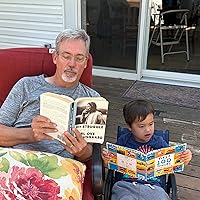
April 9, 2017
Three longish short stories really show off Styron’s remarkable talents. These stories are piercingly honest tales of his memories of childhood. He was traumatized at the age of 10 by his mother’s agonizing battle with cancer, and the parallel disintegration of his father’s emotional health. These events no doubt shaped his life. The first story yields singular insight into the mixed emotion of the young marine’s desire to go to battle – any young man can relate. The second is of an old black man who arrives at the end of life back to his childhood plantation, to find it 100 years later a rundown place nearly abandoned. This was the best story of the lot, for me, as it captured 1930s in Virginia, where Jim Crow was in full swing and racism was the norm. It was a beautiful story of the boy following his ramshackle white trash neighbors to their old plantation, the ancient black man in tow, where they strangely connect over boyhood joys and the memory thereof. The last story is certainly autobiographical, the telling of a single day in his life, where his mother’s pain has reached a scintillating horror of agony, and the father is bereft to the point of breaking, and all told on a day of oppressive heat in the lowlands of Virginia. The child observes, hidden, his father excoriate the visiting pastor and his wife in a sizzling spleen venting. Again, the child (author) is traumatized by his father’s true feelings of doubt and uncertainty of the omnibenevolence of God, as the father (a deacon himself!) drunkenly excoriates the pastor and his entire congregation is a torrent of anger. This is a powerful scene, as I could feel the boy’s ambiguity, the loss of rudder as his father and mother simultaneously disintegrate. Styron is a superb writer; he made me feel in my gut his pain. I thank him for that, lest I become complacent.
Below is just a sampling of the young marine on the ship, on the ship visiting his lieutenant colonel, in the way that young men sometimes idolize the masculinity of those slightly superior leaders (p. 13): “All the rest I could see was a rear view of his beautifully muscled torso; the shiny scar of a bullet wound near the armpit… I suspect he also liked to keep his handlebar (moustache) graphically emphasized. I admired this touch of panache. .. (p 14) I once thought that if you could distill the sheer masculinity he exuded, make of it some volatile essence, you would have an adman’s triumph- a cologne called Cock and Balls, smelling of leather, sweat, and gunpowder.” Pretty hilarious stuff here…
I’m planning to read all of Styron’s material, he’s been promoted to my A list.
Below is just a sampling of the young marine on the ship, on the ship visiting his lieutenant colonel, in the way that young men sometimes idolize the masculinity of those slightly superior leaders (p. 13): “All the rest I could see was a rear view of his beautifully muscled torso; the shiny scar of a bullet wound near the armpit… I suspect he also liked to keep his handlebar (moustache) graphically emphasized. I admired this touch of panache. .. (p 14) I once thought that if you could distill the sheer masculinity he exuded, make of it some volatile essence, you would have an adman’s triumph- a cologne called Cock and Balls, smelling of leather, sweat, and gunpowder.” Pretty hilarious stuff here…
I’m planning to read all of Styron’s material, he’s been promoted to my A list.

August 6, 2015
Many people say they are going to write a novel. Most of us never get around to it. Some teeter on the edge but then, somehow, still don’t get around to it. A few of us, like me, are pushed. I was “pushed” by William Styron. Strange for an Australian to say but it’s true. Sophie’s Choice blew my mind and stayed with me for a long time. The only way to get rid of it, actually, was to write my own novel. I wanted in some small way to affect a reader the way he did me. That was my aim and still is.
Recently I was able to bring the rest of my books into the house from the garage. As I put them all away, I set this book aside to read. It was the last William Styron I had left to read. Earlier this month I began Tidewater Morning and was immediately reminded why he is one of my favourite writers. And why he pushed me. In a funny way, reading his prose was like returning home. I found it meaningful too, reading the book within a week or so of Go Set a Watchman. These three stories seem to compliment Lee’s book. Not surprising, as both authors were born within a few years of each other.
As Styron explains: “The tales are an imaginative reshaping of real events and are linked by a chain of memories. The memories are of a single place - the Virginia Tidewater of the 1930s.”
The first story Love Day is about a young marine about to invade Japan in WWII. Listening to his commanding officer telling a long winded story, our marine remembers a long ago day with his parents after their Oldsmobile broke down beside a peanut field near the Virginia Carolina line.
In Shadrach an incredibly old and ill black man turns up one day at the property where he used to be a slave decades ago. “From Shadrach’s breast there now came a gentle keening sound which, commencing on a note of the purest grief, startled me by the way it resolved itself suddenly into a mild faraway chuckle; the moonshine was taking hold. The pink clapper of a tongue lolled in the cave of the jagged old mouth. Shadrach grinned.
“Ask him how old he is, Paul,” came the command.
I asked him. “Nimenime” was the glutinous reply.
“He says he’s ninety-nine years old,” I reported, glancing up from the ageless abyss.
“Ninety-nine! Well, I’ll be goddamned!”
In the title story, the same narrator remembers the day his mother died. It is a powerful, yet subtle and heart-wrenching story.
I’ll let his wonderful prose speak for itself.
“We heard the noise of shuffling feet, a thumping, raised voices. The doctor hurried through the living room and up the stairs while I followed, aware that the sound, or sounds, my mother was making was no longer a scream but a choked ebb and flow of breath, as if screaming had been so bottled up by exhaustion that all that could emanate form the core of her torment was a reedy and strengthless wail. Yet somehow she managed to form words, and the words I heard were: “Jeff, Jeff! Hold me!” Highly recommended.
Recently I was able to bring the rest of my books into the house from the garage. As I put them all away, I set this book aside to read. It was the last William Styron I had left to read. Earlier this month I began Tidewater Morning and was immediately reminded why he is one of my favourite writers. And why he pushed me. In a funny way, reading his prose was like returning home. I found it meaningful too, reading the book within a week or so of Go Set a Watchman. These three stories seem to compliment Lee’s book. Not surprising, as both authors were born within a few years of each other.
As Styron explains: “The tales are an imaginative reshaping of real events and are linked by a chain of memories. The memories are of a single place - the Virginia Tidewater of the 1930s.”
The first story Love Day is about a young marine about to invade Japan in WWII. Listening to his commanding officer telling a long winded story, our marine remembers a long ago day with his parents after their Oldsmobile broke down beside a peanut field near the Virginia Carolina line.
In Shadrach an incredibly old and ill black man turns up one day at the property where he used to be a slave decades ago. “From Shadrach’s breast there now came a gentle keening sound which, commencing on a note of the purest grief, startled me by the way it resolved itself suddenly into a mild faraway chuckle; the moonshine was taking hold. The pink clapper of a tongue lolled in the cave of the jagged old mouth. Shadrach grinned.
“Ask him how old he is, Paul,” came the command.
I asked him. “Nimenime” was the glutinous reply.
“He says he’s ninety-nine years old,” I reported, glancing up from the ageless abyss.
“Ninety-nine! Well, I’ll be goddamned!”
In the title story, the same narrator remembers the day his mother died. It is a powerful, yet subtle and heart-wrenching story.
I’ll let his wonderful prose speak for itself.
“We heard the noise of shuffling feet, a thumping, raised voices. The doctor hurried through the living room and up the stairs while I followed, aware that the sound, or sounds, my mother was making was no longer a scream but a choked ebb and flow of breath, as if screaming had been so bottled up by exhaustion that all that could emanate form the core of her torment was a reedy and strengthless wail. Yet somehow she managed to form words, and the words I heard were: “Jeff, Jeff! Hold me!” Highly recommended.

February 27, 2016
Published in 1993, I ran across this book on my shelf and realized I had never read it. A slim volume of three long short stories, I was by no means disappointed.
All three stories involve recollections of youth by the narrator as he grew up in the Tidewater area of Virginia.
In the first a young Marine, trained to kill, and outwardly anxious to enter combat, silently acknowledges his relief to find out that his unit will not take part in an upcoming invasion.
The second story recounts an episode involving a family, who on the surface appear to be "poor white trash", but who ultimately display a compassion and humanity rarely seen.
The title story is a heartwrenching account of a thirteen year old, navigating his transition into manhood, while coping with the terminal illness of his mother and the affect it has had on his parents and himself.
With exquisite prose and a host of memorable characters, Styron provides us with insight of how our lives are not only effected by the experiences of our youth, but by their memories as well.
All three stories involve recollections of youth by the narrator as he grew up in the Tidewater area of Virginia.
In the first a young Marine, trained to kill, and outwardly anxious to enter combat, silently acknowledges his relief to find out that his unit will not take part in an upcoming invasion.
The second story recounts an episode involving a family, who on the surface appear to be "poor white trash", but who ultimately display a compassion and humanity rarely seen.
The title story is a heartwrenching account of a thirteen year old, navigating his transition into manhood, while coping with the terminal illness of his mother and the affect it has had on his parents and himself.
With exquisite prose and a host of memorable characters, Styron provides us with insight of how our lives are not only effected by the experiences of our youth, but by their memories as well.

October 5, 2020
داستانها خوب بودند.
ترجمه چنگی به دل نمیزد. من راحت نبودم باهاش.
با کمک از ویکی پدیا
«ویلیام کلارک استیرن (به انگلیسی: William Clark Styron) رماننویس آمریکایی و برندهٔ جایزه پولیتزر ادبی متولد ژوئن ۱۹۲۵ بود.از مشهورترین آثار استیرن به کتاب انتخاب سوفی میتوان اشاره کرد. استیرن در سال (۱۹۹۳) آخرین اثرش «صبح تایدواتر» را که خاطراتی است از دوران کودکیاش در جنوب آمریکا منتشر کرد.»
ترجمه چنگی به دل نمیزد. من راحت نبودم باهاش.
با کمک از ویکی پدیا
«ویلیام کلارک استیرن (به انگلیسی: William Clark Styron) رماننویس آمریکایی و برندهٔ جایزه پولیتزر ادبی متولد ژوئن ۱۹۲۵ بود.از مشهورترین آثار استیرن به کتاب انتخاب سوفی میتوان اشاره کرد. استیرن در سال (۱۹۹۳) آخرین اثرش «صبح تایدواتر» را که خاطراتی است از دوران کودکیاش در جنوب آمریکا منتشر کرد.»
August 21, 2011
This is a lovely book. The stories are supposedly fiction but I expect there is a fair amount of autobiography in them. They are really rich in character and place, transporting me to... the south pacific engagement of young marines in WWII; to the coastal waters of Virgina; the depression era and into a heart of racism and reality of the time and space.... I've always been interested in Styron because of his book Sophie's Choice. But having seen that movie, I simply could not read that book. So this is an introduction to the writer for me that is less wrenching and excruciating.
The title story, A Tidewater Morning, affected me particularly... It is the story of a young boy in his 14th year, during the final period of his mother's life. The fact that Paul's mother dies at home struck me profoundly... none of the clinic impressonal-ness of a hospital, no fluorescent lights, no metal beds or institutional surroundings, no impersonal 'dead body swept out of the way to be replaced by another', forgotten the minute the room has been tidied and occupied by another - the passing person non-descript to anyone but the family... No, Paul's mother died in her own room, with its familiar smells and the light drifting in the window in that particular way, the softness of the incandescent bedside lamp, the familiarity of her own bed, the chair her husband or the nurse sat on, the way the hinge squeaked when the door opened, the creak of the bed springs, the dresser and the little things on top of it, the familiar pictures on the wall.... What a sane place to depart from, a gentler passing for anyone. For those who remain in that home, the room will always hold that memory, the particular feel of that day, memories of the stirrings and emotions that passing brought forth... The deceased person still alive in more than just a photograph or a 'dead file' medical report. Such place memories often linger for generations... Those of you who live in 'new construction' may not understand at all what I am speaking of... Those of you with family histories in your homes, or even someone else's history in that home, most probably will.
The title story, A Tidewater Morning, affected me particularly... It is the story of a young boy in his 14th year, during the final period of his mother's life. The fact that Paul's mother dies at home struck me profoundly... none of the clinic impressonal-ness of a hospital, no fluorescent lights, no metal beds or institutional surroundings, no impersonal 'dead body swept out of the way to be replaced by another', forgotten the minute the room has been tidied and occupied by another - the passing person non-descript to anyone but the family... No, Paul's mother died in her own room, with its familiar smells and the light drifting in the window in that particular way, the softness of the incandescent bedside lamp, the familiarity of her own bed, the chair her husband or the nurse sat on, the way the hinge squeaked when the door opened, the creak of the bed springs, the dresser and the little things on top of it, the familiar pictures on the wall.... What a sane place to depart from, a gentler passing for anyone. For those who remain in that home, the room will always hold that memory, the particular feel of that day, memories of the stirrings and emotions that passing brought forth... The deceased person still alive in more than just a photograph or a 'dead file' medical report. Such place memories often linger for generations... Those of you who live in 'new construction' may not understand at all what I am speaking of... Those of you with family histories in your homes, or even someone else's history in that home, most probably will.

November 22, 2018
I was very disappointed in this loosely tied group of three stories. Perhaps part of my disappointment was tied to the fact that I have recently read a collection of similar structure written by Wendell Berry, and those were so marvelous that I could not leave them behind. The comparison was impossible to avoid.
Styron’s collection is coarse and his characters are difficult to engage with. It is set in the Tidewater of Virginia, which is home to me now, and I expected to feel connected from at least that point of view, but his opening story takes place in Europe during WWII, and neither of the other two felt part of the places I know, even though the names were there.
The second story, Shadrach, which is the best of the three, deals with a ninety-nine year old former slave returning, in the 1930s, wishing to be buried on the land where he was held in slavery as a child. The idea seemed too far-fetched to be believable, the reactions of the people involved were unrealistic, and the racial overtones were hard to overlook, despite an effort to put them into their time context.
All in all, I would say Styron missed the mark with this collection. I truly loved Sophie’s Choice, so I will probably still tackle the two Styron’s I have left on my list, but I am hoping to find they have little or nothing in common with this failed effort.
Styron’s collection is coarse and his characters are difficult to engage with. It is set in the Tidewater of Virginia, which is home to me now, and I expected to feel connected from at least that point of view, but his opening story takes place in Europe during WWII, and neither of the other two felt part of the places I know, even though the names were there.
The second story, Shadrach, which is the best of the three, deals with a ninety-nine year old former slave returning, in the 1930s, wishing to be buried on the land where he was held in slavery as a child. The idea seemed too far-fetched to be believable, the reactions of the people involved were unrealistic, and the racial overtones were hard to overlook, despite an effort to put them into their time context.
All in all, I would say Styron missed the mark with this collection. I truly loved Sophie’s Choice, so I will probably still tackle the two Styron’s I have left on my list, but I am hoping to find they have little or nothing in common with this failed effort.

January 24, 2025
سه داستان کوتاه از زندگی خود مولف که برای من جالب بودند.

March 1, 2016
The way Styron is able to grab my attention and keep it, even when I'm not reading his book, is like no other. I simply love his writing, his descriptions, and his views towards the world. Although his books are not my favourite of favourite, his writing always comes to mind when someone mentions a 'favourite author'. This one took me a while to get through, due to school and other engagements, but it has impacted me greatly, as with his other works that I have read. Recommend from the bottom of my heart.
"Although earth's foundations crumble and the mountains be shaken into the midst of the seas, yet alone shall I prevail."
Older update: *guys, can we talk about the fact that I found this book at a charity shop right after declaring my love for Styron a few days ago - I'm telling you, it's fate;;;I'll probably pick it up this week - it's now on my express priority superfast to-read check-out line
"Although earth's foundations crumble and the mountains be shaken into the midst of the seas, yet alone shall I prevail."
Older update: *guys, can we talk about the fact that I found this book at a charity shop right after declaring my love for Styron a few days ago - I'm telling you, it's fate;;;I'll probably pick it up this week - it's now on my express priority superfast to-read check-out line

April 2, 2019
Love Day - 4 out of 5
Shadrach - 4 out of 5
A Tidewater Morning - 5 out of 5
Shadrach - 4 out of 5
A Tidewater Morning - 5 out of 5

November 20, 2012
William Styron fiction that doesn't have some length to it necessarily lacks some of the long, detailed, total involvement — a willingness to just let the gorgeous prose flow and flow — that I love; that said, the three short stories that make up "A Tidewater Morning" are pretty damned good.
The stories, all published in the 1980s and reprinted here as linked tales from the life of Paul Whitehurst, at 20, 10 and 13 years of age, are interesting reflections featuring transformative events in his young life. There are no slam-bang conclusions or neatly tied-up plots here, just strong, emotionally involving tales from youth with enough of Styron's great prose to satisfy.
In the first story, "Love Day," Paul is on a ship as it nears Japan during World War II, the ship's task a feint while Americans launch the "real" attack elsewhere. Paul, an only child, considers episodes from his youth, particularly involving his father, and the reflections hit him harder than he expected as he moves among his shipmates and commanding officer. It's strong but probably third-best of the tales.
The second story, "Shadrach," is about a 99-year-old black man, who, in 1935, returns to his former home — the property on which he was a slave in Virginia. The man, dying, falls in and out of coherency while the family of Paul's young friend tries to soothe the old man in his final days.
In the third, longest and best tale, Paul, 13, copes with his jarring family life as his mother dies. Here Styron's writing is in nearly full flower, though in truncated form because of the short story format.
I held off on reading "A Tidewater Monring" for a long time. I suppose I thought tackling Styron in short story form would be a letdown. However, these tales are more thematically linked than I had expected, and individually and wholly I was satisfied. Styron was a treasure.
The stories, all published in the 1980s and reprinted here as linked tales from the life of Paul Whitehurst, at 20, 10 and 13 years of age, are interesting reflections featuring transformative events in his young life. There are no slam-bang conclusions or neatly tied-up plots here, just strong, emotionally involving tales from youth with enough of Styron's great prose to satisfy.
In the first story, "Love Day," Paul is on a ship as it nears Japan during World War II, the ship's task a feint while Americans launch the "real" attack elsewhere. Paul, an only child, considers episodes from his youth, particularly involving his father, and the reflections hit him harder than he expected as he moves among his shipmates and commanding officer. It's strong but probably third-best of the tales.
The second story, "Shadrach," is about a 99-year-old black man, who, in 1935, returns to his former home — the property on which he was a slave in Virginia. The man, dying, falls in and out of coherency while the family of Paul's young friend tries to soothe the old man in his final days.
In the third, longest and best tale, Paul, 13, copes with his jarring family life as his mother dies. Here Styron's writing is in nearly full flower, though in truncated form because of the short story format.
I held off on reading "A Tidewater Monring" for a long time. I suppose I thought tackling Styron in short story form would be a letdown. However, these tales are more thematically linked than I had expected, and individually and wholly I was satisfied. Styron was a treasure.

July 19, 2015
This was a "re-read," and I am so glad that I decided to do so. Styron is one of the most gifted writers of the 20th century, and the three stories in this book are woven together around themes of loss, war, race and the power of memory to bring us to tears. Set in the Depression and World War II, the memories of Paul Whitehurst enable us to travel to the Pacific Theater and feel the crushing anticipation and memories of a Marine awaiting battle. The reader is taken to rural King and Queen County during the Depression and witnesses the death of an ex-slave through the eyes of a young boy. Finally, in the title story, Tidewater Morning, we are with Paul as he witnesses the dying days of his mother, who has suffered from bone cancer most of his life.
Styron writes as a poet. The words float from the page and carry you with him through his stories. You feel what his protagonist is feeling, every emotion is yours as well.
I borrowed this book from the library but am adding it to my wish list, it will be one I read again, and is definitely one of those books to be treasured and revisited several times.
Styron writes as a poet. The words float from the page and carry you with him through his stories. You feel what his protagonist is feeling, every emotion is yours as well.
I borrowed this book from the library but am adding it to my wish list, it will be one I read again, and is definitely one of those books to be treasured and revisited several times.

September 9, 2020
A nice revisit to one of my all time favourite authors. Three short stories about Paul, a thinly disguised younger Styron, from his youth. One story of being on a navy vessel about to land on Okinowa in 1945, the other two from earlier in the 1930s, more about race and growing up in Virginia.
Moments of beauty as all his writing is, but sometimes meandering and off the point. Worth the journey.
Moments of beauty as all his writing is, but sometimes meandering and off the point. Worth the journey.

June 25, 2020
The central theme of these three stories is death, which disrupts the normal order of life by stirring up settled emotions and thoughts. In the first story death only emerges as a possibility, in the second it becomes reality through the death of a stranger, an old man, while in the last one, it becomes as direct an experience as possible.
As a fully matured man conjures up his youth, the reader would expect that the dominant tone should be some kind of resignation or wisdom originating from unworldly consolation. But there is neither self-deception nor encouragement here: the readers as well as the characters of the story are facing the incomprehensible, immutable and indigestible idea of death.
As a fully matured man conjures up his youth, the reader would expect that the dominant tone should be some kind of resignation or wisdom originating from unworldly consolation. But there is neither self-deception nor encouragement here: the readers as well as the characters of the story are facing the incomprehensible, immutable and indigestible idea of death.

March 23, 2013
There is an excellent sense of both place and time in these three stories, fictionalized accounts of different periods in the author's life in Tidewater Virginia. I decided to read the book after seeing the movie Shadrach which is based on the middle of the three stories. But the story I liked best was the third, the title story, A Tidewater Morning. It tells of one morning in young Paul Whitehurst's life as his mother lay dying of cancer. Styron had an amazing vocabulary and the ability to create interesting and well-developed characters.

January 29, 2014
I frequently forget what a great writer Styron is. This unique, poignant book is made up of three parts of a life and a time in Virginia's tidewater coast. Each part could be it's own short story but all three together make a complete novel, no matter how short. War, death, family, slavery reflect a boy's life.
It examines the simple complexity and complex simplicity of living. Styron is truly a writer's writer. Beautiful and stunning.

March 7, 2017
Not so sure this book rated this high of a rating. Three short stories that at times I struggled to get through. I found that the author had a habit of using really big words (words that I never heard of before let alone knew the meaning of). This was especially true in the last story which most of it was told from a 12 year olds point of view. I can't see any 12 yr old using that type of language nowadays let alone in 1938.

July 12, 2010
3 short stories from the author's life. From what I can gather from the details, Styron grew up in Hilton Village in Newport News, but I need to verify. The 2nd story, Shadrach, is what compelled me to pick up the book in the first place. Shadrach is an ex-slave who travels back to Virginia to die on the land he was born on.

November 22, 2016
William Styron is the best writer that we've had, now, and in our recent past. His language is gorgeous, his dialogue is true and his story writing can not be beaten. Tidewater Morning contains three stories that are at least semi autobiographical from his youth. They portray the evils and stupidity of war and racism.

October 15, 2008
Ugh. Reading this book is like a taking a big lungful of stale, dead air.

February 5, 2017
I'm not sure what was more cringe-worthy- the run-on sentences or the flagrant racism. Yikes.
However, after an insightful book club I found a better appreciation for the stories.
However, after an insightful book club I found a better appreciation for the stories.

July 4, 2025
This collection of three long short stories is part memoir and part fiction as Pulitzer Prize-winning author William Styron recalls and embellishes three specific incidents of his youth that took place at ages 10, 13, and 20.
And while all three are highly readable and very well-written, this is the notable power of each: The point isn't the plot. The point is to show deeply-felt human emotions caused by out-of-the-ordinary events that transform our lives forever.
• "Love Day" takes place on April 1, 1945, which happened to be Easter Sunday that year, aboard a ship in the Pacific Ocean that was serving as a decoy while other ships conducted an invasion on Japan. Paul Whitehurst is 20 years old and serving as a platoon leader in the Second Marine Division. He and his men are itching for a fight, itching to be part of this war in a violent, lethal way, itching to do what they were trained to do. But they slowly figure out that the rumors aboard the ship are true: They will not be fighting anyone, since they are the decoy. The story takes a sudden turn when Paul fully grasps this reality and examines how he truly feels about war.
• "Shadrach" takes place in the sweltering heat of the summer of 1935 in Tidewater Virginia when Paul is 10 years old. He is playing marbles with Little Mole Dabney when an ancient Black man named Shadrach stumbles into the Dabney yard. The Dabneys are dirt poor with seven children. It's the Great Depression, and Mr. Dabney's only real means of income is the illegal still he operates deep in the country. Shadrach is 99 years old, and has the most astonishing tale to tell—one that has Paul and the Dabneys willing to do just about anything for which Shadrach asks.
• "A Tidewater Morning" takes place on September 11, 1938 when Paul is 13 and his dear mother Adelaide is dying a very painful death from cancer. She is at home with her grief-stricken husband Jefferson, the maid Florence, and the caregiver Miss Slocum. Paul is forbidden to enter the sickroom, but when the morphine has lost its power to control the pain, her cries and screams echo throughout the house. All this is contrasted to Paul's paper route where he works for Mr. Quigley, a meanspirited, cheating old man who makes Paul's life miserable. Meanwhile, Paul recalls some of the arguments his parents have had over the years—usually his mother complaining about their lives. This is a family, like almost all families, with a secret side.
Just a note: Amazon classifies this book as young adult literature for ages 12 to 16. I couldn't disagree more! While the subject matter is fine, the writing, language, and vocabulary would be far too difficult for most teenagers, if not many adults.
And while all three are highly readable and very well-written, this is the notable power of each: The point isn't the plot. The point is to show deeply-felt human emotions caused by out-of-the-ordinary events that transform our lives forever.
• "Love Day" takes place on April 1, 1945, which happened to be Easter Sunday that year, aboard a ship in the Pacific Ocean that was serving as a decoy while other ships conducted an invasion on Japan. Paul Whitehurst is 20 years old and serving as a platoon leader in the Second Marine Division. He and his men are itching for a fight, itching to be part of this war in a violent, lethal way, itching to do what they were trained to do. But they slowly figure out that the rumors aboard the ship are true: They will not be fighting anyone, since they are the decoy. The story takes a sudden turn when Paul fully grasps this reality and examines how he truly feels about war.
• "Shadrach" takes place in the sweltering heat of the summer of 1935 in Tidewater Virginia when Paul is 10 years old. He is playing marbles with Little Mole Dabney when an ancient Black man named Shadrach stumbles into the Dabney yard. The Dabneys are dirt poor with seven children. It's the Great Depression, and Mr. Dabney's only real means of income is the illegal still he operates deep in the country. Shadrach is 99 years old, and has the most astonishing tale to tell—one that has Paul and the Dabneys willing to do just about anything for which Shadrach asks.
• "A Tidewater Morning" takes place on September 11, 1938 when Paul is 13 and his dear mother Adelaide is dying a very painful death from cancer. She is at home with her grief-stricken husband Jefferson, the maid Florence, and the caregiver Miss Slocum. Paul is forbidden to enter the sickroom, but when the morphine has lost its power to control the pain, her cries and screams echo throughout the house. All this is contrasted to Paul's paper route where he works for Mr. Quigley, a meanspirited, cheating old man who makes Paul's life miserable. Meanwhile, Paul recalls some of the arguments his parents have had over the years—usually his mother complaining about their lives. This is a family, like almost all families, with a secret side.
Just a note: Amazon classifies this book as young adult literature for ages 12 to 16. I couldn't disagree more! While the subject matter is fine, the writing, language, and vocabulary would be far too difficult for most teenagers, if not many adults.

April 26, 2020
A really fine small collection of short stories from a master writer, such that cause much envy in me because I wish I could pen similarly. And although the stories are situated from about 1935 to 1944, they are connected by the narrator, thinking back on life as a ten-year-old observing his neighbors and witnessing the arrival of an elderly ex-slave, thirteen-year-old paperboy contemplating his mother's illness, and a twenty-year-old Marine off the coast of Japan. Styron is recalling his youth in eastern Virginia near the military shipyards, and it definitely has an autobiographical feel. A really nice volume.

June 30, 2020
the title story, where a 13 yo Styron stand-in watches his mother succumb to cancer, is incredible - poised, gentle, sunset-like. a model for what coming of age stories ought to be. like, the platonic ideal of a coming of age story. unfortunately, styron’s racism mars it + the rest of the collection. I get the feeling that he was raised intensely racist and then spent his adulthood trying to shake it off. he succeeded for his time but not for ours

May 13, 2019
Une très belle découverte dans le cadre du challenge #maiennouvelles !
October 6, 2021
I don’t do short stories. I zipped through these and am hungry for more of Styron’s works. Wonderful.

July 1, 2012
this will be the...5th...6th?...from styron that i will read. stories...a tidewater morning: three tales from youth...1993..."love day" was originally published in esquire in 1985..."shadrach" same mag in '78...and "a tidewater morning", '87.
dedicated to carlos fuentes...
a quote on a white page: the long habit of living indisposeth us for dying. --sir thomas browne, urn burial
an author's note...stories of experience at ages 20, 10, and 13...linked by a chain of memories...of a single place...virginia tidewater of the 30s....preparing for war...encroaching on a pastoral way of life...
love day
begins:
on april fool's day, 1945 (which was also easter sunday), the second marine division, in which doug stiles and i were platoon leaders, made an assault on the southeast coast of okinawa. actually this was a fake assault, and we had problems about that.
onward and upward.
this 1st story is okay...from the p.o.v. of a marine scheduled (or not) to land on the beach at okinawa tomorrow...not though...his unit will be used as a diversion and then sent back to some other island, saipan...
they all lament that they will not have opportunity to kill japs...feel their oats...and secretly the narrator is happy. and so it goes.
shadrach
second story...this one is a good one...this old black man, shadrach, comes upon the narrator and his poor buddies, the moles...playing marbles or something...the narrator at 10...the old black man, 1935, ninety-nine years old, walked there from alabama...started months ago...and intends to die on dabney land...where he was born...
fore all that...there's this hilarious scene that i record here, for moi....the boy, a man now, but a ten-year-old boy is impressed with mr. dabney and his frequent transports of rage..."his blasphemies and obscenities, far from scaring me, caused me to shiver with their splendor. i practiced his words in secret, deriving from their amalgamated filth what, in a dim pediatric way, i would perceive was erotic inflammation. 'son of a bitch whorehouse bat shit jesus christ pisspot asshole!' i would scream into an empty closet, and feel my little ten-year-old pecker rise."
ha ha ha ha ha ha! thanks for the memories. could be only an american male of the latter half of the previous century can appreciate that...i suspect, moreover, that we've become so fuggen emasculated that this story risks banishment to the corner, along with twain, who has been spanked a number of times already, and will likely be whipped again and again.
go stand in the corner, styron!
ha ha ha!
anyway, the old black man dies...the sheriff tells dabney he can't bury the man on the property...it's against the law...did i say we have become emasculated? yep. you bet. we are. sans balls.
anyway...the story ends before the sheriff returns to arrest dabney, who doesn't have $35...doesn't have 25....does not have $5...and so it goes.
a tidewater morning
last story....onward and upward
this last is another good one...although...(this that the other)...events.
anyway...from the perspective of a 13-year-old...newspapers...all that malarkey...from...ummmm, 1938..a quote: we each devise our means of escape from the intolerable.
in this one...is there is a sense of the autobiograph...there is also a sense of the above...drink, oblivion...music...the boy throws his papers into the ocean...the old man curses god, after a fashion...these things happen..
anyway...good read...i dunno is this is early stryon...but there is some nice things happening in this last one...the italicized sections...i like this how it ends..."thus lulled by history, i let myself be elevated slowly up and up through the room's hot, dense shadows. and there, floating abreast of the immortal musicians, i was able to....
like the balloon-man, far and wee....nice....scoobie doobie doob-ee...
finished, 18 jul 12, wednesday evening, 10:08 p.m. e.s.t.....almost full-dark...
dedicated to carlos fuentes...
a quote on a white page: the long habit of living indisposeth us for dying. --sir thomas browne, urn burial
an author's note...stories of experience at ages 20, 10, and 13...linked by a chain of memories...of a single place...virginia tidewater of the 30s....preparing for war...encroaching on a pastoral way of life...
love day
begins:
on april fool's day, 1945 (which was also easter sunday), the second marine division, in which doug stiles and i were platoon leaders, made an assault on the southeast coast of okinawa. actually this was a fake assault, and we had problems about that.
onward and upward.
this 1st story is okay...from the p.o.v. of a marine scheduled (or not) to land on the beach at okinawa tomorrow...not though...his unit will be used as a diversion and then sent back to some other island, saipan...
they all lament that they will not have opportunity to kill japs...feel their oats...and secretly the narrator is happy. and so it goes.
shadrach
second story...this one is a good one...this old black man, shadrach, comes upon the narrator and his poor buddies, the moles...playing marbles or something...the narrator at 10...the old black man, 1935, ninety-nine years old, walked there from alabama...started months ago...and intends to die on dabney land...where he was born...
fore all that...there's this hilarious scene that i record here, for moi....the boy, a man now, but a ten-year-old boy is impressed with mr. dabney and his frequent transports of rage..."his blasphemies and obscenities, far from scaring me, caused me to shiver with their splendor. i practiced his words in secret, deriving from their amalgamated filth what, in a dim pediatric way, i would perceive was erotic inflammation. 'son of a bitch whorehouse bat shit jesus christ pisspot asshole!' i would scream into an empty closet, and feel my little ten-year-old pecker rise."
ha ha ha ha ha ha! thanks for the memories. could be only an american male of the latter half of the previous century can appreciate that...i suspect, moreover, that we've become so fuggen emasculated that this story risks banishment to the corner, along with twain, who has been spanked a number of times already, and will likely be whipped again and again.
go stand in the corner, styron!
ha ha ha!
anyway, the old black man dies...the sheriff tells dabney he can't bury the man on the property...it's against the law...did i say we have become emasculated? yep. you bet. we are. sans balls.
anyway...the story ends before the sheriff returns to arrest dabney, who doesn't have $35...doesn't have 25....does not have $5...and so it goes.
a tidewater morning
last story....onward and upward
this last is another good one...although...(this that the other)...events.
anyway...from the perspective of a 13-year-old...newspapers...all that malarkey...from...ummmm, 1938..a quote: we each devise our means of escape from the intolerable.
in this one...is there is a sense of the autobiograph...there is also a sense of the above...drink, oblivion...music...the boy throws his papers into the ocean...the old man curses god, after a fashion...these things happen..
anyway...good read...i dunno is this is early stryon...but there is some nice things happening in this last one...the italicized sections...i like this how it ends..."thus lulled by history, i let myself be elevated slowly up and up through the room's hot, dense shadows. and there, floating abreast of the immortal musicians, i was able to....
like the balloon-man, far and wee....nice....scoobie doobie doob-ee...
finished, 18 jul 12, wednesday evening, 10:08 p.m. e.s.t.....almost full-dark...

February 8, 2018
(Fiction, Literary, Classic)
William Styron is one of those mid-twentieth century authors of literary fiction whom I’ve always meant to read. Tidewater Morning is a novella that I happened to have on Kindle which I had taken with on vacation.
Amazon says: “In this brilliant collection of ‘long short stories’, the Pulitzer Prize-winning author of Sophie’s Choice returns to the coastal Virginia setting of his first novels. Through the eyes of a man recollecting three episodes from his youth, William Styron explores with new eloquence death, loss, war, and racism.”
Styron’s prose is magical: calming, glowing. I loved this book!
4½ stars
William Styron is one of those mid-twentieth century authors of literary fiction whom I’ve always meant to read. Tidewater Morning is a novella that I happened to have on Kindle which I had taken with on vacation.
Amazon says: “In this brilliant collection of ‘long short stories’, the Pulitzer Prize-winning author of Sophie’s Choice returns to the coastal Virginia setting of his first novels. Through the eyes of a man recollecting three episodes from his youth, William Styron explores with new eloquence death, loss, war, and racism.”
Styron’s prose is magical: calming, glowing. I loved this book!
4½ stars
Displaying 1 - 30 of 161 reviews