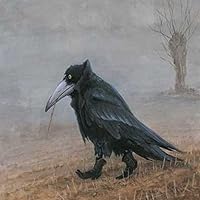
'The Flower-Tunicked Priest of Nightmare', Arthur Machen (1863-1947) is best known for his horror and supernatural fiction and has been a cult writer since the 1890s. The publication of this revised third edition of Ritual and Other Stories reflects the continued interest in Machen's work, and collects together his more elusive short fiction. Through the publication of Ritual and its companion 'best of' volume Tales of Horror and the Supernatural, Tartarus has now reissued all Machen's short stories in accessible form. As R.B. Russell writes in his new Introduction, 'the great strength of Ritual is that it spans Machen's career and thus reveals his development as a writer'. As well as two early pieces from the 1880s, Ritual contains from the 1890s stories that compare well with Machen's better-known decadent work, such as The Great God Pan. These include the exquisite prose-poem 'Rus in Urbe' (1890), and the stories from the Ornaments in Jade collection, written in the 1890s but not published until 1924. Machen's much underrated later work is represented by, amongst others, 'The Tree of Life' (1936), 'one of the most sympathetic stories Machen ever wrote', and the title story 'Ritual', which although written in 1937 'could have been penned at any time in his career, and is undeniably Machen at his best'. Ritual & Other Stories contains: The Priest and the Barber, The Spagyric Quest of Beroaldus Cosmopolita, The Town of Long Ago, Candletime, Cidermas, Over the Gate, Of the Isle of Shadows, A Further Account of the Academy of Lagado, Tales from Barataria, Sir John's Chef, Rus in Urbe, By the Brook, The Autophone, The Brook Farm, A Remarkable Coincidence, A Double Return, A Wonderful Woman, The Lost Club, An Underground Adventure, Jocelyn's Escape, The Red Hand, The Rose Garden, The Turanians, The Idealist, Witchcraft, The Ceremony, Psychology, Torture, Midsummer, Nature, Holy Things, The Young Man in the Blue Suit, The Soldiers' Rest, The Monstrance, The Dazzling Light, The Little Nations, The Men from Troy, The Light That Can Never Be Put Out, Drake's Drum, A New Christmas Carol, 7B Coney Court, Munitions of War, The Gift of Tongues, The Islington Mystery, Johnny Double, The Cosy Room, Awaking, Opening the Door, The Compliments of the Season, The Dover Road, The Exalted Omega, The Tree of Life, Out of the Picture, Change, Ritual.
Arthur Machen was a leading Welsh author of the 1890s. He is best known for his influential supernatural, fantasy, and horror fiction. His long story The Great God Pan made him famous and controversial in his lifetime, but The Hill of Dreams is generally considered his masterpiece. He also is well known for his leading role in creating the legend of the Angels of Mons.
At the age of eleven, Machen boarded at Hereford Cathedral School, where he received an excellent classical education. Family poverty ruled out attendance at university, and Machen was sent to London, where he sat exams to attend medical school but failed to get in. Machen, however, showed literary promise, publishing in 1881 a long poem "Eleusinia" on the subject of the Eleusinian Mysteries. Returning to London, he lived in relative poverty, attempting to work as a journalist, as a publisher's clerk, and as a children's tutor while writing in the evening and going on long rambling walks across London.
In 1884 he published his second work, the pastiche The Anatomy of Tobacco, and secured work with the publisher and bookseller George Redway as a cataloguer and magazine editor. This led to further work as a translator from French, translating the Heptameron of Marguerite de Navarre, Le Moyen de Parvenir (Fantastic Tales) of Béroalde de Verville, and the Memoirs of Casanova. Machen's translations in a spirited English style became standard ones for many years.
Around 1890 Machen began to publish in literary magazines, writing stories influenced by the works of Robert Louis Stevenson, some of which used gothic or fantastic themes. This led to his first major success, The Great God Pan. It was published in 1894 by John Lane in the noted Keynotes Series, which was part of the growing aesthetic movement of the time. Machen's story was widely denounced for its sexual and horrific content and subsequently sold well, going into a second edition.
Machen next produced The Three Impostors, a novel composed of a number of interwoven tales, in 1895. The novel and the stories within it were eventually to be regarded as among Machen's best works. However, following the scandal surrounding Oscar Wilde later that year, Machen's association with works of decadent horror made it difficult for him to find a publisher for new works. Thus, though he would write some of his greatest works over the next few years, some were published much later. These included The Hill of Dreams, Hieroglyphics, A Fragment of Life, the story The White People, and the stories which make up Ornaments in Jade.
This should be viewed as a supplementary book to Tartarus' prior release: Tales of Horror and the Supernatural, which contained all of Machen's short fiction that would be of interest to a casual reader, along with most of his essential short fiction overall. Ritual and Other Stories should be the next step only for those of us Machen addicts who can not get enough of the man's anti-materialist artistry. The breadth of material here, from the beginning of Machen's writing career right until the end, is generally of lesser quality than the fiction featured in Tartarus' primary 'best of' volume, but while later period Machen can be frustratingly diffuse and unfocused (the rambling and flagrantly unnecessary side story about a young telekinetic in the otherwise solid tale Out of the Picture is a key example of this), he's rarely, if ever, outright bad.
The abstracted, journalistic style of his later career means his stories don't dazzle as much as his more famous work from the 1890s, when he wrote the classic decadent horror novella The Great God Pan and one of my personal favourite novels from any author The Hill of Dreams, but they still cultivate the appropriate sensation of mystery, and lesser Machen is still better than most weirdists achieve. Unsurprisingly, the best written pieces in the volume are from Machen's great decade of the 1890s – these being the prose poems formerly collected within his book Ornaments in Jade. From his later period I would single out the title story and particularly Change as effective folk horror tales and Opening the Door as a tale of wonder akin to his classic story N.
If you finished Tales of Horror and the Supernatural (still the perfect Machen starter book) and only enjoyed Machen as a sort of proto-Lovecraft writer of fun horror stories then this book isn't for you. Machen actually, despite his reputation, wrote relatively few horror stories, and hardly any feature here. This is exclusively for those mystic wanderers whose trembling hands seek to pierce the veil in search of another fix from this most brilliant, visionary artist of mystery and awe.
Una maravilla de edición de la estupenda editorial Reino de Redonda de uno de mis autores favoritos,con varios cuentos inéditos en español y otros ya clásicos. En la línea de Machen, cuentos que abordan el lado misterioso de la vida y el folklore galés, con elementos sobrenaturales abordados de manera muy sutil. Destaco en especial los dos últimos cuentos: "Trueque" y "Ritual". MUY bueno.
This was my first long-form exploration into Machen, aside from having read a smattering of some of his most famous. I knew it was a long time coming, and from some earlier interactions (like the The Garden of Hermetic Dreams's excerpt from "The Hill Of Dreams") was able to infer that Machen is perhaps incorrectly classed as a horror writer in the contemporary mind, wherein he seems more a "fantasist" whose work occasionally turns to the darker side of things (thus religious visions and the ambiguity of "the fae" sometimes lead to concepts of the "diabolic" and "atavistic").
Regardless. I read 17 of the offerings here and will note my reactions. It must be said that a good amount of the material here is not specifically to my taste, especially when Machen turns to the use of religious/spiritual visions to support WWI scenarios ("The Angels Of Mons" being one of his most successful forays in that direction) - though his long-form "The Terror" is an interesting variation of this. So, here, things like "Drake's Drum" (mysterious drumbeat accompanies the surrender of the German fleet - is it Admiral Drake, in heaven, celebrating?), "Munitions of War" or "The Soldier's Rest" don't really hit the mark (they were probably more effective in their time) - with even pieces like "The Little Nations" (a Cleric finds a patch of ground which exactly resembles a map of Gallipoli and watches ants war over it, while reflecting on 'As above, so below') and "The Monstrance" (in which a German soldier causes a sneak attack plan to fail because of his religious guilt hallucinations for past actions) seem initially engaging but slight (due to the conceit of the tales, there are no active characters so much as a "let me tell you what happened" approach). Also to be grouped with these are short pieces like "The Holy Things" in which an artist, feeling pessimistic and wanting no human company, undergoes a full-blown religious vision. Beautiful, and effective in its way, but not really my thing.
Then you have "Machen the potential Crime writer," with works like "The Islington Mystery" and "The Cosy Room". In “The Islington Mystery” a narrator bemoans the general public, which sees ingenuity in the recent murder case involving Dr. Crippen while ignoring the truly inventive murder cases that lack journalistic support or sparkling details. Then, they proceed to narrate the unresolved case of Mr. Harold Boale, taxidermist, who's shrewish wife disappeared one day, and the subsequent series of events... Well, while it's interesting to see further confirmation that authors have always been testing non-usual markets to see if they might strike with more success in their short fiction sales, Machen is certainly a surprise to see writing in the true crime/mystery genre. He makes an okay go of it, honestly, but it works against so many of his strengths (no mystic visions, no evocative descriptive passages, just dry recitation of facts) that one can't help but feels he made the right decision in the long run. Still - interesting. "The Cosy Room," is also a bit different than his usual. A young man commits a murder and flees to another neighborhood, hoping to hide away until the thing has blown over. But "murder will out" and all that... It's an okay psychological yarn, all about the slow accrual of mental instability that comes from fear of retribution - all worrying about being out in daylight, or darkness, muttering repetitiously to oneself, etc. So "The Tell-Tale Heart" but not as gruesome, nor dramatic - veddy British.
These can be seen to lead into "crime" type stories that are more evocative of larger mysteries, more imaginative scenarios. "The Lost Club" has two dandies stumble into an obscure club, led by a friend they meet by chance, thus observing a strange club ceremony which seems to result in the "loser" ending up "disappeared". It's all very sinister (with participants denying knowledge, and no trace of the club afterwards) but the two main characters will never get an answer (and neither will we). And then there's one of Machen's keynote stories, "The Red Hand", which ostensibly involves the assertion by Mr. Dyson (who fancies himself a bit of a detective, what with his application of the dubious "Doctrine Of Improbability") that atavistic survivals of savage humanity co-exist with us in modern times, and how this ties in to a a murdered doctor, a scrawl of street graffiti, and an ebony tablet with strange writings. There's a lot to like in this story (mainly Machen's evocation of "the people down below", although the classist and racist assumptions are to be expected) but it barely works "as a story" because it wants to be both an evocative weird tale AND a Sherlock Holmes-styled mystery. Thus, the solution makes all the weird intimation secondary to the actual reality (as effective, if removed, the final references to the "weird" aspects are). A frustrating story.
There are also the straight "strange" stories. "Opening The Door" has a flash-in-the pan figure ("The Canonbury Clergyman" - noted for railing against modern traffic) suddenly disappear for a month, only to return with no explanation. And so a reporter (given some similar details in "Out Of The Picture," one may assume the character is Machen himself) befriends the man to uncover a story that ultimately he can't. It's a soft and very gentle story that revolves on the idea of being "taken by the faeries" (although only in the abstract) but instead focuses on how altered mental states (of confusion or deep thought) can open us up to the "strange." Meanwhile, "The Exalted Omega" seems like an oddly put together story - Machen's British take on Bierce's "The Moonlit Road" perhaps? - about Spiritualist Mediums who are fakes but also seem to exhibit real (if misunderstood) abilities, seances and the like, while ALSO serving as a rather poignant, deep character study of a disappointed, exhausted, jaded man ("I hardly ever go beyond the inn gates. I have seen it all. I don't want to see it again"). A strange tale of apathetic afterlife (nice shout out to Tristram Shandy; and A Sentimental Journey, though).
As for "straight horror" we have "Out of The Picture" which involves a reporter ("A.M." so, as I said, probably Machen himself) being buttonholed by a painter, Sandy M'Calmont, who has rejected his own Kabalistic theory of "ultimate truth" as an artistic style in favor of a deliberate "turning back" to older styles and approaches, producing disturbing landscapes full of storms, fire and a twisted figure who gradually claims prominence. We then shift to the reporter's interest in psychic phenomena (specifically poltergeist occurrences) and how they specifically relate to a young boy he knows (Machen, it must be said, is not particularly elegant in weaving his disparate pieces into a narrative whole). But then, a "Devilish Dwarf" begins haunting the London fog, assaulting strangers (including a savage, deliberate trampling of a child).... This is an effective, if patchwork (did I miss it or did the seemingly important - if ominously vague - "contents of the package that had been found under the bushes of Irving Square" come into the narrative from nowhere?) story that has some creepy imagery near the end (even as it seems to playing off Dr. Jekyll and Mr. Hyde). Nicely done.
Another, more delicate aspect of Machen (that he shares with, for example, Algernon Blackwood) is an appreciation for the pagan and fae in rural British culture (though his religious beliefs seem to perhaps only recognize the vaguely sinister aspects of it). While this leads to pieces like "The Turanians" (essentially, a full-blown "othering" of the inscrutable, magical "Gypsies") you also get pieces like "The Ceremony", in which a young girl feels unease at the sight of a large phallic stone in the woods, though eventually she comes to understand that all the locals, including good and trustworthy people, keep up the semblance of flower offerings to the remnant of previous beliefs. "Witchcraft" is a charming little piece about wise old women and love spells and the way locals still use the old ways, told in an abstracted way that never directly states anything. Quite nice. Finally, "Change" (the best of what I've read) fills us in on the "Darren Mystery" of Wales, wherein a young boy goes missing when a picnic occurs in a cave in the wilderness, and what happens when he is eventually found... nicely eerie.
This is an excellent career-spanning survey of Machen's career. All the great subjects are here, as well as mouthful gems and several works from the post-war period that I have no hesitation declaring masterpieces: including "Change" and "The Tree of Life." wartime stories are the weakest, Machen's contribution to the propaganda war against Hunnishness.
My review
In the last five weeks I have read nothing but the works of Arthur Machen. It has been a wonderful experience. I now understand why Machen's fans are so passionate.
My least favorite Machen stories are the short pieces he wrote during World War One. But though they smack of bourgeois chauvinism, even in these stories the craftsmanship and authorial pleasure are evident.
I paticularly appreciate Machen's late stories from the 1930s. They are not the exuberant tales of the 1890s, endlessly inventive and flowing with incident. But they are perhaps more architecturally arresting.
Arthur Machen is a foundational titan of genre fiction. While he should be better known, I understand why he’s not. His most enduring pieces are held precious by the horror community, but more of his work is as a fantasist, a religious symbologist, and frequent resonances of faery that lean more into The Weird than horror. “The Great God Pan” is his best known work, but it is a lush and wordy victorian novella where all the explicit, horrifying, and filthy material is *just* off the page. “The White People” is a wonderful novelette whose title has aged poorly, and I appreciate that T Kingfisher has done some good work to reintroduce modern audiences to this story with her novel “The Twisted Ones.” I am probably more likely to point folks to The Twisted Ones as an introduction to Machen, and then show them more if their curiosity is piqued. “Change” is probably the closest story in this collection to those two master works with its intrusion of faery into our world.
I had not read deeply of his other stories, so I wanted to correct that with this book. Early on, "The Town of Long Ago" hits one of my least-loved styles that is blessedly rarer than second person - the first person plural. I imagine all these stories told by an aged Peter Pan holding my hand in his sweaty one while he breathes licorice-scented words on my neck while he narrates everything. Particularly when done by Peter Straub. I've only liked it in the occasional M.R. James story, and I only forgive it when it's done in a story older than cinema. This was fine, but failed to remember that it was a story, and not a series of scenes. “Of the Isle of Shadows, and of the Strange Customs of the Men That Dwell There” is shared at a distant text-book remove with little to connect us to the oddities presented. “The Autophone” is an invention that plays voices of the past and the dead, and how one is always haunted by those. “The Monstrance” is an interesting vocabulary lesson with distanced storytelling. “A New Christmas Carol” is a sequel of sorts to the Dickens story, and it is interesting to note that other writers have been playing around with A Christmas Carol virtually since it was first published.
“Opening the Door” is a little sparkle of weirdness where a clergyman steps into Faery for a moment but disappears from our world for six weeks. The part I liked the most was the clergyman’s notoriety for letters to the editor warning that the roads are not built to withstand the wear and tear that will be caused by large trucks. Still something we struggle with a century later. “Awaking” is a much simpler and shorter vignette about stepping into faery, which apparently will turn you into a poet.
“Torture” is a tense early exploration of the making of a serial killer, with the understandings of the time rather than what the body of research indicates now. “7B Coney Court” is a neat story about liminal spaces. “The Cosy Room” is an interesting post-murder story with Tell-Tale Heart vibes. “Ritual” is an interesting story that has folk horror vibes while being set in an urban environment.
"The Lost Club" has us stumble across a mysterious club with an enigmatic ritual where the "loser" disappears from the public eye, while all involved deny the existence of the club. We are eternally fascinated by secret societies that run the world on blood sacrifice. There’s some great parts of "The Red Hand" with dark fae under the mounds protecting their realm and treasures, with ominous symbols and strange ciphers. But how it comes together is less than satisfying. "Witchcraft" does a similar trick as Pan with all the explicit and horrifying bits being *just* off the page. “Out of the Picture” has some wonderful monsters that are the manifestation of dabbling in modern art – they just show up really late after a lot of philosophical rambling.
«Y como dicen por ahí abajo, "asakai dasa": la tiniebla es imperecedera.»
Cuento: "El trueque" en «Ritual. Cuentos tardíos.» | Arthur Machen
Algo que caracteriza al escritor Arthur Machen, es su convicción de que en este vulgar mundo cotidiano, se esconde un mundo aún más extraño, fascinante, lleno de misterio y que no hace falta ir muy lejos para encontrarlo, pues hay atisbos de éste para quienes pueden observar a su alrededor.
En sus propias palabras: «la literatura ha de estar inspirada por el éxtasis porque ha de contar la verdad acerca de la vida, del mundo, de todo. Y la verdad (...) es que todo es un profundo misterio, el velo de una gloria inefable y secreta.»
Con este ideario estético que estuvo presente a lo largo de su obra, aunque él no se consideraba como un autor de género, esta antología presenta el ocaso de esa faceta con estos maravillosos cuentos (1925-1937), algunos de ellos hasta ahora inéditos, durante uno de los periodos más grises de Machen, quién se vio en la necesidad de trabajar como periodista y eso se refleja en estas historias, no solo en sus personajes, sino en la escritura que es mucho más reservada. Sin embargo, aún cuando estas historias ya no poseen el mismo brío de sus trabajos más reconocidos, siguen manteniendo el encanto y desconcierto con su resolución que tanto maravilló a diferentes escritores que le sucedieron como Lovecraft, Borges o Gaiman.
Trece cuentos que hablan sobre rituales antiguos, casos inexplicables, crímenes extravagantes, misteriosas desapariciones, contacto con entidades de carácter feerico o portales a otros mundos que no comprendemos y que pueden ser muy hostiles. Para los amantes del terror folk este libro hará algo más que robarles su atención. Comparto una breve reseña de cada relato, sin spoilers:
"7B Coney Court" El libro comienza con la historia de una casa de donde proviene un escalofriante sonido de piano. Es una clásica historia de fantasmas, pero aún así es bastante disfrutable.
"El don lenguas" Esta historia de misterio gira en torno a un extraño fenómeno sobre lenguas: ¿cómo una persona es capaz de hablar fluidamente un lenguaje antiguo o completamente desconocido manifestado como un acto similar a la posesión?
"El misterio de Islington" La historia es sobre un matrimonio que no podría ser más infeliz; ella es una mujer cruel y despiadada; él es un hombre de carácter blando del cuál todos se compadecen. Un crimen de naturaleza muy extravagante por su ejecución gira en torno a nuestros personajes; es una de esas historias que distraían a una sociedad inglesa en tiempos de guerra. Para mi sorpresa, de este cuento se hizo una adaptación al cine: "El esqueleto de la señora Morales" que es una película joya del cine de oro mexicano, fue una agradable sorpresa encontrar en esta antología esta historia.
"Johnny Doble" Las historias de Doppelgangers han tenido un lugar especial en la literatura de terror. En esta historia se habla sobre un pequeño niño con mucha imaginación y un extraño fenómeno que le podría estar ocurriendo. ¿Proyección astral, doppelgangers o acaso algo más?
"El cuarto acogedor" ¿Qué pasa por la mente de un hombre que ha cometido un crimen y se encuentra en una continua persecución? Esa es la premisa en este relato. Va sobre un crimen pero creo que va más sobre un hombre atrapado dentro de su propia paranoia.
"Despertar" Este cuento es breve, sobre un caso de insolación o tal vez un viaje en el tiempo del pobre Johnny que cuando despertó encontró al mundo tan diferente a cómo lo recordaba.
"Abrir la puerta" En este cuento la desaparición del clérigo de Canonbury al serle revelado como en una visión un Londres del futuro y la sensación de estar viajando entre portales dimensionales y descubrir a las entidades que en estos habitan. Es una historia que avanza lento pero poco a poco revela esa esencia que tanto distinguió a Machen.
"El camino de Dover" Esta historia está rodeada de muchos misterios, una extraña desaparición que deja una sensación de mucho desconcierto, como a sus personajes. De nuevo se trata el tema de los "Doppelgangers", pero también estos portales misteriosos que desafían la física y qué tal vez estén íntimamente relacionados con un extraño ritual. Un cuento fascinante.
"N" Se cuenta que hay un lugar llamado Canon's Park, que podría pasar inadvertido salvo por el testimonio de algunas personas que hablan de que oculta una ventana a un jardín tan hermoso como los que se describen en los cuentos de hadas e imponente como un reino sacado de "Las mil y una noches". Sin duda es la joya de esta antología y una de las mejores historias de Machen.
"La Omega enaltecida" Médiums y espiritismo son tópicos que en este relato se exploran y sus consecuencias.
"Fuera del cuadro" Dos preguntas giran en torno a este cuento: ¿Quién era el hombre torcido? ¿A dónde iría M'Clamont? Es una historia dentro de otra, de hecho en esta antología, varios cuentos comparten esa particularidad. Narrada con la voz de un periodista (Machen) nos cuenta esos extraños casos que no pudo resolver y entre ellos y más raro tuvo que ver con un artista y sus inquietantes cuadros.
"Trueque" La historia comienza con un anciano que comparte con su invitado, una hoja con extrañas inscripciones que tomo parte en el misterio de Darren. La historia dentro de esta historia es fascinante, si has leído a Arthur Machen en su gloria con la temática del horror folk y entidades de carácter feerico sin duda este relato te encantará. Fue mi relato favorito de la antología.
"Ritual" Es muy curioso cómo los niños con su desbordada imaginación, son capaces de inventar toda clase de juegos. Lo inquietante ocurre cuando estos juegos, simulan rituales que antiguas logias, sociedades secretas o tribus salvajes. Este relato es con el que cierra la antología y que maravilla leer algo muy diferente y muy macabro.
I will, for now, focus on reviewing just one of the stories from this edition. The truth is that I don’t care for the vast majority of Arthur Machen’s short fiction, that's why I'm giving the collection three stars, since I give individual ratings to each story. But every now and then, though, you come across something that justifies the reading — you know the ones, the more famous pieces that tend to survive for a reason. But there are also those stories that go beyond mere obscurity, so overlooked that you can barely find a trace of them discussed anywhere. This review is about one of those cases: a story that is not only ignored, but one I would place among his very best.
The Exalted Omega
Rating: 7/10
A tale about depression and spiritual and temporal displacement.
Arthur Machen had a strong interest in the occult, and The Exalted Omega, being one of his later works, makes that quite clear. This is not a story that explains the supernatural, but one that lets its effects leak into perception, memory, and the very sense of reality itself. In fact, entire portions of the tale suggest that there are many tricks and fraudulent figures within occult circles, yet at times something truly inexplicable occurs — something strange even to those immersed in that world.
The Exalted Omega in question is Mansel, a man who has become isolated and depressed, losing contact with his friends. The reason for this is not merely psychological: he begins to suffer from a strange condition in which his senses and memories can no longer be trusted. He appears to experience fragments of other lives, as well as events from the future of his own apartment, as if receiving impressions that do not belong to his time.
Not only that, but at certain moments he believes there are strange people inside his apartment, speaking among themselves, and he feels as if he is lying within a malicious game and a conspiracy — being dragged into something he does not understand, sustaining a false reality without knowing why. This feeling is never fully reduced to paranoia. The story suggests there is something more behind this displacement.
Mansel had his spirit poisoned — and this does not sound like mere metaphor, nor simple depression. One could say he was displaced, not elevated; his spirit is divided.
In other words, this is not a story that functions linearly, and attempting to read it that way is almost a mistake. It demands reconstruction: one must piece together the overall sequence of events,
Recopilación de relatos que todo amante del terror sutil que espere un buen estremecimiento y un par de noches en vela, debería leer. Machen y su prosa muy adelantada a su época nos deleita con una serie de oscuros relatos en los que toca varios temas del terror y el horror en todos sus ámbitos, asustándonos de diferentes formas.
This is an odd assortment of rarities and such. Most stories in this book are dreamlike and strange. While this is not the best of Machen's work, it is still an enjoyable read. The gem of the collection is "The Red Hand", a strange mystery.
Muy buena colección de relatos. Si tuviera que escoger uno, me quedaría con "trueque", que por momentos hace revivir las sensaciones del pueblo blanco (posiblemente el mejor relato de horror jamás escrito).
Machen puso sobre la mesa las mejores semillas de historias inquietantes pero siempre me faltan mejores remates. Mis cuentos preferidos son "N" (un precursor de las lovecraftianas Tierras del Sueño) y "Fuera del Cuadro" (con inquietantes disertaciones de la Cábala y la naturaleza humana).