Robert Burton Towne was an American screenwriter, director, producer, and sometime actor. Born in Los Angeles, California, USA, and raised in the seaport town of San Pedro. He started acting and writing for legendary exploitation director/producer Roger Corman. Came into his own during the 1970s when he was regarded as one of the finest screenwriters in Hollywood. Began directing with mixed success in 1982. One of the best script doctors in Hollywood, he contributed crucial scenes to such films as Bonnie and Clyde (1967) and The Godfather (1972).
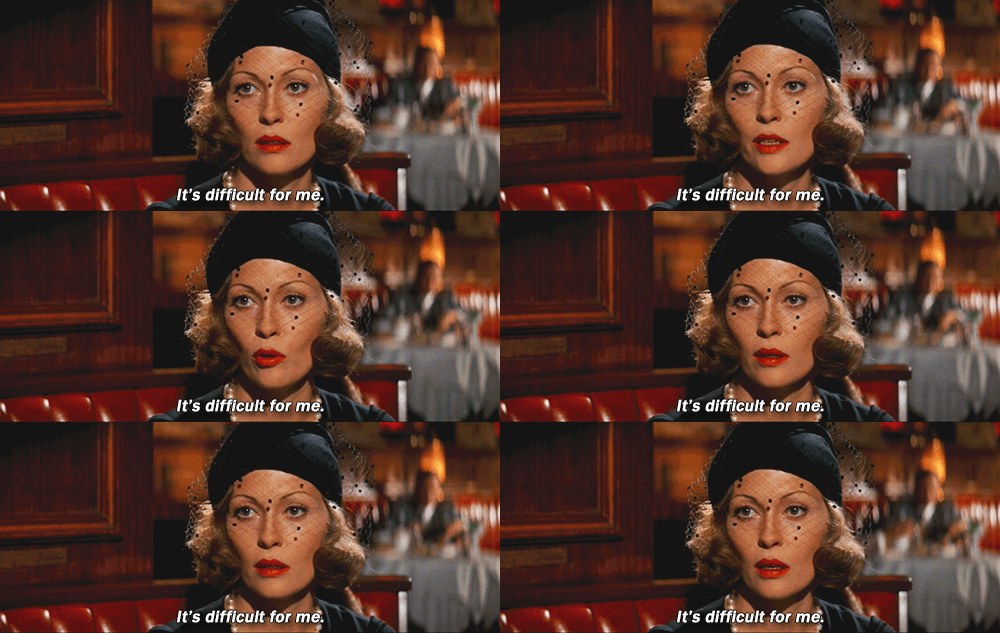
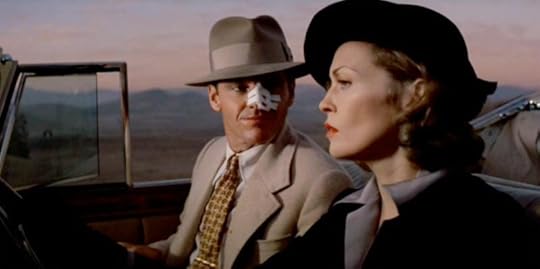
Having really enjoyed reading the Pulp Fiction: A Quentin Tarantino Screenplay, I got myself a copy of another one of my favourite movies the hot, dark and grubby Chinatown. Directed by Roman Polański, with magnificent leads Jack Nicholson as private investigator Jake Gittes, Faye Dunaway as Evelyn Cross Mulwray, wife of the primary murder victim, a possible femme fatale or murder conspirator, and the legendary John Huston as the man in the shadows, and her father Noah Cross. But how do I judge a screenplay where I already have all the imagery, atmosphere and players firmly in my head from watching the movie a number of times? On the face of it this nicely paced 1930s Los Angeles waterworks(!) conspiracy within a conspiracy is a tour de force of post-Depression American growth and the underbelly that fed it, but I do feel I get a lot of insight as a fan of the movie that the screenplay doesn't give. The sepia tones of Polanski's direction, Nicholson and Dunaway's amazing performances, Huston's gravitas as a patriarch. So as a standalone screen play it's OK, but the plot and dialogue leaves the reader feeling that they have missed out on some key information... although it could be argued, well argued that's he point, they're all unreliable characters. 8 out of 12, Four Star read. It goes without saying that my real advice, is go see this amazing movie, it's probably free to stream nowadays. 2020 read
Amazing secret the state of California keeps from its citizens when the politicians and water district sell out to the rich farmers which causes a massive draught in areas of California. There are con men everywhere and the story tells of a problem that began long ago and is still taking place tody!
Spoiler Free: Chinatown is easily one of the greatest screenplays ever written. It choses to set up the story in a simple and predictable manner but at around page 20 the whole story goes in a turn. Private detective J.J Gittes explores a situation in L.A during the time of the flood and discovers a huge corruption conspiracy going along that time. The dialogue and sense of fear each situation causes creates a huge amount of tension considering J.J Gittes isn't afraid of breaking the law to get his work done. Robert Towne writes the dialogue so that every character has a set personality that does change as the story progresses and more things are known about the corruption in this town. Many quotable lines and classic moments are seen and are still used as inspiration by many writers of not only screenplays but literature, proving how Towne's masterpiece is still being considered by many as a fantastic journey through corruption in L.A.
Chinatown gets a 5 out of 5, one of the top 5 greatest screenplays ever written.
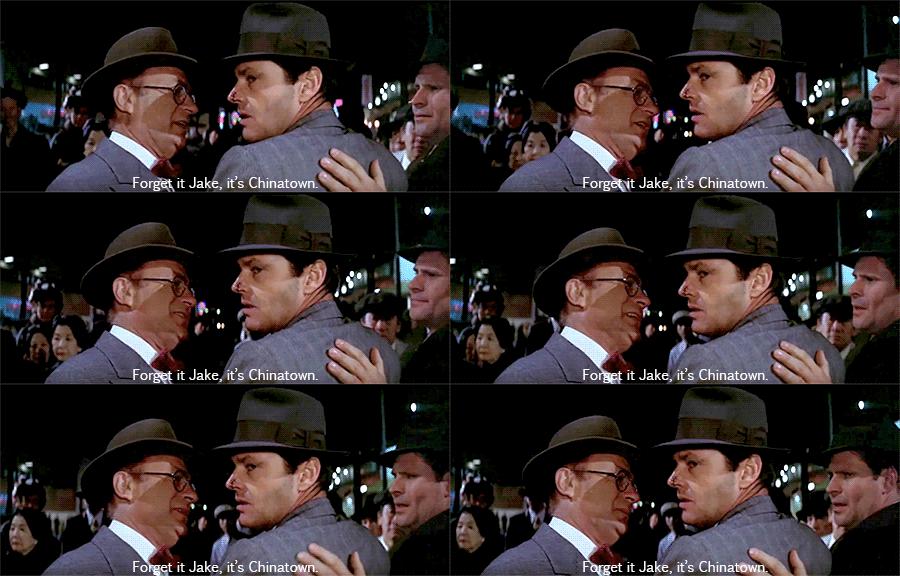
SPOILERS >>" > > > > > > > What creates the fear of every situation is Gittes remembering his past and how it affects him as an individual even though most of his dialogue at the beginning of the film has an average level of seriousness and is always in a good mood no matter what's going on. Evelyn's character was the unexpected bit at page 20 when she is revealed to be the real person looking for the service instead of that other woman. Gittes slowly begins to build up a great chemistry with her until he realises she's working for her. During the scene where Gittes slaps her and makes her reveal her secret about how her sister is her daughter its really hard for her to say it. Many times previously there were many subtleties referring to how she hasn't said everything to Gittes. That makes the reveal much stronger than any other aspect of the film aside from the ending. Speaking of which, the ending is easily one of the greatest ever made. Gittes had said how he had some fear for Chinatown due to someone died there with him as a witness. Having Evelyn die there is what ends the script full of suspense after the line: "Forget it Jake, its Chinatown".
Reading this was a testament to how influential a middleman between page and screen the director can be. I disliked Polanski's Chinatown (no, you didn't misread that), but found the screenplay richer in terms of narrative and character, and just different - in a better way - in tone. The atmosphere of the film felt perverse and quietly dark and grisly, and might have translated to a plotline I deemed likewise heavy and twisted. Towne's execution of the story was engaging, rather than off-putting, and easier to appreciate (with a stronger resolution, might I add).
This was an artistic screenplay, motifs and all, but I couldn't help but wonder why I was following Towne's trail of crumbs. While references to Chinatown and water enhanced the narrative, they weren't specifically significant elements. In other words, why the subject matter that Towne chose? I'll overlook the story's attention to eroticism - we'll just hand that to the seventies. Furthermore, the details, revelations, and parallel plots would have been better suited to a full narrative form, I felt, and I questioned Towne's decision in favor of the screenplay.
This is a great screenplay! Didn't realise that it would be this gripping. What is really terrific is seeing the differences between the film and the script and how well this script paints a cinematic picture in your mind. Having already seen the movie twice, the plot twists came as no surprise. What really held me was the clear, precise writing and all the little details I overlooked in the film. It all ties together beautifully.
I read this for my Screenwriting class, and it was actually pretty brilliant. It's a suspenseful, noir screenplay revolving around a private detective. I liked it better than the movie, but that might just be bc I read it first, and it kind of took out the shock value of all the twists when I watched the movie.
Just rewatched this. Perhaps the most cliche-free screenplay ever written. Nicholson and Dunaway are of course great, but I think John Huston's performance is most impressive. Given only 15 minutes of screentime he turned Nick Cross into an unforgettable villain. "Oh, Lord!"
Chinatown is one of the masterpieces that will remain in history and I have it included in my top twenty favorites. It is also on All-TIME 100 Movies list:
Robert Evans, the producer of this film and the man responsible for other major motion pictures, one of which might be the very best of them all, The Godfather, writes about Chinatown in his book about movies:
- The Kid Stays in the Picture
We learn from there how Robert Evans was involved in getting roman Polanski to Hollywood and how they worked on Rosemary’s Baby. There is the funny aspect of Frank Sinatra, his request to have his wife, Mia Farrow, back soon and how she wanted to pay back.
Roman Polansky is the magician directing Chinatown, after the immense success and Oscar nomination for Knife in the Water… And of course, the aforementioned Rosemary’s Baby, for which the director wrote the screenplay, nominated for both Oscars and Golden Globes.
Chinatown was nominated for all the major Academy Awards and had to compete with Godfather II, but won for Best Writing, Original Screenplay.
The magnificent Jack Nicholson was discovered by Robert Evans and that story is included in the aforementioned book. He is a private detective called Jake Gittes and he is asked to work on what seems to be a usual case, the wife suspecting her husband of infidelity.
Jake and his associates follow Mr. Mulwray and they think they have found the very young woman with who he is involved. The story gets in the newspaper and Jake is visited by Evelyn Mulwray, who informs him that he is being sued…
The woman who had hired the detective was doing so on false pretenses…the real wife is Faye Dunaway. Chinatown is about human relationships, love and betrayal, greed and power, money and fame, but also about…Water.
It is notable that a long time after the time of the story, California and Los Angeles have a huge problem with water. So severe that over the past few years, draconic measures have been taken in places where taking a bath instead of a shower was forbidden, watering the lawn- indeed many lawns had been painted green.
Hollis Mulwray is found dead, with salt water in his lungs and it becomes increasingly obvious that the water is the key to this murder and that the dead man found out that water had been dumped at night, in the middle of a…drought. Enter the stage Noah Cross portrayed with outstanding talent by an actor better known as director- John Huston.
He is the rich former owner of the water supply, in partnership with his late son-in-law and he has concocted a plan to become even richer. Noah Cross wants to hire Jake Gittes to find “the girl „who is actually the key of the investigation and the motion picture.
The hero is attacked and beaten in various circumstances, his nose is cut- by a hoodlum played by Roman Polansky. The detective is doing an outstanding job, proving to be a real superhero, for he follows the trace of corruption into the orange groves, in the offices where the registers are, in an asylum for old people, supposedly owners of huge areas of land that would make them incredibly rich, onto to the salty pond at the Mulwray house.
This where he becomes too violent and the aura of superman is disintegrating for he is very aggressive with the woman he had an affair with and he suspects is responsible for murder, having the wrong evidence. The glasses he holds as irrefutable proof had not belonged to the victim and therefore even the best of detectives can be wrong.
I have seen the film many times, but reading the screenplay makes you realise what a masterpiece this is, as a noir crime plot is unfurled in vivid scenes with economical dialogue, and the reader/viewer is irresistibly swept along/entertained, with mystery, suspense, action, romance - the full set!
محله چینیها زخم را نمیپوشاند؛ آن را آرام باز میکند، تا مخاطب درد را با چشم ببیند، با گوش بشنود، و با پوست احساس کند. نوشته رابرت تاون، به کارگردانی رومن پولانسکی و با بازی درخشان جک نیکلسون، نه فقط یک داستان کارآگاهیست، بلکه مرثیهایست بر مرگ اخلاق در دل قدرت، سیاست، و فریب.
شخصیت جیک گیتس، کارآگاهیست از همان جنس مارلو، اما سرخوردهتر، تنهاتر، و حتی گمشدهتر. او در دل ماجرایی فرو میرود که ظاهرش خیانت و قتل است، اما ریشههایش در عطش برای کنترل آب، زمین و زندگی مردم شهر است. محله چینیها قصهی یک شکست است، اما نه شکست فردی؛ شکست تمام انسانهایی که هنوز فکر میکنند حقیقت نجاتبخش است.
فضای فیلم، تنگ و غبارآلود است. نورها همیشه کم، چهرهها همیشه مشکوک، و هیچ چیز، آنطور که بهنظر میرسد، نیست. فیلمنامه تاون، با ظرافت، فساد را همچون موریانهای در ساختار جامعه جا میدهد؛ بدون شعار، بدون هیاهو. جملهی آخر فیلم ــ «فراموشش کن، جیک. اینجا محله چینیهاست.» ــ نه فقط پایان ماجرا، بلکه مرثیهایست بر هر امیدی برای اصلاح.
محله چینیها را نباید فقط دید؛ باید آن را حس کرد، لابهلای سکوتها، در نگاهها، و در ناگفتههایی که بیشتر از گفتهها میگویند. این فیلم و فیلمنامهاش، سندیست از آنچه سیاست با زندگی میکند، و آنچه حقیقت با قلب آدمی.
Read this at a virtual play reading group. What a tight, twisty plot! It was great to see Jake, Evelyn and Cross in their raw forms before they were brought to the screen by Jack, Faye and John. The dialogue is snappy and quick, and the stage direction is very full, which was helpful in reading this out loud. Very well-paced and enjoyable!
America literally turned into a sewer. I re-watched CHINATOWN last night, and was struck by how two confessed apolitical artists, screenwriter Robert Towne and director Roman Polanski, weaved the greatest work of political fiction in the history of American cinema. Few screenplays read well (CITIZEN KANE, by Orson Welles and Hermann Mankewiecz, is the great exception), since the vision of the director, in this case Polanski, is vital to the story telling. What this script for CHINATOWN gives in pleasure is Towne's tough-guy poetry invoking a world gone mad and overwhelmed with an evil so radical in its infirmities than even his cynical detective, J.J. "Jake" Gettes, is thrown for a loop. The best line in this film is spoken by rich bastard Noah Cross, who owns the city, the police and the future. Cross: "Mr. Gettes, you may think you know what you're dealing with, but believe me you don't"; a threat, promise and prophecy of the horror that is about to unfold. Don't look for the ending of the film in these pages. Polanski wanted a more bleak end to his film, Towne balked, and so Roman wrote his own, where no one gets out alive or unshaken.
Excellent. Of course. Some interesting differences between screenplay and finished film I noticed: Curly is scripted to be a very tall, massive man, as opposed to frumpy Burt Young. The little guy who sticks the blade up Gittes’ nose is written to be a very distinct character, behaviorally. Polanski likely didn’t have the chops to pull it off. There is an entire seaplane sequence, midway through, in which an islander provides more info on Noah Cross. Best I can recall, not in the film at all. At the end, Katherine has already escaped, and does not witness what happens to Evelyn. Also of note: When Gittes is scoping out Hollis and Katherine on the “romantic” boat ride together, Robert Towne forgets to make any mention of a camera. If you were reading it cold, you’d be stunned, thinking Jake just pulled out a gun and started taking “shots” at the couple.
This entire review has been hidden because of spoilers.
This is the screenplay of the classic 70s film starring Jack Nicholson and directed by Roman Polanski. The first thing I should say is that it reminded me that I haven't actually seen the film. Quite an omission for someone who likes to think he knows a thing or two about the cinema of the twentieth century. So, perhaps the greatest compliment I can give this book is that it really has motivated me to search out and find the film, to plug this gap in my movie knowledge. So not much more to say. I am off to scan various streaming services to see if I can catch up with this movie. I've read the screenplay, so I know it's going to be great.
Chinatown is one of the screenplays pretty much every veteran screenwriter will tell aspiring screenwriters to read, and since I've never seen the movie I decided to pick this up from the library.
It's kind of fun to see how the cliches of every detective movie began. And the twists and turns made the journey all the more enjoyable. I'm curious how it was adapted to film, but I'm looking forward to discovering that soon.