Jump to ratings and reviews
Rate this book

In the Bonesetter's Waiting Room

Rate this book

BBC Radio 4 Book of the Week


India defies definition, and the story of medicine in India is similarly rich and complex: shaped by unique challenges and opportunities, uniting cutting-edge technological developments with ancient cultural traditions, fuelled by political changes which transformed the lives of millions and moulded by the energy of forceful individuals.


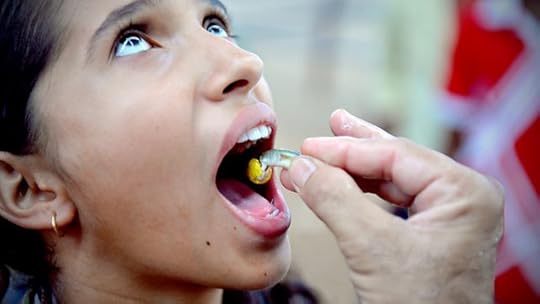
Here, Aarathi Prasad investigates how Indian medicine came to be the way it is. Her travels will take her to bonesetter clinics in Jaipur and Hyderabad and the waiting-rooms of Bollywood's best plastic surgeons, and introduce her to traditional healers as well as the world-beating heart surgeon who is revolutionising treatment of the poor around the globe. From the asthma treatment 'cure' that involves swallowing a live fish, to ground-breaking mental health initiatives in Mumbai's Dharavi mega-slum and ground-breaking neuroscience happening inside the Mughal walls of old Delhi, In the Bonesetter's Waiting Room tells the story of the Indian people, in sickness and in health, and provides a unique perspective on the most diverse and fascinating country in the world.


In the Bonesetter's Waiting Room will accompany a programme of Wellcome Collection exhibitions and activity exploring India's rich plurality of cultures of medicine, healing and well-being in Indian cities in 2016.

256 pages, Hardcover

First published May 19, 2016

17 people are currently reading
297 people want to read

About the author

Aarathi Prasad

6 books34 followers
Aarathi Prasad was born in London to an Indian mother and a Trinidadian father and was educated in the West Indies and the UK. After a PhD in genetics she worked in research, science policy, and communication. She has presented documentaries for the BBC, Channel 4, National Geographic and the Discovery Channel. She is the author of Like A Virgin: How Science is Redesigning the Rules of Sex; and In the Bonesetter’s Waiting Room: travels through Indian Medicine. She works at University College London.

Ratings & Reviews

What do you think?
Rate this book

Friends & Following

Create a free account to discover what your friends think of this book!

Community Reviews

5 stars
18 (15%)
4 stars
45 (38%)
3 stars
44 (37%)
2 stars
7 (5%)
1 star
3 (2%)
Displaying 1 - 16 of 16 reviews
Profile Image for Bettie.
9,973 reviews8 followers
May 27, 2016
BOTW

http://www.bbc.co.uk/programmes/b07btdbf

Description: Aarathi Prasad explores the ancient and modern in Indian medicine. Read by Sudha Bhuchar. Indian Medicine is a fascinating mix of the ancient and the modern. From Ayurvedic treatments, which predate the Common Era, to the allopathic (Western) medicine which now operates in parallel. Aarathi Prasad takes us through the myriad medicinal worlds - from a bonesetters' clinic in Hyderabad, where breaks but not fractures are reset, via a shrine in the Dharavi megaslum (just outside of Mumbai) where the goddess Kali rules, to a fish doctor in Secunderabad who makes patients swallow live fish and a remarkable neuroscientist, Pawan Sinha, whose venture 'Project Prakash' has helped thousands of Indian children to see for the first time.

Aarathi Prasad is a writer and geneticist. Her PhD was in molecular genetics at Imperial College and she is currently based at University College, London. Prasad has written for The Guardian, The Telegraph and Prospect Magazine, and her first book, Like A Virgin: How Science is redesigning the rules Of Sex, was published in 2012. She has written and presented TV and radio programmes, including Rewinding the Menopause and Quest for Virgin Birth for Radio 4, and Brave New World with Stephen Hawking for Channel 4 and the Discovery Channel.


Episode 1: The basic seven types of Medicine in India.

Episode 2: At the shrine of Subawa, where the bhoots (ghosts) rule.

Episode 3: It all began with a rabbit, so the bonesetter's story goes.

Episode 4: They come in their thousands to eat live fish

Episode 5: Project Prakash, named after the Sanskrit word for light, has helped to bring vision to thousands of children
Profile Image for Ian Laird.
497 reviews97 followers
November 22, 2022
The most interesting Indian medical practice discovered by Aarathi Prasad concerns swallowing live fish.

An event has developed in Secunderabad, courtesy of the Goud family. Once a year tens of thousands gather to have a murrel fish, a fingerling really, small but very alive, placed down their throat to swim to the stomach where it is dissolved, rapidly enough, by digestive juices.

A paste made from a centuries old secret recipe is inserted down the fish’s gullet before introducing the murrel to the patient. This is the actual medicine. The paste can be administered without the fish, but is thought to be less effective and the fish method is far preferred. What ailments does this extraordinary free treatment cure? Asthma, coughs and flu. (p144). It is overwhelmingly successful, so effective the Hyderabad Fisheries Board supplies all the fish each year. Over 70,000 of them.

This event illustrates two profound aspects of medicine in India. Firstly, the prominence of alternative treatments, from Ayurvedic medicine to the unlicensed bonesetters of the title. But it is also true that the tension between western and traditional medicine waxes and wanes. Secondly, a vast proportion of the population have little or no access to health care unless it is provided philanthropically, (for example Project Prakash, set up to help blind children, whose clinics are heavily supported by private corporations) or in the case of the murrel fish cure, underwritten by the state, which is not usual. Even when conventional health care is available the results are often compromised by ignorance, superstition, additional cost and sheer remoteness.

In contrast, Prasad details the fascination of many well-to-do Indians with Botox, cosmetic surgery, often of questionable value, and skin lightening.

Unfortunately the quality of this content is marred by treacly descriptions of the author’s efforts to meet with practitioners and officials during her yearlong study. We get far too much guff about office decorations, details of hospitality, teas sipped, treats consumed and the twinkly eyes of the saintly doctors and gurus.

But, it was worth wading through to get to the murrel fish.
33 reviews7 followers
October 16, 2016
In summary, a good introduction, and some very good reporting albeit incomplete in important places, about alternative medicine systems in India and their history, as well as interesting models of allopathy based community health care across the country. It has some elitist undertones in the beginning segments of the book when I compare it with Atul Gawande's reporting (in "Better") about his experiences at an Indian hospital. I also wish the book was a little more questioning about the political motives behind some of the research going into justifying certain traditional ideas in Ayurveda and Unani. Prasad's attempt to build in travel into her narrative ends up being more of a rant about traffic in urban areas (but let's be fair, you can't blame her too much for it!) and vague landscape descriptions in rural areas.

The author's reporting from Dharavi, where psychologists attempted to build a rapport to effectively treat women who are victims of domestic abuse, depression. While bemoaning the state's failure to provide good healthcare in these parts, she builds a strong case for why it may be a wise policy decision for governments to invest in understanding alternative medical systems for the treatment of at least certain chronic ailments for which allopathy provides no relief. Of course, mental health is unfortunately one area where Western systems are the only option. The system followed by an NGO in Dharavi, which involves training locals in organizing self help groups, in getting women to think about larger aspects of their lives other than their day to day existence speaks to a system that is easily scalable provided government support.

This is also true of Prasad's wonderful reporting from Gadricholi in Maharashtra, which is a hotbed of Maoist violence. A hospital run by a remarkable doctor couple that caters to the million strong Gond tribal population is a beautiful example of Western medicine and its hospitals being completely re-thought and re-designed to accommodate the beliefs of the local population. For instance, Atul Gawande writes extensively about little details that improve a patient's outcomes and happines, such as plants and birds in old age homes, politeness in physical examination rooms, or intelligent placement of hand wash systems for doctors and nurses. Prasad documents something similar in this remote hospital, where examination rooms allow for patients' families to sit in on consulations, naming the hospital after Gond's tribal goddess, and allowing locals to help in constructing the hospital.

Another parallel in this book with Gawande's "Better" is extensive data collection. Be it the tribal hospital in Gadricholi, or Narayana Hrdulaya in Bangalore, maintaining extensive records and meticulously following up with patients, and generally thinking deeply about processes involved in healthcare have allowed these establishments to stand out from the average Indian hospital. While this theme doesn't quite get the limelight in Prasad's book, which is understandable given the nature of her book, it still is an important takeaway from the book. Her writing about some kind of a holy woman she encounters at Dharavi makes for very interesting reading.

Prasad writes glowingly of Devi Shetty's work in Bangalore (Narayana Hrudalaya) in providing cheap cardiac care for all classes of society, and Project Prakash at Dr. Shroff's eye hospital in Delhi with childhood cataract. Shetty comes off as a saint in his commitment to healthcare and his philosophy and moral convictions about medicine, which is rather fitting considering he was a personal physician to Mother Teresa. But alas, her reporting ends up being a bit inadequate in terms of numbers and costs incurred at the hospital. The model of the hospital ends up being way too hard to believe, where patients pay as much as they can and the rest is covered by the hospital. Sure, they run on donations and government support, but how much? There are interesting tidbits about how sourcing local manufacture of surgical equipment has helped them cut costs, but by how much?

The best portions of the book I think belong to the reporting on Ayurveda and Unani, the latter of which involves bone-setting. In Ayurveda, the author recalls her grandfather's attempts to convince the Indian government after Independence to take ayurveda seriously. Her history of Europe's discoveries of Ayurveda, while quite skeletal in detail, do paint a picture of a thriving school of medicine. She also ends up explaining why the number of "genuine" practitioners remain small - the long years of apprenticeship, the familial nature of the passing of knowledge between generations, and of course, the British trampling upon Ayurvedic ideas which bear similarities to discredited Hippocratic notions of the four humours. Decent efforts to catalogue Ayurvedic plant based cures are afoot and seem to have grown in recent years with the establishment of the Institute of Ayurveda and Integrative Medicine in Bangalore.

But to me, this is where Prasad's narrative gets less questioning. She vaguely references a clinical trial about Ayurvedic treatments for rheumatoid arthritis having fewer side effects than their allopathic counterparts, but she seems rather sanguine about genetic based efforts to understand the Ayurvedic system of doshas and prakritis. Perhaps a result of her training in genetics, she doesn't write more about other investigations into Ayurveda. Are doshas and prakritis (which refer to a person's body constitution) immutable over time? Do they even have a genetic component? How does one justify some recent publications about genomic correlates of doshas, when we aren't even sure if these are inherited? Are these questions being asked, and if so, by whom and where?

She ends up being uncritical of some of the more controversial Ayurvedic presciptions that contain lead. While Ayurvedic preparation protocols show awareness of the poisonous effects of these metals, their protocols claim to purify these toxic components out of the final cure. How is that possible? There are of course quacks who turn a quick buck from these medicines, but what is the explanation for the existence of such cures and protocols involving these metals?

Prasad does cast a scrutinizing eye on the fish doctors in Andhra Pradesh, who claim to possess a cure for asthma. She writes with sensitivity and respect about the beliefs about the family that gives away this medicine for free to tens of thousands every year. One of the family members seems to justify the workings of this medicine, which involves putting a secret herbal formula inside a fish's mouth before proceeding to directly place inside the throats of patients, by talking about steroids in the herbal formula and how fish's help protect passage of the medicine through the body from the acidic nature of the stomach. She rightfully questions whether the lines of devotees and patients outside (the cure was passed on the family by a holy man in the 19th century) are even correctly diagnosed with asthma, or whether the family's explanation of the fish cutting through phlegm in the throat with its fins make sense. But this leaves you wondering where her critical eye was during the earlier portions of the book!

While talking about the Unani bone setter family, Prasad reinforces a recurring theme through her book. Some Ayurvedic and Unani practitioners have embraced Western methods wherever they are found to be superior, while allopathic doctors are comfortable with Ayurvedic and Unani practitioners dealing with certain classes of ailments and injuries. Clinical trials into the treatment of these ailments are imperative to help ease the burden on the already over-strained hospital system. Of course, in the event that patients presenting with these ailments have more complicated underlying conditions, it is unclear from the book if traditional healers redirect them back to allopathy. But stories of Ayurvedic practitioners suggesting blood sugar measurements while treating diabetes instead of thinking in terms of doshas, or Unani doctors using a stethoscope, was very interesting. I always imagined allopathy and these disciplines never talking to each other.

Prasad's book ends on documenting Project Prakash, an attempt to help cure congenital cataract in India. The lack of paediatric eye surgery as a distinct discipline in India till 2001 was a surprise to me. The project was started by Pawan Sinha, a neuroscience professor at MIT, who realized that his own studies into how humans learn to recognize objects could be coupled with a worthy cause of helping cure a very real disease. I wish she wrote more about Sinha and his motivations to carry forward this plan, considering the highly competitive nature of his institute. Neuroscience professors have frequently found themselves at the receiving end of the ire of animal rights activists with brutal experiments on cats and monkeys. Sinha seems the exception. While Prasad writes of a few stories of children helped from this project, she highlights something more interesting about the project. It seems to track children out of their blindness too by providing them with mentors and teachers to help re-integrate them with the larger educational system in India. To me, it speaks highly of the far-sighted and humane thinking of the creators of this project. The author gently touches upon some of the neuroscientific understanding that has come out of the project, I wish she said more!
Profile Image for Laura.
7,150 reviews611 followers
May 28, 2016
From BBC Radio 4 - Book at the Week:
Aarathi Prasad explores the ancient and modern in Indian medicine. Read by Sudha Bhuchar.

Indian Medicine is a fascinating mix of the ancient and the modern. From Ayurvedic treatments, which predate the Common Era, to the allopathic (Western) medicine which now operates in parallel. Aarathi Prasad takes us through the myriad medicinal worlds - from a bonesetters' clinic in Hyderabad, where breaks but not fractures are reset, via a shrine in the Dharavi megaslum (just outside of Mumbai) where the goddess Kali rules, to a fish doctor in Secunderabad who makes patients swallow live fish and a remarkable neuroscientist, Pawan Sinha, whose venture 'Project Prakash' has helped thousands of Indian children to see for the first time.

Episode 1: The basic seven types of Medicine in India.

Episode 2: At the shrine of Subawa, where the bhoots (ghosts) rule.

Episode 3: It all began with a rabbit, so the bonesetter's story goes.

Episode 4: They come in their thousands to eat live fish.

Episode 5: Project Prakash, named after the Sanskrit word for light, has helped to bring vision to thousands of children.

Aarathi Prasad is a writer and geneticist. Her PhD was in molecular genetics at Imperial College and she is currently based at University College, London. Prasad has written for The Guardian, The Telegraph and Prospect Magazine, and her first book, Like A Virgin: How Science is redesigning the rules Of Sex, was published in 2012. She has written and presented TV and radio programmes, including Rewinding the Menopause and Quest for Virgin Birth for Radio 4, and Brave New World with Stephen Hawking for Channel 4 and the Discovery Channel.

Writer: Aarathi Prasad
Abridger: Pete Nichols
Reader: Sudha Bhuchar

Producer: Karen Rose
A Sweet Talk production for BBC Radio 4.


http://www.bbc.co.uk/programmes/b07btdbf
Profile Image for GrabAsia.
99 reviews15 followers
August 16, 2016
Ms Prasad’s second book, very intriguingly named and with a wonderful cover in the Indian edition, is a Travelogue through Indian Medicine.

She starts her journey in Dharavi, the second biggest slum in the world, made recently famous through the movie “Slumdog Millionaire”. Besides Dharavi itself, we visit its Chota Sion Hospital & SNEHA (the Society for Nutrition, Education & Health Action) where we see how women’s health and mental wellbeing being tackled valiantly by the likes of Nayreen Daruwala, Chandravati & Bhanuben.

We move swiftly to the opposite end of the spectrum, the plastic surgeries of Dr Arolkar & Dr Rashmi Shetty in Mumbai, where not just Bollywood stars, but also other men & women (and even teenagers) come for nips and tucks.

Then we go back to the colonial era where we come across studies of ancient Indian Medicine by Van Rheede, the Governor of Dutch Malabar. India itself ignored this for the last 200 years, but after centuries of a lack of patronage we now have a start. A result is AYUSH, an acronym for Ayurveda, Yoga, Siddha, Unani, Homeopathy & Naturopathy. We meet Dr Venkateshwarlu who runs a key AYUSH research centre & Dr Darshan Shankar who runs the Foundation for the Revitalization of Health Tradition, both in Bangalore (incredible isn’t it that India’s Silicon Valley also seems to be its place where ancient things thrive?).

My takeaway from this is the best way is using traditional methods to treat chronic diseases, and modern ones for infectious diseases & surgical emergencies. We have many Ayurvedic examples here, and Unani examples later on from Hakeen Sultan Rasool.

Staying in Bangalore, we next go to Narayana Hrudayala, created by the cardiologist Dr Devi Prasad Shetty. What he has done is through “the power of not having money. When you have money in the bank, your brain stops working”. He has harnessed this power to give treatment & insurance to millions of poor people. He says, to anyone listening, India is short of 1million doctors & if we start 100 medical colleges in the next 5 years, we would have enough by 2025.

Next, with a short hop to nearby Hyderabad, we finally get to the Bonesetter’s Waiting Room (the title of the book). What we see happening here, through Hakeem Gulam Mohideen & his forbears using Unani methods, is nothing short of instant gratification, albeit with a wince here & there. Perhaps modern obstetricians may wince equally reading these accounts, but its worthwhile the 2 sides meet and exchange notes.

Staying in Hyderabad, we visit the strangest pit stop in this journey, the Fish remedy of Dr Harinath Goud’s family. It involves shoving a fish, stuffed with a secret herbal mixture known only to the family, down a patients throat to treat asthma, cough & flu. The Goud family collect & prepare the herbs, chant prayers & get the medium of delivery, the murrel fish ready. The government helps provide the fish & control the thronging crowds on the (only) day the potion can be delivered. The thousands of people who do this every year will not agree with my calling it strange. In fact the “lady in the rose-pink salwar kameez” said “I am eighty percent better”.

Our penultimate visit is to SEARCH (the Society for Education, Action and Research in Community Health), run by the couple Dr Rani Bang & Abhay Bang, in the Gond tribal area of central India. This chapter has perhaps too many statistics that I confess having skipped through, but you will nonetheless experience a fascinating journey through the eyes of women in rural India and their travails.

The last stop is at the Dr Shroff’s Charity Eye Hospital in Daryaganj, Delhi after Dr Pawan Sinha decided to actually do something when he witnessed horrendous poverty. He started Project Prakash, combining funded research on how the brain reacts to stimuli (including vision) with treating blindness, that was less funded. The connection with Shroff started due to their “outstanding pediatric facilities “ and that their desire “to learn more about how children’s vision develops after eye surgery”. We meet Dr Suma Ganesh (Shroff’s paediatric head), Harvendra Dhillon who gets patients to the hospital (very difficult to do) & Shakeela Bi who manages the critical follow-ups.

Dr Umang Mathur’s quote (in the introduction & back cover) where he says “India is everything they say it is, and nothing” reflects the daily struggles of India. He has helped my eyes a lot, and I must thank him.

I end with where I found this book. Earlier this month, I was at one of my favourite places, Midland’s Bookshop in Aurobindo Place in Delhi, a must visit for any booklover. Aurobindo Place is a branch of their first outlet on Janpath, the round bookshop near Bankura’s that I had been going to since High School. While I was going through my pile of books , a gentleman standing next to me asked for this book, and when I saw the cover I had to have it. Fortunately the subject and content was interesting, so I had an excuse!
Profile Image for Sanjay Banerjee.
544 reviews13 followers
June 17, 2020
This is a book on how people in India approach health. It tells stories about Indians in the business of healing - from the forefront of cutting edge medical science to traditional street-corner pharmacies dealing with all manner of diseases by all manner of means. Especially insightful was the penultimate chapter on Mother Goddess. It provides great insights on what needs to be done for India to achieve the Millenium Development Goals related to maternal and neo-natal outcomes.
Profile Image for Monique.
24 reviews19 followers
December 22, 2017
I wanted to like this but i found it really boring... It felt too depoliticised and her analysis seemed really shallow and badly researched. I started wanting to know more about her own life and relationship to India instead of the topics she was talking about.
Profile Image for Ranger.
382 reviews3 followers
February 8, 2018
The individual chapters were interesting, well-written, engaging. But the book didn't have much of a direction but seemed to wander from topic to topic. We're reading it for a book club, so I may update once I hear others' opinions.
Profile Image for Jess.
4 reviews
April 19, 2019
I only liked some chapters. At times the writing is way too descriptive and I fell asleep several times while reading some chapters! The chapters that interested me were very easy to get through and I sometimes read them in one go
43 reviews3 followers
September 6, 2017
Readable and entertaining at places, but too simplistic in approach. The layperson may be misled, while the professional (like me) found it written from a pre-established perspective!
Profile Image for Saket Suman.
35 reviews3 followers
December 15, 2016
The story of India's healthcare system, as most of us look at it, is one of apathy, abominably rooted in deprivation and inequality, but this striking chronicle of Indian medicine argues that despite all odds, it is also a story of constant innovation, hope and passionate individuals who have moved heaven and earth in search of solutions.

Easier said than done is the narrative of the establishment in providing for and meeting the medical needs of the sick among the country's 1.28 billion people. According to the author's estimates, the MBBS doctor-to-patient ratio in rural areas may be as high as 100,000:1 . Couple this with brain drain from the world's largest exporter of doctors -- about 47,000 currently practising in the United States and about 25,000 in the United Kingdom.

"On top of all this, for far too many, the cost of conventional medical treatment for common health problems is prohibitive and the distribution of drugs and the execution of public health programmes can face massive bureaucratic and logistical hurdles," the author says.

Needless to mention that there is no-one-rule-fits-all solution to the grave health issues in our country of 22 official languages and hundreds of dialects -- and countless diversities.

Along with the English (also known as allopathic, Western, modern or biomedicine) "one that Westerners are most familiar with", there continues to be a multidisciplinary system in which there are seven officially recognised types of healthcare.

AYUSH, for instance, signifies Ayurveda, Yoga, Unani, Siddha, Naturopathy and Homoeopathy. Three of these: Ayurveda, Yoga and Siddha are Indian by birth while Unani, also of ancient origin, is Greek that came to India via the Arab world and finally Naturopathy and Homoeopathy originated in 18th century Europe. The Sanskrit word for "long life" and also the acronym of most of their initials, AYUSH is the sextet of traditional medicine systems.

Going back in history, immediately after independence, even as thousands of refugees created by the sub-continent's partition continued to live in makeshift camps, the blueprints for India's new policies were being moulded. The major goals were sustained economic development, education for the masses and healthcare for all.

The last named demanded making use not only of Western drugs and procedures but also of "the many and varied traditional systems" that had been practised across the country for centuries. The author's grandfather was appointed Secretary to the Chopra Committee that was set up to make recommendations on both the training and the synthesis of Indian and Western medicines.

"Yet, despite the committee's best efforts," regrets Aarathi Prasad, "it would be around another 50 years before the Government of India would create a Department for Traditional Medicine under its Ministry of Health."

"In the Bonesetter's Waiting Room" she adequately investigates how Indian medicine came to be the way it is. Prasad's travels during the course of her research for the book takes her to bonesetter clinics in Jaipur and Hyderabad and the waiting-rooms of Bollywood's best plastic surgeons, and introduces her to traditional healers as well as an unnamed Indian heart surgeon who is revolutionising treatment of the poor around the globe.

From the asthma "cure" that involves swallowing a live fish, to ground-breaking mental health initiatives in Mumbai's Dharavi mega-slum and ground-breaking neuroscience happening inside the Mughal walls of old Delhi, this book tells the story of the Indian people, in sickness and in health, and provides a unique perspective on the most diverse and fascinating aspect from our surroundings that we little cared to think about.

"In the Bonesetter's Waiting Room" is a fascinating mix of the ancient and the modern. Prasad takes us through the myriad medicinal worlds, a gentle reminder of sorts but more importantly, a significant travelogue through the course of Indian medicine.
Profile Image for Samikshan Sengupta.
220 reviews8 followers
January 29, 2022
The research of the book seems shallow. The writer has travelled places, met the people, some were quite fascinating, I must say, unravelled their stories.

But the overall base of the book is flimsy. Ayurvedic methods & medicine, which were once part of the rich Indian culture, are great remedies. But why? How?

The basic concept of charaka samhita that all maladies are caused by imbalance of the 4 body fluids is itself flawed. European medicine once based its practice on the same concept, there popularised by Galen. But they had to change it. Infact, medical science remains one of the fastest growing sciences compared to astronomy or say particle physics.

But the author harps on the same string over & over again, without providing any legitimate proof. Big cosmetic companies are using herbs in their products - not a new thing at all. In the 18th century a few European physicians espoused a syncretic approach towards medicine - surely that would happen when European medicine was not advanced enough & Indian practices (some of them real good like the surgeries in Susruta Samhita) were more or less shrouded by mystery.

But doing the same thing 300 years later beggars logic.

And of course, the writing style - dry as ever. It feels like I'm reading a report, not a book.
Profile Image for Chanpheng.
352 reviews22 followers
February 22, 2017
A personal study of healing traditions in India and the way that Indian people have adopted choice bits of Western medicine, explaining that Indian medicine worked with the body and was a lifestyle, with treatment taking months or years, and that Western medicine was fast and effective but didn't require people to change their lives, which was causing their maladies to begin with.
Profile Image for Sridhar.
60 reviews1 follower
December 11, 2016
AYUSH- Ayurveda. Yoga. Unani. Sidda. Homeo.

India has got rich cultural narratives and birth centres of each of the above streams. The origin of these alternative medicinal stream could've been a fascinating read. Thus, I picked up the book from an airport book store.

But Aarathi Prasad's narrative, is devoid of deep research and fact finding. It meanders along Dharavi, plastic surgery and Mumbai. The chapters revolve around the city of Mumbai , till at least the mid-way, post which I lost my interest in the book. Seems to be a poor version of Maximum City. (a must read!)

The Title is deeply misleading.

Displaying 1 - 16 of 16 reviews