

What do you think?

Reinas medievales en los reinos hispánicos
Barcelona. 24 cm. 430 p. Encuadernación en tapa dura de editorial con sobrecubierta ilustrada. Grandes biografías de la historia de España. Índice. Reinas. 711-1492 (Reconquista) .. Este libro es de segunda mano y tiene o puede tener marcas y señales de su anterior propietario. 9788467459401
430 pages, Hardcover
First published February 18, 2003
Ratings & Reviews
Friends & Following
Create a free account to discover what your friends think of this book!
Community Reviews
Displaying 1 - 4 of 4 reviews

March 14, 2018
This has been a much more enriching read than I had expected. The book is not an unrelenting plead on the significance of forgotten women, which sometimes due to precisely to its insistence, remains unconvincing.
Fuente presents here a very meditated and even-handed evaluation of the position that women, with a very high social standing, had during the Middle Ages in Spain. At no point does she bore the reader with a superfluous tone of belligerence.
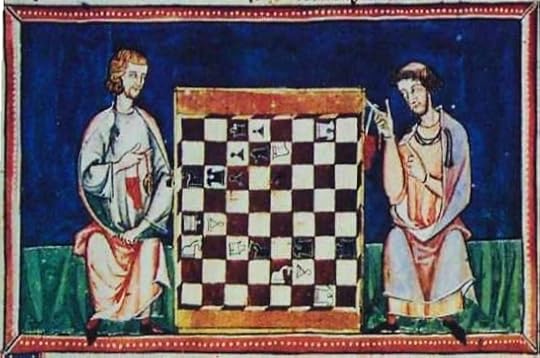
The author starts and frames her discussion within a hypothetical chessboard. This board and the specific pieces will change as she moves across her period of close to a millennium, as well as across the different regions in the Iberian Peninsula. She begins with the Visigoths and ends with the Royal Catholic Monarchs. In between we have the complex period of the Muslim invasion, the consolidation of a couple of Christian resistance points at the very north of the Peninsula, and their gradual reconquering of the formerly Roman and Christian united territories.
Fuente elaborates her argument also borrowing from the Medieval notion of 'speculum', and the images in which men and women hoped that the ideal women would find their exemplary reflection. These models were, as is to be expecte, the Virgin Mary; but also Queen Esther, the intercessor -- the figure who offered the open path to power. In her study Fuente insists that the individual women are to be considered within a wider social and political context in which legal aspects are given particular emphasis. This broad perspective makes the account more persuasive; women and men are presented in their complex relations; anachronistic judgments are also completely avoided.
The book is composed of seventeen chapters, titled with the names of seventeen women. Each chapter is introduced by a contemporary quote from which the discussion very effectively takes off. In these chapters, however, many more than seventeen women make a presence. Some of these were participant of some significant events of a society that was expanding, or were key pieces for matrimony, or in a few cases were the direct sources of power, or were strong personalities who could exert some ascendancy over figures who unquestionably held the power.
In her investigation Fuente attempts to discern out of these female chess pieces whether others moved them (most commonly) or if they moved themselves. Undoubtedly, the women who belonged to the high spheres of society reflected more the world of men than the world of the other women. It was also inevitable that all the women existed always in reference to a man - or to a group of men. The most significant move for these chess pieces was at the time of marriage; it was almost invariably decided by others (mostly other men, but sometimes other women) and decided at an early age. Fuente distinguishes between the esponsales (betrothal) and the boda (wedding), stages that during the Middle Ages had very clear codified legal status and which were often attached to other political agreements and were separated by several years.
At the very beginning of the period covered, Fuente identifies the existence of a matrilineal descent of power. Its origins are found in the peoples prior to the arrival of the Romans; the matrilinear custom was partly kept by the Germanic Visigoths, but once Arrianism is abandoned and Rome establishes its religious authority more strongly, it is gradually substituted by the patrilineal mode to disappear completely by the 13thC.
Fuente also traces two parallel traditions in the way a Queen was conceived that coexisted until the 10thC. One was followed in the Astur Kingdom and it understood the figure of the Queen in a more passive and restricted role, while the other, in the Navarra Kingdom, allowed the queen a more active presence.
The legal body that ruled queens for the most part of this period was the Visigoth Liber Iudiciorum, which was subsequently substituted by the Partidas of King Alfonso X. The later Kingdom of Castille admitted queens, such as Queen Urraca, while the Aragón Kingdom did not. In the latter, however, the figure of the lugarteniente (lieutenant - or figure who 'takes a particular place instead of') proved to be significant. A memorable case is that of María de Castilla who ruled over Aragón 'in lieu of' her husband, king Alfonso the Magnanimous, when he moved to his new kingdom of Naples.
I found all the women in the gallery striking in one way or another. I welcomed learning about the earlier queens, the Visigoths: Baddo, Egilo. The chapter on the Asturian matriarch Ermesinda was also illuminating; there is so much legend surrounding this former kingdom. Some women such as Queen Sancha command a strong presence, as daughter, sister, wife and mother of several kings. Two sisters, Urraca and Elvira, had a definite role to play during the exceptional kingdom of King Alfonso VI. I am particularly fond of Queen Urraca (niece of the former Urraca) and I hope a good biography will rescue her from the misogynist pit in which she has been placed. It was inevitable that I felt sorry for Petronila who was betrothed at the age of 1 to a man of 24, and thanks to whom County of Barcelona joined the Aragon Kingdom. My interest in Maria Molina had already made me read Maria de Molina. Tres veces reina., but I enjoyed reading Fuente's view of her. As for Leonor de Guzmán, the lover of king Alfonso XI, the fascination that she exerted on her king, and the heroic string of sons she had, could make her a good subject for a film. We also have a very cultivated queen, the humanist Maria de Luna, from the same family as the 'Antipope' Benedict XIII. And I feel sorry that I am leaving out many other women whom I hope regain their presence as posterity continues to focus on women who were players in how history unfolded.
They were also part of the pieces. And we all know the power that the Queen exerts on a chess board.
February 15, 2024
Interesante repaso por las reinas medievales de los reinos hispanos. En algunas buena profundización. Se hace una reflexión de la importancia de la mujer en la “profesión “ de reinar, su protagonismo, el papel de regente de representante y la vuelta que en algún caso da la vuelta a la historia, por ejemplo como con Leonor de Guzmán da un giro la dinastía a los Trastamara y los Enríquez .
May 8, 2023
Un ensayo que he tardado varios años en leerlo porque es bastante denso y hay que descansar y si alguna reina te llama la atención sueles investigar más sobre ella.
Un libro muy interesante sobre las mujeres en la edad media, algunas más importantes que sus maridos.
Un libro muy interesante sobre las mujeres en la edad media, algunas más importantes que sus maridos.
July 24, 2021
Buen libro para quien quiera empezar a adentrarse en el mundo medieval hispano y sus personajes femeninos. Gran trabajo de bibliografía y referencias.
Displaying 1 - 4 of 4 reviews