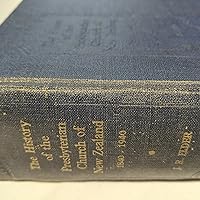
The fifth volume of Churchill's Nobel-Prize winning six-part chronicle of World War II. The fate of the Allies turn with the Normandy invasion after Hitler's defeat at Stalingrad. For the first time, the end of the war with an Allied victory seems possible. Churchill wartime Prime Minister through this period, incorporates contemporary documentation and his own reminiscence.
Sir Winston Leonard Spencer Churchill, politician and writer, as prime minister from 1940 to 1945 and from 1951 to 1955 led Great Britain, published several works, including The Second World War from 1948 to 1953, and then won the Nobel Prize for literature.
William Maxwell Aitken, first baron Beaverbrook, held many cabinet positions during the 1940s as a confidant of Churchill.
Sir Winston Leonard Spencer-Churchill, KG, OM, CH, TD, FRS, PC (Can), served the United Kingdom again. A noted statesman, orator and strategist, Churchill also served as an officer in the Army. This prolific author "for his mastery of historical and biographical description as well as for brilliant oratory in defending exalted human values."
Out of respect for Winston_Churchill, the well-known American author, Winston S. Churchill offered to use his middle initial as an author.
It all goes to show: believe hard enough in your dream, and you can make it come true. Here, Adolf Hitler had the insane idea that the Jews, the Bolsheviks and the Americans were all involved in one big conspiracy to get him. Given that the Bolsheviks and the Americans were sworn enemies, it did seem a little far-fetched.
All the same, by this stage of World War II, Adolf's dream was a reality. The Americans and the Bolsheviks were indeed openly encircling him, working together to hunt him down and kill him without mercy. Not only that, a bunch of largely Jewish scientists were creating a deadly new science-fiction weapon, which they planned to use against him and his remaining allies at their earlier opportunity.
Faith is a mighty power. But he should perhaps have wished for something different.
Truth is so precious that she always must be attended by a bodyguard of lies.
After four books delving into the anguish and the distinct possibility (at that time) that the Axis could have won World War II, it was almost a relief to get to #5 in the series, when the Allies clearly had the upper hand. As always, it is a pleasure to read Churchill for his insight, his meticulous detail, and his haphazard wit (particularly with Uncle Joe Stalin).
Your Majesty will also have noticed that I have heard from the Great Bear and that we are on speaking, or at least growling, terms again.
The great Prime Minister is able to articulate specifics about his Allied partners, such as the Soviets having to take the brunt of the fighting but also having the advantage of fighting only on one front and being able to focus strictly on land power. He notes the Americans having to fight a two-front war with land, navy, and air, while also supplying everyone else with the weapons and machinery to win.
This volume also marks Churchill's inkling of Great Britain losing her place as the world leader. His realization that the Americans have the dominant industry and money to run the war their way is a bit heartbreaking to read, after staying with him through the days of the Brits acting as the lone lighthouse of hope in the first years of the conflict. As the Allies close the ring, Churchill must endure more criticism, particularly as the Yanks gently take over overall leadership and Britain heads into bankruptcy.
...this class of criticism...reminds me of the simple tale about the sailor who jumped into a dock to rescue a small boy from drowning. About a week later, this sailor was accosted by a woman who asked, "Are you the man who picked my son out of the dock the other night?"
The sailor replied modestly, "That is true, ma'am."
"Ah," said the woman, "you are the man I am looking for. Where is his cap?"
What a great book! The book ends with the onset of D-Day. As always Churchill has a unique and determined viewpoint. I would definitely recommend this book to anyone interested in history or WWII.
The least action-packed of the volumes, there's a lot of diplomatic and administrative detail. I know these details are important, but they're often quite dull. Particularly when it comes to decisions about who should be put in charge of what military units. And the ins and outs of the internal politics of countries like Poland and Greece. Even the fighting in Italy - bogged down by poor weather, poor leadership - on the part of some Allied commanders - and the dogged resistance of the Germans - doesn't speed up the narrative. Not until the fall of Rome does the story really sparkle. Proving once again the old adage that war is long periods of boredom punctuated by moments of sheer terror. It's a pity Churchill didn't keep to his fine exhortation to hunt down and punish all the Nazi war criminals. But he does leave this volume on a knife edge, concluding it as he does on the eve of D-Day. I mean, who can resist starting the sixth - and final - book when presented with this cliffhanger? Not me. I mean, yes we know how it turns out. But it still makes you want to read on.
This fifth volume takes us from June of 1943 to the eve of D-Day (June 6, 1944).
Mr. Churchill is again travelling at a stupendous rate – to North America for the Quebec Conference, where he also journeyed to Washington DC – and then to Cairo meeting with both Roosevelt and Chiang Kai-shek and from there off to the first meeting of the “Big Three” (Churchill, Stalin and Roosevelt) in Teheran. Security was lax there as the cars in the Churchill entourage made there way through streets teeming with on-lookers. All these voyages and meetings are recounted in stirring passages.
Page 339 (my book) November, 1943
This was a memorable occasion in my life. On my right sat the President of the United States, on my left the master of Russia. Together we controlled a large preponderance of the naval and three-quarters of all the air forces of the world, and could direct armies of nearly twenty million men, engaged in the most terrible of wars that had yet occurred in human history. I could not help rejoicing at the long way we had come on the road to victory since the summer of 1940, when we had been alone, and, apart from the Navy and Air, practically unarmed, against the triumphant and unbroken might of Germany and Italy, with almost all Europe and its resources in their grasp.
The continuing friction between the British and U.S. with the Soviet Union are also spoken of. On one occasion Stalin wrote a nasty note to Churchill demanding, among other things, the continuation of Arctic convoys. Churchill very quietly handed this note back to the Soviet ambassador implying something on the lines of “don’t talk to me like this”.
The landings in the south of Italy and then of the Italian surrender to the Allies, is examined along with the stalemate that ensued. It had been hoped that Rome would have been liberated by the end of 1943, but German resistance was strong and Rome was only reached in early June, 1944 – just prior to D-Day.
Page 4 In 1940 four million tons of merchant shipping were lost, and more than four million tons in 1941. In 1942, after the United States was our Ally, nearly eight million tons of the augmented mass of Allied shipping had been sunk. Until the end of 1942 the U-boats sank ships faster than the Allies could build them. ... During 1943 the curve of new tonnage rose sharply [due to the shipbuilding program in the United States] and loses fell. Before the end of that year new tonnage at last surpassed losses at sea from all causes, and the second quarter saw, for the first time U-boat losses exceed their rate of replacement.
Page 139 House of Commons Speech, September 1943 When I hear people talking in an airy way of throwing modern armies ashore here and there as if they were bales of goods to be dumped on a beach and forgotten I really marvel at the lack of knowledge which still prevails of the conditions of modern war.
The preparations for D-Day are discussed in detail and as the above quotes indicate, 1944 was the earliest this could have been launched. This is convincingly presented by Churchill. Only in 1944 - was the U-boat war going well for the Allies, were there sufficient American troops in England for the assault on Normandy, and were there enough vehicles and landing ships present for this vast enterprise. Also the air space over France had to be dominated by the Allied air forces.
And I cannot refrain quoting from a couple of Churchill’s letters:
Prime Minister to President of the Board of Trade 26 July 43
I am told that in spite of contributions from civilian supplies there is at present a shortage of playing cards for use by the forces and workers in industry. The importance of providing amusement for the forces in their leisure hours and in long periods of waiting and monotony in out-of-the-way places, and for sailors penned up in their ships for months together, cannot be overstated. Nothing is more handy, more portable, or more capable of prolonged usage than a pack of cards. Let me have a report on this subject, and show me how you can remedy this deficiency. It ought to mean only a microscopic drain on our reserves to make a few hundred thousand packs.
Prime Minister to Home Secretary 3 Apr 44
Let me have a report on why the Witchcraft Act, 1735, was used in a modern court of justice.
What was the cost of this trial to the State? – observing that witnesses were brought from Portsmouth and maintained here in this crowded London for a fortnight, and the Recorder kept busy with all this obsolete tomfoolery, to the detriment of necessary work in the courts.
This fifth volume in Churchill’s massive six-volume history of the Second World War covers the period from June, 1943, after victory in Africa, until June, 1944 – the eve of D-Day, when Operation Overlord would finally be launched. During this period the main action for Allied troops in Europe would be the invasion of Italy and the defeat of Mussolini, leading to an encirclement of Germany and the countries it had occupied. Churchill would refer to the Italian campaign as the Third Front, partly to emphasise to the impatient Stalin that, while the Second Front, i.e., invasion of France, was still in the future, this did not mean the Allies were not acting to draw some of Germany’s firepower away from the Eastern Front. Meantime, in the Pacific, the US were leading the campaign to drive Japan back.
Theme of the Volume
HOW NAZI GERMANY WAS ISOLATED AND ASSAILED ON ALL SIDES
In his preface, Churchill suggests that at this stage in the war it had become clear to all that Germany could not win. However, it was less clear if the Allies could completely defeat them and destroy the Nazi regime. The danger now was no longer fear of a German victory, but of a stalemate, with the war dragging on seemingly endlessly. The book reflects that, with much of it given over to explaining the ongoing discussions, even arguments, among the Allies as to when and how the conflict would be brought to a decisive end. Overlord had long been in the planning, and Churchill goes into detail on the logistical problems of carrying out a massive invasion via France, and of how these problems were slowly overcome through the ingenuity of the planners and engineers.
To Churchill, the Italian campaign was a necessary forerunner to Overlord, both to take some pressure off the Russians and to tie up several divisions of German troops that would otherwise have been free to increase German strength in France. He also felt that Allied victory in Italy and perhaps the Aegean would give impetus to the patriot organisations in various Balkan countries to rise up against the German invaders, thus tying up even more of Germany’s fighting force in the attempt to keep control there. The Americans, on the other hand, didn’t share Churchill’s evaluation of the importance of this campaign, and there was much debate over the allocation of scarce resources, such as LSTs (Landing Ships, Tanks) which Churchill wanted in the Mediterranean for the Italian campaign, but Roosevelt wanted back in Britain, in readiness for Overlord, still many months away. More than at any other time, there is a sense of Churchill’s growing frustration with the US’ stubborn focus on Overlord as not only the main, but the only, Allied action to be considered in the European field. Though he doesn’t say it in so many words, he seems to think that they are failing to see the bigger picture, and failing to consider the benefits of keeping Hitler looking South and East, rather than being free to build up his forces in France while the Allies were not yet ready to invade from that direction. This rumbling squabble is never entirely resolved, although enough compromise is reached to enable the Italian campaign to succeed without damaging the preparations for Overlord. One feels, though, that Churchill felt that Italy could have been taken more quickly and with less loss if the US hadn’t needed constant persuasion.
On the other side of this strange Alliance, Stalin is constantly bullying and hectoring over the delayed Second Front and over the frequent cancellations of the Arctic convoys to bring supplies to Russia. In the same way as the US doesn’t seem to mind if French people die in the bombing raids to destroy their infrastructure in preparation for Overlord, Stalin seems fairly relaxed about the deaths of British seamen in the Arctic. But then, from Stalin’s perspective, Britain and the US must have seemed equally relaxed about the massive Russian death toll on the Eastern Front. One feels that by this stage Churchill often felt like banging Stalin’s and Roosevelt’s heads together, but then I suspect they both felt like hitting Churchill with a brick quite often too. It’s actually a major feat of diplomacy that three such pig-headed arrogant men managed to maintain the Alliance for the duration. Churchill gives the impression that he was the diplomat and that Britain and its Dominion allies were the ones who made most of the concessions to hold the Alliance together and keep its eye on the ball, but whether that would be the view in Washington and Moscow would be debatable, I’d imagine.
I found it interesting that this volume also contains quite a lot of discussion regarding post-war planning – changing from a wartime to a peacetime economy, dealing with the liberation and repatriation of war prisoners, dealing with war criminals, deciding on future borders and areas of control and influence. It is so clear that Churchill and the Allies were supremely confident of eventual victory by this stage that I wondered whether there was any belief left in Germany that they could still win. Assuming not, then it suggests (to me) that Roosevelt’s “unconditional surrender” demand, of which Churchill was not a fan, may have prevented a “conditional” surrender that could have averted the massive loss of life, on both sides, that Overlord was bound to involve. I’ll be interested to see if Churchill discusses this in more depth in the final volume.
Here then we reach what the Western Powers may justly regard as the supreme climax of the war. Nor, though the road might be long and hard, could we doubt that decisive victory would be gained. Africa was cleared. India had been defended from invasion. Japan, over-strained and disillusioned, was recoiling on her homeland. All danger to Australia and New Zealand had passed away. Italy was fighting on our side. The Russian armies had driven the German invaders from their country. All the gains Hitler had acquired so swiftly from the Soviets three years before had vanished, with staggering losses of men and equipment. The Crimea had been cleared. The Polish frontiers had been reached. Roumania and Bulgaria were desperately seeking to escape the vengeance of their Eastern conquerors. Russia's new offensive, timed with our Continental landing, was about to break. While I sat in my chair in the Map Room of the Annexe the thrilling news of the capture of Rome arrived. The immense cross-Channel enterprise for the liberation of France had begun. All the ships were at sea. We had the mastery of the oceans and of the air. The Hitler tyranny was doomed.
As always, this volume is excellent, giving a clear picture of the Italian campaign in both its political and military aspects, and covering in depth the various plans, those that came to fruition and those that didn’t, for how to bring the war to a conclusion. Along the way, there is a sense of Churchill ageing, with his health causing problems more than once, though he himself brushes this off with his usual bluster. Often he and Roosevelt would be writing to each other from their respective sickbeds on opposite sides of the world. And despite their occasional disagreements, one sees the deep friendship and trust these two men have developed over the years, and their ability to discuss matters openly and sometimes bluntly without it adversely affecting their relationship. Again in his preface, Churchill points out that he is writing this volume seven years after the war ended, and that in the interim some who were once allies have become adversaries while some who were enemies are now friends. A lesson worth remembering.
The fifth volume in Churchill's masterpiece on WWII covers the period of 1943 to the eve of D-Day on June 6th 1944. The main focus of the volume is the activity in Italy where both Sicily and Italy were invaded and Italy surrenders to the Allies. Rome is eventually retaken just as D-Day was beginning. Churchill continues with this brilliant narrative of events as seen by him including countless letters and telegrams that give us an inside look at his near day to day activities. This volume covers less of the military actions and more of the political intrigue between the Allies as the USSR continues to press for a Second Front on the continent. Negotiations between Churchill, Roosevelt, and Stalin are fascinating to learn about and Churchill provides here the direct messaging that went between the three of them. The whole series is worth reading for history lovers and people interested in WWII.
About half way through reading this volume Dianne and I took a trip to England. We were last there at the time of Diana's funeral. Then, we stayed in Kent at the Tudor Park hotel in Bearsted. Having liked it then, we returned. From all the reading of these many volumes I was wanting to visit the historic places where great decisions had been taken by Churchill et al. So we made pilgrimage to the likes of Dover Castle, Blenheim, the War Rooms, Chartwell, No. 10, Parliament. In all, it was a nostalgic, emotional, educational, and completely delightful sojourn.
This book carried as its theme: "How Nazi Germany was Isolated and Assailed on All Sides". The character is one of growing optimism in the midst of the deadliest series of conflicts imaginable. Much of the story has to do with the centrality of "Overlord" - the code name for what came to be the invasion at Normandy, D-Day. Overlaying this was Churchill's anxiety about ensuring Britain's name would go down in history as having played a major role in actual combat. For him, as for the rest of us, there could never be any question about England's role as sentinel, stalwart antagonist, caller-to-arms, vociferous propagandist for Western Civilization and impudent upstart toward Nazism. But as he recorded the massive military effort extended by the Russians, and realized the extent of the men and materiel coming into play by the US, he agonized over lapses in engagement by his own military. Following the defeat of Rommel's army in North Africa the British involvement had dwindled to virtually nothing. To stimulate activity he proposed attacking and taking Rhodes and a few other islands in the neighborhood. He believed this would go a long way to convincing Turkey to enter the war on the Allies side or at least grant them some operational space. This became an obsession with him. His insistence brought many to think he would go so far as to jeopardize the buildup to Overlord just to get his way. In another book I have been reading - Churchill - An Illustrated Life (By Brenda Ralph Lewis, Amber Books, 2013) one of his top advisers, Alan Brooke "was furious with him and confided in his diary: ' I can control him no more. He has worked himself into a frenzy of excitement about the Rhodes attack, he had magnified its importance so that he can no longer see anything else and has set himself on capturing this one island even at the expense of endangering his relations with the President and the Americans ...' " (page 188). Subsequently, he developed a similar sort of stance on the invasion of Italy. In the former case he was totally thwarted, in the latter, he prevailed. The battle for Italy was a study in the horrors of warfare only just justified by the victory of good over evil.
As matters progressed and improved Churchill continued to have new run-ins with De Gaulle. The man (De Gaulle) was insufferable. Of course, there were those who thought the same of Churchill. But on this matter he found more than moral support from FDR. This man, who in the days of the Nazi invasion of France had suggested a quasi-political melding of England and France was now as condescending and demanding toward England and the US as one might imagine King of the World. On the other hand, Stalin took on new stature as the effective counter to Hitler and his previously undefeated war machine. No one, no one, had expected such a counter-punch as Stalin delivered. Even with all the aid from the US and England, there was common despair about what would happen to Russia. But Stalin prevailed and that made all the difference. Consequently, while he continued to despise Communism, and never really felt comfortable with Stalin, Churchill stood in awe of him. While at the Tehran conference, Stalin repeatedly insisted that a firm date be given for Overlord. He had argued for a "second front" from day one of Hitler's attack on Russia. He said he would start a major attack on Hitler's armies to coincide with Overlord thus making Hitler decide which "front(s)" and to what extent he would defend and support it/them. But Stalin was also reminding Churchill and FDR that it was his efforts that had stymied Hitler and he wanted a firm, no wiggle-room date, for Overlord.
Italy was a special war theater. By taking it the Allies took the Italian army and navy out of the picture. Their army had provided most of the occupation troops for Greece. Their navy was modern, effective and a constant threat to English activity in the Mediterranean. The fall of Mussolini created something of an embarrassment to Hitler and certainly a distraction. Further, it brought him to the realization that this was a "front" he had to defend. And he did. The commitment of troops and equipment to Italy by both the Allies and Nazis was staggering. The brutality of the fighting unparalleled. Anyone who lived through those war years will never forget the names: Sicily, Solerno, Anzio, Cassino. For some time the Allies had referred to themselves as the United Nations. Looking at the list of countries who had participants fighting in Italy you could almost believe it: US, England, Poland, France, North African corps, New Zealand, Australia, Canada, India. But all Hitler's men could not save Rome. After months of fighting, the Allies finally took Rome in a rush and all was over.
On the other side of the world the war in the Pacific was being waged by the US essentially alone. FDR, Churchill and Stalin had agreed that the top priority was the defeat of Hitler. All believed that Japan was just a matter of time once Hitler was down. But the US, read FDR, was, in Churchill's thinking unduly convinced of the importance of China, read Chiang Kai-shek. To support the latter, and to build more airfields which would provide launch sites for attacks on Japan, the US was insisting on getting British help to rebuild the Burma road. To put it succinctly, Churchill thought this was nuts. He said everything he could, and mounted every subterfuge he could think of, to keep this from happening. This issue along with the Rhodes and Italy conflicts began to engender some unpleasant thoughts in the minds of many. And rumors were about that Churchill wasn't quite with the program, even to the extent that he was not wholly committed to Overlord. He, of course, totally dismisses any such disaffection in the book.
Again, as the light at the end of the tunnel became brighter, Churchill gave a lot of thought to what the policy should be toward the Axis countries and their citizens when Nazism and the Nazis were ground to dust. Early on, Churchill, as he stood alone, said there were to be no terms given the vanquished. There was to be nothing but "unconditional surrender". FDR had bought in to that position as well. Both being concerned about what that meant and how it would be interpreted by "ordinary citizens", realized they had to make some clarification. They did that in a joint document called The Atlantic Charter. It essentially said the Allies had no intention of taking over the vanquished countries. But rather wanted to ensure the native populations would be given opportunity to become self-governed and return to conditions of prosperity once the contagion of Nazism was removed. Then there was the question of the leaders of the Nazi political and military. Stalin offered a solution: round up the top 40 or 50 thousand and shoot them. When Churchill heard this he wasn't quite sure whether "Uncle Joe" was being serious. But, of course, we know: he was.
The book is replete with all kinds of information regarding the buildup to Overlord. One question I always had was: how was it possible to conceal all this from the Germans? The build up took two and a half years. Concealing men and equipment had to be a stupendous operation. And, how do you conceal the increased number of ships and landing craft that numbered in the hundreds? The occupied French coast was just a few miles away. He never gives much explanation for this, except to say that the German air force had so dwindled and was so occupied in other areas that they simply did not do much reconnaissance.
One of the most amusing statements is the opening few sentences of Chapter 13 in Book Two. Titled: "The Greek Torment". Ever since the Italians had been defeated, the Greek partisans had "only" the German forces to deal with. But they could well see the Nazis were eventually going to loose. So, many of the partisan groups started spending more time and energy engaged in political maneuvers rather than in those of the military type. This prompted the following from Churchill: "The Greeks rival the Jews in being the most politically minded race in the world. No matter how forlorn their circumstances or how grave the peril to their country, they are always divided into many parties, with many leaders who fight among themselves with desperate vigour. ... Both have shown a capacity for survival, in spite of unending perils and sufferings from external oppressors, matched only by their own ceaseless feuds, quarrels, and convulsions. ... Personally I have always been on the side of both, and believed in their invincible power to survive internal strife and the world tides threatening their extinction." This the opening paragraph to a tawdry story of how Greece came out of the war. He presents a similar story of what occurred in Yugoslavia as the German occupation closed out; the rival political factions among the partisans, and the rise of Tito to dominance.
Once again, I was sucked in by the romance of the times and places. Among the places I can never get "out of", and remain forever "into": Khartoum; Marrakech; Casablanca; Algiers; Rangoon; Mandalay; and sunrise, sunset, on the Atlas mountains.
The fifth volume in the series and my fifth five-star rating. Difficult to critique Winston Churchill whose mastery of English prose is second to possibly only Shakespeare. Once again, this volume is primarily a discussion on strategic thoughts, aspirations, and management of multiple fronts in a world war. Winston Churchill draws on his voluminous correspondence between world leaders, their Generals, Admirals, and Air Marshalls.
This volume begins stemming the Japanese expansions, invading Sicily, and ends with the liberation of Rome, final D-Day preparations, with everything in between. Closing the Ring perfectly describes this period of the war, the Axis powers had been stopped on all fronts, and now the allies started to close in from every direction. U-Boats were being sunk faster than could be built, ships of all sizes were delivering men & materials to all the allies in such numbers that North Africa had been liberated, Sicily & Italy invaded, knocking the first Axis power (Italy) out of the war. The Japanese defeated in New Guinea, Burma, and their fleets sunk in a series of brilliantly led battles. The Russians supplied thru the Arctic Convoys and by rail through Iran, enabling them to turn the tide against the Germans.
Winston Churchill was at the forefront of all these campaigns, questioning, pushing his Senior Commanders on Land, Sea & Air to get into the fight, and ensuring the maximum application of force was being applied. Whilst resources were still building much deliberation was required on where key elements such as Landing Ship Tank (LST's) would be made available for enterprising operations. Strategic bombing of Germany and defeating the "Vengeance Campaign" of Hitler's V1 & V2 rockets raining down on the UK.
Clearly, what shines through is Winston Churchill's supreme grasp of strategy. Particularly, in regards to the Eastern Mediterranean, Balkans, and orchestrating Italy's capitulation. His interventions supporting resistance groups in the Balkans resulted in dozens of German Divisions being tied down. Winston even managed to convince the Italian Navy to sail and surrender in mass to the Royal Navy.
During this period and after the war Winston Churchill came under criticism that he was reluctant to start a second front in France. I believe history debunks this criticism and Winston's defense in this volume shows his initial reluctance to invade France in 1943 as justified, they were just not ready yet.
Starting as an equal partner with the United States in strategic and operational decisions this slowly changed to US dominance and Winston Churchill was forced to accept a lesser role. His reflections indicate frustration after bearing the brunt of the war up to this point alone. Meanwhile, his insightful read and handling of key personalities such as Stalin is brilliant, including his extreme patience in dealing with the useless & arrogant de Gaulle is priceless.
The four previous volumes involved defeats, disasters, retreats with incredible perseverance in spite of it all. Quoting Winston, "If You Are Going Through Hell, Keep Going". Closing the Ring is a highly recommended reading on forward & visionary strategic thought by a master.
This volume of Churchill's account is the turning of the tide in 1943 and the ends with the day before D-Day.
Other significant passages in this volume: -the British and American attempts to pacify, please and deal with Stalin in the efforts for the western front and to get him to meet (which ended up in Tehran). -Much of this book was concerned with the war in Italy. -DeGaulle's vexation of the Allies with his arrogance. -the usage of the German v-rocket.
I see that it took me not quite a year to read. I certainly set it aside for a while to read some other stuff. I continue to marvel at Churchill's use of vocabulary and the British ability to say difficult things in a graceful way. Churchill is always convinced that he is right which was both a strength and a weakness (i.e. even in battles won he contends that it could have been done quicker or with less damage and casualties if it had been done his way).
Many of my highlights are examples of this or significant things that I have wondered about. Many of them summarize or introduce chapters or themes.
Exceptional history of WW2 from a man that was instrumental in its planning. A sober thought; Wars are fought for many reasons but one that struck a note with me was the allies in dividing up their spoils, territories.
This book focuses on the one year prior to D-Day. The story and eventual victories because of the landing and forthcoming battles belies all the preparations, disagreements between allies, political ramifications of every country's liberation because of the spread of communism. It was a hell of a year.
Closing the Ring is the fifth volume in Winston Churchill’s writings on the Second World War. The theme of this volume is “How Nazi Germany was Isolated and Assailed on All Sides,” and, it sets the stage for the final takedown of Germany by the Allied Powers.
The book opens where the previous one left off, beginning with the successful Allied invasion of Italy. This move initially created some rare friction between British and U.S. commanders, as division was created between those who wanted an all-out campaign to begin immediately on the heels of Operation Torch in north Africa and advocates of a more cautious initial approach. This Mediterranean invasion is a prelude to Operation Overlord, which is already in the opening stages when Closing the Ring begins.
At the same time, the battle in the Pacific (which, given the U.K.’s proximity to Germany and Italy, is not the first priority of Churchill’s British-centric writing) continues to rage on. Admirals Chester Nimitz, Ernest King and General Douglas MacArthur all want more of an emphasis on the Japanese theater, while Churchill continues to stress that Germany/Italy must first be brought to their knees before Britain turns its focus further east. But even here, thanks to Allied victories (with Australia playing a supporting role to the American Navy and Marine Corps) in New Guinea, the Solomon Islands, and Guadalcanal, the tide is beginning to turn against the Axis.
But the clear focus of the first half of the book is the Italian theater and preparations for the cross-Channel invasion at Normandy.
The shenanigans which kick in due to the way in which Benito Mussolini was removed from power make for some challenging reading. The unwillingness of some to deal with any sort of Fascist-sympathizing Italian government that would replace the Duce made Churchill’s job extend well beyond the military an into the cajoling sphere. Pietro Badoglio and the Italian Royal Family’s desire to be instituted in place of Mussolini made it even more difficult for the Allies to decide with whom to deal following the surrender of Italy's Axis forces, a relevant question considering what could be brought to be bear from an Italian fleet placed into Allied hands.
The struggle over the islands of Leros, Cos, and Rhodes forms an eastern Mediterranean subplot to the sprawling war story which unfolds across the book’s 632 pages. Churchill’s writing makes elliptical references to British concern than the initial successes in Italy were unnecessarily squandered by a letting down of the Allied guard. He expresses surprise that Hitler puts as much effort as he does into defending the area near Rome, making one of several allusions to the doubts cast on the Fuhrer’s skills as a military tactician.
Churchill’s presence at the Quebec Conference and visit to Washington, D.C. in the fall of 1943 would lead to consequential decisions about the impending cross-Channel invasion.
Since a substantial number of both American and British troops would be taking part in this operation, as opposed to the Mediterranean theater where there was a clear majority of British troops, Churchill proposes to Franklin Roosevelt that a U.S. commander be put in charge of Overlord while a British one maintains control over the Italian and Mediterranean campaign. This would evolve into another minor source of friction between the Anglo-American alliance, as FDR briefly considered packaging the Mediterranean and Overlord commanders into one position headed by a U.S. general. General Dwight Eisenhower ends up with overall command of the Overlord operation (Churchill actually thought George Marshall would eventually end up with the title) while General Harold Alexander is the British leader placed at the top of commander in the latter theater.
The Triple Meeting in Tehran between Stalin, FDR, and Churchill makes for awkward moments as the allies of convenience sought to reassure each other they were doing enough in their relevant theater of operations to take pressure off the other country. Even deciding where to meet was an initial decision of contention between the Anglo-American leadership and the U.S.S.R. dictator.
Mounting Russian victories over Germany are credited by Churchill with weakening the Reich and setting the stage for a more successful outcome in Italy and Overlord. Truth be told, it is strange to hear both the Prime Minister and president refer to Stalin as “Uncle J.”
A pre-Tehran meeting in Cairo during November 1943 between the U.S., Britain, and China helped to hammer out details for the presentation of a united front to the demands from Stalin for a stepped-up Allied tempo in the west. The Soviet Union leader is shown by Churchill to be a frequent doubter of the Allied Powers’ commitment to burying the Nazi threat, an understandable position given the massive slaughter of Russian troops in cities from the gates of Moscow to its more western satellite states.
The Anglo-American bombing of Germany, especially of the Ruhr region, Hamburg, and Berlin, was a demonstration of the rapidly growing air superiority over the Luftwaffe. In April 1944 General Eisenhower states “We must never forget one of the fundamental factors leading to the decision for undertaking ‘Overlord’ was the conviction that our overpowering Air Force would make feasible an operation which might otherwise be considered extremely hazardous, if not foolhardy...”
The complex political situation in Italy paled in comparison to that of Yugoslavia, which nearly made Greece’s predicament look sane by comparison. The havoc created by various resistance movements all claiming to oppose the Nazi occupiers in their nation was on display in these two countries.
In Yugoslavia, Josep Tito claimed his Commandos were the legitimate anti-Nazi resistance, claiming the men fighting for Draza Mihailovic were compromised and unworthy of running a post occupation, free Yugoslavian government. The fleeing from the country of King Peter the Second, who despite this absence still claimed to be the rightful leader, further complicated the debate as to how a post war Yugoslav/Serb region would look. Churchill eventually plays a role in ousting Minister of War Mihailovic from a position of power and doing his best to broker a compromise between King Peter II And Tito.
In Greece, the great news of Allied liberation causes short term problems.
The Greek Monarchy was criticized for its relationship with the now-fallen dictatorship of General Ioannis Metaxas, creating a crisis of trust upon the expulsion of German troops. A guerrilla group known as the National Liberation Front (E.A.M. in Greek initials) was set up to battle the Nazis in central and northern Greece. Their fighting force was given the nickname E.L.A.S. (People’s Liberation Army acronym in Greek initials). Eventually these guerrillas would break off into competing bands, although all ostensibly were fighting to kick out the Axis troops. Some would follow Colonel Napoleon Zervas, while the E.L.A.S. fell under Communist influence and set up a state-within-a state in Greece. The overseas Greek Royalist politicians were yet another force Churchill could ill afford to alienate.
Things would get worse before getting better; a mutiny among the Greek armed forces led to a flaring of tension but was kept from getting completely out of control. After a series of political maneuvers, Social Democratic Party leader Georgios Papandreou is elevated to head a new Greek Government.
Another (seemingly minor) disagreement between British and U.S. war planners crops up toward the end of the book. President Franklin Roosevelt appears more set on emphasizing China as a base of operations against Japan than Churchill, who views this as a distraction from operations against Japan. Variations of this crop up throughout the book-including during the Cairo Conference-where the U.S. seems much more committed to and enamored with Chiang Kaishek's worth as an ally than does Churchill.
“On the Eve,” the book’s final chapter, features the finishing touches being put on the planned invasion. Eisenhower and his lieutenants maintain a keen eye on weather updates, landing vehicle availability and visibility chances as D-Day approaches. According to Churchill, both he and King George VI of England had to be talked out of being present on board a ship at the invasion’s outset on D-Day. This comes across as a bit of bravado on the part of Prime Minister.
But bravado is one of Churchill's few character flaws which seem glaring in Closing the Ring. Admittedly, he is the author of the book, but the steady leadership he exercised during repeated crises is apparent throughout the narrative. The letters between the Prime Minister and the country's military and political leadership shed brilliant light on behind the scenes machinations which might otherwise be overlooked in a study of the second world war. This volume meets the high bar set by the first four books, and it is a worthy addition to a British history of World War Two.
It is fortunate for us as readers that Winston Churchill not only had the qualities of a writer, but that he also found the time to put them to such good effect. Many a retired politician has written his personal memoirs-few of them have ever done so quite as completely. In the war, Churchill used secretaries to help him cover the multitude of daily tasks he needed to get through and afterwards, when living at Chartwell, his home in Kent, he kept up the practise of using an amanuensis instead of writing himself. This allowed him to get far more work done, since he could literally do it with his eyes closed. Nevertheless, we may feel sure that the text is his own. Proud man that he surely was, there is little chance that he indulged anyone in much editing. When we see his virtually unedited copy sent from the field from India, the Sudan and South Africa at the end of the last century, we can feel sure that by the 1950s, he was a competent composer of text indeed.
"Closing the Ring" is the story of the climax of the Second World War. Although he refused to admit it, Hitler probably knew deep down what everybody else could see very clearly after Stalingrad. The once mighty armies of the Third Reich were being forced to withdraw; some of the best divisions had by then been so savaged that little remained. Berlin was being mercilessly ground down to rubble by legions of British and American heavy bombers that ended up attacking their targets almost unopposed. It was the time when madness reigned in the Fuhrerbunker and when the Allies could see the fruit of their careful planning starting to ripen. Churchill was at once rewarded by the knowledge that he had been right in thinking America invincible, and at the same time he was sadly aware that an era was passing and the British Empire was fading away in front of his eyes.
This is a long sustained narrative, written by a man in full command of his enormous personal resources. In addition, Churchill had access to a vast quantity of documentation concerning the period, because he had written much of that too! Frankly, this is an admirable work of history, told with a writer's gift for spinning a yarn and I enjoyed every word of it.
This book covers the time from mid-1943 to just before D-Day, June 6, 1944. The amount of planning it took to launch that invasion is incredible. The fact that two different governments, with two separate military bureaucracies, managed to do such a good job is absolutely astounding. And during all this build-up phase they were invading Italy, negotiating with the Russia and and busy with all sorts of things. I was sadly amused to notice that during this time the Greeks had what amounted to a civil war on top of being invaded by the Germans. There were three different factions claiming to be the REAL government in exile. It got so bad an entire battalion of Greek infantry refused to obey any Allied orders unless one group was recognized and a Greek destroyer mutinied. The peaceful resolutions of these difficulties showed a lot of patience on the Allied commanders' part, I thought.
One reason I like reading histories is the applicability to our own times. I read the following quote right around the time of the election, and it seemed to sum up the problems I have with both GW Bush and Obama:
What holds us together is the prosecution of the war. No Socialist or Liberal or Labour man has been in any way asked to give up his convictions. That would be indecent and improper. We are held together by something outside, which rivets all our attention. The principle that we work on is, "Everything for the war, whether controversial or not, and nothing controversial that is not bona fide needed for the war. That is our position." We must also be careful that a pretext is not made of war needs to introduce far-reaching social or political changes by a side-wind.
We have been asked to be on a war footing for a long while, but except for a relatively small number, those sacrifices have been changes in the way we regard our freedoms. The war has been an excuse, not the cause, for a number of non-necessary controversial changes. I now worry that correcting those will also be an excuse, not the reason, for another round of forced changes. That's enough on politics for now. It is one of those things you either say very little or way too much.
This book chronicles the Allied struggle in the time period spanning from summer 1943 up to the beginning of Operation Overlord, the long-awaited June, 1944 cross-Channel invasion of Europe, in World War II. As usual, Winston Churchill, as Prime Minister and, essentially, British military war lord, discloses a wealth of information on the workings of the British and other Allied governments in prosecuting the war, as well as his personal dealings and thoughts at the time. Churchill was the only head of government of any of the leading combatants on either side of the conflict to survive the war and also to write his memoirs. Japan's General Hideki Tojo, Prime Minister during most of the war, barely survived his suicide attempt in September, 1945. He was then taken prisoner by the Americans and was hanged later. Of course, Russia's Joseph Stalin lived into the early 1950's, but the murderous Communist-party super-apparatchik was not going to write a tell-all about his dark past. "Closing The Ring" and its sister volumes are therefore a special literary treasure.
The complexity of the planning and decision-making challenges faced by Churchill form the background of much of the book. It is simply phenomenal how many political, diplomatic and military problems constantly demanded his attention. The basis of this book's title derives from the situation as it existed in the period, 1943 going-into 1944, when, as Churchill warns, the end of the war was nowhere near, but growing Allied strength and ensuing wartime successes produced what is clear in hindsight, that the noose was beginning to tighten around the Axis' collective necks. Placing the end of this volume while the Normandy battle raged is therefore appropriate, since this is the point in time where a successful invasion of Europe would assure the inexorable countdown to the defeat of Germany, while a failed amphibious landing on June 6, 1944 would lead to an uncertain end of the war, both in terms of timing and type of peace which would have had to be accepted by the Allied governments.
The previous volume ended with the final victory against Germany and Italy in the North African desert. Two figures who emerged to world-wide recognition during that time were Great Britain's General Bernard Montgomery and the USA's General Dwight Eisenhower. Both individuals would be essential players in the fighting which would transpire during the remainder of the war in Europe. As Churchill rightly brags during several sections of this book, the smooth-working relationship of the British and American leadership, from head of states down to the Generals and Admirals of the respective services, was really the most effective Allied weapon in the war, in Europe and in Asia. Much is written in these volumes about the close friendship between Churchill and Franklin D. Roosevelt, and their sometimes strained, but ultimately successful attempts to form an effective collaboration with Stalin.
Churchill doesn't avoid admitting that there were occasional very forceful disagreements at times between himself and Roosevelt, and among their staffs, however. They could be piqued by each other, such as when Roosevelt insisted on bringing along the Chinese Nationalist Generalissimo Chiang Kai-Sheck to the meetings in Cairo, en route to Teheran. Churchill found the attention paid to Chiang to be highly distracting and irritating then. This followed a tense period of arguing between London and Washington about Churchill's proposal to invade Rhodes and clear the Aegean Sea of Germans, which he claimed would enable the much-needed entry of Turkey into the war on the side of the Allies. Roosevelt and his advisors vehemently opposed the diversion of landing craft from the build-up for next year's Normandy landings for this operation, and Churchill eventually grudgingly surrendered in the interest of Allied cooperation. However, this continued to gall him, especially when Roosevelt promised Chiang significant help from American and British forces for an amphibious landing in the Bay of Bengal (later overridden) and the building of a road in extremely difficult terrain from Lido, in Burma, to supply Chinese forces for results of dubious value.
A lot of wire communications transpired among these leaders. However, it would be necessary to try to meet face-to-face when possible. "Closing The Ring" extensively covers the Roosevelt-Churchill meetings at the Quadrant Conference in Quebec and the Big Three conference in Teheran. Besides war strategies, there was serious discussion at these conferences about the state of the world after the war. Roosevelt and Churchill, at both meetings, delved into their already-known ideas about post-war organizations that could maintain the peace. Some of these ideas were almost utopian, especially on Churchill's part, with talk about the most powerful survivors of the war, the U.S., Britain and Russia, continuing their improbable alliance as the main arbiters of any disputes which would occur in the future. These discussions, however, were essential preambles to the subsequent post-war founding of the United Nations.
Roosevelt, to Churchill's constant dismay, continued to champion China's Chiang Kai-Sheck as a fourth player in these scenarios. He referenced the four countries as the post-war world's "Four Policemen." It simply confounded Churchill and many other Europeans how Roosevelt and the American people in particular revered an idealized version of China that probably never existed and thereby placed the corrupt Chaing, leader of a large army that didn't hold its own in the fight against Japan while siphoning off huge amounts of American foreign aid, on such a high pedestal. In fairness to accuracy, these corruption allegations, however true historically, were not mentioned by Churchill in this book.
There were many more allied and co-belligerent nations than the "Big Four" mentioned above, taking the fight to the Axis. A sampling of some of the "United Nations" joining with the Allies is contained in the description of the struggle to wrest control of Monte Cassino in Italy, in which American, British, Moroccan, Indian and New Zealand army divisions were fighting toward common objectives, with the Monte finally being breached by Polish forces.
The last item on the above list highlights the predicament faced by the Allied leaders throughout the war concerning friendly, provisional governments formed by exiles from German-occupied Europe. Much thought and diplomatic talk took place among the Big Three (Roosevelt, Churchill and Stalin), along with sometimes difficult negotiations with the principals who considered themselves the leaders of the countries under siege. This book gives enlightening revelations of the various hurdles Churchill faced in this regard, especially concerning three countries.
First, there was the example of France, whose exiles consisted of a Free French Army and leaders of a Committee of National Liberation in Algiers. Roosevelt especially wanted this committee to be headed by General Giraud, but his rival, General Charles DeGaulle, became the strongest exiled French personality by far. Roosevelt and Churchill had numerous tense communications regarding the French situation, differing strongly as to the value of extending friendship to De Gaulle but also splitting hairs even to the advisability of using the term "recognition," since it was never clear to what extent the Committee should be considered the embodiment of French sovereignty; it was eventually decided that the Committee's civil authority over various colonial territories would be recognized, and its Free French forces would be co-belligerents with the Allies.
Likewise, there was a Polish government in exile in England, but in this as well as numerous instances, the Poles got short shrift when it came to Allied recognition during the War. To his credit, Churchill had tried to get concurrence from Stalin to back a United Nations effort to restore Poland's government after the war, but the Poles were basically treated as guests of the British and were not invited into any war planning. This extended even to the question of post-war borders. The Big Three discussed where Poland's east and west borders should lie, among their Teheran agenda items, with Churchill using match sticks to show how the current borders should shift, while no Polish representatives were even invited to the conference. This despite the fact that the war was started over Britain and France's guarantees to protect Poland if it was invaded.
One of the most satisfying parts of the book is the wealth of information provided by Churchill concerning Italy. He of course gives a thorough grounding of the entire conflict there, from Allied discussions and planning to invade, to the tragic Salerno landings and lengthly, hard-contested German resistance which delayed the liberation of Rome by many months, to just before Overlord. But there was also a huge story surrounding the political situation in the country, having to do with Mussolini's confinement by a new government sanctioned by the King, and later rescue by the Germans. For a while, who you recognized as your government, if you were an Italian, depended on which part of Italy you were in at the time.
After Mussolini fell, I found it highly interesting that the Allies didn't demand Italy's unconditional surrender, as would be required in the later event of German and Japanese capitulations. Roosevelt, Churchill and Stalin agreed that a lighter hand was needed in the handling of Italy, both to ensure civil calm during Allied military occupation and to get the cooperation of Italian military forces to join the fight against the Germans, in events where they were able to break away from German control at the time of Italy's surrender. It was agreed, therefore, to consider Italy to be a co-belligerant, but not an Allied government.
-- The summary of this book, in Churchill's words: "A deadlock supervened and was not relieved for eight months of severe fighting, which will be presently recounted." Churchill, Winston (2010-07-01). Closing the Ring (Winston Churchill World War II Collection) (Kindle Location 3957). RosettaBooks. Kindle Edition.
--- GB has become a small Power in the war. As a consequence, its role in policy-making has reduced, and increasingly we see the US discussing directly with Russia. An account from the side of GB is, thus, reduced in importance.
+ Husky (Sicily) "In the initial assault nearly 3000 ships and landing-craft took part, carrying between them 160,000 men, 14,000 vehicles, 600 tanks, and 1800 guns."
Churchill, Winston (2010-07-01). Closing the Ring (Winston Churchill World War II Collection) (Kindle Location 356). RosettaBooks. Kindle Edition.
-- In managing the disgraced government of Badoglio in Italy just after Mussolini, Churchill seems to forget his promise to Stalin that no peace will be signed by Allies without each Ally agreeing.
- The endless preparation for Overlord (Normandy, D-Day). The main problem was not that the preparation took long, but that the description through a long stream of multi-partite letter-based exchange is tedious.
++ Interesting discussions about the technical innovation needed to carry through the Overlord operation, including the floating harbors which would prove so important around the D-Day.
++ Interesting discussions about the technical advances of the Germans, including radio-controlled drones (very long-range rockets, glider bombs, etc.) By June 1943, high-tech has become the only hope of Nazi Germany; on June 10, Hitler informs the military that the annihilation of London by the end of 1943 was imperative and certain, and would cause Britain to surrender. This anticipates the destruction of Hiroshima by the Allies.
++/-- An overview of the aerial bombing actions above Berlin, Hamburg, the Ruhr area, etc., of historical interest. We learn that the Allies also conducted blind bombing (e.g., the OBOE device), for example over Essen, and had overall in their bombing policy, besides destroying the Nazi machinery, "the undermining of the morale of the German people to a point where their capacity for armed resistance is fatally weakened." Churchill, Winston (2010-07-01). Closing the Ring (Winston Churchill World War II Collection) (Kindle Locations 8429-8430). RosettaBooks. Kindle Edition.
++ Glimpses of the smart battle to destroy German super-weapons. Mainly covert ops, especially involving Peenemünde.
+ The episode of the use of the provisions of a treaty signed between England and Portugal in 1373, albeit largely irrelevant for the war, is delicious.
+ The episode about smuggling an entire rocket from Nazi-occupied Poland to Britain is interesting and with important consequences for the defense of London.
+++ A lesson, alas, not learned: the treatment of the "liberating" armies by the local population. "The situation was at first bewildering for our troops on the spot. The Italians had been their enemies for more than three years. By joining the United Nations they had in the space of a few weeks acquired a new status, and some of them assumed a new attitude. Requisitioning was no longer possible. Accommodation was denied to British troops, and food refused to officers without Italian ration cards. British military currency was treated with suspicion." Churchill, Winston (2010-07-01). Closing the Ring (Winston Churchill World War II Collection) (Kindle Locations 3195-3198). RosettaBooks. Kindle Edition.
--- Regarding Italian prisoners, Churchill seems to suggest forced labor. (This is also what Stalin suggests of doing with Germans, for the purpose of repairing the damage they did during the war. Stalin refers here only to the Germans that he does not propose to kill at the end of the war.) "in respect of the use of Italian prisoners of war and manpower? We cannot allow these large numbers of Italians to be freed from discipline and control and left at large in Britain or North Africa. There is no means of repatriating them without straining our shipping. Meanwhile we need their man-power." Churchill, Winston (2010-07-01). Closing the Ring (Winston Churchill World War II Collection) (Kindle Locations 3264-3266). RosettaBooks. Kindle Edition.
-- The string of justification for the apparent inability, sluggishness, and lack of courage of British commanders. Stalin does not mince words and claims that the British are slowing down their advance and even refusing to fight at all, for fear of risks. The blame-game includes Aegean islands (especially Crete, Rhodes, and Cos), taking of Rome in the Italian campaign, etc. It's always the fault of Russians, Americans, the weather, etc. The Anzio operation, which instead of taking Rome has turned into months of inactivity and a delay of Overlord, is in particular attributed to the failure of Americans to follow the soft British commander (who "urged" instead of "ordered" the Americans to advance).
+ The insistence of Churchill to allow (push?) Turkey to join the Allies in the war seems a much longer-term game: Churchill seems to want to prevent the Russians (or any other Power but Britain) from claiming the Dardenelles (Canakkale). To close the link: Churchill is able to claim that no discussion about the strategic straights Dardenelles can take place until Turkey decides on whether to join the Allied side, effectively blocking Stalin's plans in this matter.
+/- The intention of Churchill to ensure British control the Balkans misfires. Stalin, having own intentions on the matter, insists on the British honoring first their commitments elsewhere. The Americans, under the claim of insufficient resources, side with Stalin. This anticipates the post-war spheres of influence.
+++ The beginning of the discussion about the after-war situation, with great consequences especially for the nations of Europe. For example, the discussion about new Polish frontiers, the treatment of Germany after the war, etc.
= There is an tragic tension between politicians and army commanders, in what concerns the Nazi combatants. Churchill wanted German capitulation on the Italian front. General Alexander wanted total annihilation of the Germans, on the battle field.
--- Although he is concerned with shortening the war and thus militates for taking negotiating with the German combatants, Churchill does not seem interested in the humanitarian treatment of Germans after the war. In his view, the Germans have broken the Atlantic Charter /Geneva Convention/ and should thus be guaranteed any protection. Churchill desires Britain and Ahe allies to remain humane, that is, to not torture unduly the Germans, but is indifferent to whether German prisoners are put on fair trial or are immediately shot, and to similar approaches. A similar debate was to occur at the fall of Communism in Europe, when decommunization /addressing the problem of former Communist officials and collaborators/ struck similar chords.
+/- The meeting in Teheran between Roosevelt, Stalin, and Churchill.
? Claims of hearty collaborationism from the Polish Government, regading both working with the Germans and killing partizans, but these claims are attributed to Stalin.
--- During Teheran, there seems to be no mention of the Jewish problem.
--- Churchill is dismissive of China, but it seems that Stalin was seeing Britain as Churchill was seeing China: "The talks of the British and American Staffs were sadly distracted by the Chinese story, which was lengthy, complicated, and minor." Churchill, Winston (2010-07-01). Closing the Ring (Winston Churchill World War II Collection) (Kindle Location 5342). RosettaBooks. Kindle Edition.
--- Churchill has often reproached Stalin of remorselessly reapeating the arguments and causing endless discussions about the Second Front, but he was doing the same about Turkey (see my other point about this topic).
--- After Darlan in Northern Africa and Badoglio in Southern Italy, Churchill now supports Tito in Yugoslavia. (Stalin is so big that supporting him does not count.) Not for nothing Churchill mentioned publicly that he would make friends with the Devil to win the war.
--- The political situation in Greece seems mishandled by the British, who fail to help the King retain power and allow Communists to take over in the field.
Review of Closing the Ring by Winston S. Churchill
Closing the Ring is the fifth volume in Winston S. Churchill’s monumental six-volume history of the Second World War. It continues his sweeping narrative of the global conflict, detailing the critical years of 1943 to 1944. As with the other volumes, Churchill’s unique perspective as a key political leader, military strategist, and statesman infuses the work with a richness that goes beyond mere facts and figures, offering readers unparalleled insight into the strategies, battles, and decisions that shaped the course of the war.
This volume is particularly compelling as it chronicles the consolidation of the Allied position and the shift in momentum that ultimately led to the Allied victory. Churchill’s narrative delves into pivotal events such as the fall of Mussolini, the Allied forces’ increasing dominance over Germany, and the preparation for D-Day — the defining moment of the European theater of the war.
Key Themes and Events: • The Battle for Italy: Churchill masterfully narrates the gradual Allied conquest of Italy and its strategic significance. This was a crucial step in the weakening of Axis powers and the solidification of the Allied front. • Hitler’s ‘Secret Weapon’: One of the book’s highlights is Churchill’s exploration of Germany’s desperate measures to maintain its dominance, as well as the struggle to defeat the Nazi regime and its strategic blunders. • The Preparation for D-Day: Churchill provides an in-depth look at the Allied strategies, tactics, and the coordination necessary for the invasion of Normandy. The meticulous planning and coordination that led to D-Day, one of the most successful military operations in history, are explored in gripping detail. • Strategic Shifts: The volume explores the changing dynamics of the war — from the Africa Campaign to the Pacific Front and the intensifying air campaigns against Germany.
Churchill’s Personal Involvement:
As always, Churchill’s personal voice is felt throughout the book. His involvement in shaping Allied strategy is an ever-present thread, and the insights into his mindset offer readers a glimpse into the heart of wartime leadership. His emotional investment in the war effort and his deep understanding of the challenges faced by his allies and adversaries alike are conveyed with both clarity and passion.
Key Takeaways: • The volume offers an invaluable account of how the Allied forces consolidated their gains and began to turn the tide against the Axis powers. • Churchill’s observations on leadership and strategy provide timeless lessons for military strategists, policymakers, and anyone interested in the dynamics of wartime alliances. • This book is part of a larger narrative that paints a broad yet intimate portrait of a war that reshaped the world.
Notable Quotes: • “The war had to be won. But it was only half-won until the total victory of our arms was achieved.” • “The road to victory is never smooth, but it is paved with effort, sacrifice, and strategy.”
Final Verdict:
Closing the Ring is a brilliant continuation of Churchill’s masterful recounting of the Second World War. It is a must-read for history enthusiasts, military strategists, and anyone interested in the political and military leadership that shaped the world’s most significant conflict.
Rating: ⭐⭐⭐⭐⭐ (5/5) — A highly detailed, strategic account of the final phases of the war, showcasing Churchill’s unparalleled leadership and insight into the events that led to the Allied victory.
As I've remarked with previous volumes, this really is Winston Churchill's autobiography of World War 2, rather than a true history of the war, but such is the depth and breadth of Churchill's influence that by default we get a whole history from a unique insider perspective. However there are implications and then limitations in this. Firstly this is a strategic or grand tactical history; and while the progress of battle comes through we don't have a combat history - but that field is already crowded sufficiently, so no worries. Also because of Russian - rather communist deceit and obstruction the view of the Russian front is necessarily treated more superficially, albeit the overall influence fully acknowledged in the text.
On this topic there are also hints of communist duplicity both home and abroad. Churchill didn't live long enough for the treachery the communists within Britain to fully emerge, but reading between the lines the hints are there - most clearly in the treatment of Poles, but otherwise too. Churchill wouldn't, or couldn't have yet seen this because there are also hints of the other great problem that produces similar sabotage - that being the bureaucratic and institutional inertia, pettiness and inefficiency (Yes Minister!). At times times we see how much more efficient were the Americans and even more so the Germans. Churchill is battling an increasing dead-weight of administration and bureaucracy tailing both armies and homefront, if indeed this is not downright shirking at times.
However for all the efficiency of the vast American machine, the weaknesses are also hinted, this time very circumspectly, having regard for the ongoing relationship. There are the weaknesses in military performance that comes from beginners, albeit ones that can't be ordered or taught. There is the shortsightedness in strategy and there is Roosevelt's naivety in dealing with both Russia and the China situation. A lot of the book is dedicated to Churchill's desire to recover ground in the eastern Mediterranean (Rhodes etc) against American obstruction. Churchill was correct, although unrealistic in hoping to bring Turkey into the war - why would they? What emerges is Churchill's masterful management of the American relationship on every level, to Britain's loss post war.
There is a tremendous amount of useful and valuable information in a very well written book. However why I downrated this volume was because of confusion or tediousness in certain issues that lack the balance of duplex conversation or seem irrelevant in the end result - in particular I'm thinking of the considerable portion of the first half of the volume dealing with the surrender terms for Italy (also French problems with DeGaulle). The non Churchill half of the debate is missing and in the end who cares?! Churchill needed either to fill in the missing material, but that would have made tedious discussion even more long winded - as he couldn't miss out such a huge portion of his own correspondence which was the only alternative, and that would be dismissive of the overall history.
Some of the most interesting material is the discussion of technical matters both in the main body and dealt with in appendices raising many side issues.
This is the fifth of Churchill's six volumes on the Second World War. The series is a combination of autobiography, war diary and history. This volume covers from July,1943 to May,1944.
It was a grim time in the war. The slow slog up the Italian peninsula drags on and Mussolini is deposed. The Russins were just starting to turn the tide against the Germans. The Americans were island hopping to Japan in a series of bloody victories. The Allies were waiting for the cross-channel invasion of Europe by the American, Canadian and British armies which was planned for late May of 1944.
As a result, this volume drags. The Tehran meeting between Stalin, Churchill and Roosevelt is discussed at great length. Documents are negotiated. Stalin pressures the British and Americans to invade as soon as possible to take pressure off the Russians. There are long discussions about post-war Europe. Stalin lies about his intentions.
The battle in Italy is difficult. The invasion of Anzio is a disappointment. Churchill, even at this point, is sympathetic towards Mussolini. He thinks he stopped the Communist after WW1 and argues that his "fatal mistake" was siding with Hitler rather than remaining neutral.
It is easy to forget how many fronts this global war was fought on. Churchill has long discussions about his attempt to get Turkey into the war on the Allies side. Churchill tries to control things as Greece descends into an internecine murderous battle between the Royalist, the liberals and the Communist resistance. He fails. Churchill tries to make sure that India is protected while at the same time trying to keep the Americans focused on Germany and not Japan.
This volume is more memos and bureaucracy and less politics and battles than the previous four.
In each volume Churchill includes at the end a selection of memos, reports and letters that he sent during the period. The purpose seems to be to show that he had his hands in everything. They are fascinating and they do suggest he was a control freak.
He sends a memo on picking code names. They shouldn't be "boastful and overconfident", in case they fail. They should not be frivolous because, he does not want "some widow or mother to say that her son was killed in an operation called "Bunnyhug" or "Ballyhoo."
He asked his Minister of War Transport to do something about the queues for the buses for workers retuning home. "War efficiency is lost when people are tired out before they get home."
He clarifies usage. "We "invade" all countries we are at war with... we "enter" all subjugated Allied lands we wish to liberate." They invaded Italy and entered France.
He has a series of memos on avoiding the use of "division" in official reports as a way to count troops because each Army on both sides has a different idea of how many soldiers make up a division.
The enjoyment of reading Churchill in your armchair. Meeting him again, this fantastic author, and the last lion. Now at volume V, Closing the Ring.
He reminds you how we now know how everything went. But then, was the war at sea going to be won? What secret weapons did Hitler have? Are we going to breach the ring or it is going to be one long stalemate?
And he understands that breaking the ring, there will be horror and death for many civilians. But how otherwise remove nazism and fascism? He and Roosevelt sends a message to the Italian people:
“If you continue to tolerate the Fascist regime, which serves the evil power of the Nazis, you must suffer the consequences of your own choice. We take no satisfaction in invading Italian soil and bringing the tragic devastation of war home to the Italian people; but we are determined to destroy the false leaders and their doctrines which have brought Italy to her present position”.
And with the help of the Italian king, Italy surrenders and change sides.
Now of course, Churchill tells his own story. But he really seems very wise in his predictions, here for example, what will happen in Palestine after the war:
“The opposition to partition will come from the Arabs, and any violence by the Arabs will be countered by the Jews. … the Jews will beat the Arabs. "
Which is exactly what happened.
For myself, I was a bit surprised in how much discussions there was of getting Sweden into the Allied side. Both early in 1943 or later, like here in Mars 1944: “I am most anxious that Sweden shall eventually come into the war, which I think there is quite a chance of her doing.”
I love this book series so much, I am beginning to think to buy also his memoirs from World War 1 and his books about Marlborough.
Winston Churchill's "Closing the Ring" is a masterpiece of the actual words by the actual man who lead the actual effort against Germany in World War II. Any discussion of this book should begin with the author's name, not the title, because the source makes the material matter more.
You are there, in the moments that changed the world. History is relayed, stunning in its depth even if you have studied the era. If the size of the book is daunting, know that each chapter has its own table of contents so each topic can receive the focus the reader wishes to give it.
Churchill wrote six volumes to recount World War II. I'm confident you can start with any of them because I began my walk with Winston right here, in the fifth.
The constant thread through these hundreds of pages is that of preparing for the Normandy invasion. June 6, 1944 marks the end of this book. Never has the journey to the destination been more interesting, more fact-filled, more clear, or more complete. No part of the campaign is ignored, from the Atlantic to Pacific, Mediterranean to Baltic, land, sea and air.
Maps were crisp and highly readable on the Kindle edition, not always true for past reviewers. This work also contains full text of telegrams and letters between leaders as well as to some field commanders.
I trust and wholly recommend this first-hand account with its vivid detail and exceptional insight. "Closing the Ring" opens the mind to history, war, and character. Thank you, Mr. Winston Churchill, for skillfully sharing, and shaping, these moments of history for us.
I have been slowly reading through Churchill's diaries which give a first hand account of his leadership before and during the Second World War. As well as providing an overview of the significant political and military events of that time, it also provides an insight into his thinking about a wide range of issues. In this volume the battle for Italy and preparations for the Normandy invasions are described. His difficult relationships with De Gaulle, the various political factions in Yugoslavia and Stalin are covered. In contrast he recounts a warm personal, as well as working relationship with President Roosevelt. He recognises the need to plan for the future, writing to colleagues about how he thinks the new world order should develop once Germany and Japan have been defeated.
Overall the impression is of a hard working leader, one who whilst involved in world politics of the day also had time to consider how many packs of playing cards should be made available to troops awaiting D-Day. I don't doubt that some might have been riled by this micro-management approach to his role!
This volume covers mid-1943 to to the eve of D-Day in 1944. North Africa was in Allied control, and Churchill, looking to keep forces occupied before the invasion of France, drummed up Allied support for a campaign in Italy beginning in Sicily. One goal was to keep as many German divisions occupied and thus unable to release them westerly. The struggle was a hard one, but Allies made steady progress up the Italian peninsula.
During the period, there were three more Combined Chiefs of Staff planning meetings in Quebec, Washington and Teheran to tidy up post-D-Day strategy. Churchill pushed hard to continue the Italian campaign through the Alps and pressure Austria, Vienna, and the Balkans. He wasn't allocated additional resources, but in the end the Allies achieved dominance over all Italy.
Throw in progress in the Pacific theater, improving success of Atlantic convoys, increasing air bombardment, accommodating General De Gaulle, ensuring adequate D-Day landing assets, and a four-week bout with pneumonia, I judge that Mr. Churchill had a memorable one-year period.
This volume covers summer of 1943 to June 5, 1944, the day before D-Day. These volumes are very lengthy, 633 pages plus another 75 pages for Appendix references. The history is great-well put together. We have minutes, letters and such from Winston to FDR, War Cabinet and other cabinet members. Things are looking up from the last volume. Book 1 here covers Italy, the Quebec Conference, Italy's armistice, tensions with de Gaulle, Rhodes and Lerros losses, long range missiles, Arctic conveys, and talk of "Overlord." Some good tidbits about Lord Louis Mountbatten and SE Asia.
Book 2 starts with Teheran to Rome. Winston is gone for 3 months, to Egypt, meets with Chiang Kai-shek, another Big Three meeting, his sickness and recovery, Tito and Yugoslavia, problems in northern Italy, Greece and issues there, Burma, and Japan. Planning for Overlord is key now. Weather will determine the exact day. Hearing directly from Winston matters. Some of the media out there is not true, propaganda to make Winston look bad. On to the last volume and the end of the war.
Another interesting read this one, from mid 1943 to mid 1944. Covers a lot more of the Political side, with the various agreements / disagreements amongst the allies, and the Tehran conference covered in a lot of detail. A bit of defence by Churchill as well against accusations of him opposing Overlord, and while I don't think he was in opposition to it, I'm not sure he was as strongly for it as he presents here. Get some good detail of the Italian campaign, and the shock fall of Mussolini, but the coverage of the Soviet front and the Pacific front get a lot less detail, understandable given that this is Churchill's viewpoint and he was very much concentrating on Germany, but would have been good to have a similar amount of detail that he provides on the Italian battles to the other fronts. All round another good interesting read though.
In "Closing the Ring," Winston Churchill details the collapse of fascist Italy, planning for Operation Overlord, and important meetings among the Allies like the Tehran Conference. The United States, the United Kingdom, and the Soviet Union are on the precipice of reclaiming Europe from Nazi tyranny, and the tides of war have turned in their favor. At this point, Churchill's role as head of government for one of the major powers comes to the fore with his essential diplomatic duties and marshaling of resources to finish the fight. His proximity to the events of World War II make him an invaluable resource, and his inclusion of appendices, correspondences, data tables, and minutes from his meetings ad depth to his narrative. His writing is excellent, and the reader is left eager to finish this historical account in the next and final volume.
From the planning of the invasion of Sicily to the eve of Normandy, D—Day June 6 1944. Another incredible account of a slice of WWII told by the master wordsmith, allied leader of Great Britain as Prime Minister and Minister of Defense, the man who was at the center of all, whose breadth of scope, and command of the details of all significant operations boggles the imagination. What a force Winston Spencer Churchill was, how fortunate we are that he was there.
WSC lays out the events, politics, and personalities in a clear, concise, no-nonsense manner, all documented with letters, memos, telegraphs, and other forms that originated in that time.
‘Closing the Ring’ is the fiftieth of six volumes in the account of WWII. It is essential reading for all Americans and Brits in particular and peoples of the world in general. 5 stars for this volume as well as the series.
Volume 5 covers roughly from the invasion of Sicily in the summer of '43 to the capture of Rome in June '44 with a brief backtrack to cover some of the Pacific battles from the previous year. The major foci are the Italian campaign, the major conferences of the period -- Quebec, Cairo, and Tehran -- and the preparation for Overlord. Interspersed with this are Churchill's arguments for attacks in other areas, particularly the eastern Mediterranean and coverage of the war with Japan.
Unlike the other volumes, where Churchill was besieged, but in command, there is a touch of wistfulness in this volume as Churchill realizes that victory is in sight, but he has become the junior partner in a Big Three dominated by Roosevelt and Stalin.
Shorter and, to me, faster moving than the previous volume, worth the read if your interested in a perspective of the time from the highest level.
I’ve been reading my way though the Churchill memoirs since listening to “The Splendid and the Vile” during COVID.
This volume includes preparation for Overlord (D-Day, Normandy), Mussolini, the Italy campaign (Cassino and Anzio) in 1944.
I listened to this after “A Woman of No Importance,” CCPLM Herstory July book. The French resistance is mentioned at the end of this volume.
I’ve returned to “The Pope at War” (2022) which I started in February. I discovered the book after watching the documentary, “Holy Silence,” on PBS. I left off at Part Two, Chapter 13. Churchill becomes Prime Minister in Chapter 14.
The Churchill volumes remind me why I prefer nonfiction over historical fiction.
After Volume 5, I’m looking forward to reading Eisenhower. The CCPLM Presidents Book Group is currently reading Hayes, POTUS #19, so I need to be patient until we (cohort 2) reach POTUS #34.