

What do you think?

Routledge Worlds
The Sumerian World
The Sumerian World explores the archaeology, history and art of southern Mesopotamia and its relationships with its neighbours from c.3,000 - 2,000BC. Including material hitherto unpublished from recent excavations, the articles are organised thematically using evidence from archaeology, texts and the natural sciences. This broad treatment makes the volume of interest to students looking for comparative data in allied subjects such as ancient literature and early religions.
Providing an authoritative, comprehensive and up-to-date overview of the Sumerian period written by some of the best-qualified scholars in the field, The Sumerian World will satisfy students, researchers, academics and the knowledgeable layperson wishing to understand the world of southern Mesopotamia in the third millennium.
.
Providing an authoritative, comprehensive and up-to-date overview of the Sumerian period written by some of the best-qualified scholars in the field, The Sumerian World will satisfy students, researchers, academics and the knowledgeable layperson wishing to understand the world of southern Mesopotamia in the third millennium.
.
684 pages, Paperback
First published November 1, 2012
About the author
Harriet Crawford
24 books9 followersDr. Harriet Crawford (Institute of Archaeology, University College London): Director, The Joint Kuwaiti-British Archaeological Expedition to As-Sabiyah. Dr. Crawford has had a long and distinguished career in Western Asian archaeology, having written numerous articles and books. She has a long-standing love of the Sumerians and their civilization. Prior to initiating the British Archaeological Expedition to Kuwait, she was a director of the successful London-Bahrain Archaeological Expedition, which excavated at Saar. She is currently an Honorary Visiting Professor at the Institute of Archaeology, UCL, and a Fellow of the McDonald Institute, Cambridge.
Ratings & Reviews
Friends & Following
Create a free account to discover what your friends think of this book!
Community Reviews
Displaying 1 - 14 of 14 reviews

May 31, 2025
The Sumerian world is incredibly important because it’s one of the earliest known civilizations and it laid the foundations of many aspects of modern society. This is fascinating to say the least and this book is one of the most complete and up to date books I could find about it. The book consists of several well-researched chapters, each written by a different expert in the field. This gives us a very wide and yet also detailed view of this civilization in so many areas. To review all these chapters individually would be a disservice to this book, so I’m just going to point out a few things that stood out to me.
One chapter that stands out is about the Sumerian language. That chapter shows that when a language is no longer used, we lose more than just words. It’s also a way of thinking and a representation of a part of history that no longer exists. That’s why documenting and preserving those languages of old is important, to understand that part of history better. To understand where we came from and how we evolved from there.
Some chapters detail things that didn’t really interest me that much at first sight, but managed to fully captivate me because of the surprisingly fascinating and insightful content and/or the writer’s enthusiasm. One chapter that took me by surprise was the one about the kings and queens. The Sumerian society was a patriarchy, but they had a sort of gender balance. The kings were men and they ruled in terms of the politics and the military, while the religion was significantly influenced by women. These are two pillars that kept the Sumerian society in balance and contributed to its long-lasting success. There are also exceptions to this. One thing I was not aware of, is that a female king was mentioned in the Sumerian King List. But by the time the King List was made, her reign had already reached a legendary status, so there’s not much we actually know about her.
One of the most fascinating things about the Sumerian society was their religion. In the chapter about religion, we do get enough information to whet our appetite. It definitely mentioned a few stories I had not heard of. But the mythology is so fascinating and rich that it takes more than a short chapter to really immerse yourself into it.
This is a mammoth of a book. But if you want to learn as much as possible about the Sumerian civilization, you can’t really go wrong with this one. Be aware that some chapters are firmly written with an academic audience in mind. This can be in terms of the dry writing style and some writers also assume that readers already have a small foundation of knowledge about the topic at hand. I found the latter a bit frustrating when the topic of the chapter really interested me to be honest. Other chapters are luckily refreshingly engaging, written with passion and feel more easily accessible to a non-academic audience.
If you already know a little bit about the Sumerian world and want to know more about everything that we know about it, this is the book you want. If you don’t know a lot about it yet, I’d recommend something less challenging and more specific to start with, like a book about Inanna for example. To give yourself the chance to really fall in love with this fascinating society first. And to give yourself a solid foundation of knowledge, which you will need to fully appreciate everything this more academic and in-depth book has to offer.
One chapter that stands out is about the Sumerian language. That chapter shows that when a language is no longer used, we lose more than just words. It’s also a way of thinking and a representation of a part of history that no longer exists. That’s why documenting and preserving those languages of old is important, to understand that part of history better. To understand where we came from and how we evolved from there.
Some chapters detail things that didn’t really interest me that much at first sight, but managed to fully captivate me because of the surprisingly fascinating and insightful content and/or the writer’s enthusiasm. One chapter that took me by surprise was the one about the kings and queens. The Sumerian society was a patriarchy, but they had a sort of gender balance. The kings were men and they ruled in terms of the politics and the military, while the religion was significantly influenced by women. These are two pillars that kept the Sumerian society in balance and contributed to its long-lasting success. There are also exceptions to this. One thing I was not aware of, is that a female king was mentioned in the Sumerian King List. But by the time the King List was made, her reign had already reached a legendary status, so there’s not much we actually know about her.
One of the most fascinating things about the Sumerian society was their religion. In the chapter about religion, we do get enough information to whet our appetite. It definitely mentioned a few stories I had not heard of. But the mythology is so fascinating and rich that it takes more than a short chapter to really immerse yourself into it.
This is a mammoth of a book. But if you want to learn as much as possible about the Sumerian civilization, you can’t really go wrong with this one. Be aware that some chapters are firmly written with an academic audience in mind. This can be in terms of the dry writing style and some writers also assume that readers already have a small foundation of knowledge about the topic at hand. I found the latter a bit frustrating when the topic of the chapter really interested me to be honest. Other chapters are luckily refreshingly engaging, written with passion and feel more easily accessible to a non-academic audience.
If you already know a little bit about the Sumerian world and want to know more about everything that we know about it, this is the book you want. If you don’t know a lot about it yet, I’d recommend something less challenging and more specific to start with, like a book about Inanna for example. To give yourself the chance to really fall in love with this fascinating society first. And to give yourself a solid foundation of knowledge, which you will need to fully appreciate everything this more academic and in-depth book has to offer.

September 30, 2022
Scientific synthesis at its best: an overview of just about everything we know about the “Sumerian world”, solid, up-to-date, well illustrated, covering all themes, while also balanced, nuanced and indicating the magnitude of the uncertainties and even gaps in our knowledge of this earliest human civilization. I didn't have time to read all the contributions, I went through many diagonally, but they all seem of the highest scientific level, albeit a bit too detailed at times. If you really want to know everything about the Sumerian world, this is an absolute must. Of course, keep in mind that new discoveries are constantly being made in this field and the insights regularly shift, as the contributors to this book also indicate. At the same time, there is a warning: the title gives the impression that the Sumerian world was a homogeneous whole (one people, one language, one culture), and in many other works this impression is sometimes reinforced but nothing could be further from the truth. Fortunately, this book also sets this straight. More on this in my History-account on Goodreads: https://www.goodreads.com/review/show....

Read
October 3, 2022I'm not going to go into all aspects of this excellent work, that’s not feasible. Rather, I want to focus on an essential issue, namely the question of whether there really has been a “Sumerian world”, as the title of this collection suggests, and by that I mean a homogeneous culture, based on a separate people and language. Fortunately, the editor of this book, Harriet Crawford, immediately addresses this peculiar issue in her introduction.
It appears we can really only be certain of the existence of a Sumerian language, a very specific language that cannot be associated with other language groups, and which is distinguishable from the later Semitic languages that prevail in Mesopotamian history. Sumerian appears from the earliest cuneiform writings we have, sometime around 3500 BCE. So, it may have been present in the region before, we just don't know because there is no recognizable writing before that time. Quite soon after the first archaeological discoveries in the course of the 19th century in Mesopotamia there was great enthusiasm about the discovery of this "first human civilization", and certainly well into the 20th century the Sumerian language was equated with a corresponding (non-Semitic) people and a corresponding homogeneous culture. But over the course of the 20th century, cracks gradually appeared in this rather simplistic picture. After all, it became clear that in the course of the 3rd millennium BCE, in addition to Sumerian, a Semitic language also appeared, Akkadian, which at least from the 2nd millennium became more or less the standard language of Mesopotamia (Sumerian as a spoken language died out around 2,000 BCE, but it was still used as a language of religious cult and high culture). An endless debate arose among scholars about the exact relationship between the two, whether it concerned two distinct peoples and/or cultures, etc.
Meanwhile, in our days there is reasonable consensus that soon in early Mesopotamia both Sumerian and Akkadian lived in symbiosis with each other, just as there was a symbiosis later between Babylonian (an evolved form of Akkadian), Chaldean and Aramaic. Harriet Crawford herself indicates that it makes no sense to speak of a Sumerian people or a Sumerian culture, certainly not in a homogeneous sense, and that speaking of the 'Sumerian world' is simply a practical convention. Science sometimes has to be very pragmatic.
I want to add two more things to this. In an article on the Enheduana cult (see here), the Danish researcher Sophus Helle (who wrote a magnificent translation and introduction to the Epic of Gilgamesh, see Gilgamesh: A New Translation of the Ancient Epic) pointed out that Western researchers have been misled by the Sumerian revival that began at the beginning of the 2nd millennium BCE in the Old-Babylonian Empire. Scribes in the city of Nippur around 1750 BCE seem to have exaggerated and appropriated the Sumerian heritage, in an attempt to maintain their prestige as the religious center of the Mesopotamian world. As a result, the myth of Sumerian culture and the Sumerian people has continued to live on, at least until hellenistic times, and again after its rediscovery by Western archaeologists and linguists in the 19th and 20th centuries.
A second and final remark is in line with this: it may seem that we know a lot about early Mesopotamia, and the synthesis I discuss here may reinforce that impression. But in reality our knowledge falls short on many points, because of a lack of sources (even after almost 2 centuries of digging in Iraqian and Syrian soil). Researchers are constantly groping in the dark, including on such an essential question whether there really existed a Sumerian people. That’s difficult, but fascinating, and above all encouraging caution and modesty.
It appears we can really only be certain of the existence of a Sumerian language, a very specific language that cannot be associated with other language groups, and which is distinguishable from the later Semitic languages that prevail in Mesopotamian history. Sumerian appears from the earliest cuneiform writings we have, sometime around 3500 BCE. So, it may have been present in the region before, we just don't know because there is no recognizable writing before that time. Quite soon after the first archaeological discoveries in the course of the 19th century in Mesopotamia there was great enthusiasm about the discovery of this "first human civilization", and certainly well into the 20th century the Sumerian language was equated with a corresponding (non-Semitic) people and a corresponding homogeneous culture. But over the course of the 20th century, cracks gradually appeared in this rather simplistic picture. After all, it became clear that in the course of the 3rd millennium BCE, in addition to Sumerian, a Semitic language also appeared, Akkadian, which at least from the 2nd millennium became more or less the standard language of Mesopotamia (Sumerian as a spoken language died out around 2,000 BCE, but it was still used as a language of religious cult and high culture). An endless debate arose among scholars about the exact relationship between the two, whether it concerned two distinct peoples and/or cultures, etc.
Meanwhile, in our days there is reasonable consensus that soon in early Mesopotamia both Sumerian and Akkadian lived in symbiosis with each other, just as there was a symbiosis later between Babylonian (an evolved form of Akkadian), Chaldean and Aramaic. Harriet Crawford herself indicates that it makes no sense to speak of a Sumerian people or a Sumerian culture, certainly not in a homogeneous sense, and that speaking of the 'Sumerian world' is simply a practical convention. Science sometimes has to be very pragmatic.
I want to add two more things to this. In an article on the Enheduana cult (see here), the Danish researcher Sophus Helle (who wrote a magnificent translation and introduction to the Epic of Gilgamesh, see Gilgamesh: A New Translation of the Ancient Epic) pointed out that Western researchers have been misled by the Sumerian revival that began at the beginning of the 2nd millennium BCE in the Old-Babylonian Empire. Scribes in the city of Nippur around 1750 BCE seem to have exaggerated and appropriated the Sumerian heritage, in an attempt to maintain their prestige as the religious center of the Mesopotamian world. As a result, the myth of Sumerian culture and the Sumerian people has continued to live on, at least until hellenistic times, and again after its rediscovery by Western archaeologists and linguists in the 19th and 20th centuries.
A second and final remark is in line with this: it may seem that we know a lot about early Mesopotamia, and the synthesis I discuss here may reinforce that impression. But in reality our knowledge falls short on many points, because of a lack of sources (even after almost 2 centuries of digging in Iraqian and Syrian soil). Researchers are constantly groping in the dark, including on such an essential question whether there really existed a Sumerian people. That’s difficult, but fascinating, and above all encouraging caution and modesty.

January 28, 2018
Harriet Crawford’s work has very distinct importance in its field, for it represents a recent, up-to-date effort to bring an overview of Sumerian history and archaeology. From that point of view, the text is invaluable, and it is a very long and detailed text, stuffed full of technical details and covering a wide variety of topics, including the ancient landscape, evidence of trade routes, gender studies, the basis of Sumerian economy, the finer points of the Sumerian language, the mysteries of Sumerian religion, and much more. However, I have to admit that the sheer length of the book, and the fact that some chapters are written in a very dry manner (although I should note that other chapters are quite readable) make it obvious that the book is intended for a peer audience of historians and archaeologists. I can’t deny the text’s importance, both in its recent publication and the breadth of the topics it covers, but it is not the most readable text in Sumerology, that’s for sure.
8 out of 10

March 15, 2016
This book, an entry in the Routledge “Worlds” series, consists of 32 chapters examining myriad facets of Sumerian history and archaeology. The contributors are a diverse team of experts on Sumerian studies, and the material is grouped under six parts entitled “The Background”, “Sumerian Society: The Material Remains”, “System of Government”, “Life and Death”, “The Neighbors” (i.e. the peoples immediately bordering on the Sumerians) and “The Ends of the Sumerian World”(i.e. peoples somewhat further afield like the Egyptians with whom the Sumerians had contact). The book represents the state of the art as of 2012, and it even includes some archeological data that hadn’t yet been published elsewhere.
This is not quite a popular work on the Sumerians for the man in the street. The intended audience is an academic one. However, much of the book will prove quite accessible to educated readers who are not closely involved in the field. Some chapters deal with the dry details of archaeological digs, but most offer a comprehensive reconstruction of Sumerian life. The past century has seen a number of surveys of the Sumerian world, but a refreshing strength of this particular book is its wealth of information on the everyday life of Sumerians, not just dry accounts of kings and military campaigns. Thus we get a chapter on how women lived and what agency they had, a very detailed description of Sumerian fashion, and funeral rituals. The contributors on Sumerian government deal not only with lofty regal matters, but also chart Sumerian calendars and timekeeping and disputes between the “little people” of those centuries.
For me as an outsider to Sumerian studies, one of the most interesting aspects of these chapters is certain aspects of Sumerian life are sometimes reconstructed by examining the lifestyle of the 20th-century Marsh Arabs. It is believed that so much of the material culture of the Sumerian persisted in the area down the millennia almost to our time. The book is in fact capped with a personal recollection of the Marsh Arabs by Azzam Alwash, who spent a great deal of time in the region before Saddam Hussein drained the marshes and killed off this ancient culture in the 1990s.
This is not quite a popular work on the Sumerians for the man in the street. The intended audience is an academic one. However, much of the book will prove quite accessible to educated readers who are not closely involved in the field. Some chapters deal with the dry details of archaeological digs, but most offer a comprehensive reconstruction of Sumerian life. The past century has seen a number of surveys of the Sumerian world, but a refreshing strength of this particular book is its wealth of information on the everyday life of Sumerians, not just dry accounts of kings and military campaigns. Thus we get a chapter on how women lived and what agency they had, a very detailed description of Sumerian fashion, and funeral rituals. The contributors on Sumerian government deal not only with lofty regal matters, but also chart Sumerian calendars and timekeeping and disputes between the “little people” of those centuries.
For me as an outsider to Sumerian studies, one of the most interesting aspects of these chapters is certain aspects of Sumerian life are sometimes reconstructed by examining the lifestyle of the 20th-century Marsh Arabs. It is believed that so much of the material culture of the Sumerian persisted in the area down the millennia almost to our time. The book is in fact capped with a personal recollection of the Marsh Arabs by Azzam Alwash, who spent a great deal of time in the region before Saddam Hussein drained the marshes and killed off this ancient culture in the 1990s.

August 15, 2014
This book is a collecction of essays on sumerian civilization and consisted of different subjects such as geography, architecture, social politic, law, economy, socio-culture, etc. This is probably one of the most updated resources over sumerian-related subjects.
This book is incredibly expensive, but the knowledge is worth it.
This book is incredibly expensive, but the knowledge is worth it.

March 13, 2023
Recommended to me by someone on Goodreads, The Sumerian World is the most technical work I have read on the Ancient Near East since the first two volumes of The Cambridge Ancient History (third edition) nearly half a century ago, and it is also the most recent by nearly a decade, so it had much that was new to me. The book consists of thirty-two articles by different authors, all recognized specialists working in the discipline, divided into six parts. The intended audience is neither the general reader (such as myself) nor other specialists in Sumerology, but specialists in related areas who are looking for comparative data, who are familiar with the methodology and terminology. I admit I had to look up several technical terms. It is part of a series of similar "The ____ World" books published by Routledge.
As with any multi-author book there was some unevenness in quality and interest (to me), but all but one were worthwhile. (The article on "Women and Agency" was so disorganized and ungrammatical that it was essentially incoherent.) Many of the articles had issues with grammar that occasionally made them harder than necessary to understand (surprisingly not in the articles by foreign authors); the book could have used a good copy-editor. This is really unforgiveable in a book by a reputable publisher which cost me $45.00 for the Kindle edition (and sells for $250.00 in hardcover — obviously for ripping off libraries.) There were also, naturally, some repetition and some differences of opinion.
The first part was called "The Background" and contained some of the best (although most technical) articles in the book. One was on the physical geography of Mesopotamia, one (with some repetition of the first) dealt with the irrigation systems and how they changed over time, and one was on agriculture and land management. Although I had picked up from other books that exploitation of the marsh resources had probably preceded large-scale irrigation, the detailed information here made it much more real to me, and also explained the probable reasons (climate change and other ecological factors) why the economic system changed over time. There was also an article on the transition from the Ubaid to the Uruk period, and one on the Sumerian language which was extremely interesting to me. Sumerian is described as an agglutinative, ergative, and verb-final language, apparently a very unusual combination of features. Despite some background in linguistics I had never come across the distinction between nominative-accusative and ergative-absolutive languages, and the discussion was very clear. Also interesting is that Sumerian had two grammatical "genders", not masculine and feminine but human and non-human. The last article in this part was a brief summary of the standard history and chronology necessary for understanding the other articles.
The second part was on "The Material Remains". The first article was on settlement patterns, especially as revealed by air and satellite imaging. The other five were interesting but had less that was new to me. The third section, on "Systems of Government" and the fourth section called "Life and Death" on everyday life, also had less new material but some of the articles were still of interest.
The last two sections, "The Neighbors" and "The Ends of the Sumerian World" were the most fascinating. They dealt with the relations and trade of Sumer with the surrounding regions (North Mesopotamia, Western Syria and the middle Euphrates Valley, Anatolia, Mari and Ebla) and regions farther off (the Iranian Plateau and Highlands (not just Elam but many other cultures), the Gulf (Dilmun and Magan), and the Harrapan Civilization (Meluhha)). Mesopotamia had the first pre-Greek civilizations to be discovered, apart from Egypt, and especially after the discovery of Sumer it became the primary if not exclusive subject for archaeological and historical research in Western Asia (with the exception of "Israel"). We all learned that "History began in Sumer." After the 1995 Gulf War and the subsequent invasion and occupation of the present century, on-the-ground archaeological research ceased in Iraq, and the focus of archaeologists by necessity moved into the surrounding areas, with unexpected results. While the influence of the Ubaid cultures remains important, it now appears that significant urbanization did not simply diffuse from Sumer in the "Uruk Expansion" but appeared simultaneously throughout the region including Syria, Anatolia and Iran, largely independently of developments in Sumer. Sumer may have developped more quickly and progressed somewhat farther but the entire region made contribution to "History." It is not even certain that writing was invented at Uruk; the "Proto-Elamite" tablets from Susa cannot be dated with enough certainty to say whether they came before or after the assumed Sumerian tablets from Uruk, and since both were essentially logographic we cannot be sure what languages they represented (the Sumerian tablets were probably in Sumerian, since there is continuity with later tablets that are definitely Sumerian, but the "Proto-Elamite" writing system died out before the language could become evident.) There was a "Proto-Elamite" Expansion similar to the "Uruk Expansion" and which ended as mysteriously. Many of the supposed influences of Mesopotamia in the Gulf and elsewhere actually seem to resemble Iranian rather than Mesopotamian features. Finally, I learned that entire new cultures have been discovered recently (recently compared to my reading) such as the Oxus Civilization.
Each chapter, in keeping with the book's purpose, has its own two or three page bibliography, mainly of articles but some books as well. I was gratified that I had actually read some of the older and more general books.
In short, I would recommend the book to those who are interested in a somewhat technical in-depth consideration of the subject, and have the money to buy it or can find it in a university library. It is probably too long to try to read on Interlibrary Loan, which I considered.
As with any multi-author book there was some unevenness in quality and interest (to me), but all but one were worthwhile. (The article on "Women and Agency" was so disorganized and ungrammatical that it was essentially incoherent.) Many of the articles had issues with grammar that occasionally made them harder than necessary to understand (surprisingly not in the articles by foreign authors); the book could have used a good copy-editor. This is really unforgiveable in a book by a reputable publisher which cost me $45.00 for the Kindle edition (and sells for $250.00 in hardcover — obviously for ripping off libraries.) There were also, naturally, some repetition and some differences of opinion.
The first part was called "The Background" and contained some of the best (although most technical) articles in the book. One was on the physical geography of Mesopotamia, one (with some repetition of the first) dealt with the irrigation systems and how they changed over time, and one was on agriculture and land management. Although I had picked up from other books that exploitation of the marsh resources had probably preceded large-scale irrigation, the detailed information here made it much more real to me, and also explained the probable reasons (climate change and other ecological factors) why the economic system changed over time. There was also an article on the transition from the Ubaid to the Uruk period, and one on the Sumerian language which was extremely interesting to me. Sumerian is described as an agglutinative, ergative, and verb-final language, apparently a very unusual combination of features. Despite some background in linguistics I had never come across the distinction between nominative-accusative and ergative-absolutive languages, and the discussion was very clear. Also interesting is that Sumerian had two grammatical "genders", not masculine and feminine but human and non-human. The last article in this part was a brief summary of the standard history and chronology necessary for understanding the other articles.
The second part was on "The Material Remains". The first article was on settlement patterns, especially as revealed by air and satellite imaging. The other five were interesting but had less that was new to me. The third section, on "Systems of Government" and the fourth section called "Life and Death" on everyday life, also had less new material but some of the articles were still of interest.
The last two sections, "The Neighbors" and "The Ends of the Sumerian World" were the most fascinating. They dealt with the relations and trade of Sumer with the surrounding regions (North Mesopotamia, Western Syria and the middle Euphrates Valley, Anatolia, Mari and Ebla) and regions farther off (the Iranian Plateau and Highlands (not just Elam but many other cultures), the Gulf (Dilmun and Magan), and the Harrapan Civilization (Meluhha)). Mesopotamia had the first pre-Greek civilizations to be discovered, apart from Egypt, and especially after the discovery of Sumer it became the primary if not exclusive subject for archaeological and historical research in Western Asia (with the exception of "Israel"). We all learned that "History began in Sumer." After the 1995 Gulf War and the subsequent invasion and occupation of the present century, on-the-ground archaeological research ceased in Iraq, and the focus of archaeologists by necessity moved into the surrounding areas, with unexpected results. While the influence of the Ubaid cultures remains important, it now appears that significant urbanization did not simply diffuse from Sumer in the "Uruk Expansion" but appeared simultaneously throughout the region including Syria, Anatolia and Iran, largely independently of developments in Sumer. Sumer may have developped more quickly and progressed somewhat farther but the entire region made contribution to "History." It is not even certain that writing was invented at Uruk; the "Proto-Elamite" tablets from Susa cannot be dated with enough certainty to say whether they came before or after the assumed Sumerian tablets from Uruk, and since both were essentially logographic we cannot be sure what languages they represented (the Sumerian tablets were probably in Sumerian, since there is continuity with later tablets that are definitely Sumerian, but the "Proto-Elamite" writing system died out before the language could become evident.) There was a "Proto-Elamite" Expansion similar to the "Uruk Expansion" and which ended as mysteriously. Many of the supposed influences of Mesopotamia in the Gulf and elsewhere actually seem to resemble Iranian rather than Mesopotamian features. Finally, I learned that entire new cultures have been discovered recently (recently compared to my reading) such as the Oxus Civilization.
Each chapter, in keeping with the book's purpose, has its own two or three page bibliography, mainly of articles but some books as well. I was gratified that I had actually read some of the older and more general books.
In short, I would recommend the book to those who are interested in a somewhat technical in-depth consideration of the subject, and have the money to buy it or can find it in a university library. It is probably too long to try to read on Interlibrary Loan, which I considered.

August 1, 2018
Uneven in places, and a real doorstopper of a tome, but overall an erudite overview of Sumerian history. Aimed more at those with a background in archaeology than the general reader.
Also, the chapter on Sumerian sacred marriages gave me some amusing mental pictures, although whether or not that was the author's intent is another matter. I was also highly impressed with the chapters on Women's life in Sumer, Mari, The Organization of a Sumerian Town, and the mythology chapter.
I would also note that it could use some more diagrams and illustrations in several specific places. While clearly intended for a more scholarly audience, it would still be useful, for example, for the book to have diagrams/site maps of the typical Sumerian "tripartite house".
Also, the chapter on Sumerian sacred marriages gave me some amusing mental pictures, although whether or not that was the author's intent is another matter. I was also highly impressed with the chapters on Women's life in Sumer, Mari, The Organization of a Sumerian Town, and the mythology chapter.
I would also note that it could use some more diagrams and illustrations in several specific places. While clearly intended for a more scholarly audience, it would still be useful, for example, for the book to have diagrams/site maps of the typical Sumerian "tripartite house".

August 1, 2026
This is a 640 page with 32 different essays/articles on various aspects of Sumerian history, culture, and economy. There is a wealth of information here and I don't think there's another single volume text that offers so much.
None of these articles is really a straight history of the period catered toward beginners. You should probably have a basic understanding of the Ancient Near East already to get the most benefit from this book.
None of these articles is really a straight history of the period catered toward beginners. You should probably have a basic understanding of the Ancient Near East already to get the most benefit from this book.

January 3, 2020
A series of detailed essays on the Sumerian World. This is not an overview book, but rather hardcore archeological essays. If you are interested in this long-ago civilization, this is an excellent book.
January 5, 2021
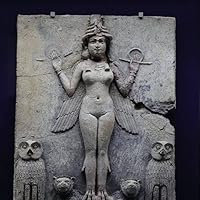
关于圣婚的一章通过图像分析提出圣婚的象征性元素,这对于长期挣扎在圣婚上有没有性仪式、有没有女祭司的这个领域是一大突破,非常有想法,也很扎实。
February 7, 2021
Absolutely fabulous.
December 26, 2023
edícia Routledge World je super... po Babylonii som si sal aj Sumerov a potešilo... mestá, politika, viera, posmerný život, obchod, každodenný život, všetko v jednej knihe od desiatok autorov

February 22, 2017
«It is Sumerian culture as described above which will be explored in most of the chapters in this book. It is ironic that as our information improves many of the old certainties become blurred. The tidy groups which help us reconstruct ancient societies are now becoming fuzzy. The old oppositional categories of human and divine, palace and temple, church and state, urban and rural, nomad and settled, no longer fit our more nuanced understanding of the evidence. [...]. As boundaries between such categories are becoming unclear and our understanding of the textual and iconographic evidence improves, we hope that we are edging closer to a realistic portrait of the Sumerian world.»
No creo que exista un libro general más completo, variado y profundo sobre la civilización sumeria que éste, escrito por un destacado grupo de expertos en la materia, quienes, cada uno desde su especialidad y particular perspectiva de la historia, le dan al trabajo una amplísima visión de conjunto.
Publicado en 2013, The Sumerian World (no sé de alguna traducción al español) contiene además información actualizada, nuevas reinterpretaciones y evaluaciones de fuentes ya conocidas, amén de material hasta ahora no publicado.
Un libro que me parece tal vez necesario, dado que, por desgracia, siguen hoy día publicándose textos de carácter general-divulgativo, ya sea como objeto principal de estudio, o como algo tangencial, que siguen repitiendo ideas e hipótesis de hace tiempo descartadas con respecto a la cultura sumeria, su economía, la extensión o importancia de sus instituciones o su carácter, entre ellas, y quizá la más importante, esa de caracterizar a las primeras civilizaciones surgidas en la Baja Mesopotamia como dominadas por un templo, o tratar a los sumerios como una raza o etnia particular, o la no menos extendida de catalogar a la civilización sumeria como algo aislado y extraordinario rodeado en un mundo salvaje.
Porque si bien todo demuestra que, tal cual, la sumeria fue la primer civilización surgida en la historia, la acumulación de más y más evidencia, así como el reanálisis del material de larga data existente, han ido mostrando en realidad un cuadro mucho más vasto, rico y plural de lo que se pensaba hacía un par de décadas, reconociéndole la debida importancia a otras culturas en el extraradio inmediato de Súmer, como la milenaria Anshan y la región del medio y alto Éufrates, en donde se desarrollaron núcleos de población y cultura semejantes, distintos, casi contemporáneos a los de Súmer, y que se influenciaron mutuamente desde un inicio.
Sin profundizar en exceso (que es propio de otro tipo de literatura, sobre todo de revistas de investigación especializadas), en sus poco menos de mil páginas, el libro ofrece una riquísima variedad de temas, desde los básicos del entorno ambiental o el desarrollo, estructura y organización de las ciudades y el campo, como sobre el idioma (tan peculiar y huérfano entre otras lenguas); temas de género (el papel de las mujeres en la sociedad), la religión oficial, la mitología, las creencias populares, el comercio interno y externo, la constante lucha contra los dos grandes ríos (bendición y maldición de Mesopotamia), la estrecha relación con los vecinos inmediatos, siempre compleja, dinámica, sobre todo con Elam o allá en el alto Éufrates (donde se desarrolló una cultura muy propia que apenas y se vio influenciada por la poderosa ciudad-estado de Uruk), por no decir ya aquellos países casi legendarios como Dilmun, Magan y Meluhha. Un capítulo dedicado a la moda y otro más, a modo de epílogo, sobre el estado actual de esta tierra en el actual Irán, le otorgan al conjunto un punto adicional de riqueza.
Como no podría ser de otro modo, dado el carácter de las fuentes disponibles, The Sumerian World se enfoca en el estudio de restos arqueológicos, epigráficos, lingüísticos, paleoetnográficos, y dista mucho por ello de ser una historia narrativa, y sin embargo, resulta muy interesante y esclarecedor, toda una referencia sobre este particular periodo histórico, de esta región del antiguo Oriente Próximo, y que dice mucho más, te hace comprender mucho más, que una narrativa basada en puras especulaciones o los disparates que tan frecuentemente se encuentran cuando se trata de los sumerios.
Displaying 1 - 14 of 14 reviews