Jump to ratings and reviews
Rate this book

Palinuro de México

Rate this book
Madrid. 22 cm. 725 p. Encuadernación en tapa blanda de editorial. Colección 'Literatura Alfaguara', numero coleccion(11). Paso, Fernando del 1935-2018. Palinuro de México .. Este libro es de segunda mano y tiene o puede tener marcas y señales de su anterior propietario. 8420421081

725 pages, Paperback

First published January 1, 1977

151 people are currently reading
2754 people want to read

About the author

Fernando del Paso

45 books192 followers
Fernando del Paso Morante es un cuentista y novelista mexicano. Cursó hasta el segundo año de la carrera de economía y llevó un seminario de literatura comparada en la Facultad de Filosofía y Letras de la UNAM. Trabajó en varias agencias de publicidad y fue becario del Centro Mexicano de Escritores (1964-1965). Colaboró en diversas publicaciones, como La Palabra y el Hombre, Vuelta y Revista de la Universidad de México. Desde 1970 residió en Londres, donde se desempeñó como locutor y redactor para la BBC. En 1986 fue nombrado agregado cultural en la embajada mexicana en París.

Tras unos inicios como poeta (Sonetos de lo diario, 1958), se orientó hacia un tipo de novela total que integrara la historia y la ficción, el sentido del humor y la reflexión cultural, política y el mito. México es el escenario primordial que ya se recrea en su primer título, José Trigo (1966), para alcanzar un desarrollo y dimensión mayores en la siguiente novela, Palinuro de México (1979), obra que fue galardonada con varios e importantes premios.

Se trata de una obra sumamente ambiciosa, incluso exuberante, entre cuyos posibles modelos narrativos cabría citar el Ulysses de Joyce y Rayuela de Cortázar. Como éstas, aporta, con gran libertad, un abrumador caudal expresivo y temático, Palinuro, personaje extraído de la Eneida virgiliana (el piloto de Eneas que se quedó dormido mientras tripulaba), pasa a representar el muchacho soñador y constituye un instrumento para trazar una irónica reflexión sobre el hombre actual.

Entre los elementos y temas dispares que se dan cita en la novela pueden mencionarse la crónica de la represión policial en la Plaza de las Tres Culturas de México durante las olimpiadas del 68, la descripción minuciosa de la ciudad con carácter de personaje, el pastiche literario y la sátira de la publicidad.

No menos extensa es la tercera novela, Noticias del imperio (1987), sobre la trágica historia de Carlota, reconstrucción del imperio Maximiliano. El autor cede la voz a su personaje, quien, desde su locura, va desgranando recuerdos que arrancan de sus orígenes familiares y giran en torno a su esposo fusilado. Obtuvo el Premio Nacional de Letras y Artes en 1991. En 1996 publicó la novela de corte policíaco Linda 67: historia de un crimen.

Ratings & Reviews

What do you think?
Rate this book

Friends & Following

Create a free account to discover what your friends think of this book!

Community Reviews

5 stars
378 (58%)
4 stars
160 (24%)
3 stars
55 (8%)
2 stars
35 (5%)
1 star
14 (2%)
Displaying 1 - 30 of 108 reviews
Profile Image for Vit Babenco.
1,784 reviews5,792 followers
March 12, 2023
Palinuro of Mexico is a medical epopee with a lot of incredible digressions and nuances aplenty.
Palinuro is a reincarnation of the helmsman of Aeneas’s ship in Virgil’s Aeneid and he valiantly stays at the helm throughout the book…
‘It is death which speaks through my lips; as a medical student, you’ll get used to death of the common or garden variety. As Claude Bernard said: La vie, c’est la mort. Personally, however, I prefer the attitude of the Divine Marquis who considered death to be one of the most precious laws of nature. Look,’ said Palinuro, showing me a toy boat, ‘this was the first boat, and the last, that my father built for me. Which leads me on to the thought that the surgeon, my friend, in the operating theatre surrounded by a team of nurses dressed in green and white, is the captain of a ship sailing through a sea of blood and lymph, through cystotomies and trepanations, between Scylla and Charybdis, his face bronzed by the lamps of the operating theatre! To port…’
‘There‘s an anaesthetist, doctor…’
‘To starboard…’
‘There’s a lymphosarcoma, doctor!’

Palinuro of Mexico is like an appendix of some weird cosmic encyclopedia and it is a love story…
And the best proof that our love was infinite was our room, faithfully reflecting our love. And the best proof that our room was infinite was a crystal egg we had on the windowsill which faithfully reflected our room. This egg was colourless and transparent, as big as an ostrich egg and spent its time, every morning, reproducing the view upside down: mountains hung from the ceiling, the ceiling was a lake and when the sun rose in the world outside, in our little crystal world the evening set: the sun sank over the horizon, round, luminous and orange as a giant yolk sinking into a sea of collyrium. And in the afternoon the opposite happened: when the sun descended in the sky outside and the stars sprinkled the boats’ masts, in our sky the dawn was breaking. And so it was that, like the chocolate emperor who spoke in German to his horses, we could say that over our kingdom, over our little room in Holy Sunday Square, in which our bed was America, our kitchen Europe and the bath-tub Oceania, the sun never set. It was the golden egg floating in the primordial waters in which Brahma was born: the egg in the shape of Father Mersenne’s Great Lyre of the Universe; the egg hanging over the head of Piero della Francesco’s Madonna dell’uouo. This was the egg that if you shut one eye and placed it in front of the other, you contemplated the universe and its surroundings as Borges contemplated the world in El Aleph or as Faust and Vasco da Gama, from the peak of Paradise, contemplated the Ptolemaic orb.

Every life is a standard set of physiological and psychological processes with a lot of incredible digressions and nuances aplenty.
Profile Image for Guille.
1,006 reviews3,280 followers
June 10, 2025
Palinuro de México ha sido una gozada, de esa clase excepcional de gozada solo provocada por libros tan especiales y míticos como Rayuela. Y es que Palinuro es una grandiosa cascadas de metáforas, ríos de erudición, océanos de ingenio por donde transitan corrientes de psicodelia y donde se bañan personajes inolvidables, tan inolvidables ya para mí como aquella pareja Horacio-Maga de Cortázar.

Durante su lectura, Fernando Palinuro del Paso se me antojaba un Perseguidor con la imposible y deseable pretensión de abolir tiempos y espacios o, en su defecto, agrandarlos hasta el infinito, que viene a ser lo mismo o parecido. El perseguidor incansable de esa palabra que lo contenga todo o, en su defecto, de pléyades de ellas que converjan en el concepto perseguido, que viene a ser lo mismo o diferente. Perseguidor de otros mundos, no por escapismo sino por su ensanchamiento, y, por eso, también inquisidor de prejuicios y tabúes, y, por eso, también, burlador de lo fijo, de lo dado, de lo establecido, y, al tiempo, verdugo de la unidad en la identidad del hombre y sicario de las verdades absolutas, y, por eso, también, abogado de borracheras y drogas, de sexo fornicador, de sexo masturbatorio, y hasta de sexo incestuoso, al que no le sobra ni le falta agujero alguno que desear, buscar, penetrar e inundar. Perseguidor del chiste y la parodia, de la piel de plátano y la corrosión de los cimientos, de la carcajada liberadora y de todas las sonrisas posibles, de la ocurrencia y la ordinariez, del ingenio y la patochada. Perseguidor de combinaciones de palabras nunca antes combinadas, de confusiones ordenadas y ordenaciones confusas, de metáforas nunca antes soñadas, de fantasías de ayer y de hoy, de imaginaciones al poder y donuts sin agujeros, de mundos patas arriba y peluches gigantes acariciándoles la panza más o menos situada a la altura y anchura de México.

Un libro con una clara ambición de inundar todos los universos habidos y por haber; de traspasar cualquier límite impuesto a la novela y al hombre, sin olvidar a la mujer; de meterse en todos los recovecos del alma y del cuerpo y llenarlos: el silencio está prohibido en Palinuro. Fernando del Paso nos riega de palabras, nos reboza y nos inunda de ellas, modificando significados, invirtiendo significantes, buscando movernos del sitio, alterarnos el mundo, mudarnos el pensamiento, siempre tan supeditado a la palabra.

Puede que técnicamente no sea una novela intachable, que académicamente tenga fallas, pero su frescura y su fuerza -todo da impresión de primera vez, de verdadera creación-, la desfachatez, la irreverencia, la poesía -no hay que olvidar la poesía del texto-, el anarquismo y subversión de estructuras, estilos y tramas es tan grande que la hace enorme.

Para ejemplo, una preciosidad de texto:

“Hacíamos el amor compulsivamente. Lo hacíamos deliberadamente. Lo hacíamos espontáneamente. Pero sobre todo, hacíamos el amor diariamente. O en otras palabras, los lunes, los martes y los miércoles, hacíamos el amor invariablemente. Los jueves, los viernes y los sábados, hacíamos el amor igualmente. Por últimos los domingos hacíamos el amor religiosamente. O bien hacíamos el amor por compatibilidad de caracteres, por favor, por supuesto, por teléfono, de primera intención y en última instancia, por no dejar y por si acaso, como primera medida y como último recurso. Hicimos también el amor por ósmosis y por simbiosis: a eso le llamábamos hacer el amor científicamente. Pero también hicimos el amor yo a ella y ella a mí: es decir, recíprocamente. Y cuando ella se quedaba a la mitad de un orgasmo y yo, con el miembro convertido en un músculo fláccido no podía llenarla, entonces hacíamos el amor lastimosamente. Lo cual no tiene nada que ver con las veces en que yo me imaginaba que no iba a poder, y no podía, y ella pensaba que no iba a sentir, y no sentía, o bien estábamos tan cansados y tan preocupados que ninguno de los dos alcanzaba el orgasmo. Decíamos, entonces, que habíamos hecho el amor aproximadamente. O bien Estefanía le daba por recordar las ardilla que el tío Esteban le trajo de Wisconsin y que daban vueltas como locas en sus jaulas olorosas a creolina, y yo por mi parte recordaba la sala de la casa de los abuelos, con sus sillas vienesas y sus macetas de rosasté esperando la eclosión de las cuatro de la tarde, y así era como hacíamos el amor nostálgicamente, viniéndonos mientras nos íbamos tras viejos recuerdos. Muchas veces hicimos el amor contra natura, a favor de natura, ignorando a natura. O de noche con la luz encendida, mientras los zancudos ejecutaban una danza cenital alrededor del foco. O de día con los ojos cerrados. O con el cuerpo limpio y la conciencia sucia. O viceversa. Contentos, felices, dolientes, amargados. Con remordimientos y sin sentido. Con sueño y con frío. Y cuando estábamos conscientes de lo absurdo de la vida, y de que un día nos olvidaríamos el uno del otro, entonces hacíamos el amor inútilmente. Para envidia de nuestros amigos y enemigos, hacíamos el amor ilimitadamente, magistralmente, legendariamente. Para honra de nuestros padres, hacíamos el amor moralmente. Para escándalo de la sociedad, hacíamos el amor ilegalmente. Para alegría de los psiquiatras, hacíamos el amor sintomáticamente. Y, sobre todo, hacíamos el amor físicamente. También lo hicimos de pie y cantando, de rodillas y rezando, acostados y soñando. Y sobre todo, y por simple razón de que yo lo quería así y ella también, hacíamos el amor voluntariamente."
Profile Image for MJ Nicholls.
2,275 reviews4,851 followers
November 30, 2012
Del Paso favours the maximal form—Palinuro of Mexico and News From the Empire are sprawling imaginative playgrounds, concerned with the seemingly limitless possibilities of the human mind to transcend anything with everything. In Palinuro of Mexico Del Paso has created a magical, surreal, artificial and dreamlike narrative. The titular character is, at times, both narrator and subject (sometimes he narrates about himself in the third person)—a medical student in passionate love with his cousin Estefania. Ostensibly, this is a novel about the body—in love, in pain, in all its staggering medical complexity—and the irresponsible people responsible for keeping it ticking. Ostensibly, this is about a lovedrunk incestuous romance between sex-mad cousins. Ostensibly, this novel is a “state of the nation” piece about the decline of Mexico. Ostensibly, this is a form-breaking metafictive wonderland with nods to Sorrentino’s satire, Bolaño’s breathless run-on sentences, Sterne’s incomplete encyclopaedism, Rabelais’s delirious vulgarity, Ducornet’s tempestuous romances. Ostensibly, this is an enormous strutting vulture larded with medical terminology, literary references, nonsensical internal monologues that run for up to ten pages sans paragraph breaks. Ostensibly, this is that all-too-rare bird—a freewheeling uninhibited masterwork in pursuance of pure readerly pleasure, of that Gassian wonder of the word. Ostensibly, it is all these things, and a million more you can think up if you do the decent thing and read this exasperating Mexican supernova tomorrow. A thin line between love and hate, perhaps . . . but love will prevail in the end. I promise.
Profile Image for Megha.
79 reviews1,193 followers
April 23, 2013
"...and I vowed that the book which I would write someday would be as sickly, fragile and defective as the human organism and also, if possible (which it isn't), equally intricate and magnificent."
Encyclopedic. Kaleidoscopic. One of its kind.

If I were asked what this book is about, I will be able to do no more than babble like a six month old. This book is like a house of mirrors. Each mirror sends you down a rabbit hole, carrying you on an enticing journey full of wonder and splendor. It's a solid testament to the richness and power of imagination and the ability of fiction to stretch the reality to that which lies beyond the physical world and the conscious mind. It's an eloquent tribute to ageless mythologies and to unforgettable works of art and literature. It's a token of respect to the marvels of medical science seen over the centuries and a romanticized view of the human anatomy. It's a mirror to the culture of Mexico. It's a creative exploration of the concepts of love, knowledge, fantasy, death and more. It has the charm of fairy tales and prince(ss) stories without being one such story itself. It has the enchantment of dreams, but is much beyond a dream. It's excessive and overwhelming, it's epic and sprawling, it's many things all at once.

Reading Palinuro of Mexico makes for a rather demanding relationship. With the uncountable allusions to art, literature, science, history, philosophy and what not, it was all I could do to not lose myself in a Wikipedian labyrinth. Else it would have taken me years to finish it. Lack of anything resembling a narrative drive, run-on sentences, walls of text much longer than Ali's, long paragraphs, prose that often requires concentration, medical terminology and detailed anatomical descriptions, very curious goings on with Palinuro being multiple characters and narrator all at once - this book presents several reasons against reading it. And yet, it had me hooked.

I find this a hard book to recommend to anyone. But I can tell you this much, give it a few chapters, if it doesn't seduce you within those, you can comfortably put it aside without having to wonder if you'll like it better on reading further. What Palinuro of Mexico taught me about reading it was to be in the moment. Don't read it looking to get somewhere or to finish. Don't look for big questions or answers. Let it into your bloodstream and when it hits your head, you will know.

There were a few occasions when I felt like I was dragging my feet through sand, when a chapter began to look longer than eternity. But, for each of those moments, the Del Paso voiced angel on my shoulder made me fall in love with it all over again. Taking into account all that is wonderful and all that is potentially frustrating about Palinuro of Mexico, my rating averages to all of those five stars. Five stars for Estefania's blue eyes. Five stars for Grandfather Fransico's stories. Five stars for Aunt Luisa's Parisian love. Five stars for Cousin Walter's patchwork waistcoat. Five stars for Tristram Shandy's apples. Five stars for Don Prospero's obsession. Five stars for the three friends' trippy adventures. Five stars for the house in Holiday Square and the world around it. Five stars for the mirror who died. Five stars for the General's one hundred eyes. Yes, five stars all around for this one.

Let me not forget to acknowledge the great job by the translator who not only made this work accessible to us, but sculpted all the wordplay, never-ending sentences and paragraphs into delicious prose.
And many thanks to the Loch Ness monster's neighbor for bringing a terrific book to my attention yet again.

I keep seeing Rabelais's name in reference to some of the books I have been reading. I ought to read me some Rabelais soon. And Joyce. And Sterne. But for now, a needy Warholic is looking for my time.

______________________________

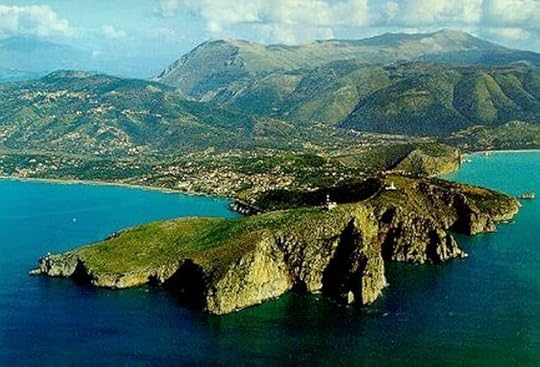
Cape Palinuro, named so after Palinurus of Aeneid, who was the navigator on Aeneas's ship. Palinuro of Mexico, likewise, is our navigator through this ambitious book.

Cape Palinuro
Profile Image for Jonathan.
1,009 reviews1,230 followers
September 26, 2013
There are novels of the spirit, and there are novels of the body. Del Paso sings the body biologic. He sings of blood, of pus, of glistening, yellowed fat, of the muscled twisting of our bowels. He sings of sex, of autopsy, of amputation and of excretion. He sings of a broken country cutting itself into shreds. Of a broken self splintering into a thousand mirrored and mirroring shards.

Rabelaisian, yes, it reminded me too (at times – in particular towards the end) of Coover's Public Burning. It is, as the quote from La Croix on the back of my edition says a "loose and baggy monster" and, if you are the kind of reader who reads that as a positive description of a novel, then this is most definitely for you.
Profile Image for Alaíde Ventura.
Author 6 books1,630 followers
April 10, 2015
Este libro es una fiesta, un homenaje a la ciudad, al país, al cuerpo, al siglo y al español.

Gracias, Fernando del Paso, vive por siempre, es todo lo que te pido.
Profile Image for Nathan "N.R." Gaddis.
1,342 reviews1,653 followers
Read
January 2, 2016
“And that is what we were up to when they told us, Palinuro, that you were about to be born. Your grandmother Altagracia was told by Robin Hood.
“Robin Hood was told by Lady Windermere.
“Lady Windermere had been told by the Count of Monte Cristo.
“The Count of Monte Cristo was told by the two halves of the Viscount.
“The two halves of the Viscount by the two halves of don Prospero.
“And then Dr Latorre, who was a gentleman with a single wart on the shadier side of his nose, sat down on the edge of the bed, yawned like a Comanche, lit his pipe and started to send smoke signals to the Arkansas trappers.
“And Loyal Heart told Eagle Head who told the stuffed crow on his staff who told Robinson Crusoe who told Man Friday who told the Man who was Thursday.
“And, to witness your birth, cam all the characters in Los Pardallan and Les Rougon-Macquart.
“And on horseback, raising a great cloud of dust, came also the Lone Ranger, Doña Bárbara, the Bengal Lancers, Don Segundo Sombra, Artemio Cruz and the Bandidos of Rio Frio.
“Phileas Fogg came by express train from Iowa City, losing five days but recovering four and thus, in effect, travelling around the world in eighty-one days.
“And Christmas came and Lolita, D’Artagnan and the Man without Qualities.
“Tyl Ulenspeigel was told by Lord Jim.
“Lord Jim was told by Tirano Banderas.
“Tirano Banderas was told by the tin drum midget.
“The tin drum midget was told by the valorous Roland.
“Then Sinbad the Sailor told Captain Poison who told Captain Blood who told Mr K who told Pancho and Ramona who told the Queen of Spades who telephoned Ivanhoe who sent a telegram to Tartarin on the Alps who sent a heliographic message to Fortunata and Jacinta who told Baron de Charlus who wrote to Scheherazade who told Bertoldo Bertoldino and Cacaseno who signalled by flag to Swiss Family Robinson who took a plane to inform Zazie who emerged from the metro to tell Anna Karenina who got into a troika to go and tell Spiderman who slid down a spider’s web to tell Arthur Gordon Pym who took a taxi to advise Sherlock Holmes who boarded a double-decker bus to go and tell Dick Tracy who sent a message with a bunch of flowers to Madame Bovary who sniffed her favourite perfume and told Bilitis who composed a poem to Manasidika and told Hans Castorp who lit a cigar and told Mandrake the Magician who hypnotized Lothar and told Leopold Bloom who bought a pig’s kidney and told Damian who told Bouvard and Pécuchet who told Mafarka, the futurist, who told the Hobbits’ thinking trees who told Captain Pantoja and his Special Service who told Eugene Gant who told Peer Gynt who told the Major of Zalamea who told Tartuffe who told Phèdre who passed the news on to the sorceress who told the Daughter of Jorio who told Omegar, the last of men, who told the Last of the Mohicans who told Dr Sangrado who told José Cemí who told Blue Beard who told Big Brother who told Doc Savage who told Beremundo el Lelo who told the portrait of Dorian Gray who told the Phantom of the Opera who told L’homme qui rit who told Dr Jekyll who informed Mr Hyde who told José Trigo who told Paul andVirginia who told romeo and Juliet who told Lucia and Renzo who told Chichikov who told Lord Greystoke who told the Mad Woman of Chaillot who told Silvestre Paradox who told Saturnin Faurandoul who told Fu Manchu who told Mr Here Comes Everybody who told Harlequin the flying doctor who told Dr Zhivago who told Dr Pascal who told Eric of Melniboné.
“Barbarella was told by her robot Aiktor.
“Aiktor was told by Carl, the robot of the year 2001.
“Carl was told by Adam Link.
“Adam Link by Eva Futura.
“And the future Eve had been told by the general who had a glass eye who had been told.....” u.s.w.

Q.E.D.
223 reviews189 followers
November 18, 2013
A surrealistic maelstrom in PoMo: the latter so much in evidence that some reviewers remark the course Del Paso took in creative PoMo writing in the University of Iowa in 1976 went to his head. OK, I can see it. This essay like collage of structural perambulations does approximate the Human Centipede. Del Passo is so giddy with excitement that he can’t choose: so he goes for it all: Grand Guiginol, magical realism a la Master and Margarita, Théâtre de l'Absurde, oh, whats this: Flaubert read the entire encyclopedia and regurgitated it in Bouvard and Pecochet? Bring it. So del Paso gives us the history of medicine, encyclopaedia style. And of course he’s Spanish (speaking), so theres ample tradition to draw from there as well. A little upmanship on Donoso and Pinera apropos the ‘umbunche-ism’ of the human body (virtue of the Iowa PoMo course, perchance?), and lo, we have Technicolour dismemberment of a corpse which comes back to life in a kaleidoscope, Rainbow farts, Picasso-esque delineation of body parts, astral projection into objects, homemade abortions, scatological parties, and, and, and, where does this all come from, and, and, and, because I can, whose to stop me, I’m going to say Carlos II. Yup, thats when this body dismorphia and ‘re-morphia’ started, when the Hapsburgs finished. Carlos II was thus:’ Charles's own immediate pedigree was almost exclusively populated with close relative relationships: Charles's mother, Mariana of Austria, herself a Habsburg, was a niece of his father, Philip. Mariana was a daughter of Empress Maria Anna of Spain (1606–46) and Emperor Ferdinand III. Thus, Maria Anna was simultaneously his aunt and grandmother and Margaret of Austria, Maria Anna's mother, was both his grandmother and great-grandmother. The inbreeding was so widespread in his case that all of his eight great-grandparents were descendants of Joanna and Philip I of Castile.’ The result of all this of course was that Carlos II was pshysically monstrous and mentally deficient. Think of any deformity or condition you can: this man had it.

To me, the end of that King was the beginning of the Spanish literary body diaspora, elements of which I see so many everywhere. In any event Del Pasos certainly feeds off this Carlos travesty with aplomb: his ‘reflections of incest’ mimic a Jonathan Swiftian rhetoric and are no less a modest proposal of their own, apropos incest, of course.
Now, I’m not sayng no one else has done incest the Swiftian way. Heck, the Australians are pretty darn good when it comes to it, case in point:

http://www.youtube.com/watch?v=meQ_K1...

But if the unabashedly brazen PoMo mimicry detracts, at times, in this plotless wander wonderland, then the sheer schism of concepts provides the gravitational pull. A continuo basso to Lewis Caroll’s Alice in Wonderland and a precursor to Chevillard’s Crab Nebula, Palinuro absolutely seduced me with a Bretonian seismic shiftiness (sic) of subject-object groundedness and serrated the Frege sense and reference distinction (for you linguists out there). I can’t describe how awesome and rare that is: you just gots to read them both to ken.
And that is why Del Paso is a genius. To me. (For me?) . He shows me ontology, colours, associations, angles, symphonies, and arrangements which are crazy-original. Fab.

Oh and one more thing: this book isn’t really all about incest. That must be just me.
Profile Image for Jonfaith.
2,147 reviews1,749 followers
May 27, 2017
And Loyal Heart told Eagle Head who told the stuffed crow on his staff who told Robinson Crusoe who told Man Friday who told the Man who was Thursday.

I stole the above from Nathan's review who pinched it from Cervantes who purloined such from Pierre Menard, that sneaky bastard. I think I'll pocket another quote --this one deftly cited by Megha:

...and I vowed that the book which I would write someday would be as sickly, fragile and defective as the human organism and also, if possible (which it isn't), equally intricate and magnificent.

I noted early on that because of other stresses and fissures, Palinuro of Mexico had become an early morning reprieve. Much like Doctor Johnson on Burton's Anatomy, I leaped from bed to clutch this messy beast to my breast and allowed my daimon, my delightful imp to rent and rave, all in a snug enclosure of my own imagination. It is about love/lust, medicine, smut and drunkenness. There's incest and pathology and more stabs at advertising than an Ides of March on Cielo Drive. Then there's a compendium of jokes regarding flatulence. Just offstage is the Tlatelolco massacre.

What did I hear while reading:
birdsong
our dehumidifier in the basement
our wind chimes on the porch
the clunk a trailer makes when hauled down the perpendicular street
the bump-bump of someone's woofer

What did I listen to (or what was playing during my reading)?

Mavis Staples
Tom Waits
Manu Chao
John Coltrane
Dawn Upshaw interpreting Golijov
Van Morrison
Alfred Brendel interpreting Beethoven

My wife majored in Spanish Literature and asked about the novel. I told her it was either Renaissance or 18th Century literature and had nil to do with Boom. I feel confident in that.

This is worth people's time.
Profile Image for Ronald Morton.
408 reviews207 followers
March 20, 2016
"Priaprank" is an excellent pun/neologism. (And one of the funnier sections of the book, which is quite bursting with humor).

This was over the top excellent - it mixes tall tale with myth with history with offbeat yet deep pieces of trivia; all of this collages together into a dense encyclopedic feat of literature. It is moving, funny, sad, erotic, educating, gross, bawdy, explicit, crude; it is all these and more. It is playful with form; it is literate at all times, piling references and allusions into multi-page length paragraphs. Overall, and most importantly, it is a joy to read; sentence upon sentence of exquisite prose, all resulting in an incomparable work of literature.

It is also extremely depressing that, having read News From the Empire, I've now read the entirety of del Paso's works translated into English. It seems like there are only a handful of other works by him, but I basically wish I read Spanish so I could seek them out. Dalkey needs to get on this shit.

Random paragraph chosen by opening the book at random (as it is exceptional from cover to cover):
But, on her nose and cheeks, my cousin also had archipelagos of freckles which might have been caused by the impact of bubbles of champagne and which, maintained Uncle Esteban - because he adored them and because he adored Estefania and drank her tears from a thimble of ivory - added sparkle to her fizziognomy. And also on her shoulders, those shoulders like blue dunes, caressed by scorching Levantine winds, and from which grew, like scattered vegetation from desert sand, single golden hairs tasting of apricot. And when my cousin sunbathed, whether in Acupulco, in the YMCA or in Walter’s house in Cuernavaca where she lay naked on the lawn framed in passion flowers and plumbago, her freckles appeared to emigrate from her shoulders and congregate on her back, forming adventitious continents like shadows of butterflies hovering with outspread wings a few centimetres from her skin.
Oh yeah, there's a shit-ton on incest as well.
Profile Image for Misael.
138 reviews5 followers
February 4, 2017
¡Lo terminé! Es, sin miedo a equivocarme, una de las mejores novelas del siglo XX; no sólo de la narrativa mexicana o hispánica sino de la universal. Es un libro hiperbólico, todo lo que está en él se lleva hasta las últimas consecuencias y, aquí está la parte buena, el lenguaje es lo que más sobresale.
Va de la narración a la mitología, de lo autobiográfico a lo político, todo cargado con una estética del vocabulario médico: llena de referencias a la corporalidad -influenciada, pienso, por la novela del barroco tanto en el tratamiento como el sintaxis.
El único problema que tuve fue la extensión de párrafos, eso es más un asunto mío (a veces me pierdo en los párrafos que se extienden por varias páginas) pero esa forma de escritura es la que va más de acuerdo a la estructura del libro.
Alucinante, onírico, médico, cuerdo, mitológico, literario, este libro lo es todo.
Del Paso se merece todos los premios que existen y veinte más.
Por último, el capítulo ”Palinuro en la escalera” es magnífico, una parte de la novela escrita en dramaturgia que resulta hermosa al hacer el recuento de lo ocurrido en Tlatelolco.
Profile Image for Nate D.
1,654 reviews1,254 followers
Currently reading
February 9, 2018
Alright, time to dive into my first meganovel of 2018.

Apparently everyone I know has read this and already given it five stars. I can see why instantly, as in the first 20 pages this already goes looping and dipping through such a range of experience, history, and medical anecdote. This is the post-modern epic we know and love: warm and inviting even in its sheer excess and, at times, calculated repulsiveness. I love it from the first moment, but also know that if this wants to really earn that love, it will have to continuously startle and surprise me by carving a path in some yet unknown and unexpected direction through its universe, rather than just rest on its endless allusions, episodes, anatomies, and sheer love of language.
Profile Image for Simon Robs.
505 reviews101 followers
August 17, 2017
'ACTA EST FABULA' (the comedy has ended) ... think twice before entering these gates of hellish reading, ... gird, strap, lock/load all extremities and firepower this is a behemoth that won't fall without an all-out assault. I knew after 1st installment of reading that if not approached that way I'd likely never finish this book, and you reader if not also prepared for onslaught then refrain, go back, choose another book or, just randomly splash open a spot and read this supernova/mandala of delight that out gargantuas Pantagruel. It's a five star heavyweight I docked for biting my ear and everything else to complete this journey. There's my disclaimer as faux review. Ay Caramba!!
Profile Image for Vilma.
12 reviews48 followers
October 2, 2012
Not a review, simply wonderin´ why the fuck nobody has read this? D.Keith Mano and Felipe Alfau fans - where are you? This book is for you! Throw in a bit of Joyce too and you will get a pretty good picture what Del Paso is up to - its a hell of a ride to be sure, especially if you love tons of medical details and have a strong stomach. Probably one of the best treasures Dalkey has published over the years - I am serious, folx!
Profile Image for Andrés.
75 reviews29 followers
January 5, 2016
Hay que ser muy talentoso y tener un dominio magistral de nuestro idioma para alargar la frase "Palinuro es un chingón, sabe todo lo que hay que saber de medicina y anatomía y además se la pasa cogiéndose a su prima" por seiscientas cincuenta páginas. :V

Creo que tengo un problema semejante al que tuve con Rayuela. Puedo ver que es un buen libro, y puedo comprender que a la gente le guste mucho, pero fue muy difícil para mí lograr mantenerme en su frecuencia.

Tal vez nomás estoy menso. :(
Profile Image for Paul H..
869 reviews458 followers
June 7, 2023
(3.5 stars.) I have to give him credit for trying; if you're going to be a novelist, you might as well try to write Ulysses and Gravity's Rainbow and Gargantua and Pantagruel all rolled into one. Despite his failure to do this, Del Paso is certainly waaaaaaay better than the other Latin American imitators of Joyce, of which there are surprisingly many (e.g., Marcehal's Adán Buenosayres is just embarrassingly bad). I'd take Del Paso over Piglia or Fuentes or Cortázar or the other mediocrities who are falsely held to be the greatest Spanish-language authors since GGM, but he's definitely not as good as, say, Bolaño or Puig.

Anyway, in short, Del Paso tries to achieve GGM's “loquacious heightened-affected-tone epigram-dispensing storyteller narrator” but can't get the tone right, and this attempt is further burdened by 500 pages of “crazeeee” Pynchonian dick jokes and Joycean bodily functions (perhaps Del Paso did not realize that Joyce had a narrative/thematic reason for those passages).

There are also some family resemblances to Gass and Gaddis and Sterne (. . . on LSD), but ultimately Del Paso is most similar to his fellow Dalkey author, Joshua Cohen -- the same flat, vacant nihilism, the same dependence on literary pyrotechnics and wordplay and pretentious ‘big postmodern hysterical realist novel’ stuff (long lists! scientific factoids! scatology!) that the same handful of GR reviewers keep falling for, but at third-hand, an imitation of an imitation. (Del Paso's later novel, News From the Empire, is an imitation of different postmodern authors, and fails in a slightly different way.)

With all that said, ymmv . . . I can see the case for a certain kind of reader falling in love with Del Paso's style. Just in the first hundred pages or so, we have:

Palinuro's was the power to reinvent life and family cosmogonies and crystallize them into a world held up, here and there, with pins: here to the remembrance of a Dutch still-life which memory had forgotten in a pantry; there, to the perpetuation of a coded phrase fertilized by the fortuitous presence of an aster plant, on one of the many occasions he went with Estefania to Walter's house in Cuernavaca. Palinuro never forgot the sight of those flowers, clustered in candyfloss corymbs of magenta, against a backdrop of stars which seemed to make up for the distance between the name of the plant and its objective: Aldebaran, the Pleiades, Sagittarius. Neither did he ever forget that he had to describe to his cousin the roundness and the itinerary of the stars because Estefania was short-sighted and the twinkling orbs were drowned in the vitreous humours of her eyes before reaching her own shining spheres. Palinuro's was also the privilege of embracing in memory the joint existence with a single square centimeter of a river about to freeze and estival grass, of the falling of a dove's wing in the orange marmalade forgotten on the porch . . .


And:

And in the last of the rooms was Estefania, alone and mad. It was an immense chamber, with walls, ceilings, and floors covered in immaculate white mosaics. Flourens' doves, deprived of their cerebella, flew headlong into the mosaics and fell into the jars of methyl orange and cut their throats as, in their clumsy flight, they broke test tubes of Bohemian glass and flasks of Jena glass. Drops of red blood and orange methyl dripped into agate mortars and white sinks corroded by nitric acid, as Estefania's tears trickled down the long glass pipettes, leaving a drop of transparency here and there, filtering through a silk sieve, leaving a drop of blue here and there, and overflowed from chrome crucibles. Only much later, when Estefania forgot about Flourens' doves and all her animals killed and tortured in the name of science, not till then did her tears evaporate and each turn into a tiny, violet, butterfly-shaped flame, the color of a flame of potassium and hydrogen.


And:

Now and again, you could hear the spores of a gelatinous conversation, and I continued to climb the endless stairs of the old colonial building of red foam, submerged in the darkness of a brew of seaweed, between greenish and opaline, with hints of apple camphor and rotten egg yolks, towards the immense organ of burning wind composed of the retorts of the alchemic cathedral belonging to Palinuro, whom I was about to meet, as the concierge told me, around the corner of a cornice or in the drainpipe of shadow which acquired, suddenly, a tempestuous translucency. And so it was; I swear I will never forget it: beneath that light of oily cellophane, in the middle of the room and some way from the window which looked out over the street and the afternoon, was Palinuro, naked from the waist down and from the waist up, prescribing for himself a sit-down bath in an aluminum tub full of vinegar.
Profile Image for Josafat.
37 reviews1 follower
August 30, 2025
Palinuro o la desmesura

Enfrentarse a una novela de este tipo, en que no hay trama ni asideros conocidos, puede ser chocante para el lector clásico, apareciendo todo como un dibujo borroso que se prolonga más allá de la vista. Pero también muestra cómo atenerse a un argumento lógico es otra manifestación de los grilletes, que desaparecido abre puertas si la pericia del escritor las aprovecha.

Desde el prólogo se advierte la tendencia del narrador por la exageración, proliferando lo posible, lo real y lo imaginario. La multiplicación de la novela es de perspectivas, de sinónimos y colores, para repetir una y otra vez lo mismo, matizando cada repaso el fondo, como si de una mano de pintura se tratara. Con un erudismo que fuera cargante de no ser por la forma en que se adereza, (donde el autor repasa los tipos de ángeles de la historia del arte, los ojos históricos y los muchos nombres que tienen las partes del cuerpo humano) sabemos que nos encontramos ante una obra que busca abarcarlo todo, creando una realidad paralela que busca competir con la verdadera.

Situada en el México de los estudiantes, —irreverentes y escépticos de las costumbres– se respira una libertad falseada, tensa por la proximidad de los juegos olímpicos, que desataron la catástrofe del 68. Y como esta novela no se rige por las convenciones, esta parte de la historia latinoamericana se representa en una obra de teatro, absurda, exagerada (no podía ser de otra manera) que sirve como válvula para la ira y frustración de una generación marcada por el horror.

Me sorprende que una obra como esta, moderna y singular, no figure en los listados conocidos de las grandes novelas del boom, desarrolladas sobre todo en los 60'.
Así como "Rayuela" y "La ciudad y los perros" rompieron con las formas en el siglo pasado, "Palinuro de México" hace de las suyas, con una escritura experimental que no deja de sorprender.
Author 52 books12 followers
August 6, 2021
A los 20 años leí este libro y en esa época regalé como treinta ejemplares a costa de mi precario presupuesto (aún cargo esa deuda). Creo que fue la primera vez que me entró la urgencia de compartir el entusiasmo. Lo regalé a quienes les gustaba leer y a quienes no, a los que querían estudiar medicina y a los doctores que conocía, a mi papá, a futuros galanes que no llegaron a serlo y a mi actual pareja, tres décadas después. Sin saberlo, fue mi primera misión como promotora de la lectura. Todavía regreso a algunos fragmentos de vez en cuando. Recuerdo que empecé a devorarlo y luego fui limitando el número de hojas porque veía que se acercaba el terrible momento de su fin. Es excesivo, delicioso, irreverente, divertido, lleno de miles de referencias, audaz en el lenguaje, una sorpresa pura, un canto a la vida que me convirtió en la lectora entusiasta que soy.

Profile Image for Paul Dembina.
694 reviews164 followers
January 26, 2021
I have to admit I really struggled to get through this. A couple of the chapters stood out: 1 a satire on the advertising industry and another a playlet about student protests in Mexico City in 1968. But a chapter on students playing practical jokes by appropriating penises amputated from medical cadavers - really? That's supposed to be funny?
Profile Image for Andrew.
2,258 reviews933 followers
Read
March 3, 2025
Let's talk about density in Latin American literature. It's a bit of a recurring theme, isn't it? Garcia Marquez, Donoso, and all the rest, all of the interweaving and unspoken alliances and age-old customs and Jesuit discourse, the "jungle" of prose, to use a particularly shopworn metaphor.

And Palinuro de Mexico is firmly within that camp. This is 700 pages largely consisting of medical terminology and descriptions of maladies and biological processes. So why was I so entranced? I don't know, but my god, I was! The sheer assault of language was on the order of the finest works of L. Krasznahorkai and A. Theroux. Fuck yeah, I mainline this shit.
Profile Image for Janet.
Author 25 books88.9k followers
February 25, 2009
A beautiful torrent of language, like Joyce on E, a young man in Mexico in love with his cousin. Makes you laugh out loud it's so beautiful, reminds you what it's like to be young. The sheer energy, love of life and words.
Profile Image for Sandra Bermúdez.
1 review16 followers
November 13, 2014
Una de las obras más bellas jamás escritas en castellano. Forma, fondo y lenguaje. Este libro es un viaje de placer infinito.
Profile Image for Jesus Flores.
2,570 reviews66 followers
June 10, 2024
Palinuro

Como hacerle justicia en una reseña a tan maravilloso libro.

La forma como juega con el lenguaje, con los personajes, con la percepción de realidades, con las tras familiares, con las narrativas temporales.

Odio hacer esta comparación, pero Palinuro es la versión mexicana del Ulyses, pero cien veces más disfrutable, mil veces más entrañable. Si sé que el hecho de ser mexicano hace que Palinuro se sienta más cercano, más propio.

Y ese entretejido entre el lenguaje coloquial y los términos médicos.

El segundo libro de 6 estrellas que leo este año
Profile Image for Josue Olvera.
340 reviews10 followers
July 8, 2016
¿Qué puedo decir? Otro libro que me deja abrumado, sin palabras, completamente enamorado y feliz. Enamorado del libro y también de la mente maestra que lo creó. Fernando del Paso (Premio Cervantes 2015, y bien merecido) hace un despliegue de erudición, creación, recreación, malabarismos literarios, cultura y muchas cosas más. Palinuro de México, definitivamente, es uno de esas libros que uno no puede contar, realmente no puedes, ni podrán hacerlo película (gracias a Dios). Es una experiencia que sólo se puede vivir leyéndolo. La novela ganó el premio Rómulo Gallegos en 1982, yo tenía un año de vida entonces (ya sé que van a calcular mi edad, pero está bien, háganlo si no tienen algo mejor que hacer) y Del Paso ya estaba ganando premios, ya había escrito José Trigo y ganado el Premio Javier Villaurrutia con ella en 1966. Un monstruo hermoso. Además de aculturarte, darte lecciones de humildad como escritor y lector, bajita la mano, y embellecerte la existencia con esta maravilla, Palinuro es divertidísimo, no recuerdo haber tenido en mis manos una obra tan divertida como esta, o sea, sí me he reído muchas veces con algunas obras, pero no de tapa a tapa, no con tanto asombro. Nada se desperdicia en este libro, sus más de 600 páginas valen su peso en oro.

Aquí dejo algunos fragmentos pequeños. La verdad tiene capítulos completos increíbles.

“Mamá no tenía por qué haberle contado eso a Palinuro. Mamá tampoco tenía por qué haberle dicho una vez: «Tu padre no me satisface», porque Palinuro no estaba ya en edad de imaginarse que tu padre no me satisface quería decir que papá Eduardo no le regalaba chocolates rellenos de topacios, que papá Eduardo no la llevaba a ver películas de Charles Boyer, no le inundaba el alma con aleluyas y tamarindos o no la llevaba a patinar al Luna Park.” Pág. 375.

“Y mientras tanto, no hubo día festivo o fin de semana que no hiciéramos algo para componer nuestro cuarto y el mundo; en que yo no pensara en hacer un móvil inspirado en el cuadro Maternidad, de Miró, para colgarlo arriba de la cuna, o Estefanía no participara en una manifestación contra la guerra de Vietnam, o los dos no nos preocupáramos de adelantarle a nuestro hijo un poco el placer de conocer las cosas y las miserias de la vida, y le enseñáramos a través de la vagina de Estefanía, un soldado de plomo, un bastón de caramelo, una lámpara de pilas con la que iluminábamos por unos segundos su vida intrauterina.
Y en muchas ocasiones, para que nuestro hijo supiera de dónde había salido, introduje en la vagina de Estefanía mi propio miembro paterno, disfrazado unas veces de payaso, otras de pirata tuerto y otras más de guiñol villano que amenazaba con ponerlo de patitas en el mundo si no pagaba la renta.” Capítulo XV. Trabajos de amor perdidos. Pág. 338.

“Leyes, me hubiera gustado estudiar Leyes, doctor, y quizás lo haga algún día antes de que la muerte me dispense su recia caravana y me lleve de la mano, en un autobús, rumbo a la flora de las ciudades…” Cap. XVIII. La última de las islas imaginarias: esta casa de enfermos. pag. 388.

“Mamá no tenía por qué haberle contado eso a Palinuro. Mamá tampoco tenía por qué haberle dicho una vez: «Tu padre no me satisface», porque Palinuro no estaba ya en edad de imaginarse que tu padre no me satisface quería decir que papá Eduardo no le regalaba chocolates rellenos de topacios, que papá Eduardo no la llevaba a ver películas de Charles Boyer, no le inundaba el alma con aleluyas y tamarindos o no la llevaba a patinar al Luna Park.” Cap. XVII. O my Darling Clementine! Pág. 375.
Profile Image for Alfredo.
64 reviews
May 25, 2020
La edición del Fondo que leí muestra en la portada una quimera de la imaginación de Del Paso, que también era ilustrador. Es una especie de disección de un objeto esférico, quizás una fruta, un planeta, un virus, un globo. Mientras más me fijo, menos sentido le encuentro a la abundancia de elementos (¿un sombrero? ¿un cubo Rubik? ¿una corneta?) Ya la portada anuncia al lector cómo habrá de leer la obra: hay que suspender el juicio, hacer una epojé literaria y dejarse arrastrar por la desmesura delpasiana, que llena todas las expectativas cuando uno las abandona. No hay que esperar ni trama ni nudo ni desenlace: la única lógica en Palinuro de México es la de la imaginación, la loca de la casa que por loca se resiste a cualquier lógica. Mientras leía, con la imaginación sobreestimulada, me inventaba historias y capítulos que el autor podría haber incluido en la novela. Páginas después me sorprendía leyendo justo lo que me había imaginado, como si el libro se escribiera cuando yo volteaba la página.

A Palinuro de México se le ha descrito como una fiesta del lenguaje, pero es más bien un carnaval, porque en el carnaval no falta nadie: están el campesino y el rey, el monje y la prostituta, el granadero y el estudiante, el santo y el pecador, el rico y el mendigo. En Palinuro de México, que Del Paso confesó que de las suyas era su novela favorita, no falta nada ni nadie. Palinuro es él mismo, pero a veces no, a veces es su primo Walter, a veces su abuelo Francisco, a veces era yo y a veces eran todos.

Palinuro de México me recuerda a El jardín de las delicias del Bosco. Aparece toda la humanidad, solazándose en su carnalidad y en un caos colorido que resulta un tributo al hombre protagórico, medida de todas las cosas.
Profile Image for Kevin Adams.
476 reviews143 followers
May 18, 2022
There’s a lot of great reviews/writings on Palinuro of Mexico here on GR so I’ll just add that it really is a great piece of literature. It’s everything that makes the maximalist novel great. Dialogue, concept, page length sentences. It’s different in its own way. Vulgar and literate. Hits all the greats: Rabelais, Joyce, Sterne. 81 reviews on GR. I’m not sure how to get more people to read. If you get the chance, please do so.

I’m really looking forward to reading News From the Empire.
Profile Image for Ana Flores.
Author 5 books32 followers
July 26, 2018
Aunque decir atrás, claro, sólo es un decir: no es que la esencia de las cosas esté atrás ni en ninguna parte; ni abajo, ni adentro, ni alrededor. Todas esas palabras no nos sirven para designar algo que no está ni en el espacio ni en el tiempo, porque espacio y tiempo son también palabras. ¿Y quién ha visto jamás a una palabra redonda? ¿quién ha visto una sílaba color de rosa? ¿quién ha visto nunca una frase correr por las calles gritando como loca? ¿Quién ha visto nunca a un párrafo gordo y oloroso a tabaco Príncipe Alberto sentarse en la banca de un parque para leer el periódico? ¿quién ha visto jamás a una ilusión vestida de encajes morados, o a un poema que revienta como un estornudo en el plexo solar y lanza la sangre a las alturas?


Resulta complicado comentar un libro como este, y es que es un libro complicado, que en sí no habla de nada en concreto, ni tiene una trama en el sentido usual del término, transcurre un poco en la realidad, un poco en sueños, quizás sea todo él una gran alegoría, y hasta es incierto que tenga algún protagonista bien determinado, todo lo cual podría hacer fruncir el ceño a quienes, escuchando de él por primera vez, se toparan con descripción tan chocante, haciéndolos alejarse de él, no estando para nada dispuestos a perder su valioso tiempo en galimatías.

No ayuda tampoco a dar una clara descripción el que su personaje central, Palinuro, de repente hable en tercera persona de sí mismo, aunque no precisamente como César en sus comentarios de gestas bélicas, sino refiriéndose a la primera persona, yo, “Estefanía y yo”, “mi prima y yo”, “yo no sabía...”, mientras en el mismo renglón ya está comentando algo sobre Palinuro, en tercera persona, una tercera persona que, además, por momentos parece volverse dos que dialogan entre sí, haciéndole a uno perder el rumbo durante las primeras ciento y tantas páginas del libro...

Y sin embargo, esas primeras cien páginas se te pasan sin darte cuenta, porque la prosa magnífica del autor, repleta de imágenes vivas, frondosa, gozosa, abundante, es en realidad poesía en narrativa, un exuberante juego del lenguaje que no acaba de concretarse en nada preciso sino que intenta abarcarlo todo, todo el universo, o cuando menos todo un mundo con sus múltiples y no pocas veces abigarrados matices, el mundo de Palinuro y Estefanía, que es a la vez un viaje, recuento, nostalgia y disperso relato sobre los inicios del siglo XX, enfocado eso sí en la historia de la medicina, el arte del médico, su vocación, su oficio, sus crudas realidades y crueles decepciones, que son las realidades y decepciones del propio Palinuro, quien algún día soñó en ser recordado como uno más o quizá el más grande de entre todos los médicos, como Galeno de Pérgamo, o Hipócrates de Cos.

Palinuro de México.

Puede que sea, o intente ser, la realidad misma el personaje central de esta novela, el titánico esfuerzo de querer plasmarlo todo todo en palabras, de aprehenderlo, de atrapar toda esa Gran Realidad de la que la nuestra particular es solo una pequeña parte, aunque a la vez lo sea todo, y entregárnosla en dilatados versos para volverla más explícita, o puede que más misteriosa aún, o más complicada tal vez, quién sabe, mas haciéndonos gozar con su lectura en el ínterin.

Lo único en verdad concreto, la sola trama del relato, es el amor de Palinuro y Estefanía, o el amor del onírico Palinuro por Estefanía, que brilla por entre aquel embrollo de familiares, amigos, vecinos, personajes históricos, ensoñaciones, fantasías, acontecimientos determinantes, sucesos insignificantes, que de alguna u otra forma se mezclan todos sin mucho orden, cambiando identidades, lugares, circunstancias, tal como sucede en los sueños, y puede que también en nuestra memoria.

Más que una novela, o narración a la que estamos acostumbrados, Palinuro de México es una monumental poesía, un retrato portentoso de lo que cada uno de nosotros percibe como realidad, toda la realidad, el universo entero en tiempo presente, para atrás y para adelante, hacia dentro y hacia fuera, desde el centro y desde la periferia, sobre uno y sobre todos. A lo largo de sus casi mil páginas el autor nos envuelve y mece entre sus palabras, por momentos no entiendes un carajo y se te pierde el hilo, no sabes bien a bien quién es quién o qué era lo que estaban haciendo, y aun así lo disfrutas y sigues leyendo.

Opacada quizá por la celebérrima Noticias del imperio, esta otra obra de Fernando del Paso no desmerece en nada a aquélla, si bien, por su propia naturaleza caótica, no sea en modo alguno un libro de primeras lecturas y hasta sea difícil de llevar para muchos lectores veteranos, quizás un poco impacientes o deseosos de más sólidas narrativas, una historia o personajes concretos sobre los cuales rumiar, y cierto es que su lectura no se presta para las prisas, las tramas concluyentes o las búsquedas de la verdad del mundo, no obstante, o tal vez precisamente por lo cual, yo la recomiendo mucho; significa para quien a ella se acerque largas, disfrutables horas entretenido en la magia negriblanca de las palabras.
Profile Image for Liz Estrada.
499 reviews4 followers
February 18, 2024
Uno de los libros más surrealista y psicodelico que he leído jamás!.
3.8 estrellas.
Profile Image for C. Alfonso Juárez.
18 reviews1 follower
August 1, 2019
Palinuro de México resulta una novela (si es que el término hace justicia a esta creación titánica) erudita hasta el hartazgo, poética hasta el sinsentido, referencial hasta lo ininteligible; abigarrada sintáctica y morfológicamente; por momentos se convierte en una prueba de resistencia para el pobre lector; excesiva, en fin, en cualquier sentido. Mas todo este esfuerzo termina siendo recompensado por extensos pasajes de una prodigalidad pocas veces vista en nuestra literatura mexicana.
Palinuro desciende de las más diversas tradiciones narrativas: del enciclopedismo de Moby Dick, pasando por la inmensidad y parsimonia de En busca del tiempo perdido, hasta llegar al Ulises de James Joyce. Esto sólo es un breve resumen de la cantidad de tradiciones que se involucran en esta especie de novela-crisol.
Si aún se tiene la impresión de que el género narrativo tiene la inexorable obligación de contar una historia, esta novela no es recomendable. Palinuro no sólo pone en entredicho cualquier clase de convención genérica, sino que ni siquiera puede hablarse de una trama propiamente dicha, lo que se halla son una especie de “ciclos” narrativos que Del Paso desarrolla poco a poco hasta formar una masa narrativa incoherente en tanto convención genérica pero coherente en cuanto al singular universo creado, en que “caben todas las posibilidades”, como bien apunta la contraportada.
Dividida en dos partes, desde la primera puede percibirse que se trata de una obra magnánima y magnífica. Desde este punto pensaba que su valoración final sería, sin problemas, las 5 estrellas. No obstante de la magnitud de la obra, Palinuro de México no es perfecta —ni siquiera tomando en cuenta que para su juicio deben emplearse valoraciones no convencionales del género—: hacia el final del libro estos “ciclos” narrativos se cierran, pero la novela no acaba, sino que se añaden, de manera algo forzada, algunos capítulos en que la narración toma un cariz inédito de “compromiso social”, en total desfase de tratamiento con el resto de la narración.
Sin duda, Palinuro es un hito en la narrativa mexicana de la segunda mitad del siglo XX. Fernando del Paso apostó por la grandilocuencia y la hipérbole infinita, aunque creo que la búsqueda y la intención totalizadora de la novela no por fuerza aseguran la alta valoración ni la grandeza ni la perfección de la obra. Es decir, una novela no es mejor por cuántos excesos se atreva a cometer, aunque en este caso la osadía por sí sola valga ya un lugar en la historiografía universal.

P.S. Hay capítulos que por sí solos valen la obra entera: 9. La mitad alegre, la mitad triste, la mitad frágil del mundo; 11. Viaje de Palinuro por las Agencias de Publicidad y otras Islas Imaginarias; 15. Trabajos de amor perdidos, entre otros varios. El libro termina por ser un espacio laberíntico inmenso donde cualquier lector puede toparse con un camino o un recoveco que llame su atención.

Calificación final: 4.5
Profile Image for sean.
106 reviews48 followers
March 23, 2021
I knew about fifty pages into this book that I was doomed to admire it and never finish it. What few English reviews exist of this book rightly praise the language and translation, but while I found the conceptual and aesthetic aspects of the book pretty appealing, I just couldn't imagine myself getting through 580 densely typed pages of it (I got a cheap hardback online, but I think the Dalkey edition is closer to 750pp). No matter how much goodwill I reserved for this book, I still found it to be a slog.

Del Paso seems to take a lot of cues from Jean Genet in his attempts to obliterate the distinction between subject and object through fiction. Like Our Lady Of The Flowers, Palinuro is a novel of the body, but it's a novel that redefines the boundaries of that same body. The self is both a gestalt of bodily organs, and also an unlucky coincidental result of many complex relations. Del Paso tries to destroy our ideas of what a novel is by dissolving his characters among a vast web of different discourses and histories, by making them fuck their cousins for pages on end and never allowing us the illusion of understanding why. Like the more transgressive stuff in Gravity's Rainbow, Del Paso seems to be hinting at some sexual propulsion towards entropy. All of which is very cool and good. But I found something else to grab onto in those two novels beyond concepts and word-drunk torrents, and I couldn't find that here.
Displaying 1 - 30 of 108 reviews

Can't find what you're looking for?

Get help and learn more about the design.