Born in 1960, the sixth of thirteen children, Velma Wallis comes of age in a two-room log cabin in remote Fort Yukon, Alaska. Life is defined by the business of living off the land. Chopping wood. Hauling water from the river. Hunting moose. Catching salmon. Trapping fur. Taking care of the dogs. For a thousand years, the Gwich'in clan had followed migratory animals across the north. But two generations before, the people had settled where the Porcupine River flows into the Yukon. Now, the Wallis family has a post office box and an account at the general store, and Velma listens to Wolf Man Jack on armed forces radio. The author discovers that her people have surrendered their language, traditional values, and religion to white teachers, traders, and missionaries. Flu epidemics have claimed many loved ones. Village elders seem like strangers from another land, and in a way they are. There is much drinking when the monthly government checks come, and that is when the pain comes out of hiding. Written by the author of the international bestseller "Two Old Women," this memoir yields a gritty, sobering, yet irresistible story filled with laughter even as generations of Gwich'in grief seeps from past to present. But hope pushes back hopelessness, and a new strength and wisdom emerge.
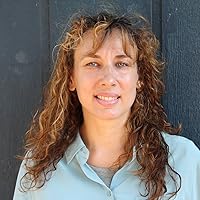
Velma Wallis (born 1960) is a Gwich'in Athabascan Indian and bestselling U.S. novelist. Her work has been translated into 17 languages.
She was born and raised in a remote Alaskan village near Fort Yukon, approximately 200 km north-east of Fairbanks. This location could be accessed only by riverboat, airplane, snowmobile or dogsled. Velma grew up among twelve siblings. Her father died when she was thirteen years old, and she stayed out of school to help her mother with the household. (She later went on to receive her GED diploma, which is a High School equivalent.)
About twelve miles away from the village, her father had once built a small cabin in the wilderness. He had been an active hunter and trapper. Some time after his death Velma surprised her family and friends by leaving home and living in the cabin for some years. She perfected her trapping, fishing and hunting skills and lived on what she could provide for herself. At one point her mother joined her during the summer to teach her more of the traditional skills needed to survive. In this area, where the Porcupine River flows into the Yukon River, Velma Wallis lived an independent lifestyle. These experiences led directly to her first book, Two Old Women, which astonished her publisher by selling 1.5 million copies worldwide.
Velma Wallis, who has three daughters and a son, now divides her time between Fairbanks and Fort Yukon.
In this book, Velma Wallis tells a difficult story with grace. It helped me look at my story through a different lens. Sometimes lessons come after enough time and distance allows you to see clearly. I grew up as the white kid, in an Alaska Native village, and proximity to the culture did not give me great understanding of that culture - at least not then. Time, distance, maturity, and now returning to these roots as a curious outsider has allowed me to appreciate the beauty of the Native culture, the tragedy of the past, and the hope for the future. The author describes 2 questions she is often asked that leave her dumbfounded. I used to silently ask these same questions, more or less. "Why don't you Native people forget the past and move on?" And the other, "Why can't you Native people drink normally like us white people?" Between this book, and Harold Napoleon's landmark essay describing 'The Great Death,' I realize how naive and ignorant these questions are. And while I have no better answers for how to move forward - and it isn't for me to move forward as I am merely an outsider here - I have great respect for the Native community that is making their way, and it is an honor to be witness to to it.
Read this again, for the second time for a book-club up here in the village. And, of course, as with all second readings of good books, got more from it the second time, than the first.
Wallis's honesty and real portrayal of Native Alaskan village life and the isolation, and dysfunction that goes with it. Her straight-forward and insightful description of growing up and surviving in a small village, as well as the cultural shock of being sent to the the lower 48 for school, are beautifully and movingly told.
As a teacher in a Native bush village, I've seen most of the same trials and troubles for many of my students and their families. This should be a must-read for anyone trying to understand Native culture in any part of the United States.
Velma Wallis is truly a treasure. If you haven't already read any of her other books, I would recommend Two Old Women and her other book, Bird Woman and (can't remember the rest of the title.) They are retellings of G'wichin legends and are beautifully written.
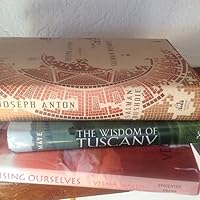
What is life like for a Native girl growing up near the Yukon River? Hard, very hard. In this book, Velma Wallis, who has written fiction based on her people's legends, tells of her life as one of 13 children in a Gwitch'in family. The Gwitch'in are an Athabaskan tribe that is coping with combining subsistence fishing, hunting, and trapping with new ways of trying to earn a living. Like other Alaskan tribes, they were forced to accept money, limited land, and adjustment to running their tribe like a corporation in exchange for unlimited land. That "agreement" with the federal government happened in 1972. The government tried to prevent the sale of alcohol to Alaskan Natives, but was unsuccessful. Under the stress of the changing world, many Natives, including Wallis's parents, fell into alcoholism. Raising Ourselves is the book's title because Velma and her siblings had to do just that because of her parents' alcoholism. Her mother sometimes emerged from alcoholism, but her father never did. Velma tried to learn to trap in an isolated cabin to escape that kind of life, and tried to persuade her mother to do the same. One of her brothers tried to lead their tribe in community building. This is a powerful book that shows how Native people must deal with overwhelming forces to build a new life.
I'm a high school student living in Utqiaġvik, Alaska and I read this book as part of an Iñupiaq Literature class. The book Raising Ourselves is a story about a young girl named Velma Wallis who is growing up in Fort Yukon, Alaska with her parents and twelve siblings. Velma's story talks about challenges in her life, growing up with her father Pete and her mother Mae as alchoholics. I'm glad I read this book because it was very inspiring to see how a young girl and her siblings survived a difficult childhood. The book Raising Ourselves is very heart felt and I would reccomend people who have been through these kind of difficulties in life to read it to realize that it is never to late to change your life and it is okay to be different from others.
So this was a deeply sad book of growing up poor, struggling, being one of 13 kids with alcoholic parents struggling to hold onto the tatter remains of tradition as it falls apart for them. Moving book.
Though I want to know more about this woman and her story and if she's doing OK.
I like some of the way that this author presents a window into her world and life. I appreciate the glance of perspective that she offers me into a place that I had not considered closely enough in my time up here in Alaska to this point. On the other hand, I pull back a bit from such heavy compliments when she writes such negative and hurtful things in the flippant way that she does about her parent's issues with alcohol. I am sure that her way to referring to the problem comes from years of dealing with this issue within herself, but the way that she writes about this serious issue seems tainted by those years of poisoned abuse and sorrow to the point where only bitterness and resentment are able to bubble out of the surface of her memory of those times. Her story is full of sadness and frustration, and in a way I feel responsible as a representative of my culture reading her accounts. Yet, on the other hand I know that all I can do as a reader is listen to her story and try to glean what I can from her words.
A powerful Native voice telling her own tale after sharing her traditional tales. Worth reading to better understand her experience as it relates to the challenges faced by contemporary Native communities.
My only problem is that the structure of Wallis' narrative could've used the guidance of a gifted editor, someone who would've helped Wallis tell her tale more powerfully.
One of my favorite authors, Velma Wallis takes us on a journey with her through the telling of her adolescence through her young adulthood of growing up in Fort Yukon in northern Alaska. She was caught between the worlds of being native Gwich’in and being taught by the state to leave that behind and live like the white people. It’s heartbreaking to hear the hardships put onto indigenous people by the white man. I’m grateful Velma shared her personal story, the stories of her family and native people with the world.
Such an interesting glimpse into native nations an drug abuse and alcoholism I did not know much about and thought of most of it as a bad stereotype before learning more about it.
I'm a student who lives in Barrow, Alaska and I'm a senior in high school. I read this book because it caught my attention by the title. Raising Ourselves is about a woman who grew up with ups and downs but still overcomes her challenges. I read it because it relates to me because I am an Alaska Native. The best personal connection I made with the book was when Velma was told stories by the elders. I was told stories before when I was younger. I also relate to Velma because she grew up with ups and downs. Velma is a strong person and I know what it is like to live in a environment with people drinking as I experienced that when I was younger.
This an interesting look at a child (the author) growing up in a difficult and often challenging culture and environment. I felt sorry for the children, as I do with any child who suffers from abuse and/or neglect. However, it was interesting to see how each child was affected differently. The author was able to take her early experiences and learn from them, becoming independent at a very young age.
I always enjoy learning about different cultures, and that is what I most liked about this book. The author offers an insightful look into the dynamics of her family and of the local community during that time period.
I first read "Two Old Women" and loved it so much I shared it with others. When I learned the author, Velma Wallis, had written a biography, I wanted to read it as well. The connection between the two books is meaningful, as it told of Velma's escape to the forest and mastery of traditional skills and survival that opened the way for her to break free of the destructive patterns of dysfunction that engulfed her family and community. She could also bond, at last, with her often-drunk mother, who was able to pass down to her the legends and ways of the Gwich'in peoples.
Growing up, Velma and her 14 siblings (two of her brothers died) were, indeed, forced to raise themselves, as their parents were overwhelmed and the resources were scant in their native village near Fort Yukon, Alaska. Wallis is sometimes brutally honest in her retelling, including her own shameful actions and attitudes. On the family tree, she fell between her 9 older brothers and sisters, and her 5 younger siblings. She is especially close to and supported by her sensitive but capable brother Barry.
The story begins with her birth in 1960 and her earliest memories in the family's 2-room log cabin and hardscrabble existence. Because Velma is headstrong, she is sent to various relatives to be "tamed". Her Grandmother, Martha "Itchoo" and Aunt Nina give her affection and direction in her early years missing from her own parents.
The telling of her story is simple, linear and straight-forward. Her alcoholic father dies and the food that he brought in by hunting no longer provides sustenance and, as their mother goes into a deep depression, she starts to disappear as her drinking increases. Then, literally, the children are left on their own, adrift in a world of despair. "The 1970s were a time when everyone in Fort Yukon seemed to be drinking. A whole generation of us spent years with no concept of rules, discipline or order. Nor did we feel safe at any time of day." After great struggle, with her children's support, their mother attains sobriety and works as a janitor until her much-abused body begins failing her. "Just as a war always has an aftermath, years of addiction are followed by an aftermath, too... Where she had been drunk and oblivious to the fact that we had grown up, we had been sober and oblivious to the fact that we needed to grow up. Children of alcoholics are stunted mentally, emotionally, and spiritually along with the addicted person. We thought Mom was the one with the problem. But after she sobered up, we had to begin the same process of gaining sobriety. We discovered that there was no more room for sickness or unhealthy thoughts."
The scenes where she describes the Bully and the gangs that tormented her are painfully realistic and her experiences in their school are heart-wrenching: "My first experiences with schoolteachers were not much better. In first and second grade, my teachers were women who were disciplinarians and took it upon themselves to whip us anytime we so much looked at them the wrong way... Once, when my first-grade teacher paddled my behind with a Ping-Pong paddle, I laughed at the foolishness of it. She was a frail thing, in high heels and a skirt, who wore herself out spanking a bunch of us, and it was obvious she was getting tired. When at last she started in on me, I started to giggle. She became so incensed that she threw me into the closet for an hour. Already in the closet was a boy who stank from lack of washing. The other kids sniggered to think of me in the closet with the boy they called "Flower" after the skunk in Walt Disney's "Bambi". He did have a powerful smell, but more than that I remember peeking out of the cracks in the closet door and thinking that my teacher was a witch. My first-grade mind conjured up methods of exposing her to be beheaded for her evil ways. My second-grade teacher was a devil in disguise. She and I locked horns the minute we met... I managed to keep a low profile that year, but nonetheless, the teacher held me back for a couple of weeks the following fall. Somehow she felt I would benefit from being humiliated. The day she graduated me from the second grade to third in mid-semester, she made me push my desk all the way down the hallway to the third-grade classroom while my peers called me a dummy. The teacher did nothing to stop the jeers as I pushed my heavy desk. I was well-acquainted with feelings of rebellion and hatred toward educators when I met my third-grade teacher. She would be the one to open doors in my mind and to restore some of my self-esteem. Miss McMullin was a black woman. She wore musky perfume, pearly necklaces, and colorful muslin, satin and embroidered outfits with coordinated shoes to match. In contrast to our mothers... Miss McMullin seemed filled with patience, love and humor. We gravitated to her. Her accepting nature made us better people. She healed my otherwise tattered soul."
Throughout this biography, the balance seems a lot like this: 2/3 negative experience and hardship, but then comes 1/3 positive and VICTORY! Velma's spirit is tested again and again, but she is much more than a survivor- She's a winner, in the end, able to lift herself out of the muck and pioneer a path for others as well. By publishing her "Two Old Women" book , a prize-winner translated into 17 languages, she `restored some of the value and dignity of her traditional culture. Through her broader exposure to the world, she becomes clear-eyed about the challenge of healing her people and helping them transition to a healthier, brighter tomorrow.
Velma Wallis was born in 1960. She grew up during the years that Alaskan Indians were transitioning to the new life presented (?or forced) by white teachers, traders, and missionaries. Their lives changed from living off the land - chopping wood, hauling water from the river, hunting moose, catching salmon, taking care of the dogs - to one of being forced to use a new language, a new religion, getting government checks, and introduction to alcohol. Ms. Wallis gives us pause to think about the value of the old and the new.
A narrative ethnographic autobiography. Velma Wallis' life growing up in Fort Yukon, Alaska in the 60s & 70s chronicles the beginnings of the welfare system in Native Alaska-and the concurrent loss of traditional culture as older vllagers die off. A very important read for anyone unfamiliar with the atrocities of the "Westernization" of America's native peoples. Especially enlightening for teens. Valma is a likable, if sad, storyteller.
I read this book because I had read the book 2 women and LOVED that one and my friend told me to.This book is a realistic account of a village Gwin'ch family growing up in Fort Yukon Alaska. The story describes how only generations earlier the people had lived off the land and were seemingly healthy. The arrival of religion and white people truly did a disservice to these Native Alaskan villages
This IS a life story, it IS a sad tale & the native Alaskans ARE egregiously affected by the forthcoming technological & societal advances; however, the author leaves out depth, and actual intrigue that must have existed through those hardships. Raising Ourselves reads like a short version diary with all of the demands & questioning of existence and self-reflection left out.
I really enjoyed this book and the insights into village life in Alaska at a time of transition. There were a few editing errors and the story was slightly random. I think a better editor would have helped a lot, but the story and information itself was really interesting and a good read!
This is a story that is very sad and painful, but filled with hope throughout. It is the story of the 60s, a woman growing up in a log cabin in Alaska.
This is a wonderful book showing the modern day life of a Gwich'in woman. Tells of the hardships and wonders of growing up in a rapidly changing culture and world.
In ‘Raising Ourselves’ Velma Wallis peels back the curtain of snow, fur and time and invites the reader to witness her childhood years spent in the rural Alaskan village of Fort Yukon. She writes of the endless games she and her 12 siblings played late into those summer nights where the sun never seemed to set. She relives the winter she – as a teen - spent on her own in the woods of her family’s trapping grounds, reconnecting with nature and her heritage.
She infuses her story, with the history of others in her family. Her parents, grandparents, cousins….and through their shared experiences she weaves together the darknesses that can so often be part of rural Alaskan life. Nightmares that came about almost entirely due to the white man’s appearance in Alaska Native life. The deconstruction – if not flat-out destruction - of their culture and beliefs, the forced separation of children from parents, the introduction of alcohol which has led to far too many early graves; not to mention the emotional, psychological and physical damage of alcoholism on an individual and those who love them.
This story is bursting with the beauty of Alaska and the human heart, but it also filled with (justifiable) anger and a raw pain. I do recommend.
I am a junior in high school in Barrow, Alaska. I read this book because I had read and really liked Velma Wallace's book, "Two Old Women" and wanted to know more about her. I was interested in the fact that she had many siblings and wanted to know what her life was like in the 1960s. This book is a good book to understand more about how some of the Alaska Natives went through changes that happened when the missionaries came and Alaska became part of the United States. It gave a part of history that happened near the 1940s to near 1980s with the Natives and Alaska. It also gave an outlook of a lifestyle of alcoholics and living with many siblings and the memories of Velma Wallis. This book helped me understand why we have the things we have and how things have changed, like how the traditions have sort of faded. I am glad that Velma Wallis wrote this book because I I found it interesting and I really connected to the things she shared.
One of the best books I have ever read. Velma Wallis was a strong Alaskan woman who faced many struggles growing up where the missionaries at her church sneered at her, the bullies chased her and her friends, and there was a perpetual sense of being in an outsider in a world that was meant to be free to play in bliss. She explains her culture with ease and grace; highlighting particularly the gritty truth of Alaska's dark colonial history. Her village was swarmed with alcoholism. However, through it all she had her mother's stories; the stories gave her strength. At some point, in a harrowing moment, she realizes that in all those westerns she saw growing up, they got a lot wrong. She realized it was better to be "Indian" than a "Cowboy" and that to be Gwich'in did not mean pain or ridicule at all but a greatness. I wish I could have met her to tell her what a beautiful impact she has had on my life and my academic career.