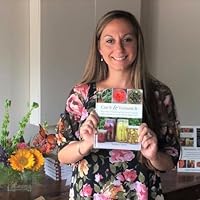
Recipes in this helpful, full color book include strawberry chutney, the perfect garlic dill pickle, spring onion kimchi, cinnamon-honey apple butter, and more!
Welcome to the world of produce preservation. In Can It & Ferment It , blogger and Certified Master Food Preserver Stephanie Thurow brings the canning and fermenting communities together by offering recipes that work for both canning and fermenting. From a first-timer to the advanced preservationist, Can It & Ferment It shows canners and fermenters alike how they can have the best of both worlds. Recipes
Stephanie explains the differences between the canning and fermentation processes, emphasizes the importance of using local and organic produce, describes canning and fermenting terminology and the supplies needed for both methods, and offers more than seventy-five fun and easy recipes for every season. Readers will learn how to preserve each fruit or vegetable in two different ways; each can be enjoyed water bath–canned or as a healthy, probiotic-rich ferment.
Stephanie Thurow is a Certified Master Food Preserver, food preservation instructor, Master Gardener Volunteer, freelance writer and the author of three best-selling books, Can It & Ferment It ('17) - 2nd Edition (released 2020), WECK Small Batch Preserving (2018) and WECK Home Preserving (2020). Stephanie's 4th book, Small-Scale Homesteading, is set to release February 2023. Pre-order now!
Stephanie first learned the kitchen craft of water bath canning in the mid-2000's. What initially started as a mission to make the perfect garlic dill pickle quickly morphed into a way of life. She finds great pride in canning and fermenting fresh, organic produce for year-round enjoyment. She and her family also tap their maple trees, raise laying hens, grow hundreds of pounds of fresh produce each year, plus more, and do it all from their urban homestead.
Thurow finds great joy in teaching others. Her non-intimidating approach to cooking and preserving from scratch puts a novice at ease and her delicious recipes are ones that even a seasoned preservationist can appreciate and enjoy.
In addition to writing, she also owns a hand-stamped jewelry business. Stephanie was born and raised in Minnesota and resides in Minneapolis, MN.
I am gaga over this book. Time to ferment all the things. I've got the pumpkin kvass going and I'll I've got tons of recipes earmarked for when my fermentation vessels become available (I need more!)
I have been canning things for more years than I care to discuss but fermenting is relatively new to me. Sauerkraut is about the extent of my experience and I do that in a whomping big crock. That is what I like so much about this cookbook – it will allow me to experiment with small batches so that if I mess up I’m not doing it with a big whomping crock of food.
The book opens with an overview of both processes and the equipment you need for each. They are written in a simple way that doesn’t make either intimidating. The book only delves into water bath canning, not pressure canning so keep that in mind. It deals with pickles, jams and relishes.
The recipes follow by season starting with Spring. Options are given for both the fruits and vegetables that are commonly available at the time of year. Of course depending upon where you live, your season might be bit different. For example, for most people strawberry season comes in April or May but I don’t see my berries until June.
The recipes are well written and easy to follow. You are offered recipes for either method for each fruit or vegetable. I’m interested in trying several for fermenting such as cranberries in honey, and green tomato salsa.
I am glad I have added this cookbook to my library for dealing with the harvest. I know it will give me new ideas for all of the produce the hubby brings me.
Stephanie Thurow briefly explains how she got into canning and fermenting food, then explains the differences between canning and fermenting (and how they both preserve food). She also gives an overview of waterbath canning, but as I say with every canning cookbook - please take a class or learn from someone experienced like Thurow did - don't try to can for the first time just based on a book. It is easier than you think, but taking a class really equips you to do this right. The rest of the book is recipes divided into seasons - Spring, Summer, and Fall/Winter because it's best to can whatever is in season and is freshest. There were definitely a few recipes I'd like to try and I really liked that the recipes are designed for small batches so you know if you like something before committing to a huge batch.
Wow! What a great little cookbook! I've been working on getting more fermented foods into my diet the past year or two but find the quality of store bought ones can be pretty inconsistent. Recently I had an opportunity to eat some pickles that Stephanie (this author) canned (or fermented?) and they were so crunchy and perfect that I'm now committed to action and starting to do my own! I love that the recipes in the book are small batch as I didn't need dozens of quarts of most things (which is what I previously associated with canning.) The recipes are simple, consistent, and I suspect will be delicious! Can't wait to get started!
Lots of great ideas, and I love the pairing of canned recipes with fermented ones. I haven't tried any yet, and the recipe names get a little repetitive.
Love this book! It has come in so handy this summer as my garden produce is harvested. I grab the book and flip through to find a new way to preserve the things we grow. I love that I can find options for both canning and fermenting right in the same book, makes my life so much easier. Highly recommend this book to all gardeners, preserves and food lovers.
A great book for learning to can or ferment and also if you are experienced but looking for new recipes. I love the kimchee- the best I have ever had. My husband says the pickles are his very favorite- crisp and flavorful. Lots of recipes I would never have thought of and creative ways to use produce from your farmers market. It's nice too that she includes small batch recipes- I don't want to try a new recipe and make 10 quarts before I know if I like it or not.
I've gotten into fermenting vegetables, and wanted ideas and inspiration. I borrowed 3 different books on fermenting from our library system and when I got to the end of this one I was like, "I am buying this one!" It's simple and straightforward, and reads like a recipe book rather than a tome on fermenting. It calls for measuring by volume (tablespoon, cups, etc), which I prefer. Plus it has beautiful pictures with every recipe. While I wasn't looking for canning recipes, some of them look delicious and would be useful for a gardener who ran out of fridge space for ferments. 😉 You get the full line of all things pickled and fermented fruits and vegetables here.
I bought this book went it first came out on a preorder from Amazon. I have been so happy with this book that I have it with me at all times...I share with others...and we have created numerous recipes from the book. WORTH IT!!!! It is totally awesome and has some of the best recipes on fermenting foods on the market. Love the stories that go with the recipes and some of the places that inspired the recipes.
I loved how she learned the skill from a relative in Wisconsin. Being a Wisconsinite this makes me proud! Most of the recipes are ones I would try. Some are basic ones I already make, but are great for those first trying canning or fermenting. The step-by-step pictures are also wonderful and her tips and tricks are very helpful!
I was looking for more of a "why fermentation works" book, to understand enough about the process that I wouldn't have any more failures. This is a cute recipe book, but little more than that. There is also a major error: not all kosher salt is free of additives. You want pure sodium chloride - no anti-caking agents added. Check the box before you buy salt for pickling/fermenting.
There were some interesting recipes in the book but I was frustrated that the ingredients were not by weight but by number (one cabbage or three bunches of parsley, for example). Fruits and vegetables vary so much in size, especially when you grow your own that these amounts are not very helpful. I will try some of the recipes though, and enjoyed getting ideas.
Thurow does small batch fermenting and canning making experimenting doable. Several recipes of old and new to try. Good beginning explanations and equipment listing. If you've limited yourself to sauerkraut, give one of her other recipes a try.
Excellent recipes, delicious and easy to follow with seasonally appropriate combinations and easy-to-grow/ find at the market ingredients. I especially loved that each recipe has a whole section to make your own notes. This lady knows what’s up!
I liked how this book included and canning and fermenting version for each of the recipes. Will definitely use this book if I ever finally get into fermenting.
Very simple and up to date. I want to try many of these recipes and will keep this book handy. Ms. Thurow has boosted my confidence in my canning skills; now I want to try fermenting.
I purchased this book at Tractor Supply in WNY. I was not disappointed.