A literary genre-bending novel full of heart. Cult comic book creator Debbie Reynolds Biondi has been riding the success of her Cold War era inspired superhero series Sputnik Chick Girl with No Past for more than 25 years. But with the comic book losing fans and Debbie struggling to come up with new plot lines for her badass mutant-killing heroine she decides to finally tell Sputnik Chick's origin story. Debbie's never had to make anything up before and she isn't starting now. Sputnik Chick is based on Debbie's own life in an alternate timeline called Atomic Mean Time. As a teenager growing up in Shipman's Corners, a Rust Belt town voted by Popular Science magazine as most likely to be nuked, she was recruited by a self-proclaimed time traveller to collapse Atomic Mean Time before an all-out nuclear war grotesquely altered humanity. In trying to save the world Debbie risked obliterating everyone she'd ever loved as well as her own past in the process. Or so she believes. Present-day Debbie is addicted to lorazepam and dirty wet martinis making her an unreliable narrator at best.
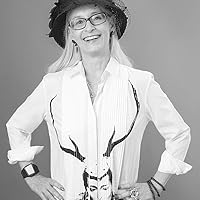
Growing up in an immigrant neighbourhood in Canada's Niagara region, Terri Favro was always told that "if there's a nuclear war, we'll be the first to go", due to the proximity of the Niagara hydroelectric station. Her earliest influences were superhero comics, Warner Brothers cartoons, robots, MAD magazine, Narnia, Middle Earth, her Nonno’s deliciously violent Italian fairytales and the Atomic Bomb. Her life’s ambition was to write satirical comics while living under a lunar geodesic dome.
Not much has changed. Terri is now the author of three novels, a pop-science book about robots, and comic books she creates with her visual artist husband. She’s fond of red wine, cycling, cats, Sinatra standards from the ‘50s and her sons.
Although the lunar dome thing didn’t pan out, Terri enjoys stargazing in east end Toronto whilst sipping a wet dirty martini. Or two.
Terri is currently completing edits to "The Sisters Sputnik", the sequel to her critically acclaimed speculative fiction novel "Sputnik's Children" (ECW ) which was longlisted for 2020 CBC Canada Reads and chosen as one of the Globe & Mail's 100 Best Books of 2017, CBC Books Top 10 Canadian Fiction Books of 2017, and Quill & Quire Best Books of 2017.
First impressions upon finishing: What a pleasant surprise this book was! Review forthcoming.
Revieiw originally posted 8 April 2017 at Falling Letters. I received a copy from the publisher in exchange for my honest review.
Alternate timelines + cult comic books = say no more. (Though I am generally not a fan of unreliable narrators, that turned out to be less of a transgression against my personal preferences than I braced myself for.) Sputnik’s Children combines alternate history and literary character building to tell a creative and entertaining story.
I wasn’t quite sure how to interpret the above summary, particularly this statement: “Sputnik Chick is based on Debbie’s own life in an alternate timeline called Atomic Mean Time”. Is Debbie imagining this alternate timeline or did she actually believe she lived it? The latter turns out to be true. To clarify, Debbie currently lives in ‘the real world’ of 2011. She’s considering writing the origin story of her cult comic book hero, Sputnik Chick. Debbie believes she (herself, Debbie) grew up in Atomic Mean Time (AMT), an alternate universe similar to ours, but that’s stuck in Cold War time with a constant threat of nuclear bombings and World War III. Debbie’s youth in this other timeline inspires her Sputnik Chick stories. The bulk of the book is Debbie’s first person narration of her time in AMT, with occasional chapters of third person narration in the ‘real world’ leading up to the present. The question is, did Debbie actually live through AMT or is this just a concocted story?
At its core, Sputnik’s Children may be described as a coming of age novel. The majority of the story takes place during Debbie’s teen years, beginning when she’s 12 and continuing to mid-twenties. Debbie has to deal with a maturing body, unwanted sexual attention, and her first romantic relationship. This relationship is a significant component of Debbie’s life in AMT. Debbie is White and her boyfriend John Kendall is Black. This relationship creates tension from societal expectations in their small town of the 1970s.
What sets Sputnik’s Children aside from other small town stories is the science fiction setting of AMT. Debbie has to contend with the fact that her community expects to be destroyed at any moment by an atomic bomb. Favro establishes the AMT world in the first few pages, laying out the core differences between Atomic Mean Time and Earth Standard Time (the ‘real world’). This gives the reader a chance to focus on character and plot right away, without having to spend too much effort on becoming oriented with the setting. AMT differs in slight ways from the real world, resulting in an alternate universe where the Cold War only intensified in the seventies and corporations manufacturing weapons rule the day. (I do love a shadowy overseer organization.)
The plot of the story comes in the form of a time-travelling man from the future, who wants to prevent World III. He believes Debbie is the key to doing that. Debbie herself only time travels once, with seemingly little impact on the plot (aside from the personal changes she notices, having skipped a few years into puberty).
The Bottom Line:Sputnik’s Children is a character-based take on science fiction that blends comics, the Atomic Age, the seventies, and interracial romance into one compelling tale. The question of whether Debbie has made everything up or actually lived it is almost irrelevant – you’ll enjoy the story either way.
Debbie Biondi, creator of the long-running comic book series Sputnik Chick: Girl With No Past, is at a comic book convention, feeling a certain level of bemusement and hostility toward Sputnik Chick fans who keep asking her about Sputnik Chick’s origin story. Debbie’s always avoided the origin story, for the simple reason that she is Sputnik Chick. (This is not a spoiler, it’s right there in the book description.)
Back in Shipman’s Corners, the depressed grimy burg where Debbie was born, life goes on in a typical 1950s/60s way, except for the fact that the looming threat of global thermonuclear war is even more intense than it was in our time. Debbie became Sputnik Chick as a teenage girl, recruited by a self-styled time traveler who says she’s the only one who can collapse Atomic Mean Time into Earth Standard Time to avoid the nuclear destruction of the planet. (This is also in the book description.)
The book is divided into roughly three parts. The first and third parts are Debbie in the present (if we can call it that), while the second part is the origin story. The book starts out with a lot of snarky humor and intriguing concepts. Debbie is a martini-swilling horndog with a bad attitude, and that’s a lot of fun. The pace becomes more deliberate and the tone more somber for the origin story.
The origin story explores the normal angst of teenage life (especially the love/sex elements), but since it takes place in Atomic Mean Time, which is a parallel universe to our universe, you also get a clever alternative history of the early Cold War era. And Debbie has the experience of comparing her life after becoming Sputnik Girl to what it was and might have been.
In addition to being a mind-bending tale of alternative history and time travel, this is the story of the loneliness of a superhero, one who has to close the door on her past life and its options for the greater good.
This is an entertaining, evocative and thought-provoking novel, and the female protagonist is welcome for this genre. I felt the origin story part of the book bogged down a bit in parts, but that may well be just because I’m an AARP-age person and teenage angst isn’t of that much interest to me anymore.
I was really fortunate to read an ARC of this book and I love it! I loved the arty elements but all in all, it's a great story. I always enjoy Terri Favro's insights and observations (which are beautifully written from the characters' perspectives, without any hint of author intrusion). Highly original, Favro's energetic and crisp style are a treat.
Nothing would be permitted to get in the way of our world's highly profitable march towards self-destruction. p16
Science fiction and fantasy have a long tradition of slipping in the truth about the way it is, no matter the unlikely scenario. In fact, it could be argued that most, maybe not all, of the best sci fi and fantasy is social commentary in its core. Saved from dogmatism by the supernatural, perhaps these sidelined genres are more effective than the sober commentaries of analysts and newscasters in reaching the widest audience.
I wonder if you should go beyond personal trauma and explore more universal themes? p117
I reminded myself that we were all going to be dead soon anyway, when they dropped the Bomb. What did it matter who did what to whom? p204
Actually, TF has a talent for ricocheting from the explicit to the ambiguous; from acute assessment to incomprehensible. Patience is required, and suspension of logic. Debbie Biondi, whether she exists or not, is like no other superhero with a quick change act. Even she is uncertain of the likelihood of the events that changed the world in which which she plays a pivotal role. But even as she is so obviously tagged as an unreliable narrator, she is at heart a truthsayer with the courage to trust her intuition and to face her own truth, which includes her confusion.
I searched in my heart for happiness, and when I didn't find it, I decided to act happy until I felt happy. p284
Thanks to Kelsi whose 5 stars encouraged me to steam through my confusion until I was hooked. Considering the fact that there is nothing predictable here except for the confusion of alternate time lines, this meant giving up trying to create logic and just enjoying the mayhem.
"So much for saving the planet...I guess scaring the shit out of everyone and breaking our parents hearts was all for nothing." "It's not over yet...." p288
I'm lucky enough to be able to keep coming back to this book, as I hope you'll do too when you read it. Seriously, I can't let it go! I've almost finished my second read and while I have questions, they're more of a curious nature, and my enthusiasm reminds me of when I read as a kid.
This novel is fascinating. The writing is captivating. It's funny, relatable even while incorporating sci-fi (it's a time-bendy book!), clever, wondrous, inventive. I marvelled at Favro's ability to imagine things she's not experienced and which I can tell hold a sense of wonder for her too.
There's just so much to love about this novel: the characters, the narrative voice, the creativity, the evocative settings, the time travel (who doesn't love a good mind-fuck? Because when I say bendy, I mean it), the difference between Earth Standard Time and Atomic Mean Time, the creative and also compassionate way Favro handles the archetypal sacrificial lamb's coming of age and her adulthood.
The story of the ultimate sacrifice of one's life for the greater good has always thrown me into chaos. What would I do?? I'd like to think I'd be the heroine, but if you were faced with the possibility of ceasing to exist and losing everything you know and love, and if changing history meant also causing potential disaster, would you go ahead anyway or would you let nature run its course??
This book is begging to be made into a movie. I can't wait to see it.
Sputnk's Children drew me in because of the striking cover design, and I stayed for the excellent prose and enthralling narrative. The book is about Debbie Biondi, creator of the popular Sputnik Chick comics. However, despite writing them for years and years, she's never released an origin story. As her money starts to dwindle and Sputnik Chick's popularity declines, Biondi considers whether it's time to tell that particular story. Sputnik Chick's origin story is her own, and is she ready to think back on those memories again?
When Debbie was a child, she lived in a parallel world that was doomed to destroy itself in a nuclear holocaust. From the time she was small, two men kept popping in and out of her life, trying to convince her that she was the only one who would be able to save everyone. The words unsettled her. What was a 12 year old supposed to do with that kind of information as her world kept changing in increasingly distressing ways? Did she really get flashed a year and a half into her own future? Or was that just the trauma of teenagerhood that made her forget things? Why can she never settle into a feeling of safety and contentment? Is it more than just their troubling times?
The narrative flips back and forth between Debbie's reflections in the future with the story of her past. It's a jarring exchange, but the story itself is unnerving and strange, so the effect is quite welcome. There is uncertainty in the narrative. Is Debbie completely mad? Do we trust the word of a woman deep in the throes of addiction, who refuses to stay in one place, hopping from hotel room to hotel room, convinced that she must maintain the exact same weight or the world will destroy her? It's easy to cast doubt on her story, but it's also easy to believe it as well. There's something so sincere and authentic about her childhood memories that even when things get strange, you can't help but believe that these intensely impossible things must have actually happened to her.
The prose flows beautifully. While I like my pulp and beach appropriate thrillers, Favro tells a time travel tale with a more literary approach, yet still produces an engaging and very readable book. It's focused, satisfying, and wonderfully strange. Definitely recommend!
To me, this is a difficult book to review. In the last half or so, the main character (who, I have to imagine, is based substantially on the author) talks bluntly about her eating disorder, chemical dependencies, sexual assault, and other ghastly, traumatic events. As a result, this part of the book is often gripping and harrowing, as we follow a mostly likable character through her believable and praiseworthy attempts to set her life straight.
But that's only the second half of the book - and even then, the second half also suffers from many of the problems that plague the first. The primary setting of the story (an alternate timeline) often feels imprecisely defined or somehow not fully finished; to me, it was something halfway between The Oblongs and Blade Runner, which is a VERY weird pair of things to be stuck halfway between. Similarly, the main plot conceit, which promises to reconcile the alternate history with the real one, often comes off as threadbare or incoherent - and that's AFTER you suspend your disbelief about the totally off-the-wall "science" involved. All in all, these flaws combine to make the book very hard to read for a while and then, even after it picks up, very hard to understand or really get excited about.
The problem, I think, is this: ultimately, the skewed, alternate version of history doesn't have anything in particular to do with the protagonist's emotional story. I credit Favro for having the twisted imagination to come up with the war-saturated parallel universe that she did (the most memorable instance for me was the lyric "tie a yellow ribbon 'round pokey old me," an eerily anodyne and poppy transmutation of a song that we know for its associations with the human costs of war), but her imagined universe ultimately means almost nothing in the context of the story that she's telling. The eating disorder, the chemical dependencies, the sexual assault - all of those things occur in the story in a direct, literal way, and none of them is directly related to (or directly resolved by) the parallel universe. For the most part, then, the alternate reality comes across as an empty curiosity, a shiny object that distracts both reader and (apparently) writer from what's really going on.
But with that having been said, I did enjoy the last, I dunno, hundred to hundred-and-fifty pages of the book. Again, once the main character begins to open up about herself and her struggles, the entire experience becomes a lot easier to relate to (and the random distractions become a lot easier to ignore and forgive). My best guess is that Favro felt like the whole thing should have kind of a punk aesthetic, such that chaos and randomness and sloppy edges would be a welcome part of the experience rather than distractions from it; going out on a limb even further, I wonder if her background in comics hasn't contributed to that aesthetic style. Whatever the case may be, though, I would argue that this novel doesn't use its disarray properly and that it would've been far better if it had been tighter and more focused.
So, I mean, I dunno whether to recommend the book or not. I'm not sure that you can appreciate the last half without reading the first half, but I'm also not sure that the strengths of the last half compensate for the book's many weaknesses. All I'll say is this: if you do decide to pick up this book, do so planning to be disappointed at first. That way, maybe the disappointment won't be too bad and it'll be easier for you to get to the good part.
(I received this book for free through this site's giveaway program.)
This started and ended as something dark and weird and trippy, and as what I wanted to read (and, more narcissistically, something I would want to write).
And then there were two hundred and seventy-five pages in the middle of confused and self-loathing and poorly-written backstory that felt like filler and did serve a purpose but felt like they were serving a purpose for a completely different story that I had absolutely no interest in reading.
I wish you could give half-stars on here, because this is barely scraping by with two and a half stars. The beginning was great. The end was interesting. The concept was fucking fantastic. The characters had potential, and were diverse and when they weren't being hollow parodies of themselves (especially the women), were treated with respect, which was great, given that there were PoC and gay characters in the 1950s, 60s, and 70s. But the science was... terrible, just wrong; ill-researched and goofy as shit (and that's with the speculative time travel stuff entirely notwithstanding), which wouldn't bother me except that there seemed to be points where it wanted to be treated like hard or at least harder sci-fi, especially considering the effort Favro went in to getting all the politics right, and the dialogue and writing really really slipped at points to where it felt juvenile and naive, even at the points where the POV went back to the main character's youth; there were lots of, "No one does that/thinks that/talks that way," and that really shook me out of the story. On top of that, when shit got real, everyone was ignorant and no one was likeable (and I love an unlikeable character but these folks weren't just unlikeable, they were straight-up smackable), and for pages 200-300 I have to admit this is a real struggle bus. Finally - as it usually happens - the climax, which is to say the whole fucking point, comes with less than 50 pages left in the book, and then has an epilogue that last for about 30 pages so... not exactly giving points for balance here, either.
If you like Atomic Age fiction, give it a try. But if I knew when I picked it up what I know now, I don't think I would have given this more than a cursory glance.
Your universe is in peril and you have the ability to save it, but only if you give up your life as you know it and everyone you've ever known. Sounds like a premise of a science fiction story, but it's the reality for Debbie in Sputnik's Children by Terri Favro.
Debbie Biondi is the creator of the successful comic book series Sputnik Chick: A Girl With No Past. Readers are keenly interested in learning about Sputnik Chick's origin story after 25 years of Sputnik Chick's adventures, despite her being the "girl with no past." To reveal the origin story, Debbie has to reveal the unbelievable story of her childhood from the alternate timeline of Atomic Mean Time, as the comic books are a therapeutic way for Debbie to deal with the traumatic events of her past.
I was entertained by the fully realized alternate reality presented in the world of Atomic Meant Time and all the dystopian fears from the Cold War era. The time travel element of this story is a bit Whovian in nature with Debbie encountering the Traveller at various points in both of their lives, often with only one of them aware of the relevance of the other person. Hopping between Earth Standard Time and Atomic Mean Time to tell the story was captivating as a way to intersperse backstory with current narrative, although some of it was incorporated a bit roughly and could have used a bit more finesse to make it more seamless.
To be completely transparent, I will say I was the editor of this book. But it doesn't change the fact that I think it's nothing short of extraordinary. I still remember getting the manuscript from the agent while I was on vacation at a cottage, and I read it in two sittings, barely looking up from it. I was so in love with the book I called them the very next day and said I wanted to publish it. Now that it's out and garnering so many other great reviews, I'm thrilled to know I wasn't alone. This is a fantastic story about Debbie Biondi, a graphic novelist whose fans are clamouring for the origin story of Sputnik Chick, her kickass heroine who has come into our timeline from her original timeline—Atomic Mean Time—to save the world. But why won't Sputnik Chick's creator write her origin story? Because all of it is true, and Debbie has actually come from another timeline that looks remarkably like ours. I love this book so much.
The book only picks up in the last 15%. Most of the story revolves around Debbie who likes comics and goes on to be an author. It only moves along when she jumps into an alternate time line. This work was on a Canadian Broadcasting Corporation list of Canlit and I should have chosen an alternative.
What if the terror of the atomic age -assured mutual destruction via nuclear weapons- didn't cool off? That's one of the questions Favro seeks to explore in this creative, thought provoking novel of alternate realities.
"It started the way we’d always been told it would — with the whine of the Emergency Broadcast System signalling the beginning of the end of the world."
The novel is told through Debbie, a middle-aged artist of "Sputnik Girl," a very popular -though declining- comic book series. To rekindle interest from the general public and to appease devotees alike, Debbie decides to finally tell the origin story of "the girl with no past" who burst into the world in 1979. But it's not just the comic book heroine's back story, it's Debbie's life.
We're never really sure if the story of an alternate "Atomic" timeline, which Debbie saves by merging with our "Earth" timeline is from her imagination, a delusion, or reality. It's up to the reader to make determinations of how much to trust her. The question of the reliability of the narrator, and in fact the reliability of any of our memories is another of the main themes of the book. Along with ideas of duty, destiny, sacrifice, etc.
"...others would be constantly snipping and spinning the tattered threads of her memories into the fabric of accepted history. It’s amazing anyone trusts their own memories about anything, really.
A significant part of the novel is, at its heart, a coming of age story; complete with growing pains, changing viewpoints, and first loves. Just, you know, in a parallel universe where events like the Cuban Missile Crisis are a near constant. It's interesting to see what changes in this parallel world the author chose to highlight from products and holidays to world leaders.
I have no idea if any of the scientific theories presented for time and universe jumping have any credibility whatsoever. I love reading sci-fi, but usually more of the Hitchhiker's Guide than The Martian variety where focus is more on the characters and their interactions than on scientific detail. So I read this casually not giving much thought to the more sciencey aspects.
I most enjoyed the setting here, as it was fun peeking in on the idea of an Atomic parallel world. The characters fell a little short for me. I felt like they were well-rounded enough, but the emotional investment just wasn't there for me. I didn't particularly care for any of the characters or their relationships. The relationship between Debbie and Kendal in particular felt lacking. It's almost like we were just told and expected to just accept that they were in love with no evidence to see for ourselves.
The writing style was fun, perceptive, and even surprising at times, if not particularly effective in expressing emotion. I found descriptions of places or things to be particularly strong. For example, I love this passage in a resale shop:
"We made our way through an aisle piled so high with junk that we had to walk sideways, past a shelf crammed with noisy jewellery music boxes; it looked like a ballerina insane asylum with little mechanical dancers twirling and leaping to tinny versions of the Blue Danube and Swan Lake, all playing at the same time."
All in all I found this to be a rather enjoy book with a unique writing style and with interesting questions to ponder. The main issue holding me back from giving it a higher rating is the lack of connection I felt to the characters.
Disclaimer: I received a galley proof of this title from NeGalley in exchange for a fair review.
I wasn't really expecting great things from this story. I mean, a novel about comic books? Debbie Reynolds Biondi is a has-been graphic artist and comic book creator, the creator of Sputnik Chick. She needs an origin story for Sputnik Chick, so like the whole series, she bases the story on her own life. What follows is a crazy narrative of two parallel timelines: Atomic Mean Time and Earth Standard Time. Bleak landscapes, corporate abuse, and impending nuclear destruction are all saved by Debbie! The story is crazy and far-fetched, with recognizable historical characters and situations just slightly askew. Highly recommended for fans of the offbeat and creative.
Debbie Reynold's Biondi lives in a company town called Shipman's Corners and the company controls and manipulates all the inhabitants to maximize a profit that seems to depend on the reckless disregard for the safe disposal of nuclear waste. Many people in Shipman's Corners seem to have abnormalities either physical or perceptual. To keep people complicit with the environmental disaster brewing, the company produces a soothing wineish drink called 'Sparkling Sparrow' which lulls them into happiness. A time traveller appears several times in the novel finally convincing Debbie that she must save the world and all the people in it by moving it from Atomic Mean Time to Earth Standard Time.
Debbie is a perceptive and interesting character with intelligence and talent. In spite of her addictions and reckless drinking I tend to trust her version of events. Or maybe she is creating another comic book as she mentioned. One that describes the origin of her heroine.
I would have liked to read more about what she did in New York and Toronto once the shift took place.
Really loved this book and the premise of the girl with no past. Debbie has hopped into an alternate reality to save the world as she knows it and arrives with no past. The Sputnik Chick's origin story is begging to be told and it just might be the salvation Debbie needs. Blooming fabulous!
Debbie is a cult comic book artist and creator. Her series on the kick-ass heroine Sputnik Chick Girl, who fights crime in an alternative, eradiated NY, has had a steady fanbase for decades. However, Debbie has never told her character's back story...it turns out that her creation is based on Debbie's childhood in alternate timeline (Atomic Mean Time), a reality where the Cold War is turning warm and WWIII is just around the corner and only teenaged Debbie can save them all.
Despite all the alternate history and comic book-style driving action, essentially Sputnik’s Children is another coming-of-age-during-the-Cold-War tale complete with sweethearts and mental issues, puberty and sexism, a childhood both affected by and ignorant of larger human struggles and the events happening around the world.
It’s a fun read. Easy to follow with an excellent pace/flow. It was often hard to put the thing down as the story continued to pull me along without a moment of boredom or rest. The likeable characters (though unrealistically a product of 21st century liberal imagination with their level of diversity and understanding) and punchy writing helped. It was just a good one to get lost in. Just enough realism to relate to but just enough fantasy/sci-fi to get your imagination working. (I mean an alternate Cold War history is not exactly the newest trick in the book, but the comic book-style heroine thrown into the mix was refreshing and exciting.)
The ending was a little clunky with the author insisting on revisiting every character, even the minor ones, to mention where they ended up. (Sometimes people don’t realize that some things are left better unsaid.) And there were some leaps of faith that were a bit hard to swallow, like the explanations and methods used to save Atomic Mean Time which were described but not in enough detail to really make total sense.
Also, don’t expect many musings on the human condition. Like some examples of the medium the novel is constantly alluding to, the whole thing is really about the story and the action, the fun. Deeper meanings are secondary at best. Even so, the impact of the novel would’ve been greater if it was presented in comic book form or as a mixture between the drawn and written mediums or at least had some illustrations accompanying the author’s descriptions. It would’ve seemed appropriate and all those minor flaws would’ve easily been brushed away.
Maybe one day this story will be turned in to a comic book. (I would read the hell out of that thing.) It probably won’t, but a girl can dream, right?
Interesting concept. If you are into alternate realities or are a fan of the old Sliders Syfy series, you'll like this. I was thinking of looking up where to find Canusa until I realized it was the name of our northern neighbor in another dimension.
An intriguing novel dealing with a woman who come from an alternate universe and ends up woefully alone not unlike the old classic story "The Man Who Fell To Earth." Our heroine writes a cult comic book featuring "Sputnik Chick" with tab00-breaking sexuality, superpowers, and an unknown origin story. Maybe, just maybe, it's actually the author's true life story and she's just a less heroic version that really does have a mysterious background. Getting along in years, artistically challenged, and dissatisfied with a wandering lifestyle, she decides to fulfill her fan's desires and write the origin story of her character and maybe tell her own story. There's a parallel Earth she names "Atomic Standard Time" where the Cold War was more intense, long-lasting and maybe catastrophically ending. All the world is much more on a war footing, there's no effective peace or ecological movement, and it looks doomed except that some scientists may have found a way to skip universes. There's plenty of alternative history from pop culture to politics, but the story mainly focuses on the childhood and teenage years of Sputnik Chick and keeps you intrigued. Another more literary speculative fiction novel that's takes it's premise seriously and affectingly - not unlike "A Time-Traveler's Wife" or "Edward Tulane."
Read an Advance Reading Copy of Sputnik’s Children. A fresh take on parallel Earths and time travel science fiction sub-genres. Made me smile several times.
Debbie Reynolds Biondi is a comic book creator and writer who achieved fame for her superhero series "Sputnik Chick Girl with No Past." It's been 20+ years and much of Biondi's life is now attending conventions, signing autographs, and listening to fan after fan asking her to please tell them Sputnik Chick's backstory, while she simply wants to find some attractive guy and get laid without having to talk about comics.
But the comic world is struggling and Biondi has trouble coming up with new adventures for Sputnik Girl and finally relents to sharing her origins, which - not surprisingly - mirror Biondi's own strange origins. Sputnik/Biondi comes from an alternate universe. But in a slightly unusual twist, Biondi herself may be more of a superhero than her crime-fighting creation, having saved the entire human race but then relegated to anonymity and losing everything she's loved the most.
The book is very interesting and author Terri Favro's understated style carries a melancholy tone that is so appropriate to Biondi's plight (though we don't know that until much later in the book). But at times this melancholy appears to occur at the expense of story.
Although this is quite readable and will pull the reader in, what we have - aside from a story within a story - is a book that is 90% backstory. After being introduced to Biondi, we get to learn all about her (her backstory) - first through her creation, and then her own story. It's a fascinating way to read/tell a story.
The last ten percent of the book is the culmination of Biondi's story, but it stands out as being different enough - in story and in tone - from the rest of the book that it feels as though this was an action tale with too much back story to get to the climax. It was exciting, but it really was so different - much more of a fantasy than we'd had to that point. Though Favro tried to give us some hints (with one character in particular) we just didn't see the magic room and space/time hopping coming.
The fact that some of this feels like a story within a story within a story because Terri Favro is also a comic book writer, added just enough hint of autobiography to keep the reader guessing as to where the story would go.
There was a lot to like about this book, and I really want to read this again, now that I know where it is going, to hopefully better pick up on some of the (hopefully) clues in the book. I was caught up in the story and looked forward to seeing where it would go, but at the same time, once it was over I was left feeling unsatisfied.
Looking for a good book? Sputnik's Children is a fantasy novel by Terri Favro and takes a unique path to tell a complicated story, but it's left just a little too unresolved for full satisfaction.
I received a digital copy of this book from the publisher, through Netgalley, in exchange for an honest review.
What a trip! I'm glad that, like most of Canada, I was holed up from a storm that allowed me to pick this book up and not put it down until I finished.
This book was a page-turner that kept me on the edge of my seat, constantly wondering what was real, what was imagined, what was a story, and what would happen next. The similar-but-not-quite-familiar Atomic Standard Time and Canusa added an ominous overtone to the novel as you couldn't trust your own recollection to determine what global events would impact Debbie's life. I'd strongly recommend this book to sci-fi fans of all sorts looking for a thriller novel. Or, Welcome to Night Vale fans would also appreciate this book for its alternate atomic universe and the overall tone of the novel.
This book was on the long list of Canada Reads in 2020, so I also read it, asking myself "How does it bring Canada into Focus?"
A big player in the novel was the ShipCo business, manufacturing nuclear weapons and manipulating society by owning pretty much most of it, and polluting the environment without any repercussions (given the proximity to Niagra, the Superfund site "Love Canal" definitely crossed my mind at least once). Issues of womens rights, immigration, discrimination against people of colour, and labour rights also could be seen as issues raised by the book. The biggest Canadian issue we are facing today that could be explored though the book? The impact on industry in shaping the future (and destroying it). ShipCo is anti-labour, anti-environment (nuclear manufacturing creates jobs!), and supports anything that boosts its profits (i.e. nuclear war), regardless of the impact on people or the world at large. Sound familiar? ***
Engaging, intelligent, humourous, witty, creative and thought-provoking are all appropriate adjectives to describe Sputnik’s Children. Terri Favro’s tale of a comic book artist struggling to put into words her heroine’s origin story takes place in two alternative realities. In Atomic Mean Time, Robert Stanfield is the long-serving Prime Minister of Canada, Richard Nixon commits suicide and legendary disco Studio 54 in New York City is the epicentre of time travel. Meanwhile, in Earth Standard Time, a world much like that in which we currently reside, protagonist Debbie struggles with her addiction to anti-depressants and her tendency to shag “Spunkies”, fans of her successful comic book series “Sputnik Chick”. These two worlds eventually collide, as they must, and that’s when the story begins to come together in a rollicking series of “aha” moments. I guarantee after reading this book you will Google “Schrodinger’s Cat” to try to understand Favro’s inspiration for the overarching theme of this novel. Well worth a read.
I enjoyed this coming of age tale set in an alternate time line to our own and found it very engaging. An older Debbie Reynolds Biondi tells her story of growing up in a small Ontario town with all the normal childhood events like falling in love with a neighbourhood boy, going to dances, reading comic books, oh and let's not forget meeting a traveller from the future who wants her to save the world. Is the story that Debbie tells strange but true, or is she just an alcoholic drug addict with a wild imagination? Who can say? But it's one heck of a ride.
Terri Favro's Sputnik's Children is a humane, funny, story of Debbie, who lives in both Eastern Standard Time, and Atomic Mean Time, and is that late -50's early '60's ordinary trusting teenager—who may have to save the world. Her wised-up older self in the disco late '70's early '80's eventually arrives in current time amid fine revelations. So authentic to common experiences of sexuality and romance in the several time periods, and the writer makes each landing for the reader in those periods smooth. A brilliant addition to science fiction libraries!
Man that was disappointing. It’s the end of the world, time travel and alternate realities are interweaving and a superhero is supposed to be being born. The first half was great, building up to an exciting, sci-fi, kickass story. Unfortunately once it started to get interesting the protagonist hit puberty and apparently that’s all that matters. I care about how she can save the world from nuclear holocaust by collapsing timelines, i don’t care about a 14 year old navigating sex (and nothing else apparently).
This entire review has been hidden because of spoilers.
This book is a banger. Some things I appreciated about it:
- An ambiguous ending. I love me some ambiguity at the end of a book. - Examining 70s and Cold War culture through a darker take in an alternate timeline. - Atomic meantime is a creative world that captured my attention right away - Quirky humour sprinkled in - Exploring serious themes, such as interracial relationships, immigrant experiences, sexual harassment and assault, and PTSD while also being a fun science fiction adventure and yet the tone works IDK how but it does
This entire review has been hidden because of spoilers.
This book was not what I expected at all, but I still really enjoyed it. I thought it was going to be a lighthearted comic book themed romp, but it was more of a coming of age tale, with some alternate reality stuff thrown in. I would have liked to learn more about the characters 2011 life, but I read the whole book in one afternoon because I was so wrapped up in the story. Definitely an interesting, offbeat read.
A rollicking good read! Takes me back to the golden era of science fiction. Golden era, you ask? Well, it's when you discover sf for tghe first time when you're about 13 years old. I got the same thrill and sense of wonder from the opening page till the last.
There are several differences though. Sputnik's Children is quite a bit more literate, actually has insight, and more depth than anything I read way back when I was 13.