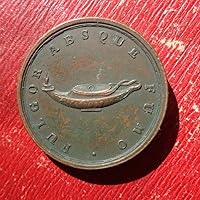
In Geoffrey Hill's words, "The poet's job is to define and yet again define. If the poet doesn't make certain horrors appear horrible, who will?" This astonishing book is a protest against evil and a tribute to those who have had the courage to resist it.
Only a month or two after Geoffrey Hill's death, our local library had on the discard shelf a nice cloth first edition of his book The Triumph of Love, dust jacket mummified and taped down in mylar. Only a quarter! Meaningless coincidence, of course, but of course I assign all sorts of meaning to it anyway - God must want me to read Geoffrey Hill. Or the "Vergine bella" perhaps (she shows up a lot in The Triumph of Love - I think this is a Petrarch (Laura) or Dante (the Divine Beatrice) reference, although I am not sure). I spent a quarter, which is not the same as spending a penny in British slang, or the same "sacral baseness, like kings at stool." But I digress...in a clumsy, Hillian fashion, which is pretty clumsy, I hope to demonstrate...
Crudely put, there are two kinds, at least, of difficulty when it comes to poetry - by "difficulty" I mean the common reader's complaint (common reader as well as common complaint, I suppose) that they just don't understand poems. Me too. The first type of difficulty comes about when confronted with actual people and events and things that you just don't know. Hill is difficult this way to be sure - for instance in a couple of places he refers to "Tully." Tully is what 17th century gentlemen called Cicero (Marcus Tullius Cicero, I think it goes, nomen, cognomen, etc.). I know this, barely, because I collect old books. Hill also mentions, gratifyingly, "Hudson (Hudson the Railway King -- ED)" - a person I'd never heard of; a quick Wikipedia search cleared this up, of course. (Note, by the way, the parenthetical editor's clarification - these are bogus inserts made by Hill on his own work - part of the meta-text or whatever it is called when writers do this - a real editor would've cleared up a bunch of other stuff as well. In The Triumph of Love they appear a couple of times that I noticed. I mean them must be fake, right? I mean, since there are no real editors anymore).
The second type of difficulty comes when a reader is confronted with abstractions. Abstractions for some readers, including this one, are very, very difficult to apprehend. Some readers, apparently - readers such as Helen Vendler and Harold Bloom - love abstractions, to the point when if it ain't abstract it ain't nothing. Well, Hill is definitely difficult in this way as well (and Vendler and Bloom love him). Examples abound (I'll refer to the section numbers only, they should be easy to find in whatever edition you have):
"But how could there not be a difficult confronting of systematics -- the scale of articulation notched up one grade at a time? They have conceded me -- I think, beyond question -- power of determination but without force of edict. If I were to grasp once, in emulation, work of the absolute, origin-creating mind, its opus est, conclusive otherness, the veil of certitude discovered at itself... (VIII)
Hard cheese, old chap! "Grades" "of articulation" and the "force of edict" and an "absolute, orgin-creating mind, its opus est..." Who'd dispute that a "difficult confronting of systematics" is indeed difficult. But whose fault is that? Don't blame the poet unless you are very sure of yourself. Harold Bloom, I'd bet, finds this passage to be thrilling, and he's the smartest guy in the room. So do the rest of us in the room nod along or do we doze off, or drift over to the keg? "The veil of certitude" needs, perhaps, discovering.
***
Some random thoughts:
Poetry and Deconstructionist "Play": Back when I was young, the creative writing types were still terrified by deconstructionism - remember that? This terror never reached me because I was too dim-witted to ever really understand what was going on. But I do remember finding the Derridarian concept of "play" to be interesting, however dimly I understood it. For indeed, so much contemporary American poetry wasn't any fun - a friend used to razz me about this, my love of "fun" being contemptible. Perhaps it is. And it is certainly very narrow - what I considered fun(ny). Wallace Stevens "Bantam in Pine Woods" or "I'm plowing North America!" was funny. John Ashbery wasn't nearly that funny (not that I've really explored his work in depth). And certainly not that broad swath of what I call "NPR Humor" which chortles along with Billy Collins. Shallow I may be, but I wanted something more than gentle NPR humor in the warm, folksy baritone of Garrison Kellior. I wanted humor in the service of - what? Ask Hamlet's gravediggers. They'd tell you, and make you feel a fool for asking. Now that's funny.
Which has what to do with Geoffrey Hill? Well, Hill displays, throughout "The Triumph of Love" the elephantine humor (humour, I mean) of Paul Muldoon or Nabakov. Here's an example:
The ethical motiv is -- so we may hazard -- opportunism, redemptive and redeemed; case-hardened on case-law, casusitry's own redemption; the general temper a caustic equity. (CXX)
Note the riff on "redemption," the phony juxtapositioning (just because you can!) of "case-hardened on case-law." What fun! How Postmodern. How tiresome.
Hill doesn't do this a lot, just from time to time, a restraint much appreciated, and most un-Muldoonian. Sometimes I suspected we didn't get more of this because Hill just isn't clever enough. That's okay - cleverness is not a virtue.
***
The John Berryman factor: Towards the end of "The Triumph of Love" I was struck by those moments of late-Berryman I was starting to feel. Just twinges here and there, but a twinge is better than nothing. By late-Berryman I mean those last books ("Love & Fame" and "Delusions, etc.") when Berryman was frizzling physically, mentally, and emotionally. Some of these late poems are wonderful, not by far the best Berryman had written in "The Dream Songs," but because of "The Dream Songs" you know what has been lost, what has been burned away and lost ("occluded" as Berryman says somewhere).
With Hill, however, I am not quite convinced the way I am by Berryman. The breast-beating histrionics, the self-loathing all seem a bit bad-actory. The sort of reflexive self-deprecation we indulge in these days (remember, I told you I was dim-witted!) before we say anything at all.
"Shameless old man, bent on committing more public nuisance. Incontinent fury wetting the air. Impotently bereft satire. Charged with erudition, put up by the defence to be his own accuser." (XXXVII)
For "shameless old man" read "self-proclaimed truth-teller grey beard in a hostile world." "Charged with erudition" means "smart and educated guy in a stupid, stupid world." All in all, he sounds pretty pleased with himself, don't he? So was Berryman, but with better poems.
***
Seamus Heaney and how green and gooey everything is in Britain (yeah, I know, Heaney is Irish): I see from the Internet that Geoffrey Hill is a master of doing up nature in his verse. P'raps so, but I was not impressed in "Triumph of Love"
"a light rain unceasing, the moist woods full of wild garlic." (CI)
So what is faith if it is not inescapable endurance? Unrevisited, the ferns are breast-high, head-high, the days lustrous, with their hinterlands of thunder. Light is this instant, far-seeing into itself, its own signature on things that recognize salvation. I am an old man, a child, the horizon is Traherne's country." (CXXI)
The days "lustrous" and those "hinterlands of thunder" seem sort of phoned in to me. The use of light is one of contemporary poetry's most enduring, and annoying trait. Light seems to be what poets say when they are too scrupulous to say "God" and I'm sick of it. A lot of poets use light without even knowing they're doing it, something I suspect happens to Hill in CXXI - "Light is this instant, far-seeing / into itself, its own / signature on things that recognize / salvation" is pure balderdash, post-Christian dribbling, as "full of high sentence" as Prufrock and just as self-unaware.
Furthermore, aren't those "moist woods" kind of funny? I mean, imagine yourself on a hike, and you turn to your companions and say, "What moist woods these are!" wouldn't everybody laugh at you? This is the kind of thing said only in poems - which is not necessarily a problem, but oh so many times it is. Like it is here.
***
Religion and God and Stuff: Hill has the typical Kierkegaardian hand-wringing relationship with The Divine, which he shares from time to time throughout the poem.
"Christ has risen yet again to their ritual supplication. It seems weird that the comedy never self-destructs. Actually it is strengthened -- if attenuation is strength. (Donne said as much of gold. Come back, Donne, I forgive you; and lovely Herbert.) But what strange guild is this that practices daily synchronized genuflection and takes pride in hazing my Jewish wife? if Christ be not risen, Christians are petty temple-schismatics, justly cast out of the law. Worse things have befallen Israel. But since he is risen, he is risen even for these high-handed underlings of self- worship: who, as by obedience, proclaim him risen indeed." (LXVI)
Fellow-poets Donne and Herbert, both Anglican clerics get a laddish arm around the neck. His Jewish wife gets a botched acknowledgement - I say botched because "hazing" isn't the right word, is it? The online Free Dictionary has it:
1. To persecute or harass with meaningless, difficult, or humiliating tasks. 2. To initiate, as into a college fraternity, by exacting humiliating performances from or playing rough practical jokes upon.
This really happens to Geoffrey Hill's (second) wife Alice Goodman (an Anglican priest, but adult convert from Judaism, according to Wikipedia)? She gets hazed? By the first definition, it could be said that Jews were "hazed" by the Nazis - forced to crawl on the pavement, clean latrines with toothbrushes, etc., but to an American anyway, this word is all wrong. Frat boys and West Point cadets haze each other. Nazis were terrorizing Jews (then murdering them). Furthermore, what is the "strange guild" that "practices / synchronized genuflection"? Genuflection is specifically Catholic, but daily prayers are more Muslim. I am confused, but is it my fault? Isn't the fault sloppy writing, one wrong word after the other?
***
History Channel Geekiness: Hill is famous, the way Pound was, for vast erudition and knowing lots of stuff, trivial on up. I applaud this sort of thing, but sometimes less is more. And this is where a lot of the first kind of difficulty (see above - the marshalling of facts and obscure references) comes in. Of course, if you understand the obscure reference, you are filled with self-satisfaction - I know I was. Let me here brag about how much obscure crap I know about World War II:
"At seven, even, I knew the much-vaunted Battle was a dud. First it was a dud, then a gallant write-off. Honour the young men whose eager fate was to steer that droopy coque against the Meuse bridgeheads. The Fairey Swordfish had an ungainly frail strength, cranking in at sea level, wheels whacked by Channel spindrift. Ingratitude still gets to me, the unfairness and waste of survival; a nation with so many memorials but no memory" (LXXVI)
So let me fill you in, in case you didn't waste your childhood (and far, far beyond) reading popular histories of World War II - the "Battle" is an oddjob fighter/bomber designed by theorists and inflicted on the Royal Air Force at the start of World War II. It was a big single-engine plane, slow, and ungainly with a large, bomber-type rotating turret at the rear of the cockpit. It was supposed to be invulnerable to anything but proved to be one of the many "flying coffins" designed with such high hopes. They were annihilated in France in 1940 (those Meuse bridgeheads and elsewhere) and quickly withdrawn. The Swordfish is a torpedo biplane - biplane as in Snoopy's Sopwith Camel, two pairs of wings, fabric-covered framework and lots of cables - I believe the Royal Navy fliers called them "stringbags" - it was an obsolete design that was still in service with the desperate British and had remarkable success because of luck and circumstances - the Germans had no aircraft carriers, therefore could not really mount a good aerial defense against any old junk the Brits could launch, including Swordfishes, one of which managed to disabled the battleship Bismarck's rudder, sealing its fate. However, if the British had deployed these in the Pacific, the Japanese carrier-based Zeros would've shredded them, "ungainly frail strength" being no match for a Zero...
Shut me up! But it is so rare to find such detail in a poem dealing with history, at least in my experience. And there is wonderful stuff here beyond the geekiness. Those Swordfish "wheels whacked / by Channel spindrift" is lovely. And even the "memorials but no memory" has a Alexander Pope stateliness despite the banality of the scolding. But Hill doesn't give us much of this sort of detail, just a taste here and there. And as for the Battles and the Swordfishes, did you really need to know this? I loved it because it flattered my geeky vanity, but as for really adding anything to the poem, I just don't see it.
As for the generally-well-known World War II stuff, here is Hill on Chamberlain and Appeasement in Munich, I think:
"Last things first; the slow haul to forgive them: Chamberlain's compliant vanity, his pawn ticket saved from the antepenultimate ultimatum; their strict pudency, but not to national honour; callous discretion; their inwardness with things of the world; their hearing as a profound music the hollow lion-roar of slammed vaults; the decent burials at the eleventh hour: their Authorized Version - it has seen better days - 'nation shall not lift up sword against nation' or 'nation shall rise up against nation (a later much-revised draft of the treaty). In either case a telling figure out of rhetoric, epanalepsis, the same word first and last." (X)
This is indeed a difficult passage, but only in its unraveling and once unraveled, what have you got? A fairly typical, if rhetorically high-flown complaint against Neville Chamberlain and "peace in our time." And yet...some revisionist historians say that had Britain went to war in 1938, their radar system not fully in place, fighter production still clawing its way upward, the Battle of Britain, a very narrow victory in 1940, would've been lost. It may have been "callous discretion" but it may have been necessary (as in national survival necessary) discretion. Not that Hill's job is to explore the nuances of European diplomacy of the "low, dishonest decade" but high-flown self-righteousness of the hindsight's 20-20 sort isn't very edifying either. He says here pretty much what everybody has said about Chamberlain at Munich since Sept. 1, 1939 or thereabouts. He's just piling on, in verse. Why bother?
Note that when Hill really wants to make something obscure clear, he will provide a definition - now you know what epanalepsis is. Why is this a "telling figure out of rhetoric"? Thanks for nothing.
***
Yes, Geoffrey Hill is a difficult poet. He is famous for this difficulty, and when alive defended his right to be difficult. And I'll defend it too, although with qualification. The older I get, the more the difficult things of the world sort of unravel - most of them explained to me, very occasionally, I figure something out for myself - and learning is good, of course. But stripped of mystery and difficulty, what is left but exhaustion and cynicism (like those 600-year-old vampires you used to read about). And yet difficulty for its own sake, or difficulty that is really only a product of unclear thinking or writing, is not really difficulty at all. The revelation ain't worth the unspooling. Except now and then. Now and then, this book is really worthwhile:
"You say how you are struck by the unnatural brightness of marigolds; and is this manic, or what. Are clowns depressives? The open secret is to act well. Can the now silent witnesses be questioned? What hope remains to get him out alive? I'm sorry, her. Tomorrow he died, became war-dead, picked off the sky's face. Fifty years back, the dead will hear and be broken. Get off the line. Who are you to say I sound funny." (78 pp. 40-41)
The "war-dead, picked / off the sky's face" is beautiful and brutal in the same ineluctable instant. Unfortunately it is not a passage that is characteristic of this poem.
***
The problem with this book, finally, is its failure to grapple with the Big Problem it approaches - the 20th century and what a person or a poet is supposed to do with it. And God too. Sure, these are impossible tasks, but some approaches are more successful than others. In many ways, The Triumph of Love reminds me of a big, bloated version of "The Wasteland" (and perhaps "Four Quartets"?) written by a poet with far fewer resources and a far teensier talent than T. S. Eliot's. Eliot had the advantage in that the 20th century was just over 20 years old when he tackled it in "The Wasteland." But read that opening stanza, the one we all think we know: "April is the cruellest month..." Here, in a couple dozen fractured line, Eliot "does" World War I and the fragile antebellum culture. Devastating stuff here - the coffee in the colonnade with the echt-Deutsch Lithuanian, the sled ride and Marie! Marie! Eliot's economy alone is impressive, especially compared to Hill's sprawl. But also the language, the way abstractions are always anchored in Eliot's poem whereas Hill constantly floats off in abstractions untethered to actual things. Both poets employ fragmentation and shifting viewpoints, but Eliot takes us places; Hill provides a historical travelogue of a fairly predictable sort - once you shift through the wordiness and bombast and aw-shucks old poet shtick. Hill doesn't, despite all the words, really have quite as much of interest to say as the critics think he does.
This being said, I'll probably read it again. Maybe not. I got little pleasure from this book...pleasure is for sissies, perhaps, and yet as harrowing as it is, "The Wasteland" is a pleasure to read because it is so good. Good in the good writing sense of good. But despite everything, I am glad Geoffrey Hill took the trouble. It beats Twitter and a bunch of other stuff that wasn't quite around at the turn of the century. Requiescat in pace, poeta.
Is this one poem or 150 poems? The volume is divided into 150 segments numbered in Roman numerals. The poem (I'm taking it to be one poem) is an ongoing monologue which does have shifts in emphasis. I suppose, from the title, that love is triumphant over evil, but the poem seems to say more about evil in its most banal forms than about love. This is one deeply skeptical poem at odds with its own assertion that love triumphs. Not from much that we do. Perhaps as an accident of grace.
I'm glad I read the poem, but it is difficult. What most makes it difficult are the numerous allusion and dips into languages other than English. Suppose I were to write a poem using the names Masse, Carrithers, Nardo, Borke, Cope, and Barthelemy. You may know people with these names, but most of you would be hard pressed to know that all of them have something in common, and once you would figure it out, you'd have to piece together in what way the commonality has any significance. The poem needs annotations, but would the annotations help? I wonder.
(Those names were last names of graduate school English professors during the time I was working on my Ph.D. at Louisiana State University.)
“So – Croker, MacSikker, O’Shem – I ask you: what are poems for? They are to console us with their own gift, which is like perfect pitch. Let us commit that to our dust. What ought a poem to be? Answer, a sad and angry consolation. What is the poem? What figures? Say, a sad and angry consolation. That’s beautiful. Once more? A sad and angry consolation." (CXLVIII)
The poet has gone back, in his old age, to his native Worcestershire. He observes the sun breaking out from massed cloud. He baits and berates himself for his pride, his worldliness as a public, Christian poet ('his proud ignorance of doctrine'), also his unworldliness. There seems a demand laid on him to write; yet no one seems to value his writings, neither their scourging denunciations, nor their mannered, lofty mode. Much of the time he harks back to the Second World War. We learn--in newly personal passages--that he has an identification as a Jew, through his Jewish wife, though predictably this arouses his moral suspicion. Hill writes with an authority is that well-formed and superbly easy, whether the short poems in this sequence are occasional (or observational), or take the form of meditations on public civility--much degraded, he thinks--or the stringencies of personal morality.
Honestly, listening to PJ Harvey's Let England Shake has the same effect as reading most of Geoffrey Hill's work about England without the struggle. The man can be bloody difficult, and without googling 'saint X' and 'politician Y' every other stanza most of it would have certainly been lost on me. Hill is always hard work, but the pay-off always varies as well. Some works are better than others, and Triumph sits mostly in the middle for me so far.
I do like it when he goes full on mystic poet though. On to Speech! Speech!
Similar in style to Speech Speech, with which it forms part of a trilogy, it differs in the stanzas being of irregular length. I got a bit bogged down with this one, though. Maybe I should have read it aloud throughout, or maybe I'd just been reading too much in the preceding weeks and needed a break, but I'll give it another go one day. If I can get hold of The Orchards of Syon I can read the whole trilogy in sequence and see how I get on with that!
The difficulty of this book length poem can be overcome by checking many of its names and references and that adds to the understanding of Hill's immersion in the histories he praises and blames here. His "moral landscape" is a hard seen statement in "which particular grace/ individual love, decency, endurance, are traceable across the faults." Pound's dove sta memoria operates in the poem but I think it ends with a sound like Stevens of what poetry is for, a sad and angry consolation.