The last thing eleven-year-old Ruby Tabeata expected to happen on her way to a Jack Kerouac reading was to be hauled to the police station.
It's 1958 and Ruby is the opposite of a 1950s stereotype: fierce, funny and strong willed, she is only just starting to chart her course in a family of Beat Generation artists in Greenwich Village. Ruby dreams of meeting famous poets while becoming one herself; instead, she's accused of trying to steal fruit from a local vendor and is forced to live in a children's home. As Ruby struggles to return to family and friends, she learns her only choice is to follow her heart.
Join Ruby's journey as she finds unexpected friendships, the courage to rebel against unjust authority and the healing power of art in this inspiring middle-grade novel by Jenna Zark.
Jenna Zark is a columnist, lyricist, and playwright. Her play A Body of Water was published by Dramatists Play Service and produced regionally after its debut at Circle Repertory in New York. Other plays were produced in the Twin Cities, Los Angeles, Atlanta, and St. Louis. As a columnist at TC Jewfolk, Zark writes about her relationships to Jewish holidays, rituals, and more. Columns have been reprinted in MinnPost, the Star Tribune, the Forward, and elsewhere. Literary essays and poems appeared in FieldReport and Stoneboat; articles have appeared in Woodbury magazine, Minnesota Bride and Midwest Home. Zark is also a member of the songwriting collective Prosody. She is still trying to figure out if it’s harder to write a play, novel or a song. To share your thoughts on that or learn more, please visit www.jennazark.com.
This book is about the "Beat" generation from the 1940's. As I wasn't previously familiar with this part of American history, I found this book to be especially interesting! The Beat on Ruby's Street is primarily geared towards middle grade readers, but it can definitely be enjoyed by book-lovers of all ages.
One thing in particular I love about this book is Jenna Zark's writing style. She perfectly channels the thought process of a 12-year-old child. The writing is structured and well thought out, but it flows with more childlike direction. For instance, Ruby can be talking about school and mention her cat, but then she gives you the whole story behind her cat before returning to her previous topic. This writing style makes Ruby feel a lot more real and relatable.
This book also deals with issues that many children deal with--school, friends, independence, relationship with parents, parents' relationship with each other, etc. Although some of these topics may seem a little dark for the younger middle grade reader to handle, Zark is appropriately sensitive with her stories and descriptions. In my opinion, a 9 or 10-year-old could easily read, understand, and enjoy this book.
The only reason I marked this book down at all is because I feel that the end was somewhat lacking. I was left with a sort of "that's it?" feeling after finishing it. I feel that an epilogue would have really helped this story, just so that we could see where Ruby ends up and how she feels about it. Other than that, this story was fantastic and highly enjoyable!
(This book is being rated in comparison to other Middle Grade books, as opposed to Young Adult books.)
Greenwich Village, 1958, a place and time where free spirits congregated to express themselves, make far-reaching statements and live under the radar of authority. This is the life young Ruby has known, think on your feet, be suspect of authority and always give yourself an out. Growing up with inattentive parental figures, yet in a community who cares for its own, Ruby knows the value of a good eat, a good piece of poetry, and she has the street-smarts to survive, until the day she is chased by the Child Welfare agency, who are only trying to “better her living” conditions. To Ruby’s way of thinking, her life is pretty grand, home schooling, artists all around, and that vibe on the streets, that everything is alive and shaking. Follow Ruby as her own decisions and free-thinking could be the cause of her own downfall as she comes under the scrutiny of “The Man.”
Fun, fast and furious, Ruby plays “catch me if you can” with the authorities as she tries to stay one step away from foster homes and losing the ones she loves. You might think that without bad luck, she may have no luck at all, because if it can go wrong for Ruby, it usually does. The Beat on Ruby’s Street by Jenna Zark is a faced paced, humorous take on life for one girl living in a world far removed from the norm. Jenna Zark has captured the essence of youth with all of its idealistic energy and lack of life experiences. Ruby is a delight, and her mental gymnastics will bring more than one chuckle to your lips! Ms. Zark creates the feel of the era and the neighborhood with great attention to the all-important attitude that zaps the air. A fun and entertaining way to give kids the chance to learn a little history without the boring maps and dates. Ms. Zark has just the right beat going to create a hit!
I received this copy from Jenna Zark in exchange for my honest review.
Publisher: Updrift (October 19, 2015) Publication Date: October 19, 2015 Genre: Middlegrade fiction Print Length: 150 pages Available from: Amazon For Reviews & More: http://tometender.blogspot.com
I would like to thank the author, Jenna Zark, for sending me a copy in exchange for an honest review.
This was a read completely out of my comfort zone. I don't often read children's fiction and I'm not particularly interested in the 1950s... but, I ended up falling a bit in love with this one. It's a sweet story told in an unique and charming way.
Ruby grows up as part of the "Beat Generation" and I wasn't at all familiar with this part of American history. I found that aspect of the book particularly interesting and enjoyed learning about the culture through Ruby's eyes.
It is an easy read, told in first person and is definitely geared towards a young reader, and while I think a 9 or 10 year old could easily read this one, I also believe it can be thoroughly enjoyed by adults.
Jenna Zark has a unique writing style and I love how well she captures the voice of a young girl growing up in Greenwich Village during the 50s. Ruby feels real at all times. Ruby also wants to be a poet and her voice is actually very poetic but still feels like the voice of a 12 year old.
The book deals with lots of issues and some of them might be a step above Middle-Grade but Jenna Zark brings those subjects across in a sensitive and heartwarming way that can easily be understood by a young reader.
The Beat on Ruby’s Street is the first book in Jenna Zark’s Beat Street series, and it’s a unique young adult historical fiction that had me hooked throughout.
Although I enjoy a good historical fiction, I find most of my reads can be categorised into two categories. We have the regency reads and we have the World War reads. I sometimes step out of these two boxes – I’ve read a few Cold War espionage novels, for example – but it is rare. Thus, my knowledge of the time period in which The Beat on Ruby’s Street is set is rather lacking.
Nevertheless, despite my lack of knowledge, The Beat on Ruby’s Street had me hooked throughout. It was both a great historical fiction novel and a great young adult novel. It brought the time period to life, sucking us into the time and providing information to make everything seem real. It included a lot of issues central to young adult novels, ensuring you’re sucked in for the journey.
Without a doubt, the first Beat Street book hooks you and leaves you willing to read more.
A copy of this book was provided to me in exchange for an honest review
This is a solid read. I liked it but it didn't stand out to me.
This book is a historical fiction book that takes place in the 1950's and we follow the story from the point of view from Ruby. Ruby is an 11 year old and absolutely loves poetry. One thing I like about is that we see Ruby's hobby throughout the story. In some books they mention that a character likes something and will never acknowledge it again. In this story however the hobby is shown and it is very believable that Ruby does like poetry.
In the beginning of the book Ruby is accused of stealing fruit which leads to her adventure.
One thing I wanted was more background to the characters. I wanted some flashbacks to see more of her past. I feel like that could of added to the story. Another thing too is the ending. I was like "that's it?" I wanted a little more of an explanation of what happens. I felt like the story just stopped and I wanted more of a conclusion.
I will say I loved the writing. It was very easy to read and should be easy for a young reader to understand. The Beat on Ruby's Street is told in first person and it is very easy for me to tell that a 11 year old, almost 12 is telling the story.
This is a very short book I will admit and I feel like it could of been slightly longer. I would of liked a little more world building because I only new it took place in the 1950's because the story said so and there was one line they said which I cannot find.
Overall I would recommend this book to 11 or 12 year olds. I honestly do not have that much to say about it.
The Beat on Ruby's Street was an interesting novel about a young girl in that "tween" stage of life. Ruby is a rebel with a cause and poetic soul. I think she thinks she is misunderstood throughout the novel by her peers, parents and other adult figures. But this is the view of a child. Zark keeps true to this period peace, when protests of war are high and the arts (poetry and painting) are taboo. In The Beat on Ruby's street we follow young Ruby through many acts of childhood rebelliousness. Everything Ruby does is for "the cause." At times I thought Ruby was being way disrespectful, but Zark reminds us of the time period and gives up parental clues of who raised Ruby. Ruby is a product of the streets and not meaning this in a harsh or bad way. She was well cared for by her parents but not in a way that the majority of society would approve, but she was not from a bad home. In my opinion this book shows that it does take a village to raise a child who could think for herself and fight for what she truly believed in.
Zark gives us a view from a child's perspective but this is no childish book. I appreciate the way she makes the novel flow and tells the story as if it were a movie or play in front of our eyes. This could easily be turned into a Ruby series and I hope Zark continues to write with such feeling and abandonment. I really dug this novel and look forward to reading many more by Jenna Zark.
Ruby Tabeata is an eleven year old who lives in Greenwich Village during 1958. This is during the time when people wrote about their unhappiness towards society. Despair was expressed through works of writing and music.
Ruby was on her way to a reading by her favorite poet, when she was accused of stealing and was taken off to the police department. Since she is a minor, things get out of hand when a social worker is assigned to her and her case because she does not have two parents living with her. This eventually ends in a disaster and Ruby must figure out how to get herself out of a horrible situation.
The author writes a lot of back story to each character, so you really get to know everyone on a personal level. I was especially interested in learning more about the children in Greenwich Village during the late nineteen fifty's. I was a little confused when the social worker comes into the picture. I couldn't tell if she is a negative character or someone who's intentions are only to help a young girl.
Overall I found this to be a beautiful story with amazing history, background and emotion. At moments, tears came to my eyes, and other moments I was biting my nails in anticipation of what was to come next. There were some slow moments while reading this book, but it quickly became interesting and exciting. I give this book a 5/5.
In all honesty, this book wasn't my cup of tea. Which is where the missing final star comes in. I give it four stars because even though it wasn't my kind of story, it was still a really good story. Man, this story also raised my blood pressure like something fierce but I knew I couldn't stop reading because I just had to know what happens. It was also written very well yet I also feel like there was something missing. I felt like the story was incomplete. I hit the final page and was a bit lost because I really thought there was more to it. This book left me with a lot of questions like:
11-year-old Ruby grows up in Greenwich Village. The story is set in 1958, but I didn’t feel the historical significance. The strength of the book is in the writing style. The author has captured Ruby's particular voice, and it is this that kept my interest. It is a short story for middle-grade readers. She has an unusual upbringing with informal home education, and she’s happy to get along on her own. That is, until, when arranging fruits on a stand, she is accused of stealing. A slow, albeit interesting, beginning. It is only by a third of the book that we learn the stakes/consequences of her getting caught stealing. I doubt at her age she understood them too. Social services get involved in her peaceful life. I enjoyed the book and, after the last page, I went out to find whether it was part of a series. Which, unfortunately, it wasn’t. I wanted to read more after the book ended with her joining a poetry group. Ruby’s mother decision and sacrifice for her daughter’s sake were left… hanging. I wanted Ruby to fight for her mother's happiness. But the tween's disregard for her responsibility in this decision, her failure to admit her actions led to them, dropped the book a notch. All Ruby feels is anger. What about accountability? I guess one can’t expect such from an 11-year-old. So not a very satisfying ending for me.
I received an e-copy of this book courtesy of KidLitExchange with no obligation to review. All opinions are my own.
Oh man, this was SO great. (I did receive a copy in exchange for an honest review) Writing/Style: 4/4 Characters: 4/4 Story: 4/4 Pacing: 3/4 Ending: 2/4 Total: 17/20 I loved this so much. The author's style really brought Ruby to life. Amazing characters. Fantastic story. Unique voice. Just all around wonderful. The pacing seemed to shift about 2/3 of the way through the book, not in a distracting way, just slightly noticeable for me. And the ending, while GREAT, did seem to wrap up a tiny bit too fast for my preferences. But, none of those little things take away from the incredible message and story. I will be raving about this book for awhile... Full review here: https://youtu.be/Hxyt7yaJWgY
Ruby ist elf und eigentlich auf dem Weg eine Lesung von Jack Kerouac zu hören, als sie sich auf der Polizeistation wiederfindet, weil sie einen Apfel gestohlen hat. Nun hatte man herumstreunende Teenager in den 50ger Jahren in Amerika nicht so gern. Außerdem bemerken die Behörden widerwillig, dass Ruby aus einer Beatniks Familie kommt, die so gar nichts von gesellschaftlichen Konventionen hält. Also landet Ruby in staatlicher Obhut. Da vermisst sie jedoch das freie Leben, dass ihre Eltern führten und sie tritt in einen Hungerstreik. Ihre Mutter heiratet, um Ruby wieder zu bekommen, doch leider nicht ihren Vater und Ruby muss erkennen, dass das Leben nicht immer so läuft, wie man es sich wünscht.
Eine wunderbare Geschichte über die Beatniks Ära 1958 in Amerika. Ich habe die freche, eigenständig denkende Ruby, die später einmal eine Poetin werden will, sofort in mein Herz geschlossen. Sie hat mich zurückversetzt in die Teenagerzeit, wo man sein Umfeld revolutionieren möchte, und denkt wenn man groß ist, macht man alles anders als die Eltern. Es war auch schwer für mich zu beobachten, wie sie sich gegen die Veränderung wehrt und nicht verstehen kann, wie ihre künstlerische Mom zu ihrem Wohl einen Fremden heiratet und plötzlich zum Establishment gehört und ihr Vater sein Leid in Alkohol ertränkt. Erst als sie ihren Dichtervorbildern begegnet, findet sie zu sich selbst und einen Weg das Leben zu akzeptieren. Dieses Freebie hat mich aufmerksam gemacht auf eine Epoche, von der ich nicht einmal wusste dass sie existiert hat.
Oft falle ich ja mit Freebies auf die Nase, aber diese kleine Geschichte zeigt mir, dass man hin und wieder kleine Edelsteine unter dem Müll entdecken kann.
I was sent this book in exchange for an honest review
This book takes place in 1958 and our protagonist- an eleven year old girl named Ruby must fight to get back to the people she loves. She was caught supposedly stealing fruit and was later put into a group home and taken away from her mother.
I believe that the premise of this book is super interesting because it is a middle-grade historical fiction, but I don't think the execution of the story was up to par with its synopsis. The story felt very jumbled and could have been better if it was longer and more fleshed out.
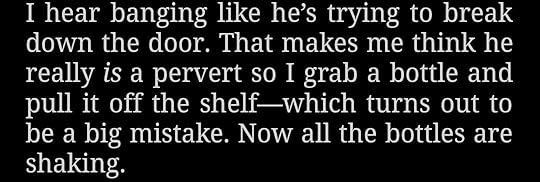
The characters in this story were just okay for me, some felt very one-dimensional. Our protagonist Ruby was very naive, which is expected due to her age. She acted like she knew everything and treated people in abnormal ways. Also some quotes that she said really irked me such as:
So you were yelling for help and a dude is breaking down the door to get to you... but now he's a pervert like umm noo....
The writing was also not the greatest. I noticed some spelling errors and the story was overall really messy. The organization of the story lacked as well as the overall point of the novel. By the end of it, I honestly didn't feel much it was kind of just like a "meh" book for me overall.
Something that I did like though was that this was a super fast read and a page turner. Even though most parts of the story lacked for me, I still was interested in knowing where this story was going to go. It was entertaining and a very fast and easy read.
For middle grade readers I think this sets a poor example, to assume adult men are perverts is wrong, especially as she was calling for help... Also showing a young girl getting into fights and going on a hunger strike can be very hazardous to young readers who can be easily persuaded. I'm all for fighting for what you believe in and for what is right but the hunger strike aspect was a bit much.
In The Beat On Ruby's Street we find Ruby, a child of the 50's and the beatnik era. Ruby lives free and somewhat wild while mom and dad beatniks do their thing. Ruby's growing up and finding who she is. However, accused of stealing, Ruby's life implodes.
Never fear, Ruby's strong, determined, and coming of age. Ruby has dreams of poetry, meeting the famous Jack Kerousac, and becoming a poetic. Challenges will be met, confronted, and conquered.
Come along with Ruby as she grows up on beat street. My children's novel review of The Beat On Ruby's Street follows.
CHARACTERS, PLOTTING, DEVELOPMENT:
Author Jenna Zark explores the counter-culture of the beatniks, their philosophy, and lifestyle. Known as the beat generation, the 1950's were a time of change and restlessness. Exploring Ruby's growth from child to young adult, Zark gives the reader a real feel for this time period.
Giving Ruby a strong personality, Zark demonstrates the determination of the era. With excellent plotting, skillful character development, and pacing which will hold the reader's attention, Zark crafted a one of kind story.
Finally, in concluding my children's novel review of The Beat On Ruby's Street, I found a well-developed story-line, with engaging characters, and skillful plotting. I would not hesitate to buy this book for my self or a friend with proper age children as Zark explores a generator seen only in movies
THE BEAT ON RUBY'S STREET RECOMMENDATION: STARS 4
Recommended for grade levels 5-12
FINALLY, PLEASE NOTE:
Additionally, I received this book from the author and chose to voluntarily review the book with an honest children's novel/book review. Lastly, book reviews of any novel are dependent on the book review author’s opinion. Consequently, all book reviews on-line and on my blog, are my opinions. In addition, the ARC did not affect my children's novel/book review.
This book was entered and was a GOLD MEDAL WINNER in The 2016 Wishing Shelf Book Awards. This is what our readers thought:
Title: The Beat on Ruby’s Street Author: Jenna Zark Star Rating: 5 Stars Number of Readers: 36 Stats Editing: 10/10 Writing Style: 10/10 Content: 10/10 Cover: 10/10 Of the 36 readers: 36 would read another book by this author. 35 thought the covers were good or excellent. 36 felt it was easy to follow. 36 would recommend them to another reader to try. 35 thought the opening chapter was very exciting. 36 felt this author understands what children enjoy reading.
Readers’ Comments ‘I loved the New York setting in the 1950s. It was an exciting book. Ruby was an interesting character. The ending was also really good.’ Girl, aged 13 ‘It was fun to read a children’s book that wasn’t all magic and dragons. Ruby is a lovely character, wise but still trying to find her way in life. Very much a character-led book, the author is excellent at handling the secondary characters and the interaction between them and Ruby.’ Primary teacher, aged 52¨ ‘This book would be very welcome in our school library and as a class reader. Our class discussed this book at length after we had finished reading it. It is a fantastic way of stimulating discussion on many topics including family life and cultural identity. The children, although British, also enjoyed the New York setting. Excellent cover too.’ Primary teacher, aged 43 ‘Ruby is so clever and sees so much. I loved looking at the world through her eyes.’ Girl, aged 13
‘Confidently written and riveting to the very last page. A GOLD MEDAL WINNER and highly recommended.’ The Wishing Shelf Book Awards
I give The Beat on Ruby’s Street by Jenna Zark 5 out of 5 stars.
Ruby Tabeata is an old soul living in a 1950s Beat community with her family. Because of her unconventional upbringing, Ruby is torn from her family and placed in a group home, not to be returned unless her parents agree to conform to society’s expectations. Refusing to accept this turn of events, Ruby carries out a plan of her own.
Ruby’s voice is thoughtful and engaging throughout the story; poetic, yet very much what an eleven-almost-twelve year old voice should be – interested in things like leotards and golden birthdays. Her fear of “the man” and guilt over “his” entrance to her life, family, and community are completely relatable.
The Beat culture and ’50s pop culture are woven into the story through Ruby’s eyes and avoids feeling like a history lesson or game of trivia. Vocabulary and other references are presented the same way.
Overall, The Beat on Ruby’s Street is a charming and uplifting read. It’s easy to settle into and relate to, and I highly recommend it for preteen girls.
Ruby learns how to make a statement, when she unknowingly meets her hero. She gets into trouble time and time again through a series of lies and mishaps. She's taken from her home and finds that she just want's to get home so she goes and figures a way out but her mom comes to save her the only way her mom can. She marries another man. Ruby can't handle her mom and dad not getting married. Remember this is set in the 1950's it's shocking for people to have kids out of wedlock. Her life is now upside down and she feels like she has no where to go and no one to turn to. I would recommend this book to teens just due to the lack of respect for authority, the lies Ruby tells, the drinking and the little bit of scheming that goes on. It would be a really good book for the class room as discussions could be done on what could have been done differently. All in all the main characters were well developed. Some of the back characters could have been more developed to make the story a little more interesting for older people. The author wrote well but the flow was a little slow at times.
I received a copy to facilitate my review. The opinions expressed here are my own.
Ruby is an eleven-year-old, who has become a "free thinker" like her idol Jakl Keroauc. She is on her way to one of his readings when she is arrested and accused of stealing fruit. Her mom is an artist and her father is a muscian. They allow her to run the streets and be this free thinker and this is what gets social services to remove her. Ruby learns that other eare no perfect families. She also learns how important to it is to follow her own heart. She remains true to herself. She handles this situation the best way she can, by being creative. The author did a wonderful job of pluking the reader into Greenwich Vilalge in 1958. You feel the "vibes" of that time period throughout the book. It is realistic, historical, and a book both adults and kids will be able to relate to. I am pleased to recommend this book to my students and will definitely watch for more from this author.
What a fun read, no matter what your age. Travel back to Greenwich Village , NY in the late 1950’s, to meet 11 year old Ruby. Ruby is part of the Beat Generation. Her Mom is an artist and her Dad is a musician. She loves Beat poetry and is trying her hand at writing, while plotting to meet her idol, Jack Kerouac. Naturally, trouble follows her on her journey.
I don’t want to share any more of the plot but it’s intriguing, fun, and dramatic. Love all the bits of historical facts sprinkled throughout the story.
The characters are well-written. Their personality shines through the author’s words. Are they the classic, perfect family we often see depicted in books and shows about that era? Absolutely not, but they are very real.
I recommend this book to all middle-grade ages and above. Book clubs should also consider reading The Beat on Ruby’s Street, as the discussions will be fabulous.
I loved this book! From the adventures in the first chapter to self-discovery in the last, I did not want to put this book down. We get a glimpse into the life of 12 year old Ruby, who is being raised in the Village by her unmarried, beatnik parents. She wants to be a poet like Jack Kerouac, and some of her poems are sprinkled throughout the book. This is a middle-grade book and I would love to see a sequel where we get to catch up with 15 year old Ruby, or maybe even 20 year old Ruby. The author's note includes a very brief history of the Beat generation, and I appreciate that she gives us a list of authors and titles to poems, books, and movies. I'll definitely be checking them out.
The Beat on Ruby's Street is for the lack of a better word, powerful. I know what the synopsis said, but I was not prepared for the depth and breadth of experiences and emotions that washed over me in waves as I read this. I'm 32 years old as I write this, and I know this book is accessible to middle grade readers, but also enjoyable for readers of all ages. I never lived in the 50s, but I felt like I was walking those streets with Ruby, hearing, seeing, smelling everything she did. Absolutely brilliant.
A great read for any age, 9 years to 99 years old. The delightful story follows 11 year old Ruby in her beatnik neighborhood as she plans on going to meet her poetry - writing hero, Jack Kerouac. Real life problems challenge our head-strong child, and we find ourselves rooting for her all along her way.
The novel is very well written, and I know no one will be disappointed in this debut novel from local author Jenna Zark.
The Beat on Ruby's Street by Jenna Zark is a book about Ruby Tabeata, an eleven-year-old living in Greenwich Village.
Full disclosure: I was given a free copy of this book by the author in exchange for an honest review. This did not affect my rating in any way.
I thought that this book was written very well, style wise! I really enjoyed how perfectly the author captured the persona of the eleven-year-old main character. The storyline flowed in a linear fashion over a seemingly short period of time.
My favorite feature of the book was that throughout the story the main character was always a rambling off a random fact, definition, or anything that she's learned from her teachers. This was written in a way that I felt was constantly backing up the fact that she has learned plenty in her nontraditional schooling.
I do wish that we had gotten more about the characters and their dynamics early on. The lack of family backstory made me feel lukewarm about the characters, especially when it came to the parents. But of course, if I had read this when I was in the targeted age group, I don't think that would have been an issue.
I also wish there had been more of a deeper explanation about the historical factor. I personally didn't take much away from this book in regard to the Beat poets.
While I did enjoy the read, I can't say it was exactly in my wheelhouse. I would still recommend this book to others, but I personally wouldn't pick it up again. I gave it three stars.
I would recommend this book to readers that really enjoy quick, realistic middle grade stories with a focus on personal growth, family problems, and poetry.
My favorite passages: The night I saw it, someone said the lights made it look like a pearl necklace, which I wrote down in my notebook. If you want to be any kind of writer, you should always have a notebook with you.
It's really hard getting Ray to worry. He's a lot like Gary Daddy-o, who says while everything matters, nothing matters very much. I think that's another one of those Zen sayings. What it really means is if you want to get through life without falling apart, you can't let every flippy little thing get to you.
"Oh, yeah. Sure," I say like it was nothing, but my heart's going so fast I'm sure he can hear it.
It's funny how something can look pretty good until you see it with someone else's eyes.
It's the ugliest budding on the block, wide and squat, and if it had a color you wouldn't know it. I think it's yellow, but it could easily be gray.
I think Nell-mom can sense what I'm feeling because she asks, "Are you okay?" I lick my lips, trying to decide I feel like the lady in King Kong when he picks her up and shakes her while he's walking through the jungle. When he finally puts her down, it must have bene strange to be standing on the ground again. But how do I say that?
The Beat on Ruby’s Street is a novel intended for middle-grade students, as the protagonist is an 11-year-old girl named Ruby, and the story is told from first-person point-of-view. Ruby’s voice is realistic for a girl her age, and I think this book reads appropriately for kids around the same age.
The details of New York in the late 1950s and the Beat Generation of the time are also fleshed out well in the backdrop. There’s a certain freedom to being a kid 60 years ago that I feel no longer applies nowadays. A girl like Ruby can wander the streets with her friends for hours at a time and be safe. I am reminded of stories my mom told me about how far she’d ride her bike or how she’d ride on public transportation when she was about Ruby’s age and be gone all day, yet her parents didn’t have to worry.
Ruby is also an aspiring poet. She wants badly to meet famous poets like Jack Kerouac and is on her way to one of his readings when...
The freedom Ruby experiences is threatened when she is accused of stealing fruit, however. A social worker steps in and begins to question Ruby’s homelife. The reader discovers that Ruby’s parents aren’t married. Their apartment isn’t kept up. Her dad, Gary Daddy-o, is a musician who is on the road for weeks at a times. Her mom, Nell-Mom, is an artist is is oblivious to the comings and goings of Ruby and her brother, Ray. Ruby and some of her friends attend “school” at a store called Blue Sky, where they learn some stuff from the owners, Sky and Blu, but they aren’t being properly educated.
Everything Ruby thought was true and normal about her life is suddenly threatened. She spends some time in a children’s home. Her childhood innocence is ripped away from her. To see the shortcomings of adults through a child’s eyes is a unique perspective. I remember when I was a kid thinking my parents knew everything and that I would understand everything about life once I was grown up. To have that worldview shattered, to realize your parents are far from perfect and that your home isn’t the nice place you thought is scary and also realistic, a part of growing up.
This is a quick read. Being much older than the intended audience, I found the novel had its charms and was good for middle-grade readers, and yes, it reminded me of what it was like for me when I was 11 or 12, but I didn’t get much else out of this novel. It’s a good story, but not great. It doesn’t necessarily stand out from much else I’ve read, but it was enjoyable enough.
This story is about a girl named Ruby who lives in the 1940/50s. The story follows her as she struggles her way through an important event in her life. Honestly this book surprised me. I’m not sure what I was expecting, but it wasn’t this. Ruby is a young poet and that’s pretty cool. Very few MG books are about or include poetry. I think that’s a shame because poetry is fluid and mysterious and deserves more credit. I especially love how the author incorporates the poetry into Ruby’s life. You can see where it stems from but you don’t exactly know what it’s about, if that makes any sense.
Another thing I loved about this book was the storytelling. The author built up maybe not a complex world, but filled the world with complex characters with complex stories that gave the world its depth. Ruby’s view was very childlike but also understanding. What I mean by this is that she had the innocence of a child but she understood much more than what the adults gave her credit for. She had many flaws and she doubted herself and blamed herself for things that weren’t necessarily her fault. No character was put on a pedestal and given a medal for being “perfect” or “bad”. Each character had both good and bad and human in them.
There especially was some important historical events foreshadowing in this book. It also was sort of inspired by the ‘Beats’–a group I had never heard of until I read this book. There were diverse characters and not everyone got a happy ending at the end. Characters were forced to make decisions that may have been for the best, but they were not the best that could’ve happened.
Another thing I liked was the storytelling was very fluid, intertwined, fast and realistic. I could would believe it if someone told me that this was based on a true story. I especially liked how things from the beginning happened at the end. It sort of reminded me of some melancholy movie you might see.
Thanks to the the author for the review copy of this e-book - all opinions are my own.
This historical fiction novel grabbed my interest from the very beginning. Ruby is a brave and spunky and resourceful eleven year old living in a small, rather shabby apartment in Greenwich Village in 1958. Her mother is an artist and her father a musician who are part of the “beat generation”. She attends a “school” run by two neighborhood candy shop owners, Blu and Sky, with a handful of other kids her age and is frequently on her own. Ruby loves to write poetry, idolizes the local poets and dreams of one day meeting her hero, Jack Kerouac. She has been raised to be suspect of authority of any kind, and when she encounters that she creatively and bravely finds a solution.
This is the first middle grade historical fiction book about Greenwich Village in the 50s that I have ever read. and found it to be so interesting. For students who are lovers of this genre, I'm sure they will find this to be fascinating, simply because there are so few middle grade books written about this period in our history. I especially loved the fact that Ruby was always creating a poet in her head, no matter what situation she encountered. This story is full of adventure, as well as many of the issues that an eleven year old might face today wherever they live.
I would recommend this for any upper elementary or middle school students who are looking for an historical fiction book set during a different time period of U.S. history than they usually read. The Beat on Ruby’s Street is one that is full of adventure and lots of heart.
I read this book in one sitting, I just had to. There is no other choice than to immerse yourself inside it and only wake up from it when you’re done.
Ruby’s world isn’t comforting at all, still with her as the narrator this book becomes a hymn for a childhood that I never had and that I’m still looking for. Her world filled with beat poetry, the blue sky and her own place she calls home falls apart, like all homes once do. But Ruby is a child New York calls for - she’s wild, she’s brave and she has as much empathy as a child is capable of feeling. She fights for her world, like all women do at some point.
That brings me to my next point: womanhood. The girls crying in the orphanage, Ruby empathizing with her mother. To say it shortly: I felt seen. And to add upon all that authorities like Elise Cowen or Diane de prima got mentioned. (I silently screamed when I read Elises name because she has a special place in my heart.)
Kerouac Dreams. Another silent scream when I read Kerouacs name. I did knew this book was partly about the beats but as far as that? The description of Kerouac - mysterious, silent, sensitive, kind - this is how I knew my Jack. This book felt like meeting him. No more to say: this book is a good dinner with Jack, a good conversation with Gregory, a walk with Elise. Not to mention all the other beats that got mentioned, just like Ginsbergs Kaddish.
What I really loved are the questions for discussions and the book recommendations. I thank Jenna Zark dearly for blessing us with a book like this.
This book is comfort. It might not be egypt but it's heart warming.
Ruby is a precocious girl living in Greenwich Village in the 1950s whose family gets into trouble after she’s accused of stealing. Her parents are pretty unconventional by 1950s standards: not married, sending her to “school” at a store run by some friends, and teaching her about Beat poets and art. Ruby writes poetry of her own, and looks up to other poets like Jack Kerouac and Allen Ginsberg.
I enjoyed the writing– Jenna Zark has a way of writing in this rambly, quirky style that reminds me of the way a chatty twelve-year-old would talk. I really enjoyed the descriptions of the antics of Ruby and her friends, and would have liked to have seen them all together on the page more often.
The story was interesting, and I didn’t have a hard time reading it. It wasn’t exactly what I expected. I think the characters kind of outshine the plot. The relationships between Ruby and her parents felt pretty realistic and complicated, and it’s those relationships that really drive the story forward.
The only thing that really gave me any pause is the use of a couple racial slurs. These were probably more commonly used in the 1950s, but they’re not used without offense now. I wish that the author had either just used updated language since it was only a couple places, or had written a note to explain why those words were used.
Other than that, I enjoyed reading THE BEAT ON RUBY’S STREET. If you like the 1950s time period or quirky narrators, this may be worth adding to your shelf.
Note: I received a free copy of this book in exchange for my honest review.
Eleven-year old Ruby Tabeata is growing up in Greenwich Village in 1958. She is part of the Beat generation and lives a slightly different kind of life than those around her. Ruby loves poetry and writes some herself, her biggest dream is to hear Jack Kerouac perform. However, her parents aren't exactly married, her house isn't the cleanest and she doesn't attend a normal school. All of this plus being mistaken for stealing from a market stall gets Ruby in trouble and gets the attention of a social worker. The social worker does not approve of Ruby's home life and takes her to a children's home. While there, Ruby does whatever she needs in order to return to her mom and home.
The Beat on Ruby's Street was a very interesting look into the life of a child of the Beat generation. I really don't know much about people who did consider themselves Beatniks, and never thought about the children that they raised. I was very interested in Ruby's way of life and I adored her poetry. I thought it was very interesting that they were treated without respect because of their different way of life. However, I didn't like that the social worker was portrayed as a villain rather than someone who came to understand a different way of living. I was very happy that Ruby did finally get to meet her poet and perform her poetry. Overall, an inspiring piece of historical fiction for middle grade readers.
This book was received for free in return for an honest review.
The Beat on Ruby's Street gives you an intimate look into the Beatnik culture through the eyes of 12-year-old Ruby. You get to hear her thoughts as she creates poetry, suffers through betrayal, and learns the true meaning of family.
I've always enjoyed reading about other cultures and eras, and this story was no different. Ruby is a charming, strong-willed, dynamic personality that you can't help but love. She dominates the scene, but the supporting characters are by no means just background noise. They also have their own lives, and their lives often intertwined with Ruby's and helped propel her story along.
My only real complaint was the way it ended. We never got any real closure; Ruby may have learned a valuable lesson, but her life was still in chaos, leaving us with a profound sense of "What happened next?"
The writing style also changes from first-person to third within the last few paragraphs, which doesn't seem to make any sense. It breaks the fourth wall and pulls the reader from the story, which, coupled with the lack of resolution, just comes across as frustrating.