

What do you think?

The Fractured Europe Sequence #3
Europe in Winter
Rudi, the former chef-turned-spy, returns on a mission to uncover the truth—in a fractured Europe utterly changed by the public unveiling of the Community.
Union has been forged and the Community is now the largest nation in Europe; trains run there from as far afield as London and Prague. It is an era of unprecedented peace and prosperity. So what is the reason for a huge terrorist outrage? Why do the Community and Europe meet in secret, exchanging hostages? And who are Les Coureurs des Bois? Along with a motley crew of strays and mafiosi and sleeper agents, Rudi sets out to answer these questions—only to discover that the truth lies both closer to home and farther away than anyone could imagine.
Union has been forged and the Community is now the largest nation in Europe; trains run there from as far afield as London and Prague. It is an era of unprecedented peace and prosperity. So what is the reason for a huge terrorist outrage? Why do the Community and Europe meet in secret, exchanging hostages? And who are Les Coureurs des Bois? Along with a motley crew of strays and mafiosi and sleeper agents, Rudi sets out to answer these questions—only to discover that the truth lies both closer to home and farther away than anyone could imagine.
304 pages, Paperback
First published November 3, 2016
About the author
Dave Hutchinson
59 books239 followersUK writer who published four volumes of stories by the age of twenty-one – Thumbprints, which is mostly fantasy, Fools' Gold, Torn Air and The Paradise Equation, all as David Hutchinson – and then moved into journalism. The deftness and quiet humaneness of his work was better than precocious, though the deracinatedness of the worlds depicted in the later stories may have derived in part from the author's apparent isolation from normal publishing channels.
After a decade of nonfiction, Hutchinson returned to the field as Dave Hutchinson, assembling later work in As the Crow Flies; tales like "The Pavement Artist" use sf devices to represent, far more fully than in his early work, a sense of the world as inherently and tragically not a platform for Transcendence. His first novel, The Villages, is Fantasy; The Push, an sf tale set in the Human Space sector of the home galaxy, describes the inception of Faster Than Light travel and some consequent complications when expanding humanity settles on a planet full of Alien life. Europe in Autumn (2014), an sf thriller involving espionage, takes place in a highly fragmented and still fragmenting Near-Future Europe, one of whose sovereign mini-nations is a transcontinental railway line; over the course of the central plot – which seems to reflect some aspects of Thomas Pynchon's The Crying of Lot 49 – the protagonist becomes involved in the Paranoia-inducing Les Coureurs des Bois, a mysterious postal service which also delivers humans across innumerable borders.
- See more at: http://sf-encyclopedia.com/entry/hutc...
Works
* The Villages (Holicong, Pennsylvania: Cosmos Books, 2001)
* Europe in Autumn (Oxford, Oxfordshire: Rebellion/Solaris, 2014)
Collections and Stories
* Thumbprints (London: Abelard, 1978)
* Fools' Gold (London: Abelard, 1978)
* Torn Air (London: Abelard, 1980)
* The Paradise Equation (London: Abelard, 1981)
* As the Crow Flies (Wigan, Lancashire: BeWrite Books, 2004)
* The Push (Alconbury Weston, Cambridgeshire: NewCon Press, 2009)
After a decade of nonfiction, Hutchinson returned to the field as Dave Hutchinson, assembling later work in As the Crow Flies; tales like "The Pavement Artist" use sf devices to represent, far more fully than in his early work, a sense of the world as inherently and tragically not a platform for Transcendence. His first novel, The Villages, is Fantasy; The Push, an sf tale set in the Human Space sector of the home galaxy, describes the inception of Faster Than Light travel and some consequent complications when expanding humanity settles on a planet full of Alien life. Europe in Autumn (2014), an sf thriller involving espionage, takes place in a highly fragmented and still fragmenting Near-Future Europe, one of whose sovereign mini-nations is a transcontinental railway line; over the course of the central plot – which seems to reflect some aspects of Thomas Pynchon's The Crying of Lot 49 – the protagonist becomes involved in the Paranoia-inducing Les Coureurs des Bois, a mysterious postal service which also delivers humans across innumerable borders.
- See more at: http://sf-encyclopedia.com/entry/hutc...
Works
* The Villages (Holicong, Pennsylvania: Cosmos Books, 2001)
* Europe in Autumn (Oxford, Oxfordshire: Rebellion/Solaris, 2014)
Collections and Stories
* Thumbprints (London: Abelard, 1978)
* Fools' Gold (London: Abelard, 1978)
* Torn Air (London: Abelard, 1980)
* The Paradise Equation (London: Abelard, 1981)
* As the Crow Flies (Wigan, Lancashire: BeWrite Books, 2004)
* The Push (Alconbury Weston, Cambridgeshire: NewCon Press, 2009)
Ratings & Reviews
Friends & Following
Create a free account to discover what your friends think of this book!
Community Reviews
Displaying 1 - 30 of 108 reviews

October 3, 2016
Thanks to Netgalley for the ARC!
I was very happy to get a copy of this early. The story has gotten very, very interesting through the trilogy, and getting my hands on it at this point is simply a delight. The whole thing is more than unusual for any kind of SF or Thriller, and I just have to applaud.
Coureurs* are always a big part of this trilogy, but more than that, it's the mystery and the myth of these men and women who refuse to be bound by borders that makes this spycraft novel into something a bit more than drug-running or refugee-spiriting across arbitrary jurisdictions of Europe.
If that wasn't enough, it's even better because it's a near-future hard-SF tale following not only plagues and exploded bombs and a fantastically interesting rail system into ... elsewhere. And more, because it's a heavily-stressed commentary on expediency, the absurdity of borders, and power, as well.
The SF portions really popped out of the woodwork in the previous novel with an awesome reveal, and in this one, it is now a done deal that the whole world is aware of. We also get a lot more of Rudi this time, learning a lot more about his place in the world, how his actions have changed the world and the Coureurs* and the real meaning of all that money.
Everything ties up very nicely, indeed. I'm very impressed. :) I admit that I was worried at certain places within the previous novels, but making it here and finishing it is very rewarding and very interesting, indeed. :)
*Correction
I was very happy to get a copy of this early. The story has gotten very, very interesting through the trilogy, and getting my hands on it at this point is simply a delight. The whole thing is more than unusual for any kind of SF or Thriller, and I just have to applaud.
Coureurs* are always a big part of this trilogy, but more than that, it's the mystery and the myth of these men and women who refuse to be bound by borders that makes this spycraft novel into something a bit more than drug-running or refugee-spiriting across arbitrary jurisdictions of Europe.
If that wasn't enough, it's even better because it's a near-future hard-SF tale following not only plagues and exploded bombs and a fantastically interesting rail system into ... elsewhere. And more, because it's a heavily-stressed commentary on expediency, the absurdity of borders, and power, as well.
The SF portions really popped out of the woodwork in the previous novel with an awesome reveal, and in this one, it is now a done deal that the whole world is aware of. We also get a lot more of Rudi this time, learning a lot more about his place in the world, how his actions have changed the world and the Coureurs* and the real meaning of all that money.
Everything ties up very nicely, indeed. I'm very impressed. :) I admit that I was worried at certain places within the previous novels, but making it here and finishing it is very rewarding and very interesting, indeed. :)
*Correction

October 7, 2018
There is a wonderful moment towards the end where a character muses about the chain of events that has propelled the trajectory of his life, which Hutchinson uses as a kind of meta-commentary on his overall narrative: “It never tied things up neatly; no one ever got to see the whole story, and anyway the stories never ended, just branched off into infinity.”
And so it is with the Fractured Europe sequence. I was delighted to learn that #4 is on the cards, Europe at Dawn, which motivated me to catch up with what is (supposedly) the end of the trilogy. A lot has happened since the first volume, both in terms of the story, and the real-world geopolitics. But the particular achievement of these books is how timeless and topical they feel at the same time.
Well until 200 pages in, I was unsure even if Hutchinson would deign to give the reader something as mundane as a plot. But then all the disparate pieces fall together so seamlessly, and at the same time so effortlessly opens up the story into even bigger possibilities, that it is quite breathtaking.
There is a wonderful SF sensibility here that takes the warts-and-all cultural melting pot of Europe – with jokes and jibes at everybody from the Brits to the Poles – and turns it into something so much greater that talks about the fractured, divided world we currently find ourselves in, to something new and made whole again.
And so it is with the Fractured Europe sequence. I was delighted to learn that #4 is on the cards, Europe at Dawn, which motivated me to catch up with what is (supposedly) the end of the trilogy. A lot has happened since the first volume, both in terms of the story, and the real-world geopolitics. But the particular achievement of these books is how timeless and topical they feel at the same time.
Well until 200 pages in, I was unsure even if Hutchinson would deign to give the reader something as mundane as a plot. But then all the disparate pieces fall together so seamlessly, and at the same time so effortlessly opens up the story into even bigger possibilities, that it is quite breathtaking.
There is a wonderful SF sensibility here that takes the warts-and-all cultural melting pot of Europe – with jokes and jibes at everybody from the Brits to the Poles – and turns it into something so much greater that talks about the fractured, divided world we currently find ourselves in, to something new and made whole again.

January 8, 2017
3 1/2 stars I guess. I've loved this series, but this last book seemed unfocused. Too many people with slice-of-life stories and then don't reappear.
The author mentions that it was hard to write this book as it'd been a very hard year. And then goes on to suggest donations to a fund for patients with blood cancers. He names a young man and I wonder about their relationship. So it seems as though it makes sense that this book isn't as tightly written as the others.
The author mentions that it was hard to write this book as it'd been a very hard year. And then goes on to suggest donations to a fund for patients with blood cancers. He names a young man and I wonder about their relationship. So it seems as though it makes sense that this book isn't as tightly written as the others.

December 18, 2016
Rating: all 5 stars
My review's live at Expendable Mudge Muses Aloud. Hint: no book report, so don't go looking for one or you'll be disappointed.
My review's live at Expendable Mudge Muses Aloud. Hint: no book report, so don't go looking for one or you'll be disappointed.

December 13, 2016
Starts with a bang, ends with a stolen airport. Didn't realize how much I missed Rudi and his fractured central and eastern Europe wanderings. The sightseeing is my favorite part. Will inflame your wanderlust.

October 22, 2016
I'm grateful to the publisher for an advance e-copy of this book.
"It was hard to be certain who was running the world any more, although obviously it wasn't the people who thought they were."
This is the third book in Hutchinson's Fractured Europe sequence (I hope that it being a sequence not a trilogy means there is more on the way - I want to read more, and by the end of this book a great deal is left intriguingly unresolved).
It is the mid to late 21st century. Europe has devolved into its default condition for much of history - a collection of pocket states, principalities, duchies, free cities and territories, the EU a vestige of its former state (but with money!) the UK divided. (I'd love to borrow Mr Hutchinson's crystal ball, especially with reference to next week's Lottery numbers...)
The main transnational, unifying feature in this Europe was thought to be the Line, a railway running from Portugal to Siberia, which is itself sovereign. Europe at Midnight revealed another: a second Europe, hidden in old maps and accessible only where the topology is right. The Community was invented - laid out, surveyed - by an English family, beginning in the 19th century, and it has a certain tweediness: they can't make good wine there because such a thing wasn't contemplated by the Founders. But you can - if you know how - cross into the Community, travel through it, and come out somewhere else - making the Line somewhat moot.
The Community and Europe are now in an awkward state of detente, pre full Union - but it is a fragile state, beset by espionage, suspicion and sabotage.
Against this background, Europe in Winter is less a single narrative, a chunk of plot, but more but a series of vignettes, set in this time and place, slowly adding up to an impression of a story which Hutchinson avoids telling as a story. Instead, you have to infer it (although there is a bit of a recap at the end for anyone who's been a bit slow).
A reckless act of terrorism aboard a train. A cat and mouse game in the Warsaw Underground. Conspiracy theorists crossing with real agents in Luxembourg. Murder on an island off Estonia. A trail of money.
At the centre of it, as always, is the urbane Rudi, chef, member of les Courreurs des Bois and former infiltrator of the Community. He's a man equally at home amidst the clamour of a busy kitchen, and trading identities is the backstreets of London. We meet him at the start of this book on familiar territory, in Max's restaurant... but something isn't quite right here and when we know what it is, there's the first clue to what is going on.
Again and again he pops up, sometimes observing, sometimes acting - often in danger, usually in control. And each time, Hutchinson drops him into another little vignette, like a cooler version of George Smiley. There are so many situations (and Situations) here that it would be silly to try and list them all (as well as spoilery) and it would miss the point: it's the cumulative effect that counts. Not only the atmosphere that Hutchinson engenders - the subtle spycraft, dodging a tail in the snowy Luxembourg streets or arranging a meet in a deserted English parish church - but also the characters: he's endlessly inventive at making real not only the major players but all the little people - the tired nurse getting ready to go to work, the tunnelling contractor in his office, the woman doing a favour for a friend and in deeper than she realises.
And the language: the book is written in a cool, knowing tone ("It could have been any day, any year. Only the drunks changed..." "Not my circus; not my monkeys") that's well suited to the subject and well suited to, especially, Rudi's viewpoint - collected, and in charge, even when baffled by events.
Frankly I could read this forever. I don't care whether or not it ever converges to a definite plot, I just want to go on, seeing the layers peel away, shuffling the jigsaw pieces around, reading backwards and forwards to check details. Hutchinson's writing is almost interactive in the way it gives you and evolving problem to engage with
And it is a problem in every sense of the word. In a world already complicated enough, we see additional layers, whole aspects of reality that were previously unsuspected. It's an achievement to pull the rug from under your readers as thoroughly as Hutchinson does here, more so for the third book in a sequence when normally you might be expecting things to start resolving.
All in all, a gem of a book, easily as good as, possibly better than, its predecessors and promising so much more in this fractured world.
"It was hard to be certain who was running the world any more, although obviously it wasn't the people who thought they were."
This is the third book in Hutchinson's Fractured Europe sequence (I hope that it being a sequence not a trilogy means there is more on the way - I want to read more, and by the end of this book a great deal is left intriguingly unresolved).
It is the mid to late 21st century. Europe has devolved into its default condition for much of history - a collection of pocket states, principalities, duchies, free cities and territories, the EU a vestige of its former state (but with money!) the UK divided. (I'd love to borrow Mr Hutchinson's crystal ball, especially with reference to next week's Lottery numbers...)
The main transnational, unifying feature in this Europe was thought to be the Line, a railway running from Portugal to Siberia, which is itself sovereign. Europe at Midnight revealed another: a second Europe, hidden in old maps and accessible only where the topology is right. The Community was invented - laid out, surveyed - by an English family, beginning in the 19th century, and it has a certain tweediness: they can't make good wine there because such a thing wasn't contemplated by the Founders. But you can - if you know how - cross into the Community, travel through it, and come out somewhere else - making the Line somewhat moot.
The Community and Europe are now in an awkward state of detente, pre full Union - but it is a fragile state, beset by espionage, suspicion and sabotage.
Against this background, Europe in Winter is less a single narrative, a chunk of plot, but more but a series of vignettes, set in this time and place, slowly adding up to an impression of a story which Hutchinson avoids telling as a story. Instead, you have to infer it (although there is a bit of a recap at the end for anyone who's been a bit slow).
A reckless act of terrorism aboard a train. A cat and mouse game in the Warsaw Underground. Conspiracy theorists crossing with real agents in Luxembourg. Murder on an island off Estonia. A trail of money.
At the centre of it, as always, is the urbane Rudi, chef, member of les Courreurs des Bois and former infiltrator of the Community. He's a man equally at home amidst the clamour of a busy kitchen, and trading identities is the backstreets of London. We meet him at the start of this book on familiar territory, in Max's restaurant... but something isn't quite right here and when we know what it is, there's the first clue to what is going on.
Again and again he pops up, sometimes observing, sometimes acting - often in danger, usually in control. And each time, Hutchinson drops him into another little vignette, like a cooler version of George Smiley. There are so many situations (and Situations) here that it would be silly to try and list them all (as well as spoilery) and it would miss the point: it's the cumulative effect that counts. Not only the atmosphere that Hutchinson engenders - the subtle spycraft, dodging a tail in the snowy Luxembourg streets or arranging a meet in a deserted English parish church - but also the characters: he's endlessly inventive at making real not only the major players but all the little people - the tired nurse getting ready to go to work, the tunnelling contractor in his office, the woman doing a favour for a friend and in deeper than she realises.
And the language: the book is written in a cool, knowing tone ("It could have been any day, any year. Only the drunks changed..." "Not my circus; not my monkeys") that's well suited to the subject and well suited to, especially, Rudi's viewpoint - collected, and in charge, even when baffled by events.
Frankly I could read this forever. I don't care whether or not it ever converges to a definite plot, I just want to go on, seeing the layers peel away, shuffling the jigsaw pieces around, reading backwards and forwards to check details. Hutchinson's writing is almost interactive in the way it gives you and evolving problem to engage with
And it is a problem in every sense of the word. In a world already complicated enough, we see additional layers, whole aspects of reality that were previously unsuspected. It's an achievement to pull the rug from under your readers as thoroughly as Hutchinson does here, more so for the third book in a sequence when normally you might be expecting things to start resolving.
All in all, a gem of a book, easily as good as, possibly better than, its predecessors and promising so much more in this fractured world.

December 22, 2016
Europe in Winter just didn't click with me in the same way its predecessors did. I hate to play the role of "befuddled dullard reader who doesn't seem to be paying attention", but the returning characters, influx of new characters, and Hutchinson's prose--which is lean and not given to much in the way of exposition or "remember this guy?"--became a hodgepodge to me, and the book erred on the side of being an overstuffed and confusing read, especially with many of the new characters being somewhat on the indistinct side. I found myself wanting to get the thing over with by the time I got about halfway through.
There are some neat reveals and a few instances of Hutchinson overtly playing contrary to genre cliches, but generally I think the book is another case of Hutchinson having some fascinating concepts (The Line, the Whitton-Whytes, Coureurs, etc.) that work better as ideas than they do as fully realized plots.
There are some neat reveals and a few instances of Hutchinson overtly playing contrary to genre cliches, but generally I think the book is another case of Hutchinson having some fascinating concepts (The Line, the Whitton-Whytes, Coureurs, etc.) that work better as ideas than they do as fully realized plots.

December 22, 2016
Review originally published on The Curious SFF Reader
The Fractured Europe Sequence is one of the most relevant series of all time. I devoured the first two installement of this series at the beginning of the year and I was highly anticipating the continuation (or ending ?) of this series. Europe in Winter did not disappoint. As much as Europe at Midnight was an extremely loose sequel to Europe in Autumn (it did not follow the same characters and the story did not take place in the same countries), Europe in Winter is a perfect balance of the two, we have the pleasure to reacquaint ourselves with Rudy, the main protagonist of the first installment. I didn’t realize how much I missed his perspective until I followed his adventures again.
It’s very difficult to put this series in any genre, it has a bit of sci-fi (with the parallel universe), a bit of a spy thriller novel (the main character Rudy is a Coureur des Bois, a member of an organization which transport mysterious packages across borders) but it’s also very much a commentary on European politics. I mean you could read this only for the enjoyment level and you would still like it but once you start digging a little, you realize that this definitely not a James Bond book. In The Fractured Europe Sequence, espionnage isn’t very sexy, the research is tedious and takes years and our main character is a middle aged and ordinary looking man who walks with a cane.
The whole idea of this series is based on two facts. First of all, because of a disease, the European Union has imploded in a multitude of small countries, new borders are created everyday and power is the ability to travel across them and it is reserved to few people (as power usually is). In this context, being a part of Les Coureurs des Bois is wonderful opportunity for anyone who wish for freedom.
The second fact is that, centuries ago, an English family has managed to slowly build the Community, a kind of alternate Europe where they don’t have to deal with other countries that they consider dangerous. Of course, because of different things explored in the first two books, it doesn’t really work the way they wanted and they are discovered by other countries
As much as the similarities between the Community and England are obvious, Hutchinson manages to quitely craft a Cold War II type of a setting. Indeed the Community is a nuclear power and they don’t want to have any types of relations with the barely hold-together Europe. However, even though no visible power is there to fund European countries, odd structures, such as The Line, a huge railway that allows its citizen to travel all the way across the former Europe, still manage to exist. But who provides the money ?
The first book of this series was published in 2014 when Brexit was only an idea and now that the UK are planning to leave the EU, it’s pretty scary to see how this book managed to create a big “what if” scenario that doesn’t seem to science-fictioney anymore(parallel universe set aside..).
I actually don’t know if this last installment is the end of trilogy or if we are going to be able to read more books set in this universe (as always with Hutchinson, his endings are pretty vague, you could read Europe in Autumn as a standalone ), I could live with Europe in Winter being the end, this could be a frankly genius trilogy as it is but I am definitely on board for more, and, if a sequel is coming, I will read it the second it’s available.
Highly recommended.
The Fractured Europe Sequence is one of the most relevant series of all time. I devoured the first two installement of this series at the beginning of the year and I was highly anticipating the continuation (or ending ?) of this series. Europe in Winter did not disappoint. As much as Europe at Midnight was an extremely loose sequel to Europe in Autumn (it did not follow the same characters and the story did not take place in the same countries), Europe in Winter is a perfect balance of the two, we have the pleasure to reacquaint ourselves with Rudy, the main protagonist of the first installment. I didn’t realize how much I missed his perspective until I followed his adventures again.
It’s very difficult to put this series in any genre, it has a bit of sci-fi (with the parallel universe), a bit of a spy thriller novel (the main character Rudy is a Coureur des Bois, a member of an organization which transport mysterious packages across borders) but it’s also very much a commentary on European politics. I mean you could read this only for the enjoyment level and you would still like it but once you start digging a little, you realize that this definitely not a James Bond book. In The Fractured Europe Sequence, espionnage isn’t very sexy, the research is tedious and takes years and our main character is a middle aged and ordinary looking man who walks with a cane.
The whole idea of this series is based on two facts. First of all, because of a disease, the European Union has imploded in a multitude of small countries, new borders are created everyday and power is the ability to travel across them and it is reserved to few people (as power usually is). In this context, being a part of Les Coureurs des Bois is wonderful opportunity for anyone who wish for freedom.
The second fact is that, centuries ago, an English family has managed to slowly build the Community, a kind of alternate Europe where they don’t have to deal with other countries that they consider dangerous. Of course, because of different things explored in the first two books, it doesn’t really work the way they wanted and they are discovered by other countries
As much as the similarities between the Community and England are obvious, Hutchinson manages to quitely craft a Cold War II type of a setting. Indeed the Community is a nuclear power and they don’t want to have any types of relations with the barely hold-together Europe. However, even though no visible power is there to fund European countries, odd structures, such as The Line, a huge railway that allows its citizen to travel all the way across the former Europe, still manage to exist. But who provides the money ?
The first book of this series was published in 2014 when Brexit was only an idea and now that the UK are planning to leave the EU, it’s pretty scary to see how this book managed to create a big “what if” scenario that doesn’t seem to science-fictioney anymore(parallel universe set aside..).
I actually don’t know if this last installment is the end of trilogy or if we are going to be able to read more books set in this universe (as always with Hutchinson, his endings are pretty vague, you could read Europe in Autumn as a standalone ), I could live with Europe in Winter being the end, this could be a frankly genius trilogy as it is but I am definitely on board for more, and, if a sequel is coming, I will read it the second it’s available.
Highly recommended.

March 26, 2017
Please give my review a helpful vote on Amazon - https://www.amazon.com/review/RSBEL25...
When I finished this book, I was still not sure that I've read the completed novel.
My review of Europe in Autumn argued that that book was not really a novel but the first part of a longer novel. I pointed out that that book decided to bring in a mind-blowing change of direction without wrapping up the loose threads. Normally, I think that kind of thing is dirty pool. We purchase books as books, rather than as parts of books, but I was so taken with Hutchinson's writing and ideas that I decided not to hold it against him.
Well, he's done it again.
And again I like the story enough to not hold it against him.
This may get spoilery. So, if you don't like that kind of thing, don't read beyond this line.
In the immediate predecessor story - Europe at Midnight - we follow "Rupert" as he discovers that he lives in a pocket universe and that there is a bigger universe out there in which Europe is fragmenting into smaller and smaller polities. This made sense because at the end of the first book, the main character of that book, Rudi, had unraveled the secrets of the pocket universe of the Commonwealth adjacent to that of Europe.
In Book 3, Rupert is reduced to walk-on and supporting character status, as we return to following Rudi as Rudi searches for "Courier Central", which is the legendary central authority of the shadowy organization of smugglers that operates in Europe.
The book opens with a suicide bombing of a tunnel used by the Line - the European-crossing railroad that is also a state. We observe the assassination of Mundt, the former citizen of Dresden who had figured out something about opening breaches in the multiverse. Rudi learns something about his father and a group of French mathematicians who were part of the Versailles Conference in 1919. Rudi gets braced by an agent of the European Community. Characters introduced in prior books - like Seth and Rudi - appear for a moment and walk off stage without contributing much of anything. Pieces of the Community begin to drop into Europe.
I found myself noting the appearance of minor characters who were introduced with the signals and portents that they were going to contribute to the story, who simply disappeared. It appears that this quirk was due to Hutchison introducing them into the story as a reward for their contributions to a charity. That's really nice but made for some confusion and extra work for the reader.
Ultimately, Rudi gets his answers but the reader discovers that there has been a new mysterious player in the game, that his father has had connections with the Community for fifty years, that he is basically Courier Central, that there is a brand new pocket universe under the control of the European Community, and an even more mysterious player in power politics is hinted at.
All in the last twenty pages of the book.
Then the book ends.
Again, this is not really a novel, but the ride is quite enjoyable. I like Hutchinson's characters. I enjoyed seeing Seth and Rupert walk on stage for a turn. I felt as if I was getting information on the structure of this odd reality that Hutchison has invented. I tried to work out the mystery as the plot developed.
Obviously, this story is not over.
When I finished this book, I was still not sure that I've read the completed novel.
My review of Europe in Autumn argued that that book was not really a novel but the first part of a longer novel. I pointed out that that book decided to bring in a mind-blowing change of direction without wrapping up the loose threads. Normally, I think that kind of thing is dirty pool. We purchase books as books, rather than as parts of books, but I was so taken with Hutchinson's writing and ideas that I decided not to hold it against him.
Well, he's done it again.
And again I like the story enough to not hold it against him.
This may get spoilery. So, if you don't like that kind of thing, don't read beyond this line.
In the immediate predecessor story - Europe at Midnight - we follow "Rupert" as he discovers that he lives in a pocket universe and that there is a bigger universe out there in which Europe is fragmenting into smaller and smaller polities. This made sense because at the end of the first book, the main character of that book, Rudi, had unraveled the secrets of the pocket universe of the Commonwealth adjacent to that of Europe.
In Book 3, Rupert is reduced to walk-on and supporting character status, as we return to following Rudi as Rudi searches for "Courier Central", which is the legendary central authority of the shadowy organization of smugglers that operates in Europe.
The book opens with a suicide bombing of a tunnel used by the Line - the European-crossing railroad that is also a state. We observe the assassination of Mundt, the former citizen of Dresden who had figured out something about opening breaches in the multiverse. Rudi learns something about his father and a group of French mathematicians who were part of the Versailles Conference in 1919. Rudi gets braced by an agent of the European Community. Characters introduced in prior books - like Seth and Rudi - appear for a moment and walk off stage without contributing much of anything. Pieces of the Community begin to drop into Europe.
I found myself noting the appearance of minor characters who were introduced with the signals and portents that they were going to contribute to the story, who simply disappeared. It appears that this quirk was due to Hutchison introducing them into the story as a reward for their contributions to a charity. That's really nice but made for some confusion and extra work for the reader.
Ultimately, Rudi gets his answers but the reader discovers that there has been a new mysterious player in the game, that his father has had connections with the Community for fifty years, that he is basically Courier Central, that there is a brand new pocket universe under the control of the European Community, and an even more mysterious player in power politics is hinted at.
All in the last twenty pages of the book.
Then the book ends.
Again, this is not really a novel, but the ride is quite enjoyable. I like Hutchinson's characters. I enjoyed seeing Seth and Rupert walk on stage for a turn. I felt as if I was getting information on the structure of this odd reality that Hutchison has invented. I tried to work out the mystery as the plot developed.
Obviously, this story is not over.

March 24, 2022
(...)
This form is one of the books’ many strengths, but in Winter it is also its weak spot. Remarkably, Kincaid wrote that “there is no point where [Hutchinson] allows the story to flag”, contrasting this with the previous two books. I don’t agree, as for me it was exactly the opposite. I thought the previous books nowhere became tiresome, and it’s only in Winter that the story did flag a bit: the final fourth failed to really grab me. That’s because Hutchinson expands his world in that final part of the novel yet again, and to a certain extent it felt like he stretched it too much.
So I rather agree with Jeroen, who wrote that the ending “seems to come out of the blue. We never really follow Rudi’s explorations from up close, so there is no sense that the story is going places, and when Hutchinson seemed to tire of his short stories he pasted the resolution at the end to round off the novel.” While the books seem intricately crafted, at the same time I get the impression Hutchinson made it up as he went along – nothing wrong with that, to be clear, it’s an interesting paradox that attests to Hutchinson’s writing prowess & skill.
(...)
Full review on Weighing A Pig Doesn't Fatten It
This form is one of the books’ many strengths, but in Winter it is also its weak spot. Remarkably, Kincaid wrote that “there is no point where [Hutchinson] allows the story to flag”, contrasting this with the previous two books. I don’t agree, as for me it was exactly the opposite. I thought the previous books nowhere became tiresome, and it’s only in Winter that the story did flag a bit: the final fourth failed to really grab me. That’s because Hutchinson expands his world in that final part of the novel yet again, and to a certain extent it felt like he stretched it too much.
So I rather agree with Jeroen, who wrote that the ending “seems to come out of the blue. We never really follow Rudi’s explorations from up close, so there is no sense that the story is going places, and when Hutchinson seemed to tire of his short stories he pasted the resolution at the end to round off the novel.” While the books seem intricately crafted, at the same time I get the impression Hutchinson made it up as he went along – nothing wrong with that, to be clear, it’s an interesting paradox that attests to Hutchinson’s writing prowess & skill.
(...)
Full review on Weighing A Pig Doesn't Fatten It

September 3, 2016
Got to read this in advance of publication, yay! A great story. Hutchinson's prose is flawless. Really enjoyed seeing Rudi and Rupert acting in concert. Some interesting new people too. Very suspenseful. A great thriller, and great science fiction. More mysteries of the world unfold ...

December 22, 2016
This is quickly becoming one of the greatest and one of the most relevant science-fiction series of all time. I'm reading about Fracture Europe with a sinister guilty pleasure and with a wonderful morbid fascination.

January 12, 2019
So I'm reading this book, right, thinking either I've forgotten a lot in the last year-and-a-bit, or else a lot has happened since the last one but that's OK - it's a series that's given to jumps in the action and it doesn't spoon-feed the reader, so I just went with it. Ten pages from the end (ten!) I realise it's the third book in the series, not the second and that's why I'm feeling a bit lost 🤦♂️
I think in my mind the series went
📖 Autumn
📖 Winter
🤔 Hm... Spring sounds too optimistic
📖 Midnight
📖 Dawn
But apparently not.
Anyway, as it happens, it doesn't matter too much because, as long as you understand the premise - that Europe has dissolved into tiny pieces held together by a mysterious railway line and that a secret, hidden territory exists, coextensive with the Europe we know, and in a sort of parallel universe (the mechanics are wisely kept vague) it still works.
IIRC, when I reviewed the first book in the series, I was struggling for comparisons. It started out describing the shifting landscape of the continent with a sort of dry comic energy that made me think of Terry Pratchett, and it retains some of its sense of humour as it solidifies into a darker sci-fi/fantasy mode more akin to... Maybe Ballard? I know someone else compared it to Kafka but I don't really see it, myself. This installment is more like a sci-fi John Le Carre. Lots of shady goings-on, mainly Eastern Europe and the grittier spots in the west, never anywhere sunny with good coffee. As with Le Carre, you get a sense of major events that can be intuited in the hidden webs between people in unglamorous places, although unlike Le Carre, some of those places are fictional. Anyway, point is, it's difficult to pin down, and if you're the kind of person who likes to sort their books by genre you're going to be spending a lot of time deciding where to put it. Or you could buy five copies and spread them out. I'm sure the author won't mind.
I think in my mind the series went
📖 Autumn
📖 Winter
🤔 Hm... Spring sounds too optimistic
📖 Midnight
📖 Dawn
But apparently not.
Anyway, as it happens, it doesn't matter too much because, as long as you understand the premise - that Europe has dissolved into tiny pieces held together by a mysterious railway line and that a secret, hidden territory exists, coextensive with the Europe we know, and in a sort of parallel universe (the mechanics are wisely kept vague) it still works.
IIRC, when I reviewed the first book in the series, I was struggling for comparisons. It started out describing the shifting landscape of the continent with a sort of dry comic energy that made me think of Terry Pratchett, and it retains some of its sense of humour as it solidifies into a darker sci-fi/fantasy mode more akin to... Maybe Ballard? I know someone else compared it to Kafka but I don't really see it, myself. This installment is more like a sci-fi John Le Carre. Lots of shady goings-on, mainly Eastern Europe and the grittier spots in the west, never anywhere sunny with good coffee. As with Le Carre, you get a sense of major events that can be intuited in the hidden webs between people in unglamorous places, although unlike Le Carre, some of those places are fictional. Anyway, point is, it's difficult to pin down, and if you're the kind of person who likes to sort their books by genre you're going to be spending a lot of time deciding where to put it. Or you could buy five copies and spread them out. I'm sure the author won't mind.

March 25, 2024
This is the third volume in the series that I've read, and I confess I'm a bit disappointed. I loved the first one; found the second one overly complex; and this third one, while more readable, suffers from what I think is a surfeit of characters and plotting. There is too much going on, and although the conceit of being able to walk between worlds, Narnia-like, is fun, it all gets a bit muddled. The Community and Europe are in contact with each other now, but not everyone s happy about that. The various skeins of plot get knotted up in a rather confused manner. The characters are all well-drawn, the dialog is fine, and there are lots of good ideas -- but the whole somehow ends up being less than the sum of its parts. I wish there was one over-arching thread to follow. There's a lot of running around but somehow it doesn't seem to add up to as much as I would have liked. Worth a read, and maybe better for those who can pay closer attention to the goings-on than I managed to do.

July 7, 2018
Hacía muchísimo que no me leía una saga de tres libros tan contento. Lo que no quiere decir que no tenga cositas un poco de vagancia. Pero me ha hecho pensar mucho sobre qué me gusta, qué no y por qué en tema ciencia ficción especulativa. ¡Si tuviera paciencia escribiría algo más largo! Como no la tengo, doy la chapa a mis seres queridos.

October 3, 2018
Puede que se haya convertido en una de mis sagas favoritas de los últimos años. La capcidad que tiene para generar atmósferas y tramas densas y opresivas es alucinante. Lo malo es una presencia femenina muy regulera y que he desarrollado un condicionamiento pavloviano por el que me pongo a temblar cuando veo que me acerco al final de cada novela mientras pienso "a ver por donde me sale ahora".

January 21, 2021
There's so much going on at this point that I had trouble sorting out characters, places and plot threads from earlier in the book, let alone the two previous in the series. But it's a cracking read, funny and suspenseful, with a light touch of future technology. I love how the world has expanded, and grown less simple, as the series progresses and the hero gains experience.

February 14, 2017
3.5 or 4-ish
The tale ends and it might have been the best?
Although each on left me thinking that!
The tale ends and it might have been the best?
Although each on left me thinking that!
September 9, 2026
It started in the 19th century, west of London, where the Whitton-Whyte family secret was exposed. They had brought a piece of a parallel Earth overlain on existing territory. This incursion was known as the Community. Originally only a select few ever found the entry and exit points but now, in the 21st century on our Earth, the existence is revealed. It is now treated more like a foreign country, except it has nuclear weapons and has already accidentally released a plague. It is justifiably treated with caution and suspicion. Rudi is a chef who is also a member of the Coureur de Bois, a group in charge of deliveries into and out of the Community, and when a rash of terrorist attacks occur involving The Line (an independent country consisting solely of a lengthy railroad), he is brought back into active duty. The problem is that everybody seems to be a spy and nobody seems to be in charge, and the prize being sought might just be the secret to controlling parallel universes! Dave Hutchinson’s third volume in his Fractured Europe series is Le Carre on acid. Lots of mysterious doings and betrayals and subterfuge. An enjoyable, if occasionally confusing, romp.

April 18, 2019
I really wish I’d had time to read this quicker because it really impacted my ability to follow the story and enjoy it. There are so many characters by this point that I often lost track of who was who and did not always pick up on clues given or remember what those pointers were referring to. Consequently it read like a series of really well-written interconnected stories but the threads between them and the previous books were not properly joined in my head. I’ll really need to give the series another read to give it the attention it deserved. On to the last one now.

November 6, 2016
This is the third part of Dave Hutchison's Fractured Europe sequence. The first book, Europe in Autumn sets up a continent in the middle of the 21st century where nation states have fractured into hundreds of tiny statelets, some permanent, some winking in and out of existence. Cutting a furrow across this mosaic,a transcontinental railway has been built and grown into a state in its own right. Rudi, a chef in a Polish Restaurant, is recruited by the Coureurs du Bois, a mysterious network of quasi political smugglers. As he becomes more involved,he learns about an even stranger truth than the fragmentation of Europe and the creation of the Line. Over laid on Europe is a second continent,in a different topology, established by Victorian English map makers, with a culture mired in reactionary Englishness of the 1950s.
In the second book,Europe at midnight, more was disclosed about the insular Community,and about other parallel universes, one small enough to be simply a university campus. The Community emerges,like perhaps late 20th century England, to be terribly polite, but terribly dangerous.it is a nuclear power which has access to any point in Europe, and has already accidentally unleashed a bio weapon, a virulent flu virus which was a major contributor to the balkanisation of Europe. The major theme of the second book is detente and glasnost between the Community and Europe as
The first two books had almost entirely separate casts of characters. This third brings them together, and introduces more in a dizzying sequence of short,seemingly unconnected scenes, but with Rudi prominent inmost of them. A couple carry out a devastating bomb attack on the Line. A brainwashed assassin kills an impossibly aged man in an underground ecology. Rudi meets himself in a computer simulation. A young woman,collecting information for a and of conspiracy theorists is nearly captured when her contact is picked up by police. A construction workers union official thinks he is involved with a drug dealer,but finds himself drawn into a deadly political game.
If the earlier books in the sequence paralleled the end of the Cold War and the break up of Europe, this is absolutely a post-Brexit novel, with frequent overt and covert references, primary amongst which is the conservative,insular Community wanting to maintain its distance from Europe. This is surely a whacking great metaphor for the forces of little England in the recent referendum.
These books are both highly original,and reminiscent of other works. The alternative Europe puts this book in the same sort of space as Peter Higgin's Wolfhound Century novels. Adam Roberts New Model Army is similar in its fracturing of Europe. There is a strong parallel with the overlaid realities of China Mieville's City and the City. Outside the realms of speculative fiction, the tradecraft of the security services, the shifting alliances, dubious motives and complex plotting is strongly reminiscent of Le Carre, or Len Deighton.
Like the two previous books, this is tremendous fun, and one can feel the author having fun as he weaves together the multiple plot strands, constantly leaving the reader guessing what is going on.
My only criticism of the book is that there is perhaps too much going on. While each little episode or subplot is in itself engrossing, there is something of a lack of a central narrative. Couple that With the reappearance of a multitude of characters from the first two books, and there is at times the danger of stepping over the line from complexity to incomprehensibility.
However, overall,this is well worth the investments, and enough plot strands are left open at the end to suggest there is more to come.
In the second book,Europe at midnight, more was disclosed about the insular Community,and about other parallel universes, one small enough to be simply a university campus. The Community emerges,like perhaps late 20th century England, to be terribly polite, but terribly dangerous.it is a nuclear power which has access to any point in Europe, and has already accidentally unleashed a bio weapon, a virulent flu virus which was a major contributor to the balkanisation of Europe. The major theme of the second book is detente and glasnost between the Community and Europe as
The first two books had almost entirely separate casts of characters. This third brings them together, and introduces more in a dizzying sequence of short,seemingly unconnected scenes, but with Rudi prominent inmost of them. A couple carry out a devastating bomb attack on the Line. A brainwashed assassin kills an impossibly aged man in an underground ecology. Rudi meets himself in a computer simulation. A young woman,collecting information for a and of conspiracy theorists is nearly captured when her contact is picked up by police. A construction workers union official thinks he is involved with a drug dealer,but finds himself drawn into a deadly political game.
If the earlier books in the sequence paralleled the end of the Cold War and the break up of Europe, this is absolutely a post-Brexit novel, with frequent overt and covert references, primary amongst which is the conservative,insular Community wanting to maintain its distance from Europe. This is surely a whacking great metaphor for the forces of little England in the recent referendum.
These books are both highly original,and reminiscent of other works. The alternative Europe puts this book in the same sort of space as Peter Higgin's Wolfhound Century novels. Adam Roberts New Model Army is similar in its fracturing of Europe. There is a strong parallel with the overlaid realities of China Mieville's City and the City. Outside the realms of speculative fiction, the tradecraft of the security services, the shifting alliances, dubious motives and complex plotting is strongly reminiscent of Le Carre, or Len Deighton.
Like the two previous books, this is tremendous fun, and one can feel the author having fun as he weaves together the multiple plot strands, constantly leaving the reader guessing what is going on.
My only criticism of the book is that there is perhaps too much going on. While each little episode or subplot is in itself engrossing, there is something of a lack of a central narrative. Couple that With the reappearance of a multitude of characters from the first two books, and there is at times the danger of stepping over the line from complexity to incomprehensibility.
However, overall,this is well worth the investments, and enough plot strands are left open at the end to suggest there is more to come.

November 29, 2016
Scattered across Europe are acts of violence and mystery, and while these go unnoticed by many, the shockwaves are felt by those in power—and those with an ear for secrets—across Europe:
In Russia, a group of terrorists infiltrates the Line—the sovereign nation-state that exists as a transcontinental rail line—and when they detonate their bomb, the explosion from train’s fusion engines levels a small mountain.
In Siberia, an assassin kills an enigmatic foreign dignitary under the noses of his bodyguards, before disappearing off the grid.
A server bank draws immense computing power in Dresden—now its own independent city-state, one of many such polities that have sprung into existence as Europe fractures and balkanizes. This is more computing power than any government needs, yet here it is, running a series of simulations and predictions… to what end?
Across the continent, Europeans exchange hostages with members of the Community—a high-tech pocket-dimension spanning as much space as Europe, created in the image of the English countryside circa 1930—even as it enters into Union, a joining of the two distrustful powers.
Who is behind these seemingly unrelated but far-reaching events, and to what end? That is the problem facing Rudi, a former cook turned spy when he joined the mysterious Les Coureurs des Bois. Rudi sets out to uncover the truth, aided by a motley crew of intelligence agents, sleeper cells, mafiosi, and unlucky civilians who know just a bit too much. The search will uncover truths Rudi would never have expected, striking as close to home as his father’s lodge in Estonia and as far away as another dimension.
The Fractured Europe Series has built its success on blending near-future SF with Le Carre-style espionage, and Europe in Winter does not disappoint. The espionage is just as intriguing, if not moreso, than the previous volumes; if anything, Hutchinson has only improved here, offering a more complex mystery for Rudi to unravel and raising the stakes considerably. The series has always had a strong spy-espionage angle, but the first volume seemed as much (or more) a portrait of post-EU Europe, while Europe in Winter puts the espionage elements front and center. It does return to the roots of Europe in Autumn, not just from the espionage but from the way the narrative bounds across this fragmenting Europe like a fictional travelogue, an element I felt was less present in Europe at Midnight. On the flipside, Hutch has taken a step back from the surreal weirdness that pervaded Midnight, making Winter a more accessible but less complex read.
Europe in Winter exceeds the previous two volumes in the scope and vision, and in many ways I want to proclaim it the best in the series to date. (Part of me still leans towards the intricately-crafted Europe in Autumn, but it’s a close contest.) This is how you do a proper sequel: fan-favorite Rudi returns as the protagonist, other characters make cameos, the world continues to be fleshed out, and the stakes are raised to perilous new heights right before we’re left on a not-quite-a-cliffhanger finale pointing towards Europe at Dawn. The novel’s plot is a complex puzzle to suss out, and Hutchinson’s dry humor, good characterization, and wonderful setting make it into an addictive, engaging read. This series continues to be one of the most intelligent and rewarding in SF today, and I left Europe in Winter both impressed and satisfied. And, of course, I’m looking forward to what the next volume holds…
(Full review, and other SF reviews, on my blog.)
In Russia, a group of terrorists infiltrates the Line—the sovereign nation-state that exists as a transcontinental rail line—and when they detonate their bomb, the explosion from train’s fusion engines levels a small mountain.
In Siberia, an assassin kills an enigmatic foreign dignitary under the noses of his bodyguards, before disappearing off the grid.
A server bank draws immense computing power in Dresden—now its own independent city-state, one of many such polities that have sprung into existence as Europe fractures and balkanizes. This is more computing power than any government needs, yet here it is, running a series of simulations and predictions… to what end?
Across the continent, Europeans exchange hostages with members of the Community—a high-tech pocket-dimension spanning as much space as Europe, created in the image of the English countryside circa 1930—even as it enters into Union, a joining of the two distrustful powers.
Who is behind these seemingly unrelated but far-reaching events, and to what end? That is the problem facing Rudi, a former cook turned spy when he joined the mysterious Les Coureurs des Bois. Rudi sets out to uncover the truth, aided by a motley crew of intelligence agents, sleeper cells, mafiosi, and unlucky civilians who know just a bit too much. The search will uncover truths Rudi would never have expected, striking as close to home as his father’s lodge in Estonia and as far away as another dimension.
The Fractured Europe Series has built its success on blending near-future SF with Le Carre-style espionage, and Europe in Winter does not disappoint. The espionage is just as intriguing, if not moreso, than the previous volumes; if anything, Hutchinson has only improved here, offering a more complex mystery for Rudi to unravel and raising the stakes considerably. The series has always had a strong spy-espionage angle, but the first volume seemed as much (or more) a portrait of post-EU Europe, while Europe in Winter puts the espionage elements front and center. It does return to the roots of Europe in Autumn, not just from the espionage but from the way the narrative bounds across this fragmenting Europe like a fictional travelogue, an element I felt was less present in Europe at Midnight. On the flipside, Hutch has taken a step back from the surreal weirdness that pervaded Midnight, making Winter a more accessible but less complex read.
Europe in Winter exceeds the previous two volumes in the scope and vision, and in many ways I want to proclaim it the best in the series to date. (Part of me still leans towards the intricately-crafted Europe in Autumn, but it’s a close contest.) This is how you do a proper sequel: fan-favorite Rudi returns as the protagonist, other characters make cameos, the world continues to be fleshed out, and the stakes are raised to perilous new heights right before we’re left on a not-quite-a-cliffhanger finale pointing towards Europe at Dawn. The novel’s plot is a complex puzzle to suss out, and Hutchinson’s dry humor, good characterization, and wonderful setting make it into an addictive, engaging read. This series continues to be one of the most intelligent and rewarding in SF today, and I left Europe in Winter both impressed and satisfied. And, of course, I’m looking forward to what the next volume holds…
(Full review, and other SF reviews, on my blog.)

November 16, 2016
Book three in the Fractured Europe series. I enjoyed all of them. The premise is explained in my review of Europe in Autumn, the first book of the series. The great imaginative virtue of this book is the imagination of our world about twenty-odd years down the line. Europe has, as the series title puts it, "fractured" into many, many small political units, or, rather most countries have splintered, a few remain as we know them today. The European Union is gone, the idea of open borders a barely imaginable quirk of the past. Self-determination rules Europe (little mention is ever made of the Americas). It is a determination far beyond the splitting of Czechoslovakia or the former Yugoslavia. Former provinces or states are now independent, cities are independent political units, and a railway that traverses Europe is also an independent political entity. This comes with customs, border guards, officious bureaucrats, different currency and, most naturally, various species of secret police.
Summarizing the plot will, I think, give too much away. As I noted in the review of book one, this series is a mashup of John Le Carre spy hooks, Thomas Pynchon plots within plots and William Gibson's latest, Peripheral. Actually, one could go on creating these combinations almost indefinitely as that is the nature of the tale.
If you've read the first two Europe in Winter is essential. Something I liked is that it concludes on a note of finality. So even if author Hutchinson never writes another line these three can form a well formed trilogy. I doubt that this is the case and I do expect more in the series. It's a work of high imagination that keeps getting better as it goes along.
Summarizing the plot will, I think, give too much away. As I noted in the review of book one, this series is a mashup of John Le Carre spy hooks, Thomas Pynchon plots within plots and William Gibson's latest, Peripheral. Actually, one could go on creating these combinations almost indefinitely as that is the nature of the tale.
If you've read the first two Europe in Winter is essential. Something I liked is that it concludes on a note of finality. So even if author Hutchinson never writes another line these three can form a well formed trilogy. I doubt that this is the case and I do expect more in the series. It's a work of high imagination that keeps getting better as it goes along.

Read
October 4, 2016"We're the European fucking Union. We don't negotiate." I wouldn't normally open with a quote from a book's closing chapters, but given the current antics of our leaders, that one was hard to resist. Hutchinson ties together the themes and protagonists of his two previous Europe books, as Rudi the coureur and Rupert the parallel world spook work together to establish what the Hell is going on and how to stop it causing any further catastrophes. The book's strength is also part of what makes it so risky; Hutchinson is very good on how much of espionage is banal, what a tedious slog advanced research can be, and the many similarities and few disproportionately interesting differences between international nowhere spaces such as stations and hotel rooms. But, this does reflect in a world even more jaded than now, where the main result of another dimension being revealed adjacent to Europe is that our coffee chains have opened branches there. As more players are revealed, the reversals can get tricky to follow, and the next book is going to be a bugger of an exercise in plate-spinning. But so far, he's carrying it off.
Also, I loved the subplot about bedroom filmmakers using the tech we now see in ads featuring Audrey Hepburn to rescan whatever classics, cult flicks or porn take their fancy. I really wouldn't mind seeing Taste The Blood Of Walesa.
(Netgalley ARC)
Also, I loved the subplot about bedroom filmmakers using the tech we now see in ads featuring Audrey Hepburn to rescan whatever classics, cult flicks or porn take their fancy. I really wouldn't mind seeing Taste The Blood Of Walesa.
(Netgalley ARC)

November 18, 2016
The fractures are becoming kaleidoscopic in this third book in the Fractured Europe sequence. Rupert is working as an agent for Rudi; Rudi is trying to work out who is behind a terrorist attack on the Line; and nobody - least of all this reader - can string it together.
Keep your thinking hat handy and your concentration sharp.
3.5 stars
I received a free copy from the publisher in exchange for an honest review.
Full review to follow.
Keep your thinking hat handy and your concentration sharp.
3.5 stars
I received a free copy from the publisher in exchange for an honest review.
Full review to follow.
May 30, 2019
This third in Hutchinson’s Fractured Europe sequence of novels (previous knowledge of which is not necessary for reading this instalment) starts with a bang. Under the Urals a young couple blow up both themselves and a train in the tunnel belonging to the Trans-European Republic (aka the Line.) The significance of this, its ramifications, just who was responsible, do not become clear till much later.
Then, what at first seems merely a re-run of the “Hungarians trash the restaurant in Kraków” scene from Europe in Autumn leads to an encounter wherein chef Rudi meets an older version of himself. He is told, “You, and your entire world, are very, very sophisticated computer programs.” Not much later Rudi steps out from the restaurant and the wall behind him fades. The tone of this is of a piece with other scenes in Hutchinson’s trilogy. It is present here to introduce the idea that simulations of various futures are being run in the very secretive polity of Dresden-Neustadt in an attempt to realise a prediction engine. But that concept renders the scene problematic. Indications of unreliable narration are usually welcome, but this revelation verges on the dangerous for an author. How do we then have any faith in the depictions of all that follows?
Trust; and enjoy the roller-coaster. Rudi (what we must assume is the “real” Rudi,) an agent for the smuggling organisation known as Les Coureurs des Bois - a more or less essential organisation for those wishing to get things across Europe’s now innumerable borders - but here seemingly more free-lance, has a large part to play in the remainder of the book. His observation that, “Working in Intelligence is just a case of continually winging it,” neatly describes his approach but is probably more widely applicable. We are also reacquainted, from Europe at Midnight, with The Community, the parallel world created by the English Whitton-Whyte family who, “seem subsequently to have lost the knowledge of how to do it. Either it was lost, or stolen, or destroyed, no one knows, not here or in the Community. There are stories of a book of instructions, floating about somewhere, which tells how to map a new landscape over an old one.” Powerful, and dangerous, the Community had precipitated Europe’s ultra-Balkanisation by unleashing the Xian Flu before official contact was made with it. “There was no way to defend against an enemy who could walk across invisible borders anywhere on your territory whenever they wanted, while you were quite unable to retaliate.”
Hutchinson’s unravelling of the interactions between the (by now essentially former) EU - “The Schengen era was just an historical blip, an affectation” – the Community and an entity known as The Realm (up to something in Luxembourg) is never straightforward but always intriguing. He also finds time to comment on the proceedings. “It had been an eventful day; if he had ever been unsure of what the word infodump meant, he wasn’t now.” Despite the appearance of SF grace notes - stealth suits reduce you to a transparent patch of barely-roiling air, there are time dilation effects between the Community and Europe with even longer ones in a certain cottage by the sea, someone steals part of the Community, it in turn steals Heathrow - the overall treatment is less redolent of the genre. “A solid reliable fellow” is not common SF phraseology. And not many SF novels mention a spectacularly catastrophic bowel movement, or AJP Taylor or, indeed, deliver an amusing aside on the interrogation methods of TV detective Columbo. Other allusive touches include the punning chapter title “The Justified Ancients Of Muhu” and a character named László Viktor. Another character opines, “England is a constant pain in the arse; always whining, European only when it suits them.”
Rudi’s attempts to comprehend the convoluted relationships between the Realm, the Community, his father’s involvement in a billion-dollar trust fund, the murder of a Professor Mundt, the significance of a photograph of attendees at the Versailles Peace Conference and the importance of a group of mathematicians, topologists and cartographers known as the Sarkisian Collective are never oppressive. His discovery of just what his role in Les Coureurs des Bois actually is adds an ironic twist.
Europe in Winter’s essence is really that of a Cold War spy thriller - it even name checks Mutually Assured Destruction - but in SF terms it does not add much to the two previous novels. It’s a good, excellently written Cold War spy thriller; but one nonetheless. That, though, is a strength. When a novel deals with an organisation which is capable of rewriting worlds, that looking-glass, nothing is quite what it seems ambience may be the only suitable medium. Hutchinson executes it superbly.
Then, what at first seems merely a re-run of the “Hungarians trash the restaurant in Kraków” scene from Europe in Autumn leads to an encounter wherein chef Rudi meets an older version of himself. He is told, “You, and your entire world, are very, very sophisticated computer programs.” Not much later Rudi steps out from the restaurant and the wall behind him fades. The tone of this is of a piece with other scenes in Hutchinson’s trilogy. It is present here to introduce the idea that simulations of various futures are being run in the very secretive polity of Dresden-Neustadt in an attempt to realise a prediction engine. But that concept renders the scene problematic. Indications of unreliable narration are usually welcome, but this revelation verges on the dangerous for an author. How do we then have any faith in the depictions of all that follows?
Trust; and enjoy the roller-coaster. Rudi (what we must assume is the “real” Rudi,) an agent for the smuggling organisation known as Les Coureurs des Bois - a more or less essential organisation for those wishing to get things across Europe’s now innumerable borders - but here seemingly more free-lance, has a large part to play in the remainder of the book. His observation that, “Working in Intelligence is just a case of continually winging it,” neatly describes his approach but is probably more widely applicable. We are also reacquainted, from Europe at Midnight, with The Community, the parallel world created by the English Whitton-Whyte family who, “seem subsequently to have lost the knowledge of how to do it. Either it was lost, or stolen, or destroyed, no one knows, not here or in the Community. There are stories of a book of instructions, floating about somewhere, which tells how to map a new landscape over an old one.” Powerful, and dangerous, the Community had precipitated Europe’s ultra-Balkanisation by unleashing the Xian Flu before official contact was made with it. “There was no way to defend against an enemy who could walk across invisible borders anywhere on your territory whenever they wanted, while you were quite unable to retaliate.”
Hutchinson’s unravelling of the interactions between the (by now essentially former) EU - “The Schengen era was just an historical blip, an affectation” – the Community and an entity known as The Realm (up to something in Luxembourg) is never straightforward but always intriguing. He also finds time to comment on the proceedings. “It had been an eventful day; if he had ever been unsure of what the word infodump meant, he wasn’t now.” Despite the appearance of SF grace notes - stealth suits reduce you to a transparent patch of barely-roiling air, there are time dilation effects between the Community and Europe with even longer ones in a certain cottage by the sea, someone steals part of the Community, it in turn steals Heathrow - the overall treatment is less redolent of the genre. “A solid reliable fellow” is not common SF phraseology. And not many SF novels mention a spectacularly catastrophic bowel movement, or AJP Taylor or, indeed, deliver an amusing aside on the interrogation methods of TV detective Columbo. Other allusive touches include the punning chapter title “The Justified Ancients Of Muhu” and a character named László Viktor. Another character opines, “England is a constant pain in the arse; always whining, European only when it suits them.”
Rudi’s attempts to comprehend the convoluted relationships between the Realm, the Community, his father’s involvement in a billion-dollar trust fund, the murder of a Professor Mundt, the significance of a photograph of attendees at the Versailles Peace Conference and the importance of a group of mathematicians, topologists and cartographers known as the Sarkisian Collective are never oppressive. His discovery of just what his role in Les Coureurs des Bois actually is adds an ironic twist.
Europe in Winter’s essence is really that of a Cold War spy thriller - it even name checks Mutually Assured Destruction - but in SF terms it does not add much to the two previous novels. It’s a good, excellently written Cold War spy thriller; but one nonetheless. That, though, is a strength. When a novel deals with an organisation which is capable of rewriting worlds, that looking-glass, nothing is quite what it seems ambience may be the only suitable medium. Hutchinson executes it superbly.

October 20, 2017
Based on interviews and blog posts by Dave Hutchinson, a picture becomes clear that the Fractured Europe series was not envisioned in its entirety from the start. The first novel was a project that Hutchinson worked on, on and off over time. Europe at Midnight was then pasted on to explore the consequences of all the revelations of the first novel. And that novel in turn created so many new threads to explore that the third book Europe in Winter was written as a rather direct sequel to the second.
The second novel was rather convoluted in its plot, but Europe in Winter is nevertheless quite merciless if you haven't refreshed your memory. Do you remember these names: Molson, Prof Mundt, Lev the Russian computer expert? Rudi is back and cooperating now with Rupert. Many mysteries are still unsolved, including some from the first novel. "It has been two years since anyone tried to kill him. Something was wrong." Rudi decides to start pushing everywhere and gets involved in plot surrounding a terrorist attack on the Line, an independent nation of railways.
All three books are very episodic and “fractured” in their narratives, which works well for spy novels, and we are the detective who puzzles out the connections alongside the characters. The novel holds stories mostly of travelling. Of planes, trains and hotels. Of mystery meetings of assassins and spies having coffee and pints. The story ranges from England to central Europe and all the way to Siberia.
Occasionally something happens, but we never seem to get closer to the deeper truths that Rudi is chasing. It is only a short novel, and it feels like a collection of stories set in the Fractured Europe universe, and those short stories in the end don’t give much closure and don’t seem to tell a great deal. That is perhaps the one weakness of this series. The story has fractured so much that it devolves into a bucket of story-splinters.
Besides the lack of story, there is also a lack of main character. Rudi is quite fascinating on his own, but he only shows up as the mystery character. Once you understand the rhythm of the book’s chapters, you might even predict the moment he shows up. The first time this happened in book 1, this jarred me because Rudi was introduced as main character and then he takes a sudden step backwards into obscurity, and he never left that place in the sequels. So now we don’t have a main character and no clear conflict to follow.
There is a reason for all this, because it paints Rudi as someone with greater influence than he himself might suspect. This leads towards a resolution-of-sorts of the story at the end, but this resolution too seems to come out of the blue. We never really follow Rudi’s explorations from up close, so there is no sense that the story is going places, and when Hutchinson seemed to tire of his short stories he pasted the resolution at the end to round off the novel.
Despite these shortcoming, which I just can’t overlook, the novel is still a joy to read. Hutchinson’s writing is as clear and sharp and witty as ever. The writing style seems effortless and is enough reason by itself to read it. There are also rumors of a fourth novel in production, but honestly, I don’t think that is a good idea. With this novel, the concept has run its course. Hutchinson himself doesn’t even seem to take it all that seriously anymore. He ironically mentions infodumps and deus ex machina in the text, to joke about what he is doing.
The second novel was rather convoluted in its plot, but Europe in Winter is nevertheless quite merciless if you haven't refreshed your memory. Do you remember these names: Molson, Prof Mundt, Lev the Russian computer expert? Rudi is back and cooperating now with Rupert. Many mysteries are still unsolved, including some from the first novel. "It has been two years since anyone tried to kill him. Something was wrong." Rudi decides to start pushing everywhere and gets involved in plot surrounding a terrorist attack on the Line, an independent nation of railways.
All three books are very episodic and “fractured” in their narratives, which works well for spy novels, and we are the detective who puzzles out the connections alongside the characters. The novel holds stories mostly of travelling. Of planes, trains and hotels. Of mystery meetings of assassins and spies having coffee and pints. The story ranges from England to central Europe and all the way to Siberia.
Occasionally something happens, but we never seem to get closer to the deeper truths that Rudi is chasing. It is only a short novel, and it feels like a collection of stories set in the Fractured Europe universe, and those short stories in the end don’t give much closure and don’t seem to tell a great deal. That is perhaps the one weakness of this series. The story has fractured so much that it devolves into a bucket of story-splinters.
Besides the lack of story, there is also a lack of main character. Rudi is quite fascinating on his own, but he only shows up as the mystery character. Once you understand the rhythm of the book’s chapters, you might even predict the moment he shows up. The first time this happened in book 1, this jarred me because Rudi was introduced as main character and then he takes a sudden step backwards into obscurity, and he never left that place in the sequels. So now we don’t have a main character and no clear conflict to follow.
There is a reason for all this, because it paints Rudi as someone with greater influence than he himself might suspect. This leads towards a resolution-of-sorts of the story at the end, but this resolution too seems to come out of the blue. We never really follow Rudi’s explorations from up close, so there is no sense that the story is going places, and when Hutchinson seemed to tire of his short stories he pasted the resolution at the end to round off the novel.
Despite these shortcoming, which I just can’t overlook, the novel is still a joy to read. Hutchinson’s writing is as clear and sharp and witty as ever. The writing style seems effortless and is enough reason by itself to read it. There are also rumors of a fourth novel in production, but honestly, I don’t think that is a good idea. With this novel, the concept has run its course. Hutchinson himself doesn’t even seem to take it all that seriously anymore. He ironically mentions infodumps and deus ex machina in the text, to joke about what he is doing.

November 17, 2016
Europe in Autumn; Europe at Midnight; Europe in Winter ~ Dave Hutchinson
The first book in this ‘Fractured Europe’ series was recommended to me by a friend, and I bought it as a ebook for a few dollars. Then I rapidly went out and bought the second. The third, maddeningly, wasn’t yet released, but I placed it on pre-order and it arrived a couple of weeks ago.
So I read these three books in a matter of a few weeks. And then I turned around and immediately read them all through again from cover to cover, and I’m glad I did — so much I had missed or not understood now became clear(er). But even now I’m not sure that I fully understand what has been going on, and I’m wondering if there will be a fourth or fifth book in the series which may reveal more. Talk about ‘a riddle, wrapped in a mystery, inside an enigma’! (A not-inappropriate quotation, as it turns out).
Where to start? Well, first we have to set the scene, which is the near-term future in Europe after the European Union has essentially broken up back into its individual nations. But the rot hasn’t stopped there, and there’s a wave of independent nations, principalities or ‘polities’ breaking off from those nations, as regional and ethnic loyalties come to the fore. This reaches an almost absurd degree, with in some cases a few blocks of some cities declaring their independence. The whole concept of the Schengen Treaty of doing away with borders in Europe is now a sad, half-forgotten joke. Borders and border controls are everywhere.
Even more interesting, a trans-continental railway line has been built from Spain through to Eastern Sibera. On its completion the company promptly declares the railway and the land immediately surrounding it to be sovereign territory, and that the Line is now an independent nation. The Line’s stations are Consulates. One needs a visa to travel on the train, and to become a citizen to work for the Line. The author somehow makes this all seem perfectly rational.
We’re introduced to Rudi, the young Estonian-born chef at Restaurant Max in Kraków, in Poland. Through some shady connections of his boss Max, Rudi is eventually recruited into a shadowy organisation called Les Coureurs de Bois (“the runners of the woods”?). It’s kind of a courier operation, carrying mail and packages from one nation to another — something no longer easy, or even necessarily legal. It’s like a cross between a courier company, a smuggling ring, and an espionage outfit. Most governments heavily disapprove of it.
For most of the first book, we’re learning about Rudi and following him on the various Situations he’s placed in from time to time (while still mostly working as a chef). Some of these go well, a few go wrong, and eventually disastrously wrong. Something very strange is going on, and Rudi finds that he is being hunted and that his life is in danger. All of this (other than the slighly futuristic setting) has the engaging fascination of a spy thriller, or perhaps one of the Jason Bourne movies. Apart from the occasional use of advanced technology like ‘stealth suits’, this all seems barely like science fiction at all.
I can’t describe too much more without spoilers. Suffice it to say that about 80% through the first book, Rudi has finally tracked down what a dying former Coureur tells him is ‘the proof’. It’s in the deciphering of this proof that Rudi discovers a secret which does plunge us into real science fiction territory.
I enjoyed the second book even more than the first, as we encounter the first person narrative of ‘Rupert’ who lives in a vast (really vast) university campus run as a totalitarian regime, which has just undergone a bloody revolution. How this ties in with what Rudi has discovered in the first book takes quite a while to emerge.
It was really worthwhile re-reading the books. So much of what is going on in earlier parts of the narrative is explained by what comes later that you are almost compelled to go back and read those earlier passages again. It’s a tribute to how good the writing is that all three books were just as enjoyable to read again so soon.
Gosh these books are good! Puzzling, challenging, but very good. Written, by someone who seems to know Eastern Europe (and the restaurant trade) very well; very clever plotting; really original concepts; great characterisation. I loved them and look forward to reading more from this author.
The first book in this ‘Fractured Europe’ series was recommended to me by a friend, and I bought it as a ebook for a few dollars. Then I rapidly went out and bought the second. The third, maddeningly, wasn’t yet released, but I placed it on pre-order and it arrived a couple of weeks ago.
So I read these three books in a matter of a few weeks. And then I turned around and immediately read them all through again from cover to cover, and I’m glad I did — so much I had missed or not understood now became clear(er). But even now I’m not sure that I fully understand what has been going on, and I’m wondering if there will be a fourth or fifth book in the series which may reveal more. Talk about ‘a riddle, wrapped in a mystery, inside an enigma’! (A not-inappropriate quotation, as it turns out).
Where to start? Well, first we have to set the scene, which is the near-term future in Europe after the European Union has essentially broken up back into its individual nations. But the rot hasn’t stopped there, and there’s a wave of independent nations, principalities or ‘polities’ breaking off from those nations, as regional and ethnic loyalties come to the fore. This reaches an almost absurd degree, with in some cases a few blocks of some cities declaring their independence. The whole concept of the Schengen Treaty of doing away with borders in Europe is now a sad, half-forgotten joke. Borders and border controls are everywhere.
Even more interesting, a trans-continental railway line has been built from Spain through to Eastern Sibera. On its completion the company promptly declares the railway and the land immediately surrounding it to be sovereign territory, and that the Line is now an independent nation. The Line’s stations are Consulates. One needs a visa to travel on the train, and to become a citizen to work for the Line. The author somehow makes this all seem perfectly rational.
We’re introduced to Rudi, the young Estonian-born chef at Restaurant Max in Kraków, in Poland. Through some shady connections of his boss Max, Rudi is eventually recruited into a shadowy organisation called Les Coureurs de Bois (“the runners of the woods”?). It’s kind of a courier operation, carrying mail and packages from one nation to another — something no longer easy, or even necessarily legal. It’s like a cross between a courier company, a smuggling ring, and an espionage outfit. Most governments heavily disapprove of it.
For most of the first book, we’re learning about Rudi and following him on the various Situations he’s placed in from time to time (while still mostly working as a chef). Some of these go well, a few go wrong, and eventually disastrously wrong. Something very strange is going on, and Rudi finds that he is being hunted and that his life is in danger. All of this (other than the slighly futuristic setting) has the engaging fascination of a spy thriller, or perhaps one of the Jason Bourne movies. Apart from the occasional use of advanced technology like ‘stealth suits’, this all seems barely like science fiction at all.
I can’t describe too much more without spoilers. Suffice it to say that about 80% through the first book, Rudi has finally tracked down what a dying former Coureur tells him is ‘the proof’. It’s in the deciphering of this proof that Rudi discovers a secret which does plunge us into real science fiction territory.
I enjoyed the second book even more than the first, as we encounter the first person narrative of ‘Rupert’ who lives in a vast (really vast) university campus run as a totalitarian regime, which has just undergone a bloody revolution. How this ties in with what Rudi has discovered in the first book takes quite a while to emerge.
It was really worthwhile re-reading the books. So much of what is going on in earlier parts of the narrative is explained by what comes later that you are almost compelled to go back and read those earlier passages again. It’s a tribute to how good the writing is that all three books were just as enjoyable to read again so soon.
Gosh these books are good! Puzzling, challenging, but very good. Written, by someone who seems to know Eastern Europe (and the restaurant trade) very well; very clever plotting; really original concepts; great characterisation. I loved them and look forward to reading more from this author.

March 11, 2018
Hutchinson’s third foray into his fractured Europe was originally intended as the end of a trilogy, though word is he’s now working on a fourth book in the sequence. Europe in Winter brings back Rudi, the protagonist of the first book, teamed up with Rupert, the protagonist of the second book. Rudi is now older and more wounded, but surer of himself and more in control as he negotiates a series of “situations”. The structure is also more like the first book – a series of threaded episodes, though we now think we understand now what the thread is.
We don’t. Indeed, Rudi doesn’t even understand who he is. I can’t say more about that without inflicting a massive spoiler. But that’s really the point the book is making – nothing is what it appears on the surface, and surfaces can’t be trusted because they can be over-written. What remains, below the surface, is the power of money. You can almost glimpse the Illuminati at work over the centuries, but this book is too slick too fall into the conspiracy trap.
If you thought Hutchinson was going to tie it all up neatly at the end, forget it. As Rudi says of life, “it never tied things up nearly; no one ever got to see the whole story, and anyway the stories never ended, just branched off into infinity”. This book is probably harder work than the previous two. There are just too many threads and too many characters to hold them all in your head. We get lost in the Polish metro system. We do learn what the mysterious polity of Dresden Neustadt is up to. We learn some more about the massive railway, The Line, that operates like a country. There are lovely, tantalising forays into topology and cartography, and you hope the author is going to tell you how it’s all done. He doesn’t.
Perhaps he will in the fourth book, but I doubt it. Hutchinson is evidently a trickster.
I had many of the same disappointments about this book as the previous ones. Female characters are evanescent, and human warmth in short-supply. The future is so lightly sketched-in that most of the action could occur in the present (and that may be the author’s intention). There are new disappointments too. I wanted to understand the physics of Hutchinson’s world, or at least the rules. I think he’s too political and too thoughtful a writer for him not to believe that the world is governed by magic, but he never fully explains. Despite all this, I loved the book, and his sharp sardonic prose carried me through all the times I was tempted to throw the thing into the waste-basket. The Fractured Europe sequence is, well, fractured but it’s among the best things I’ve read in years.
We don’t. Indeed, Rudi doesn’t even understand who he is. I can’t say more about that without inflicting a massive spoiler. But that’s really the point the book is making – nothing is what it appears on the surface, and surfaces can’t be trusted because they can be over-written. What remains, below the surface, is the power of money. You can almost glimpse the Illuminati at work over the centuries, but this book is too slick too fall into the conspiracy trap.
If you thought Hutchinson was going to tie it all up neatly at the end, forget it. As Rudi says of life, “it never tied things up nearly; no one ever got to see the whole story, and anyway the stories never ended, just branched off into infinity”. This book is probably harder work than the previous two. There are just too many threads and too many characters to hold them all in your head. We get lost in the Polish metro system. We do learn what the mysterious polity of Dresden Neustadt is up to. We learn some more about the massive railway, The Line, that operates like a country. There are lovely, tantalising forays into topology and cartography, and you hope the author is going to tell you how it’s all done. He doesn’t.
Perhaps he will in the fourth book, but I doubt it. Hutchinson is evidently a trickster.
I had many of the same disappointments about this book as the previous ones. Female characters are evanescent, and human warmth in short-supply. The future is so lightly sketched-in that most of the action could occur in the present (and that may be the author’s intention). There are new disappointments too. I wanted to understand the physics of Hutchinson’s world, or at least the rules. I think he’s too political and too thoughtful a writer for him not to believe that the world is governed by magic, but he never fully explains. Despite all this, I loved the book, and his sharp sardonic prose carried me through all the times I was tempted to throw the thing into the waste-basket. The Fractured Europe sequence is, well, fractured but it’s among the best things I’ve read in years.
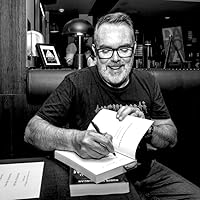
September 6, 2020
I once expressed to Mr. Hutchinson the view that, given trains feature prominently on the excellent covers of the Fractured Europe series, there is a surprising paucity (one might even say absence) of scenes involving trains and railways in the actual books. This was after reading Book 2. Yes, the Line is introduced in Book 1 (the quite superb Europe in Autumn), but as a powerful piece of world-building rather than a moving part giving any particular traction to the story.
Neither would the Wheel Tappers and Shunters Club (or Dr. Sheldon Cooper for that matter) be particularly chuffed at the role of the 'Iron Horse' in the equally wonderful Europe at Midnight. In response to my concerns about the efficacy of the series' covers, DH made some vaguely reassuring noises. (It was Tw'tter, so I don't know if he actually made any noises at all.) Imagine my unrestrained delight then, as I delved into Book 3, and found my ferroequinological desires satisfied right from the off.
There is of course very much more for fans of the series to be delighted about in this third instalment, not least a far bigger role (IMO) for our hero, Rudi, than in Book 2. I'll admit to being a smidge confused in places, but never, ever was there a moment that I did not feel completely entranced by the twisty-turny, topsy-turvy journey through main lines, sidings and shunts of an imagined Europe that continues to pull itself apart (with no little help from any number of antagonists).
These books are such a remarkable example of taking an immensely satisfying and-at its heart-straightforward idea, and extrapolating the heck out of it with the aid of a superlative and dextrous imagination. Yet this is no dry scientific thesis, this is a series of stories populated by people as convincing and colourful as any dramatis personae I can think of. Admittedly many of those colours are shades of grey, but that is only the hue of their intentions, their morals and their politics, and even then leaves all the room in the worlds for nuance and intrigue.
If you are looking for a sophisticated and challenging story of political intrigue, shady dealings, crosses of various degrees in a near future setting that is at once both completely familiar and unrecognisable, then this series is for you.
Neither would the Wheel Tappers and Shunters Club (or Dr. Sheldon Cooper for that matter) be particularly chuffed at the role of the 'Iron Horse' in the equally wonderful Europe at Midnight. In response to my concerns about the efficacy of the series' covers, DH made some vaguely reassuring noises. (It was Tw'tter, so I don't know if he actually made any noises at all.) Imagine my unrestrained delight then, as I delved into Book 3, and found my ferroequinological desires satisfied right from the off.
There is of course very much more for fans of the series to be delighted about in this third instalment, not least a far bigger role (IMO) for our hero, Rudi, than in Book 2. I'll admit to being a smidge confused in places, but never, ever was there a moment that I did not feel completely entranced by the twisty-turny, topsy-turvy journey through main lines, sidings and shunts of an imagined Europe that continues to pull itself apart (with no little help from any number of antagonists).
These books are such a remarkable example of taking an immensely satisfying and-at its heart-straightforward idea, and extrapolating the heck out of it with the aid of a superlative and dextrous imagination. Yet this is no dry scientific thesis, this is a series of stories populated by people as convincing and colourful as any dramatis personae I can think of. Admittedly many of those colours are shades of grey, but that is only the hue of their intentions, their morals and their politics, and even then leaves all the room in the worlds for nuance and intrigue.
If you are looking for a sophisticated and challenging story of political intrigue, shady dealings, crosses of various degrees in a near future setting that is at once both completely familiar and unrecognisable, then this series is for you.
Displaying 1 - 30 of 108 reviews